The Man Who Chose Harmony in an Age of Blood | Prince Shōtoku
血の時代に、和を選んだ人 | 聖徳太子


IBUKI – Hiragana Times September 2026 issue

Listen to the Audio:

The Man Who Chose Harmony in an Age of Blood | Prince Shōtoku

時代じだいに、えらんだひと | 聖徳太子しょうとくたいし


Returning to the Origins of This Nation
第一部だいいちぶ:このくにはじまりにかえ

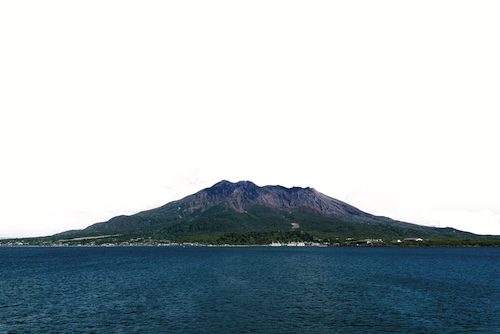
Fertile land, enriched by minerals from volcanic soil. Deeply indented coastlines where fish carried by warm and cold currents gather to spawn. In the mountains, deer, wild boar, and sansai (wild mountain vegetables). Japan is an island nation blessed with the bounty of both sea and mountain.
火山かざんによるミネラルが豊富ほうふ肥沃ひよく土地とち暖流だんりゅう寒流かんりゅうはこばれたさかなあつまり、産卵さんらんするんだ海岸かいがんやまには、鹿しかいのしし、そして山菜さんさいうみさちやまさちめぐまれた島国日本しまぐににほん

Japan Nature

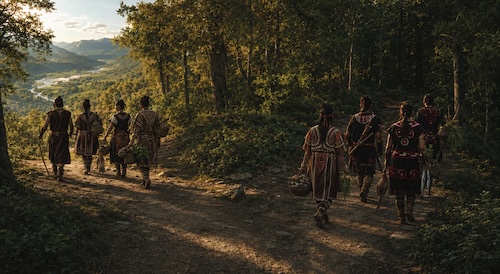
Throughout the Jōmon period, which lasted for more than ten thousand years, no evidence of large-scale warfare has been found in this archipelago. It was not an age of enclosing land or fighting over it. Nature’s bounty was abundant, and there was little reason to sustain conflict. Rather than enclosing the land, people lived within nature itself.
縄文時代じょうもんじだい一万数千年いちまんすうせんねんあいだ、この列島れっとうには大規模だいきぼたたかいの形跡けいせきがありません。土地とちかこみ、うば時代じだいではありませんでした。自然しぜんめぐみはゆたかにあり、たたかいをつづける理由りゆうもなかったのでしょう。人々ひとびと土地とちかこむのではなく、自然しぜんなからしていました。

Jomon Period

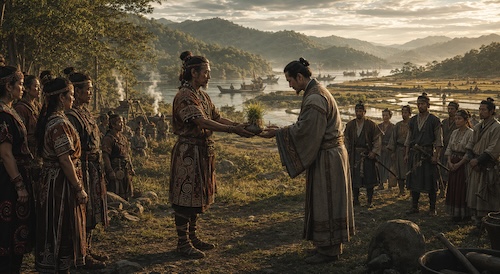
In time, people began arriving from the Asian continent. Rice cultivation was introduced, land ownership began, iron was forged into weapons, and powerful clans arose throughout the country. Even so, traces remain of Japan’s efforts to avoid conflict. One is the myth of Kuni-yuzuri—the “yielding of the land.” Rather than seizing the land through battle, it was received when another willingly yielded it.
やがて大陸たいりくからひとわたはじめます。稲作いなさくはいり、土地とち所有しょゆうはじまり、てつ武器ぶきわり、各地かくち豪族ごうぞくがっていきます。それでもこのくにあらそいをけることにつとめた形跡けいせきのこっています。「国譲くにゆずり」という神話しんわです。たたかってうばうのではなく、ゆずける。

Mythology

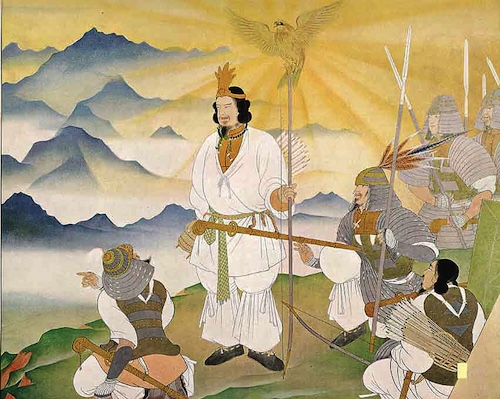
Thus, according to tradition, Emperor Jinmu became Japan’s first emperor. His imperial edict declares: “Let us nurture righteousness and thereby govern all under heaven.” In other words, let us continue to consider together what righteousness means. This starting point—the refusal to define righteousness once and for all—has been passed down to the present day, through to Japan’s 126th emperor.
そうして最初さいしょ天皇てんのうとなった神武天皇じんむてんのうみことのりには、「ただしきをやしない、もって天下てんかおさめん」——ただしさをみなかんがつづけよう、とかれています。この「ただしさを固定こていしない」出発点しゅっぱつてんが、現在げんざいいただい126代天皇だいてんのうまでがれていきます。

Emperor Jinmu

In the sixth century, East Asia underwent a dramatic transformation. In China, the Sui dynasty unified the entire country, and a superpower on an entirely different scale emerged. Its waves reached Japan. Within Japan itself, forces backed by continental civilization were rising and beginning to clash with the ancient order.
六世紀ろくせいきひがしアジアが激変げきへんします。中国ちゅうごくずい全土ぜんど統一とういつし、桁違けたちがいの超大国ちょうたいこく出現しゅつげんしました。そのなみ日本にほんにもとどいていました。国内こくないにも大陸たいりく文明ぶんめいうしだてにした勢力せいりょく台頭たいとうし、古来こらい秩序ちつじょとぶつかりはじめていたのです。

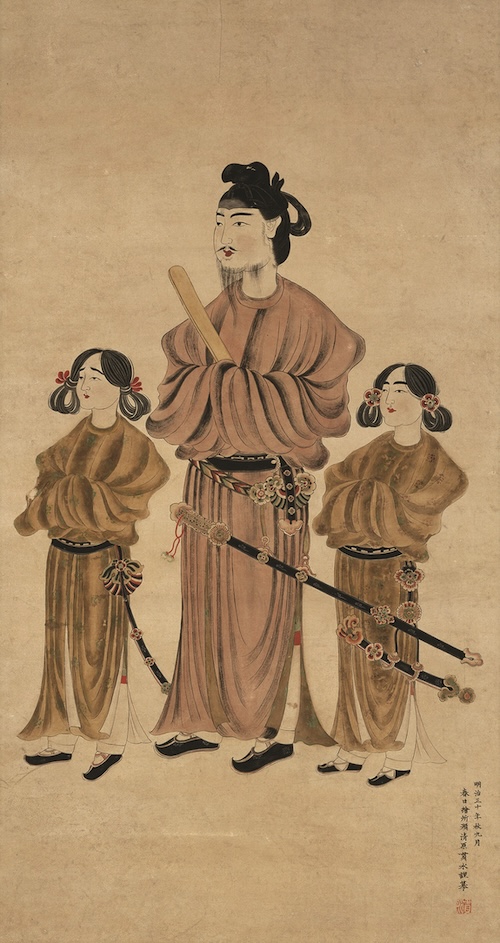
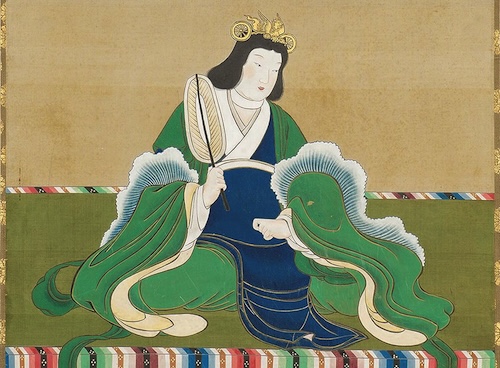
To reject it, or to accept it? At this moment, one figure made a decisive choice: Prince Shōtoku. He embraced Buddhism without abandoning Shintō. He chose to bring together within a single vessel two civilizations: the Japanese civilization that had lived in communion with the spiritual presence of nature since Jōmon times, and the continental civilization that possessed the power to reshape nature itself.
排除はいじょするか、れるか。このとき、一人ひとり人物じんぶつ決断けつだんくだします。聖徳太子しょうとくたいしです。太子たいし神道しんとうてずに仏教ぶっきょうれる。縄文以来じょうもんいらい自然しぜん霊性れいせいともった日本文明にほんぶんめいと、自然しぜんえるちからった大陸たいりく文明ぶんめいを、ひとつのうつわなか融合ゆうごうさせるみちえらびました。

Prince Shotoku

This fusion later came to be known as Shinbutsu-shūgō—the syncretic union of Shintō and Buddhism—and it would shape the country for more than a thousand years. Even today, Japanese people hold weddings at Shintō shrines and funerals at Buddhist temples. They celebrate Christmas, listen to temple bells on New Year’s Eve, and visit shrines at the beginning of the new year. No one finds this strange. Follow that sensibility back to its roots, and it leads to the great work of Prince Shōtoku.
この融合ゆうごうは、のちに「神仏習合しんぶつしゅうごう」とばれ、千年以上せんねんいじょうこのくにつらぬきます。いま日本人にほんじん結婚式けっこんしき神社じんじゃげ、葬式そうしきてらおこない、クリスマスをいわい、除夜じょやかねき、初詣はつもうできます。だれもそれに違和感いわかんっていません。その原点げんてんさかのぼると、聖徳太子しょうとくたいし偉業いぎょうつながっています。

Shinbutsu-shugo

The Seventeen-Article Constitution promulgated by Shōtoku begins with a single line: “Harmony is to be valued.” Wa wo motte tōtoshi to nasu. What, then, is wa? Surely it was not merely a slogan meaning, “Let us all get along.” This is the story of the true meaning—and the resolve—behind those words.
太子たいし制定せいていした十七条憲法じゅうしちじょうけんぽうは、「もっとうとしとす」の一行いちぎょうからはじまります。「」とはなになのか。「みんな仲良なかよく」という標語ひょうごではないはずです。その真意しんい覚悟かくご物語ものがたり辿たどります。

Seventeen-Article Constitution

An Age of Blood
第二部だいにぶながれる時代じだい

Shōtoku was born in 574, during the Asuka period. At that time, two powerful forces were locked in fierce conflict over the wave of Chinese civilization arriving from the continent: the Soga clan and the Mononobe clan.
太子たいしまれたのは574ねん飛鳥あすか時代じだい。この時代じだい日本にほんは、大陸たいりくからせる中国文明ちゅうごくぶんめいなみをめぐり、ふたつの勢力せいりょくはげしくぶつかっていました。蘇我氏そがし物部氏もののべしです。

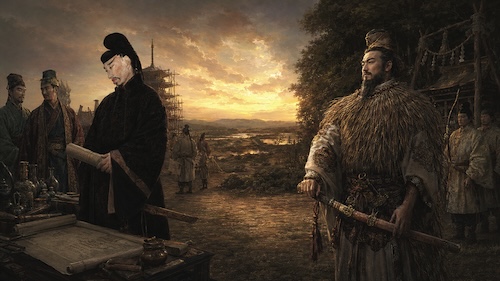
The Soga possessed knowledge of the continent and extensive connections there. They sought to introduce continental civilization into Japan—systems of government, architecture, medicine, diplomacy, and, at the heart of it all, Buddhism. The Mononobe, by contrast, were among the imperial family’s oldest allies, their lineage reaching back to the founding myths of the nation. They had long guarded its rituals, its military traditions, and the spiritual life of the land.
蘇我氏そがし大陸たいりく知識ちしき人脈じんみゃくち、大陸たいりく文明ぶんめい——統治とうち仕組しくみ、建築けんちく医学いがく外交がいこう、そしてその中核ちゅうかくにある仏教ぶっきょう——をくにもうとしていました。一方いっぽう物部氏もののべしは、建国けんこく神話しんわにまでさかのぼ天皇家てんのうけ最古さいこ盟友めいゆう——祭祀さいし、そしてこのくに霊性れいせいまもってきた一族いちぞくです。

Moriya vs Umako

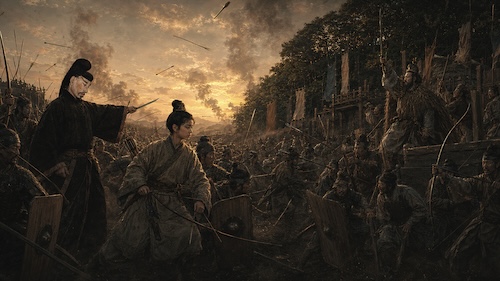
In 587, armed conflict finally erupted. Shōtoku was fourteen years old and is said to have taken part. The immediate cause of the clash was the strong resistance of Mononobe no Moriya, head of the Mononobe clan, to the acceptance of continental civilization with Buddhism at its core.
587ねん、ついに武力衝突ぶりょくしょうとつきます。太子たいし14さい。このたたかいにくわわったとされています。この衝突しょうとつ発端ほったんは、物部氏もののべしおさ物部守屋もののべのもりやが、仏教ぶっきょう中核ちゅうかくとする大陸文明たいりくぶんめい受容じゅようつよ抵抗ていこうしたことにあります。

Shōtoku sided with the Soga. Yet this was not a religious war between Buddhism and Shintō. Shōtoku did not reject Shintō. Even Shitennō-ji, the temple he later founded, had a Shintō shrine within its grounds. What Shōtoku chose was not the Soga clan itself, but the path of coexistence. The true divide was coexistence versus exclusion. The battle ended in victory for the Soga side, and Moriya was slain. Yet this cannot have been the outcome Shōtoku truly desired. The Mononobe were ancient allies who had walked alongside the imperial family for centuries.
このあらそいで、太子たいし蘇我氏そがしがわちました。しかしこれは「仏教ぶっきょう たい 神道しんとう」の宗教戦争しゅうきょうせんそうではありません。太子たいし神道しんとう否定ひていしていません。のちてた四天王寺してんのうじにも神社じんじゃ併設へいせつされています。太子たいしえらんだのは蘇我氏そがしではなく、共存きょうぞんというみちでした。構図こうずは「共存きょうぞん たい 排除はいじょ」だったのです。たたかいは蘇我氏側そがしがわ勝利しょうりわり、守屋もりやたれました。しかしこれは、太子たいしこころからのぞんだ結末けつまつではなかったはずです。物部氏もののべし何百年なんびゃくねん天皇家てんのうけともあるんできた盟友めいゆうだったからです。

Battle of Shigisan

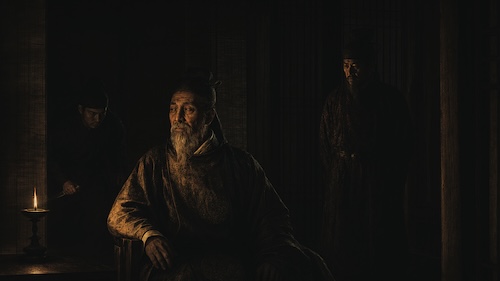
Then, in 592, an even more shocking event occurred. Emperor Sushun, who was on the throne at the time, was assassinated by Soga no Umako, head of the Soga clan. It is the only assassination of an emperor recorded in Japan’s official histories. Moreover, Umako is believed to have been the father of Shōtoku’s wife—in other words, his father-in-law. His own father-in-law had killed an emperor who was also a member of Shōtoku’s family. Shōtoku carried that reality with him when he became regent the following year.
そして592ねん、さらに衝撃的しょうげきてき事件じけんきます。当時とうじ天皇てんのうであった崇峻天皇すしゅんてんのうが、蘇我氏そがし頭領とうりょう蘇我馬子そがのうまこによって暗殺あんさつされたのです。日本にほん正史せいししるされた、唯一ゆいいつ天皇てんのう暗殺事件あんさつじけんです。しかも蘇我馬子そがのうまこは、太子たいしつまちち——つまり義父ぎふであったとされています。みずからの義父ぎふ親族しんぞくでもある天皇てんのうころした。太子たいしはその現実げんじつ背負せおいながら、翌年よくねん摂政せっしょうきます。

Assassination of Emperor Sushun

It was an age in which an emperor could be murdered. Shōtoku was only nineteen. The words that would later emerge—”Harmony is to be valued”—were not gentle idealism. They were words of resolve, wrung from an age of blood.
天皇てんのうころされる時代じだい太子たいしはこのとき19さいのち誕生たんじょうする「もっとうとしとす」という言葉ことばは、こうしたなかからしぼされた決意けつい言葉ことばだったのです。

No One Wanted the Throne
第三部だいさんぶだれ天皇てんのうになりたくなかった

After Emperor Sushun was assassinated, the throne stood empty. The court turned to Shōtoku’s aunt to become the next sovereign. She declined, and it was only after officials of every rank pleaded with her three times that she finally accepted the throne. Thus emerged Japan’s first reigning empress: Empress Suiko. It was an age when even an emperor could be killed. Everyone knew that ascending the throne could cost them their life.
崇峻天皇すしゅんてんのう暗殺あんさつされたあと皇位こういきました。群臣ぐんしんつぎ天皇てんのうのぞんだのは、太子たいし叔母おばでした。しかし彼女かのじょはこれを辞退じたいし、百官ひゃっかん三度みたびにわたってねがすえ、ようやく玉座ぎょくざけます。日本にほん最初さいしょ女帝じょてい推古天皇すいこてんのう誕生たんじょうです。天皇てんのうさえころされる時代じだい。そのくことがいのちえになりると、だれもがっていたのです。

Empress Suiko

Yet one woman accepted that burden. Perhaps what Suiko was called upon to provide was not the strength to subdue others by force. In the midst of conflict, what was needed was the strength to avoid creating new enemies, and to hold different factions together within a single nation. At that moment, her supple resilience was what the country needed most. Suiko was no political novice: she had become empress consort at the age of twenty-three and had spent many years observing government at close hand. Shōtoku became regent at the age of twenty and joined his aunt in supporting the country.
それでも、その重責じゅうせき一人ひとり女性じょせいけた。推古天皇すいこてんのうもとめられたのは、相手あいてちから屈服くっぷくさせるつよさではなかったかもしれません。あらそいの渦中かちゅうあらたなてきつくらず、ことなる勢力せいりょくひとつのくにおさめること。この局面きょくめんでは、彼女かのじょのしなやかさがなにより必要ひつようだったのです。しかも推古天皇すいこてんのうは、23さい皇后こうごうてられ、以来長いらいながきにわたり政治せいじ間近まぢかてきた経験者けいけんしゃでした。太子たいしは20さい摂政せっしょう就任しゅうにんし、叔母おばともにこのくにささえることになります。

Shotoku and Suiko

Suiko’s accession was not the product of modern ideals such as gender equality or the advancement of women. In an age when even an emperor could be killed, she took on the burden of the bloodstained throne so that the country itself would not cease to exist. Suiko understood her fate and accepted its weight. The Japan of today rests upon such life-risking acts of succession.
推古天皇すいこてんのう即位そくいは、現代げんだいかたられるような「男女平等だんじょびょうどう」や「女性じょせい活躍かつやく」といった風潮ふうちょうからまれたものではありません。天皇てんのうさえころされる、まった玉座ぎょくざを、このくにやさないためにけた——そういう決断けつだんでした。推古天皇すいこてんのうは、みずからの宿命しゅくめいさと覚悟かくご背負せおったのです。今日こんにち日本にほんるのは、こうした命懸いのちがけの継承けいしょううえっているのです。

Shōtoku’s Great Undertaking
第四部だいよんぶ太子たいし大業たいぎょう

In Japanese textbooks, Prince Shōtoku is taught as “the man who spread Buddhism.” Yet Shōtoku was a member of the imperial family—a lineage that had presided over Shintō rituals for generations. Would someone born into that family truly have wished to cast away the roots of his own spiritual tradition?
日本にほん教科書きょうかしょでは、聖徳太子しょうとくたいしは「仏教ぶっきょうひろめたひと」としておしえられています。しかし、太子たいし天皇家てんのうけ人間にんげんです。代々だいだい神道しんとう祭祀さいしつかさどってきた一族いちぞく人間にんげんが、みずからの信仰しんこうてることをかんがえるでしょうか。

For more than ten thousand years, from Jōmon times onward, Japan had lived amid the worship and reverence of nature. There was no need to declare, “Protect Shintō.” It was simply there, like the air itself.
日本にほん縄文以来じょうもんいらい一万年以上いちまんねんいじょうにわたり、自然崇拝しぜんすうはいなかきてきたくにです。「神道しんとうまもれ」とわざわざ必要ひつようがなかった。空気くうきのように、そこにあるものだったからです。

The people of this country possessed a direct and sincere gratitude toward nature. What had not yet developed, however, was a philosophy that pursued such questions systematically: What is nature? What is the universe? What is the human mind? Buddhism carried such a philosophy—a kind of ancient science in itself.
このくにには自然しぜん感謝かんしゃする素直すなおこころはあっても、自然しぜんとはなにか、宇宙うちゅうとはなにか、人間にんげんこころとはなにか——それを理論的りろんてきめる「哲学てつがく」はありませんでした。仏教ぶっきょうは、そうした哲学てつがく、いわばサイエンスとしての側面そくめんあわっていたのです。

Shōtoku’s decision to bring Buddhism to the forefront was therefore a shrewd one. By introducing Buddhism as a new body of thought, he could bring a fresh current into the country and reawaken its spiritual life. It could provide a common language for diplomacy with the continent. And by joining forces with Soga no Umako, it would allow him to step forward into a new age.
太子たいし仏教ぶっきょう前面ぜんめんしたのは、したたかな判断はんだんでした。仏教ぶっきょうというあらたな思想しそうによって、くにあらたなかぜみ、その精神せいしん目覚めざめさせること。大陸たいりくとの外交がいこう通用つうようする共通言語きょうつうげんごにすること。そして蘇我馬子そがのうまこちからわせながら、つぎ時代じだいすこと。

Shōtoku used Buddhism not only as a faith, but also as a strategy for opening a new international order and establishing Japan’s place in the wider world. From the Meiji-era movement of “Civilization and Enlightenment” to the modern pursuit of global standards, Shōtoku’s decision can be seen as an early precedent. As regent, he introduced one concrete institution after another.
太子たいしは、仏教ぶっきょう信仰しんこうとしてだけでなく、あらたな国際社会こくさいしゃかいひらき、このくに存在そんざい世界せかいてるための戦略せんりゃくとして使つかいこなしたのです。明治維新めいじいしんの「文明開化ぶんめいかいか」、グローバルスタンダードをもとめる現代げんだい——太子たいし決断けつだんは、その先駆さきがけだったとえます。太子たいし摂政せっしょうとして、次々つぎつぎ具体的ぐたいてき制度せいどしていきます。

Regent Shotoku

In 603 came the Twelve-Level Cap and Rank System. Until then, a person’s birth and clan lineage largely determined their position. Drawing upon continental bureaucratic systems, Shōtoku introduced a structure in which people could be appointed according to ability. The colors of their caps indicated their rank. The system opened a path to talented individuals, rather than reserving authority solely for members of powerful clans.
603ねん冠位十二階かんいじゅうにかい。それまでの日本にほんでは、まれた家柄いえがらがすべてでした。太子たいし大陸たいりく官僚制度かんりょうせいど参考さんこうに、才能さいのうひと登用とうようする仕組しくみをみました。かんむりいろくらいしめし、豪族ごうぞく血筋ちすじではなく、実力じつりょくあるものみちひらいたのです。

Twelve-Level Cap and Rank System

In 604 came the Seventeen-Article Constitution. Its first article declared: “Harmony is to be valued.” A key to understanding this “wa” can be found in a passage from the Analects: “The noble person seeks harmony without conformity; the petty person conforms without achieving harmony.” Harmony is not the same as conformity. It means not fearing debate and allowing what is different to remain different while still finding a way to coexist. That was Shōtoku’s wa.
604ねん十七条憲法じゅうしちじょうけんぽう第一条だいいちじょうは「もっとうとしとす」。この「」をかぎとなる、論語ろんご一節いっせつがあります。「君子くんししてどうぜず。小人しょうじんどうじてせず」。同調どうちょうすることがではない。議論ぎろんおそれず、ことなるものをことなるまま共存きょうぞんさせる。それが太子たいしの「」です。

Harmony

The Seventeen-Article Constitution also declares: “Revere the Three Treasures deeply.” In Buddhism, the Three Treasures are the Buddha, the Dharma, and the Sangha—the Buddha, his teachings, and the community of monks. Yet when the Three Treasures entered into union with Japan’s Shintō tradition, they took on a deeper meaning.
十七条憲法じゅうしちじょうけんぽうには「あつ三宝さんぽううやまえ」ともあります。仏教ぶっきょうでは三宝さんぽうぶつほうそうします。ぶつとは仏陀ブッダほうとはおしえ、そうとは僧侶そうりょです。しかし、この三宝さんぽう日本にほん神道しんとうったとき、よりふか意味いみびます。

When the Three Treasures are viewed through the union with Shintō, the Buddha comes to be seen as the divinity within the human heart, the Dharma as the law of nature, and the Sangha as the bonds connecting people to one another. Over time, the Three Treasures Shōtoku set forth were opened up into a universal teaching that reached beyond the boundaries of Buddhism to embrace even the kami of Shintō.
神道しんとうとの融合ゆうごうなか三宝さんぽうとらなおすと、ぶつひとこころ宿やど神性しんせいほう自然しぜんことわりそうひとひととのつながりとしてえてきます。太子たいしかかげた三宝さんぽうは、やがて仏教ぶっきょうわくえ、神道しんとう神々かみがみをもつつ普遍的ふへんてきおしえへとひらかれていったのです。

Three Treasures

In 607 came the mission to Sui China. Shōtoku sent Ono no Imoko as an envoy, carrying a letter that began: “The Son of Heaven in the land where the sun rises sends this letter to the Son of Heaven in the land where the sun sets.” Emperor Yang of Sui is said to have been enraged. Yet this was not simply a provocation. Japan would accept the civilization of the continent. It would not, however, become a vassal state. It would deal with China as an equal nation. Here too, Shōtoku’s wa—harmony without conformity—was at work.
607ねん遣隋使けんずいし太子たいし小野妹子おののいもこずいおくり、国書こくしょにこうきました。「日出ひいづるところ天子てんししょ日没ひぼっするところ天子てんしいたす」。ずい煬帝ようだい激怒げきどしたとされています。しかしこれは挑発ちょうはつではありません。大陸たいりく文明ぶんめいれる。しかし属国ぞっこくにはならない。対等たいとうくにとしてう。ここにも、太子たいしの「」——してどうぜず——がつらぬかれているのです。

Mission to Sui

In this way, Shōtoku transformed thought into institutions and ideals into the shape of a nation. What he created would support the country for more than a thousand years.
こうして太子たいしは、思想しそう制度せいどにし、理念りねんくにのかたちにしていきました。それは、このくに千年以上せんねんいじょうささえることになります。

The Death of Prince Shōtoku
第五部だいごぶ太子たいし

In December 621, Shōtoku’s mother, Princess Anahobe no Hashihito, died. On February 21 of the following year, Shōtoku’s wife died. The next day, February 22, Shōtoku himself passed away. He was forty-nine years old. The prevailing theory is that he died of smallpox. Yet there remains something unsettling about the deaths of his mother, his wife, and Shōtoku himself in such rapid succession. Some have proposed assassination. Others have suggested suicide. The truth remains unknown.
621ねん12がつ太子たいしはは穴穂部間人皇女あなほべのはしひとのひめみこくなります。よく622ねん2がつ21にちには、太子たいしつまくなり、その翌日よくじつ、2がつ22にち太子たいしくなります。享年きょうねん49。定説ていせつ天然痘てんねんとうによる病死びょうしです。しかし、ははつま、そして太子たいしと、三人さんにんつづけにくなる不自然ふしぜんさはぬぐえません。暗殺説あんさつせつも、自殺説じさつせつもあります。真相しんそうかりません。

Passing of Prince Shotoku

Shōtoku had four wives. Two were imperial women, and one was a daughter of Soga no Umako. Yet the woman he is said to have loved most was the fourth—the woman of the lowest social standing. During his lifetime, Shōtoku is said to have declared, “After death, let us be buried together.” As he wished, Shōtoku was interred at the Eifukuji Kita Kofun burial mound together with his mother and that woman—Kashiwade no Hokikimi no Iratsume.
太子たいしには四人よにんつまがいました。二人ふたり皇族こうぞく一人ひとり蘇我馬子そがのうまこむすめ。しかし太子たいしもっとあいしたのは、のこ一人ひとりもっと身分みぶんひく女性じょせいでした。太子たいし生前せいぜん、「死後しごとも埋葬まいそうされよう」とかたったとつたえられています。その言葉ことばとおり、太子たいしはか——叡福寺北古墳えいふくじきたこふん——には、ははと、その女性じょせい——膳部菩岐岐美郎女かしわでのほききみのいらつめ合葬がっそうされています。

Shotoku's Burial

After Shōtoku’s death, Prince Yamashiro no Ōe, his son by Tojiko no Iratsume, the daughter of Soga no Umako, stood in a position to inherit his father’s legacy. Yamashiro no Ōe became one of the leading candidates for the throne, but the Soga clan repeatedly prevented his accession. Then, in 643, Soga no Iruka—the grandson of Soga no Umako—attacked Ikaruga Palace.
太子たいし死後しご蘇我馬子そがのうまこむすめ刀自古郎女とじこのいらつめとのあいだまれた山背大兄王やましろのおおえのおう太子たいし遺志いし立場たちばにありました。山背大兄王やましろのおおえのおう天皇てんのう最有力候補さいゆうりょくこうほとなりますが、蘇我氏そがしはばまれつづけます。そして643ねん蘇我馬子そがのうまこまごにあたる蘇我入鹿そがのいるか斑鳩宮いかるがのみや襲撃しゅうげきされました。

Prince Yamashiro no Oe

Yamashiro’s retainers urged him to fight back. He is said to have replied: “I cannot bear to burden all the people for the sake of my own life.” Rather than draw the people into battle for his own survival, Yamashiro no Ōe took his own life together with his entire family. The direct line of Prince Shōtoku ended there.
側近そっきん反撃はんげき進言しんげんしましたが、山背大兄王やましろのおおえのおうはこうったとつたえられています。「一身いっしんのために百姓万民ひゃくせいまんみんろうするにしのびず」——自分一人じぶんひとりのためにたみむことはできない、と。山背大兄王やましろのおおえのおう一族いちぞくもろともいのちちました。太子たいし血筋ちすじは、ここで途絶とだえます。

Tragedy of Yamashiro

Prince Shōtoku never became emperor. As regent, he devoted his life to the country. He fought an ancient ally. He saw an emperor murdered by his own father-in-law. He lost those he loved, and then died at the age of forty-nine. He never sat upon the imperial throne. Yet his life carried the history of Japan forward.
聖徳太子しょうとくたいしは、天皇てんのうになることはありませんでした。摂政せっしょうとして、生涯しょうがいくにのためにささげました。盟友めいゆうたたかい、義父ぎふ天皇てんのうころされ、あいするもの先立さきだたれ、そしてみずからも49ねん生涯しょうがいじた。天皇てんのうかず、しかしこのくに歴史れきしつないだ人生じんせいでした。

Map of Asuka

Shōtoku, Transformed into Legend
第六部だいろくぶ伝説でんせつにされた太子たいし

After Shōtoku’s death, his image changed dramatically with each passing age. Countless legends of superhuman powers gathered around him.
太子たいし死後しご、その姿すがた時代じだいるごとにおおきく変容へんようしていきます。聖徳太子しょうとくたいしには、数多かずおおくの超人伝説ちょうじんでんせつがまとわりついています。

His mother dreamed that a golden monk entered her womb, and then conceived him. He spoke immediately after birth. He listened to ten people speaking at the same time. He rode his famous black horse, Kurokoma, through the sky. He foretold Emperor Kanmu’s transfer of the capital to Heian-kyō. He wrote that a great upheaval would descend upon the realm. The list is almost endless.
はは金色こんじきそう胎内たいないはいゆめ懐妊かいにんした。まれてすぐ言葉ことばはなした。十人じゅうにんはなし同時どうじいた。名馬めいば黒駒くろこまってそらんだ。桓武天皇かんむてんのう平安京遷都へいあんきょうせんと予言よげんした。天下てんか大乱たいらんこるとしるした——。げればきりがありません。

Shotoku Legends

After Shōtoku died, Japan sank deeper into turmoil. There was the tragedy of Prince Yamashiro no Ōe and the spread of belief in Mappō—the Latter Age of the Dharma, when Buddhist teachings were thought to be declining. The darker the world became, the more desperately people sought light. They clung to Shōtoku’s name, entrusted their future to his supposed prophecies, and passed his legends from one generation to the next. Shōtoku was made into their light. We cannot dismiss the desperation of the people who needed such legends.
太子たいしくなったあと日本にほん混迷こんめいふかめていきます。山背大兄王やましろのおおえのおう悲劇ひげき末法思想まっぽうしそうひろがり。なかくらくなればなるほど、人々ひとびとひかりもとめました。太子たいしにすがり、太子たいし予言よげん未来みらいたくし、伝説でんせつかたいだ。太子たいしは、そうした人々ひとびとひかりにされたのです。伝説でんせつ必要ひつようとした人々ひとびと切実せつじつさを、否定ひていすることはできません。

Desperation for Light

It is also striking that many of the stories resemble episodes from the life of Christ. Shōtoku was said to have been born near a stable—an explanation given for his birth name, Umayado no Miko. He was said to have established an institution for orphans and to have distributed medicine to the sick. Those who created these legends may have possessed at least some knowledge of the Bible.
また、馬小屋うまごやまれた(太子たいし本名ほんみょうである厩戸皇子うまやどのおうじ由来ゆらいとされる)、孤児院こじいんつくった、病人びょうにんくすりあたえたなど、キリストの生涯しょうがいかさなる伝説でんせつおおいことも注目ちゅうもくされます。これらの伝説でんせつつくった人物じんぶつは、すくなくとも聖書せいしょ知識ちしきっていた可能性かのうせいがあります。

As for the Mirai-ki, or “Records of the Future,” they are regarded as later inventions by people connected with Shitennō-ji. Much of their content served the interests of the temple. The more superhuman Shōtoku became, the greater the temple’s prestige grew—and the more pilgrims it attracted. One might even call it a shrewd piece of Kansai merchant-style marketing.
未来記みらいきかんしては、四天王寺してんのうじ関係者かんけいしゃによる後世こうせい創作そうさく指摘してきされています。内容ないよう四天王寺してんのうじ有利ゆうりなものがおおく、太子たいし超人ちょうじんにすればするほどてらかくがり、参拝者さんぱいしゃえる。関西商人かんさいしょうにんらしいたくましいマーケティングともえます。

Superhuman Shotoku

Yet as the legends expanded, the real Shōtoku receded farther from view. People spoke only of a prince with supernatural powers, while the human being who had endured an age of blood gradually disappeared.
しかし、伝説でんせつふくらむほどに、太子たいし実像じつぞうとおくなりました。超能力者ちょうのうりょくしゃとしての太子たいしばかりがかたられ、時代じだいいた一人ひとり人間にんげんとしての太子たいしえなくなっていったのです。

Still, the sheer abundance of these legends tells us how great a turning point Shōtoku’s age represented for Japan.
ただ、これほどの伝説でんせつんだことは、太子たいしきた時代じだいがこのくににとっていかにおおきな転換点てんかんてんであったかを物語ものがたっています。

His greatness does not lie in tales of supernatural power. It lies in the resolve with which he fought an ancient ally, saw an emperor murdered by his father-in-law, and still chose coexistence over exclusion—transforming that choice into the shape of a nation. Upon the foundation of coexistence that Shōtoku created, Japan passed through the centuries with remarkably few large-scale religious wars. The road that would lead across fifteen hundred years to the Japan of today was opened by Shōtoku in that age of blood.
太子たいし偉大いだいさは、こうした超人伝説ちょうじんでんせつにはありません。盟友めいゆうたたかい、義父ぎふ天皇てんのうころされ、それでも排除はいじょではなく共存きょうぞんえらび、くにのかたちをつくった覚悟かくごにあります。太子たいしきずいた「共存きょうぞん」の土台どだいうえで、このくにはその後、大規模だいきぼ宗教戦争しゅうきょうせんそうをほとんど経験けいけんせずにあるんできました。1500ねんいま日本にほんにまでつながるみちを、太子たいしはあの時代じだいなかひらいたのです。

The Road Ahead

From Shōtoku to the Present
第七部だいななぶ太子たいしから今日こんにち

The age in which Shōtoku lived was one of the greatest periods of transformation in Japanese history. From the continent came not only Buddhism, but also Confucianism and Daoism. Farther to the west, the stream that would later come to be known as Jingjiao—a form of Christianity—was already flowing eastward. Amid all this, Shōtoku declared: “Harmony is to be valued.”
太子たいしきた時代じだいは、日本史上最大にほんしじょうさいだい変革期へんかくきひとつでした。大陸たいりくからは仏教ぶっきょうだけでなく、儒教じゅきょう道教どうきょうせ、そのさらに西にしからは、のち景教けいきょうばれるキリストきょうながれもひがしかっていました。複雑ふくざつんだ世界せかいなかで、太子たいしは「もっとうとしとす」ととなえました。

To repeat, this wa was not the modern idea that everyone should simply get along. It was a choice for coexistence, made at a time when blood was flowing within the country and a superpower was looming beyond its shores.
かえしますが、この「」は、現代げんだいの「みんな仲良なかよく」ではありません。うちながれ、そと超大国ちょうたいこくせま時代じだいに、それでも共存きょうぞんえらんだ言葉ことばです。

During this age, two women bore the burden of the throne amid bloodshed and political strife: Empress Suiko and Empress Kōgyoku. Those who discuss the possibility of a woman ascending the throne in modern Japan should begin by understanding what these women were required to carry.
この時代じだい二人ふたり女性天皇じょせいてんのうが、流血りゅうけつ政争せいそうなか玉座ぎょくざにないました。推古天皇すいこてんのう、そして皇極天皇こうぎょくてんのうです。現代げんだい、「女性天皇じょせいてんのう」をかた人々ひとびとは、まず彼女かのじょたちがなに背負せおったかを知るところからはじめるべきです。

For more than 2,600 years since its founding, Japan has continued to exist because Shōtoku and other predecessors accepted the burden of responsibility and continued to choose wa.
建国けんこくから2600年以上ねんいじょう、このくにつづいているのは、太子たいしをはじめ、覚悟かくご背負せおった先人せんじんたちが「」をえらつづけたからです。

Harmony endures

The seed of coexistence that Shōtoku planted eventually developed into Shinbutsu-shūgō and shaped the very foundation of Japanese culture. Rather than forcing everything into black or white, we allow different things to blend into a shared way of life. At the origin of this sensibility we live with today stands Prince Shōtoku.
太子たいしいた「共存きょうぞん」のたねは、やがて神仏習合しんぶつしゅうごうとして日本文化にほんぶんか根幹こんかんかたちづくっていきます。白黒しろくろをつけず、ことなるものをひとつのらしのなかかしていく。いまわたしたちのその感覚かんかく原点げんてんに、太子たいしがいます。

More From Hiragana Times

Hiragana Times Discord Community
Join the Hiragana Times Discord Community — Free!
Connect with readers worldwide — free, open, and always welcoming.
世界の読者とつながる、無料のDiscordコミュニティへようこそ。

nihongo.net
Online Japanese lessons, run by Hiragana Times.
One month free for Hiragana Times subscribers.
ひらがなタイムズ定期購読者は、1ヶ月無料でご受講いただけます。
Leave a Reply