-
Pros and Cons with Insight – Hiragana Times September 2026 issue
Listen to the Audio:
Word Policing or Adaptation? | Rethinking Baseball Terms and the Times They Reflect
言葉狩りか時代適応か。|野球用語見直しが問う、言葉と時代。
🟤 Background|背景
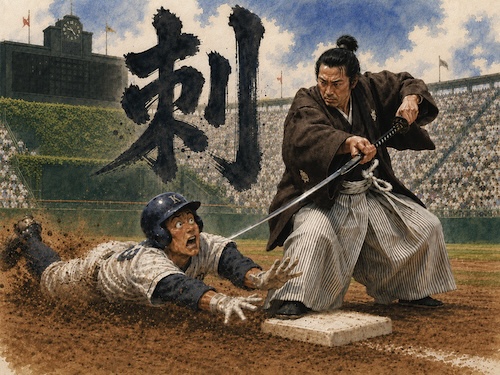
The Miyagi High School Baseball Federation has begun reviewing baseball terms that contain alarming characters such as “kill,” “stab,” and “die.”
宮城県高野連が「殺」「刺」「死」など、物騒な字を含む野球用語の見直しを始めた。Voices calling for language fit for the educational setting clash with voices saying that this is “word policing.”
教育現場にふさわしい言葉へ——という声と、それは「言葉狩り」だという声が、ぶつかっている。🟢 Pros|賛成意見(野球用語を見直すべき)
A ballpark where people shout “kill” and “stab” at children no longer fits the times.
子どもに「殺せ」「刺せ」と叫ぶ球場は、もう時代に合わない。🔴 Cons|反対意見(野球用語を見直すべきではない)
Even a single alarming character holds history and spirit. Erase it, and those vanish too.
物騒な一字にも、歴史と精神が宿る。消せば、それも消える。Unlock Full Article | 記事全文を読む
Digital PackagesRead and listen in your browser — available in bundles.誌面と音声を、パッケージでご利用いただけます。More From Hiragana Times Join the Hiragana Times Discord Community — Free!Connect with readers worldwide — free, open, and always welcoming.世界の読者とつながる、無料のDiscordコミュニティへようこそ。
Online Japanese lessons, run by Hiragana Times.One month free for Hiragana Times subscribers.ひらがなタイムズ定期購読者は、1ヶ月無料でご受講いただけます。
Join the Hiragana Times Discord Community — Free!Connect with readers worldwide — free, open, and always welcoming.世界の読者とつながる、無料のDiscordコミュニティへようこそ。
Online Japanese lessons, run by Hiragana Times.One month free for Hiragana Times subscribers.ひらがなタイムズ定期購読者は、1ヶ月無料でご受講いただけます。 -
Pros and Cons with Insight – Hiragana Times August 2026 issue
Listen to the Audio:
Shall We Cut a Two Thousand Years Thread? Japan and the female-line emperor.
二千年の糸を、断つのか。|女系天皇容認に揺れる日本。
🟤 Background|背景
The government submitted to the Diet a bill to amend the Imperial House Law, aimed at securing the number of imperial family members.
政府は皇族数の確保に向けた皇室典範の改正案を国会に提出した。But the core question of whether to allow a female-line emperor remains shelved.
だが、「女系天皇を認めるか」という核心は、棚上げにされたままだ。Some opposition parties argue that a female-line emperor should be included as an option.
一部野党は、女系天皇を選択肢に含めるべきだと主張している。🟢 Pros|賛成意見(女系天皇を認めるべき)
With male-line males alone, the imperial line will eventually die out.
男系男子だけでは、いずれ皇統は途絶えてしまう。🔴 Cons|反対意見(女系天皇を認めるべきではない)
If the female line is allowed, the imperial line will pass to another house, becoming in effect a change of dynasty.
女系を認めれば、皇統は別の家へ移り、事実上の王朝交代となる。Continue Reading In Hiragana Times
続きを読む — Hiragana Times 本誌へ
Digital PackagesRead and listen in your browser — available in bundles.誌面と音声を、パッケージでご利用いただけます。More From Hiragana Times
Join the Hiragana Times Discord Community — Free!Connect with readers worldwide — free, open, and always welcoming.世界の読者とつながる、無料のDiscordコミュニティへようこそ。
Online Japanese lessons, run by Hiragana Times.One month free for Hiragana Times subscribers.ひらがなタイムズ定期購読者は、1ヶ月無料でご受講いただけます。 -
Pros and Cons with Insights – Hiragana Times July 2026 issue
Listen to the Audio:
The daughter who consulted an AI; the adults who stopped thinking.
AIに相談(そうだん)した娘(むすめ)、考(かんが)えることを止(や)めた大人(おとな)たち🟤 Background | 背景(はいけい)
The manager of the prestigious Japanese professional baseball team, the Yomiuri Giants, was arrested on suspicion of assaulting his eldest daughter.
日本(にほん)プロ野球(やきゅう)の名門(めいもん)・読売巨人軍(よみうりきょじんぐん)の監督(かんとく)が長女(ちょうじょ)への暴行容疑(ぼうこうようぎ)で逮捕(たいほ)された。The eldest daughter consulted ChatGPT and reported to the police via a child guidance center.
長女(ちょうじょ)がChatGPTに相談(そうだん)し、児童相談所(じどうそうだんじょ)経由(けいゆ)で警察(けいさつ)へ通報(つうほう)。She suffered no injuries, and they have already reconciled.
長女(ちょうじょ)は怪我(けが)なし、既(すで)に仲直(なかなお)り。The next day, the team accepted the manager’s resignation.
翌日(よくじつ)、球団(きゅうだん)は監督(かんとく)の辞任(じにん)を受(う)け入(い)れた。This rapid one-day development sparked mixed reactions in society.
この一日(いちにち)の急展開(きゅうてんかい)が社会(しゃかい)に賛否(さんぴ)を呼(よ)び起(お)こした。🟢 Pros | 賛成意見(さんせいいけん) [The Resignation Was Justified | 辞任(じにん)は妥当(だとう)]
There is no justifiable reason for violence. The team’s response clearly showed this.
暴力(ぼうりょく)に正当(せいとう)な理由(りゆう)はない。球団(きゅうだん)の対応(たいおう)はそれを明確(めいかく)に示(しめ)した。🔴 Cons | 反対意見(はんたいいけん) [The Resignation Went Too Far | 辞任(じにん)は行(い)き過(す)ぎ]
It was a sudden parent-child quarrel, and the punishment is disproportionate to the severity of the incident.
突発的(とっぱつてき)な親子(おやこ)げんかであり、処分(しょぶん)が事実(じじつ)の重(おも)さに釣(つ)り合(あ)わない。🔍 Insight | 洞察(どうさつ)
What we should consider in this incident is not the right or wrong of the event, but how it was handled.
この事件(じけん)で考(かんが)えたいのは、出来事(できごと)の善悪(ぜんあく)ではなく、処理(しょり)のされ方(かた)である。It is that the subsequent reactions of the child guidance center, the police, and the team proceeded too emotionlessly and matter-of-factly.
その後(ご)の児童相談所(じどうそうだんじょ)、警察(けいさつ)、球団(きゅうだん)の反応(はんのう)が、あまりに無感情(むかんじょう)に淡々(たんたん)と進(すす)んだことだ。What if not only the daughter, but the child guidance center, the police, and the team were all using AI?
もし、娘(むすめ)だけでなく、児相(じそう)も警察(けいさつ)も球団(きゅうだん)も全員(ぜんいん)がAIを使(つか)っていたとすれば?Thinking this way, the inorganic nature of the series of events makes sense.
そう考(かんが)えると、一連(いちれん)の無機質(むきしつ)さに説明(せつめい)がつく。We may have passed the singularity without realizing it.
私(わたし)たちは気(き)づかぬうちに、シンギュラリティーを通(とお)り過(す)ぎたのかもしれない。It is not the moment AI surpassed humans, but the moment humans lost the need to think with their own heads.
それは、AIが人間(にんげん)を超(こ)えた瞬間(しゅんかん)ではなく、人間(にんげん)が自分(じぶん)の頭(あたま)で考(かんが)える必要(ひつよう)を失(うしな)った瞬間(しゅんかん)である。Those who think decrease, and even those who feel decrease.
考(かんが)える人(ひと)が減(へ)り、感(かん)じる人(ひと)までも減(へ)る。Its outline clearly appears in this incident.
その輪郭(りんかく)が、この事件(じけん)にはくっきりと現(あらわ)れている。On the other hand, some people deepen their inquiries with AI as a thinking partner.
一方(いっぽう)で、AIを思考(しこう)のパートナーとして問(と)いを深(ふか)める人(ひと)もいる。AI can deprive us of thought, or it can sharpen it.
AIは、思考(しこう)を奪(うば)うこともできれば、研(と)ぎ澄(す)ますこともできる。Amidst the deluge of AI, just how many people will make it onto the modern Noah’s Ark?
AIの洪水(こうずい)の中(なか)、現代(げんだい)の「ノアの方舟(はこぶね)」に乗(の)れる人(ひと)は、果(は)たしてどれだけいるか。 -
[Pros and Cons with Insight – June 2026 Issue]
Prime Minister Sanae Takaichi’s “The Time Has Come” Stirs the Nation.
高市(たかいち)首相(しゅしょう)の「時(とき)が来(き)た」発言(はつげん)に、揺(ゆ)れる社会(しゃかい)。 Background | 背景(はいけい)
Enacted on May 3, 1947, the Constitution of Japan marked its 79th year this year.
1947年(ねん)5月(がつ)3日(みっか)に施行(しこう)された日本国憲法(にほんこくけんぽう)は、今年(ことし)で79年目(ねんめ)を迎(むか)えた。
During this time, it has not been amended even once. This is an extremely rare case even in the world.
この間(あいだ)、一度(いちど)も改正(かいせい)されていない。世界(せかい)でも極(きわ)めて異例(いれい)のことだ。
Prime Minister Sanae Takaichi stated at the LDP convention, “The time has come,” showing a strong desire for constitutional amendment.
高市早苗(たかいちさなえ)首相(しゅしょう)は自民党(じみんとう)の党大会(とうたいかい)で「時(とき)は来(き)た」と述(の)べ、憲法改正(けんぽうかいせい)に強(つよ)い意欲(いよく)を示(しめ)した。
🟢 Pros|賛成意見(さんせいいけん)
It should be amended. The current constitution no longer fits the times.
改正(かいせい)すべきだ。今(いま)の憲法(けんぽう)はもはや時代(じだい)に合(あ)っていない。
🔴 Cons|反対意見(はんたいいけん)
It should not be amended. Precisely because we renounced war, there are 79 years of peace.
改正(かいせい)すべきではない。戦争(せんそう)を放棄(ほうき)したからこそ、79年(ねん)の平和(へいわ)がある。
🔍 Insight|洞察(どうさつ)
A constitution not amended even once for over 70 years is unprecedented in the world.
70年以上(ねんいじょう)一度(いちど)も改正(かいせい)されていない憲法(けんぽう)は、世界(せかい)でも例(れい)がない。
The fact that this debate is becoming active, mainly on SNS, should in itself be welcomed.
SNSを中心(ちゅうしん)にこの議論(ぎろん)が活発化(かっぱつか)していること自体(じたい)は歓迎(かんげい)すべきだろう。
However, have the participants really learned enough to discuss it?
だが、参加者(さんかしゃ)は本当(ほんとう)に論(ろん)じるに足(た)るだけ学(まな)んでいるだろうか。
Laws can be created and changed by the majority vote of politics.
法律(ほうりつ)は、政治(せいじ)の多数決(たすうけつ)で作(つく)り、変(か)えることができる。
However, the constitution exists above laws, cannot be easily changed, and continues down to our descendants.
だが憲法(けんぽう)は法律(ほうりつ)の上(うえ)に存在(そんざい)し、簡単(かんたん)には変(か)えられず、子々孫々(ししそんそん)まで続(つづ)いていくもの。
Amidst a turbulent world, Japan has walked on only by expanding interpretations, without changing a single letter of the text.
激動(げきどう)する世界(せかい)の中(なか)、日本(にほん)は条文(じょうぶん)を一文字(ひともじ)も変(か)えず、解釈(かいしゃく)の拡大(かくだい)だけで歩(あゆ)んできた。
On that interpretation, at times, the suspicion of “isn’t it a violation of the constitution?” weighed heavily.
その解釈(かいしゃく)には、時(とき)に「憲法違反(けんぽういはん)ではないか」という疑(うたが)いがのしかかった。
But that very suspicion has acted as a brake called “self-restraint”.
だがその疑(うたが)いこそが、「自制(じせい)」というブレーキ(brake)として働(はたら)いてきた。
The current debate on constitutional amendment is a question of whether to remove that brake.
今回(こんかい)の憲法改正(けんぽうかいせい)の議論(ぎろん)とは、そのブレーキ(brake)を外(はず)すかという問(と)いである。
The “pro-amendment faction” says—that the current constitution was created under the occupation of GHQ.
「改憲派(かいけんは)」は言(い)う──現行憲法(げんこうけんぽう)はGHQの占領下(せんりょうか)で作(つく)られたものだ、と。
That might be so. But, we want to ask. Then why rush the amendment at this timing when America is spreading the flames of war?
それはそうかもしれない。でも、問(と)いたい。ではなぜ、アメリカ(America)が戦火(せんか)を広(ひろ)げているこのタイミング(timing)で、改憲(かいけん)を急(いそ)ぐのか。
Any country can have a “military” to protect its own nation.
どんな国(くに)も、自国(じこく)を守(まも)るために「軍隊(ぐんたい)」を持(も)つことができる。
Postwar Japanese people who let go of that natural right, mustering courage as human beings.
その当(あ)たり前(まえ)の権利(けんり)を、人間(にんげん)としての勇気(ゆうき)をふるい起(お)こして手放(てばな)した戦後(せんご)の日本人(にほんじん)。
The determination of those who went through painful, sad, and miserable experiences, deciding to live humanely with their children and grandchildren.
つらく、悲(かな)しく、みじめな目(め)にあった人(ひと)たちが、子(こ)や孫(まご)たちと人間(にんげん)らしく生(い)きていくと決(き)めた、その決意(けつい)。
Debating amendment or preservation comes only after deeply reflecting on that resolve.
改憲(かいけん)か護憲(ごけん)かを論(ろん)じるのは、その覚悟(かくご)を深(ふか)く噛(か)み締(し)めてからだ。
This article is from the June 2026 issue of Hiragana Times.
この記事(きじ)は、月刊誌(げっかんし)『ひらがなタイムズ』2026年(ねん)6月号(がつごう)より掲載(けいさい)しています。
-
[ Pros and Cons with Insight – May 2026 Issue]
Is the Gray Zone Really a Safe Zone?
グレー(gray)ゾーン(zone)はセーフ(safe)ゾーン(zone)なのか? Background | 背景(はいけい)Actions targeting the “gray zone” without clearly violating laws and rules are increasing.
法律(ほうりつ)やルール(rule)に明確(めいかく)には違反(いはん)しない“グレー(gray)ゾーン(zone)”を狙(ねら)った行為(こうい)が増(ふ)えている。
SNS posts provoking outrage, nuisance content, videos stretching the interpretation of copyright, and so on.
炎上(えんじょう)を誘(さそ)うSNS投稿(とうこう)や迷惑系(めいわくけい)コンテンツ(contents)、著作権(ちょさくけん)の解釈(かいしゃく)を広(ひろ)げた動画(どうが)など。
The question, “If it’s not illegal, is it acceptable?”, is being posed to society.
「違法(いほう)でなければ問題(もんだい)ないのか」という問(と)いが、社会(しゃかい)に投(な)げかけられている。
 Pros | 賛成意見(さんせいいけん)
As long as they do not violate the law, actions should be allowed, and excessive regulation stifles freedom of expression and endeavors.
法律(ほうりつ)に違反(いはん)していない以上(いじょう)、行為(こうい)は許(ゆる)されるべきであり、過度(かど)な規制(きせい)は表現(ひょうげん)の自由(じゆう)や挑戦(ちょうせん)を萎縮(いしゅく)させる。
 Cons | 反対意見(はんたいいけん)
Even if not illegal, actions causing disadvantage or discomfort to others should not be allowed.
たとえ違法(いほう)でなくても、他者(たしゃ)に不利益(ふりえき)や不快感(ふかいかん)を与(あた)える行為(こうい)は許(ゆる)されるべきではない。
 Insight | 洞察(どうさつ)
The idea that “as long as it’s not illegal, doing anything is safe” is spreading.
「違法(いほう)でなければ何(なに)をしてもセーフ(safe)だ」という考(かんが)え方(かた)が広(ひろ)がっている。
The trend of defeating opponents with words and logic is also an extension of it.
言葉(ことば)や理屈(りくつ)で相手(あいて)を言(い)い負(ま)かす風潮(ふうちょう)も、その延長(えんちょう)にある。
However, is the gray zone really a “safe zone”?
しかし、グレー(gray)ゾーン(zone)は本当(ほんとう)に「セーフ(safe)ゾーン(zone)」なのだろうか。
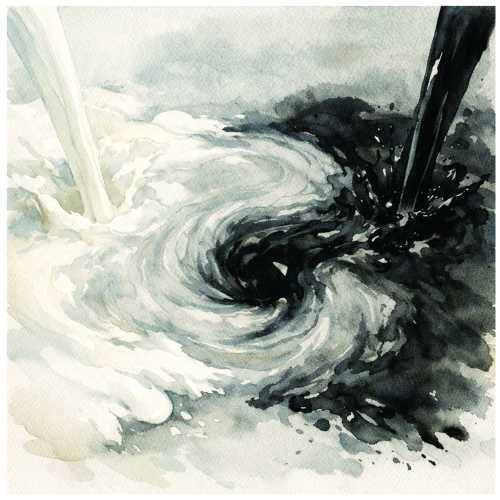
The color gray is created by mixing black into white.
グレー(gray)という色(いろ)は、白(しろ)に黒(くろ)を混(ま)ぜて生(う)まれる。
“Black” is already included in it.
そこにはすでに“黒(くろ)”が含(ふく)まれている。
Laws and rules are merely minimum standards created by humans.
法律(ほうりつ)やルール(rule)は、人間(にんげん)がつくった最低限(さいていげん)の基準(きじゅん)にすぎない。
Humans live as a part of nature. What is questioned is not “whether it is legal”, but a more fundamental sense.
人(ひと)は自然(しぜん)の一部(いちぶ)として生(い)きている。問(と)われるのは「合法(ごうほう)かどうか」ではなく、もっと根源的(こんげんてき)な感覚(かんかく)だ。
People of the past said, “Heaven is watching.” The sense of being watched, even if no one is looking.
昔(むかし)の人(ひと)は言(い)った。「お天道様(おてんとうさま)が見(み)ている」。誰(だれ)も見(み)ていなくても、見(み)られているという感覚(かんかく)。
In this way, people have faced their own conscience.
そうして人(ひと)は、自(みずか)らの良心(りょうしん)と向(む)き合(あ)ってきた。
The standard is simple. Do not do to others what you dislike being done to yourself.
基準(きじゅん)はシンプル(simple)だ。自分(じぶん)がされて嫌(いや)なことは、他人(たにん)にしない。
Even the Code of Hammurabi, known for “an eye for an eye”, was not originally meant to encourage revenge.
「目(め)には目(め)を」で知(し)られるハンムラビ(Hammurabi)法典(ほうてん)も、本来(ほんらい)は復讐(ふくしゅう)を促(うなが)すものではなかった。
It is a wisdom of restraint, meaning the same thing returns to oneself.
同(おな)じことが自分(じぶん)に返(かえ)るという抑制(よくせい)の知恵(ちえ)である。
Before rules and laws, we think about “whether it is right as a human being”. Shouldn’t we return to that axis?
ルール(rule)や法律(ほうりつ)の前(まえ)に、「人(ひと)として正(ただ)しいかどうか」を考(かんが)える。その軸(じく)に立(た)ち戻(もど)るべきではないだろうか。
This article is from the May 2026 issue of Hiragana Times.
この記事(きじ)は、月刊誌(げっかんし)『ひらがなタイムズ』2026年(ねん)5月号(がつごう)より掲載(けいさい)しています。
-
[Pros and Cons with Insight – April 2026 Issue]
How Should We Consider the ‘National Flag Destruction Crime Bill’?
「国旗(こっき)損壊罪(そんかいざい)法案(ほうあん)」をどう考(かんが)えるか Background | 背景(はいけい)The establishment of the ‘National Flag Destruction Crime Bill’, which punishes the act of intentionally destroying and insulting the national flag, is being aimed at.
国旗(こっき)を故意(こい)に損壊(そんかい)・侮辱(ぶじょく)する行為(こうい)を処罰(しょばつ)する「国旗損壊罪法案(こっきそんかいざいほうあん)」の成立(せいりつ)が目指(めざ)されている。
Over freedom of expression and so on, various opinions are being exchanged.
表現(ひょうげん)の自由(じゆう)などをめぐり、さまざまな意見(いけん)が交(か)わされている。
Pros | 賛成意見(さんせいいけん)The national flag is not a mere cloth. Its destruction is an insult to the whole country, and could shake the order of society.
国旗(こっき)は単(たん)なる布(ぬの)ではない。その損壊(そんかい)は国全体(くにぜんたい)への侮辱(ぶじょく)であり、社会(しゃかい)の秩序(ちつじょ)を揺(ゆ)るがしかねない。
Cons | 反対意見(はんたいいけん)National flag destruction is a form of political protest. Controlling it with punishment will chill freedom of expression.
国旗損壊(こっきそんかい)は政治的(せいじてき)抗議(こうぎ)の一形態(いちけいたい)。それを刑罰(けいばつ)で取(と)り締(し)まることは、表現(ひょうげん)の自由(じゆう)を萎縮(いしゅく)させる。
Insight | 洞察(どうさつ)In Japan, there is an atmosphere that feels hesitation in hoisting one’s own country’s national flag daily or incorporating it into clothes.
日本(にほん)では、自国(じこく)の国旗(こっき)を日常的(にちじょうてき)に掲(かか)げたり、衣服(いふく)に取(と)り入(い)れることに、ためらいを感(かん)じる空気(くうき)がある。
In its background, there is a reality that the Hinomaru has been imprinted negatively as a symbol of militarism after the war.
その背景(はいけい)には、戦後(せんご)日(ひ)の丸(まる)が軍国主義(ぐんこくしゅぎ)の象徴(しょうちょう)として否定的(ひていてき)に刷(す)り込(こ)まれてきた現実(げんじつ)がある。
When asked ‘What is the symbol of your country?’ in a foreign country, Japanese people who can talk with confidence are few.
外国(がいこく)で「あなたの国(くに)のシンボル(symbol)は?」と問(と)われた時(とき)、自信(じしん)をもって語(かた)れる日本人(にほんじん)は少(すく)ない。
Japan, since Jomon and Yayoi, even with people from overseas, has fostered a large-family-like sense of community based on land and blood relations.
日本(にほん)は、縄文(じょうもん)・弥生(やよい)以来(いらい)、渡来人(とらいじん)とも、土地(とち)と血縁(けつえん)を基盤(きばん)とした大家族的(だいかぞくてき)な共同体意識(きょうどうたいいしき)を育(はぐく)んできた。
Between the English ‘Nation’ and the Japanese ‘Kuni’, there is a difference in resonance, and ‘Ie’ is not a vessel called ‘house’.
英語(えいご)のNationと、日本語(にほんご)の「国(くに)」には、響(ひび)きの違(ちが)いがあり、「家(いえ)」とは、houseという器(うつわ)ではない。
‘Kokka’ contains a sense close to ‘Ie’ more than the frameworks called ‘nation’ and ‘country’.
「国家(こっか)」とは、nationやcountryという枠組(わくぐ)み以上(いじょう)に、「家(いえ)」に近(ちか)い感覚(かんかく)を含(ふく)んでいる。
Japan is the name of that one family, and means ‘Hinomoto’, a country that has been kept alive under the sun from generation to generation.
日本(にほん)はその一家(いっか)の名前(なまえ)であり、先祖代々(せんぞだいだい)太陽(たいよう)のもとで生(い)かされてきた国(くに)、「日(ひ)の本(もと)」を意味(いみ)する。
The Hinomaru is a family crest in which the sun, which is the symbol of Japan, is expressed.
日(ひ)の丸(まる)は、日本(にほん)のシンボル(symbol)である太陽(たいよう)が表(あらわ)された家紋(かもん)である。
Even if opinions do not match among family members, one does not put a cross on the family crest.
たとえ家族間(かぞくかん)で意見(いけん)が合(あ)わずとも、家紋(かもん)にバツ(cross)は付(つ)けない。
Our family crest must not be a weak thing that should be protected by punishment.
我々(われわれ)の家紋(かもん)は罰(ばつ)で守(まも)られるべき弱(よわ)いものであってはならない。
We want it to be a strong family crest that continues to be talked about.
語(かた)られ続(つづ)ける強(つよ)い家紋(かもん)でありたい。
And that family crest tells that all members who can have gratitude and pride in it are a family.
そしてその家紋(かもん)は、そこに感謝(かんしゃ)と誇(ほこ)りを持(も)てる全員(ぜんいん)が家族(かぞく)であると語(かた)っている。
This article is from the April 2026 issue of Hiragana Times.
この記事(きじ)は、月刊誌(げっかんし)『ひらがなタイムズ』2026年(ねん)4月号(がつごう)より掲載(けいさい)しています。
-
[Pros and Cons with Insight – March 2026 Issue]
Politics and Religion — Faith as a Machine
政治(せいじ)と宗教(しゅうきょう)――装置(そうち)にされた信仰(しんこう)
Background | 背景(はいけい)In Japan, a structure has long existed in which politicians backed by the bloc votes of religious organizations hold national office.
日本(にほん)では、宗教団体(しゅうきょうだんたい)の組織票(そしきひょう)に支(ささ)えられた政治家(せいじか)が国政(こくせい)を担(にな)う構造(こうぞう)が長年(ながねん)続(つづ)いている。
Despite the principle of separation of religion and state, the sense that this is abnormal is fading.
政教分離(せいきょうぶんり)の原則(げんそく)がありながら、それを異常(いじょう)と感(かん)じる感覚(かんかく)すら失(うしな)われつつある。
Pros | 賛成意見(さんせいいけん)Participating in politics based on one’s faith is a legitimate right in a democracy.
信仰(しんこう)に基(もと)づいて政治(せいじ)に参加(さんか)することは、民主主義(みんしゅしゅぎ)における正当(せいとう)な権利(けんり)だ。
Cons | 反対意見(はんたいいけん)When politicians are elected through bloc votes directed by religious organizations, it can hardly be called the will of the people.
宗教団体(しゅうきょうだんたい)の指示(しじ)による組織票(そしきひょう)で選(えら)ばれた政治家(せいじか)が国政(こくせい)を担(にな)うことは、民意(みんい)とは呼(よ)べない。
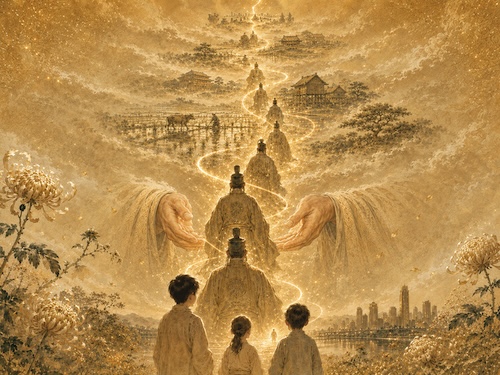
Insight | 洞察(どうさつ)Japan was once a nation where prayer and governance were one and the same.
日本(にほん)はかつて、祈(いの)りと政(まつりごと)が一体(いったい)の国(くに)であった。
The Emperor was a “priestly sovereign,” devoted to praying for the well-being of the people, who were called “Ōmitakara” — the great treasure of the nation.
天皇(てんのう)は「祭祀王(さいしおう)」として「大御宝(おおみたから)」と呼(よ)ばれた国民(こくみん)の安寧(あんねい)を祈(いの)る存在(そんざい)であった。
In time, Buddhism arrived from the continent — something akin to what we would now call MBA-style management methods.
やがて大陸(たいりく)から、今(いま)でいうMBA式(しき)の経営手法(けいえいしゅほう)のような仏教(ぶっきょう)がもたらされた。
The “CEO” of the era, Prince Shōtoku, established systems of law and rank, and governed the nation through Buddhist principles.
当時(とうじ)の「CEO」聖徳太子(しょうとくたいし)は、憲法(けんぽう)や階位(かいい)を整備(せいび)し、仏教(ぶっきょう)の理念(りねん)で国(くに)を治(おさ)めた。
Yet his ideals were gradually distorted by those who came to power after him.
しかし聖徳太子(しょうとくたいし)の理想(りそう)は、後(のち)の権力者(けんりょくしゃ)たちに歪(ゆが)められていった。
In the Nara period, branch temples called “Kokubunji” were established across the country with Tōdai-ji at the apex. Faith was transformed from something that saved the people into a machine that bred bureaucrats and fed the powerful.
奈良時代(ならじだい)、東大寺(とうだいじ)を頂点(ちょうてん)に全国(ぜんこく)へ国分寺(こくぶんじ)が配置(はいち)され、信仰(しんこう)は国民(こくみん)を救(すく)うものから官僚(かんりょう)を生(う)み権力(けんりょく)を肥(こ)やす装置(そうち)に変(か)わった。
Emperor Kanmu reset everything. He abandoned Nara and built a new capital in Kyoto.
桓武天皇(かんむてんのう)はすべてをリセット(reset)した。奈良(なら)を捨(す)て、京都(きょうと)に新(あら)たな都(みやこ)を築(きず)いた。
He then entrusted the restoration of faith to Saichō (Mt. Hiei) and Kūkai (Mt. Kōya).
そして最澄(さいちょう)(比叡山(ひえいざん))と空海(くうかい)(高野山(こうやさん))に信仰(しんこう)の立(た)て直(なお)しを託(たく)した。
The two revived Buddhism as a faith that nurtures the hearts of the people, and laid the foundation for Shinbutsu-shūgō — the harmonious coexistence of Japan’s native gods and Buddhist teachings.
二人(ふたり)は仏教(ぶっきょう)を国民(こくみん)の心(こころ)を支(ささ)える信仰(しんこう)へと蘇(よみがえ)らせ、神仏習合(しんぶつしゅうごう)の礎(いしずえ)を築(きず)いた。
The Heian capital endured for over 400 years. Japan, the world’s oldest nation, continues to this day thanks to the selfless decisions of its forebears.
平安京(へいあんきょう)は400年以上(ねんいじょう)続(つづ)いた。世界最古(せかいさいこ)の国家(こっか)・日本(にほん)は、先人(せんじん)たちの私心(ししん)なき英断(えいだん)で今日(こんにち)まで続(つづ)いている。
In the recent election, a political party backed by a religious organization suffered a major defeat. We hope for a Reiwa reset.
今回(こんかい)の選挙(せんきょ)で、宗教団体(しゅうきょうだんたい)を母体(ぼたい)とする政党(せいとう)が大敗(たいはい)した。令和(れいわ)のリセット(reset)を期待(きたい)したい。
This article is from the March 2026 issue of Hiragana Times.
この記事(きじ)は、月刊誌(げっかんし)『ひらがなタイムズ』2026年(ねん)3月号(がつごう)より掲載(けいさい)しています。
-
[Pros and Cons with Insights / 賛否と洞察 – February 2026 Issue]
Controversy Over Cabinet Official’s Nuclear Remarks
首相官邸幹部の「核保有発言」をめぐる論争
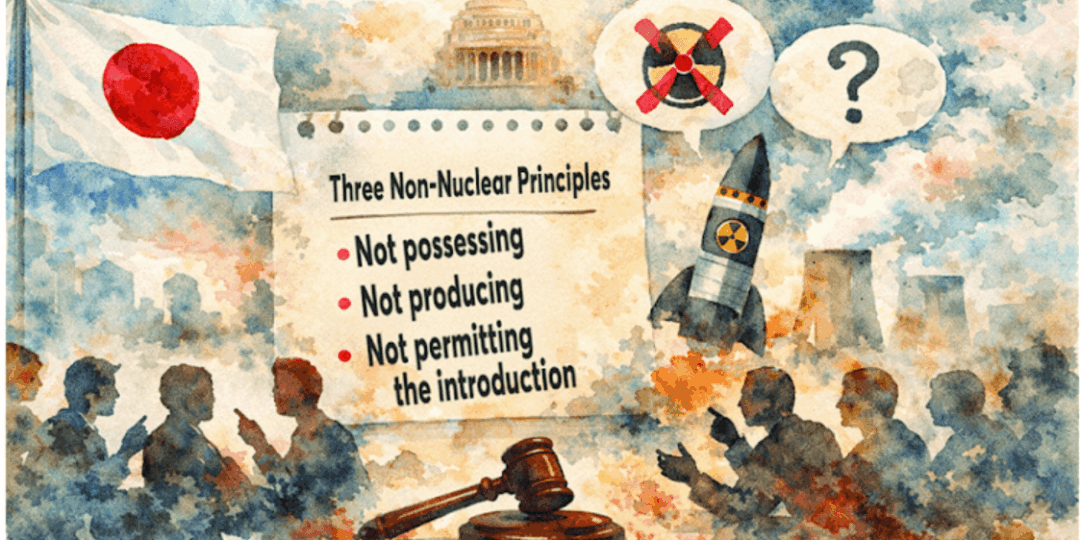
Background | 背景At the end of 2025, a Cabinet official stated that “Japan should also possess nuclear weapons,” triggering widespread controversy.
2025年末、首相官邸幹部が「日本も核を持つべきだ」と発言し、波紋を広げた。Debate over Japan’s “Three Non-Nuclear Principles” is resurfacing.
日本の「非核三原則」をめぐる議論が再燃している。Pros | 賛成意見As neighboring nuclear-armed countries strengthen their military presence, Japan should also possess nuclear weapons as a deterrent.
周辺の核保有国が軍事的存在感を強める中、日本も抑止力として核を持つべきだ。 Cons | 反対意見Japan, the only country to have suffered atomic bombings, has persuasive power precisely because it does not possess nuclear weapons. It should continue to uphold this stance.
唯一の被爆国・日本は、核を持たないからこそ説得力がある。その立場を守り続けるべきだ。 Insight | 洞察Nuclear weapons have long been described as “the ultimate deterrent.” But what about the reality?
核兵器は「究極の抑止力」と語られてきた。 だが現実はどうか。Israel, which possesses nuclear weapons, has come under missile attacks, while nuclear power Russia continues a war with no end in sight.
核を持つイスラエルはミサイル攻撃を受け、核大国ロシアは終わりの見えない戦争を続けている。Nuclear weapons may prevent full-scale war, but they have no power to prevent attacks themselves.
核は全面戦争を防ぐかもしれないが、攻撃そのものを防ぐ力はない。“Nuclear weapons ensure safety” is nothing more than a myth.
「核があれば安全」は神話にすぎない。The idea of believing in nuclear weapons as “ultimate power” is a form of monotheistic thinking.
核兵器を”究極の力”と信じる発想は、ある種の一神教的思考である。The idea of forcing others into submission through absolute power itself has generated conflict.
唯一絶対の力で相手を屈服させる――その発想自体が、争いを生み出してきた。In fact, many of the wars that continue today are rooted in clashes of monotheistic “justice.”
現に、今も続く戦争の多くは、一神教的な「正義」の衝突に根ざしている。The Japanese spiritual outlook, in which countless gods coexist, is different from such ways of thinking.
八百万の神々が共存する日本の精神は、そうした思考とは異なる。Is there no way to defend a nation without nuclear weapons?
Japan has a tradition of “softness overcoming strength.”
核を持たずに国を守る道はないのか。 日本には「柔よく剛を制す」の伝統がある。This country should have the potential to create technologies and philosophies that neutralize an opponent’s power.
力を無力化する技術や思想を生み出す可能性を、この国は持っているはずだ。A time will come when countries that have believed in nuclear weapons as the one absolute god realize that it was a demon.
核を唯一絶対の神と信じてきた国々が、それが悪魔だったと気づく時代が来る。At that time, it will be proven that the country that did not possess nuclear weapons was the wisest.
そのとき、核を持たなかった国こそが最も賢明だったことが証明される。
This article is from the February 2026 issue of Hiragana Times.
この記事は、月刊誌『ひらがなタイムズ』2026年2月号より掲載しています。
-
[Pros and Cons with Insights / 賛否と洞察] – January 2026 Issue]
Legalization of the Use of Old Surnames, Yet the Controversy over ‘Selective Separate Surnames’ Continues
旧姓使用が法制化、それでも続く「選択的夫婦別姓」論争
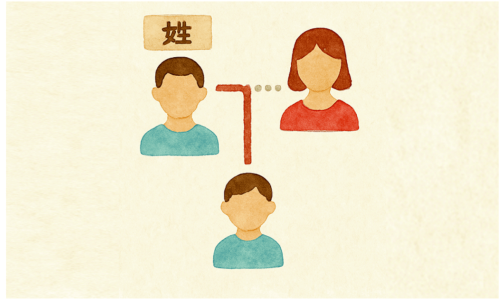
Background | 背景The government has solidified a policy to proceed with the ‘legalization of the use of old surnames,’ expanding the scope where surnames before marriage (old surnames) can be used officially.
政府は、結婚前の姓(旧姓)を公的に使用できる範囲を広げる「旧姓使用の法制化」を進める方針を固めた。Due to this, the outlook is that practical inconveniences accompanying the change of surname will be significantly alleviated.
これにより、改姓に伴う実務的な不便は大幅に軽減される見通しである。Even so, the movement seeking the legalization of ‘selective separate surnames’ is still deep-rooted.
それでもなお「選択的夫婦別姓」の法制化を求める動きはなお根強い。Pros | 賛成意見The surname is the core of an individual’s identity, and the freedom to maintain it should be recognized.
姓は個人のアイデンティティの核であり、それを維持する自由が認められるべきだ。 Cons | 反対意見If practical inconveniences are resolved, there is no need to change Japan’s tradition that ‘a family takes one surname’.
実務上の不便が解消されるなら、日本の「家族は一つの姓を名乗る」という伝統を改める必要はない。 Insight | 洞察Regarding the surname systems of the world, it tends to be talked about as if ‘separate surnames are the mainstream’.
世界の姓制度は「別姓が主流」のように語られがちである。However, in the West, although there is indeed no legal compulsion, a culture where couples and families take the same surname has taken root.
しかし欧米では法の強制こそないものの、夫婦や家族が同じ姓を名乗る文化が根づいている。On the other hand, the fact that separate surnames for couples are common in the Muslim sphere and the Chinese sphere is not due to egalitarian thought, but is because historically, women have not been regarded as beings who “enter” the husband’s family line.
一方、ムスリム圏や中国圏で夫婦別姓が一般的なのは、平等思想によるものではなく、歴史的に女性が夫の家系に“入る”存在とは見なされてこなかったためである。A clear patrilineal structure continues, where the wife is not permitted to take the husband’s surname, and furthermore, the child’s surname is fixed to the paternal line.
妻は夫の姓を名乗ることを許されず、さらに子どもの姓は父系に固定されるという明確な父系中心の構造が続いている。In other words, ‘separate surnames’ in the world are not necessarily a symbol of equality or respect for the individual.
つまり、世界における「別姓」は必ずしも平等や個人尊重の象徴とは限らない。The meaning contained in the surname goes beyond the problem of the system, and is a theme that re-questions the values themselves of Japanese society, asking ‘what is a family’.
姓に込められた意味は制度の問題を超え、「家族とは何か」という日本社会の価値観そのものを問い直すテーマである。
This article is from the January 2026 issue of Hiragana Times.
この記事は、月刊誌『ひらがなタイムズ』2026年1月号より掲載しています。
-
[Pros and Cons with Insights / 賛否と洞察] – December 2025 Issue]
Considering Prime Minister Takaichi’s “Abandoning Work-Life Balance” Statement
高市総理の「ワーク・ライフ・バランスを捨てる」発言を考える
🟤 Background | 背景
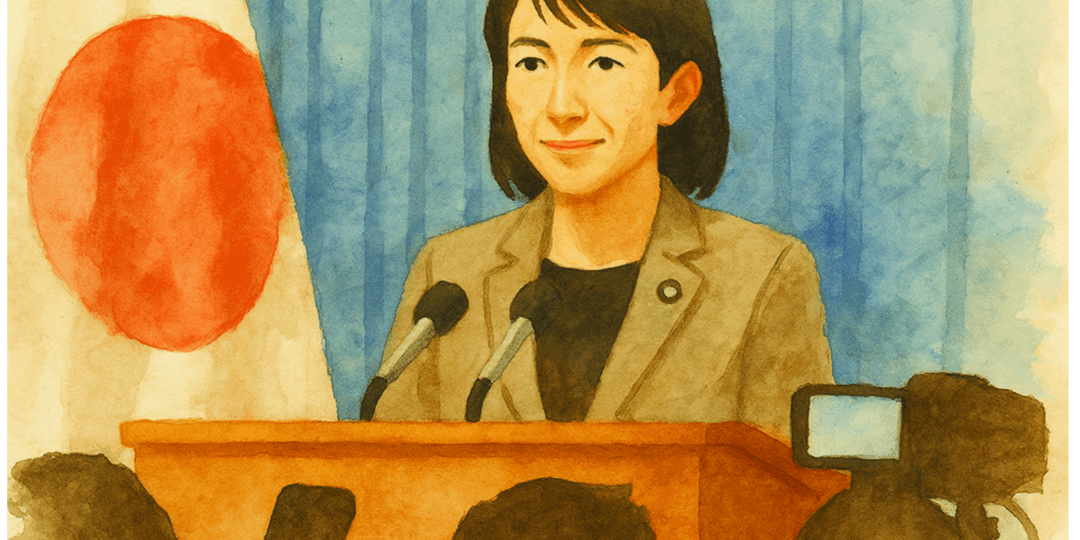
Sanae Takaichi was inaugurated as Japan’s first female Prime Minister.
高市早苗氏が日本初の女性総理大臣に就任した。
In her speech upon assuming the LDP presidency, she made a statement that she would “abandon the phrase called ‘work-life balance’,” and it caused a stir.
自民党総裁就任時の挨拶で「ワーク・ライフ・バランスという言葉を捨てる」と発言し、波紋を呼んだ。
While there is praise calling them ‘strong words,’ criticisms that ‘it is anachronistic’ are also being raised.
「力強い言葉」との称賛がある一方、「時代錯誤だ」との批判も上がっている。
🟢Pros | 賛成意見
A strong resolve of doing one’s utmost for the nation and the people is conveyed.
国家と国民のために全力を尽くすという強い覚悟が伝わる。
🔴 Cons | 反対意見
It could lead to the ‘justification of long work hours’ or the ‘glorification of overwork’.
「長時間労働の正当化」や「働きすぎの美徳化」に結びつきかねない。
🔍 Insight | 洞察
In the first place, does the phrase called ‘work-life balance’ really fit the Japanese view of work?
そもそも、「ワーク・ライフ・バランス」という言葉は、日本人的な仕事観に合っているのだろうか?
At the very point of separating ‘work’ and ‘life,’ one receives a somewhat un-Japanese impression.
ワーク(仕事)とライフ(人生)を分けている時点で、やや日本的でない印象を受ける。
What is interesting is the view of labor in the Christian sphere. In the Bible, a ‘punishment’ is defined for men and women respectively.
興味深いのは、キリスト教圏での労働観だ。聖書では男女それぞれに「罰」が定義されている。
For men, it is the pain of working, and for women, the labor pains of childbirth.
男性には働く辛さ、女性には出産の陣痛である。
In English, these two are both called ‘labor’ (work / birth pains).
英語でこの二つは、ともにlabor(労働・陣痛)と呼ばれる。
In other words, working is a ‘punishment’.
つまり、働くことは「罰」なのだ。
On the other hand, in Japan, working is not a punishment.
一方、日本では働くことは罰ではない。
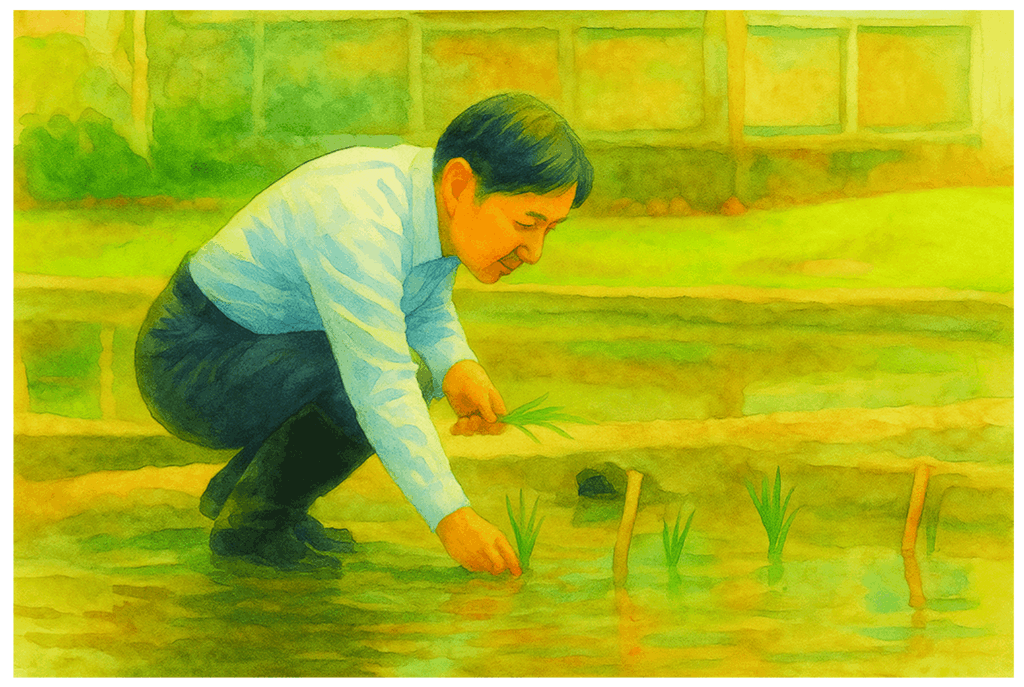
His Majesty the Emperor also personally engages every year in the rice paddies of the Imperial Palace, from planting to harvesting.
天皇陛下も毎年、皇居の水田で田植えから収穫まで自ら携わられる。
Labor has been regarded as something noble.
労働は尊いものとされてきた。
Of course, one must not fall into ‘rice work’ (work just for eating).
もちろん、ライスワーク(食べるための仕事)に陥ってはいけない。
However, by loving one’s current job as a life-work, ‘work-life balance’ should be sublimated into ‘work-as-life’.
しかし、ライフワークとして今の仕事を愛することで、「ワーク・ライフ・バランス」は「ワーク・アズ・ライフ」へと昇華されるはずだ。
This article is from the December 2025 issue of Hiragana Times.
この記事は、月刊誌『ひらがなタイムズ』2025年12月号より掲載しています。