-
Japan Style – Hiragana Times September 2026 issue
Listen to the Audio:
Japanese Minka—Homes Alive with Nature
自然の中で生きている日本民家
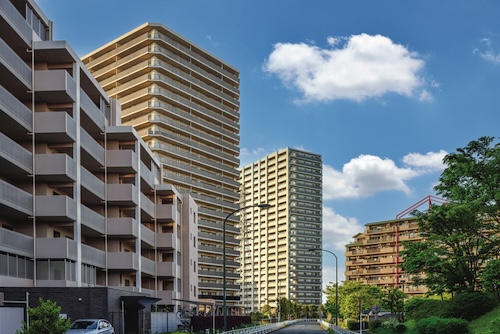
In Western homes, rooms are divided according to their purpose: a living room, a dining room, a bedroom, a guest room. The apartments and houses built in Japanese cities today are basically the same. Looking only at these modern homes, Japanese housing already seems not so different from its Western counterpart.
欧米の住宅では、リビングルーム、ダイニングルーム、ベッドルーム、ゲストルームと、それぞれの目的に合わせて部屋が分けられています。現在の日本の都市に建つマンションや一戸建ても、基本的には同じです。こうした現代の住宅だけを見れば、日本の住まいは、すでに欧米のものと、それほど変わらないように見えます。
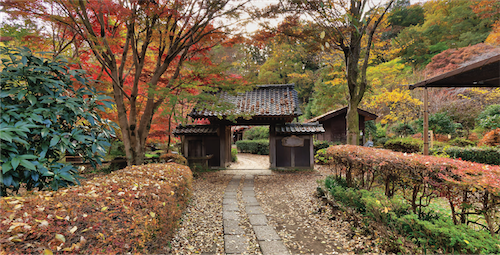
But beyond the cities, you encounter houses of a completely different kind: minka, traditional Japanese folk houses. In an old minka, a single large space is partitioned as needed by shōji and fusuma. Open them, and the rooms connect into one again, and the wind blows through the entire house.
けれど、都市を離れ、地方へ足を運ぶと、まったく異なる家、「民家」に出合います。日本の古い民家では、一つの大きな空間を、障子や襖によって必要に応じて仕切ります。それらを開ければ、部屋は再び一つにつながり、風が家じゅうを吹き抜けます。
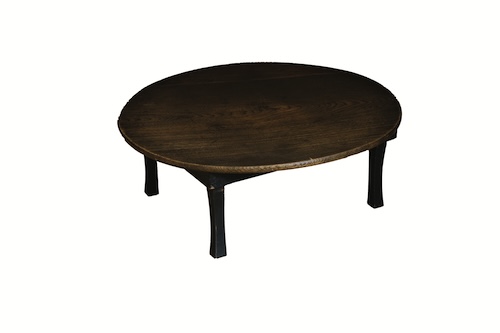
Place a chabudai or individual dining trays there, set out the meal, and it becomes a dining room. Clear the meal away, arrange the cushions, set a single flower in a vase, and it becomes a guest room. Bring out the zaisu floor chairs, let the family lean back and relax as they please, and it becomes a living room. Then, when night falls and the futons are laid out, the same space turns into a bedroom.
そこにちゃぶ台や膳を置き、食事を並べれば、食堂になります。食事を片づけ、座布団を整え、花を一輪生ければ、客間になります。座椅子を出し、家族が思い思いにもたれてくつろげば、居間になります。そして夜になり、布団を敷けば、同じ空間が寝室へと変わります。
A single space changes into different rooms according to the time of day—morning or night—the occasion, whether an ordinary day or a celebration, and the people who gather there, whether family or guests. In a Japanese house, the rooms do not determine how people live; rather, the space itself changes to suit the life of those who dwell there.
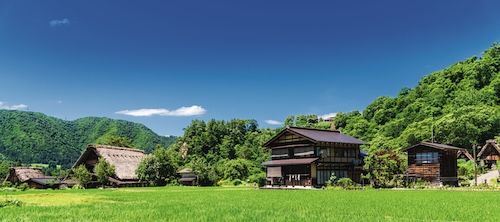
一つの空間が、朝と夜、日常と祝いの日、家族と客人によって、異なる部屋へと姿を変えるのです。日本の家では、部屋が人の暮らしを決めるのではなく、人の営みに合わせて、空間の方が変化します。Gifu Prefecture’s Shirakawa-gō and Toyama Prefecture’s Gokayama are home to gasshō-zukuri houses with enormous thatched roofs, which convey the life of the Japanese people to this day. Elsewhere too—in Nagano, Yamanashi, Tōhoku, Shikoku, Kyūshū, and across the Japanese archipelago—many minka handed down from before the Edo period still remain.
岐阜県の白川郷や富山県の五箇山には、そのような日本人の暮らしを今に伝える、巨大な茅葺き屋根を持つ合掌造りの家が残されています。そのほかにも、長野、山梨、東北、四国、九州など、日本列島の各地には、江戸時代以前から受け継がれてきた民家が数多く残されています。These are not merely buildings that have grown old. They carry a culture of the ie—the home that goes beyond the building itself—nurtured since the distant Jōmon period amid the nature of this archipelago and the lives of its people. Born from the wood, earth, bamboo, straw, grass, and stone of the land, the house, as the wind of that land passes freely through it, in time becomes a part of nature itself. And into the house soak the stories of the generations who lived and carried life onward there, layer upon layer.
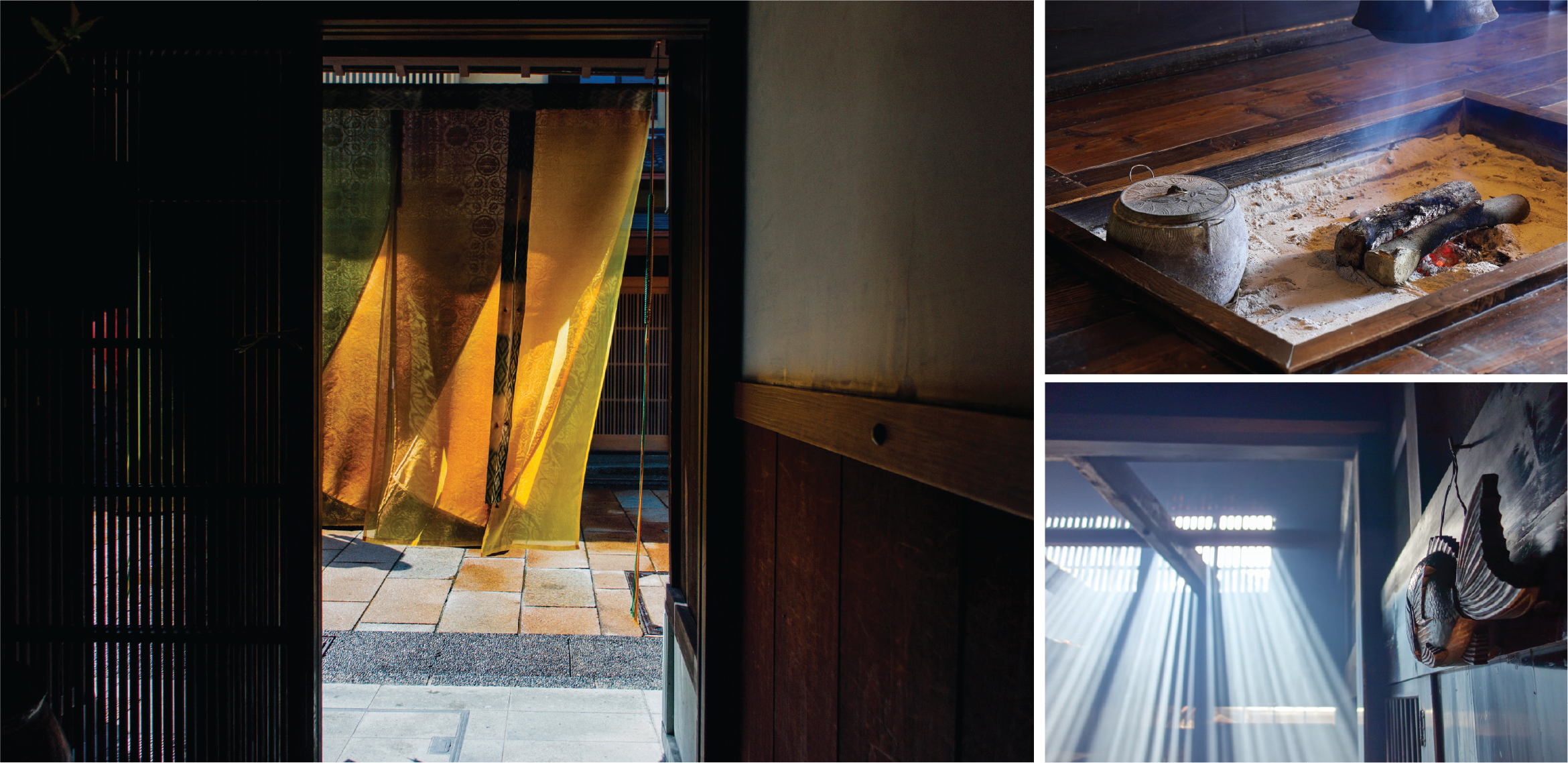
それらは、単に古くなった建物ではありません。はるか縄文の昔から、この列島の自然と人々の営みの中で育まれてきた、建物を超えた「家」という文化です。土地の木や土、竹、藁、草、石から生まれた家は、その土地の風が自由に行き交う中で、やがて自然の一部となっていきます。そして、家には、そこで暮らし、命をつないできた人々の物語が、幾重にも染み込んでいきます。Using the materials of the land, gathering around a fire, living while feeling the shifts of nature—the wind, the light, the heat and the cold—at its root lies a way of thinking that continues from the Jōmon era: to live as one with nature. That thinking can still be seen throughout these minka.
土地にある素材を用い、火を囲んで人が集い、風や光、暑さや寒さといった自然の移ろいを感じながら暮らす――その根本には、自然と一体となって生きる、縄文の時代から続く思想があります。その思想は、こうした民家の随所に今も見ることができます。
The Wind and Ki That Move Through the House
家の中を巡る風と氣
In an age without air conditioners or ventilation fans, without refrigerators or running water, how a house was oriented, where the wind was let through, and how the fire, the water, the food, and the washing areas were arranged were matters of the utmost importance in sustaining daily life.
エアコンも換気扇も、冷蔵庫も水道もなかった時代、家をどちらに向け、どこから風を通し、火や水、食べ物や水回りをどのように配置するかは、暮らしを支える極めて重要な問題でした。Even today, many people take an interest in feng shui and try to bring the flow of ki within their homes into balance through the placement of furniture and belongings. But for the minka of old, the circulation of wind was no mere matter of luck or charm. If the wind did not pass through, smells settled in. If the smoke did not escape, the air grew hard to breathe. If water spoiled, if food rotted, sickness entered the house. The circulation of wind was, quite simply, a matter of the family’s life.
現代でも、風水に関心を持ち、家具や物の置き場所によって家の中の気の流れを整えようとする人は少なくありません。けれど、かつての民家にとって、風の巡りは、縁起かつぎの話ではありませんでした。風が通らなければ、匂いがこもる。煙が抜けなければ、息が詰まる。水が傷み、食べ物が腐れば、病が家に入る。風の巡りは、そのまま家族の命の問題だったのです。
And to bring this flow of wind into order was, at the same time, to bring into order the ki that moves through the house. This was nothing less than the face of a house—and it came to be called kasō. Indeed, when you step into an old minka that still stands today, you may feel a quiet sense of comfort—as though the air itself were somehow clearer and your mind naturally settled. That is not nostalgia. The wisdom cultivated through living in harmony with nature still breathes throughout the house.
そして、この風の流れを整えることは、そのまま、家の中を巡る「氣」を整えることでもありました。つまりそれこそが、その家の表情――「家相」となりました。実際、今も残る古民家に足を踏み入れると、どこか空気が澄み、心が静かに落ち着くような心地よさを感じることがあります。それは、懐かしさではありません。自然とともに暮らすために培われた知恵が、家全体に、今も息づいているのです。
The Entrance That Divides Inside from Outside
内と外を分ける玄関
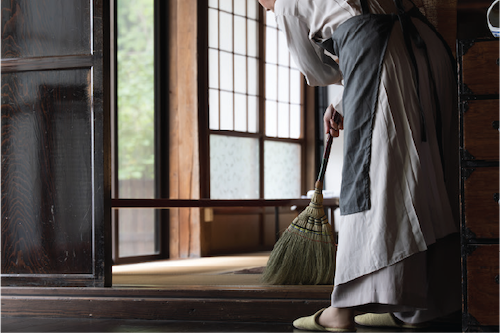
To make the house a place where the heart can rest and one can live in peace, people valued, above all, keeping the inside of the house pure.
家を心が休まり、安心して過ごせる場所にするために、人々は何よりも、家の中を清浄に保つことを大切にしてきました。
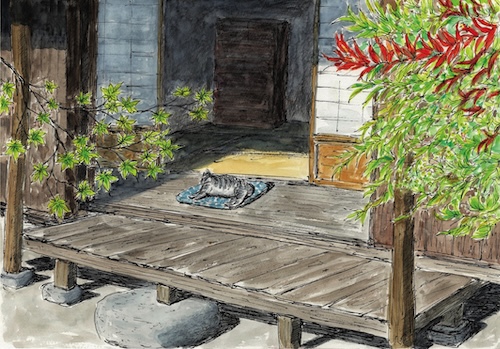
Removing one’s shoes before entering a Japanese home is a widely known custom. In Japanese, to go inside a house is agaru—”to rise.” In English, one “enters” a house; in Japanese, one “rises” into it.
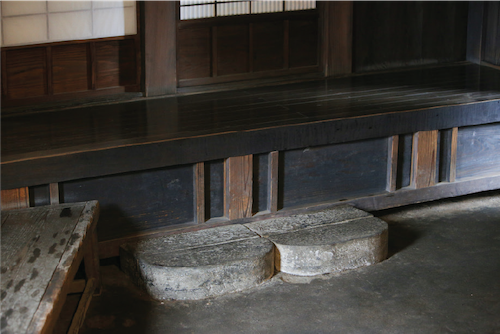
日本の家で靴を脱ぐことは、広く知られた習慣です。日本語では、家の中へ入ることを、「家に上がる」と言います。英語では、家に「入る」という意味の enter が使われますが、日本語では「上がる」のです。In a traditional Japanese house, even once you have crossed the doorway of the genkan—the entrance— you are not yet within the house. First there is the doma, an earthen-floored space you may enter with your shoes still on, and beyond it a step called the agari-kamachi. There you remove your footwear and rise up onto the floor.
伝統的な日本家屋では、玄関の戸口を越えても、そこはまだ家の内とは言えません。まず、土足のまま入ることのできる土間があり、その先に「上がり框」と呼ばれる段差があります。
This step is not merely a difference in height. It serves the practical role of keeping earth and dust from reaching the inner house, and at the same time it is the house’s kekkai—a sacred boundary dividing the outside world from the pure interior where people rest their bodies.
この段差は、単なる建築上の高低差ではありません。土や埃を家の奥へ入りにくくする実際的な役割を持つと同時に、外の世界と、人が身体を休める清浄な内側とを分ける、家の結界でもありました。Moreover, even before reaching this entrance, there are gates and hedges. Passing through the gate, crossing the garden, entering the entrance hall, removing one’s footwear and rising to the floor—from outside to inside, people move gradually deeper into the house, crossing one boundary after another.
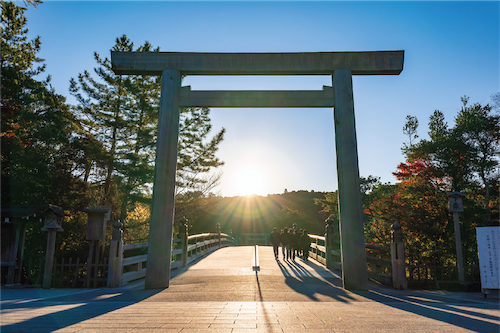
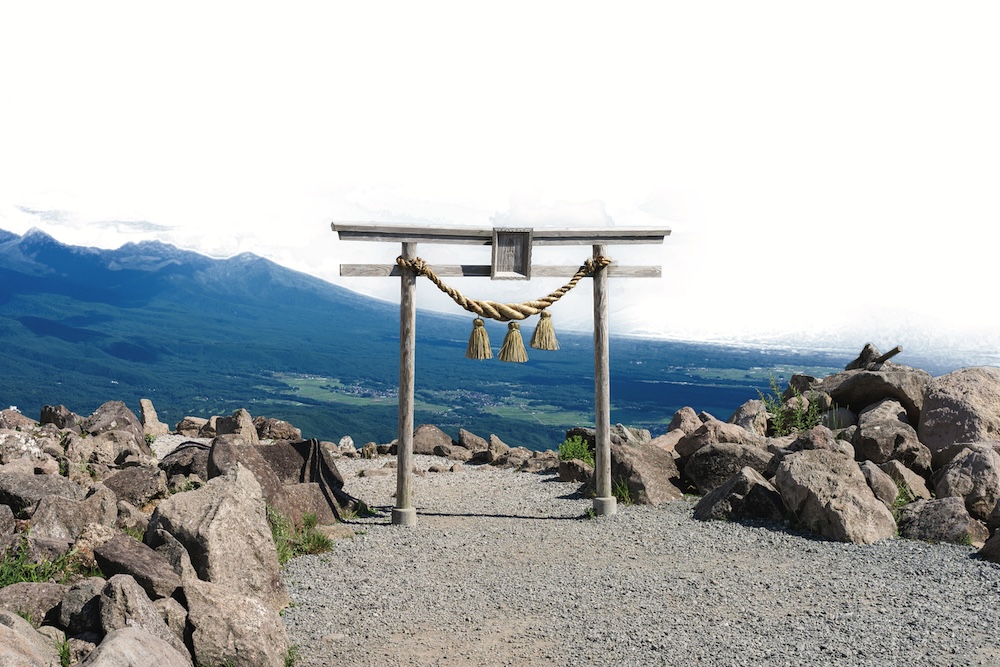
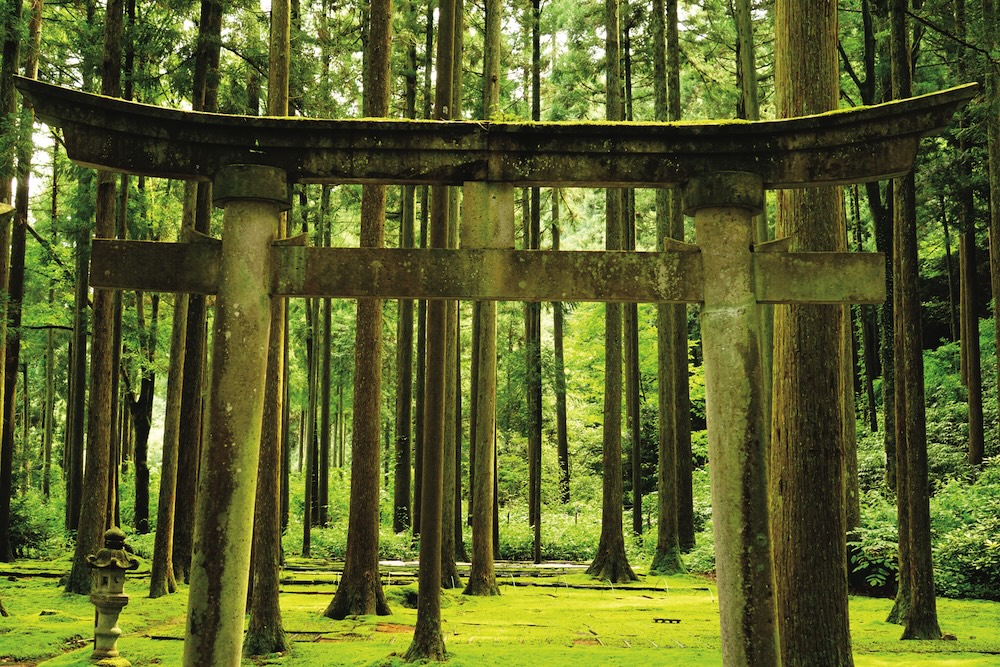
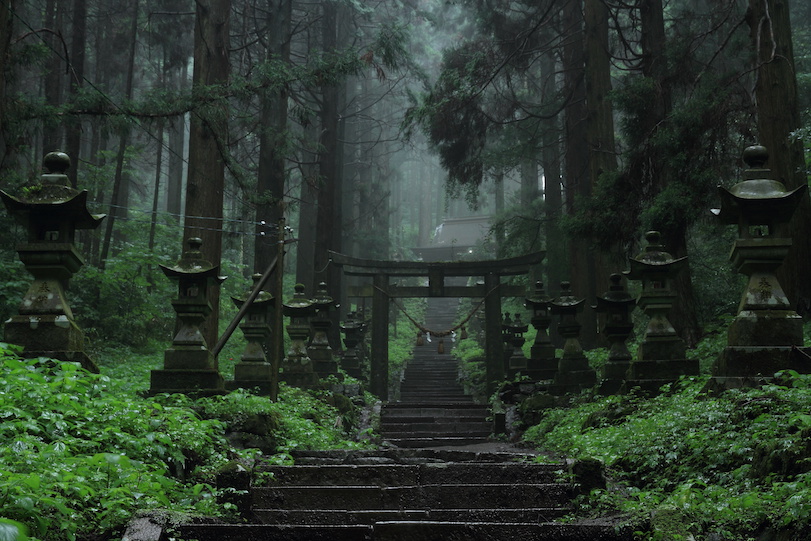
さらに、この玄関へたどり着くまでにも、門や垣根があります。門をくぐり、庭を通り、玄関に入り、履物を脱いで床へ上がる。人は外から内へ、いくつもの結界を越えながら、少しずつ家の奥へと入っていきます。This structure echoes that of a shrine. The torii gate is a boundary dividing the outer world from the sacred precinct where the deity dwells. At some shrines, one passes through many torii before reaching the main hall. Crossing the boundaries one by one, a person draws gradually away from the outside world, settles body and mind, and approaches the pure place.
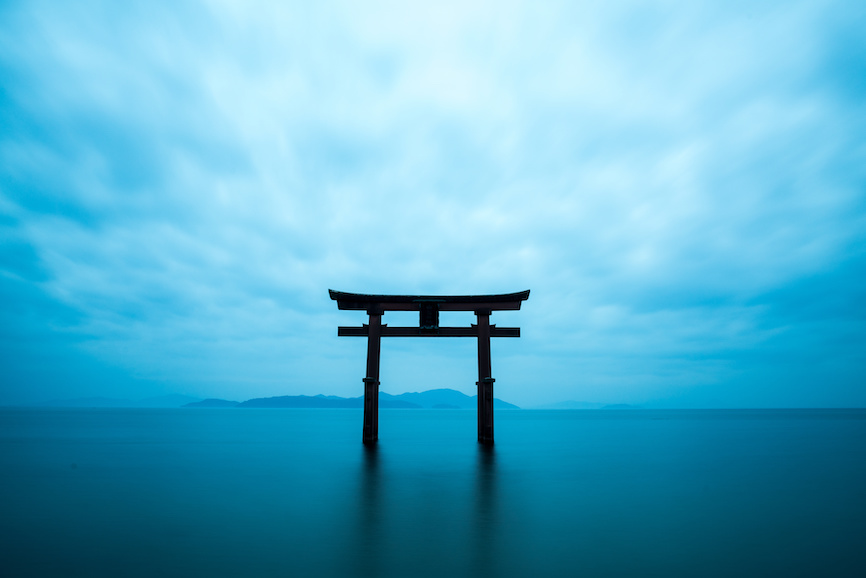
この構造は、神社にも通じています。鳥居は、神社の外の世界と、神さまが鎮まる神域とを分ける結界です。神社によっては、本殿へ向かうまでに何本もの鳥居をくぐります。人は結界を一つずつ越えながら、外の世界から次第に離れ、心身を整え、清浄な場所へと近づいていくのです。The house is much the same. The gate, the garden, the genkan, the doma, and the agari-kamachi form a series of boundaries between outside and inside, guarding the sanctuary deep within the home.
家も、それとよく似ています。門、庭、玄関、土間、上がり框――それぞれが、外と内を分ける段階的な結界となり、家の奥にある聖域を守っていたのです。
The Shrine Within the House
家の中にある神社
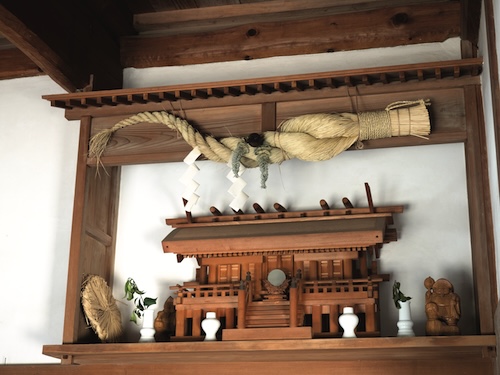
At the heart of that sanctuary stand the kamidana and the butsudan. These enshrine the deities believed to protect the land and household, as well as deceased family members and ancestors. Each morning, offering water and rice and quietly pressing one’s palms together—that sight was, in the households of old Japan, an utterly ordinary part of daily life.
その聖域の中心には、神棚や仏壇があります。そこには、その土地や家を守る神々、そして亡くなった家族や祖先が祀られています。毎朝、水や米を供え、静かに手を合わせる。その光景は、かつての日本の家庭では、ごく当たり前の日常でした。
To cleanse the house, to set out food, to settle one’s heart—and wait. The character for this, matsuru, “to enshrine,” is said to also hold the meaning “to wait.” This was itself the act of keeping the house ready, so that the gods and the ancestors could be welcomed at any time.
家を清め、食べ物を供え、心を整えて、待つ。この「祀る」という字には、「待つ」という意味が含まれているともいわれます。それは、神さまや祖先を、いつでも迎えられるようにしておく行為そのものでした。In other words, the Japanese house is not a place where people alone live. It was a place to welcome in the gods and the ancestors together. This is why the Japanese words “to protect the house”—ie wo mamoru—do not mean simply to protect a building. They carry within them the meaning of protecting the connection of life handed down from the ancestors, passing it on to children and grandchildren, and supporting the community of that land.
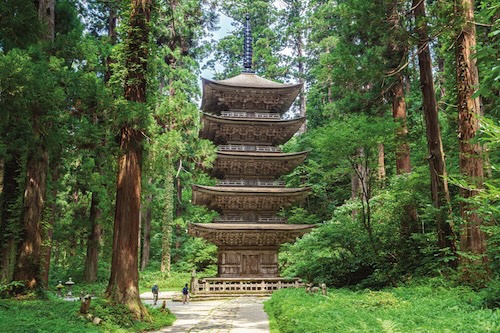
つまり、日本の家は、人だけが暮らす場所ではありません。神々も、祖先も、ともに迎え入れる場所だったのです。だからこそ、日本語の「家を守る」という言葉は、単に建物を守ることを意味しません。そこには、祖先から受け継がれてきた命のつながりを守り、子や孫へと受け渡し、その土地の共同体を支えていくという意味まで含まれています。The five-storied pagoda of a Buddhist temple is built by stacking, from the ground up, earth, water, fire, wind, and sky—the five elements that form the universe. Each of the five carries a spiritual meaning as well. In the old Japanese language, just as 八重 is read yae and 九重 kokonoe, 五重—”five layers”—can be read ie. For the Japanese, the ie was a small universe, where heaven, earth, and the people between them are joined.
仏教の寺院に立つ五重塔は、下から、地・水・火・風・空――宇宙をかたちづくる五つの要素を積み上げた建造物です。この五つには、精神的な意味も重ねられています。大和言葉では、「八重」をヤエ、「九重」をココノエと読むように、「五重」は「イエ」と読めます。日本人にとっての「イエ」とは、天と地と人が結ばれる小さな宇宙だったのです。
Such ie gathered—sharing fields, sharing water, sharing festivals—and became the village. Villages, bound together, became the country. In Japanese, the word for “nation” is kokka—written “country” and “ie.” A kokka is one great ie, formed of many ie bound together. In its very origin, it differs from the Western “nation state,” which is joined by contract.
そうした家々が寄り合い、田を分かち、水を分かち、祭りをともにして「村」となる。その村々が結ばれて、「国」となる。日本語では、国のことを「国家」――「国」の「家」と書きます。国家とは、家々が結束してできた、一つの大きな家。契約によって結ばれる西洋の “nation state” とは、その成り立ちを異にするものです。Without the ie, there is no self. Without the village, there is no self. Without the country, there is no self. For the Japanese, the ie was the very root of one’s being.
家がなければ、自分は存在しない。村がなければ、自分は存在しない。国がなければ、自分は存在しない。「家」は、日本人にとって、自分という存在の根そのものでした。Continue Reading in Hiragana Times
続きを読む — ひらがなタイムズ 本誌へ
Digital PackagesRead and listen in your browser — available in bundles.誌面と音声を、パッケージでご利用いただけます。More From Hiragana Times
Join the Hiragana Times Discord Community — Free!Connect with readers worldwide — free, open, and always welcoming.世界の読者とつながる、無料のDiscordコミュニティへようこそ。
Online Japanese lessons, run by Hiragana Times.One month free for Hiragana Times subscribers.ひらがなタイムズ定期購読者は、1ヶ月無料でご受講いただけます。 -
Japan Style – Hiragana Times August 2026 issue
Listen to the Audio:
Japan: A Nation Built By Matsuri
「まつり」で作られた国家、日本
The Matsuri That Governed A Nation | 国を治めた「まつり」
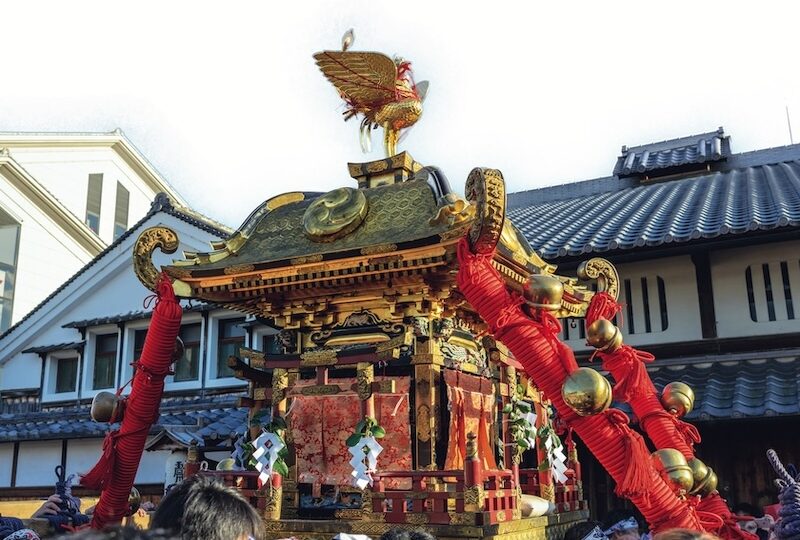
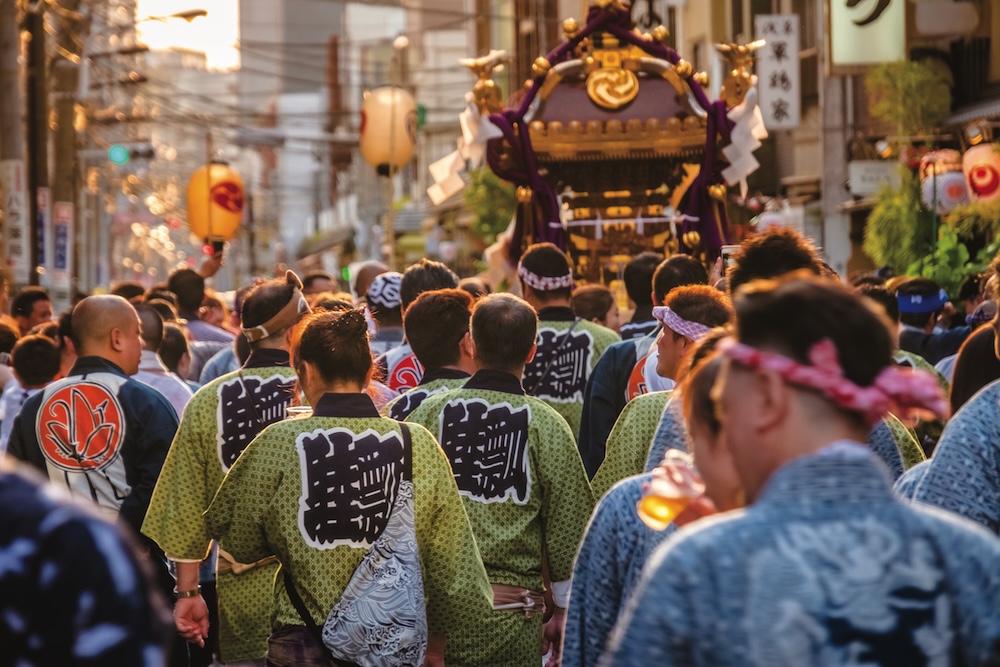
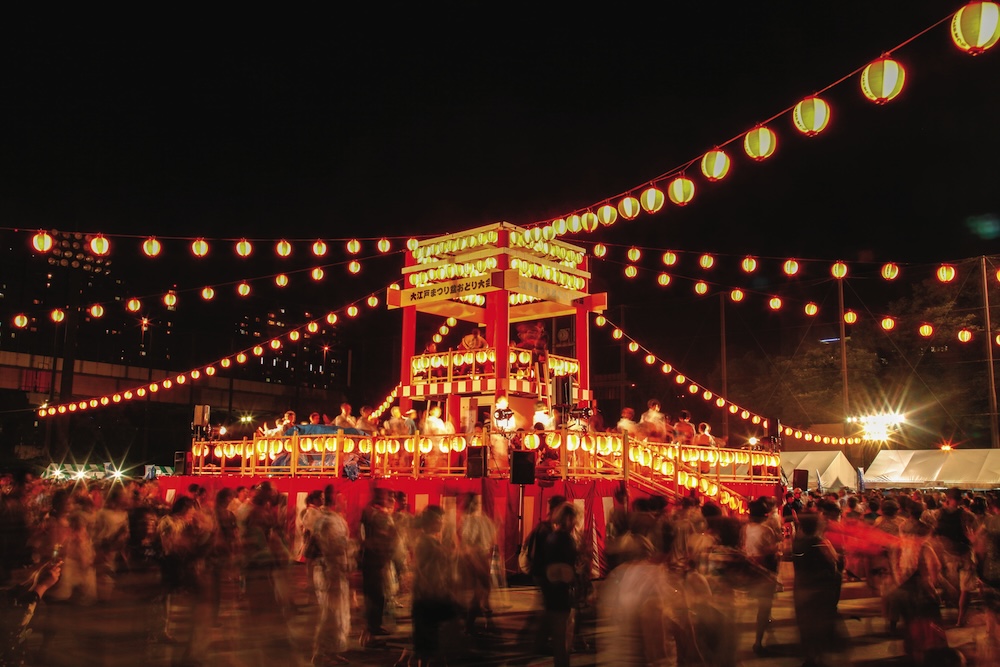
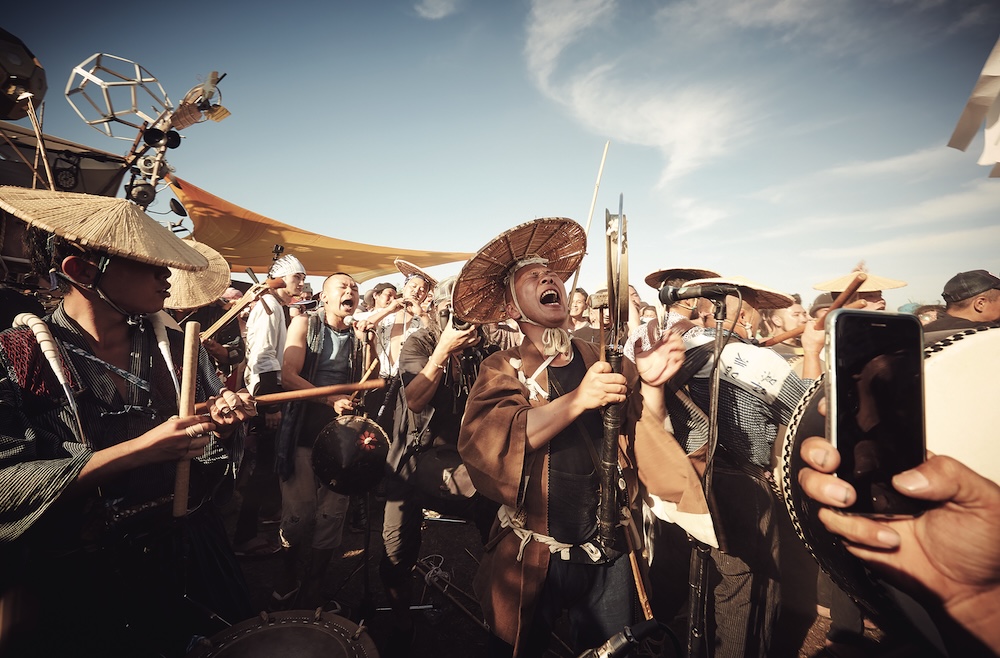
When summer comes, you encounter matsuri all across the islands. Not only in the rural villages where old traditions linger. Even in the heart of Tokyo, fue and taiko ring out, spirited chants echo between the towers, and mikoshi surge into the great crossings. These are no fading remnants. They are living traditions, whose roots reach back into the distant past.
夏になると、日本列島各地で祭りに出合います。古い伝統が残る地方の村だけではありません。首都・東京の真ん中でさえ、笛と太鼓が鳴り響き、威勢のいい掛け声が、ビルの谷間にこだまし、神輿が大きな交差点に繰り出します。それは、消えゆく名残ではありません。今も生きつづける伝統であり、その源は、はるか太古へとつながっています。Visitors from abroad turn their cameras to the scene and ask: “What exactly is a matsuri?” “How long has it been going on?” Yet the Japanese themselves no longer even hold the question. For those born in Japan, the matsuri was always there, before they were old enough to wonder. Before they knew it, it was woven into the calendar; like an internal clock, their hearts quicken at the sound of the taiko when summer comes. The “why” never arises. And yet, somewhere within, they sense that it is no mere “event.”
外国から訪れた人は、その光景にカメラを向け、問いかけます。「祭りとは、いったい何?」「いつから続いているの?」けれど日本人自身は、もはや、その問いすら持っていません。日本に生まれた者にとって、祭りは、物心つく前からそこにありました。気がつけば、一年のカレンダーに組み込まれ、体内時計のように、夏が来れば太鼓の音に胸が高鳴ります。そこに「なぜ」が浮かぶことはありません。それでいて、それが単なる「イベント」ではないことは、心のどこかで感じています。In Japanese, to govern a nation is called matsurigoto—written with characters meaning “to govern,” yet rooted in the word matsuri. Long before democracy or capitalism, matsuri was the very system that governed regions and bound the nation together. Through matsuri, people were turned back toward the way they were meant to face, shared their prayers, and became “neighbors” once more.
日本語では、国を治めることを「政」と呼びます。「政治」とは、「まつりごと」で「治める」こと。つまり、「まつり」は、民主主義や資本主義のはるか以前から、地域を治め、国をまとめてきた仕組みでした。祭りにより、人々は本来向くべき方へと立ち返り、祈りを分かち合い、ふたたび「隣人」に戻ります。Today, most nations run on democracy—choosing representatives by election, deciding their course by majority vote—and on capitalism, competing for prosperity in the market. As a result, the modern world breeds division and conflict. Welcoming the gods, binding people to people, making a region one—this article traces the true meaning held within matsuri.
いま、多くの国は、選挙で代表を選び、多数決で道を決める民主主義や、市場で豊かさを競う資本主義で動いています。その結果、現代の世界は、分断と対立を生んでいます。神を迎え、人と人を結び、地域をひとつにする——「まつり」に込められた、本当の意味をたどります。When Kami, Kimi, Omi, and Tami Become One|カミ・キミ・オミ・タミが、一つになる
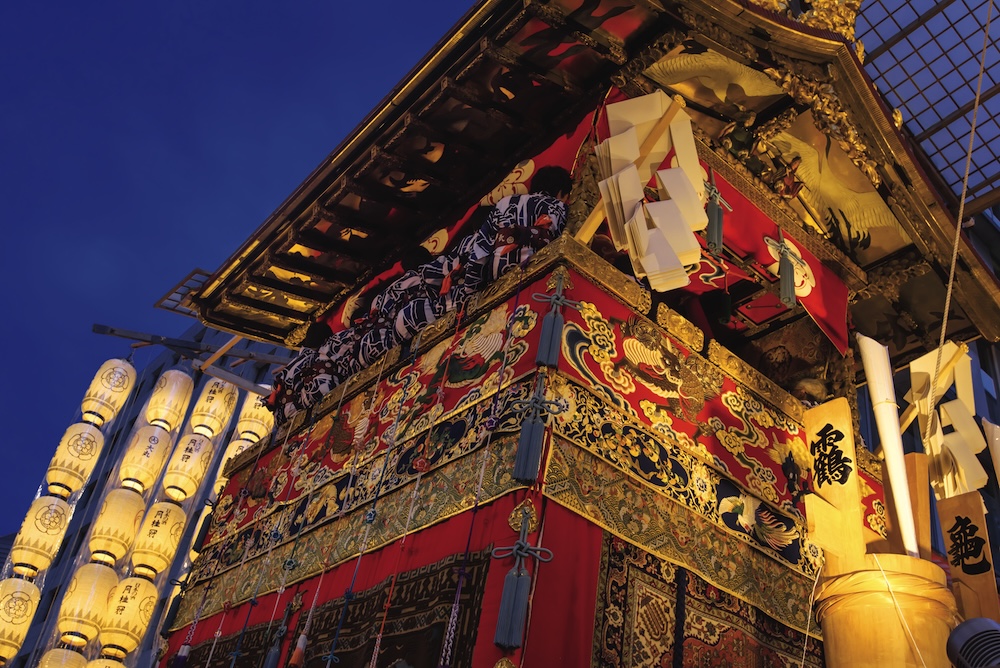
Just how many matsuri are there in Japan? The best known are the “Three Great Matsuri of Japan”—the Gion Matsuri in Kyoto, the Tenjin Matsuri in Osaka, and the Kanda Matsuri in Tokyo. Each region, too, has its own “three great matsuri.” In Tōhoku: the Aomori Nebuta, the Akita Kantō, and the Sendai Tanabata. In Tokyo: the Kanda, the Sanja, and the Sannō. In Kyoto: the Gion, the Jidai, and the Aoi. And in every corner of the country are matsuri of striking character, each mirroring the temperament of its land—Tokushima’s Awa Odori, Osaka’s Danjiri, and more.
日本には、いったいどれだけの祭りがあるのでしょう。よく知られているのは、「日本三大祭り」と呼ばれる三つ——京都の祇園祭、大阪の天神祭、東京の神田祭です。地方にも、それぞれの「三大祭り」があります。東北なら、青森ねぶた祭り、秋田竿燈まつり、仙台七夕まつり。東京なら、神田祭、三社祭、山王祭。京都なら、祇園祭、時代祭、葵祭。さらに、徳島の阿波踊り、大阪のだんじり祭りのように、土地の気性をそのまま映した、大きく個性的な祭りも各地にあります。Add to these the matsuri of unnamed little villages, and the number is beyond anyone’s counting. From the great to the small, they are like countless power plants scattered across the Japanese islands. Each time summer returns, the matsuri of every region stir to life and generate energy. Each one beats like a heart, sending that energy coursing into every corner of the country. And so the islands pulse with countless matsuri, their beating swelling into a single surge, until the land becomes one great living body.
そこに、名前さえ知られていない小さな村の祭りまで加えれば、その数は、もう誰にも数えられません。大きな祭りから、小さな祭りまで。それは、日本列島の全土に点在する、無数の発電所のようです。夏が訪れるたび、各地の祭りが動きだし、エネルギーを生み出します。それぞれの祭りが心臓のように脈を打ち、そのエネルギーを国の隅々までめぐらせていきます。そうして日本列島は、無数の祭りで脈打ち、その鼓動がうねりとなって、ひとつの大きな体になるのです。Every matsuri has changed its form with region and era. Yet most are held with a jinja—a Shinto shrine—at their center. The jinja is the wellspring of Shinto. And the essence of Shinto lies in this: in mountains and rivers, in sea and wind, in sun and moon, the divine reveals itself in countless forms—the yaoyorozu no kami, the eight million gods. And through them, the heart turns toward the one source that lies beyond, toward kami itself.
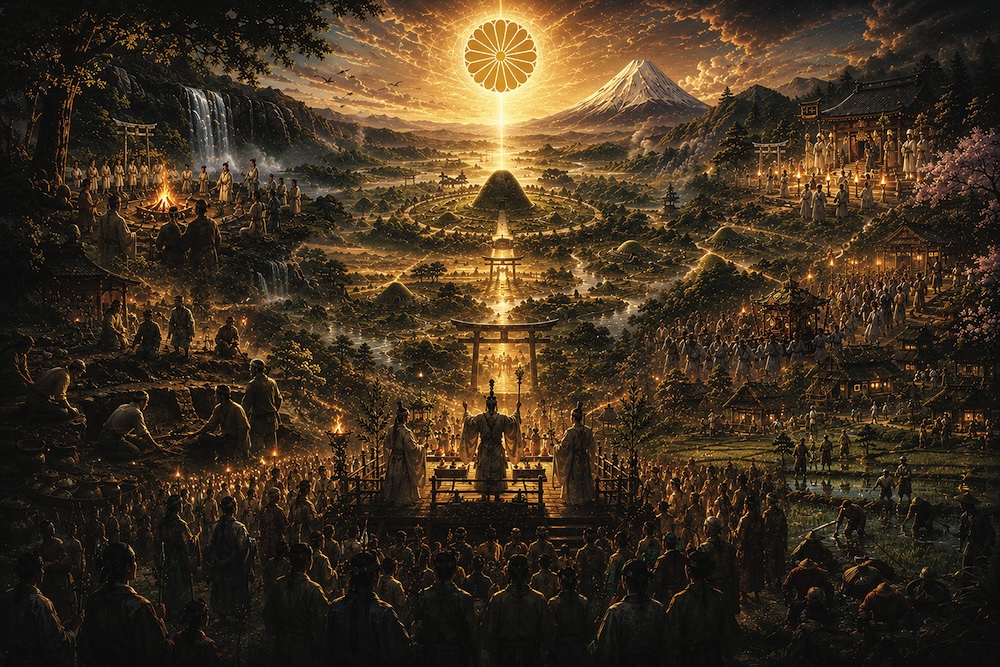
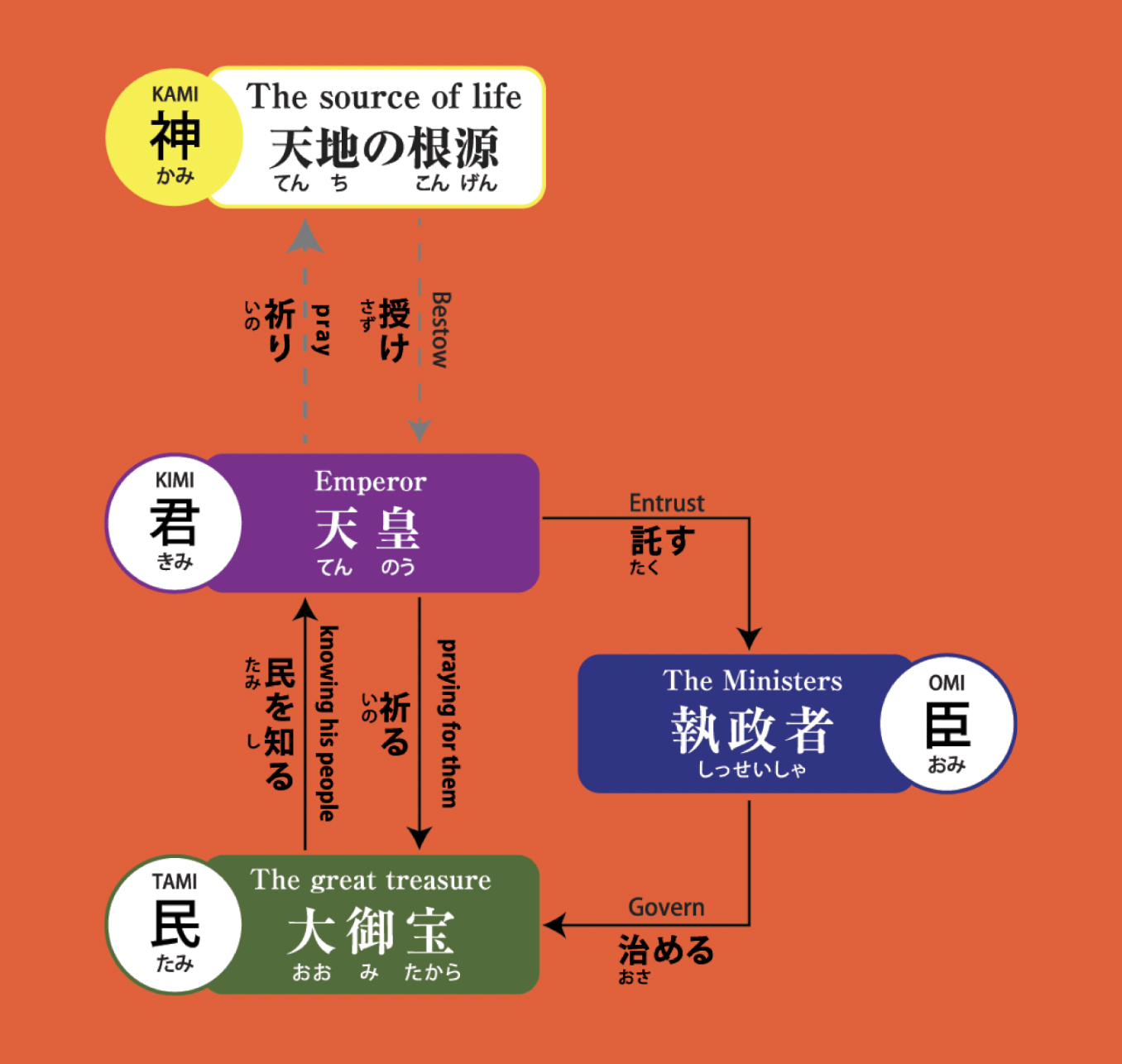
どの祭りも、地域や時代によって形を変えてきました。けれど、その多くは、神社を中心に営まれています。神社は、神道のよりどころ。その神道の本質は、山や川、海や風、太陽や月に宿る神々——八百万の神々を通して、その奥にある生命の根源、すなわち「カミ」へと、心を向けることにあります。People surrendered themselves to the nature where kami dwells, sensing the way things are, revealed within it. How a human being ought to be; how one should set oneself right. Through nature, they kept asking after the will of kami. And there was one who received that divine will on behalf of all. This was the kimi. And there was one who gave that received will form within the real world of society. This was the omi. What all of it reached toward was the peace of the tami—the people, once called ōmitakara, “the great treasure.” This, precisely, was the matsurigoto of ancient Japan.
「カミ」が宿る自然に身を委ね、そこに現れる理を感じ取る。人としてのあるべき姿、自らをどう整えるべきか。自然を通して、「カミ」の意思を問いつづけます。その「神意」を、代表して受け取る存在がいました。それが「キミ」です。そして、受け取られた神意を、現実の社会の中で形にしていく者がいました。それが「オミ」です。その営みが向かう先にあるのは、「大御宝」と呼ばれる「タミ」の安寧——これこそが、古代日本の「政」なのです。From kami to kimi, from kimi to omi—this flow of matsurigoto is at last tied together, within the daily life of the tami, as matsuri. Kimi, omi, and tami alike turn to face kami, offering prayer and gratitude. In that moment, kami, kimi, omi, and tami become one—in matsuri.
「カミ(神)」から「キミ(君)」へ、「キミ(君)」から「オミ(臣)」へ——その「政」の流れは、やがて「タミ(民)」の暮らしの中で、「祭り」として結ばれます。キミもオミもタミも、カミに向き合い、祈り、感謝を捧げる。そのとき、カミ・キミ・オミ・タミは、「まつり」で一つになります。Ten Thousand Years of Kimi|「キミ」がいた、一万年
Today, it feels natural to read kimi (君) as the emperor. But in ages past, the kimi was not a single person. All across the Japanese islands were kimi—the chiefs who governed each community.
「キミ(君)」は、いまでは、「天皇」と重ねて読むのが自然でしょう。けれど、かつての「キミ」は、一人ではありませんでした。日本列島の各地に、それぞれの共同体を治める長、「キミ」がいたのです。Their presence reaches all the way back to the distant Jōmon age. At settlement sites of the Jōmon period (roughly 16,000 years ago to around the 4th century BCE), where people settled on the same land for thousands of years, archaeologists have found burials set apart from the rest—graves thought to belong to the chiefs. As the ages passed, that presence took visible form in the kofun, the great burial mounds: more than 160,000 of them, found across the land from Tōhoku in the north to Kyushu in the south. They are proof that kimi truly existed, in region after region. And the one who stood above all these kimi and bound the whole nation together was the ōkimi, the great kimi—who would become the emperor.
その姿は、はるか縄文の昔にまでさかのぼります。同じ土地に何千年も定住した縄文時代(約1万6000年前〜紀元前4世紀ごろ)の集落跡には、ほかとは扱いの異なる、長のものと思われる埋葬の跡が確認されています。やがて時代が下ると、その姿は、北は東北から南は九州まで、各地で確認されている、16万基を超える古墳となって現れます。それは、土地土地に「キミ」が確かに在ったことの証です。そして、その「キミ」たちの上に立ち、国全体を束ねたのが、「大君」——のちの天皇でした。In Japanese, the character used for kimi is not only 君 but also 公—ōyake, “the public.” A kimi was one who existed not for watakushi, the private self, but for ōyake, the public good. That ancient sense still lives on, even now, within the words themselves.
また、日本語で「キミ」に充てられる漢字は、「君」のほかに、「公」もあります。キミとは、私のためではなく、公のために在る存在。そうした古代からの感覚が、いまも言葉の中に残されているのです。Tracing this history and these ritual sites, we find that in Japan, for more than ten thousand years, society was built through matsuri—both governance and worship—an act that bound nature to people, people to people, and confirmed the path a community should take. In old Japan, politics and worship were one and the same. Japan, in other words, was a land of saisei itchi—the unity of worship and governance.
こうした歴史や祭祀の遺跡をたどると、日本では一万年以上も前から、自然と人を結び、人と人を結び、共同体の進むべき方向を確かめる営み——「まつり(政・祭り)」を通じて、社会が築かれてきたことがわかります。かつての日本では、政治と祭りは一つであった。つまり、日本は「祭政一致」の国だったのです。Continue Reading in Hiragana Times
続きを読む — Hiragana Times 本誌へ
Digital PackagesRead and listen in your browser — available in bundles.誌面と音声を、パッケージでご利用いただけます。 -
Listen to the Audio:
Koshien — Where Baseball Became “Yakyu”
甲子園 —— ベースボールが「野球」になった場所
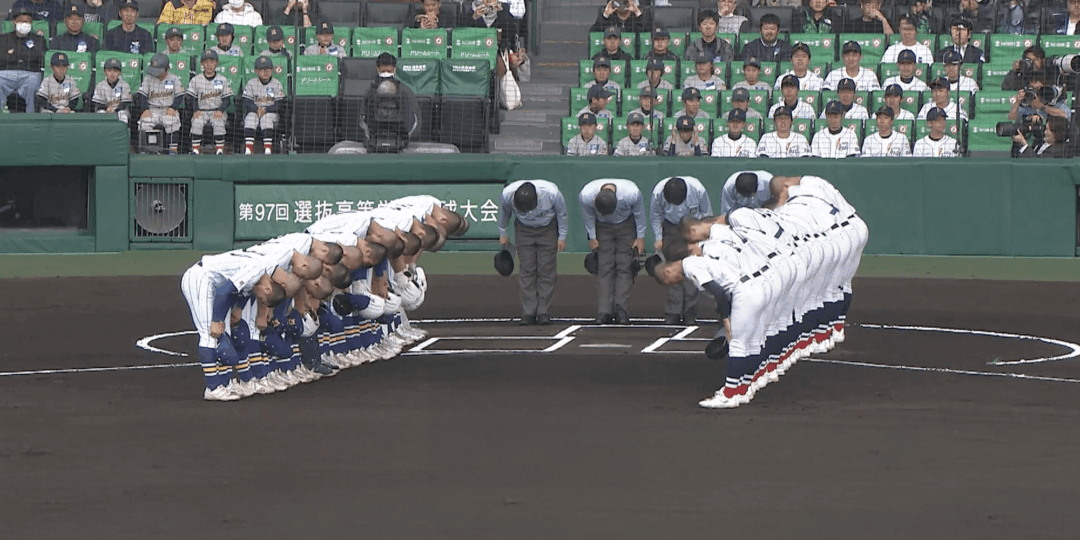
Born in America, baseball crossed the ocean to Japan, where it was transformed into “Yakyu.” It evolved into a unique culture, layered not only with physical skills but with respect, unyielding effort, and compassion for one’s teammates. As a symbol of this evolution, there is a stage that has been giving birth to stories for over a century. That stage is “Koshien.”
アメリカで誕生したベースボールは、日本に渡り「野球」となりました。技術だけでなく、礼や努力、仲間を思う心が重ねられ、独自の文化へと育っていきました。その象徴として、100年以上にわたり物語を生み続けてきた舞台があります。それが「甲子園」です。The “Apparatus” That Made Japanese Baseball the Best in the World | 日本野球を世界一にした「装置」
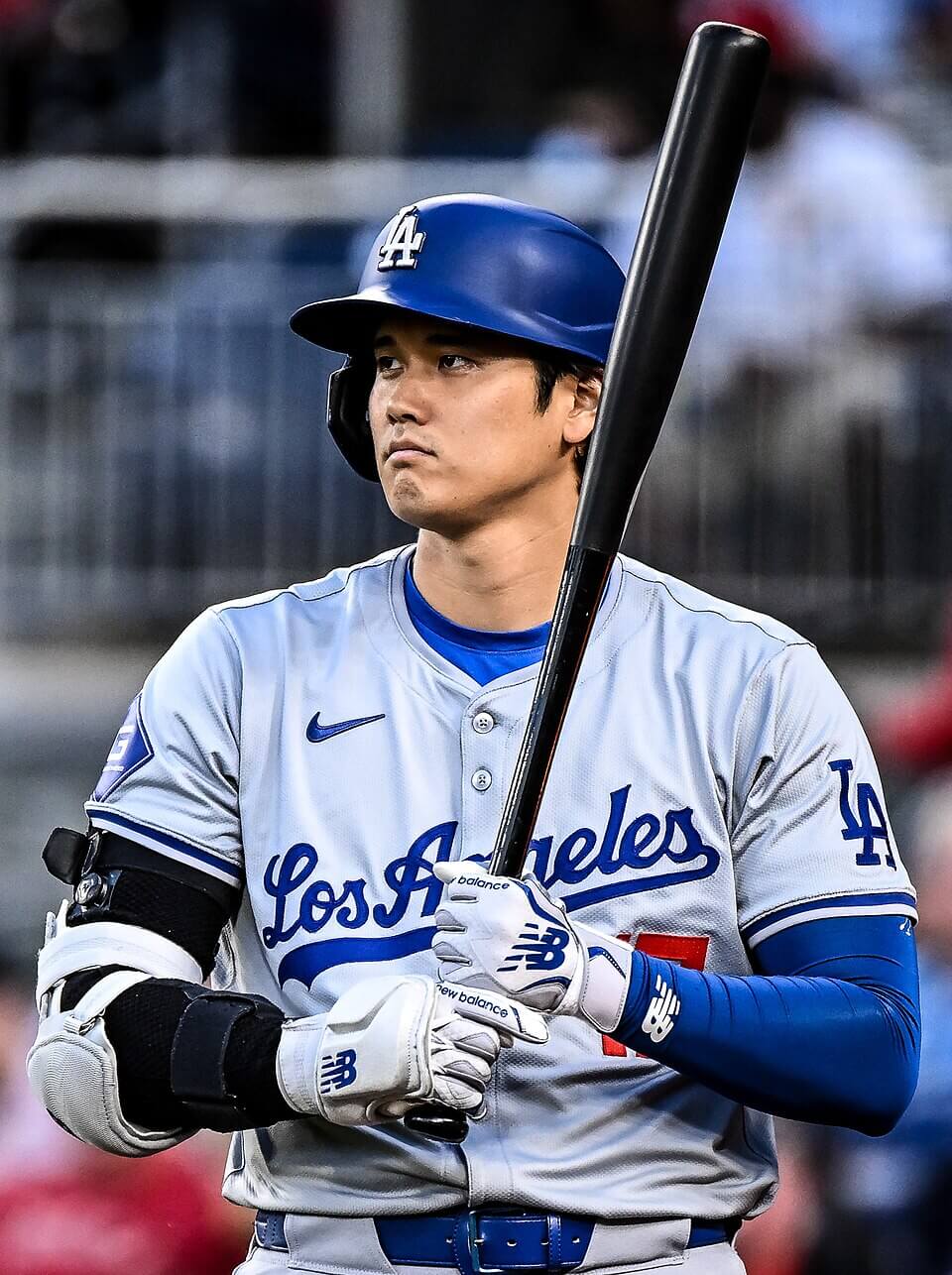
In recent years, Japanese players thriving in Major League Baseball have garnered global attention. Shohei Ohtani, in particular, continues to rewrite the very conventions of the sport as a “two-way” player—excelling as both a pitcher and a hitter. But why are Japanese players so highly valued in America, the birthplace of baseball? Where were their athleticism and skills nurtured, and by what spirit were they guided?
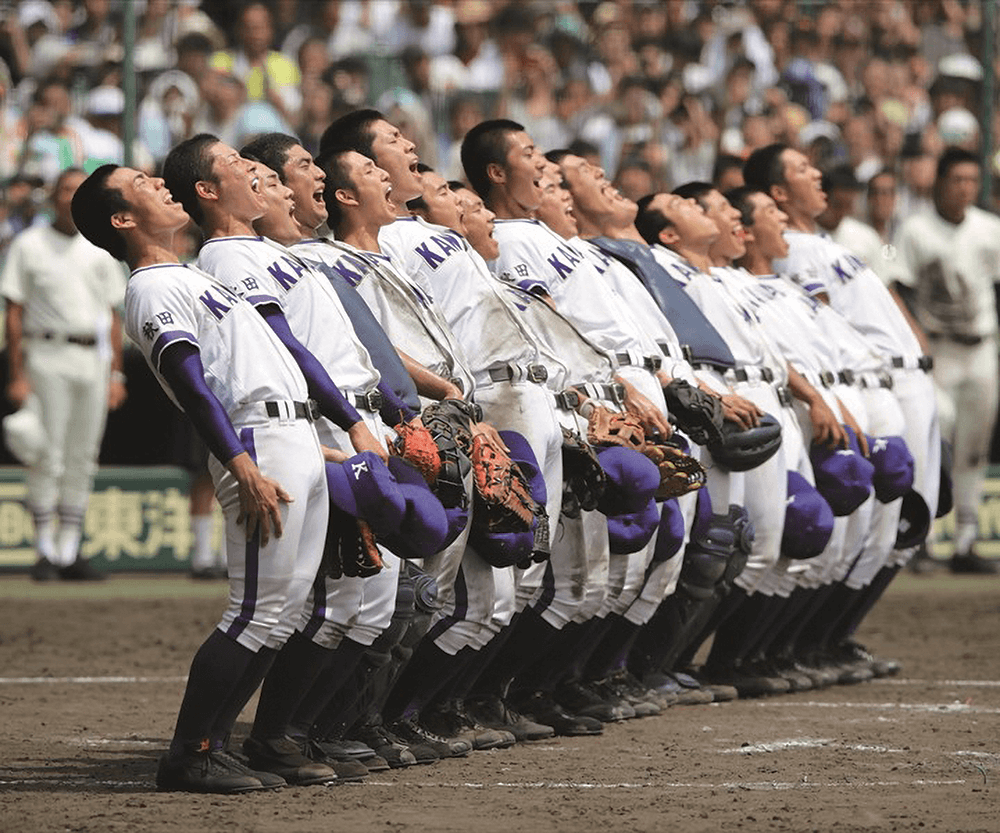
近年、アメリカ・メジャーリーグで活躍する日本人選手が、世界の注目を集めています。中でも大谷翔平は、投手と打者を両立する「二刀流」で、野球の常識そのものを塗り替え続けています。では、なぜ日本の選手たちは、野球の本場アメリカで、これほどまでに高く評価されるのでしょうか。彼らの身体能力や技術は、どこで育まれ、どのような精神性に導かれてきたのでしょうか。Of course, it goes without saying that their exceptional individual effort and talent are what yield these results. Yet, the force that has underpinned that effort and driven players as a clear, definitive goal is Koshien. It is the stage dreamed of by everyone, from elementary school children just starting the game to high schoolers aiming to turn pro. When people hear “Koshien,” they envision the stadium; and to say “I played at Koshien” signifies that one has competed in the National High School Baseball Championship.
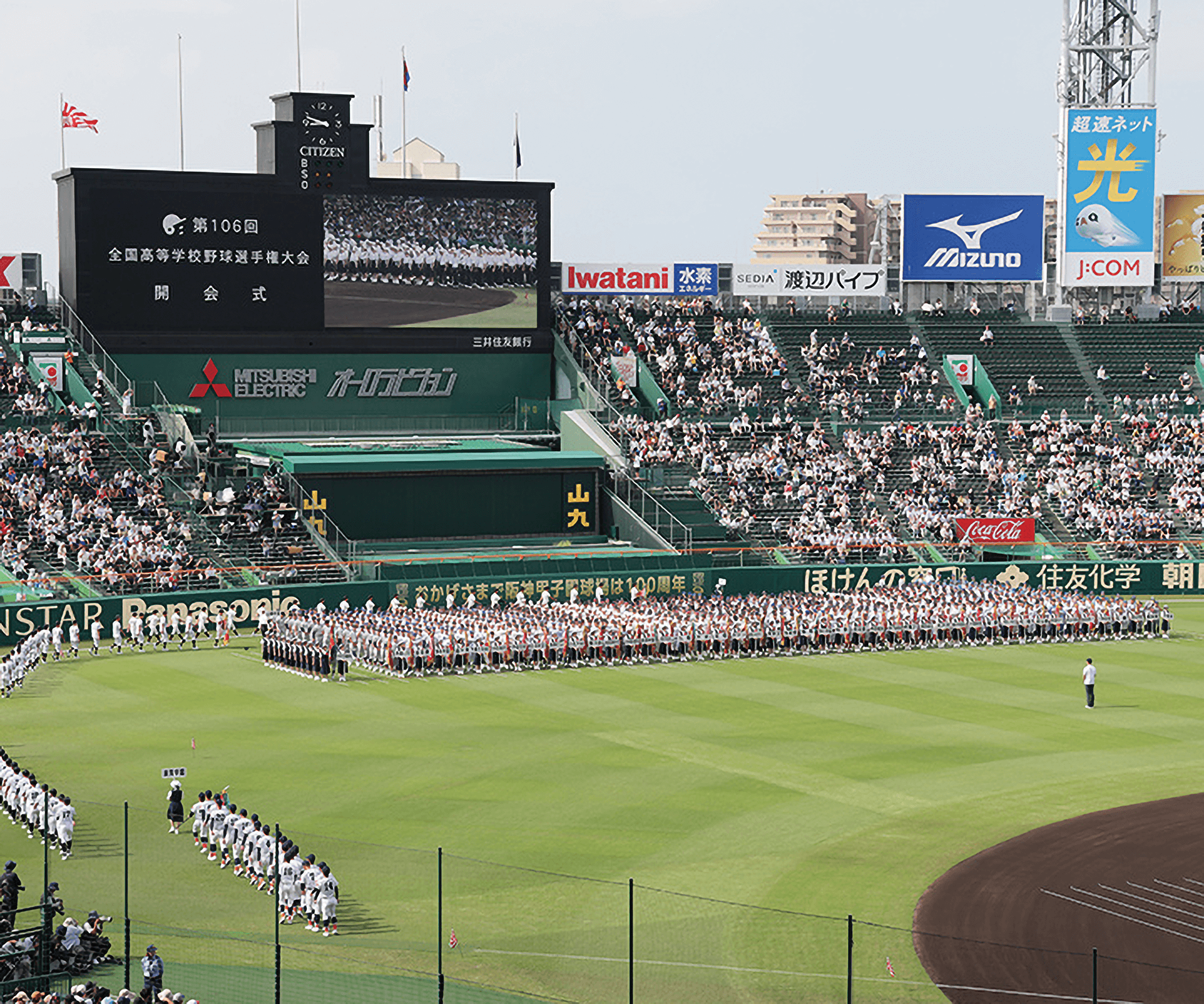
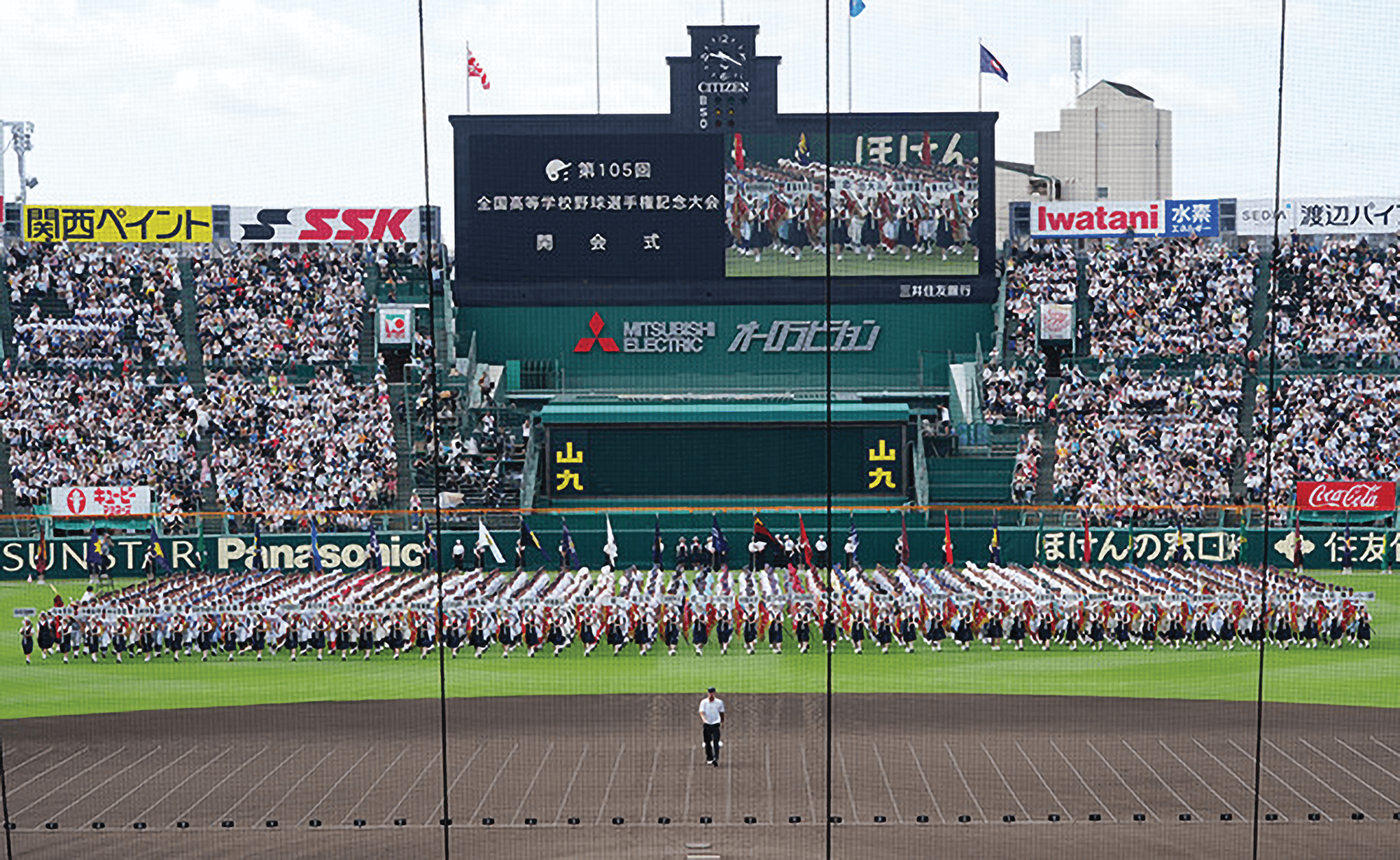
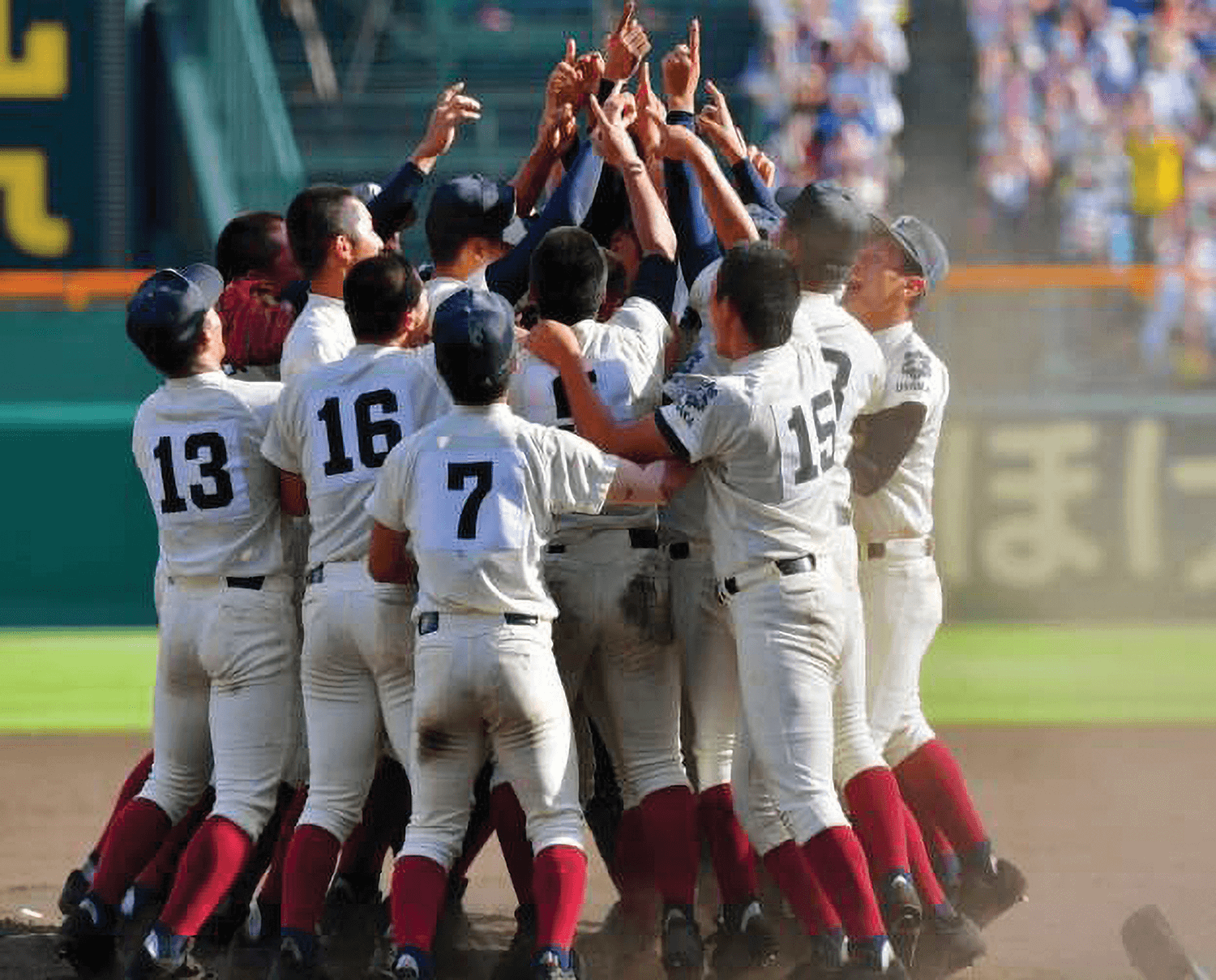
もちろん、彼ら一人ひとりの並外れた努力と才能が、結果を生んでいることは言うまでもありません。その努力を支え、明確な目標として選手たちにモチベーションを与えてきた存在が、「甲子園」です。野球を始めたばかりの小学生から、プロを目指す高校生まで、誰もが夢見る舞台。「甲子園」と聞けば誰もが野球場を思い浮かべ、「甲子園に出た」と言えば、全国高等学校野球選手権大会に出場したことを意味します。In this tournament, where young ballplayers clash with all their might aiming for the summit of approximately 3,400 schools nationwide, about 900,000 spectators pack the stands each year, while tens of millions watch on television. This is not merely a venue for competition; it is a place where the values of Japanese Baseball are condensed.
全国およそ3,700校の頂点を目指し、球児たちが全力をぶつけ合うこの大会には、毎年およそ60万人の観客が詰めかけ、テレビの前には数千万人の視線が注がれます。ここは単なる競技の場ではありません。日本野球の価値観が凝縮された場所なのです。Shohei Ohtani stood on this “Koshien” stage as a member of Hanamaki Higashi High School, representing Iwate Prefecture. Ichiro stood there as a player for Aikodai Meiden High School, representing Aichi Prefecture. Many of the Japanese players currently starring in the Major Leagues aimed for “Koshien” during their high school days, and a great number of them actually experienced that stage.
大谷翔平は、岩手県代表・花巻東高校の一員として、この「甲子園」の舞台に立ちました。イチローは、愛知県代表・愛工大名電高校の選手として。現在メジャーリーグで活躍する日本人選手の多くが、高校時代に「甲子園」を目指し、その多くが実際にその舞台を経験しています。“Koshien,” where the passion of millions of Japanese people reaches a fever pitch and where their collective gaze and spirit collide, is the very apparatus that has led Japanese Baseball to the top of the world. What did Japanese players, including today’s Major Leaguers, experience at “Koshien”? What did they etch into their souls? Let us embark on a journey to trace these origins.
多くの日本人が熱狂し、その眼差しと精神がぶつかり合う「甲子園」は、日本野球を世界一へと導いてきた装置です。日本人メジャーリーガーをはじめとする日本の野球選手たちは、この「甲子園」で何を経験し、何を刻み込んできたのか。その源流を辿る旅に出てみましょう。Koshien: A Stadium Born for High School Baseball | 甲子園——高校野球のために生まれた球場
This year, on March 19th, “Spring Koshien”—the 98th National High School Baseball Invitational Tournament—will open. Thirty-two schools selected from across the country will participate. In the summer, “Summer Koshien” will be held, where 49 schools that won through the qualifiers will clash. Outside of the high school baseball period, it is used as the home field for the local professional team, the Hanshin Tigers. However, this “Koshien” has a history of being built originally for high school baseball.
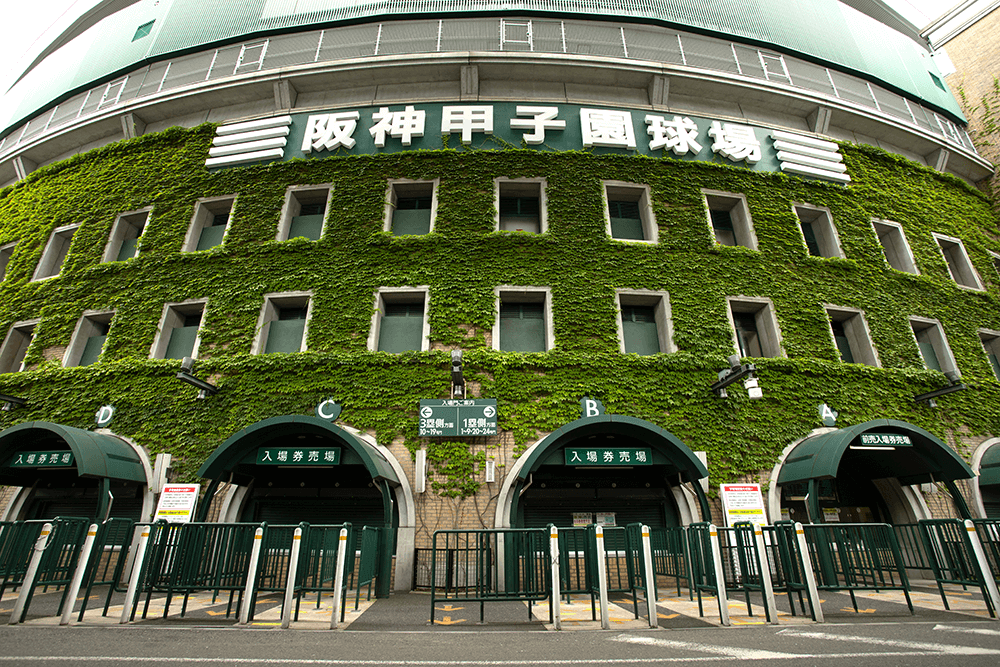
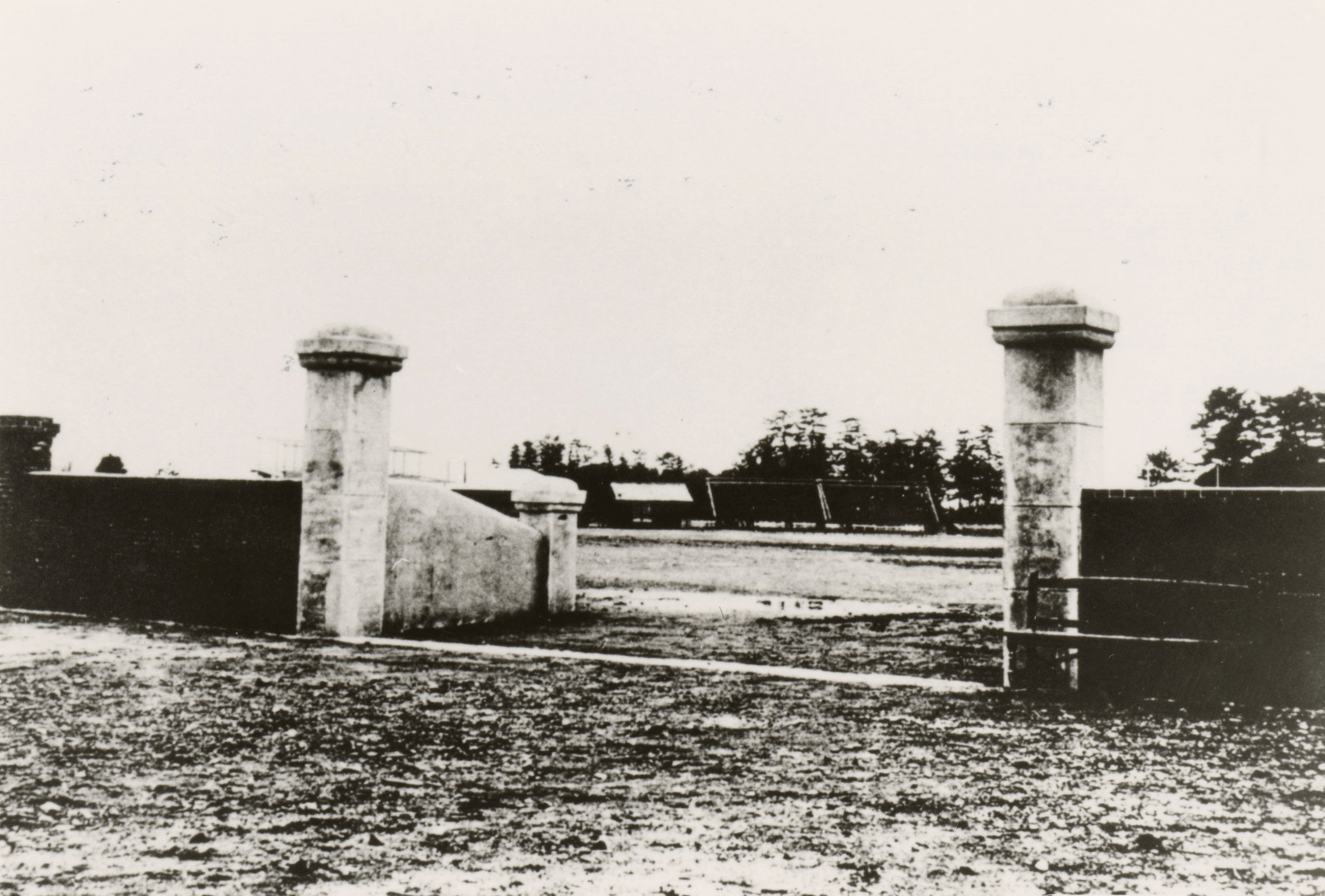
今年も3月19日、「春の甲子園」こと第98回選抜高等学校野球大会が開幕します。全国から選ばれた32校が出場。夏には予選を勝ち上がった49校が激突する「夏の甲子園」が行われます。高校野球の期間以外は、地元球団・阪神タイガースの本拠地として使用されています。しかし、この甲子園は、もともと高校野球のために建設されたという歴史があります。In 1915, the first National Middle School Baseball Championship (currently the National High School Baseball Championship) was held at Toyonaka Stadium in Osaka. There were only 73 participating schools. However, its popularity skyrocketed after that, and Toyonaka Stadium could no longer accommodate the spectators. That is why Koshien Stadium was constructed. The initial capacity was approximately 50,000. It was an unprecedented scale for a high school tournament.
1915年、第1回目の全国中等学校優勝野球大会(現在の全国高等学校野球選手権大会)は、大阪・豊中球場で開催されました。参加校は、わずか73校でした。しかしその後人気は急騰し、豊中球場では観客を収容しきれなくなりました。そこで建設されたのが、甲子園球場です。収容人数は当初約5万人。高校生の大会としては破格の規模でした。Koshien Stadium was completed in 1924 (the 13th year of the Taisho era), the year of “Kinoene” (also read as “Koshi”). This is the origin of the name “Koshien.” “Koshi” corresponds to the first combination of the ten stems and twelve branches, signifying the “beginning” of a 60-year cycle. 100 years since then—Japanese Baseball has won the World Baseball Classic (WBC) three times and continues to develop even now.
甲子園球場が完成したのは1924年、大正13年の「甲子(きのえね)」の年です。これが「甲子園」という名称の由来です。「甲子」は、十干十二支の組み合わせの第1番目にあたり、60年周期の「始まり」を意味します。それから100年——日本の野球は、ワールド・ベースボール・クラシック(WBC)で3度の優勝を果たし、今もなお発展を続けています。The Lifelong Title of “Koshien Ballplayer” | 「甲子園球児」という一生の肩書き
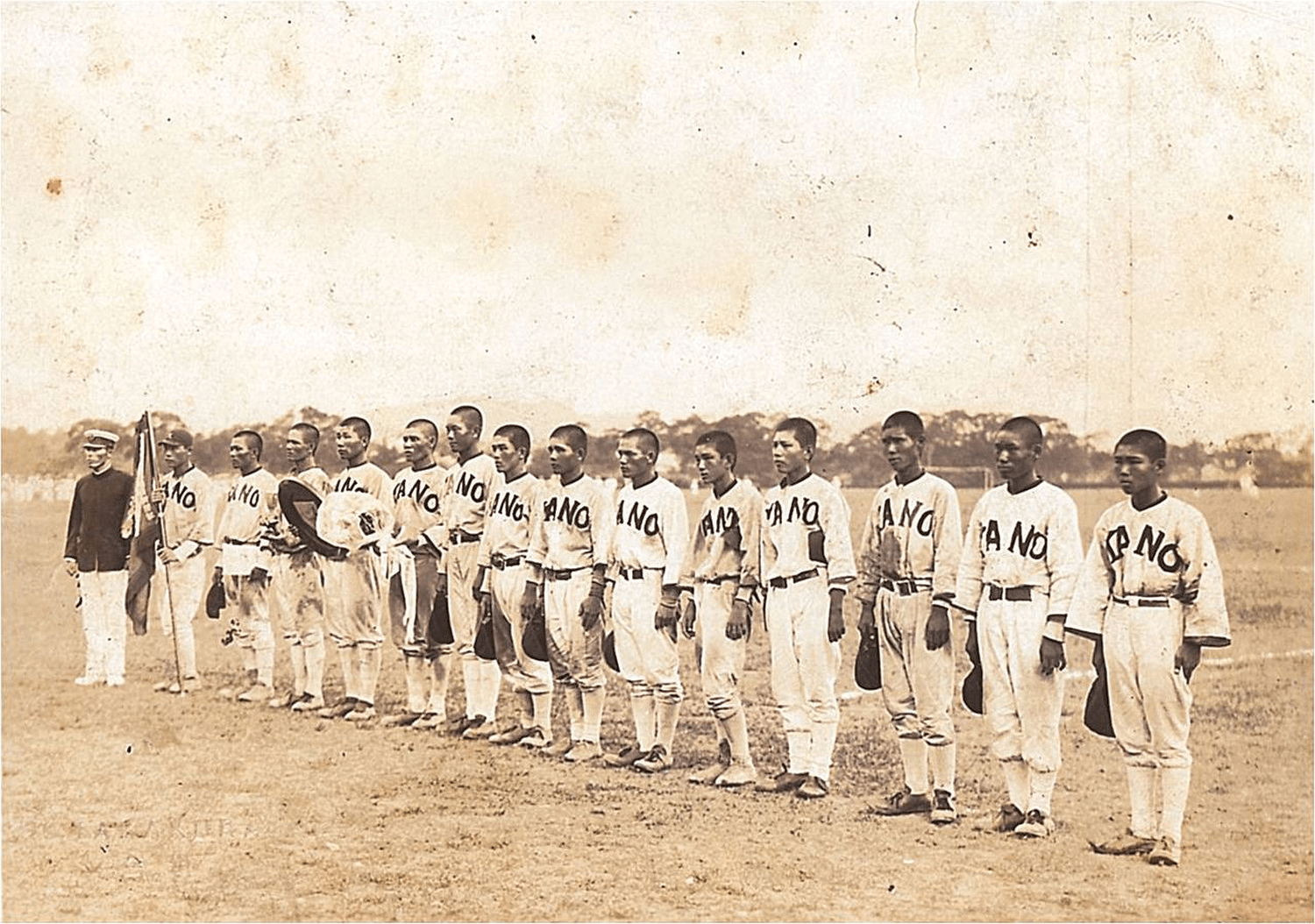
After that, newspaper companies hosted the tournament and supported its development. In 1927, Japan’s first live radio sports broadcast was conducted, and the excitement of “Koshien” began to reach the entire country. Various dramas are born at “Koshien,” both now and in the past. For example, in 1931, when Japan and Taiwan were one country, Kagi Agriculture and Forestry School (representing Taiwan) became the runner-up. It was a mixed team of Japanese, Indigenous Taiwanese, and Han Chinese. “Koshien” was also a stage that transcended ethnicity.
その後、新聞社が大会を主催し、発展を後押ししました。1927年には日本初のスポーツ実況ラジオ中継が行われ、「甲子園」の熱狂は全国に届くようになりました。「甲子園」では、今も昔も様々なドラマが生まれます。例えば、日本と台湾が一つの国だった1931年には、台湾代表の嘉義農林学校が準優勝を果たしました。日本人、台湾原住民、漢民族の混成チーム。「甲子園」は、民族を超えた舞台でもあったのです。The number of participating schools also continued to increase. It went from 73 schools in 1915 to a peak of 4,163 schools in 2003. Currently, it has decreased to about 3,400 schools due to the impact of the declining birthrate, but it is still a huge number. Even looking across the world, it is rare to find a country where a high school sports tournament attracts this much national attention.
参加校数も増え続けました。1915年の73校から、2003年には4,163校のピークに。現在は少子化の影響で約3,700校に減少していますが、それでも巨大な数字です。世界を見渡しても、高校生のスポーツ大会がこれほど国民的な関心を集める国は珍しいでしょう。During the period of Spring and Summer “Koshien,” all of Japan pays attention to this tournament. All games are broadcast live on NHK. At companies and schools, the progress of the games becomes a topic of conversation, and when it is a match of a local representative, the entire region is wrapped in a “cheering mode.” In the “Alps Stand,” each school’s brass band performs cheering songs while soaked in sweat. Cheering squads raise their voices for hours under the scorching sun. This, too, is a scene of “Koshien.”
春と夏の「甲子園」期間中、日本中がこの大会に注目します。試合はNHKで全試合生中継。会社や学校でも経過が話題になり、地元代表の試合となれば、地域全体が応援モードに包まれます。アルプススタンドでは、各校のブラスバンドが汗だくで応援曲を演奏。炎天下で何時間も声を張り上げる応援団。それもまた、「甲子園」の風景です。The background of having “played at Koshien” holds significant meaning in one’s later life. It is even said to have value greater than passing the University of Tokyo. Even if one does not proceed to the pros, the title of “Koshien ballplayer” is a lifelong asset.
「甲子園に出た」という経歴は、その後の人生で大きな意味を持ちます。東京大学に合格すること以上の価値があるとさえ言われます。たとえプロに進まなくても、「甲子園球児」という肩書きは一生の財産なのです。“Yakyu-do”—A Spiritual Culture Beyond Baseball | 「野球道」——ベースボールを超えた精神文化
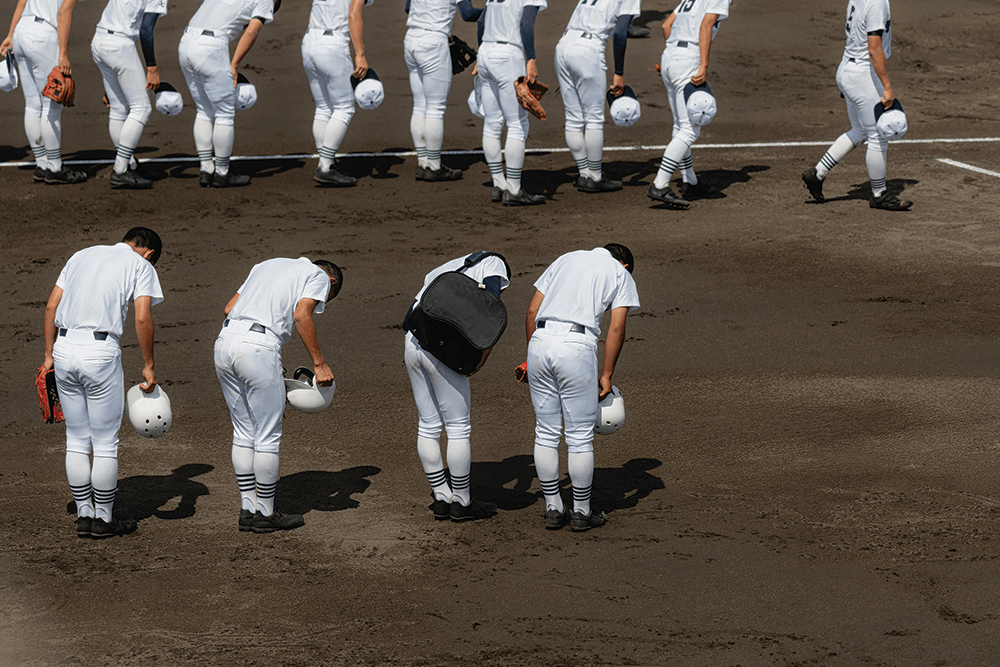
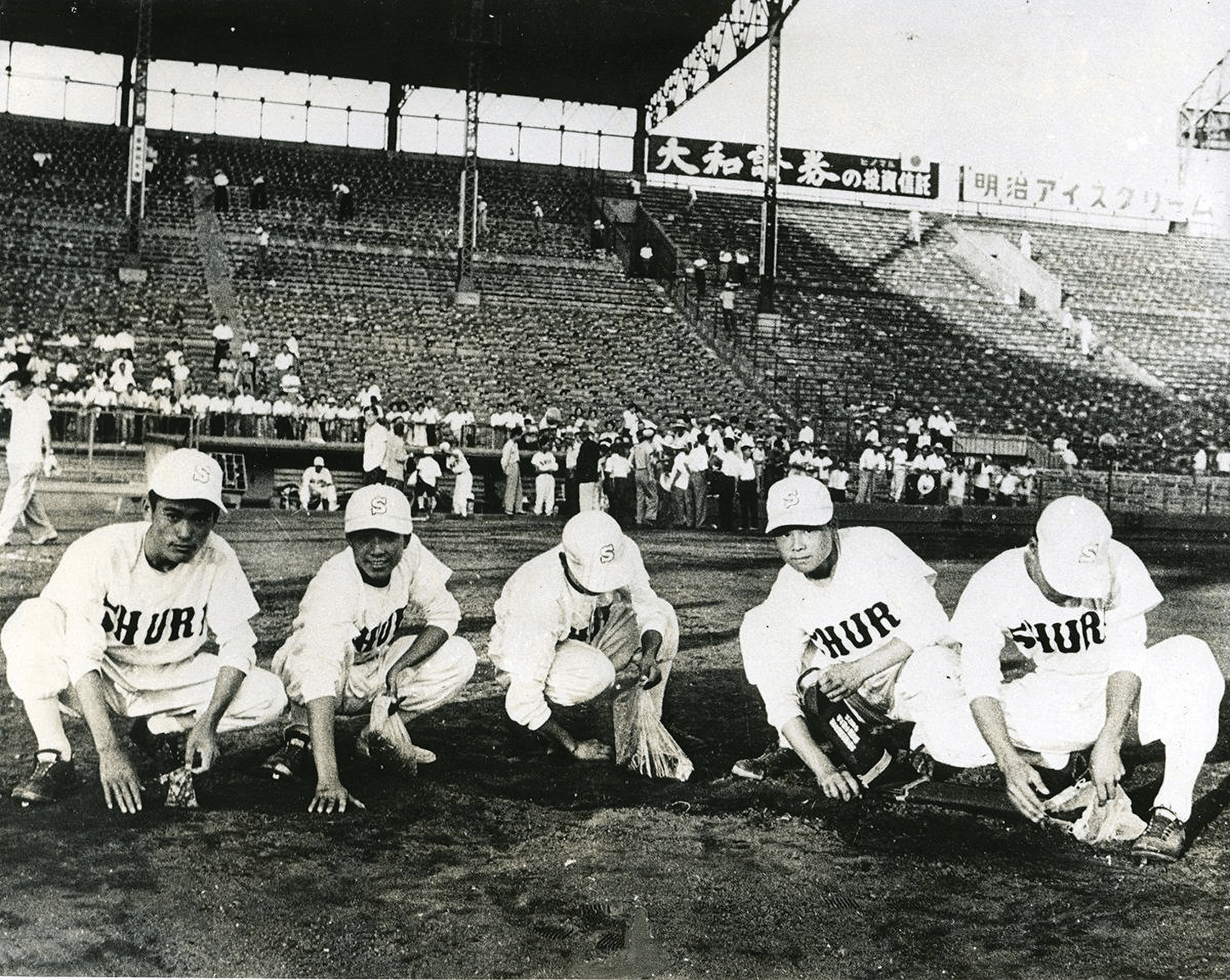
Seeing Japanese high school baseball, people from overseas are surprised. Why do high school students play baseball so seriously and so ritualistically? Why do they have shaved heads? Why do they bow to the ground? Why do defeated teams take soil home? Why do they frequently use “sacrifice bunts,” where they voluntarily get out? That appearance is already a different sport from “baseball.” It begins with respect and ends with respect—like Kendo. That is the reason it is called “Yakyu-do” (The Way of Baseball).
日本の高校野球を見て、海外の人は驚きます。なぜ高校生があれほど真剣に、あれほど儀式的に野球をするのか。なぜ坊主頭なのか。なぜグラウンドに一礼するのか。なぜ敗れたチームは土を持ち帰るのか。なぜ自らアウトになる「犠牲バント」を多用するのか。その姿は、もはやベースボールとは別のスポーツ。礼に始まり礼に終わる——剣道のように。それが「野球道」と言われる所以です。However, a sports culture similar to this exists in the West, too. It is rugby in 19th-century England. Rugby is said to be a “sport that teaches self-sacrifice.” In 1828, Thomas Arnold became the headmaster of Rugby School, and under the philosophy of “Muscular Christianity,” he promoted character education through sports.
しかし、西洋にもこれに通じるスポーツ文化が存在します。19世紀イギリスのラグビーです。ラグビーは「自己犠牲を教えるスポーツ」と言われます。1828年、トマス・アーノルドがラグビー校の校長に就任し、「Muscular Christianity(筋肉的キリスト教)」という思想のもと、スポーツを通じた人格教育を推進しました。The purpose was to cultivate this spirit—”One for all, All for one.” Japan’s “Yakyu-do” can be understood in parallel with this. England has connected the “spirit of Chivalry” to the modern age through rugby, while Japan has connected the “spirit of Bushido” through baseball.
「One for all, All for one(一人は皆のために、皆は一人のために)」——この精神を培うことが目的でした。日本の野球道は、これと並べて理解できます。イギリスはラグビーを通じて「騎士道的精神」、日本は野球を通じて「武士道的精神」を現代に繋いできたのです。Continue Reading in Hiragana Times
続きを読む — Hiragana Times 本誌へ
Digital PackagesRead and listen in your browser — available in bundles.誌面と音声を、パッケージでご利用いただけます。 -
Japan Style – Hiragana Times August 2025 issue
Listen to the Audio:
Sumo as a Sacred Ritual: The Divine Contest of Strength that Has Long Protected Japan’s Land
相撲という神事――聖なる力比べが守り続けた日本の大地
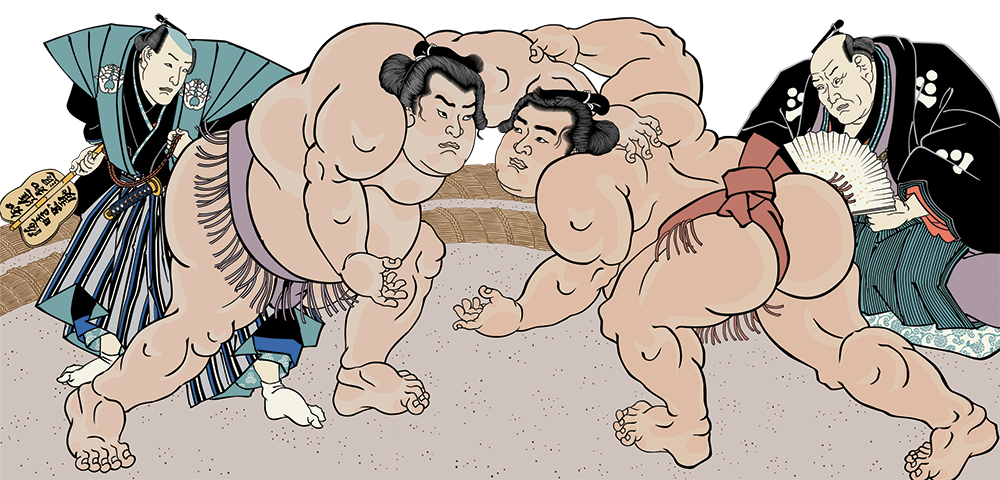
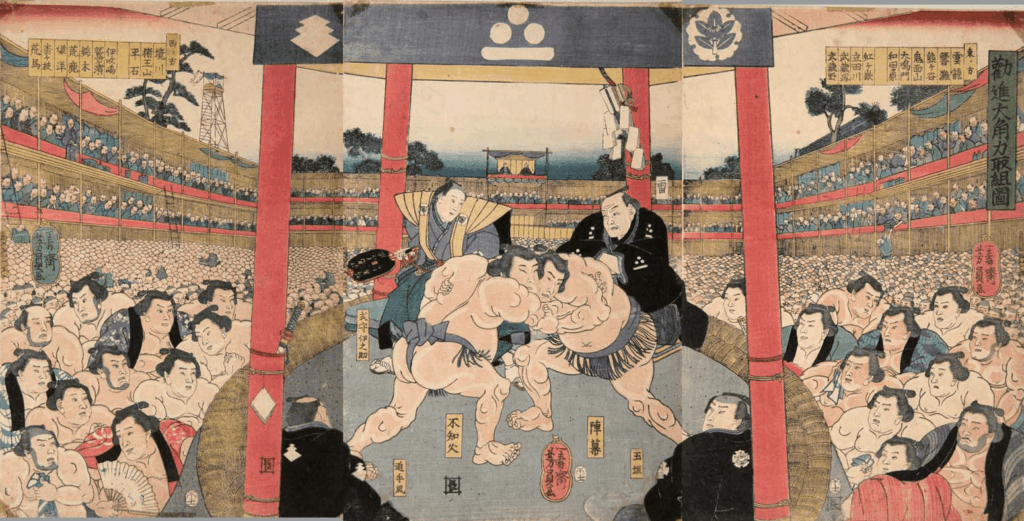
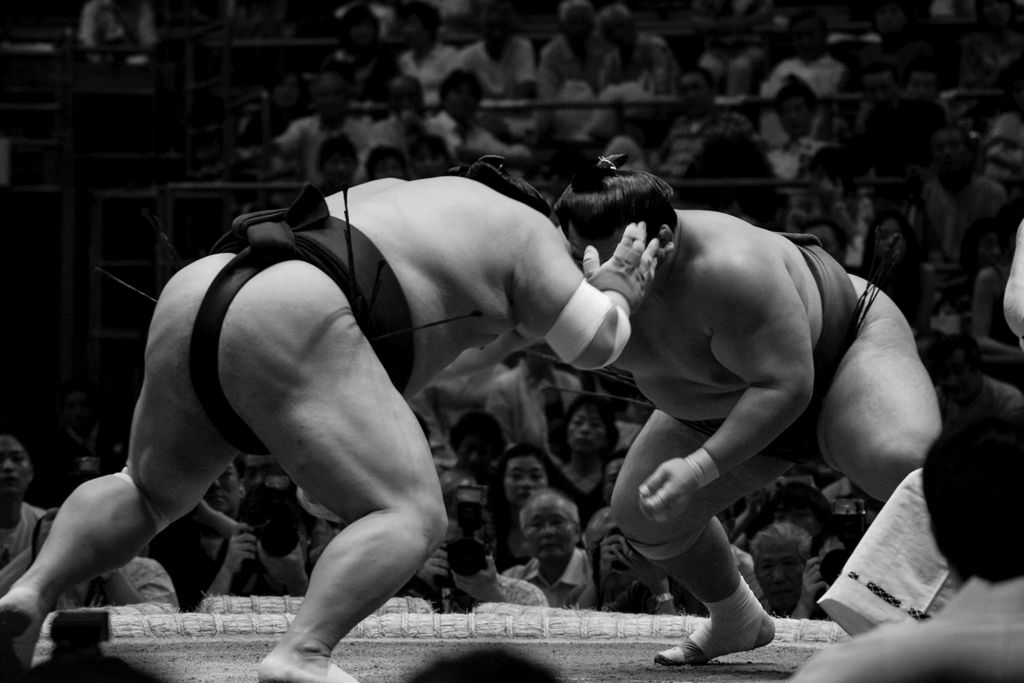
Sumo is a uniquely Japanese physical art form, in which wrestlers wearing only a ceremonial loincloth (mawashi) clash atop the earthen ring. With bodies forged through spirit and technique, they confront one another not merely in competition, but as a solemn expression of discipline and reverence. Underlying this tradition is a deep-rooted belief: that the human body is a sacred gift from the divine—pure, unarmed, and to be honored as such.
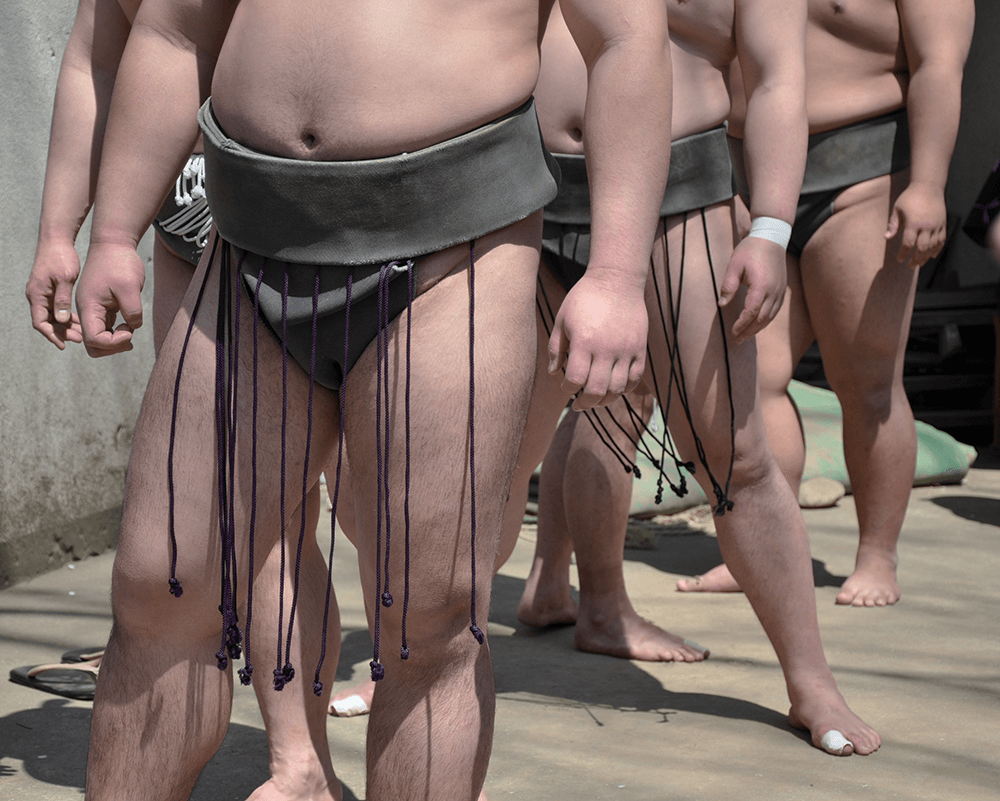
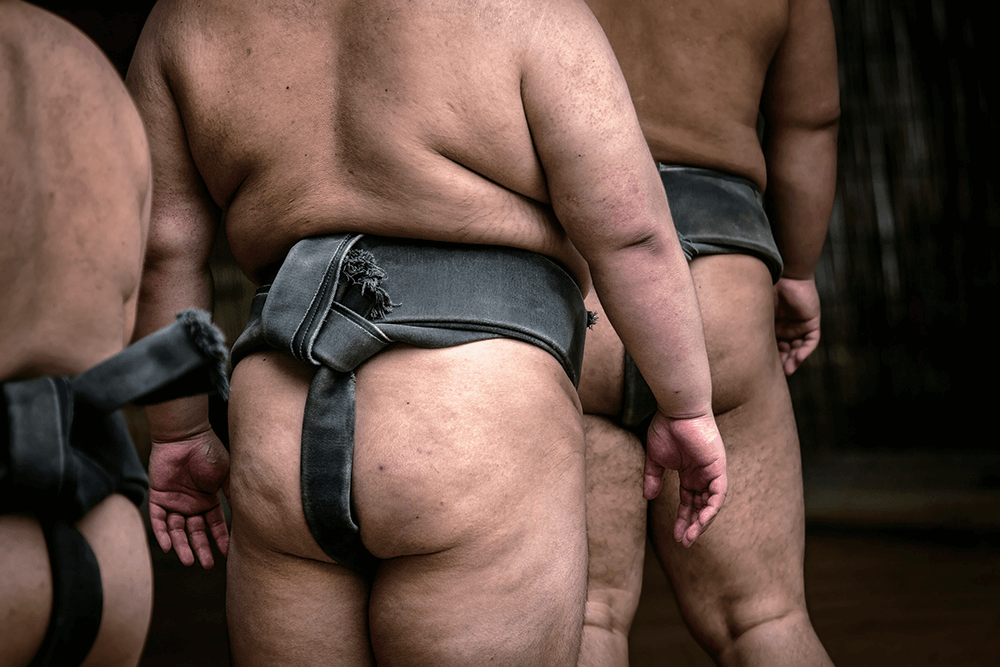
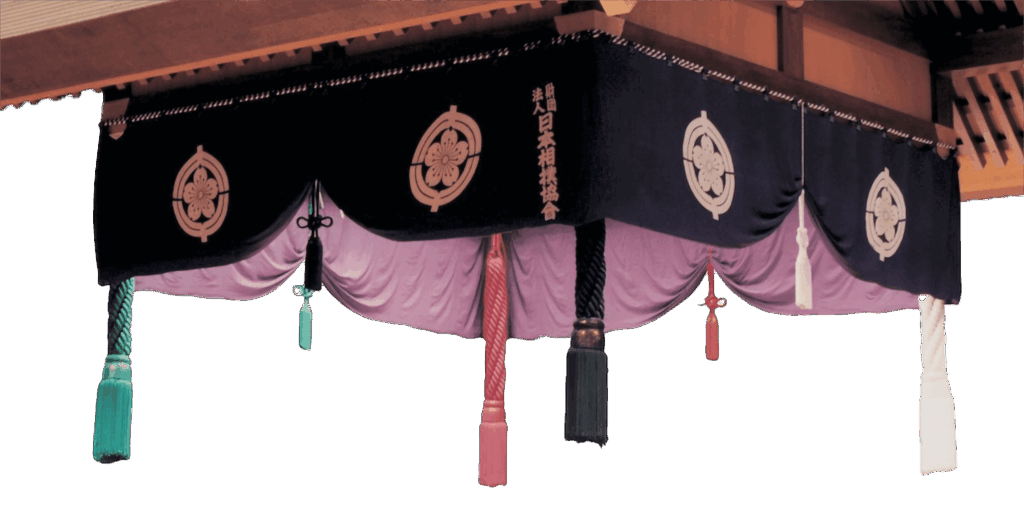
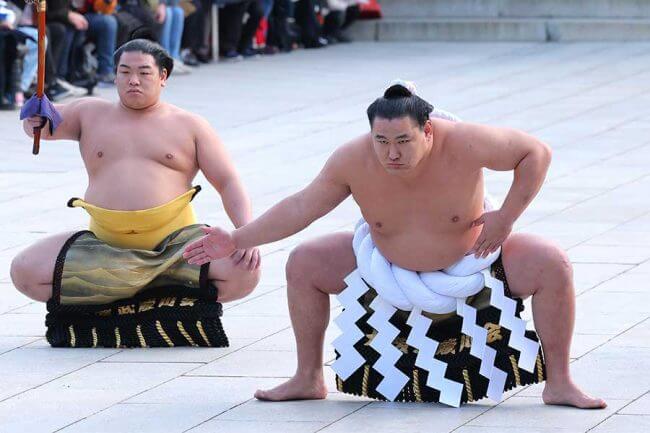
相撲は、廻しを締めた力士が土俵でぶつかり合う、日本独自の身体文化です。力士は廻し一つの姿で土に立ち、精神と技によって鍛え抜かれた身体をぶつけ合います。そこには、身体は神から授かった清らかなものとする考えが根づいています。The mawashi is not merely a piece of clothing. Like the sacred rope (shimenawa) found at Shinto shrines, it is thick, twisted counterclockwise (to the left), and carries spiritual significance. Hanging from the front are sagari—strips that mark the boundary between the sacred and the secular. The very appearance of the wrestler, clad in this ritual attire, signifies that he stands within a sacred space, embodying the presence of one who enters a realm of divine encounter.
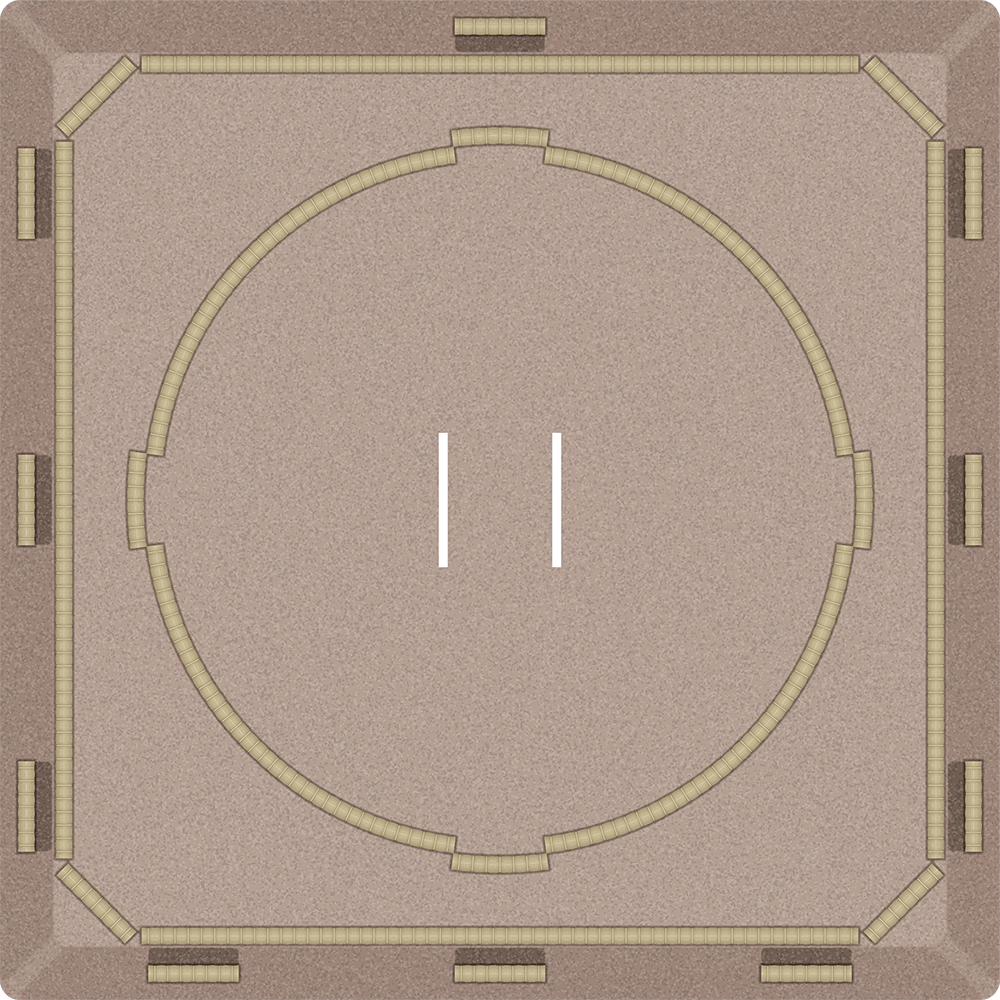
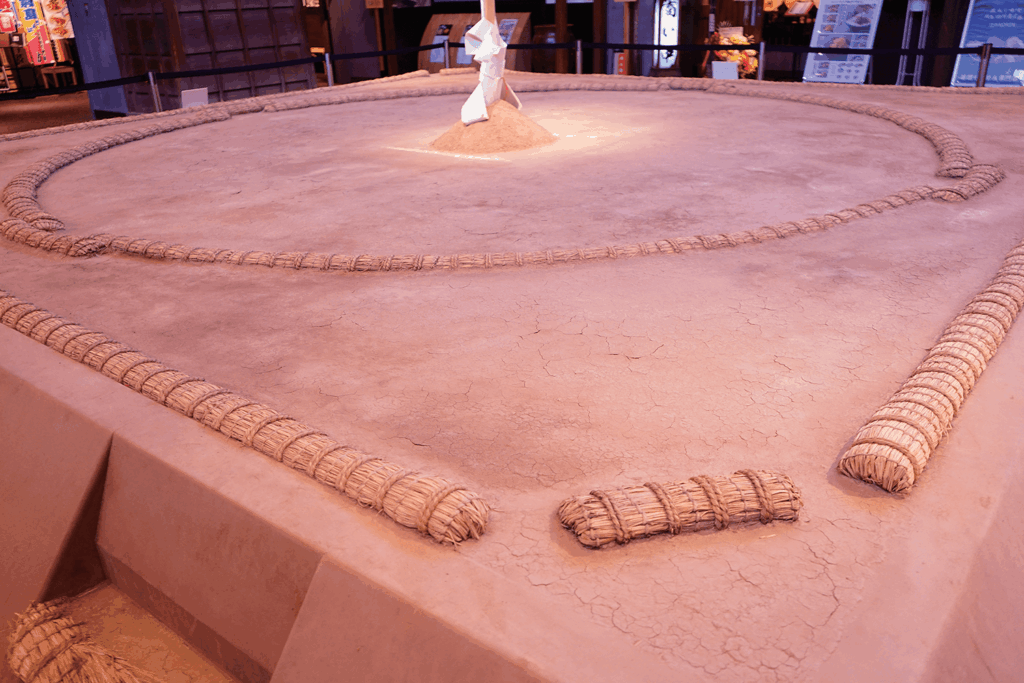
この「廻し」は、単なる衣服ではありません。神社のしめ縄と同じく太く、左撚り(反時計回り)に綯われた神聖な装束であり、前面には神域と俗世を隔てる「さがり」が垂れ下がっています。力士の姿そのものが、神聖な場に身を置く存在であることを物語っています。In the world of sumo—aptly called Kakukai, meaning “the square world”—the dohyō (sumo ring) is constructed by firmly packing the earth into a square base. At its center, a perfect circle measuring 4.55 meters (15 shaku) in diameter is outlined with rice-straw bales.
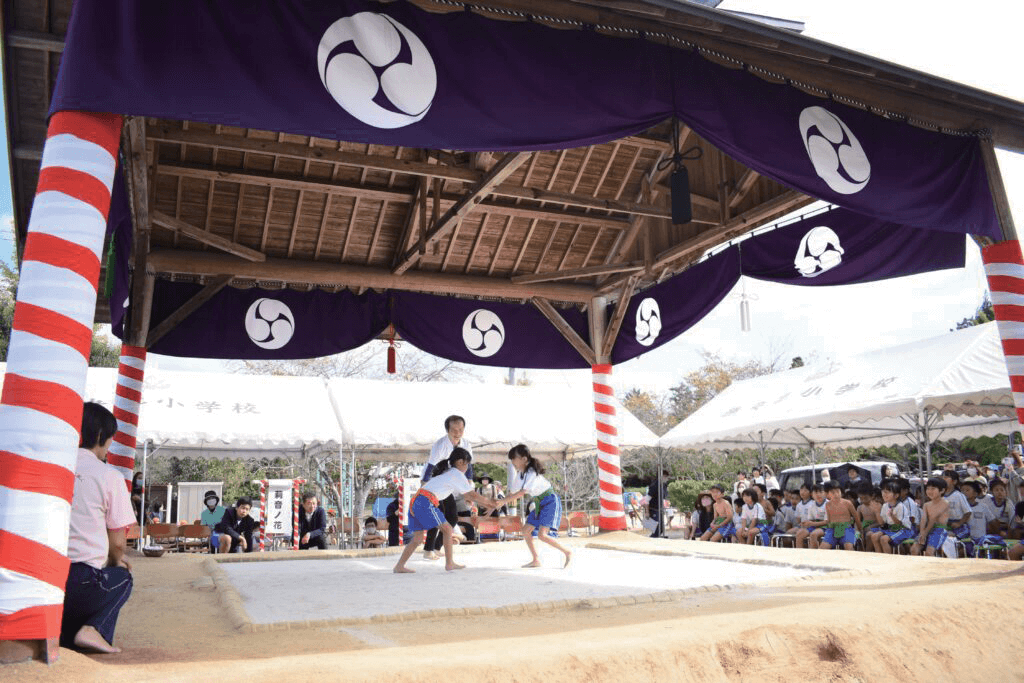
相撲の世界が「角界」と呼ばれるように、土俵は四角く土を突き固めて築かれ、その中央に直径4.55メートル(15尺)の円が俵で描かれています。In the past, sumo matches were sometimes held on square dohyō without the circular ring we see today. Even now, in regions such as Iwate and Okayama, traditional sumo is still practiced on kaku-dohyō—square rings. Going further back in history, it is said that sumo was performed without any defined ring at all, inside a hitogaki—a naturally formed circle of spectators who gathered around the wrestlers.
かつては四角いままの土俵で取られていたこともあり、今も岩手県や岡山県では「角土俵」による相撲が伝えられています。さらに古くは、土俵という構造自体がなく、観客が自然に円を描く「人垣」の中で行われていたと伝えられています。This circular formation is regarded as the prototype of today’s dohyō. Because it allowed the match to be viewed clearly from all four directions—east, west, south, and north—it eliminated blind spots, making it possible to judge the instant a wrestler stepped out with fairness and clarity.
この円形こそが現在の土俵の原型とされ、東西南北どの方向からも見渡せるため「死角」がなく、足が出た瞬間の判定も公正に行えました。Sumo boasts a history of at least 1,500 years, evolving in form and function over the ages as it has been handed down to the present day. Its origins appear in mythology as a test of strength among the gods, and historical records of sumo first emerge during the Nara period. By the Heian period, it had become an established court ritual known as Sumai no Sechie, held to pray for a bountiful harvest.
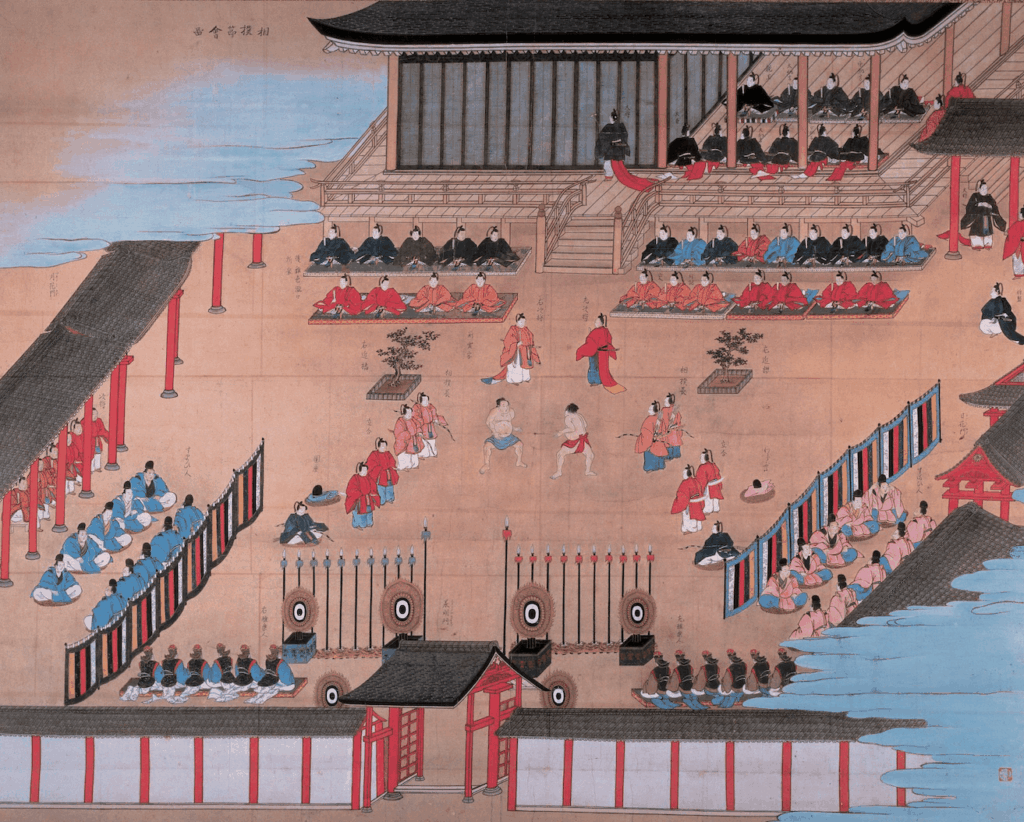
相撲は、少なくとも1500年以上の歴史をもち、時代を追うごとに姿と役割を変えながら、現代へと受け継がれてきました。起源は神々の「力比べ」として神話に登場し、文献上は奈良時代にその記録が現れます。平安時代には、五穀豊穣を願う宮中の祭事「相撲節」として定着しました。During the Warring States period (Sengoku Jidai), sumo was employed as a practical means to assess the strength and skill of retainers. Historical records also note that Oda Nobunaga held sumo matches, demonstrating its significance even in military and political contexts.
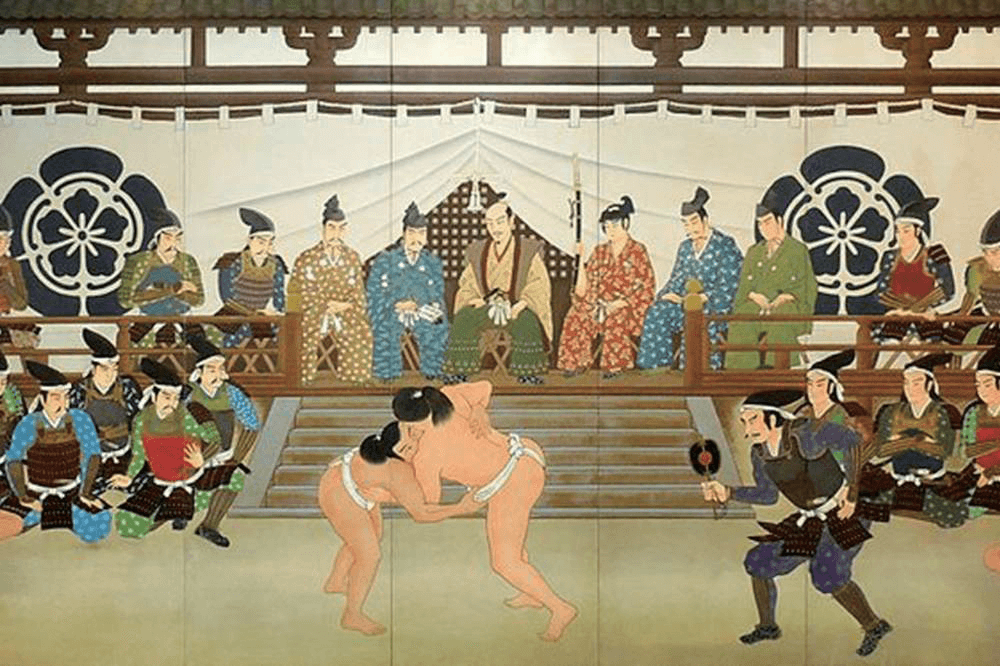
戦国時代には、家臣の力量を見極める実践的な手段として用いられ、織田信長も相撲を催した記録が残っています。During the Edo period, sumo became a major form of entertainment among the common people, standing alongside kabuki in popularity. It was during this era that the foundations of modern ōzumō (professional sumo) were firmly established.
江戸時代には、歌舞伎と並ぶ庶民の一大娯楽となり、現在の大相撲の原型が形づくられました。In this way, sumo has never been merely a contest of strength—it has been deeply intertwined with sacred ritual, politics, performing arts, and martial discipline, forming a core part of the Japanese spiritual and cultural identity. Above all, its role as a shinji—a ritual praying for bountiful harvests and national peace—has endured, with hōnō-zumō (dedicatory sumo) still held at shrines throughout Japan today.
このように相撲は、単なる勝負事ではなく、神事・政治・芸能・武道と深く結びつき、日本人の精神文化の中核を成してきたのです。なかでも、五穀豊穣や国の安寧を祈る”神事“としての性格は今も受け継がれ、奉納相撲は全国各地で続いています。Even during ōzumō (grand sumo) regional tours, wrestlers step onto local dohyō to stamp the earth, drive out evil spirits, and purify the land. In this sense, sumo serves as a “traveling ritual,” delivering prayers across the country. The spirit of sumo as shinji—a sacred rite—continues to live on today in the wrestlers’ movements and in the very structure of the dohyō itself.
大相撲の巡業でも、各地の土俵で力士が大地を踏み鎮め、邪気を祓い、土地を清める——相撲は”移動する神事“として、日本各地に祈りを届けているのです。こうした”神事“としての相撲の精神は、力士の所作や土俵の構造に今なお息づいています。🟤 The Ritual Movements of the Rikishi (Sumo Wrestlers) | 力士の所作
Scattering Salt — Purifying the Ring and Offering Prayers to the Divine|塩まき――土俵を清め、神に祈る
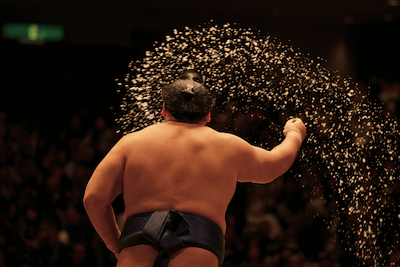
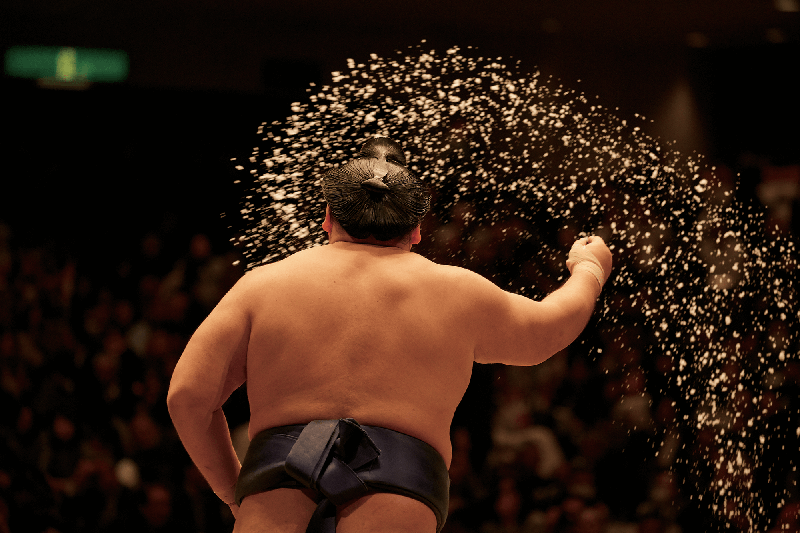
Before stepping into the ring, a rikishi scatters salt onto the dohyo. Known as “cleansing salt,” this act is akin to purification rituals performed at Shinto shrines. It serves to ward off evil spirits, sanctify the ground, and offer silent prayers before taking the first step. Each wrestler has their own unique way of casting the salt, making this simple gesture a personal expression of reverence.
力士は土俵に上がる前に塩を撒きます。これは「清めの塩」と呼ばれ、神社で行われるお祓いと同じ意味を持ちます。土俵を清め、邪気を祓い、神への祈りを込めて一歩を踏み出します。取り組みごとに何度も撒かれ、撒き方にも力士ごとの個性があります。Shiko — Stomping to Suppress Evil Spirits|四股――邪気を踏み鎮める
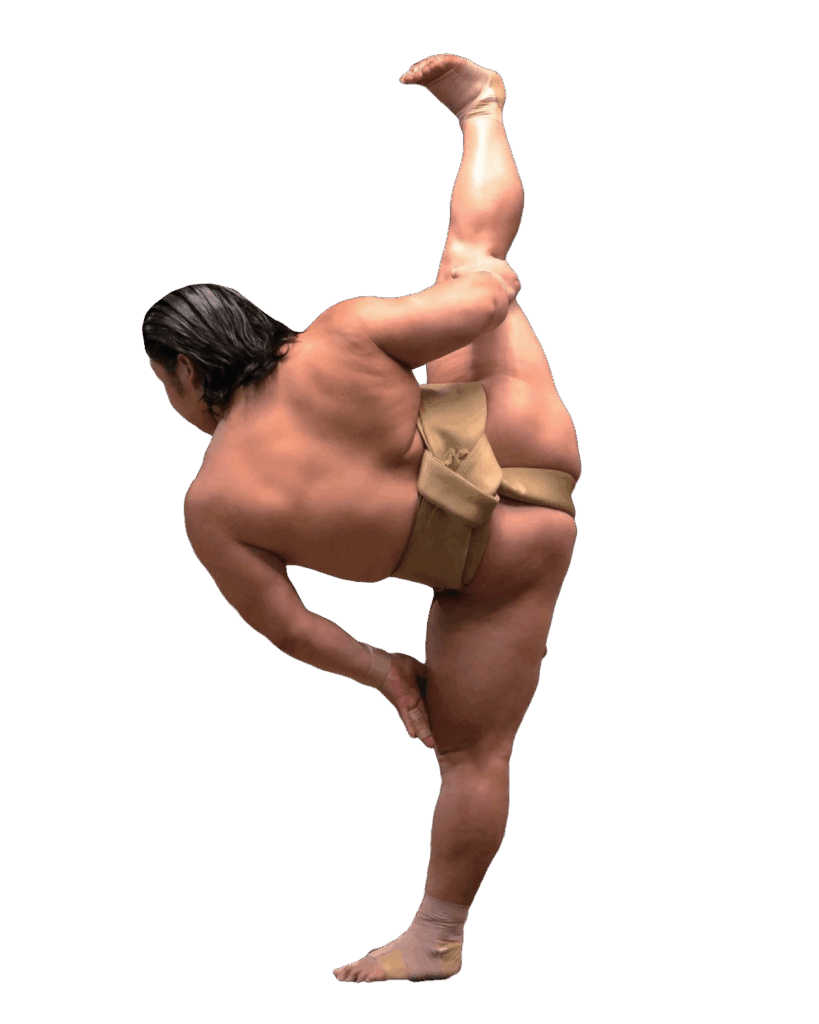
One of the most striking movements on the dohyo is shiko, in which a wrestler lifts one leg high and forcefully stomps it down. Since ancient times, this act has symbolized the subjugation of “impure” or evil forces. It is a sacred motion believed to drive out malevolent spirits lurking in the earth and to purify the arena, reaffirming the spiritual foundation of sumo.
土俵上で最も印象的な動作「四股」は、片足を高く上げ、力強く踏み下ろす所作です。古くから「醜いもの」を地に封じる意味があり、地中に潜む邪気を鎮め、場を清める神聖な動作とされています。Chikara-mizu and Chikara-gami — Purifying Body and Mind|力水・力紙――身体と心を清める
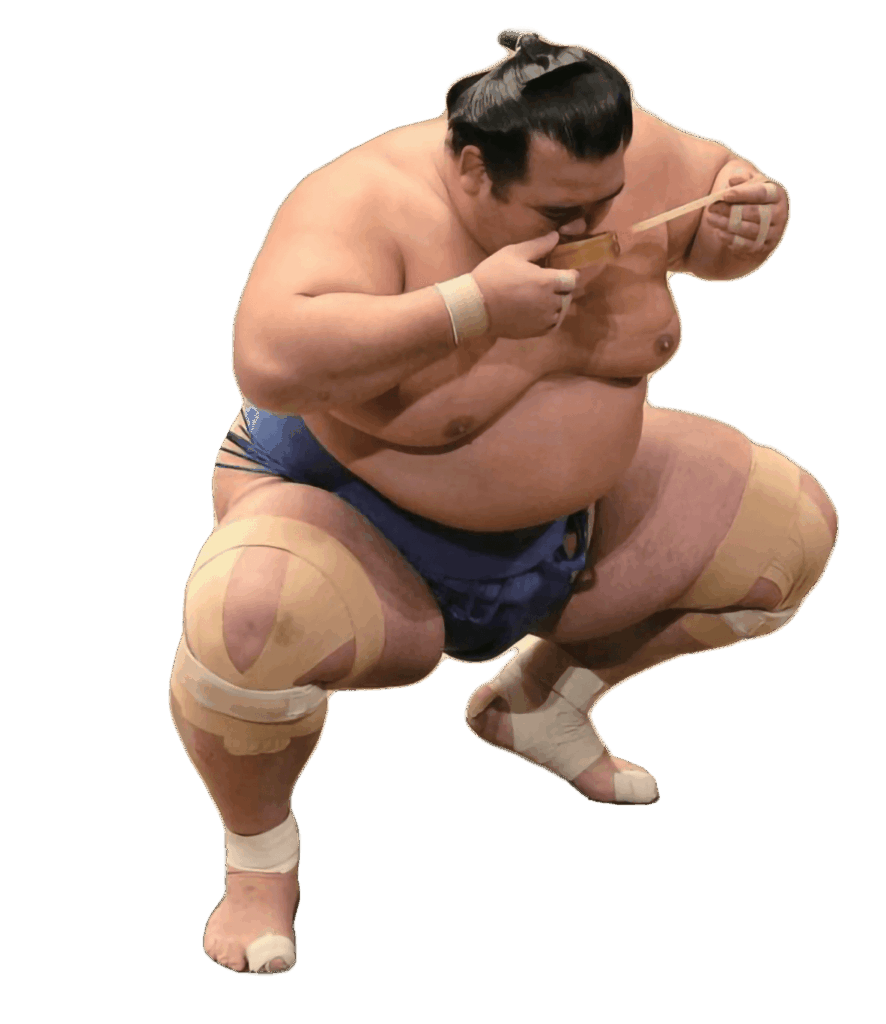
Before a bout, wrestlers rinse their mouths with chikara-mizu (“power water”), a ritual act similar to the temizu purification performed before entering a Shinto shrine. They then wipe their mouths with a white paper cloth called chikara-gami. Together, these actions serve to cleanse both body and spirit, allowing the wrestler to step onto the dohyo in a state of ritual purity.
取り組み前に口をすすぐ「力水」は、神事における手水と同様の意味を持ちます。続けて白い「力紙」で口を拭うことで、心身を清め、清らかな状態で土俵に臨みます。Sonkyo — A Posture of Respect and Readiness|蹲踞――敬意と覚悟の姿勢
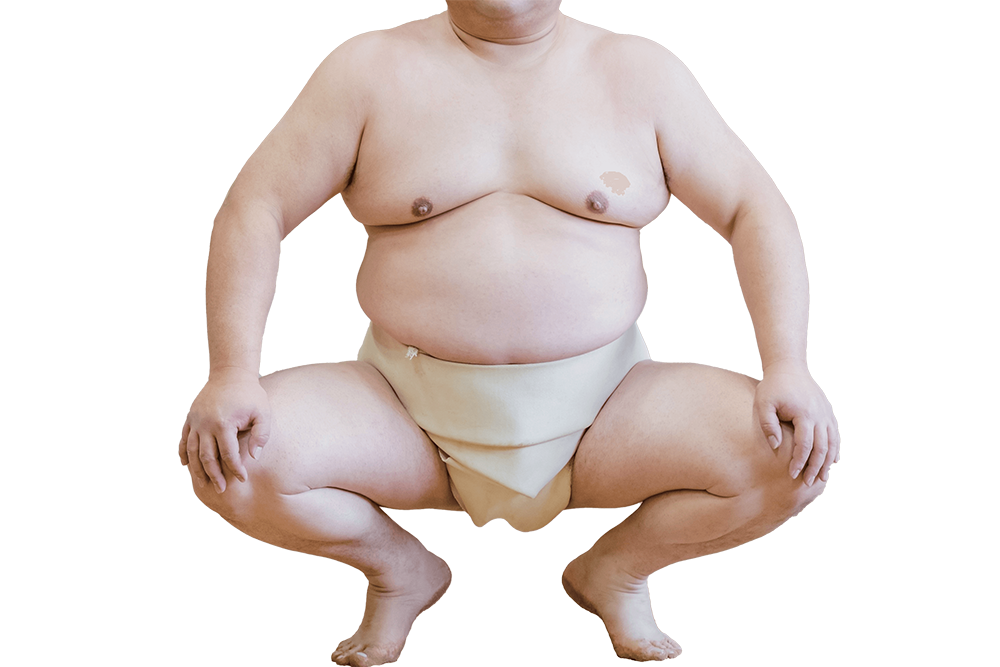
Sonkyo is the fundamental stance a wrestler assumes upon stepping onto the dohyo. With knees wide apart, back straight, and fingertips resting lightly on the knees while standing on the balls of the feet, this posture embodies both reverence toward the opponent and a calm mental readiness. Seen in traditional martial arts and religious rituals alike, sonkyo is a classic expression of “stillness and respect” in Japanese spiritual culture.
土俵に上がった力士が取る基本姿勢が「蹲踞」。爪先立ちで膝を大きく開き、背筋を伸ばして手を膝に置くこの姿勢は、相手に対する敬意と、心身を整える覚悟の表れです。蹲踞は武道や神事でも見られる「静と礼」の基本姿勢です。Chirichozu — A Vow to Fight Unarmed|塵手水――刀を持たぬ戦いの誓い
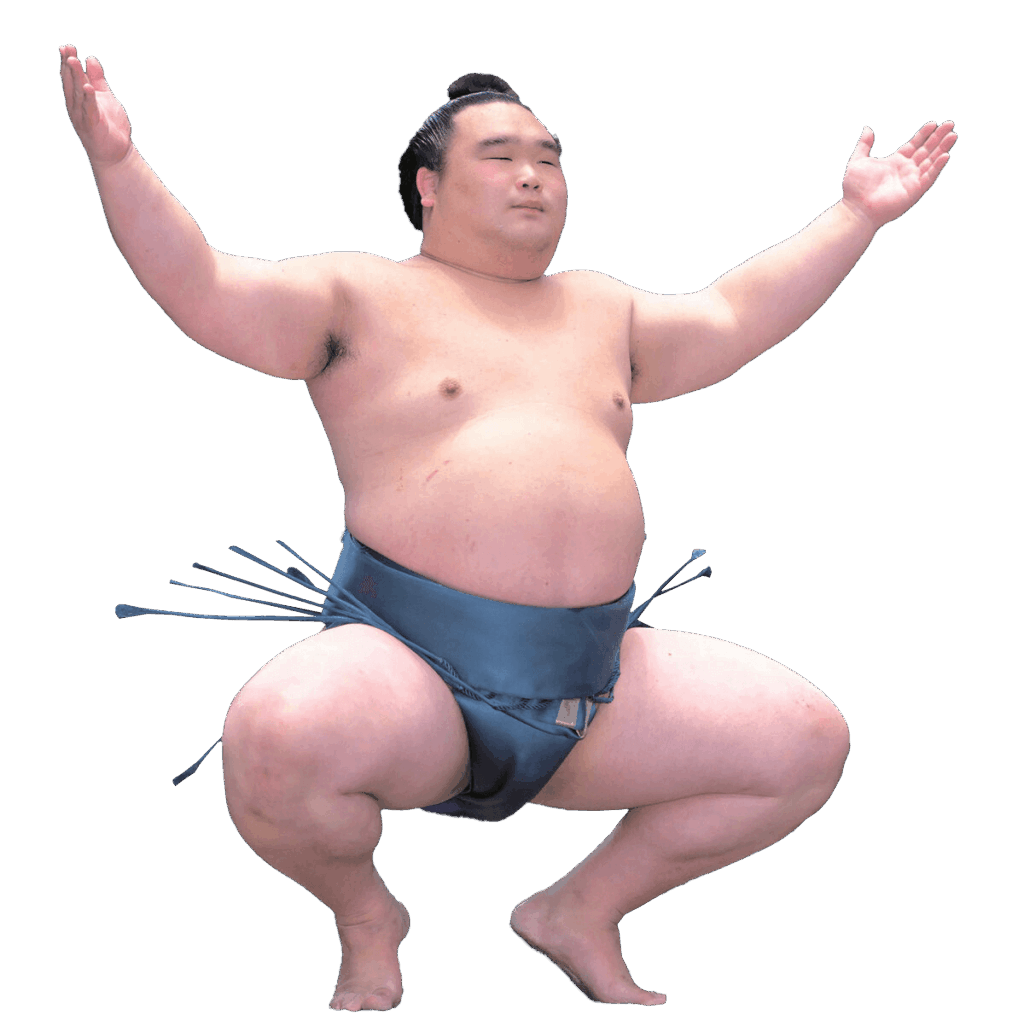
Chirichozu is the ritual gesture performed after sonkyo, where the wrestler claps his hands, extends his arms, and displays his open palms to the audience. This act purifies the body and spirit while also symbolizing the absence of weapons—a declaration of fair combat. It is a solemn moment in which the wrestler pledges sincerity, respect for the opponent, and readiness to face the match with honor, reflecting the sacred nature of sumo as a ritual rather than mere sport.
蹲踞の後、力士は柏手を打ち、両手を広げて手のひらを見せる所作を行います。これは身の穢れを払い、心を整え、「武器は持っていません」という潔白の証であり、相手への敬意を示す意味も含みます。力士が神と相手、そして自身の内なる誓いに向き合う瞬間でもあります。A-un no Kokyū — Harmonizing Breath, Connecting Hearts|阿吽の呼吸――呼吸を合わせて心を通わせる
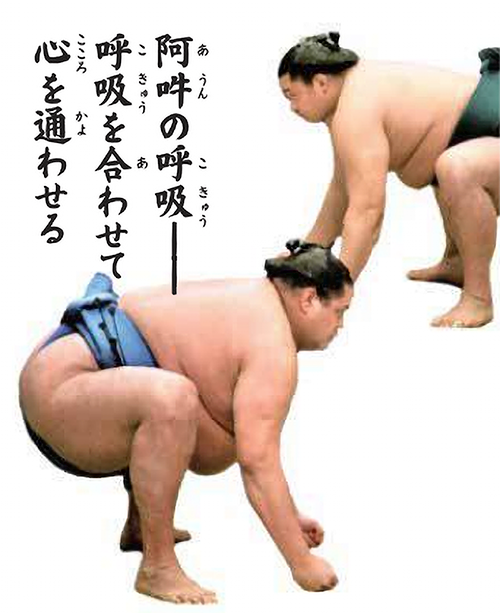
The a-un no kokyū—literally “the breath of A and Un”—is a concept rooted in Buddhism, referring to the synchronized breathing between two individuals. In sumo, it is the sacred exchange that takes place at the tachiai (initial charge), as the two wrestlers seek a shared moment of harmony before clashing. Within that intense stillness, their spirits rise, and the moment of release becomes an explosion of stored energy. It is here, in this silent communion, that the spiritual intensity and dramatic power of sumo truly reside.
相撲の立ち合いで求められる「阿吽の呼吸」は、仏教に由来し、呼吸を合わせて心を通わせることで、力士同士が”調和の間“を探る神聖なやり取りです。その静けさの中で気が高まり、蓄えられたエネルギーが一気に解き放たれる――そこにこそ、立ち合いの迫力と神聖さが宿っています。Ring Names and Nature Worship — Invoking the Spirit of Mountains, Seas, Wind, and Sky|力士の名前と自然信仰――山・海・風・空に宿る力
Many rikishi adopt ring names (shikona) that include characters like “-yama” (mountain), “-umi” (sea), “kaze” (wind), or “ryū” (dragon)—symbols drawn from nature and the spiritual realm. These names reflect Japan’s ancient tradition of nature worship, or animism, in which all things in the natural world are believed to possess a spiritual essence. In this way, a sumo wrestler’s name becomes more than an identity—it becomes a vessel of sacred power, echoing the forces of nature they embody in the ring.
多くの力士の四股名には「○○山」「○○海」「風」「龍」など、自然や霊的な存在を表す文字が使われています。これは、日本古来の自然信仰(アニミズム)を体現しているとも言えるでしょう。The Topknot (Mage) — A Symbol of Dignity and Sacred Devotion|髷――威厳と祈りを背負う象徴的な姿
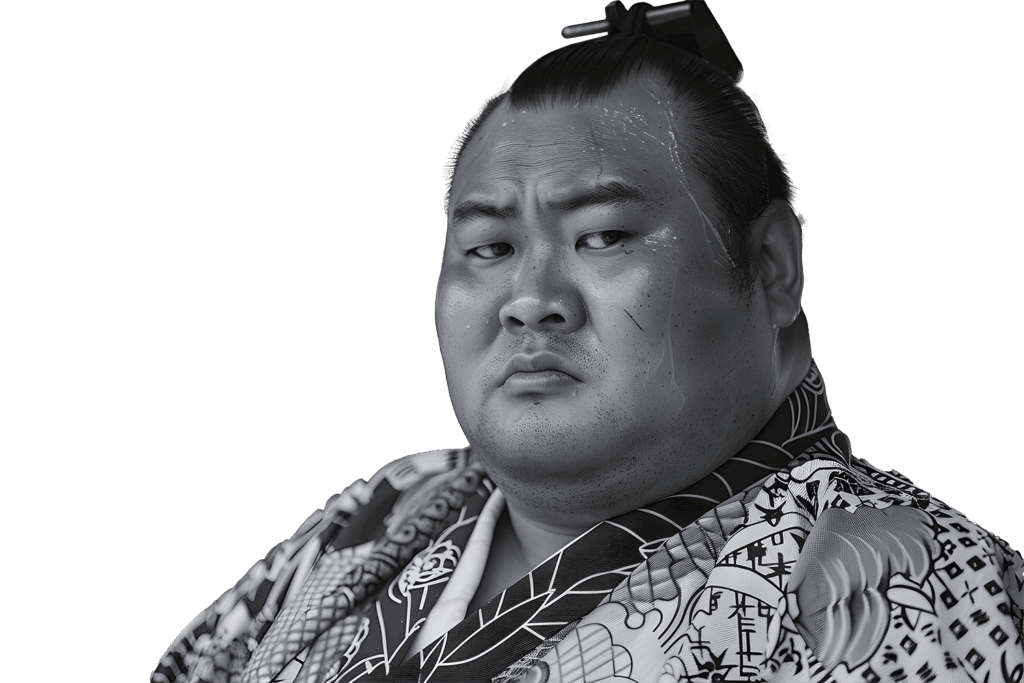
The topknot (mage) worn by sumo wrestlers is more than a hairstyle—it is a sacred adornment that embodies the dignity of those who step into the ring. The ōichō (great ginkgo leaf) style, in particular, traces its origins to the samurai of the Edo period and conveys a sense of formality and refinement. As a part of sacred ceremony, the mage signifies the wrestler’s solemn readiness to participate in divine rituals. Upon retirement, a ritual hair-cutting ceremony (danpatsu-shiki) is held, during which the topknot is severed—a powerful moment that marks the close of a wrestler’s career, witnessed with reverence, gratitude, and heartfelt prayers.
力士の髷は、神聖な姿を整えるための重要な所作です。なかでも「大銀杏」と呼ばれる結い方は、江戸時代の武士に由来し、格式と品格を象徴します。髷は、神事の場に立つ者の威厳と覚悟を示す、神聖な装束でもあります。引退の際には髷を切り落とす断髪式が行われ、その人生の節目を多くの人が見届け、労いと祈りを捧げます。🟤 The Dohyō and Its Symbolism | 土俵とその象徴性
Continue Reading in Hiragana Times
続きを読む — Hiragana Times 本誌へ
Digital PackagesRead and listen in your browser — available in bundles.誌面と音声を、パッケージでご利用いただけます。More From Hiragana TimesJoin the Hiragana Times Discord Community — Free!Connect with readers worldwide — free, open, and always welcoming.世界の読者とつながる、無料のDiscordコミュニティへようこそ。Online Japanese lessons, run by Hiragana Times.One month free for Hiragana Times subscribers.ひらがなタイムズ定期購読者は、1ヶ月無料でご受講いただけます。 -
Japan Style – Hiragana Times February 2025 Issue
Listen to the Audio:
Japan: A Nation of Addition, Multiplication, and Harmony
足して、掛けて、和する国、日本
In the United States, over 240 million people, accounting for about 70% of the population, identify as Christians, and there are approximately 120,000 churches.
アメリカでは、人口の約70%にあたる2億4,000万人以上がキリスト教徒であり、教会の数はおよそ12万にも上ります。On the other hand, Japan, with a total population of about 120 million, roughly 2/5 that of the United States, and a land area just 1/26 of the size, has approximately 165,000 shrines and temples. Furthermore, when including smaller shrines attached to major ones, the number of shrines is said to exceed 300,000.
一方、日本は総人口が約1億2,000万人とアメリカの約2/5であり、国土面積に至っては1/26程度と大幅に小さいにもかかわらず、約16万5,000の神社仏閣が存在します。さらに、神社においては、主要な神社に付属する小規模な神社を含めるとその数は30万社以上に達すると言われています。Shrines are facilities where the deities of Japan’s indigenous Shinto religion are enshrined, and rituals are performed, while temples (Buddhist temples) house Buddhist statues and conduct Buddhist ceremonies.
神社は日本固有の神道の神々を祀り神事を行う、寺(仏閣)は仏像を祀り仏事を行う施設です。The history of shrines is older than that of temples, dating back to the 5th to 3rd centuries BCE. Before the arrival of Buddhism, mountains, forests, rivers, and rocks themselves were revered as sacred and became objects of worship.
神社の歴史は寺よりも古く、紀元前5~3世紀までさかのぼるとされています。仏教が伝来する以前、日本では山や森、川、岩など、自然そのものが神聖視され、崇拝の対象とされていました。This practice, known as animism, later merged with Buddhism, forming a unique Japanese religious system called Shinbutsu-shūgō (the syncretism of Shinto and Buddhism) that endured for over 1,000 years.
これが自然崇拝(アニミズム)であり、この土着信仰に仏教が融合し、神仏習合という形で1000年以上にわたり日本独自の信仰体系が形成されてきました。However, with the Meiji Restoration in 1868 and the enactment of the Shinbutsu Bunri (Separation of Shinto and Buddhism), shrines and temples were formally divided, resulting in the independent institutions we see today.
しかし、明治維新(1868年)の神仏分離令により、神社と寺は分離され、現在のようにそれぞれ独立した施設として存在するようになりました。During the Jomon period, which was centered around hunting and gathering, it is believed that a peaceful and prosperous society flourished for over 10,000 years.
狩猟が中心だった縄文時代には、1万年以上にわたり平和で繁栄した社会が築かれていたと考えられています。The descendants of the sun goddess Amaterasu, known as the Tenson clan (migratory people), sought to claim this land.
この地を、天照大神を祖とする天孫族(渡来系民族)が手に入れようとしました。At that time, the region was governed by the land of Izumo, and Amaterasu Ōmikami sent emissaries many times. However, some of the emissaries were so captivated by the richness and allure of the land that they ended up staying there, and negotiations did not proceed as intended.
当時その地を統括していたのは出雲の国であり、天照大神は何度も使者を送りました。しかし、使者たちはその地の豊かさや魅力に心を奪われてそのまま居着いてしまうこともあり、交渉は思うように進みませんでした。Ultimately, Amaterasu sent Takemikazuchi-no-Mikoto and Futsunushi-no-Okami, gods of war, to negotiate by demonstrating their power. As a result, a peaceful transfer of the land was achieved, avoiding conflict.
最終的に、天照大神は戦いの神である武甕槌命と経津主大神を送り、力を見せつける形で交渉を行いました。結果、争いを避けた平和的な国譲りが実現しました。Takemikazuchi-no-Mikoto and Futsunushi-no-Ōkami, who played key roles in this negotiation, were later enshrined in Kashima Jingū (then known as Kashima Shrine) and Katori Jingū (then known as Katori Shrine), respectively.
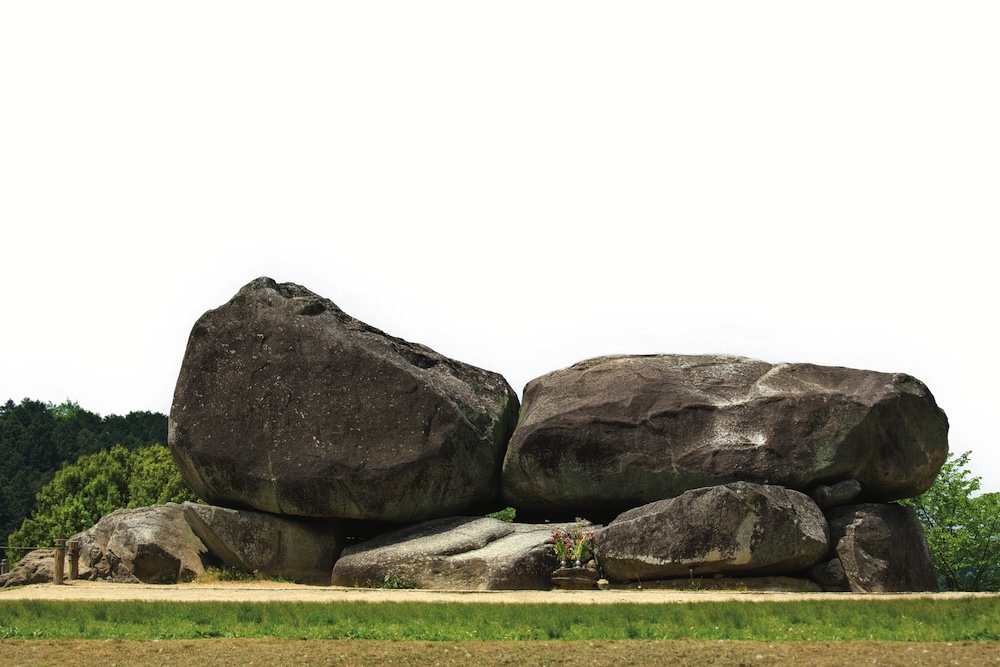
この交渉で活躍した武甕槌命と経津主大神はその後、鹿島神宮(当時の鹿島社)と香取神宮(当時の香取社)にそれぞれ祀られることになりました。Kashima Jingū (in Kashima City, Ibaraki Prefecture) and Katori Jingū (in Katori City, Chiba Prefecture) have a Kanameishi (keystone), which is believed to have the power to calm earthquakes. This Kanameishi is a massive natural stone buried deep underground and has been revered by ancient people.
鹿島神宮(茨城県鹿嶋市)と香取神宮(千葉県香取市)には、地震を鎮める力があるとされる要石が存在します。この要石は地中深くまで埋まっている巨大な自然石で、古代の人々に崇められてきました。
Continue Reading In Hiragana Times
続きを読む — Hiragana Times 本誌へ
Digital PackagesRead and listen in your browser — available in bundles.誌面と音声を、パッケージでご利用いただけます。More From Hiragana Times
Join the Hiragana Times Discord Community — Free!Connect with readers worldwide — free, open, and always welcoming.世界の読者とつながる、無料のDiscordコミュニティへようこそ。
Online Japanese lessons, run by Hiragana Times.One month free for Hiragana Times subscribers.ひらがなタイムズ定期購読者は、1ヶ月無料でご受講いただけます。 -
Japan Style – Hiragana Times January 2025 Issue
Listen to the Audio:
The Interwoven Story of Things and People: The Expo
モノと者が織りなす物語、万博
The Japan World Exposition (Expo) will be held in Osaka from April 13, 2025, for 185 days.
2025年4月13日から185日間、大阪で「日本国際博覧会」(万博)が開催されます。Various expositions are held around the world, but those officially recognized by the Bureau International des Expositions (BIE) are classified into the following four types based on their scale and theme.
世界各地でさまざまな博覧会が開催されていますが国際博覧会事務局(BIE)が認定する「万博」は、規模やテーマによって以下の4種類に分けられます。● Registered Expos: The largest type of expo, addressing global challenges and the future of international society. In Japan, this will be the third such expo, following the 1970 Osaka Expo and the 2005 Aichi Expo.
●登録博覧会:国際社会全体の課題や未来を探求する、最も規模の大きな博覧会。日本では1970年の大阪万博、2005年の愛知万博に続き、今回が3回目の開催。● Specialized Expos: Expositions focusing on specific fields such as science, technology, energy, and the oceans. In Japan, past examples include the 1975 Okinawa Ocean Expo and the 1985 Tsukuba Science Expo.
●特別博覧会:科学技術、エネルギー、海洋などに特化した博覧会。日本では過去に、1975年の沖縄海洋博覧会、1985年の筑波科学万博を開催。● Horticultural Expos: Expositions centered on flowers, greenery, environmental conservation, and urban greening. In Japan, the 1990 Osaka International Garden and Greenery Expo was held, and the Yokohama International Horticultural Exposition is scheduled for 2027.
●園芸博覧会:花や緑、環境保護、都市緑化などがテーマの博覧会。日本では1990年に大阪花博が開催され、2027年には横浜国際園芸博覧会が開催予定。● The Milan Triennale: An exposition specializing in design, fashion, and urban planning, held every three years in Milan, Italy.
●ミラノ・トリエンナーレ:デザイン、ファッション、都市計画などに特化した博覧会。3年に1度、イタリアのミラノで開催。
© BUNTA iNOUE | 井上 文太
The Bureau International des Expositions (BIE), established in Paris, highlights the deep connection between France and the concept of expos.
パリに設立された「万博」の事務局BIEは、フランスと万博の深い結びつきを示しています。The roots of the expo can be traced back to the French Revolution (1789). Following the revolution, treasures and artworks from the royal family were made available for public viewing in various locations.
万博の源流はフランス革命(1789年)にまでさかのぼります。革命後、王家の財宝や芸術品が各地で一般公開されるようになりました。One of the symbolic initiatives was the opening of the Republic Museum (Musée de la République) within the Louvre Palace in 1793. After major renovations, the entire palace was transformed into a museum.
その象徴的な取り組みの一つとして1793年、ルーヴル宮殿内に共和国美術館(ミュゼ・ドゥ・ラ・ルピュブリック)が開館。その後、ルーブル宮の大改造を経て、宮殿全体が美術館として生まれ変わりました。
© BUNTA iNOUE | 井上 文太
This movement spread across Europe, leading to the establishment of institutions such as the British Museum, the Berlin Museum, and the Hermitage Museum.
この動きはヨーロッパ全土に広がり、大英博物館、ベルリン美術館、エルミタージュ美術館などが誕生します。
© BUNTA iNOUE | 井上 文太
The public display of royal collections not only elevated national pride and alleviated discontent, but also served as a means to assert cultural superiority over other nations.
王室コレクションの公開は国民の誇りを高め、不満の緩和を促し、他国への文化的優位性をアピールする役割をも果たしました。Looking even further back, records show that in ancient Egypt and Persia, royal coronation ceremonies featured displays of art and royal garments for the public, while in ancient Rome, war spoils and enslaved captives were paraded as symbols of conquest.
さらにさかのぼれば、古代のエジプトやペルシャでは国王即位の祝典で芸術品や王族の衣類が民衆に披露され、古代ローマでは征服戦争で得た戦利品や奴隷が誇示されたことが記録にあります。Humanity may have instinctively understood that showcasing something fosters unity and solidarity.
人類は古来、何かを披露することで連帯が高まることを本能的に知っていたのかもしれません。Britain, the industrial powerhouse, transformed expos from domestic exhibitions into global platforms for nations to promote themselves, with the first World Expo held in London in 1851.
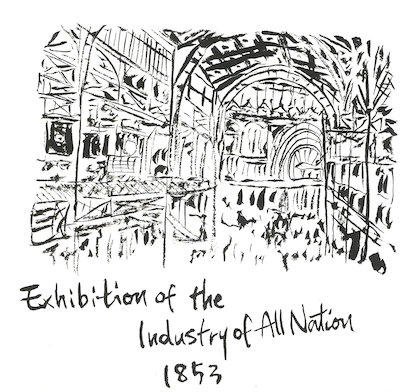
主に自国民向けだった「博覧会」を、自国を世界に向けてアピールする場へと変えたのが、産業革命で台頭したイギリスが1851年に開催した第1回「ロンドン万博」です。Held in London’s Hyde Park, the expo featured the magnificent Crystal Palace, a grand structure covered in approximately 290,000 panes of glass, which became a major highlight.
ロンドンのハイドパークで開催されたこの万博では、約29万枚のガラスで覆われた壮大な建築「クリスタルパレス(水晶宮)」が大きな話題となりました。
© BUNTA iNOUE | 井上 文太
Continue Reading In Hiragana Times
続きを読む — Hiragana Times 本誌へ
Digital PackagesRead and listen in your browser — available in bundles.誌面と音声を、パッケージでご利用いただけます。More From Hiragana Times
Join the Hiragana Times Discord Community — Free!Connect with readers worldwide — free, open, and always welcoming.世界の読者とつながる、無料のDiscordコミュニティへようこそ。
Online Japanese lessons, run by Hiragana Times.One month free for Hiragana Times subscribers.ひらがなタイムズ定期購読者は、1ヶ月無料でご受講いただけます。 -
The Japanese, Given Life by Rice
お米に生かされてきた日本人
[Japan Style – December 2024 Issue]
About 13.8 billion years ago, a flash of light spread through the infinite darkness, marking the Big Bang. Several hundred million years later, galaxies began to form, starting the grand narrative of the universe. The birth of Earth would still require a further 9 billion years.
今から約138億年前、無限の闇の中に閃光が広がり、ビッグバンが起こりました。それから数億年後に銀河が姿を現し、壮大な宇宙の物語が幕を開けたのです。地球の誕生は、さらに約90億年を待つこととなります。The newly born Earth was a wild landscape, with a sea of boiling magma stretching as far as the eye could see. Over time, however, it gradually cooled and solidified, taking shape. Eventually, icy meteorites from Jupiter showered down, filling the surface with water. It is believed that these meteorites also contained carbon, which is considered the source of life.
誕生したばかりの地球は、煮えたぎるマグマの海が広がる荒々しい姿でした。しかし、時が経つにつれて徐々に冷え固まり、形を整えていきました。やがて木星から氷の隕石が降り注ぎ、地表は水で満たされます。その氷には、生命の根源である炭素も含まれていたと言われています。Thus, the blue planet Earth—covered in carbon and water—came into being. Then, a mysterious process of the Sun known as “photosynthesis” began, producing the carbohydrates that serve as the source of life.
こうして、炭素と水に覆われた青い惑星「地球」が誕生したのです。そこに、太陽の神秘的な営みである「光合成」が始まり、私たちの生命の源である炭水化物が生まれました。Now, we move our bodies using the sugars contained in those carbohydrates. From the birth of the universe to the present day, we have been living within this cycle. Carbohydrates have spread in harmony with the natural environments of various regions across the Earth.
今、私たちはその炭水化物に含まれる糖質をエネルギーにして身体を動かしています。宇宙の始まりから今日に至るまで、私たちはこの循環の中で生き続けているのです。炭水化物は地球上のさまざまな土地の自然と調和しながら広がっています。In dry regions, strong wheat grows, while in water-rich areas, moist rice thrives. In warm highlands, corn continues to be cultivated, and in humid tropical islands, taro is grown as a staple, each fostering unique food cultures.
乾燥した地域では力強く麦が実り、水が豊かな土地ではしっとりとした米が育ちます。温暖な高原地帯ではとうもろこしが、湿潤な熱帯の島々ではタロイモが、それぞれ主食として作り続けられ、独自の食文化を育んできました。In Japan, which is blessed with abundant water, rice naturally became the staple food—an indispensable part of our lives. For Japanese people, rice—nurtured by the blessings of the sun, water, and earth—is life itself.
水に恵まれた日本では、やはり米が主食となり、私たちの暮らしに欠かせない存在となりました。米は、まさに太陽と水、そして大地の恵みを受けて育つ、日本人にとって生命そのものなのです。For over 10,000 years, during the Jomon period, the Japanese lived off nature’s blessings by hunting animals, catching fish, and gathering nuts and wild plants.
1万年以上も続いていたとされる縄文時代。日本人は、動物を捕まえ魚を獲り、木の実や山菜を採取して、自然の恵みを頂いて暮らしていました。It has been discovered that primitive rice was cultivated in Fukui Prefecture around this time. Paddy rice farming was introduced from the Chinese continent toward the end of the Jomon period.
この頃すでに、福井県で原始米が栽培されていたことが分かっています。水田稲作が中国大陸から伝わってきたのが縄文時代の終わり頃でした。The large-scale cultivation of rice using paddy fields, which allowed for nutritious and delicious rice to be produced in abundance, spread rapidly during the Yayoi period. As a result, villages centered around rice production emerged, bringing together people specializing in rice farming, pottery making, and tool crafting, leading to settled communities.
おいしくて栄養価が高い米を量産できる水田稲作は、弥生時代になって一気に広がります。それにより、米を作る人、土器を作る人、道具を作る人など米づくりを中心に人が集まる村ができ、定住して暮らすようになります。Rice became a fundamental support for the Japanese spirit and a symbol of power. Leaders emerged to oversee festivals and agricultural activities, with those who possessed rice accumulating wealth and power, creating distinctions in social class and wealth. Competition arose for fertile land suitable for rice production, leading to conflicts to protect stored rice. Stronger villages began to dominate surrounding ones, eventually forming larger nations.
米は日本人の心の支えとなり、さらに支配力の象徴にもなっていきます。祭りや農作業のリーダーとなる指導者が現れ、米を持つものが富と権力を持ち、身分や貧富の差が生まれました。米づくりに適した土地を奪い合うようになり、保存した米を守るための争いも起きます。そして、強い村が周囲の村を支配し、やがて大きな国となっていきました。In 646, a system was established in which the state controlled all land and people. They distributed fields to the people and required them to pay taxes in the form of rice. This tax system continued in various forms until 1873. Rice played an essential role as a form of currency, with salaries paid in rice. It was only in the Meiji era that taxes transitioned from rice to currency.
646年、国が全ての土地と人を支配する制度ができ、人々に田を与えて、米を税として納めさせるようになりました。この納税の仕組みは、形を変えながら1873年まで続きました。米は通貨として重要な役割を果たし、給料も米で支給されました。明治時代になってようやく、税は米から貨幣に変わったのです。In the Edo period (1603–1868), rice production served as a direct indicator of a daimyo’s economic power and authority, measured in units called kokudaka (1 koku = approximately 180 liters). Kokudaka was determined by land surveys conducted by the shogunate, based on the size and productivity of a daimyo’s territory. The daimyo’s tax and military obligations were set according to their kokudaka. Those with higher kokudaka held greater political influence and social status. For example, the Maeda family of the Kaga domain (in present-day Ishikawa and Toyama prefectures) was known as a powerful clan, with kokudaka exceeding one million koku.
江戸時代(1603年~1868年)には、米の生産量が大名の経済力や権力を示す指標とされ、「石高」という単位で計算されました。(1石=約180リットル)石高は幕府が行う検地によって、領地の広さや土地の生産性を基に決定され、大名は石高に応じて年貢や軍役を負担しました。石高が高いほど大名の政治的発言力や地位も高まり、例えば加賀藩(現在の石川県と富山県)の前田家は100万石を超える石高を持つ有力な存在として知られていました。Today, when it comes to Japanese rice available in supermarkets, varieties such as Koshihikari, Hitomebore, Akitakomachi, and Nanatsuboshi are popular. Among them, the top brand is Koshihikari from Uonuma in Niigata Prefecture.
今日、スーパーで売られている日本のお米といえば、コシヒカリ、ひとめぼれ、あきたこまち、ななつぼし……多くの品種がありますが、中でもトップブランドは、新潟県魚沼産のコシヒカリ。Koshihikari, introduced in 1956 after multiple improvements, became popular for its high quality, early harvest, and excellent flavor. It ranks first in planted area and production nationwide and remains highly popular. Its subtle sweetness and soft, chewy texture are widely appreciated.
品種改良が重ねられて1956年に登場したコシヒカリは、出荷が早く高品質、味も良いと評判になりました。作付面積も生産量も全国トップとなり、今も人気が続いています。ほんのりした甘みと、柔らかくもっちりした食感が好まれています。Each year, from mid-September to mid-October, new rice begins appearing in stores across Japan. For Japanese people, new rice is special, with anticipation similar to the excitement for Beaujolais Nouveau in France. Cooking fresh, water-rich new rice brings out glossy, smooth grains. Serve it steaming hot in a bowl, and enjoy it while it’s warm. Although it may be a bit expensive, the taste of new rice is exquisite.
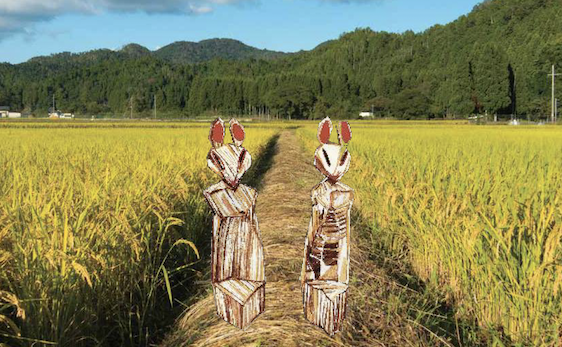
毎年、9月中旬を過ぎ10月も半ばになると、日本全国の新米が店頭に並び始めます。日本人にとって新米は特別。新米を待ち遠しく思うのは、ボジョレーヌーヴォーを想う気持ちと同じでしょうか。水をたっぷり含んだ新米を炊くと、ぴかぴかつるつるの美しい米粒が立ち上がって見えます。ほかほかのご飯を茶碗によそって、湯気の立ったところを召し上がれ。少々高くても、新米の味は絶品です。When we leave the city and see the rice fields changing with the seasons—lush green in the summer and golden during the autumn harvest—every Japanese person feels a deep sense of nostalgia. It is as if this landscape is deeply etched in our blood, sustained by the very life force of rice.
都心を離れて、青々とした夏や黄金色に輝く秋の収穫期など、季節ごとに姿を変える田んぼの景色を目にするとき、私たち日本人は誰もが懐かしさを覚えます。それはまるで、この風景が米の命に生かされてきた私たちの血液に深く記憶されているかのようです。文・岩崎由美
Text ・Yumi Iwasaki -
“Wagyu” Co-Being with “Wajin”
“和人” とともに在る“和牛”。
[Japan Style – November 2024 Issue]
Throughout the world, food cultures rooted in the natural environment have developed in different regions. For example, northern Europe, including northern England and Ireland, is cold and has many grasslands, making it suitable for cattle and sheep grazing. As a result, livestock farming has developed as an important industry.
地球上では、各地で風土に根ざした食文化が育まれてきました。例えば、イギリス北部、アイルランドなどを含むヨーロッパ北部は寒冷で牧草地が多く、牛や羊の放牧に適していることから牧畜が重要な産業として発展しました。In Japan as well, Hokkaido, with its cool climate similar to northern Europe, takes advantage of its vast land for dairy farming. The number of dairy cattle raised there is overwhelming, and the production of raw milk, the base for dairy products, accounts for more than 50% of the nation’s total. Hokkaido also ranks first in the country for beef cattle production, but there is not much production of what is considered “Wagyu.”
日本でも、ヨーロッパ北部に似た冷涼な気候の北海道では、広大な土地を生かして酪農が盛んです。特に乳牛の飼育頭数は圧倒的で、乳製品の原料となる生乳の生産量は全国の50%超。肉牛生産でも全国1位ですが、いわゆる「和牛」とされる肉用牛の生産は多くありません。The place considered the origin of “Wagyu” is Niimi City in Okayama Prefecture. In Niimi City, known for producing high-quality iron sand, farmland was limited, so livestock farming developed as a substitute industry during the Edo period. The cattle raised in this area later became the foundation for Wagyu, which spread nationwide and was gradually improved into what is now known as “Wagyu.”
「和牛」の発祥とされているのが岡山県新見市です。良質な砂鉄の産出地として知られた新見市では耕作地が限られていたため、江戸時代に畜産が代替産業として発展しました。この地で飼育された牛が後に和牛の基礎となって全国へと広がり、現在の「和牛」へと改良されていきました。The three most famous Wagyu brands—Kobe beef, Matsusaka beef, and Omi beef—are known for their beautiful cut surfaces and tenderness. The “Tajima beef” (from the Tajima region of Hyogo Prefecture), which forms the basis of many of these well-known brands, is famous for its long history of bloodline management and breed improvement. In the Kyushu region, brands like “Miyazaki beef” and “Kagoshima Kuro-ushi” (black cattle) are famous for maintaining Wagyu’s superior bloodline while incorporating local breed improvements, and in the Tohoku region, “Yamagata beef” and “Maesawa beef” are well-known.
三大銘柄と言われる神戸ビーフ、松阪牛、近江牛は切断面が美しく、柔らかさが特徴です。これらの知名度が高いブランド牛の多くの基になっている「但馬牛」(兵庫県但馬地方)は、血統管理や品種改良の歴史が深いことで知られています。九州地方では、和牛の優れた血統を引き継ぎつつ地域特有の改良が施されたブランド牛「宮崎牛」や「鹿児島黒牛」が、東北地方では「山形牛」や「前沢牛」が有名です。In Japan, from the birth of a calf to when it becomes meat, everyone involved treats the cattle with great care, paying close attention and showing affection. Each calf is registered with a name, birthdate, bloodline—including parents, grandparents, and great-grandparents—where it was born, and who raised it. Each cow is given an individual identification number. This thoroughly managed traceability (production history) provides peace of mind.
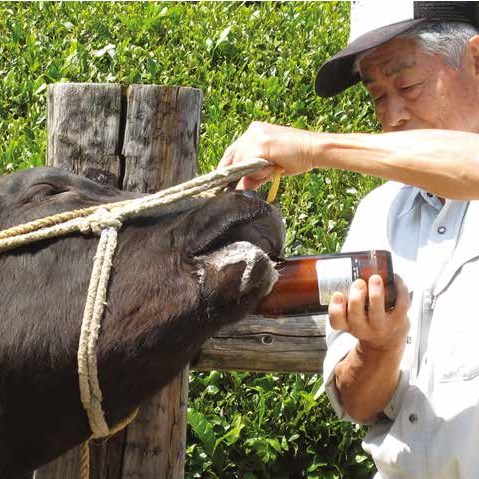
日本では、牛の誕生から食肉になるまで、全ての関わる人たちが丁寧に細やかに心を配り、愛情を注いで扱います。生まれた子牛の名前、生年月日、両親、祖父母、祖父母の父母までの血統、どこの牛農家で生まれ誰が育てたのかといった戸籍があり、1頭ごとに個体識別番号が与えられます。きっちり管理されたトレーサビリティ(生産履歴)は、安心感につながります。Cattle farmers put their hearts into raising the cattle. In addition to grains, they feed the cows rice straw that has been aged for one to two years, and the 20 to 50 liters of water they drink daily is natural spring water. In summer, when the cows’ appetite decreases, they are even given beer. Farmers brush the cows every morning without fail, massage them with shochu, shampoo them to make their coats glossy, and in winter, they even splash cold water on the cows to stimulate the growth of soft, fluffy winter fur. Through constant trial and error, farmers spare no effort or labor.
牛農家は心を砕いて育てます。穀類のほか、1~2年熟成させた稲わらを食べさせたり、1日に20~50リットル飲む水は天然水、食欲が落ちる夏はビールを飲ませたりします。ブラッシングは毎朝欠かさず、焼酎を使って全身をマッサージ。毛並みを美しくするためにシャンプーをし、冬はあえて冷たい水をかけて身体を冷やしてふわふわの冬毛が生えてくるようにするなど、手間と労力を惜しまず試行錯誤を繰り返してきました。Cattle that are carefully raised like family by skilled and dedicated producers have calm expressions and beautiful physiques. It is said that the better the cow looks, the better the meat tastes. When it’s time for shipment, farmers reportedly pray, saying, “Thank you for growing up so well. Now, please go on to sustain the lives of many people.” They feel pride in raising cows that will become essential to human life and express gratitude to the cows for supporting human existence.
生産者の技術と人柄で家族のように大切に育てられた牛は、顔つきが穏やかで体軀も美しくなります。牛は見た目に比例して肉の味も良くなるのだそうです。出荷となり送り出す時、「ここまで育ってくれてありがとう。この先はたくさんの人の命になってくれ」と祈るのだとか。牛農家は、人間の命を支えてくれる牛に感謝しながら、育てた牛がみんなの命になることに誇りを持って育てています。Today, “Japanese Wagyu” has become incredibly popular worldwide and is recognized as Japan’s finest food product. The characteristic of “Japanese Wagyu” lies in its “marbled meat,” where fat is interwoven like a web among the lean meat, creating a melt-in-your-mouth richness. This is rare overseas and has garnered high praise. The tender meat, which can be cut with chopsticks, and the sweet fat that spreads in your mouth can only be experienced with Wagyu raised in Japan.
今や「日本の和牛」は世界で大人気となり、日本が誇る最高の食材となりました。「日本の和牛」の特徴は、赤身の間に網の目のように入ったサシ(脂肪)がとろけるような旨みを生み出す「霜降り肉」にあります。これは海外では珍しく、高い評価を得ています。箸で切れるほどに軟らかく、口の中に甘さが広がる良質な肉の脂は、日本で育てられた和牛でしか味わえません。Looking around the world now, Wagyu crossbred with Japanese bloodlines, known as Wagyu, is flourishing overseas. Australia, in particular, is the largest producer of Wagyu and has gained significant recognition. However, it is a completely different product from the Wagyu produced in Japan. Japanese Wagyu, raised with the passion and dedication of farmers who tend to their cattle daily, offers a deep flavor, smooth texture, and melt-in-your-mouth harmony that will be etched in your memory once you taste it.
今、世界を見渡すと、和牛の遺伝子を交配した海外産のWagyuが幅を利かせています。特にオーストラリアは最大のWgyu生産国で、知名度も高いのが現状ですが、日本で生産される和牛とは全くの別物です。真摯に日々牛に向き合う生産者の情熱とこだわりが込められた和牛は、一度口にすれば奥深い風味と滑らかな舌触り、とろける口当たりのハーモニーが記憶に刻み込まれることでしょう。 -
[Japan Style – October 2024 Issue]
Tanka for Being in the Now
今を生きるための短歌What do you do when your heart is unsettled? One way to escape when you’re about to be crushed by stress is through “mindfulness,” which has gained global attention. This meditation method focuses the mind on the “present.”
心が乱れたら、どうしていますか。ストレスで押し潰されそうになった時に、そこから抜け出す方法の一つとして世界的に注目されている「マインドフルネス」。これは、意識を「今」に集中させる瞑想法です。When you think about it, “tanka” (or “waka”), one of Japan’s unique traditional cultural practices that has continued for over 1,300 years, serves as an excellent method to pause and calm the mind. Whether composing or appreciating a tanka, one first directs one’s awareness inward and faces one’s own emotions.
考えてみると、1300年以上続く日本固有の伝統文化の一つ「短歌(和歌)」は、立ち止まって心を静める手法としてとても役立ちます。歌を詠む時、鑑賞する時、人はまず意識を内面に向け、自身の感情と向き合います。By doing so, you can begin to see what you are truly feeling and what you are seeking. Tanka, considered the source of Japanese culture, may offer such benefits.
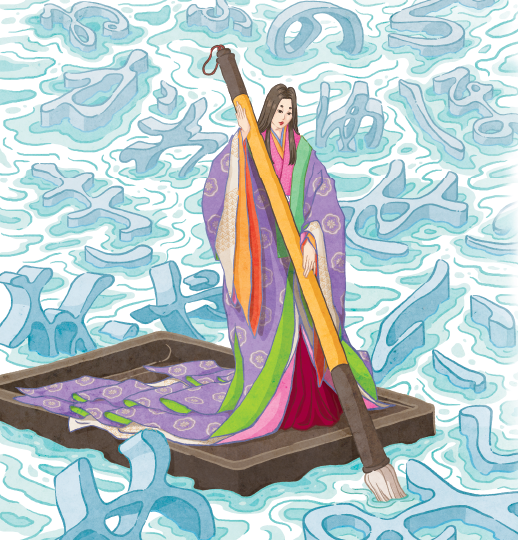
すると、自分が本当は何を感じているのか、何を求めているかが見えてきます。日本文化の源[ルビ:みなもと]とも言える短歌には、そうした効用もあるかもしれません。For over 60 years, the “Taiga Drama,” which airs every Sunday night on NHK, has featured various historical figures as its protagonists. This season (starting January 2024), the protagonist is Murasaki Shikibu. Murasaki Shikibu is known as the author of “The Tale of Genji,” the world’s oldest full-length novel, completed about 1,000 years ago, and she was also a highly educated poet (a composer of waka).
60年以上にわたり毎週日曜夜にNHKで放送されている「大河ドラマ」。今シーズン(2024年1月~)の主人公は紫式部です。紫式部と言えば、1000年ほど前に完成した世界最古の長編小説『源氏物語』の作者として知られ、教養あふれる歌人(和歌を詠[よ]む人)でもありました。In The Tale of Genji, nearly 800 waka poems appear at key points in the story. This season’s Taiga Drama also includes scenes where poems are composed, subtly revealing the poet’s personality while addressing an unrequited lover without mentioning names. It is indeed an elegant and subtly alluring portrayal.
『源氏物語』には800首近い和歌が織り込まれていて、物語の要所要所で登場します。今の大河ドラマにも、かなわぬ恋の相手に向けて名前を伏せ、自分らしさがそこはかとなくわかるような歌を詠む場面が織り込まれています。何とも奥ゆかしく、色気が漂うではありませんか。Waka is a fixed-form poem written in 31 syllables in a 5-7-5-7-7 pattern. The poet expresses one’s inner feelings and emotions.
和歌は、五七五七七の三十一文字(みそひともじ)で書かれる定型詩です。作者は感覚や心情といった心の内を表現します。Because the number of words is fixed, the poet’s thoughts are condensed, and the reader expands one’s imagination to savor that world. The reader may sense the spirit beyond the literal meaning of the words, finding empathy or inspiration.
定型で言葉数が決まっているぶん、作り手の想いが凝縮され、読む人は想像を広げてその世界を味わいます。言葉の向こうにある言葉そのものの意味を超えた魂を感じて共感したり感動したりする。How one interprets a tanka depends greatly on one’s own experiences, education, and sensitivity. The richer these are, the more one can feel. It’s not necessary to correctly grasp what the poet wanted to convey. One is encouraged to understand it in one’s own way.
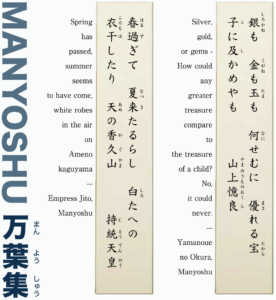
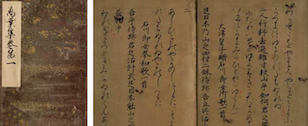
何をどう捉えるかは、読む人それぞれの経験や教養、感受性によるところが大きく、それらが豊かであるほど多くのことを感じられるでしょう。歌を詠んだ人の伝えたかったことを正しく読み取れなくてもいい。各々の捉え方で理解すればよいとされています。The oldest tanka anthology in Japan is the “Manyoshu.” It contains about 4,500 poems from the 7th to 8th centuries. The authors range from emperors to commoners across Japan. They sing of reverence, awe, and praise for nature, love for family or lovers, and discoveries in daily life, covering a wide variety of themes.
日本最古の和歌集は「万葉集」です。ここには7~8世紀頃の歌約4,500首が収められています。作者は天皇から平民まで日本各地に住む幅広い層の人たちです。自然を畏怖し、敬い、讃美する。家族や恋人への愛や日常の暮らしの中での発見など、さまざまなテーマで詠まれています。During the Heian period (794–1185), a time of cultural flourishing, waka often depicted natural landscapes such as flowers, birds, wind, and the moon using native Japanese words. The soft sounds when recited aloud and the refined use of language were essential cultural knowledge for both men and women in aristocratic society. Especially in matters of love, waka was indispensable for conveying emotions.
文化が爛熟した平安時代(794~1185年)の和歌には、日本固有の大和言葉で花や鳥、風や月といった自然の姿がよく詠まれました。和歌は、声に出した時の音の響きが柔らく格調高い言葉で詠むことがよしとされ、貴族社会において男女共に必須の教養でした。特に恋愛において気持ちを伝えるのに、和歌はなくてはならないものでした。At that time, it was considered improper for a woman to express her feelings to a man first. Even if a man confessed his feelings, replying with “I like you too” was considered unsophisticated. It was considered more refined to deflect with something like, “Aren’t you saying the same thing to someone else?”
当時は、女性から先に男性に想いを伝えるのは「はしたないこと」とされていたのです。男性から想いを告げられても「私も好きです」と返すのは野暮で、「私以外の方にも同じことを言っているのではないですか」などと受け流すのが風流だとされました。To reject someone, it was enough not to respond, much like what we would now call “read and ignore.” Direct expressions like “I’m happy” or “I’m sad” were also avoided; instead, words were chosen that would subtly convey those feelings.National Treasure | Genryaku Manuscript of the Manyoshu [Tokyo National Museum Collection]
拒絶する時は、現代の既読スルーのように返事をしなければ良いのです。また、嬉しい悲しいといった直接的な言葉を入れるのもNG。それを感じさせるような言葉を選びます。One of the works often studied in schools is the “Ogura Hyakunin Isshu (One Hundred Poets, One Poem Each),” compiled during the Kamakura period (1180–1336). This anthology consists of 100 poems, each composed by a different renowned poet.
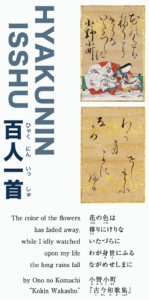
学校で習うことが多い和歌集に、鎌倉時代(1180年~1336年)に編纂された『小倉百人一首』があります。これは優れた歌人100人の和歌を1人1首ずつ、計百首を選んで作られた歌集です。Japan’s national anthem, “Kimigayo,” was also taken from the “Kokin Wakashu,” which was
compiled by imperial order in 905.
日本の国家「君が代」も、905年に天皇の命によって編集された「古今和歌集」から採られました。Waka began to be called “tanka” during the Tanka Reform Movement in the late Meiji period (1887–1906), led by poets such as Masaoka Shiki and Yosano Tekkan. Before then, it was believed that only lofty subjects should be expressed in poetry, but the movement allowed anything in daily life to become the subject of a tanka.
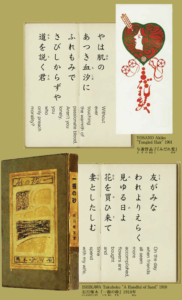
「和歌」が「短歌」と呼ばれるようになったのは、明治20年代から30年代(1887〜1906年)にかけて正岡子規、与謝野鉄幹といった歌人の提唱で起こった短歌革新運動によるものです。それまでは高尚な題材を詠むべきとされていたのが、身の回りにあるどんなものも歌に詠んでよいとしました。Yosano Akiko wrote about sensuality and romantic feelings, while Ishikawa Takuboku wrote about poverty. With this liberation of themes, the world of tanka blossomed greatly.
与謝野晶子は官能や恋愛感情を、石川啄木は貧しさを詠むなど、テーマが開放されたことで短歌の世界は大きく花開きました。The next shockwave after the Tanka Reform Movement was the tanka composed by Tawara Machi in everyday spoken language. Her poetry collection Salad Anniversary (1987) captured the hearts of people who were not usually familiar with tanka and became a huge bestseller, selling over 2 million copies.
さて、短歌革新運動の次に訪れた衝撃は、身近な話し言葉で作られた俵万智の短歌でした。彼女の出した歌集「サラダ記念日」(1987年)は普段、短歌になじみのない人の心もつかみ、200万部を超える大ベストセラーとなりました。With the start of the Reiwa era, another tanka boom has emerged. The number of people composing tanka, especially among those in their 20s and 30s, has increased, leading to more publications of tanka collections. Bestsellers have appeared, and tanka events held across the country are thriving. On social media, hashtags like “#tanka photo” and “#tanka” see new poems being posted almost every minute. Over 70,000 tanka are submitted to the “Modern Student Hyakunin Isshu” competition, which has been held since 1987 and attracts students from Japan and abroad.
そして令和になり、また短歌ブームが来ています。20代から30代の若い世代を中心に短歌を詠む人が増え、歌集の出版が続いています。続々とベストセラーが生まれ、各地で開かれる短歌イベントも大盛況です。SNSのハッシュタグ「#短歌フォト」「#tanka」には、新しい歌が毎分のように投稿されています。1987年から続く、国内外の学生を中心としたコンクール「現代学生百人一首」には、7万首を超える歌が集まります。One of the appealing aspects of tanka is the immediate feedback from readers when shared on social media. Unlike haiku, tanka does not require a seasonal word, and its fixed form makes it relatively easy for beginners to compose, which seems to add to its popularity.
短歌は、SNSで発信すればすぐに読者からの反応があることも魅力の一つです。俳句と違って季語がいらず、定型なので初心者でも作りやすいという気軽さもウケているようです。By mobilizing all senses—sight, hearing, taste, smell, and touch—we explore the depths of the heart and express it in words. This method of expression has been passed down through the ages, updated with the times, and has always reflected the hearts of the people of each era.
視覚・聴覚・味覚・臭覚・触覚といった全ての感覚を総動員して心の深いところを探り、言葉にして表現する。その表現方法は長きにわたって受け継がれ、時代とともにアップデートされ、その時代の人々の心を写し出してきました。Waka also has strong musical elements, with its pleasing rhythm and beautiful sound when recited aloud. Sometimes, waka is even used in place of norito (Shinto prayers) in sacred ceremonies. Words are meant to be a helping force in life, not a weapon. Surely, they can resonate with the heartbeat of the universe and the human heart, and save us.
和歌はリズムが良く、声に出すと響きが美しいという音楽的要素も強い。時には、神事で祝詞[のりと]の代わりに和歌が詠まれることもあります。本来、言葉は刃でなく、生きる助けになってくれる力であるはず。宇宙の鼓動と人間の鼓動を共鳴させ、私たちを救い出してくれるに違いありません。Text: IWASAKI Yumi
文:岩崎由美 -
[Japan Style – October 2024 Issue]
Echoes of Spirit on Stage – Japanese Languages and Kabuki [Part2]
舞台に響く言霊日本語と歌舞伎 [パート2]
“Kabuki is like Japan’s imperial family. It values bloodlines above all, and if there is no legitimate son, they adopt to ensure the lineage continues. It is a unique environment, for better or worse. Since my parents’ divorce, I had no connection with Kabuki.
「歌舞伎は日本の天皇家と同じです。何よりも血脈を重視し、嫡男がいなければ養子を迎えるなどします。とにかく家系を途絶えさせるわけにはいかない。良くも悪くも特殊な環境にあるのです。親が離婚して以来、私と歌舞伎は無縁になりました。That doesn’t mean I harbored any resentment. I was raised without feeling lonely, even in a fatherless household, because I had parted from my father too early. After graduating from university, I aimed to become an actor in drama and film.”
だからといって悔しい思いをしたということはありません。そして、あまりに早く父と別れたので、父親が不在の家庭であっても寂しさを感じることなく育ちました。大学卒業後は、ドラマや映画の俳優を目指しました」Chusha is better known as Teruyuki Kagawa, an actor. His notable works include the “Hanzawa Naoki” series and the NHK Taiga drama “Ryomaden.” He is highly regarded for his strong, distinctive acting ability.
中車さんは、歌舞伎役者としてより俳優・香川照之(本名)として知られています。代表作はドラマ「半沢直樹」シリーズや大河ドラマ「龍馬伝」など。個性の強い圧倒的な演技力で高い評価を得ています。The reason he returned to the Kabuki stage, which he thought he had lost connection with, was the presence of his newborn son.
中車さんが、もう縁のないものと考えていた歌舞伎役者として舞台に立つことになったのは、誕生した息子の存在だったといいます。“My son is the grandson of En’o. He was born to perform Kabuki. I felt it suddenly. After nearly ten years of contemplating my son’s future, I finally decided to introduce him to the Kabuki world. In 2012, my son assumed the name of the fifth-generation Ichikawa Danko. At the same time, I assumed the name of the ninth-generation Chusha (note: the fourth-generation Ennosuke was inherited by Chusha’s cousin). That was 13 years ago, when I was 45.”
「息子は父・猿翁の孫にあたる。歌舞伎をやるために男子として生まれてきたのだ。ふと、そう、ふと感じたのです。それから10年近く息子の行く末について逡巡し、最終的に歌舞伎界に入れようと決意しました。2012年に息子が五代目市川團子を襲名します。それと同時期に、私も九代目中車を襲名するに至ったわけです(※四代目猿之助は中車の従弟が継承)。それが13年前、45歳の時のことです」。Typically, one cannot work under two names in the Kabuki world, but Chusha, already active as a popular actor, was granted a special exception.
通常、歌舞伎界においては二つの名を持ち活動することはできないのですが、中車さんはすでに人気俳優として活躍していたことから、特例として現在に至っています。“Looking back now, I think it was fate for our family to experience such turbulence. I believe it was predestined by heaven for me to be born into this family. Buddhism teaches ‘reincarnation,’ the belief that people are reborn after death. I believe in this, and I deeply feel that life circulates in this way.”
「今思いますのは、このような波乱の家なのだろうということ。そして、私がこの家に生まれ出ずることは、きっと天が決めていたのだと受け止めています。仏教には輪廻転生という、人は死後再び生まれ変わるという教えがありますが、私はそれを信じていますし、まさにこうして命が循環しているということを、私なりに深く感じています」During the interview, Chusha impressed us with his strong presence, passion, and sense of independence. He is also knowledgeable about historical texts, such as the “Nihon Shoki,” which are vital to historical Kabuki performances like “Yamato Takeru.” His extensive knowledge of Japanese history and culture, along with his keen intellect, left a strong impression.
インタビユーを受ける中車さんは目力が強く、熱情にあふれ、独立自尊を感じさせるに十分な人物でした。また、歌舞伎、特に時代物の演目の重要な幹である歴史書、例えば『ヤマトタケル』における「日本書記」などの書物に精通しており、日本の歴史や文化についても博識で、非常に聡明な印象も受けました。“These qualities may stem from his time spent at a Christian school during his middle and high school years and from studying social psychology at university. He has a deep understanding of the ancient Japanese language, ‘Yamato Kotoba,’ which is the foundation of Kabuki, and graciously accepted our request to write for our serialized column, ‘Nihongo Do.’
それらの根底には、中学・高校時代をキリスト教学校で過ごし、大学で社会心理学を学んだことが大きくあるのかもしれません。歌舞伎の母体とも言っていい古[いにしえ]の日本語「大和言葉」については造詣が深く、弊誌で連載の「日本語道」での執筆ご依頼したところ、快く引き受けてくださいました。“Japanese is a language that includes hiragana, katakana, and kanji, making it extremely difficult for foreigners to learn. Are you struggling with it? (laughs) I believe Japanese is the most unique and mysterious language on Earth.
「日本語は、ひらがな、カタカナ、漢字とあり外国の方にとっては大変に難しい言語だと思います。この雑誌で学んでいる皆さん、苦労していませんか?(笑)。私は、日本語は地球上でもっとも特殊で不思議な言葉だと思っています。」In my opinion, languages like English are ‘horizontal connections.’ It’s an exchange between ‘me and you,’ facing each other. ‘I think this,’ ‘You think that.’
私が考えるのは、英語をはじめとする他国の言語は“横のつながり”であるということ。今向き合って会話をしている“私とあなた”という形。「私はこう考える」「あなたはこう考える」という対面する相互のやりとりです。However, Japanese is a ‘vertical connection.’ I call it a ‘vertical language,’ where, even while conversing with someone in front of you, there is a constant connection to the heavens through words.”
しかし、日本語は“縦のつながり”です。私はこれを「垂直言語」と呼んでいるのですが、目の前にいる人と会話をしながらも、言葉を介して常に天とつながっているような感覚があるのです。」“We could say ‘heavens’ refers to God, but it is more about a grand cosmic existence or ‘consciousness.’ “
「天とは神と言ってもいいですが、どのような神かということではなく、もっと大いなる宇宙的な存在、“意識”と言ってもいいと思います。」Therefore, Japanese people can understand each other through the resonance of words without detailed explanations. In ancient times, when Japanese mythology was written, this connection to the heavens was much purer and stronger. The creation of the fifty sounds and katakana has a very spiritual background.”
ですから、日本人同士は詳しく説明しなくても、言葉の響きで互いに分かり合えるところがあるのです。古代、日本神話が書かれた頃には、この天とのつながりがもっと純粋に強かったことでしょう。五十音やカタカナが生み出された背景はとてもスピリチュアルな面を持っていると言ってよいかもしれません。」“Japan has the concept of ‘kotodama,’ which means that words contain a soul. Shintoism speaks of ‘Yaoyorozu no Kami,’ the belief that everything in this world, including people, the sun, rain, snow, wind, mountains, seas, flowers, and even a single leaf, a pen, or a coffee cup, is inhabited by gods. This delicate sensitivity and spirituality are the essence of the Japanese language. Starting this month, I hope to convey its beauty to you all in depth through the Nihongo do corner in this magazine.”
「日本には「言霊」という言葉があります。まさに言葉には魂が宿っている、ということです。「八百万[やおよろず]の神という神道[しんとう]表現があります。この世の森羅万象の全て、人にも、太陽にも雨にも雪にも風にも、山にも海にも、草花や樹々の1枚の葉っぱ、ペンやコーヒーカップにさえも神が宿っていると感じる。そのような繊細な感受性と精神性を秘めている。それが日本語の本質なのです。本誌「日本語道コーナー」でその美しさを、皆さんにじっくり伝えていけたらと思っています」Text: MIZUTA Shizuko
文: 水田 静子