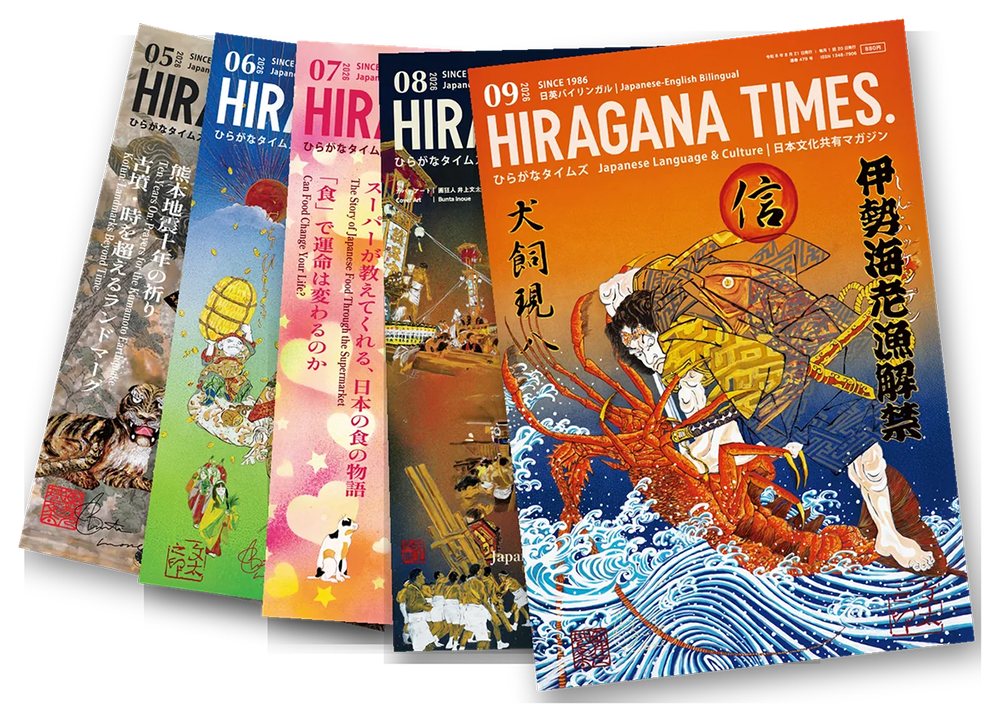
-

NIHONGO DO® | Voice Wave – Hiragana Times November 2026 issue
Listen to the Audio:
The Story of “Wa” (倭 and 和) and “Yamato” (大和)
「倭」と「和」と「大和」の物語
Among the old records about Japan is the Book of Han, compiled in China about two thousand years ago.
日本についての古い記録に、約二千年前に中国で編まれた『漢書』があります。In it, Japan is recorded as “Wa” and “Wajin.”
そこには日本のことが「倭」「倭人」と記されています。Japan was once called “Wakoku.”
かつて、日本は「倭国」と呼ばれていました。“Wa” has the meaning of obedience, and there is also a folk theory that it was a term of contempt describing a “small person with a bent back.”
「倭」には従順という意味があり、「背の曲がった小さな人」を表した蔑称だという俗説もあります。Meanwhile, the sound “wa” appears often in Japanese.
一方、日本語には「わ」という音がよく登場します。
“Watashi,” “wareware,” “waga kuni,” “wagahai.” In the old days, the other person was also called “ware.”
「わたし」「われわれ」「わが国」「わが輩」。昔は、相手のことも「われ」と呼びました。Also, the kanji “Wa” is written with the person radical and “yudaneru” (to entrust).
また「倭」という漢字は、人偏に「委ねる」と書きます。In the Japanese “watashi,” the humility of “passing to the other person” and “yielding” overlaps.
日本語の「わたし」には、「相手に渡す」「譲る」という謙虚さが重なります。Using “wa” heavily for oneself, and for the other person too, and entrusting to those around.
自らも、そして相手にも「わ」を多用し、周囲に委ねる。Unlock Full Article | 記事全文を読む
Digital PackagesRead and listen in your browser — available in bundles.誌面と音声を、パッケージでご利用いただけます。More From Hiragana Times
Join the Hiragana Times Discord Community — Free!Connect with readers worldwide — free, open, and always welcoming.世界の読者とつながる、無料のDiscordコミュニティへようこそ。
Online Japanese lessons, run by Hiragana Times.One month free for Hiragana Times subscribers.ひらがなタイムズ定期購読者は、1ヶ月無料でご受講いただけます。 -
NIHONGO DO® | Word Leaves – Hiragana Times November 2026 issue
Listen to the Audio:
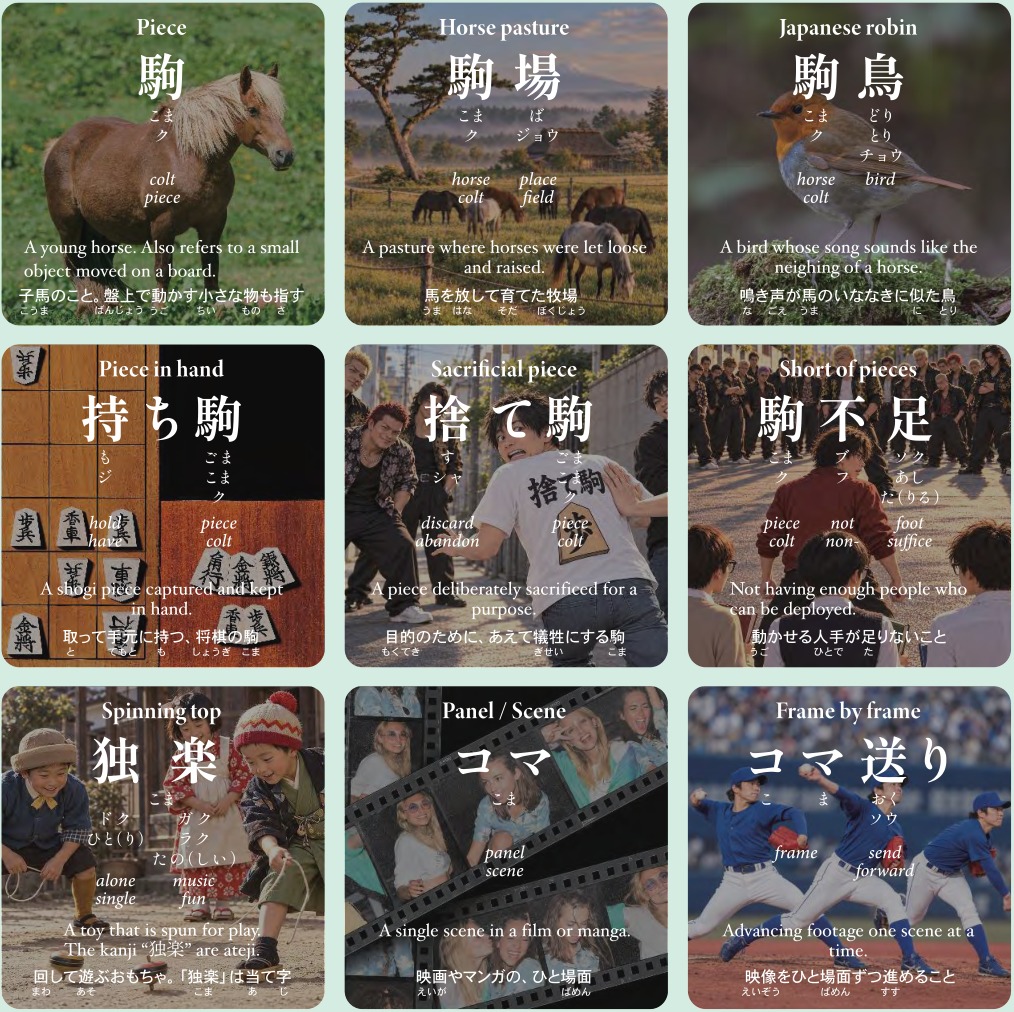
Words That Dwell in “Koma”
「こま」に宿る言の葉
Words are like leaves on a tree. They are colored by people’s thoughts and emotions, and carried from one person to another. The reason the character for “leaf” is used in the word kotoba (words) is believed to be connected to the Japanese reverence for nature. Japan’s oldest poetry anthology is also titled the Manyoshu (“Collection of Ten Thousand Leaves”). In this issue, in connection with the magazine’s theme, we trace, through words related to “koma,” how play and daily life are connected by one sound, even when the characters differ.
言葉はまるで木の葉のようです。人の心や考えに色づけられ、他者へと伝わっていきます。「ことば」に「葉」という漢字を当てた背景には、日本人の自然崇拝が関係していると考えられます。日本最古の歌集も『万葉集』と名付けられています。今号では、本誌のテーマにあわせ、「こま」にまつわる言葉を通して、字は違っても同じ音でつながる、遊びと暮らしの姿をたどっていきます。
Discover More Articles | もっと記事を読む
Digital PackagesRead and listen in your browser — available in bundles.誌面と音声を、パッケージでご利用いただけます。More From Hiragana TimesJoin the Hiragana Times Discord Community — Free!Connect with readers worldwide — free, open, and always welcoming.世界の読者とつながる、無料のDiscordコミュニティへようこそ。Online Japanese lessons, run by Hiragana Times.One month free for Hiragana Times subscribers.ひらがなタイムズ定期購読者は、1ヶ月無料でご受講いただけます。 -
NIHONGO DO® | Voice – Word Art – Hiragana Times November 2026 issue
Listen to the Audio:
A Horse from a Gourd
瓢箪から駒
What we call kotowaza is written with the kanji 諺. Here, we go beyond proverbs—from the Analects and waka poetry to modern spoken Japanese—to explore the art of words (言技), in which 言波 (voice waves) and 言の葉 (word leaves) intermingle and nurture our sensibilities. A joke comes true. The Japanese have called this wonder “a horse from a gourd” (hyotan kara koma). In this issue, please enjoy the word art that comes out of the gourd.
「ことわざ」は、漢字で「諺」と書きます。ここでは諺にとどまらず、論語、和歌、現代口語まで、「言波」と「言の葉」が融合し、感性を育ててきた言葉のアート「言技」を紹介します。冗談が、本当になる。日本人は、その不思議を「瓢箪から駒」と呼んできました。今号では、瓢箪から出てくる言技をお楽しみください。A Horse Comes Out of a Gourd
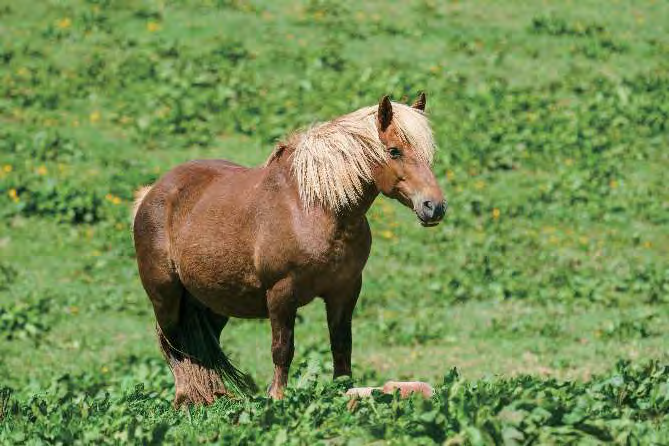
瓢箪から駒が出るHyotan, the bottle gourd, is a plant of the gourd family. It is said to have originated in Africa and is one of the oldest cultivated plants in the world. It has been used as a container, not as food, all over the world. A ripe gourd with its flesh removed and dried becomes a light, sturdy water bottle, sake container, or medicine container. Six gourds together are called “mubyo” (六瓢) and are regarded as a lucky charm for good health. Because the gourd has many seeds, it is also a sign of prosperity for one’s descendants. “Hyotan kara koma ga deru” (a horse comes out of a gourd) means that something unexpected comes out of an unexpected place. It is also used when a joke comes true. “Koma” is not a shogi piece, but a horse. It comes from a tale of Zhang Guolao, a Chinese immortal. Traveling on a white donkey, he folded it like paper into a gourd when not in use, and sprayed it with water to bring it back. In Japan, the tale became a picture, the donkey became a horse, and the phrase came to express the surprise of a horse coming out of a gourd.
瓢箪は、ウリ科の植物です。アフリカ原産とされ、世界で最も古い栽培植物の一つ。食べ物ではなく入れ物として、世界各地で使われてきました。熟した実の中身を抜いて乾かせば、軽くて丈夫な水筒や酒入れ、薬入れになります。六つそろえて「六瓢」と呼び、無病息災の縁起物とされます。種が多いことから、子孫繁栄の印にも。「瓢箪から駒が出る」は、意外な所から思わぬ物が出ること。冗談が本当になる時にも使います。「駒」は将棋の駒ではなく、馬のこと。もとは中国の仙人・張果老の話。白いロバで旅をし、使わない時は紙のようにたたんで瓢箪にしまい、乗る時は水を吹きかけて戻しました。日本ではこの話が絵になり、ロバは馬に変わり、瓢箪から馬が出る驚きを表す言葉になりました。■ Meaning / 意味
- Hyotan kara: From a gourd—out of a small container that could never hold a horse.
瓢箪から:馬など入らない、小さな入れ物から。 - Koma ga deru: A horse comes out—that horse leaps out, a truly unexpected event.
駒が出る:その馬が飛び出す、まさかの出来事。
■ Usage / 使う場面
Kenta: I joked, “I’ll treat you if we win,” and we actually won.
ケンタ:冗談で「優勝したらおごる」と言ったら、優勝しちゃった。Misaki: A horse from a gourd, huh.
ミサキ:瓢箪から駒だね。Kenta: Is “koma” the shogi piece?
ケンタ:「駒」って、将棋の駒のこと?Misaki: It’s a horse.
ミサキ:馬のことだよ。Kenta: Well then, as promised, tonight’s on me.
ケンタ:じゃあ、約束どおり、今夜はおごるよ。
Discover More Articles | もっと記事を読む
Digital PackagesRead and listen in your browser — available in bundles.誌面と音声を、パッケージでご利用いただけます。More From Hiragana TimesJoin the Hiragana Times Discord Community — Free!Connect with readers worldwide — free, open, and always welcoming.世界の読者とつながる、無料のDiscordコミュニティへようこそ。Online Japanese lessons, run by Hiragana Times.One month free for Hiragana Times subscribers.ひらがなタイムズ定期購読者は、1ヶ月無料でご受講いただけます。 - Hyotan kara: From a gourd—out of a small container that could never hold a horse.
-
NIHONGO DO® | Word Leaves – Hiragana Times October 2026 issue
Listen to the Audio:
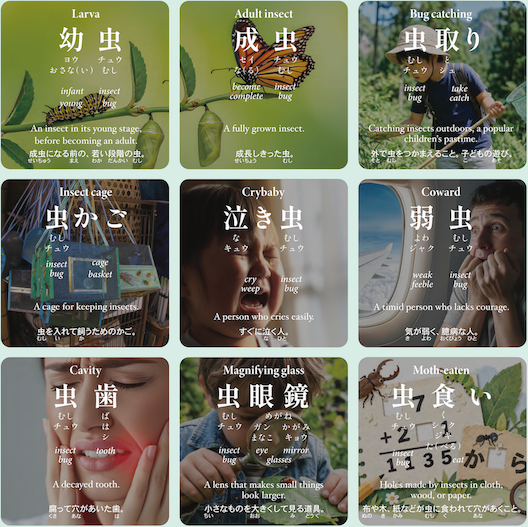
Words That Live with Insects
虫と暮らす言の葉
Words are like leaves on a tree. They are colored by people’s thoughts and emotions, and carried from one person to another. The reason the character for “leaf” is used in the word kotoba (words) is believed to be connected to the Japanese reverence for nature. Japan’s oldest poetry anthology is also titled the Manyoshu (“Collection of Ten Thousand Leaves”). In this issue, in connection with the magazine’s theme, we explore words related to insects and trace how Japanese people have lived alongside them and captured that life in words.
言葉はまるで木の葉のようです。人の心や考えに色づけられ、他者へと伝わっていきます。「ことば」に「葉」という漢字を当てた背景には、日本人の自然崇拝が関係していると考えられます。日本最古の歌集も『万葉集』と名付けられています。今号では、本誌のテーマにあわせ、「虫」にまつわる言葉を通して、日本人が虫とともにどう暮らし、その姿を言葉にとどめてきたかをたどっていきます。
Discover More Articles | もっと記事を読む
Digital PackagesRead and listen in your browser — available in bundles.誌面と音声を、パッケージでご利用いただけます。More From Hiragana TimesJoin the Hiragana Times Discord Community — Free!Connect with readers worldwide — free, open, and always welcoming.世界の読者とつながる、無料のDiscordコミュニティへようこそ。Online Japanese lessons, run by Hiragana Times.One month free for Hiragana Times subscribers.ひらがなタイムズ定期購読者は、1ヶ月無料でご受講いただけます。 -
NIHONGO DO® | Voice – Word Art – Hiragana Times October 2026 issue
Listen to the Audio:
Bugs Live in the Belly
腹に虫が住む
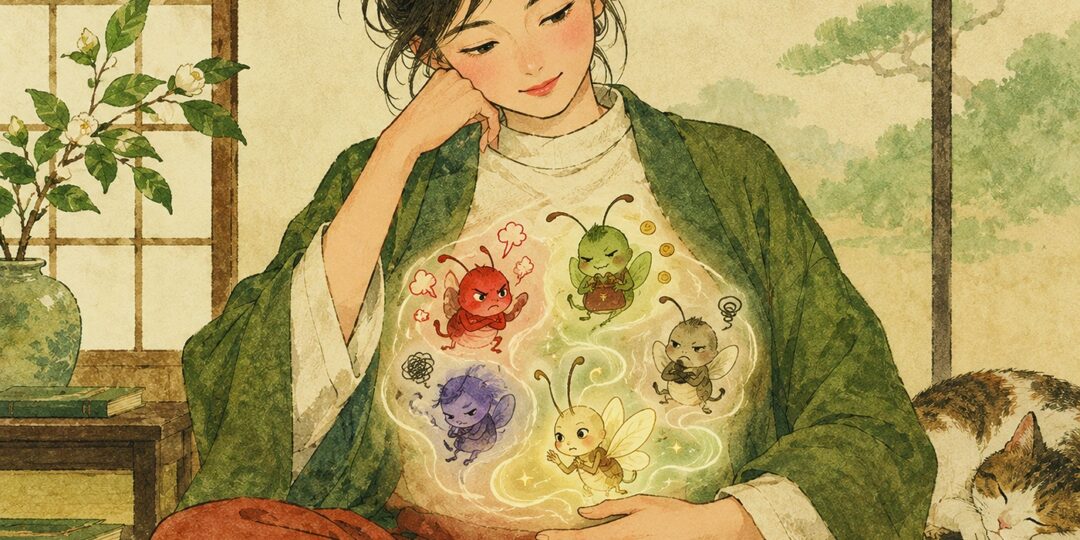
What we call kotowaza is written with the kanji 諺. Here, we go beyond proverbs—from the Analects and waka poetry to modern spoken Japanese—to explore the art of words (言技), in which 言波 (voice waves) and 言の葉 (word leaves) intermingle and nurture our sensibilities. The Japanese have long attributed anger, bad moods, and even likes and dislikes not to themselves, but to the “bugs” living in their belly. In this issue, please enjoy the word art of the bugs that live in the belly.
「ことわざ」は、漢字で「諺」と書きます。ここでは諺にとどまらず、論語、和歌、現代口語まで、「言波」と「言の葉」が融合し、感性を育ててきた言葉のアート「言技」を紹介します。日本人は、怒りも、不機嫌も、好き嫌いも、「自分」ではなく腹の中の「虫」のせいにしてきました。今号では、腹に住む虫の言技をお楽しみください。The Bug in the Belly Won’t Settle Down
腹の虫が治まらない
The idea of placing emotions in the belly is found all over the world. In English, nervousness is described as having “butterflies in the stomach,” while intuition is a “gut feeling.”
感情を腹に置く発想は、世界各地にあります。英語では緊張を「お腹の中に蝶がいる」と言い、直感を「はらわたで感じる」と言います。In Japan, “bugs” live in that belly and move people. When anger won’t subside, “the bug in the belly won’t settle down.” When someone is in a bad mood, “the bug is in a bad spot.” When you dislike someone for no particular reason, “the bug doesn’t like them.” When someone says or thinks only what suits them, “their bug is too good.” And when you somehow sense that something is about to happen, it is “a message from the bug.” The one who is angry, the one who dislikes—it is not me, but the bug. The responsibility is left to the bug.
日本では、その腹の中に「虫」が住み、人を動かします。怒りが収まらなければ「腹の虫が治まらない」。機嫌が悪ければ「虫の居所が悪い」。理由もなく嫌いなら「虫が好かない」。自分に都合のよいことを言ったり考えたりすれば「虫がいい」。そして、何かが起こりそうだとなぜか感じると「虫の知らせ」。怒っているのも、嫌っているのも、私ではなく虫。責任は虫に預けるのです。One theory holds that this idea of a bug living inside the body derives from the “Three Corpses” (sanshi no mushi), worm-like beings said in Chinese Taoism to live inside the human body.
この虫は、中国の道教で人の体内に住むとされた「三尸の虫」に由来するという説もあります。On the night of Koshin, which comes once every sixty days, they were believed to rise to heaven and tattle on their host’s misdeeds. That is why people stayed awake through the night.
虫は六十日に一度めぐる庚申の夜、天に昇って持ち主の悪事を告げ口する。だから人々は、その夜は寝ずに過ごしたのです。■ Meaning / 意味
- Hara no mushi: The bug in the belly—the bug said to live there and stir up anger, bad moods, and other feelings.
腹の虫:腹の中に住み、怒りや不機嫌などの感情を起こすとされる虫。 - Osamaranai: Won’t settle down—won’t subside.
治まらない:収まらない。静まらない。
■ Usage / 使う場面
Kenta: The manager’s bug is in a bad spot today.
ケンタ:今日の部長、虫の居所が悪いなあ。Misaki: Didn’t your “too-good bug” come out at yesterday’s drinking party?
ミサキ:昨日の飲み会で、ケンタが虫のいいことを言ったんじゃない?Kenta: Huh? How do you know?
ケンタ:えっ、なんで知ってるの。Misaki: A message from the bug.
ミサキ:虫の知らせ。Kenta: Somehow, my bug just doesn’t like the manager.
ケンタ:なんか部長は、虫が好かないんだよな。
Discover More Articles | もっと記事を読む
Digital PackagesRead and listen in your browser — available in bundles.誌面と音声を、パッケージでご利用いただけます。More From Hiragana TimesJoin the Hiragana Times Discord Community — Free!Connect with readers worldwide — free, open, and always welcoming.世界の読者とつながる、無料のDiscordコミュニティへようこそ。Online Japanese lessons, run by Hiragana Times.One month free for Hiragana Times subscribers.ひらがなタイムズ定期購読者は、1ヶ月無料でご受講いただけます。 - Hara no mushi: The bug in the belly—the bug said to live there and stir up anger, bad moods, and other feelings.
-
NIHONGO DO® | Voice Wave – Hiragana Times October 2026 issue
Listen to the Audio:
The Worms Within Came from the Universe
腹の虫は、宇宙から来た
Hara no mushi (the worm in the belly), mushi no shirase (a worm’s warning), mushi ga sukanai (the worm doesn’t like it), mushi ga ii (the worm has it easy).
腹の虫、虫の知らせ、虫が好かない、虫がいい。The Japanese language is full of “worms.”
日本人の言葉には、多くの「虫」が顔を出します。So what exactly is this “worm”?
そもそもこの「虫」は、いったい何なのでしょうか。And how long have we been living with it?
いつの時代から、私たちはこの「虫」と付き合ってきたのでしょうか。English has something similar: when you feel nervous and restless, you have “butterflies in your stomach.”
英語でも、そわそわして落ち着かない気持ちを「お腹の中に蝶がいる」と言います。In Chinese, someone who can read your mind is asked, “Are you the worm in my belly?”
中国語では、相手の心を読める人のことを「あなたは私の腹の中の虫なのか」と言います。It seems that people everywhere have sensed that something lives inside the belly.
人はどこの国でも、腹の中に何かが住んでいると感じてきたようです。From a medical point of view, the first thing that comes to mind is gut bacteria.
まず、医学の目で見て思い当たるのは「腸内細菌」です。In recent years, research on the “gut-brain axis” has shown that the brain and the gut influence each other.
近年は「脳腸相関」が説かれ、脳と腸が互いに影響し合っていることが分かってきました。Unlock Full Article | 記事全文を読む
Digital PackagesRead and listen in your browser — available in bundles.誌面と音声を、パッケージでご利用いただけます。More From Hiragana Times
Join the Hiragana Times Discord Community — Free!Connect with readers worldwide — free, open, and always welcoming.世界の読者とつながる、無料のDiscordコミュニティへようこそ。
Online Japanese lessons, run by Hiragana Times.One month free for Hiragana Times subscribers.ひらがなタイムズ定期購読者は、1ヶ月無料でご受講いただけます。 -
NIHONGO DO® | Voice – Word Art – Hiragana Times September 2026 issue
Listen to the Audio:
The House Has Ears, Eyes—and a Mouth
耳と目と口を持つ家
What we call kotowaza is written with the kanji 諺. Here, we go beyond proverbs—from the Analects and waka poetry to modern spoken Japanese—to explore the art of words (言技), in which 言波 (voice waves) and 言の葉 (word leaves) intermingle and nurture our sensibilities. The Japanese built their homes of wood and paper, allowing sounds and shadows to pass from room to room. In this issue, please enjoy a piece of word art born from the Japanese house.
「ことわざ」は、漢字で「諺」と書きます。ここでは諺にとどまらず、論語、和歌、現代口語まで、「言波」と「言の葉」が融合し、感性を育ててきた言葉のアート「言技」を紹介します。日本人は木と紙で家をつくり、音も影も部屋から部屋へと通してきました。今号では、日本の家から生まれた言技をお楽しみください。The Walls Have Ears, the Shoji Have Eyes
壁に耳あり障子に目あり
“The walls have ears” appears in many languages. English says “Walls have ears,” while Spanish has “Las paredes oyen”—“the walls listen.” Similar warnings are found in Italian, Chinese, and Korean. The idea is universal: secrets may be overheard.
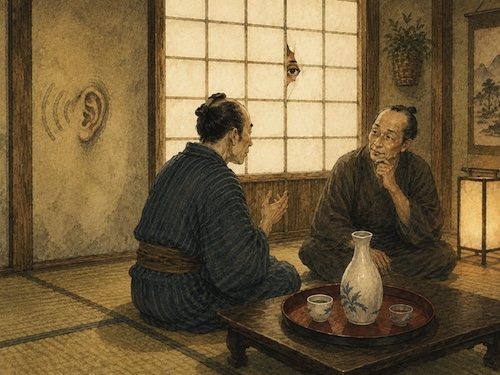
「壁に耳あり」という発想は、世界各地にあります。英語では “Walls have ears.”、スペイン語では「壁は聞いている」という意味の “Las paredes oyen.” と言います。イタリア語、中国語、韓国語にも似た戒めがあります。秘密はどこかで聞かれているかもしれない、という発想は世界共通です。Japan added “Shoji ni me ari”—“the shoji have eyes.” Shoji are paper-covered sliding screens. Voices pass through them, shadows appear on them, and a small hole can become an eye. The wall listens; the shoji watches.
日本では、これに「障子に目あり」が加わりました。障子は、木の組子に紙を張った建具です。声は通り、影は映り、小さな穴はのぞく目にもなる。壁は聞き、障子は見るのです。By the late Edo period, there was also a playful version:
“Kabe ni mimi ari, tokkuri ni kuchi ari.”
“The walls have ears, and the sake flask has a mouth.”
江戸時代後期には、こんなユーモラスな続け方もありました。
「壁に耳あり、徳利に口あり」The opening of a tokkuri is called its kuchi, or “mouth.” The phrase also hints at the human mouth, loosened by drink. A universal warning thus took in familiar objects from Japanese life, adding vivid imagery and humor.
徳利の注ぎ口も「口」と呼びますが、酒で軽くなる人の口にも掛けています。世界共通の戒めに、日本の暮らしの道具と、鮮やかな情景、ユーモアが加わっています。■ Meaning / 意味
- Kabe ni mimi ari: The walls have ears—someone may be listening.
壁に耳あり: どこで誰が聞いているか分からない。 - Shoji ni me ari: The shoji have eyes—someone may be watching.
障子に目あり: どこで誰が見ているか分からない。 - Tokkuri ni kuchi ari: The sake flask has a mouth—an old, humorous continuation warning that secrets may slip out.
徳利に口あり: 秘密は人の口から漏れるものだと戒める、かつてのユーモラスな続け方。
■ Usage / 使う場面
In a company meeting room / 会社の会議室で
Misaki: We should keep our voices down. The walls have ears.
ミサキ:声を落としたほうがいいね。壁に耳あり、だから。Kenta: Right. And the shoji have eyes.
ケンタ:そうだね。それに、障子に目あり。Misaki: Companies don’t have shoji, though.
ミサキ:会社には、障子はないけどね。Kenta: True. (laughs)
ケンタ:確かに(笑)。Misaki: But Kenta, you should keep “the sake flask has a mouth” in mind at drinking parties, too.
ミサキ:でもケンタは、飲み会では、「徳利に口あり」も気をつけなよ。
Discover More Articles | もっと記事を読む
Digital PackagesRead and listen in your browser — available in bundles.誌面と音声を、パッケージでご利用いただけます。More From Hiragana TimesJoin the Hiragana Times Discord Community — Free!Connect with readers worldwide — free, open, and always welcoming.世界の読者とつながる、無料のDiscordコミュニティへようこそ。Online Japanese lessons, run by Hiragana Times.One month free for Hiragana Times subscribers.ひらがなタイムズ定期購読者は、1ヶ月無料でご受講いただけます。 - Kabe ni mimi ari: The walls have ears—someone may be listening.
-
NIHONGO DO® | Word Leaves – Hiragana Times September 2026 issue
Listen to the Audio:
Words the Home Holds
家がつつむ言の葉
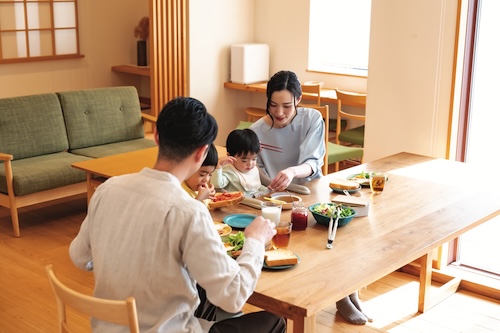
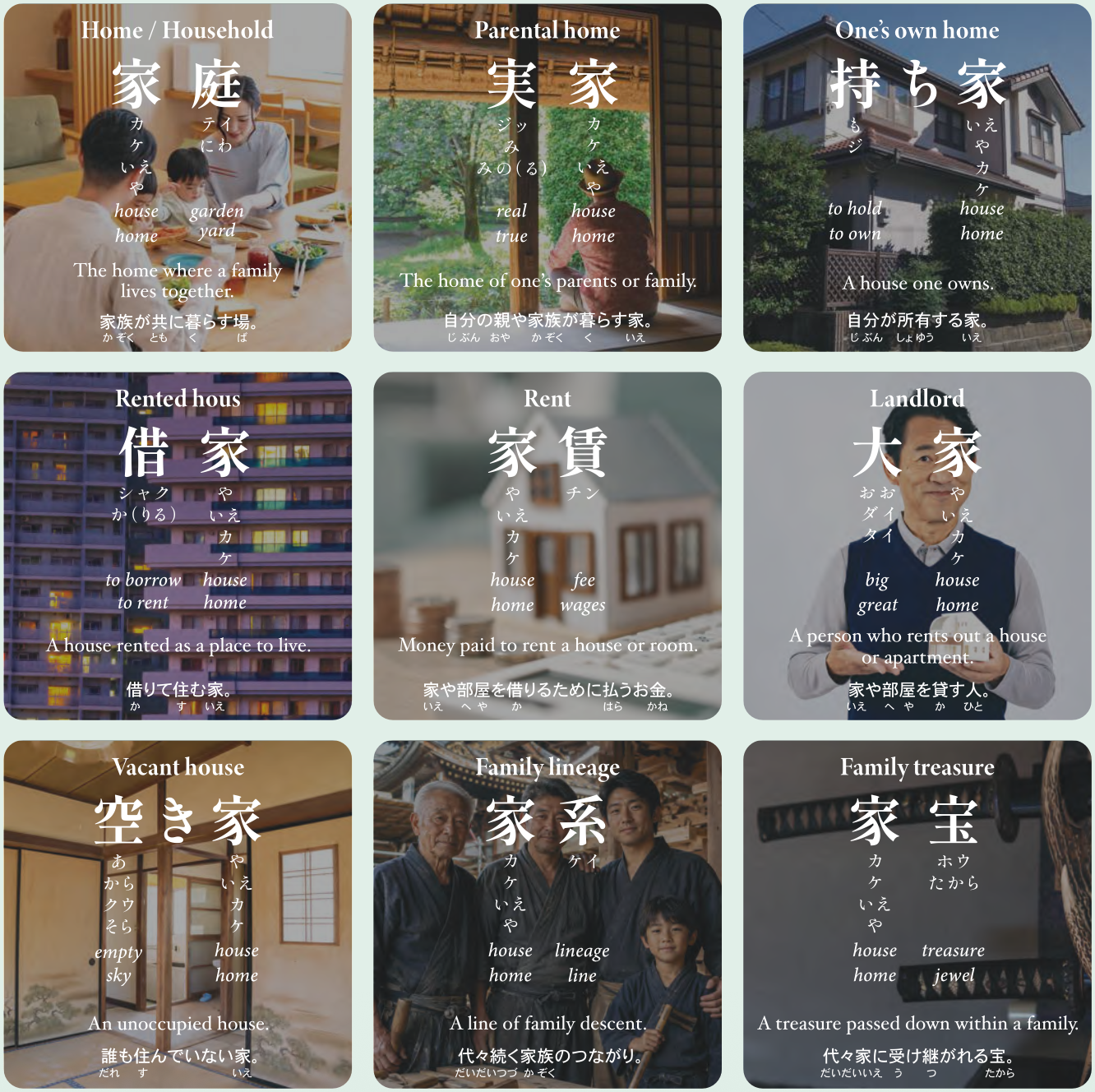
Words are like leaves on a tree. They are colored by people’s thoughts and emotions, and carried from one person to another. The reason the character for “leaf” is used in the word kotoba (words) is believed to be connected to the Japanese reverence for nature. Japan’s oldest poetry anthology is also titled the Manyoshu (“Collection of Ten Thousand Leaves”). In this issue, in connection with the magazine’s theme, we explore words related to the home and trace how Japanese people have lived together and passed their way of life down under one roof.
言葉はまるで木の葉のようです。人の心や考えに色づけられ、他者へと伝わっていきます。「ことば」に「葉」という漢字を当てた背景には、日本人の自然崇拝が関係していると考えられます。日本最古の歌集も『万葉集』と名付けられています。今号では、本誌のテーマにあわせ、「家」にまつわる言葉を通して、日本人が一つ屋根の下でどう暮らし、その営みを受け継いできたかをたどっていきます。
Discover More Articles | もっと記事を読む
Digital PackagesRead and listen in your browser — available in bundles.誌面と音声を、パッケージでご利用いただけます。More From Hiragana TimesJoin the Hiragana Times Discord Community — Free!Connect with readers worldwide — free, open, and always welcoming.世界の読者とつながる、無料のDiscordコミュニティへようこそ。Online Japanese lessons, run by Hiragana Times.One month free for Hiragana Times subscribers.ひらがなタイムズ定期購読者は、1ヶ月無料でご受講いただけます。 -
NIHONGO DO® | Voice Wave – Hiragana Times September 2026 issue
Listen to the Audio:
Living Like Wood, Flowing Like Water
木のように生き、水のように続く
Japan is said to be a “culture of wood,” and the West a “culture of stone.” In Japan, blessed with forests, wooden architecture became the basis of building. In the West, on the other hand, stone construction is the basis.
日本は「木の文化」、西洋は「石の文化」といわれます。森林に恵まれた日本では、木造建築が建物の基本になりました。一方、西洋では石造りが基本です。If the carpenter represents the craftsmen of Japan, in the West it was the stonemason. In the West, stonemasons were valued everywhere, and it is said that they worked across countries and territories. There is also a theory that such guilds of stonemasons became the origin of the Freemasons.
日本の職人を代表するのが大工なら、西洋のそれは石工でした。西洋では、石工は各地で重宝され、国や領地を越えて仕事をしたともいわれます。そうした石工の組合が、フリーメイソンの源流と考えられています。Styles of architecture go on to influence the ways of thinking and the views of religion of the people who live there. Wood has a quality that calls to mind reincarnation. A decayed tree does not simply vanish as it is. It is broken down into soil, and from that soil a new bud comes out again. Even when a tree ends its life, it returns to the soil and keeps circulating into the next life.
建築の様式は、そこに暮らす人の考え方や宗教観にも影響していきます。木には、輪廻を思わせる性質があります。朽ちた木は、そのまま消えてなくなるのではありません。土に分解され、その土からまた新しい芽が出てきます。木は、その命を終えても、土へ還り、次の命へと循環し続けるのです。In Japanese, one sound has one meaning. The same sound should have a connection of meaning. Ki is 木 (tree), and it is also 氣 (energy). Wood could also be called the energy of life itself.
日本語は一音一義。同じ音には、意味のつながりがあるはずです。「キ」は「木」であり、「氣」でもあります。木とは、生命のエネルギーそのものともいえるでしょう。If Japan, a culture of wood, values kimochi (feeling), then the West, a culture of stone, values ishi (will). The ki of kimochi is the ki of 木 (tree). And ishi (will) is also ishi (stone). I want it this way, I am like this — to show one’s own will clearly. Stone is hard, and its outline is clear. Each one is like a piece of clear logic.
木の文化である日本が「気持ち」を大切にするなら、石の文化である西洋は「意思」を大切にします。「気持ち」の「キ」は、木の「キ」。そして「意思」もまた「イシ」です。私はこうしたい、私はこうである——自分の意思をはっきりと示す。石は硬く、輪郭がはっきりしています。ひとつひとつが、明確なロジックのようです。What about a tree? Roots stretching into the depths of the earth, a trunk rising toward the sky, spreading branches, and leaves. From where to where is it a tree — that boundary is not clear. The West, which values individual identity, and Japan, whose outlines are vague. That difference overlaps with the difference between stone and wood.
木はどうでしょうか。地の底へ伸びる根、天に向かう幹、広がる枝、そして葉。どこからどこまでが木なのか、その境目は明確ではありません。個のアイデンティティを重んじる西洋と、輪郭のあいまいな日本。その違いは、石と木の違いに重なります。Stone is strong and lasts long. In Greece and Italy, many ancient ruins can still be seen today. Wood, by contrast, has life, and one day it decays. And yet, that cycle continues without ending.
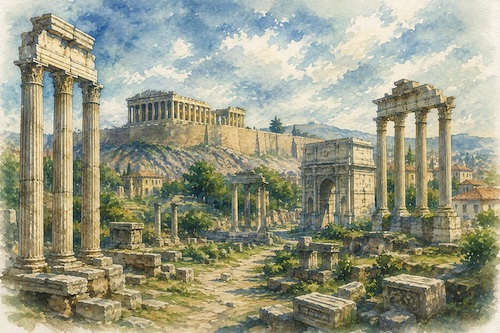
石は強く、長持ちします。ギリシャやイタリアでは、今も古代の遺跡を数多く見ることができます。それに対して木には命があり、いつか朽ちていきます。けれども、その巡りは終わることなく続いていきます。At Ise Jingu there is the Shikinen Sengu, in which the shrine buildings are rebuilt every twenty years. An exactly identical shrine is built on the neighboring site, and the old one is not destroyed but taken apart. This has been repeated for more than 1,300 years. In other words, the shrine standing there now is, as timber, at most twenty years old.
伊勢神宮には、二十年ごとに社殿を建て替える「式年遷宮」があります。隣の敷地にそっくり同じ社殿を建て、古いほうは、壊すのではなく解かれます。それを千三百年以上、繰り返してきました。つまり、いまそこに建っている社殿は、木材としてはたかだか二十年のものです。Seen through Western eyes, it would mean that the real thing was lost long ago. Yet Japanese people do not feel that the real thing has been lost. They think that the life of the old shrine moves over entirely into the new wood. Even if the form perishes, the wood (ki) that is there goes on. Rather than leaving the form forever, they let the form perish and keep moving only the life into the next form. Stone leaves the form, and wood carries on the life.
西洋の目から見れば、本物はとうに失われた、ということになるでしょう。ところが日本人は、本物が失われたとは感じません。新しい木に、古い社殿の命がそっくり乗り移ると考えます。形は滅びても、そこにある木(氣)は続いていく。形を永遠に残すのではなく、形は滅びるにまかせ、命だけを次の形へ移し続ける。石は形を残し、木は命をつなぐのです。Unlock Full Article | 記事全文を読む
Digital PackagesRead and listen in your browser — available in bundles.誌面と音声を、パッケージでご利用いただけます。More From Hiragana Times
Join the Hiragana Times Discord Community — Free!Connect with readers worldwide — free, open, and always welcoming.世界の読者とつながる、無料のDiscordコミュニティへようこそ。
Online Japanese lessons, run by Hiragana Times.One month free for Hiragana Times subscribers.ひらがなタイムズ定期購読者は、1ヶ月無料でご受講いただけます。 -
Nihongo Do – Voice wave – Hiragana Times August 2026 issue
Listen to the Audio:
Japan Has a Culture of Hara
日本には、肚の文化がある
In the United States, there is an organization called the CIA.
アメリカに、CIAという組織があります。In Japanese, it is rendered as 中央情報局 — “Central Information Bureau.”
日本語では「中央情報局」と訳されます。Because of this translation, the “I” in CIA is often thought to mean information — 情報.
この訳のせいで、CIAの”I”は、インフォメーション(情報)だと思われがちです。But in truth, it stands for Central Intelligence Agency. The “I” is intelligence.
けれど正しくは、Central Intelligence Agency。”I”は、インテリジェンスなのです。Information, and intelligence. How do these two differ?
インフォメーション(情報)と、インテリジェンス(知)。この二つは、どう違うのでしょうか。To put it in a Japanese way: if information is the soybean, mame 豆, then intelligence is nattō 納豆, fermented soybeans.
日本語の感覚で言えば、インフォメーション(情報)が「豆」なら、インテリジェンス(知)は「納豆」です。The CIA gathers vast information — the beans — from around the world, then mixes it, lets it rest, and “ferments” it into nattō: intelligence.
CIAは、世界中から膨大な情報(豆)を集め、それを混ぜ、寝かせ、「発酵」させて、納豆(インテリジェンス)をつくります。In this way, it produces the wisdom to protect its nation.
そうして、自国を守る知恵を、生み出しているのです。
Curiously, Japanese language has no words that clearly divide these two — information and knowing.
面白いことに、日本語には、この二つ——情報と知——を、はっきり分ける言葉がありません。And yet, if we turn to the Japanese of old, we find a still deeper stage of knowing: tanshiki 胆識.
けれど、古来の日本人に目を向けると、そこには、それ以上に深い知の段階が見えてきます。「胆識」です。What is tanshiki? To understand it, let us set some kindred words side by side.
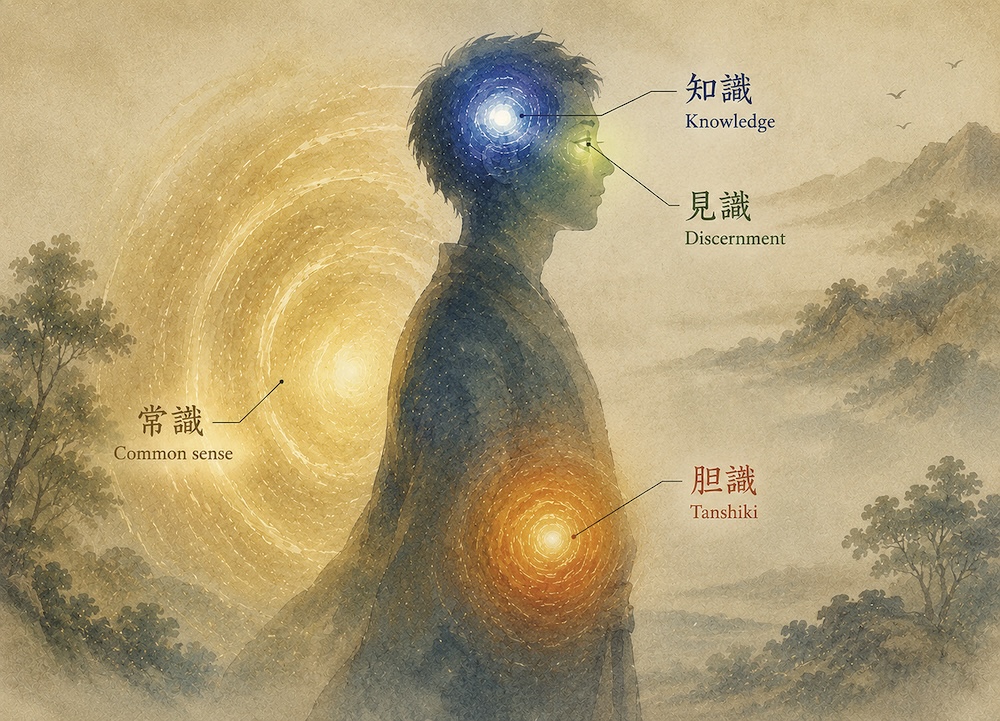
胆識とは、何でしょうか。それを理解するために、似た言葉を並べてみましょう。First, common sense — jōshiki 常識. Next, knowledge — chishiki 知識. Then, discernment — kenshiki 見識. And last, tanshiki 胆識.
まず「常識」。次に「知識」。そして「見識」。最後に「胆識」です。
Each of these four is a knowing of a different order.
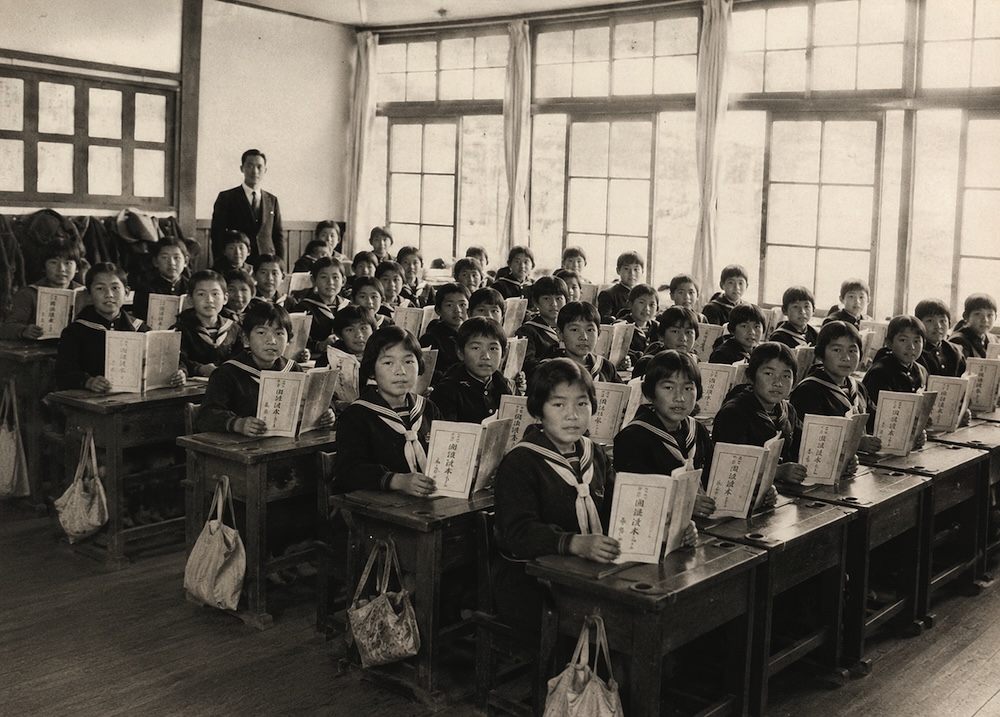
この四つは、それぞれ別の次元の、知のかたちです。Long ago, Japanese elementary schools were called jinjō shōgakkō 尋常小学校. Jinjō 尋常 means “ordinary,” “the everyday.”
かつて、日本の小学校は「尋常小学校」と呼ばれていました。「尋常」とは、普通、あたりまえ、という意味です。
A person first learns the ordinary things — common sense. Next, they gain knowledge.
人は、まず、あたりまえのこと——常識を身につけます。次に、知識をつけます。And from that knowledge, they cultivate a way of seeing, and come to hold discernment.
そして、その知識をもとに、ものの見方を養い、「見識」を得ていきます。Common sense, knowledge, discernment — thus the human mind grows. But beyond it lies one more stage: tanshiki.
常識、知識、見識——こうして、人の頭脳は育っていきます。But deeper within, there lies one more. It is tanshiki 胆識.
けれど、その奥に、もう一つのものがあります。それが「胆識」です。The tan 胆 of tanshiki can also be read kimo — the liver, an organ that sits within the belly.
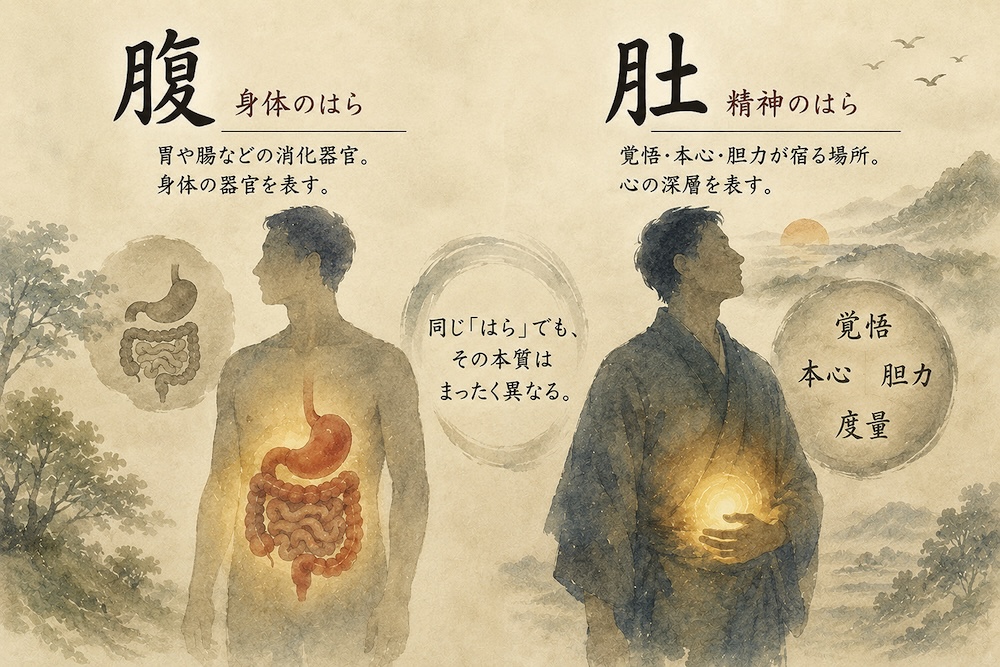
「胆」は、「きも」とも読みます。腹の中にある臓器、肝のことです。The word for belly, hara, can be written with two different characters: 腹 and 肚.
「はら」は、二つの漢字で書けます。「腹」と「肚」です。Written 腹, it calls to mind the organs of digestion — the stomach, the intestines.
「腹」と書けば、胃や腸といった、消化の器官を思い浮かべます。But written 肚, we sense something more of the spirit.
けれど「肚」と書くとき、私たちは、もっと精神的な何かを思うのです。
Even now, Japanese has many expressions that use the belly, 腹.
日本語には、今も、「腹」を使った言葉がたくさんあります。Hara ga tatsu 腹が立つ — “the belly stands up” — to grow angry. Hara wo kukuru 腹を括る — “to bind up the belly” — to steel one’s resolve. Hara wo watte hanasu 腹を割って話す — “to split open the belly” — to speak from the heart.
腹が立つ。腹を括る。腹を割って話す。These “bellies” 腹 are no mere organs.
これらの「腹」は、単なる内臓ではありません。Anger, resolve, true feeling — the belly gives voice to the very deepest places of the human heart.
怒り、覚悟、本心——人の、心の最も深いところを、腹は表しています。What expresses this depth of spirit most strongly of all is the character 肚, hara.
こうした精神の深みを、とりわけ強く表すのが、「肚」という字です。Written 肚, the same hara holds within it resolve, magnanimity — the unshakable steadiness of the heart’s core.
同じ「はら」でも、「肚」と書とき、そこには、覚悟や度量といった、心の奥の揺るぎなさが、こめられるのです。In recent years, medicine too speaks of the “gut-brain axis.”
近年、医学でも「脳腸相関」が説かれています。The state of the brain affects the gut, and the state of the gut, in turn, affects the brain.
脳の状態が腸に影響し、腸の状態もまた、脳に影響する、というのです。The gut possesses its own network of nerves, able to judge for itself without command from the brain — and so it is called “the second brain.”
腸は、脳の指令がなくても、自ら判断する独自の神経の網を持ち、「第二の脳」とも呼ばれます。
Continue Reading In Hiragana Times
続きを読む — Hiragana Times 本誌へ
Digital PackagesRead and listen in your browser — available in bundles.誌面と音声を、パッケージでご利用いただけます。More From Hiragana Times
Join the Hiragana Times Discord Community — Free!Connect with readers worldwide — free, open, and always welcoming.世界の読者とつながる、無料のDiscordコミュニティへようこそ。
Online Japanese lessons, run by Hiragana Times.One month free for Hiragana Times subscribers.ひらがなタイムズ定期購読者は、1ヶ月無料でご受講いただけます。