The Fish That Leads the Way into Autumn
秋の先頭を泳ぐ魚


Japan Savvy – Hiragana Times September 2026 issue

Listen to the Audio:

The Fish That Leads the Way into Autumn

あき先頭せんとうおよさかな


When the hot summer ends, in addition to the bounty of the fields and mountains—new rice, chestnuts, mushrooms, persimmons—fish that have stored up fat in the food-rich northern waters also come to the waters around Japan.
あつなつわると、新米しんまいくり、きのこ、かきなど、田畑たはたやまみのりにくわえ、えさゆたかなきたうみあぶらたくわえたさかなたちも日本近海にほんきんかいへやってきます。

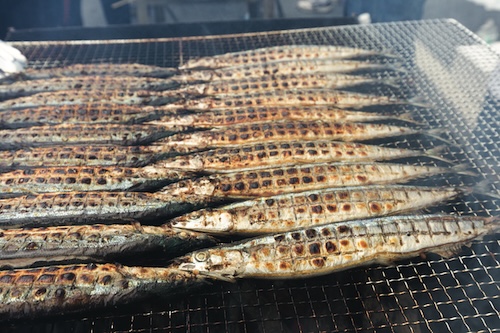
Swimming at the head of the group is the Pacific saury. Salt-grilled saury eaten with freshly cooked new rice is exceptionally delicious.
その先頭せんとうおよぐのが秋刀魚さんまです。塩焼しおやきをきたての新米しんまい一緒いっしょべれば、格別かくべつのおいしさです。

In the Edo period, saury was regarded as a “low-class fish” eaten by common people, and it rarely appeared on the tables of samurai families. The oil taken from saury was also used as inexpensive fuel for andon lamps.
江戸時代えどじだい秋刀魚さんま庶民しょみんべる「下魚げうお」とされ、武家ぶけ食卓しょくたくにはがりにくいさかなでした。秋刀魚さんまからったあぶらは、安価あんか行燈あんどん燃料ねんりょうにも使つかわれていたのです。

In classic rakugo, there is a story like this. One day, a lord grew hungry while out, was drawn by the savory smell of grilling saury in Meguro, and said he wanted to eat it.
古典落語こてんらくごには、こんなはなしがあります。ある出先でさき空腹くうふくになった殿様とのさまは、目黒めぐろ秋刀魚さんまこうばしいにおいにさそわれ、べたいとします。

His retainer tried to stop him, saying, “This is not a fish a lord should eat.” But the lord ate the piping-hot saury and was amazed at how delicious it was.
家来けらいは「殿様とのさまくちにするさかなではありません」とめますが、殿様とのさま熱々あつあつ秋刀魚さんまべ、そのおいしさに感動かんどうします。

Later, when the lord said he wanted to eat it again, his retainer ordered fresh saury from Nihonbashi, removed the bones and fat, steamed it, and turned it into an elegant dish.
後日ごじつ殿様とのさまがもう一度いちどべたいとうと、家来けらい日本橋にほんばしから新鮮しんせん秋刀魚さんませ、ほねあぶらいてし、上品じょうひん仕上しあげます。

But the lord did not think it delicious at all. And then, a single line: “For saury, it has to be Meguro.”
しかし、殿様とのさますこしもおいしいとおもいません。そして一言ひとこと。「秋刀魚さんま目黒めぐろかぎる」

Today, the “Sanma Festival” held in Meguro is inspired by this story.
現在げんざい目黒めぐろひらかれる「さんままつり」は、このはなしにちなんでいます。

Become a Sanma Savvy / 秋刀魚通さんまつうになる

Listen to the Audio:

Warm up

◎ Useful Words(12)

  • 新米しんまい — newly harvested rice; new rice
  • みのり — harvest; bounty
  • しゅん — peak season; best season
  • あぶら — fat; oil
  • 塩焼しおやき — salt-grilled dish
  • こうばしい — savory; pleasantly fragrant
  • 庶民しょみん — common people; ordinary people
  • 下魚げうお — low-class fish; fish considered unfit for the upper classes
  • 武家ぶけ — samurai family; warrior class
  • 行燈あんどん — andon lamp; traditional Japanese oil lamp
  • 落語らくご — rakugo; traditional comic storytelling
  • 家来けらい — retainer; servant to a lord

◎ Ice Breaker Question:

  • What do you feel like eating in autumn?
    あきべたくなるものはなにですか?
  • What kind of oil is commonly used in your country?
    あなたのくにでは、なんあぶらがよく使つかわれていますか?
  • What is your favorite fish?
    きなさかななにですか?
  • How do you like to eat fish?
    さかなはどうやってべるのがきですか?
  • What kind of autumn would you like to have this year?
    今年ことしはどんなあきにしたいですか?

Work Up ワークアップ

Discussion ディスカッション

Emma: So sanma is written with the kanji for “autumn,” “sword,” and “fish.”
Emma:秋刀魚さんまは、「あきかたなさかな」とくんですね。

Ken: Yes. It is in season in autumn, and its long, slender, silver body looks like a sword.
Ken:はい。あきしゅんむかえ、かたなのように細長ほそながく、銀色ぎんいろかがやさかなだからです。

Emma: But most fish names are written with just one kanji, aren’t they?
Emma:でも、さかな名前なまえは、漢字一文字かんじいちもじくものがおおいですよね。

Raj: That’s right. For example, 鮪 (maguro, tuna) is written with the fish radical and 有, as in 有り難い (arigatai), meaning “grateful.”
Raj:そうですね。たとえば、さかなへんに「がたい」の「ゆう」で「まぐろ」。

Ken: Tuna—especially toro—is certainly a delicacy to be grateful for.
Ken:まぐろとくにトロは、まさにがたいごちそうですね。

Yumi: 鰹 (katsuo, bonito) combines the fish radical with 堅, meaning “hard.” After all, dried bonito, or katsuobushi, is very hard.
Yumi:さかなへんに「かたい」で「かつお」。鰹節かつおぶしかたいですから。

Ken: 鯵 (aji, horse mackerel) combines the fish radical with 参, as in mairu, meaning “to surrender.”
Ken:さかなへんに「まいる」で「あじ」。

Raj: So we can remember it as, “I surrender to the delicious taste of aji!”
Raj:あじあじまいった!」とおぼえられそうです。

Emma: That’s funny!
Emma:面白おもしろいですね!

Ken: Then here is a riddle. What giant sea creature lives in Kyoto?
Ken:では、なぞなぞです。京都きょうとおおきなうみものは?

Emma: Is it 鯨 (kujira, whale)? Because it combines the fish radical with 京, the first kanji in Kyoto.
Emma:くじら」ですか? さかなへんに「きょう」だから。

Ken: Correct! Then, which fish is the master of all fish?
Ken:正解せいかい! では、さかななか師匠ししょうは?

Yumi: 鰤 (buri, yellowtail). It combines the fish radical with 師, meaning “master” or “teacher.”
Yumi:ぶり」ですね。さかなへんに「」。

Raj: Exactly. Now, which fish would make me the happiest?
Raj:そのとおりです。では、ぼく一番いちばんよろこさかななんでしょう?

Ken: I don’t know.
Ken:かりません。

Raj: A kiss—kisu! (Japanese whiting) Its kanji combines the fish radical with the kanji for“joy.”
Raj:Kiss、「きす」です。さかなへんに「よろこぶ」ときます。

Wrap Up 新しい知識

  • Pacific saury is rarely farmed. Its scales come off easily, and it is highly sensitive to outside stimuli, making it difficult to raise. Almost all the saury we eat is wild-caught.
    サンマはほとんど養殖ようしょくされていません。うろこががれやすく、刺激しげきにもよわいため、飼育しいくむずかしいからです。わたしたちがべるサンマのほとんどは天然てんねんものです。
  • The kanji spelling 秋刀魚 is relatively new and is said to have become widely known through the Taisho-period poet Haruo Sato’s poem “Song of the Pacific Saury.”
    秋刀魚さんま」という表記ひょうき比較的新ひかくてきあたらしく、大正時代たいしょうじだい佐藤春夫さとうはるお秋刀魚さんまうた』によってひろられるようになったとされます。
  • There are several theories about the origin of the name “sanma”. One says it came from “samana”, meaning “a long, slender fish.” Another says it came from “sawan-ma”, written with the kanji for “shoal” and “fish,” because it swims in schools.
    秋刀魚さんま」という名前なまえ由来ゆらいには諸説しょせつあります。細長ほそながさかな意味いみする「狭真魚さまな」からまれたせつや、れをなしておよぐことから「沢魚さわんま」とばれ、それが変化へんかしたというせつがあります。
  • Saury was also written as 三馬, meaning “three horses.” Soseki Natsume used this spelling in I Am a Cat. There is also a play on words that eating saury gives you the strength of three horses.
    三馬さんま」とかれることもあり、夏目漱石なつめそうせきは『吾輩わがはいねこである』でこの使つかっています。「べると三馬力さんばりきがつく」という言葉遊ことばあそびもあります。
  • Around the Kii Peninsula, saury was called saira and was sometimes written as 佐伊羅魚.
    紀伊半島周辺きいはんとうしゅうへんでは、サンマを「サイラ」とび、「佐伊羅魚さいら」とくこともありました。
  • Fresh saury has clear eyes and a shiny silver body. A yellow-tipped mouth is considered a sign that the fish is rich in fat.
    新鮮しんせんなサンマはみ、からだ銀色ぎんいろかがやいています。口先くちさき黄色きいろいものは、あぶらっている目安めやすとされます。
  • Saury has no stomach, so food does not remain in its body for long. For this reason, it is known as a fish whose internal organs can also be eaten.
    サンマにはがなく、べたものが体内たいないのこりにくいため、内臓ないぞうまでべられるさかなとしてられています。
  • Saury fishing is said to have begun about 300 years ago in the Kumano Sea. Today, the main method is bo-uke-ami fishing, in which schools of saury are attracted with lights at night and scooped up in nets.
    サンマりょうやく300年前ねんまえ熊野灘くまのなだはじまったといわれています。現在げんざいは、よるひかりれをあつめ、あみですくう「棒受ぼうう網漁あみりょう」が主流しゅりゅうです。

More From Hiragana Times

Hiragana Times Discord Community
Join the Hiragana Times Discord Community — Free!
Connect with readers worldwide — free, open, and always welcoming.
世界の読者とつながる、無料のDiscordコミュニティへようこそ。

nihongo.net
Online Japanese lessons, run by Hiragana Times.
One month free for Hiragana Times subscribers.
ひらがなタイムズ定期購読者は、1ヶ月無料でご受講いただけます。

Leave a Reply