-
Cover Story – Hiragana Times October 2026 issue
Listen to the Audio:
When the Voices of Insects Become Music
虫の声が音楽になるとき
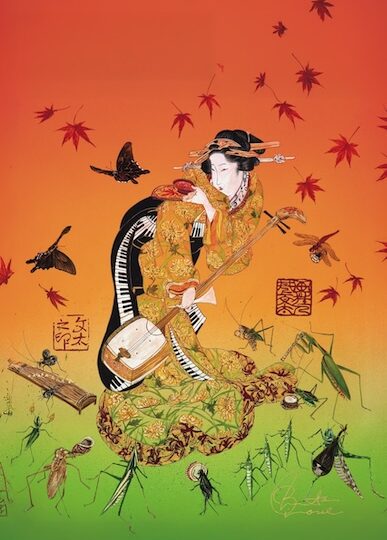
This month’s cover features Shin Hakkenden: Nene — Autumn Insect Orchestra by painting zealot Bunta Inoue. At the center sits Nene, surrounded by insects playing their own instruments. Beneath a sky of falling autumn leaves, bells, drums, strings, flutes, and the sounds of insects mingle into one lively autumn concert.
今月号の表紙は、画狂人・井上文太氏が描く「シン・八犬伝 ネネ 秋虫楽団」。ネネを中心に、さまざまな虫たちが楽器を奏でています。秋の葉が舞う中、鐘や太鼓、弦、笛、そして虫の声が重なり、にぎやかな秋のコンサートが広がります。Nene is the woman who raised Inuyama Dōsetsu, one of the Eight Dog Warriors in Kyokutei Bakin’s Nanso Satomi Hakkenden. In Inoue’s Shin Hakkenden, the world of the Edo-period tale is freely reimagined through Japan’s culture, nature, and sensibilities. Here, Nene joins the insects in celebrating an autumn night.
ネネは、曲亭馬琴の『南総里見八犬伝』に登場する八犬士の一人、犬山道節を育てた女性です。井上氏の「シン・八犬伝」では、江戸時代の物語の世界が、日本の文化や自然、感性とともに自由に描き直されています。この作品では、ネネも虫たちとともに秋の夜を祝っています。In Japan, the sounds insects make are called mushi no koe — “the voices of insects.” Crickets, bell crickets, cicadas, and other insects have long been heard as more than simple noise. Their calls carry meaning and feeling, becoming closely connected with the Japanese language and the changing seasons.
日本では、虫が発する音を「虫の声」と呼びます。コオロギや鈴虫、蝉などの音は、単なる騒音ではなく、意味や感情を持つ「声」として受け取られてきました。そこには、日本語や季節の移ろいと深く結びついた感性があります。This issue explores the relationship between insects and Japanese culture from several angles. Japan Style traces how Japanese people came to hear insects as “voices,” while Japan Savvy introduces the calls of autumn insects and the culture of listening to them. Close Up Japan looks at cicadas that continue calling late into the night beneath bright city lights.
本号では、虫と日本人の関係をさまざまな角度から紹介します。Japan Styleでは、なぜ日本人が虫の音を「声」として聞くようになったのかをたどり、Japan Savvyでは、秋の虫の鳴き声と、それを楽しむ文化を紹介します。Close Up Japanでは、明るい都市の夜に遅くまで鳴き続ける蝉を取り上げます。Across the world, insects have also been heard as meaningful presences. In China, people once kept singing insects near their beds and listened to their calls through the night. Among the Māori people of New Zealand, the cicada also appears in language and cultural memory. The voices of insects have touched human imagination far beyond Japan.
虫の声に意味を感じてきたのは、日本人だけではありません。中国では、鳴く虫を身近に置き、その声を夜に楽しむ文化がありました。また、ニュージーランドのマオリの人々の言葉や文化の記憶にも、蝉の存在が残されています。小さな虫の声は、日本を超えて人々の想像力に触れてきました。Turn off the television and smartphone for a while, and listen to the night. Somewhere in the darkness, small lives are sounding their own rhythms. The autumn orchestra on this month’s cover reminds us that listening—to insects, to the seasons, and to the world beyond ourselves—has long been part of living with nature in Japan.
テレビやスマートフォンをしばらく閉じて、夜の音に耳を澄ませてみてください。暗闇のどこかで、小さな命がそれぞれのリズムを響かせています。今月号の表紙に描かれた秋のオーケストラは、虫の声、季節の移ろい、そして自分の外にある世界に耳を傾けることが、日本で自然とともに生きる暮らしの一部であったことを思い出させてくれます。
Discover More Articles | もっと記事を読む
Digital PackagesRead and listen in your browser — available in bundles.誌面と音声を、パッケージでご利用いただけます。More From Hiragana Times Join the Hiragana Times Discord Community — Free!Connect with readers worldwide — free, open, and always welcoming.世界の読者とつながる、無料のDiscordコミュニティへようこそ。
Online Japanese lessons, run by Hiragana Times.One month free for Hiragana Times subscribers.ひらがなタイムズ定期購読者は、1ヶ月無料でご受講いただけます。
Join the Hiragana Times Discord Community — Free!Connect with readers worldwide — free, open, and always welcoming.世界の読者とつながる、無料のDiscordコミュニティへようこそ。
Online Japanese lessons, run by Hiragana Times.One month free for Hiragana Times subscribers.ひらがなタイムズ定期購読者は、1ヶ月無料でご受講いただけます。 -
Cover Story – Hiragana Times September 2026 issue
Listen to the Audio:
“Faith” That Carries the Sea’s Bounty Forward
海の恵みをつなぐ「信」
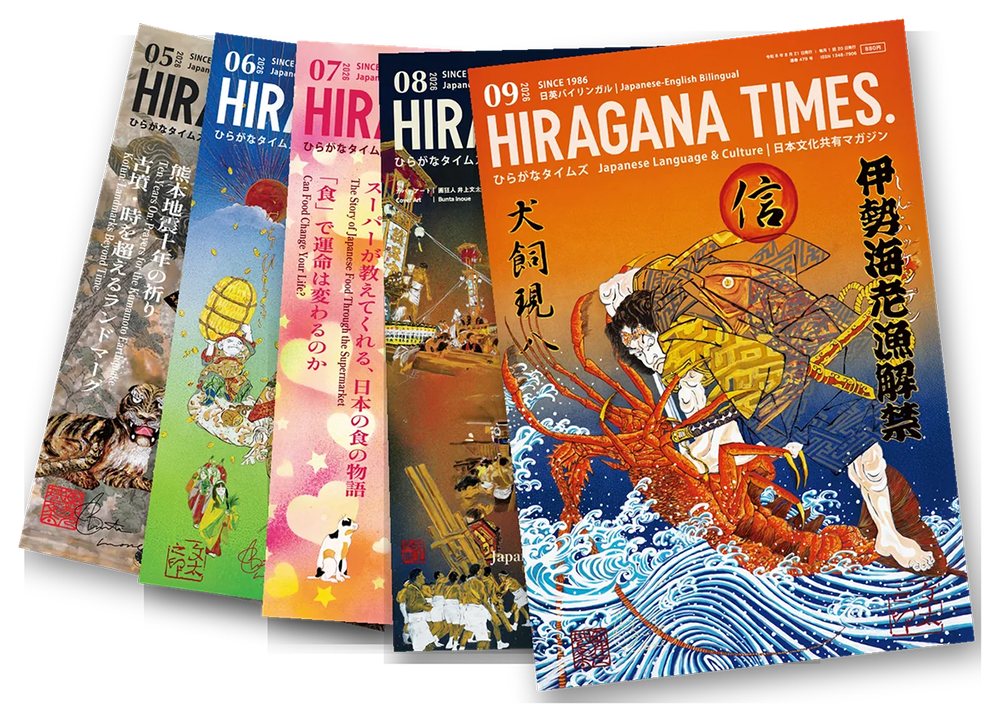
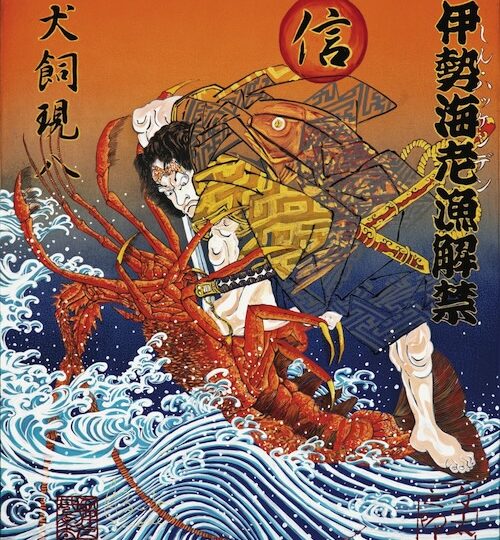
This month’s cover features Shin Hakkenden: Inukai Genpachi — Opening of the Ise-ebi Fishing Season by the painting zealot Bunta Inoue. Amid raging waves, Inukai Genpachi firmly grips a giant Japanese spiny lobster. The vivid reds and golds, swirling waves, and his powerful stance against the seabed convey the tension of confronting the life force of the sea.
今月号の表紙は、画狂人・井上文太氏の「シン・八犬伝 犬飼現八 伊勢海老漁解禁」です。荒波の中、巨大な伊勢海老をつかむ犬飼現八。鮮やかな赤と金、渦巻く波、海底を踏みしめる姿から、海の命と向き合う緊張感が伝わってきます。Inukai Genpachi is one of the Eight Dog Warriors in Kyokutei Bakin’s Nanso Satomi Hakkenden. The sacred jewel he bears is inscribed with shin, meaning “faith” or “trust.” In Inoue’s Shin Hakkenden, a hero from the Edo period is reborn in present-day Boso, merging with the culture and lives passed down in the region.
犬飼現八は、曲亭馬琴の『南総里見八犬伝』に登場する八犬士の一人で、霊玉に刻まれた文字は「信」。井上氏の「シン・八犬伝」では、江戸時代の英雄が現代の房総によみがえり、その地に受け継がれる文化と人々の営みに重なります。In Chiba Prefecture, fishing is prohibited from June through July to protect Japanese spiny lobsters during their spawning season, and reopens on August 1. Fishermen set their nets in the evening and haul up the lobsters caught in them the following morning. Reading the waves and currents, they carefully free each lobster from the net without damaging its long antennae or legs.
千葉県では、産卵期の伊勢海老を守るため、6月から7月まで漁が禁じられ、8月1日に解禁されます。漁師たちは夕方に海へ網を仕掛け、翌朝、網にかかった伊勢海老を引き上げます。大きな波や潮の流れを読みながら、長い触角や脚を傷つけないよう、一匹ずつ丁寧に網から外していきます。In Futomi, Kamogawa City, cotton-thread nets made from natural materials have been used for more than a century. They require more work than nylon nets and catch fewer lobsters, but they help prevent overfishing and cause less damage to seaweed. To receive the sea’s bounty while preserving its life for the future—this reflects the spirit of fishermen who seek not to conquer nature, but to live alongside it.
鴨川市太海では、100年以上にわたり、天然素材で作られた綿糸網が使われてきました。ナイロン網より手間がかかり、伊勢海老もかかりにくい一方、獲り過ぎを防ぎ、海藻を傷つけにくいといいます。海の恵みを得ながら、その命を未来へ残す。そこには、自然を征服するのではなく、共に生きようとする漁師たちの心があります。This issue’s Japan Savvy features saury, which arrives in the waters around Japan in autumn. Having grown in the food-rich northern seas and stored up fat over the summer, saury is an autumn harvest delivered by the sea. At a table set with salt-grilled saury and freshly cooked new rice, the bounty of the sea and the fields comes together.
本号のJapan Savvyでは、秋に日本近海へやってくる秋刀魚を取り上げています。夏の間、餌の豊かな北の海で育ち、脂を蓄えた秋刀魚は、海から届く秋の実りです。塩焼きの秋刀魚と炊きたての新米が並ぶ食卓には、海と田の恵みが一つに重なります。Fertile soil nourished by volcanoes, nuts and wild mountain vegetables growing in the hills, and fish gathering where warm and cold currents meet—the Japanese archipelago is blessed with the bounty of both sea and mountain. People have long received life from nature while respecting its power and protecting it. Genpachi’s “faith” also echoes the hearts of fishermen who trust the sea and carry their inherited skills and its bounty into the future.
火山が育てた肥沃な大地、山に実る木の実や山菜、暖流と寒流が出会う海に集まる魚たち。海山の幸に恵まれた日本列島で、人々は自然から命をいただき、その力を畏れ、守りながら生きてきました。現八の「信」は、海を信じ、受け継いだ技と恵みを未来へつなぐ漁師たちの心にも重なります。
Discover More Articles | もっと記事を読む
Digital PackagesRead and listen in your browser — available in bundles.誌面と音声を、パッケージでご利用いただけます。More From Hiragana Times
Join the Hiragana Times Discord Community — Free!Connect with readers worldwide — free, open, and always welcoming.世界の読者とつながる、無料のDiscordコミュニティへようこそ。
Online Japanese lessons, run by Hiragana Times.One month free for Hiragana Times subscribers.ひらがなタイムズ定期購読者は、1ヶ月無料でご受講いただけます。 -
Cover Story – Hiragana Times August 2026 issue
Listen to the Audio:
The More It Rages, the More the Soul Revives — Noto’s Abare Matsuri
暴れるほどに、魂は甦る — 能登・あばれ祭り
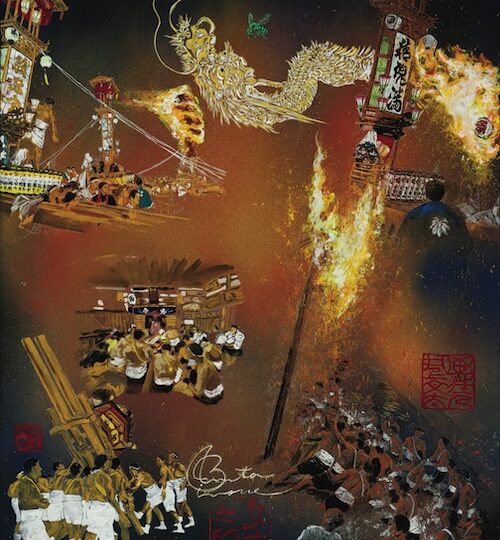
This month’s cover features a work by the painting zealot, Bunta Inoue, depicting the Abare Festival held at Yasaka Shrine in Ushitsu, Noto Peninsula. Towering kiriko lantern floats blaze against the night sky as a golden dragon dances above them, filling the entire scene with overwhelming energy.
今号の表紙を飾るのは、画狂人・井上文太氏による、能登・宇出津八坂神社の「あばれ祭り」を描いた作品です。夜空を焦がす炎の中にそびえ立つキリコと、その上空を舞う黄金の龍。画面全体に圧倒的な生命力が満ちています。The Abare Festival is unlike ordinary festivals. Giant kiriko lantern floats surge through the streets, while portable shrines (mikoshi) are cast into flames and the sea. Entrusting themselves to the power of the gods, the people celebrate with overwhelming intensity. This fierce spectacle is a prayer—one that confronts the immense forces of nature and expresses profound reverence for the gods.
あばれ祭りは、一般的な祭りとは大きく異なります。巨大なキリコが激しく練り歩き、神輿は炎や海へ投げ込まれ、人々は神の力に身を委ねながら祭りを繰り広げます。その荒々しい姿は、自然の大いなる力と向き合い、人々が神への畏敬を捧げる祈りの姿なのです。On January 1, 2024, the Noto Peninsula Earthquake dealt a devastating blow to Ushitsu as well: houses collapsed, the port was flooded, roads were severed, and even the shrine’s torii gate crumbled. Yet that summer, the people rebuilt the torii and held the festival, resolved that they must not let the “fire of prayer” go out. Residents scattered among temporary housing returned home, and natives who had left the town came from afar to shoulder the kiriko once more.
2024年1月1日に発生した能登半島地震は、宇出津にも甚大な被害をもたらしました。家屋は倒壊し、港は浸水し、道路は寸断され、神社の鳥居さえも崩れ落ちました。それでもその夏、人々は「祈りの火を消してはならない」と鳥居を再建し、祭りを開催しました。仮設住宅に散り散りになった住民が故郷へ戻り、町を離れた出身者も遠方から駆けつけ、再びキリコを担いだのです。For Bunta Inoue, festivals are among the “treasures of Japan.” Through his paintings, he has continued to preserve the beauty, spirit, and prayers embedded in these traditions for future generations. This work is also a heartfelt prayer that the light of Noto will shine brightly once again.
井上文太氏にとって、祭りは「日本の寶」です。その土地に息づく美しさや精神、精度、そして祈りを未来へ残すため、全国各地の祭りを描き続けています。この作品にも、能登の灯が再び力強く輝くことへの願いが込められています。Bunta Inoue dedicated this very work to the Ushitsu Festival Committee as a prayer for Noto’s recovery. He has continued to create works infused with prayers for recovery, from the Great East Japan Earthquake to the Noto Peninsula Earthquake. Art has the power to draw close to wounded hearts and help restore hope. Recovery is not only about rebuilding buildings and roads, but above all, about restoring a light of hope for the future within people’s hearts.
井上文太氏は、この作品を「能登復興の祈り」として宇出津祭礼委員会に寄贈しました。氏は、東日本大震災から能登半島地震に至るまで、復興への祈りを込めた作品を描き続けています。芸術は、傷ついた心に寄り添い、希望を取り戻す力になります。復興とは、建物や道路だけでなく、まず何よりも、人の心に未来への光を取り戻すことにあるのです。Online Japanese Language Courses
Learn Japanese The Fun Way!
🎁 1 Month FREE for Hiragana Times Subscribersひらがなタイムズ定期購読者は1ヶ月無料でご受講いただけます
Start Learning → -
Cover Story – Hiragana Times July 2026 issue
Listen to the Audio:
Japan Is Full of Treasures
日本には寶がいっぱいあ〜る
The “Reiwa Ukiyo-e Series” by the painting-obsessed artist Bunta Inoue began this January. This series, which graces the cover of Hiragana Times, has now reached the halfway point of 2026.
本年1月から始まった、画狂人・井上文太氏による「令和の浮世絵シリーズ」。ひらがなタイムズの表紙を彩るこのシリーズも、2026年の折り返し地点を迎えました。In June, the second “NIPPON Exhibition” by Inoue was held at GINZA SIX in Ginza. Its theme was “Japan Is Full of Treasures.” Festivals, prayers, the four seasons, the lives of people, the sea and townscapes, and figures passed down through the generations. The “treasures of Japan” that Inoue has continued to paint as he traveled all across the country were unveiled all at once.
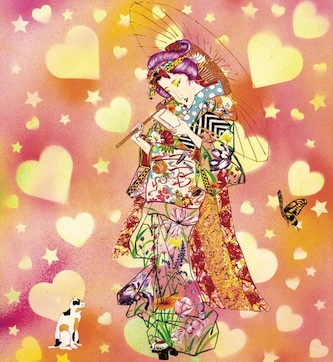
6月には、銀座のGINZA SIXにて、井上氏による第2回「NIPPON展」が開催されました。テーマは「日本には寶がいっぱいあ〜る」。祭り、祈り、四季、人々の暮らし、海や街並み、そして語り継がれる人物たち。井上氏が日本全国を巡り、描き続けてきた「日本の寶」が一挙に公開されました。This issue’s cover is also one of the works presented at that “NIPPON Exhibition.” The woman’s figure has an elegance reminiscent of a fashion leader of the Edo period. At the same time, her hair is a vivid pink. Tulips, marguerites, and lavender bloom across her kimono, and a deeply colored pedicure peeks out at her feet. And there, a calico cat looks up at her. Into the composition of a traditional ukiyo-e, a modern sensibility melds gracefully.
今号の表紙も、その「NIPPON展」で披露された作品の一つです。女性の姿には、江戸のファッションリーダーを思わせる気品があります。その一方で、髪は鮮やかなピンク色。着物にはチューリップやマーガレット、ラベンダーが咲き、足元には濃い色のペディキュアがのぞきます。さらに、その姿を見上げる三毛猫。伝統的な浮世絵の構図に、現代の感覚がしなやかに溶け込んでいます。In the Edo period, ukiyo-e were not merely works of art; in modern terms, they were something like magazines or social media. Kimono patterns, hairstyles, makeup, theater, pastimes, the people everyone was talking about. Through ukiyo-e, people learned of the latest trends and shared a sense of beauty.
江戸時代、浮世絵は美術作品にとどまらず、現代でいえば雑誌やSNSのような存在でした。着物の柄、髪型、化粧、芝居、遊び、話題の人物。人々は浮世絵を通じて流行を知り、美意識を分かち合っていました。Inoue’s “Reiwa Ukiyo-e,” too, is an attempt to revive in the present the spirit that ukiyo-e originally possessed. With the heart and forms of Edo set firmly at its core, the fashion, scenery, and values of the present day are boldly layered upon it.
井上氏の「令和の浮世絵」もまた、浮世絵が本来持っていた精神を現代に蘇らせる試みです。江戸の心と型を揺るぎない核に据えながら、そこに現代のファッションや風景、価値観が大胆に重ねられています。Hiragana Times will continue to feature Bunta Inoue’s “Reiwa Ukiyo-e” on its covers in the times ahead. What is more, we are now preparing a new section, “NIPPON,” to show the many works that the cover alone cannot convey. Through Inoue’s works, we will bring you the “treasures of Japan” that live and breathe in every corner of the country.
ひらがなタイムズでは、この先も井上文太氏の「令和の浮世絵」を表紙でご紹介してまいります。さらに現在、表紙だけでは伝えきれない作品の数々をお見せする新コーナー「NIPPON」も準備中です。日本各地に息づく「日本の寶」を、井上氏の作品を通してお届けしていきます。Online Japanese Language Courses
Learn Japanese The Fun Way!
🎁 1 Month FREE for Hiragana Times Subscribersひらがなタイムズ定期購読者は1ヶ月無料でご受講いただけます
Start Learning → -
[Cover story – June 2026 Issue]
The God at the Threshold — Sarutahiko in the Omita Matsuri
境界に立つ神 — 御田祭に現れる猿田彦
The cover of this month’s issue features a work by the Gakyōjin (painting zealot) Bunta Inoue, inspired by the Omita Matsuri at Sarutahiko Shrine in Ise—a sacred rice-planting ritual dedicated to the deities.
今月号の表紙は、画狂人・井上文太氏による「猿田彦神社 御田祭(神に捧げる田植えの儀礼)」を題材とした作品です。
Sarutahiko Shrine, the setting of this work, enshrines Sarutahiko Ōkami, a deity known as “the one who opens the way.” Yet his role extends far beyond that of a simple guide.
この作品の舞台である猿田彦神社は、「道をひらく神」として知られる猿田彦大神を祀る神社です。しかし、その役割は単なる道案内にとどまりません。
Sarutahiko is a being who stands at the boundary between heaven and earth, receiving the flow and guiding it in its true direction—appearing precisely at the point where the world shifts.
猿田彦とは、天と地の境に立ち、流れを一度受け止め、正しい方向へと導く存在――すなわち「世界が切り替わる地点」に現れる神です。
Above, rays of light spread outward, suggesting a force descending from the heavens. Below, the gestures and rituals of rice planting are carefully arranged, expressing as one the human activity that unfolds between heaven and earth. What fills the scene is not merely a festival, but the very atmosphere of a beginning.
画面上空には放射状に広がる光とともに、天から降り注ぐような力の流れが描かれています。一方で足元には、田植えの所作や儀礼が繊細に配置され、天地のあいだにある営みが一体として表現されています。そこには、単なる祭りの情景を超えた、「はじまり」の空気が満ちています。
A figure stands boldly, holding a large fan aloft, sunlight behind. The presence evokes Sarutahiko himself—as if embodying a being standing at the threshold between this world and the next.
大きく扇を掲げ、陽光を背に堂々と立つ人物。その姿は、この世界と次の世界の境目に立つ猿田彦が憑依したかのようです。
Beside him, another unseen force is at work—Ame-no-Uzume-no-Mikoto. She opens what is closed, eases the tension of the space, and allows the flow to pass through. Only through her workings can the boundary be crossed.
その傍らには、見えないもう一つの力が働いています。それが天宇受売命です。閉ざされたものを開き、場を和らげ、流れを通す。その働きによって初めて、境界は越えられるものとなります。
Since ancient times in Japan, mountains have been understood as boundaries connecting heaven and earth. Entering them, confronting oneself, and returning again—this is the practice embodied by the ascetics of Shugendō. To enter the mountains is not limited to training; it is, in itself, the fundamental act of crossing a boundary.
古来、日本において山は天と地をつなぐ境界と捉えられてきました。そこに分け入り、自己を見つめ直し、再び戻る――その営みを体現したのが修験道の行者たちです。山に入ることは、修行にとどまらず、「境界を越える」という根源的な行為そのものなのです。
In this issue’s special feature, “Yamabushi,” we explore this “power to cross boundaries” through the lives of those who have truly lived it. Myth is not something that happened in the distant past—it is shinwa (心話 / an inner story), something that is repeatedly unfolding within us.
本号の特集「山伏」では、この“境界を越える力”を、実際に生きた人々の姿を通して探ります。神話とは遠い昔の出来事ではありません。私たちの内側で、今この瞬間にも繰り返されている「心話」なのです。
This article is from the June 2026 issue of Hiragana Times.
この記事は、月刊誌『ひらがなタイムズ』2026年6月号より掲載しています。
-
[Cover story – May 2026 Issue]
Depicting a Prayer for Recovery
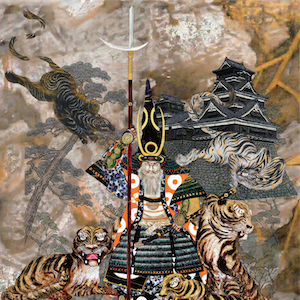
復興への祈りを描くThis month’s cover features a work by the mad artist Bunta Inoue, portraying Kato Kiyomasa. With Kumamoto Castle behind him, Kiyomasa gazes straight ahead. At his feet stand three tigers, while above him a black tiger and a white tiger race through the sky, filling the entire image with both powerful intensity and an air of prayer.
今月号の表紙を飾るのは、画狂人・井上文太氏による加藤清正公の作品です。熊本城を背に正面を見据える清正公。足元の三頭の虎に加え、上空には黒虎と白虎が駆け、画面全体に気迫と祈りの気配が満ちています。
This April, when our May issue reaches bookstores, marks exactly ten years since the Kumamoto Earthquake struck on April 14, 2016. The source of this work was a large ceiling painting that Inoue dedicated in April 2025 to Kato Shrine within Kumamoto Castle as a prayer for recovery, and that same prayer is distilled into this cover as well.
5月号が店頭に並ぶこの4月は、2016年4月14日に発生した熊本地震から、ちょうど10年にあたります。この作品のもとになったのは、井上氏が2025年4月、熊本城内の加藤神社に復興祈願として奉納した大天井画で、その祈りがこの作品にも凝縮されています。
Completed in 1607, Kumamoto Castle had preserved its majestic form for more than four centuries. That such a castle suffered severe damage reminds us once again of the overwhelming force of the earthquake. At the same time, the wounding of this symbol of Kumamoto left a deep scar in the hearts of many people.
1607年に完成した熊本城。400年以上にわたって威容を保ってきたこの城が大きな被害を受けたことは、地震の凄まじさをあらためて思い知らせます。同時に、熊本の人々のシンボルであったこの城が傷ついたことは、多くの人の心にも深い傷を残しました。
That is why Inoue dedicated the ceiling painting to Kato Shrine within Kumamoto Castle, praying not only for the recovery of the disaster-stricken area, but also for the return of hope to the hearts of the people of Kumamoto.
それだけに井上氏は、熊本城内の加藤神社に天井画を奉納し、被災地の復興と、熊本の人々の心に再び希望の光が差すことを願ったのです。
Although Kato Kiyomasa is known as a fierce warrior, he is still deeply revered in Kumamoto as the man who built the town and laid the foundations of people’s lives. Inoue portrays Kiyomasa as a figure who longs for peace and coexistence, and the tigers too are shown not as symbols of hostility, but as companions beside him, praying together for recovery.
加藤清正は、勇猛な武将として知られる一方、町を築き、人々の暮らしの基盤を整えた人物として、熊本で今なお深く敬われています。井上氏は、清正公を「平和」と「共生」を願う存在として描き出し、虎たちもまた、敵意ではなく、その傍らでともに復興を祈る存在として表しました。
Bunta Inoue has continued to create works infused with prayers for recovery, including those inspired by the Great East Japan Earthquake and the recent Noto Peninsula Earthquake. Art has the power to draw close to wounded hearts and help restore hope. Recovery is not only about rebuilding buildings and roads, but above all, about restoring a light of hope for the future within people’s hearts.
井上文太氏は、東日本大震災や先般の能登半島地震を含め、復興への祈りを込めた作品を描き続けています。芸術は、傷ついた心に寄り添い、希望を取り戻す力になります。復興とは、建物や道路だけでなく、まず何よりも、人の心に未来への光を取り戻すことにあるのです。
This article is from the May 2026 issue of Hiragana Times.
この記事は、月刊誌『ひらがなタイムズ』2026年5月号より掲載しています。
-
[Cover story – April 2026 Issue]
The Treasure Bearer Who Left No Name
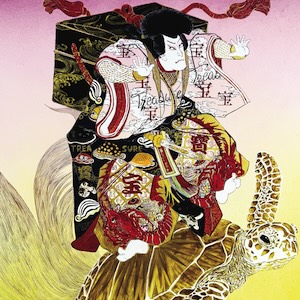
名を残さない宝運び人This month’s cover features the work “Shin Hakkenden: Inuta Kobungo, Treasure” by the painting madman, Bunta Inoue.
今月の表紙は、画狂人・井上文太氏による作品「しん・ハッケンデン 犬田小文吾 宝」です。
It depicts Inuta Kobungo, a hero from the classic tale “Nansō Satomi Hakkenden,” riding a sea turtle and carrying treasures on his back.
描かれているのは、南総里見八犬伝の犬田小文吾が、海亀に乗り宝を運ぶ姿です。
Look closely at the English word “present.” It is made of two parts: “pre” — beforehand, and “sent” — delivered.
英語の “present”(現在)という言葉をよく見ると、”pre”=事前に、”sent”=送られた、で成り立っています。
In other words, the present moment itself feels like something overflowing with gifts already given to us.
つまり、”present”、「今」という時は、贈り物で溢れているということを感じさせてくれます。
In Japanese, after a meal, we murmur “Gochisōsama” — a word that carries within it the meaning: “To all those who ran around for the sake of this meal, thank you.
日本語で食事の後に口ずさむ「ご馳走様」。そこにも「この食事のために走り回ってくださった方へ」という感謝の言葉が込められています。
“ Farmers, fishermen, cooks, and those who quietly set the table — it is a word of gratitude for a pre-sent table, laden with their love, effort, and care.
農家の人、漁師の人、料理する人、そして器を並べた人——その愛情、努力、思いにより、pre-sent された食卓への感謝の言葉です。
This issue’s theme is Shinobi — the way of those who never sought to leave their name.
今号の特集テーマは「忍び」——名を残すことをしない者たちの生き方です。
We still live in an age that praises those who display their power.
力を誇示する者が称えられる時代は、今も続いています。
Yet against that backdrop, the shinobi’s way poses a quiet question:
その中で、忍びの生き方は静かな問いを投げかけています。
To act without leaving a name, to give without seeking reward, to simply do what must be done.
名を残さず、見返りを求めず、ただ為すべきことを為す。
Perhaps this is not only the way of the shinobi. All around us, there are people who leave no mark — yet keep moving, quietly, for the sake of someone else.
それは、忍びだけの話ではないかもしれません。私たちの身の回りにも、名を刻まず、ただ誰かのために動き続けている人たちがいます。
“The day of the Lord will come like a thief” — so says the Bible.
「主の日は、盗人のように来る」——聖書の言葉です。
The salvation that truly matters does not arrive with fanfare — it comes quietly, before we even notice.
本当に大切な救いは、喧伝されてやって来るのではなく、気づかれぬ間に訪れている。
Even today, out at sea, the treasures of our tomorrow are being carried forward.
今日も海では、私たちの明日への宝が運ばれています。
And the one riding on the turtle’s back — he, too, is someone who seeks no applause.
海亀の背に乗るこの人も、称賛を求めない一人です。
This article is from the April 2026 issue of Hiragana Times.
この記事は、月刊誌『ひらがなタイムズ』2026年4月号より掲載しています。
-
[Cover story – March 2026 Issue]
Setsubun — The Divide Between Seasons, Driving Out Evil with Beans
節分 ―― 季節の分け目 豆で魔を滅する
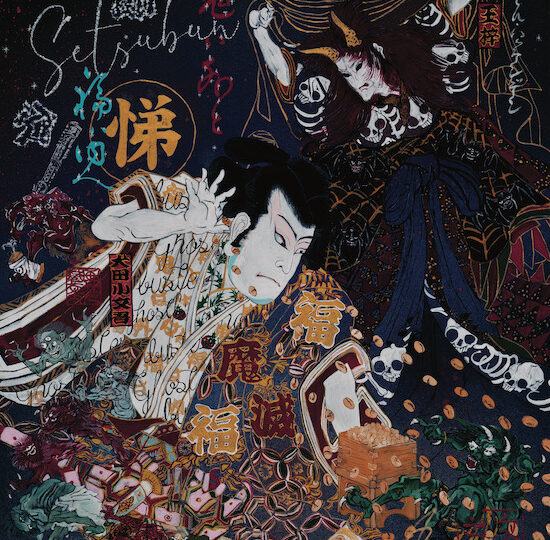
This month’s cover features the work “Shin Hakkenden: Inuta Kobungo, Setsubun” by the painting madman, Bunta Inoue.
今月号の表紙は、画狂人・井上文太氏による作品「しん・ハッケンデン 犬田小文吾 節分」です。
The painting depicts Inuta Kobungo, a hero from the classic tale “Nansō Satomi Hakkenden,” confronting an oni — a demon.
描かれているのは、南総里見八犬伝の犬田小文吾が鬼に立ち向かう姿です。
The word “setsubun” is written with characters meaning “to divide the seasons.”
「季節を分ける」と書いて節分。
Until the Edo period, it referred to the day before each of the four seasonal turning points: Risshun (the start of spring), Rikka (summer), Risshū (autumn), and Rittō (winter).
江戸時代まで、四季それぞれ、立春・立夏・立秋・立冬の前日を指していました。
Over time, only the eve of Risshun remained as Setsubun, as it marked the beginning of the new year in the traditional Japanese calendar.
その後、旧暦で新年の始まりとされる立春の前日だけが節分として残りました。
Setsubun is an occasion to cast out evil before welcoming a new season and a new year — by throwing beans.
節分は、新しい季節、新しい年を迎える前に豆をまいて邪気を払う行事です。
People scatter beans while shouting “Oni wa soto, fuku wa uchi!” — “Demons out, fortune in!”
豆をまきながら「鬼は外、福は内」と叫びます。
Why beans? It is said that “mame,” the word for beans, can also be written with characters meaning “to destroy evil.”
なぜ豆なのか? それは、「魔を滅する」、すなわち「魔滅(まめ)」が「豆」に通じるからとも言われています。
In Japan, there is also an ancient belief that the human soul has four aspects: Aramitama, the spirit of courage; Kushimitama, the spirit of wisdom; Sachimitama, the spirit of love; and Nigimitama, the spirit of harmony.
また、日本には古くから、人の魂は四つの側面を持つという考え方があります。勇気をつかさどる「荒魂」、知恵の「奇魂」、愛情の「幸魂」、そして調和の「和魂」です。
The kanji for “tamashii” (soul) contains the character for “oni” (demon) within it.
「魂」という漢字には「鬼」が存在します。
The oni is not something that comes from far away. It is also the fierce force that dwells within our own hearts.
鬼とは、どこか遠くからやってくるものではなく、私たちの心の中にある荒々しい力のことでもあるのです。
By calming the oni within and channeling it as inner strength, we send fortune outward.
鬼は、自分の心の中に鎮め、内なる強さとして生かすことで、福を外へ。
Delivering fortune to those around us — that is precisely why some regions chant “Oni wa uchi, fuku wa soto!” — “Demons in, fortune out!”
周りの人々へ福を届ける ―― だからこそ、「鬼は内、福は外」と唱える地域もあるのです。
Setsubun marks the divide between seasons, but perhaps it is also a day to set our own hearts in order.
節分とは、季節の変わり目であると同時に、自分自身の心を整える日でもあるのかもしれません。
This article is from the March 2026 issue of Hiragana Times.
この記事は、月刊誌『ひらがなタイムズ』2026年3月号より掲載しています。
-
[Cover story – February 2026 Issue]
The Grand Sumo Tournament — Dohyō-iri
大相撲初場所 ―― 土俵入り
On Sunday, January 11, Reiwa 8 (2026), the Grand Sumo Tournament will be held at the Ryōgoku Kokugikan in Tokyo.
令和8年1月11日(日)、大相撲初場所が東京・両国国技館で開催されます。
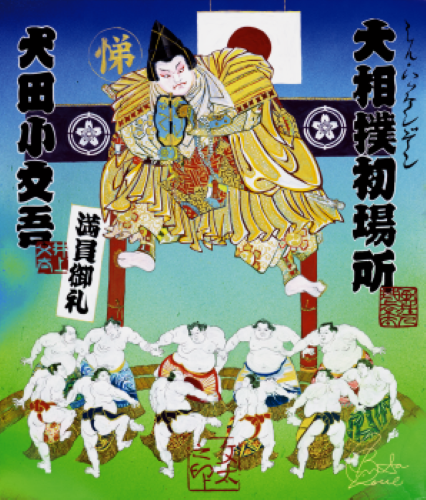
To mark the beginning of the new year, this issue’s cover features “Inuta Kobungo — The Grand Sumo Tournament,” a work by Gakyōjin Bunta Inoue.
新年の幕開けに合わせ、今月号の表紙は、画狂人・井上文太氏による作品「犬田小文吾・大相撲初場所」です。
What is depicted is a scene from the ring-entering ceremony of professional sumo.
描かれているのは、大相撲の土俵入りの場面です。
The rikishi (wrestlers) are lined up in a circular formation, and at the center stands Inuta Kobungo, a character from Nansō Satomi Hakkenden, serving as the gyōji.
力士たちが円を描くように並び、その中央には南総里見八犬伝に登場する犬田小文吾が行司として立っています。
On the rikishi’s ceremonial aprons are depicted auspicious motifs suitable for the New Year, such as pine, bamboo, plum, the rising sun, and Mount Fuji, expressing the entire dohyo as a festive space.
力士の化粧まわしには、松・竹・梅や日の出、富士山など、正月にふさわしい縁起物が描かれ、土俵全体が祝祭の空間として表現されています。
Inoue is also known for having designed the ceremonial apron worn by former ōzeki Baruto at the tournament where he achieved his first championship victory, and is an artist who deeply understands the spiritual nature of sumo.
井上氏は、かつて元大関・把瑠都が自身の初優勝を果たした場所で締めた化粧まわしを手がけたことでも知られ、相撲の精神性を深く理解するアーティストです。
From the fact that two pillars are depicted behind the dohyo, it can be seen that this work portrays sumo as it was before the September 1952 tournament.
土俵の後ろに二本の柱が描かれていることから、本作は1952年(昭和27年)9月場所以前の相撲を描いたものと分かります。
The origin of the circular dohyo lies in the ring formed by spectators who naturally gathered to watch sumo, and the suspended roof adopted after the removal of the pillars was a development to preserve a space where the dohyo could be seen from anywhere.
土俵が円形である原点は、相撲を見ようと自然に集まった見物人の人垣が円を成したことにあり、柱を廃したつり屋根も、どこからでも土俵が見える場を守るための発展でした。
The four tassels hanging from the suspended roof represent the deities that protect the seasons and the cardinal directions, indicating that the dohyo is a sacred space.
つり屋根に下がる四つの房は、四季と方位を守る神々を表し、土俵が神域であることを示しています。
Sumo is not a competition, but a Japanese ritual passed down to pacify the earth and to pray for abundant harvests and peace on such sacred ground.
相撲は競技ではなく、こうした神域で大地を鎮め、五穀豊穣と安寧を祈る日本の神事なのです。
This article is from the February 2026 issue of Hiragana Times.
この記事は、月刊誌『ひらがなタイムズ』2026年2月号より掲載しています。
-
[Cover story – January 2026 Issue]
The New Year’s Bell Opens the Gate of Heaven
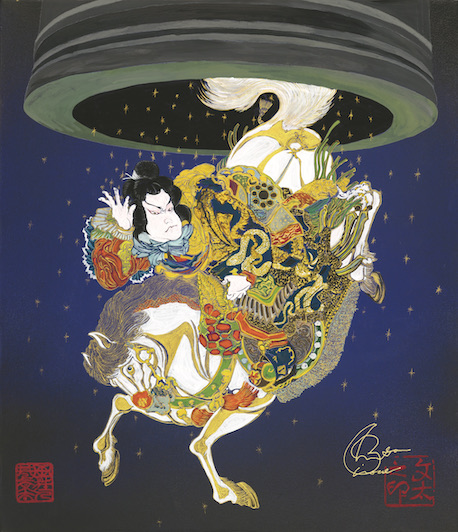
“世明け”を告げる鐘In the deep silence of midnight as the New Year arrives, the solemn peal of Joya-no-Kane—the New Year’s Bell— resonates through the darkness. Its heavy vibrations, said to sweep away worldly desires and cast off the old, carry the power to open a new gate. What appears on this month’s cover is the very moment that the gate of the new world dawn swings open.
新しい年を迎える深夜、深い静寂の中に除夜の鐘が響きわたります。古いものを払い、煩悩を祓うとされるその重い振動は、やがて 新たな世の夜明けの門 をひらく力となります。今月の表紙に描かれているのは、まさにその 「新しい世界の門」が開く刹那 なのです。
From within the bell—opening like a passage into the depths of the cosmos— the new zodiac sign, the Horse, descends together with shimmering stars. As tradition tells, the celestial steed touches the earth with its forelegs first— a single step marking a dawn moment when auspicious light begins to seep into the world. And this heavenly horse is none other than the very horse of the Soma clan, a lineage that has lived alongside horses for more than a thousand years.
宇宙の深淵へと続く鐘の中から、瞬く星々とともに新しい干支・午が降りてきます。伝承の通り、天馬は前足から地を踏みしめます。その一歩は、よき兆しが地上へ染みわたる黎明の一瞬です。そしてその天馬は、千年以上にわたり馬と共に生きてきた相馬氏の馬そのものです。
Rooted in Fukushima and known as descendants of Taira no Masakado, the Soma clan has lived every battle, every prayer, and every moment of daily life side by side with their horses. The spirit of Soma Nomaoi—an ancient equestrian tradition found nowhere else in the world and now designated as a National Important Intangible Folk Cultural Property— is the very pride of Soma itself.
福島県に根を張り、平将門の後裔として知られる相馬氏は、戦いも祈りも暮らしも、常に馬と共にありました。世界に類を見ない古式馬事、相馬野馬追(のまおい)の精神は、国の重要無形民俗文化財にも指定された、相馬の誇りそのものです。
On the armor of the samurai riding the celestial steed shines the Kuyō crest, borne for generations by the Soma clan who inherit the lineage of Masakado. It glows in harmony with the stars of the universe. On the samurai’s robe, the serpent of the previous year’s zodiac is depicted, quietly embodying the continuity of time, the cycle of life, and the layers of history that flow beneath the present moment.
天馬に跨る侍の甲冑には、将門の流れを継ぐ相馬氏が代々掲げてきた九曜紋が輝き、宇宙の星々と共鳴しています。侍の衣には、前年の干支・巳が描かれ、時間の連続性や命のめぐり、歴史の重なりが静かに息づいています。
Fukushima Prefecture, homeland of the Soma clan, is the third largest in Japan and is composed of three distinct regions: Hamadori, Nakadori, and Aizu. Hamadori, shaped by the sea and wind; Nakadori, a fertile heartland; and Aizu, a region embraced by mountains— each has nurtured its own history and culture over the centuries.
相馬氏ゆかりの地である福島県は、日本で三番目に広く、「浜通り」「中通り」「会津」から成る県です。海と風の「浜通り」、実りの大地「中通り」、山々に守られた「会津」——それぞれが異なる歴史と文化を育んできました。
Among these regions, Hamadori—where the city of Soma lies— bore deep wounds from the 2011 Great East Japan Earthquake, the tsunami, and the nuclear disaster that followed. The year 2026 marks fifteen years since that day. For this region, which has walked through a long stretch of darkness, the “dark interior” of the bell depicted on this cover stands as a symbol of the shadows of its past.
その中で相馬市が位置する浜通りは、2011年の東日本大震災と津波、そして原発事故という深い傷を負いました。2026年は、あの日から15年の節目。長い暗がりを歩んできたこの地域にとって、この表紙に描かれた鐘の“暗き内側”は、過去の影を象徴しています。
Yet—this darkness is quietly coming to an end. In the new Year of the Horse, starlight will once again pour down upon the land, and a renewed radiance will begin to fill the year ahead. And this horse will race across the whole of Japan, its gallop tracing a lineage that reaches back a thousand years, ultimately leading to Taira no Masakado,
the revered ancestor of the Soma clan.けれども——その暗がりは、静かに終わりを告げつつあります。新しい午の年は、星の輝きが再び大地へと降りそそぎ、再生の光が満ちていく一年となるでしょう。そして、その馬は、日本全土へと駆け抜けていきます。その姿は、千年の系譜を遡り、相馬氏の祖・平将門へと結ばれていきます。
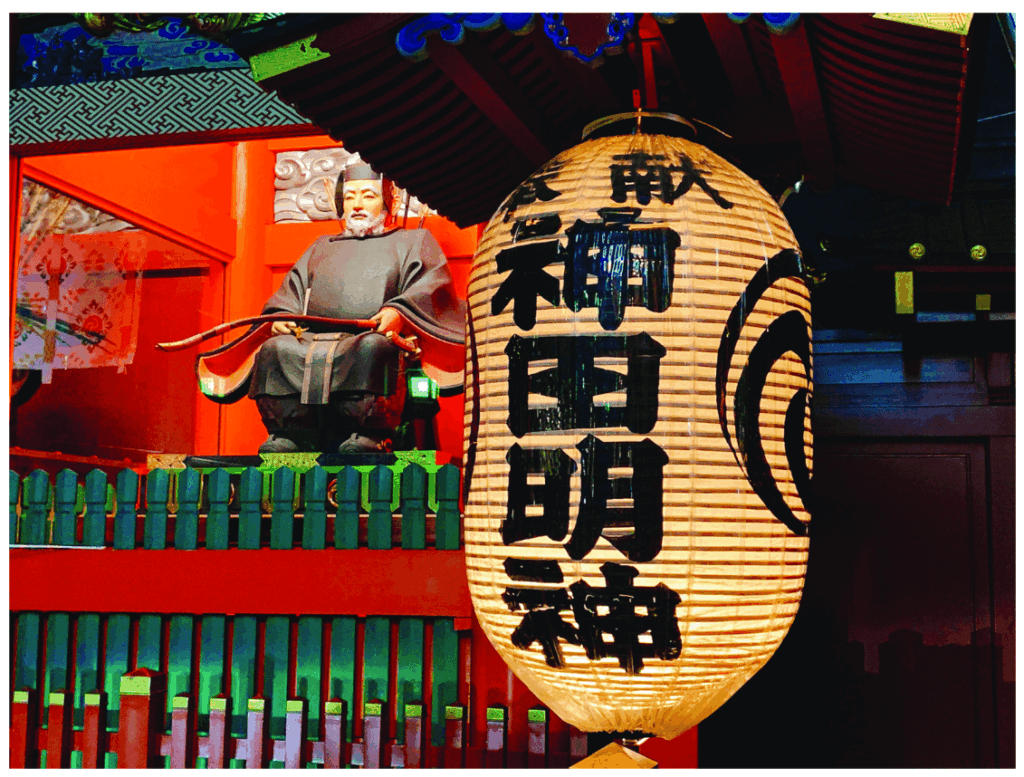
Kanda Myōjin in Tokyo, where Masakado is enshrined, will celebrate the 1,300th anniversary of its founding in 2030, four years from now. The prayers of Masakado—who once stood for the people of the eastern provinces and longed for a new and better age— continue to breathe across a millennium.
将門を祀る東京都の神田明神は、4年後の令和十二年(2030年)、創建一三〇〇年の節目を迎えます。かつて東国の民を思い、新しき世を願った将門の祈りは、千年の時を越えて息づいています。
A new era is quietly beginning— a time in which the stories carried by this lineage will once again reclaim their light. May the year 2026 become a radiant Year of the Horse, galloping forward with hope, courage, and renewed brightness.
その系譜に連なる物語が、再び光を取り戻す時代が、いま静かに始まりつつあります。2026年が、希望と勇気と光へと駆け抜ける美しい午の年となりますように。
This article is from the January 2026 issue of Hiragana Times.
この記事は、月刊誌『ひらがなタイムズ』2026年1月号より掲載しています。