
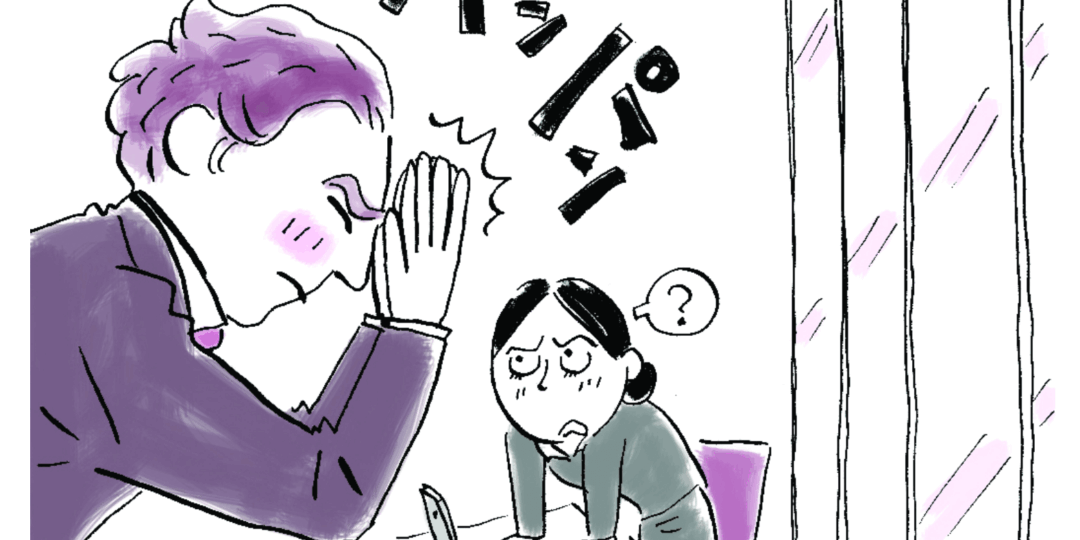
Clap your hands
[JAPAN MAZE | 迷宮ニホン – November 2025 Issue]
You may understand the words, but still get lost in communication. This corner takes you on a fun journey through the maze of Japanese language and culture with four-panel manga. Unlocking the punchline is the key — it reveals the essence of Japanese expression and leads you to the exit, with a smile and a fresh insight.
言葉の意味はわかるのに、なぜか通じない――。日本語と日本文化の迷宮を、4コマ漫画で楽しく探検するコーナーです。“オチ”を読み解けば、日本語の本質が見えてくる。迷宮の出口には、気づきと笑いが待っています。
手を打て | Clap your hands te wo ute
Scene 1
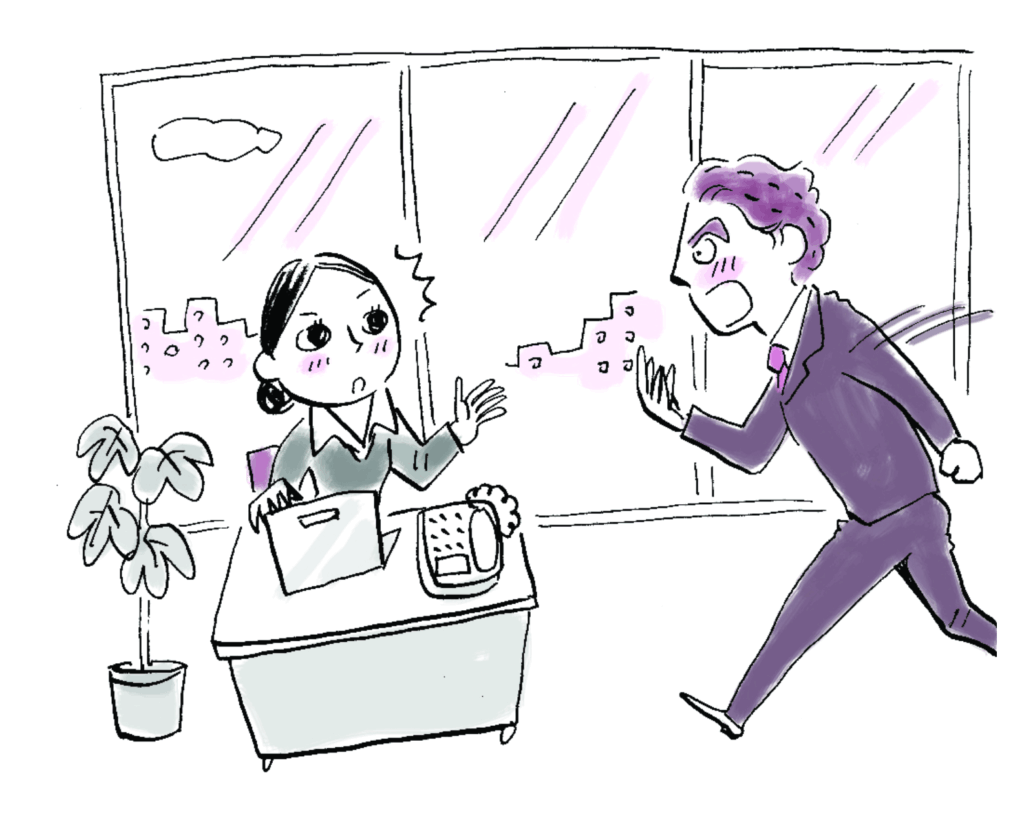
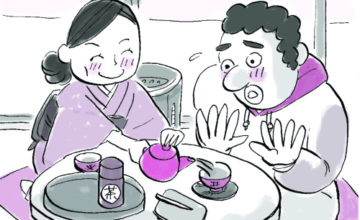
社員: 課長! 安倍さんの電車が遅れています。
kachou! abe san no densha ga okurete imasu
Staff: Section chief! Mr. Abe’s train has been delayed.
課長: 何ですって! もうすぐ大事なプレゼンが始まるのに。
nandesutte! mou sugu daijina purezen ga hajimaru noni.
Chief: What! We are due to start giving an important presentation soon.
Scene 2
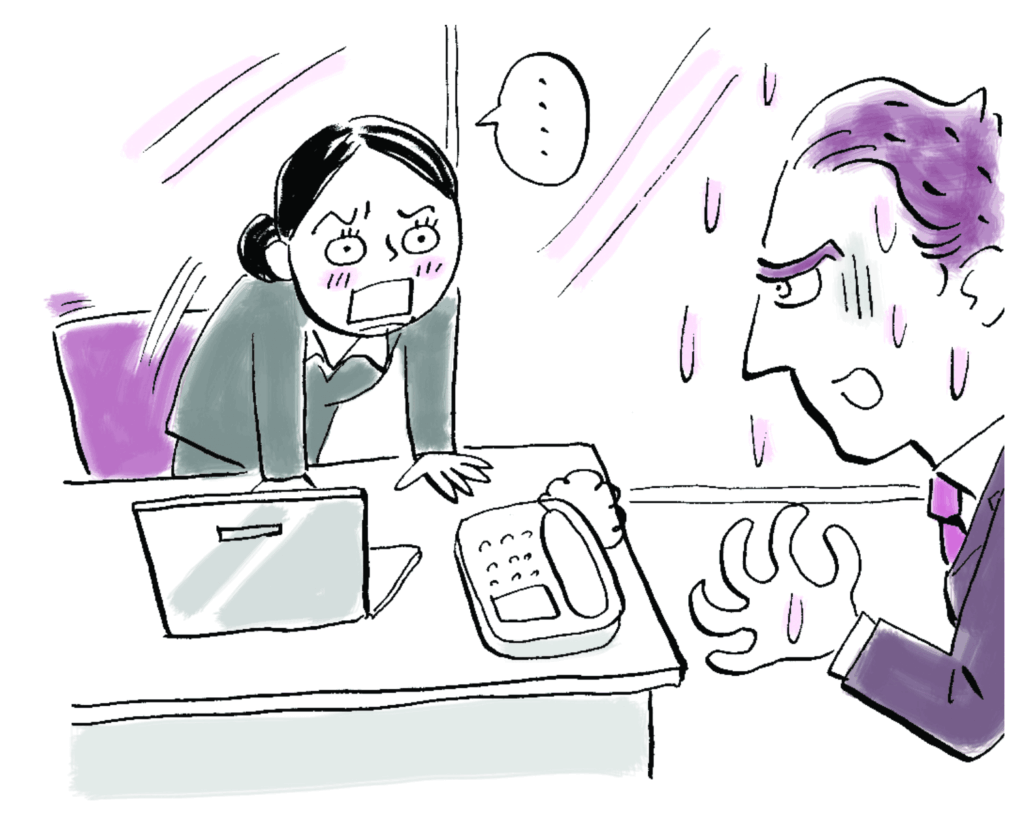
社員: どうしましょうか?
dou shimashou ka?
Staff: What shall I do?
課長: すぐ手を打ちなさい。
sugu te wo uchinasai
Chief: Act quickly to resolve the problem.
Scene 3
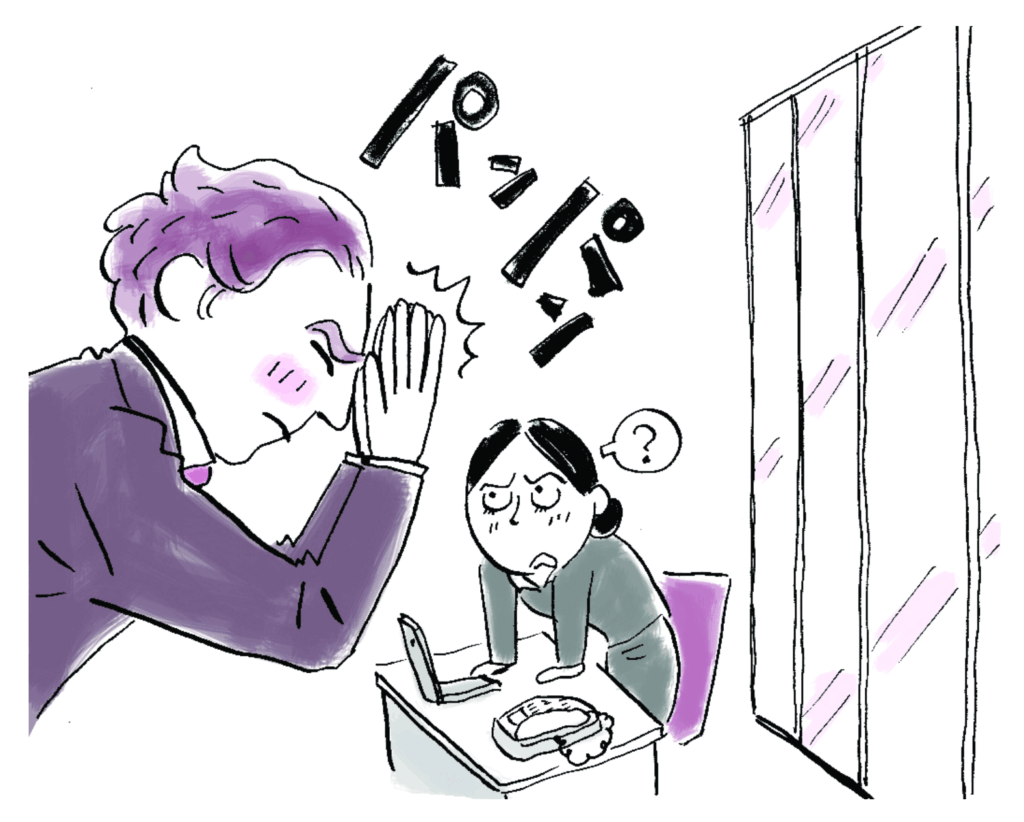
社員: はい、神社はこちらの方向でしたね?
hai, jinja wa kochira no houkou deshita ne?
Staff: Ok. The shrine is this way, isn’t it?
課長: 何しているの?
nani shite iru no?
Chief: What are you doing?
Scene 4
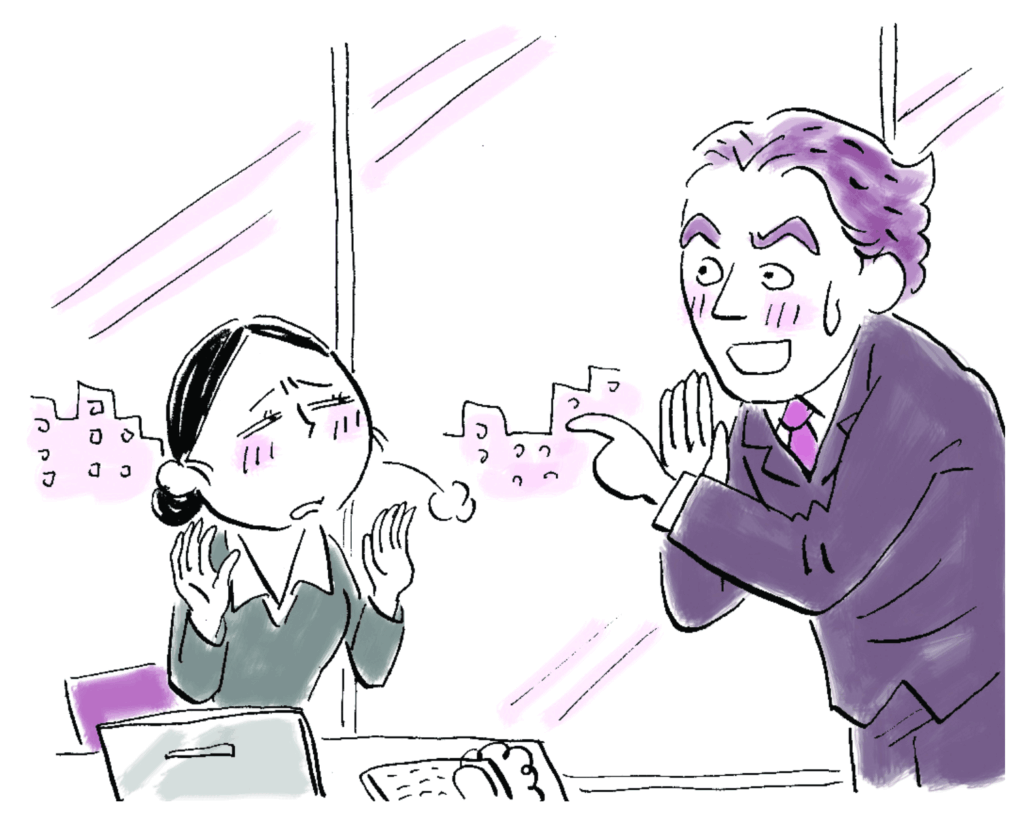
社員: 神様に解決をお願いしました。
kamisama ni kaiketsu wo onegai shimashita
Staff: I prayed to the gods to solve our problem.
課長: お手上げだね。
oteage da ne
Chief: I throw up my hands.
Maze Navigation / 迷宮ナビ
Let’s break down each scene | それぞれのシーンを理解しよう。
Scene 1
In Japan, staff address their superiors by their job title, as in “kachou (section chief),” instead of by name. The word “presentation” is now used in Japanese, but it is generally shortened to “purezen.”
日本では、社員は上司を名前で呼ばずに「課長」のように役職で呼ぶのが一般的です。「プレゼンテーション」は近年日本語としても使われますが、一般的に「プレゼン」と短く言います。
Keywords
■社員 (shain): staff ■上司 (joushi): superiors ■課長 (kachou): section chief ■役職 (yakushoku): job title ■一般的 (ippanteki): common ■近年 (kinen): recent years
Scene 2
The phrase “te wo utsu” means “to plan” and “take action to solve an issue.”
「手を打つ」は解決のための策を立てるという慣用句です。
Keywords
■手を打つ (te wo utsu): to plan / take action to solve an issue ■解決 (kaiketsu): solution ■策 (saku): measures ■立てる (tateru): stand up ■慣用句 (kanyouku): Idiom
Scene 3
When Japanese pray for something, they go to a shrine. It is customary to clap one’s hands together before the altar. He has misunderstood his boss and thinks that he has been asked to pray.
日本人は何かお願いごとをするときに神社に行きます。拝殿の前では手を叩くのが慣習です。社員はそうしろと言われたと勘違いしたのです。
Keywords
■神社 (jinja): shrine ■拝殿 (haiden): worship hall ■手をたたく (te wo tataku): clap one’s hands ■慣習 (kanshuu): custom ■勘違い (kanchigai): misunderstanding
Scene 4
The phrase “o te age” means “I’ve given up hope.” This literally means “raising hands,” a phrase related to “hands.”
「お手上げ」は「どうしようもない」というフレーズです。これは「手を上げる」という意味で、手に関する慣用句の一つです。
Keywords
■お手上げ (oteage): giving up ■どうしようもない (doushiyoumonai): no way ■手を上げる (te wo ageru): give up
Maze Exit / 迷宮出口
What did the punchline reveal? / 今回のオチでわかったこと
Cultural Insight / 新しい発想・文化知識
The Culture of “Hand” in the Japanese Language
日本語に息づく「手」の文化
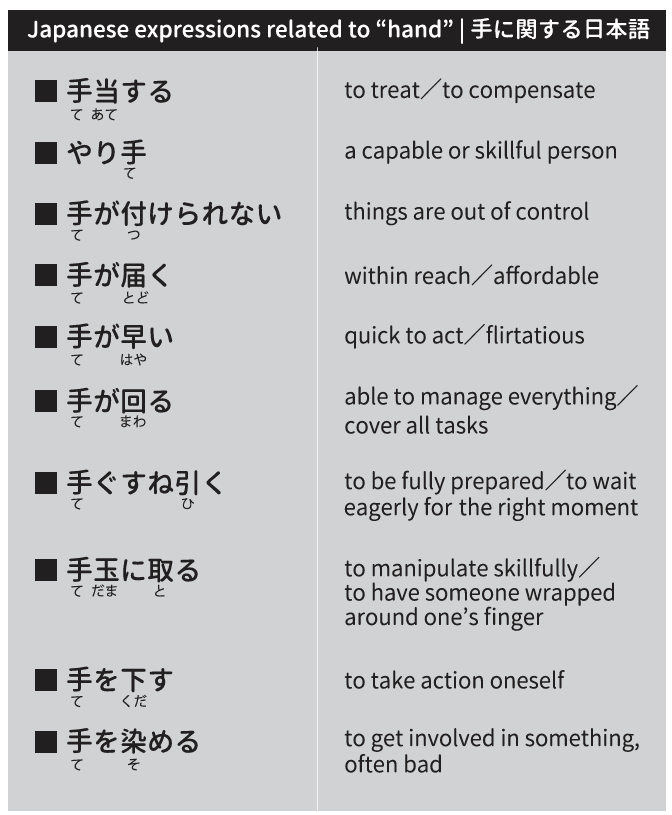
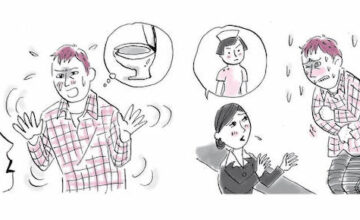
There is an astonishing number of expressions in Japanese that involve the word “te” (hand). Since ancient times, the Japanese have regarded the hand as an organ that connects to the heart. Craftspeople put their souls into their handiwork, and in traditional arts such as tea ceremony and calligraphy, the way one moves the hands is said to reflect one’s inner self. In other words, the hand is an extension of the heart – a visible expression of one’s character. The abundance of hand-related expressions mirrors a cultural spirit in which feelings are conveyed not through words, but through action. Here are some common Japanese expressions that include “hand.”
日本語には「手」に関わる表現が驚くほど多くあります。古くから日本人にとって「手」は、“心”とつながる器官でした。職人が手仕事に魂を込め、茶道や書道などの芸道では「手つき」「手の運び」がその人の内面を映し出すとされます。つまり、手とは心の延長であり、目に見える人格のあらわれでもあったのです。「手」にまつわる言葉の多さは、行動を通して心を表す日本人の精神文化を映す鏡でもあるのです。そんな「手」に関係する表現を、いくつかまとめてみました。
Japanese expressions related to “hand” | 手に関する日本語
This article is from the November 2025 issue of Hiragana Times.
この記事は、月刊誌『ひらがなタイムズ』2025年11月号より掲載しています。
日本人ファースト:誰のための「優先」か?“Food of the Gods” – Kaki Reflecting the Autumn of Japan
Information From Hiragana Times


Topics in Japan
-
![Nobody Tells You <br src=]() でも、伝わってくる" />
Nobody Tells You
でも、伝わってくる" />
Nobody Tells You
でも、伝わってくる -
![People Who Can’t Help Making Things <br src=]() 作らずにいられない人々" />
People Who Can’t Help Making Things
作らずにいられない人々" />
People Who Can’t Help Making Things
作らずにいられない人々 -
![Shogi: The Culture That Turned Enemies into Treasure <br src=]() 将棋 — 敵を宝に変えた文化" />
Shogi: The Culture That Turned Enemies into Treasure
将棋 — 敵を宝に変えた文化" />
Shogi: The Culture That Turned Enemies into Treasure
将棋 — 敵を宝に変えた文化 -
![The Story of “Wa” (倭 and 和) and “Yamato” (大和) <br src=]() 「倭」と「和」と「大和」の物語" />
The Story of “Wa” (倭 and 和) and “Yamato” (大和)
「倭」と「和」と「大和」の物語" />
The Story of “Wa” (倭 and 和) and “Yamato” (大和)
「倭」と「和」と「大和」の物語 -
![The United Nations That Runs on “Victors’ Justice” <br src=]() 「勝者の正義」で動く国連" />
The United Nations That Runs on “Victors’ Justice”
「勝者の正義」で動く国連" />
The United Nations That Runs on “Victors’ Justice”
「勝者の正義」で動く国連
 でも、伝わってくる" />
 作らずにいられない人々" />
 将棋 — 敵を宝に変えた文化" />
 「倭」と「和」と「大和」の物語" />
 「勝者の正義」で動く国連" />

