-

[NIHONGO DO – Word Leaves – February 2026 Issue]
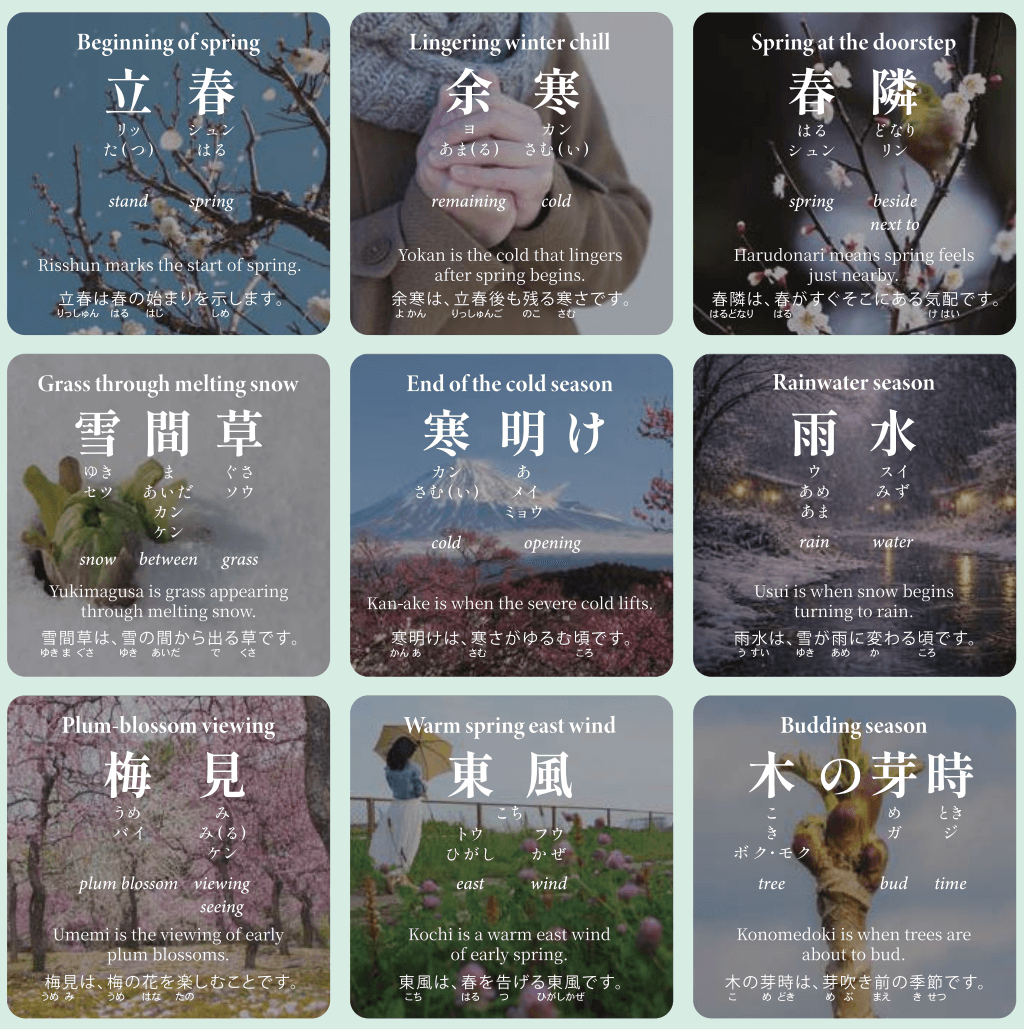
Seasonal Word Leaves: Japan’s February, “Kisaragi” — lingering winter chill, early spring signs, and days that seem to slip away.
季節の言の葉:日本の2月「如月(きさらぎ)」— 残る寒さと芽吹きの気配、そして足早に過ぎていく日々。
There is a well-known theory that “Kisaragi” means the month when people layered their garments to endure the lingering cold. Even as the chill remains, plum buds begin to open, the east wind softens the ice, and the first hints of spring quietly slip in. Time seems to move quickly, and as the saying goes, “February runs away,” the days pass in a moment. In this blend of severity and gentleness, a uniquely crisp beauty emerges in this season.
如月には、「寒さの中で衣(きぬ)をさらに重ねる月(衣更着)」とする説が広く知られています。冷え込みが残るなか、梅の蕾がほころび、東風が氷をゆるめ、春の気配が静かに差し込みます。時間はどこか急ぎ足で、「二月逃げる」という言い伝えのとおり、日々は瞬く間に過ぎていきます。厳しさとやわらぎが交わる、この時季ならではの凛とした美しさが宿ります。

This article is from the February 2026 issue of Hiragana Times.
この記事は、月刊誌『ひらがなタイムズ』2026年2月号より掲載しています。
-
[NIHONGO DO – Word Leaves – January 2026 Issue]
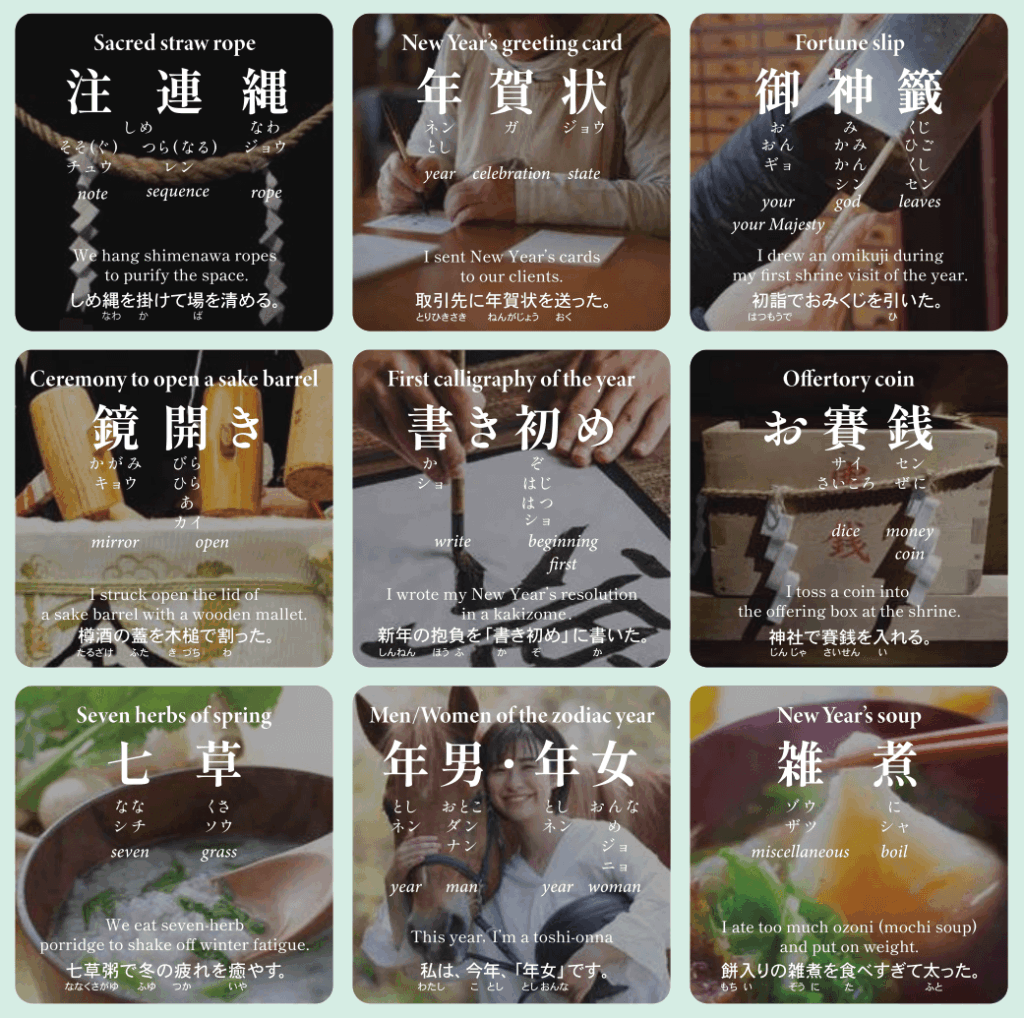
Seasonal Word Leaves: Japan’s January, “Mutsuki” — New-year gatherings, fresh starts, and quiet winter mornings across the islands.
季節の言の葉:日本の1月「睦月(むつき)」— 新年の集いと新たな始まり、そして静かな冬の朝。Mutsuki (the first month) carries the sense of coming together. Families reunite, New Year cards are exchanged, and first shrine visits offer prayers for the year ahead. Streets show festive cheer while mornings remain quiet; kagami-mochi and steaming ozoni fill the home with warmth. These small rituals and shared meals—moments of prayer, conversation, and comfort—shape Mutsuki’s gentle, hopeful rhythm.
睦月は「親しくむつまじくする月」という語感をもつ新年の季節です。家族が集い、年賀状が行き交い、初詣で一年の祈りを捧げる。街は晴れやかな賑わいを見せる一方で、朝の静けさが残り、鏡餅や雑煮の湯気が家庭を満たします。こうした小さな儀礼や食卓の時間が、睦月の穏やかで希望に満ちたリズムを形作ります。
This article is from the January 2026 issue of Hiragana Times.
この記事は、月刊誌『ひらがなタイムズ』2026年1月号より掲載しています。
-
[NIHONGO DO – Word Leave – October 2025 Issue]
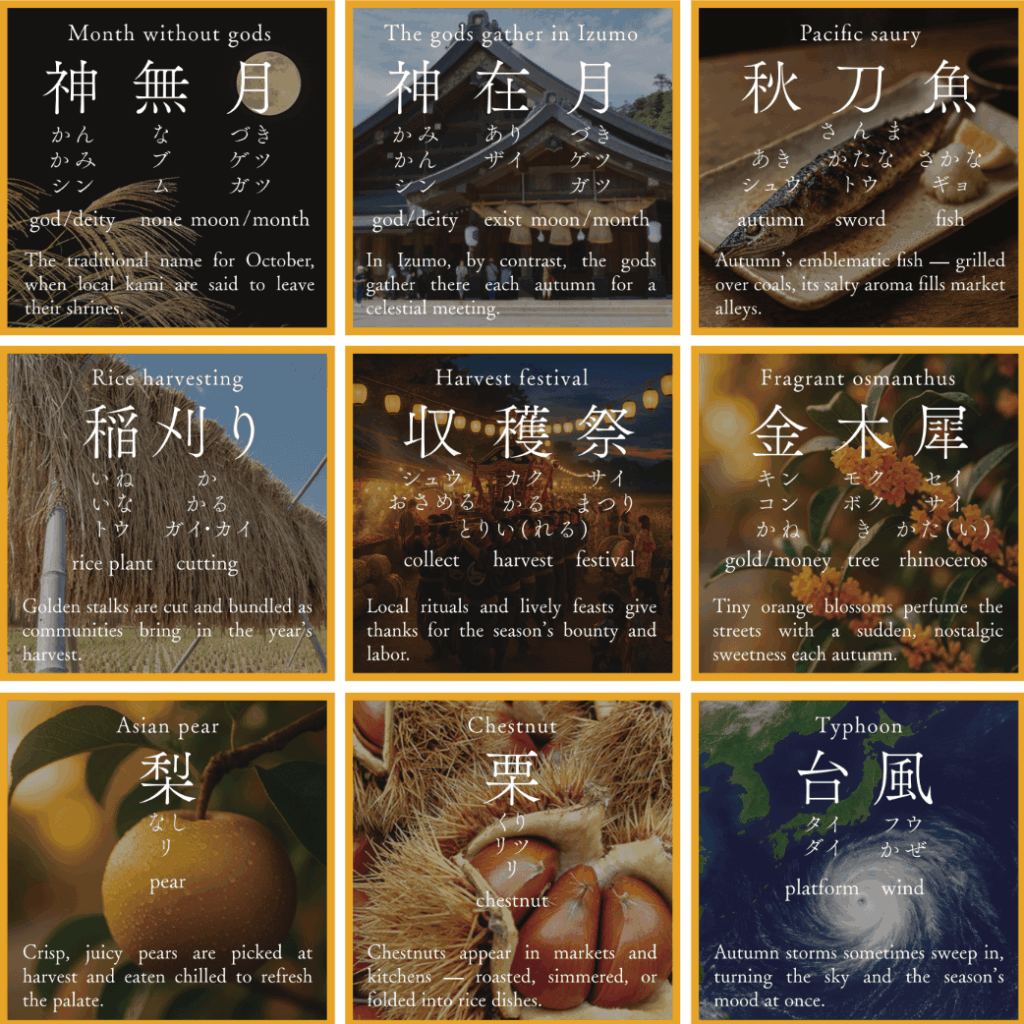
“Kanna-zuki / Kamiarizuki” — When gods travel, the air turns to autumn.
日本の10月、「神無月/神在月」— 神々が旅立ち、秋気が深まる季節。“Kanna-zuki” is the old name for October: in many regions local kami are said to leave their shrines and travel for a distant meeting, earning the month the name “without gods.” In Izumo, by contrast, it is called “Kamiarizuki,” when deities gather. Fields fill with harvest work, the scent of osmanthus drifts through the streets, and grilled saury and chestnuts grace the table — a season of harvest, ritual, and shifting skies.
「神無月」は10月の古名で、多くの地域では各地の神々が社を離れ、遠くの会合へ旅立つとされ「神のいない月」と呼ばれます。出雲では逆に「神在月」として神々が集います。里山には刈り入れの風景が戻り、金木犀の香り、秋刀魚や栗が食卓を彩る――収穫と祈り、季節の移ろいが共存する時期です。
This article is from the October 2025 issue of Hiragana Times.
この記事は、月刊誌『ひらがなタイムズ』2025年10月号より掲載しています。
-
Japanese is an isolated language born from a ‘Galapagos culture.’
日本語は、「ガラパゴス文化」から生まれた孤立言語。Japanese is an isolated language that developed independently in an island nation located at the edge of the Eurasian continent. This language, with its unparalleled complexity, can express even the subtlest nuances.
日本語は、ユーラシア大陸の端に位置する島国で独自に発展してきた孤立言語です。その言語は、世界に類を見ない複雑さにより、微妙なニュアンスまで表現できる言語となっています。
Japan, while being an advanced country, has a unique traditional culture woven into daily life. This culture is not only deeply tied to the Japanese language, but it is also no exaggeration to say that the language itself has nurtured the culture.
日本は先進国でありながら、日常生活にユニークな伝統文化が息づいています。そして、この文化は日本語と深く結びついているだけでなく、日本語そのものが文化を育んでいるといっても過言ではありません。
In recent years, many earthenware artifacts dating back around 15,000 years have been discovered in Japan, archaeologically proving that civilization existed at that time. This has led to the perspective that Japan should be classified as an “isolated civilization,” distinct from Chinese civilization.
近年、日本では1万5千年前後の土器が多く見つかり、当時から文明が存在していたことが考古学的に証明されました。これにより、日本は中華文明に含まれない「孤立文明」として分類される見方が生まれました。
What is even more intriguing is that no weapons have been found among the excavated items. It is believed that Japan enjoyed over 10,000 years of peace, which may have influenced the character of the Japanese people.
さらに興味深いのは、出土品から武器がまったく発見されていないことです。当時の日本は1万年以上の平和が続いていたと考えられ、それが日本人の性格形成に影響を与えたのではないかと推測されています。
Even in modern Japan, unique cultural practices exist. For example, there are spotless public facilities with no litter, a rich food culture that incorporates dishes from various countries, trains that run on time, elementary school children going to school by themselves, safe streets where people can walk at night, and moral behaviors such as turning in a lost wallet to the police instead of keeping it for oneself.
現代の日本でも、独特な文化が存在します。例えば、ごみのない清潔な公共施設、各国の料理を取り入れた豊かな食文化、時刻通りに走る電車、子どもだけで学校に通う小学生、夜中でも出歩ける治安の良さ、そして、財布を拾っても自分のものにすることなく派出所等に届けるといったモラルある行動などが挙げられます。
Could it be that these cultures and morals have been created, nurtured, and preserved by the Japanese people? We believe that the existence of the Japanese language plays a significant role. Just as a program is installed in a computer, the thoughts and sensibilities of those born and living in Japan are ingrained in them.
こうした文化やモラルが今も失われずにあるのは、いずれも日本人が生み出し、育み、守り続けてきたからでしょうか?私たちは、「日本語」の存在が大きいと考えています。コンピュータにプログラムがインストールされているように、日本という国に生まれ、生きる人々の思考や感覚に組み込まれているのです。
Many tourists who come to Japan from abroad are moved by its food culture and express a desire to live in Japan. We often hear them say that after arriving, they feel their hearts have become calmer, touched by the politeness and courtesy of the Japanese, even when buying something as small as a single juice.
海外から日本にやって来る多くの観光客は、日本の食文化に感動し、日本に住みたいと言います。たった1本のジュースを買う時でさえ丁寧で礼儀正しく対応する日本人に触れ、日本に来てから心が穏やかになったという声もまた、よく聞かれます。
We see the Japanese language, which lies at the foundation of Japanese culture, not merely as a communication tool but as a profound traditional art form, akin to the tea ceremony, flower arrangement, judo, and kendo. This is what we call “Nihongo-do” (The Way of the Japanese Language).
私たちは、日本文化の根底にある日本語を、単なるコミュニケーションツールではなく、茶道や華道、柔道、剣道と同じく、奥深い日本の伝統文化として捉えています。それが「日本語道」です。
Through this Nihongo-do section, we hope to share Japanese culture with people worldwide.
この日本語道のコーナーを通し、世界中の人々と日本文化を分かち合って行きたいと思います。
By stepping into Nihongo-do today, you become a “Nihongo-jin.”
日本語道に足を踏み出すあなたは今日から「日本語人」です。
Let’s begin! | さあ、始めましょう!
Nihongo-do Content | 日本語道コンテンツ
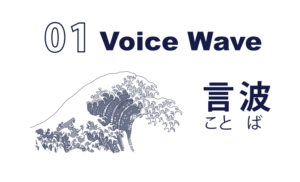
■ 言波 [コトハ / Kotoha ~ Voice Wave]
Even when the same words are spoken, the way they are conveyed changes depending on the atmosphere in which they are expressed. Words seem to have “waves,” like frequencies. Beneath the surface of these waves, there must be something like a heartbeat that creates the waves. This is the “heart,” and in Japan, we call it “Kotodama” (the spirit of words).
同じ言葉を発しても、発する際の雰囲気によって伝わり方が変わります。言葉にはまるで周波数のような「波」が存在しているかのようです。また、「波」が生まれる奥底には、その波を生み出す鼓動のようなものがあるはずです。それが「心」であり、日本ではこれを「コトタマ(言霊)」と呼びます。
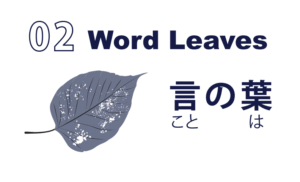
■ 言葉 [コトノハ / Kotonoha ~ Voice Leaves]
Words are like leaves on a tree. They are colored by people’s thoughts and emotions, and they are carried to others. The reason the character for “leaf” is used in the word “kotoba” (words) is believed to be connected to the Japanese reverence for nature. Japan’s oldest poetry collection is also titled “Manyoshu” (Collection of Ten Thousand Leaves).
言葉はまるで木の葉のようです。人の心や考えに色づけられ、他者へと伝わっていきます。「ことば」に「葉」という漢字を当てた背景には、日本人の自然崇拝が関係していると考えられます。日本最古の歌集も『万葉集』と名付けられています。
■ 言技[コトワザ Kotowaza ~ Voice Art]
The so-called “proverbs” are written as “諺” (kotowaza). Here, however, we will introduce not only proverbs in their traditional sense but also teachings from “The Analects of Confucius,” waka poetry, and even modern expressions, all of which are practical blends of “voice waves” and “voice leaves” in daily life. These words, which foster human sensibilities, are what we call “voice art” (kotowaza).いわゆる「ことわざ」は「諺」と書きます。ここでは本来の意味での「諺」にとどまらず、論語、和歌、さらには現代口語表現まで、人々の生活の中で「言波」と「言葉」が自由闊達[かったつ]に融合し実生活に活用され、人々の感性を育てている言葉のアート(言技)として紹介していきます。
-
『言葉』/ Word Leave
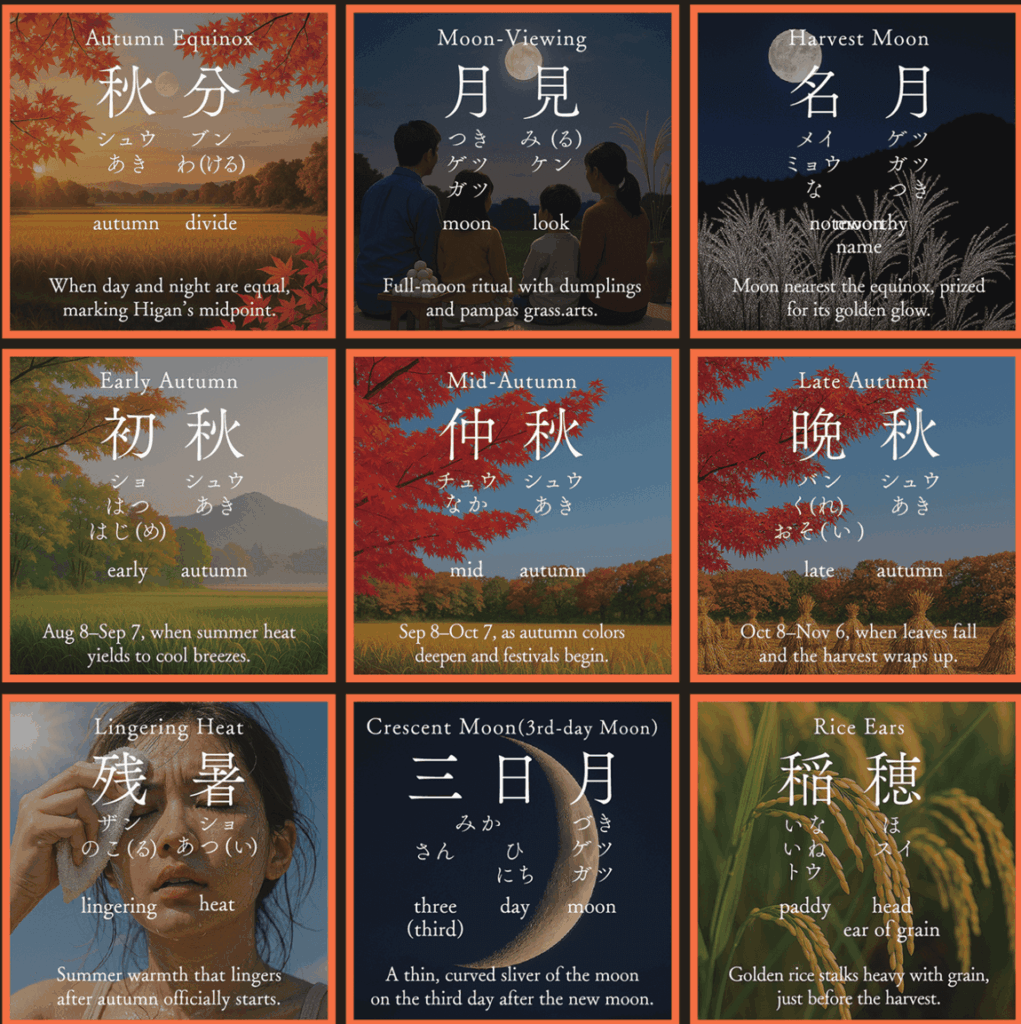
Seasonal Word Leaves: Japan’s September, “Nagatsuki” — Admiring the Moon, Thanking the Harvest.
季節の言の葉: 日本の9月「長月」— 月を愛で、実りに感謝する秋の始まり。
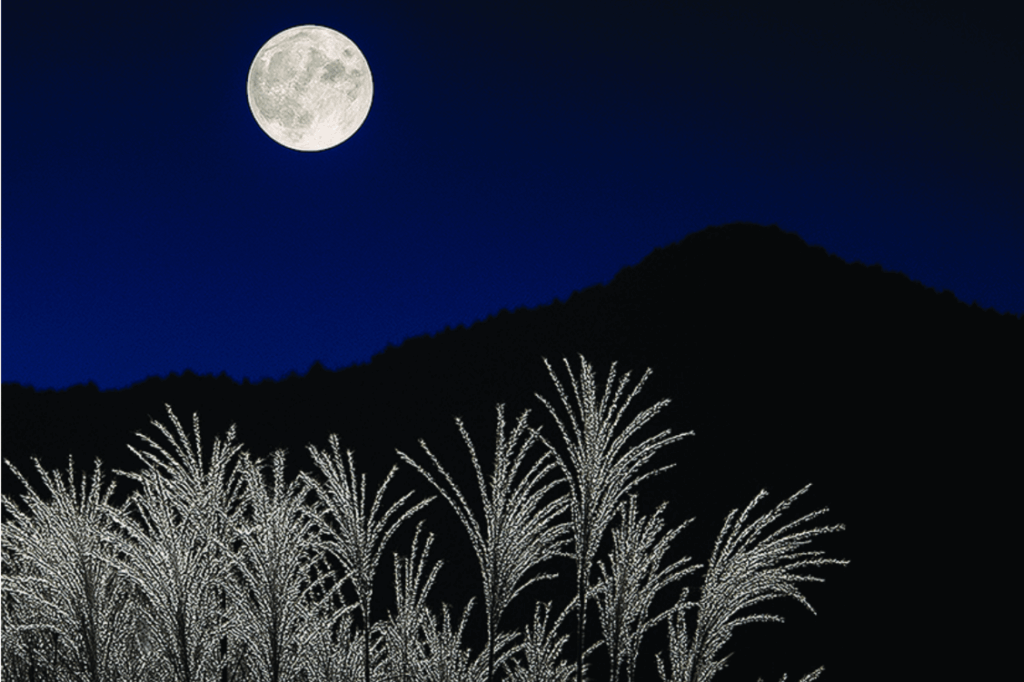
“Nagatsuki” is the traditional name for the ninth month of the old lunar calendar. It is said to be derived from “Yonagazuki” (the month of long nights), as the nights gradually lengthen. The lingering summer heat finally softens, and admiring the “Chushu no Meigetsu” (Harvest Moon) in the clear night sky becomes a special custom known as “Otsukimi.” People decorate with pampas grass (susuki) and offer dumplings (dango) to give thanks for the bountiful harvest. It is a season for appreciating nature’s blessings and the gentle autumn air amid the chorus of insects.
「長月」は旧暦9月。次第に夜が長くなる「夜長月」から転じた説が伝わります。厳しい残暑もようやく和らぎ、澄んだ夜空に輝く「中秋の名月」を愛でるお月見は、この時期ならではの風習です。ススキを飾り団子を供え、作物の豊穣に感謝します。響き渡る虫の音に、自然の恵みと秋の風情を愛でる季節です。
Hiragana Times September 2025 issue
This article is from the September 2025 issue of Hiragana Times.
この記事は、月刊誌『ひらがなタイムズ』2025年9月号より掲載しています。