
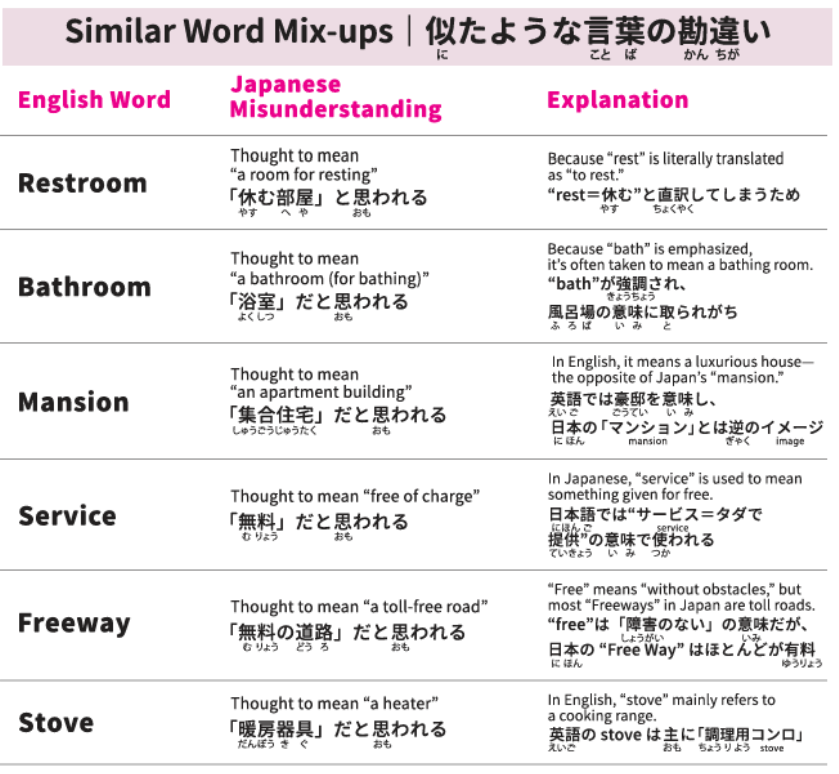
Restroom
レストルーム
[JAPAN MAZE | 迷宮ニホン – December 2025 Issue]
You may understand the words, but still get lost in communication. This corner takes you on a fun journey through the maze of Japanese language and culture with four-panel manga. Unlocking the punchline is the key – it reveals the essence of Japanese expression and leads you to the exit, with a smile and a fresh insight.
言葉の意味はわかるのに、なぜか通じない――。日本語と日本文化の迷宮を、4コマ漫画で楽しく探検するコーナーです。 “オチ”を読み解けば、日本語の本質が見えてくる。迷宮の出口には、気づきと笑いが待っています。
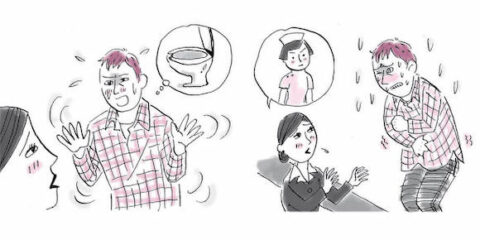
レストルーム | Restroom
Scene 1

ゆみ:どうなさいましたか。
Yumi: What’s the matter?
Scene 2

ジミー:レストルームはどこですか。
Jimmy: Where’s the restroom?
ゆみ:大丈夫ですか。
Yumi: Are you ok?
Scene 3
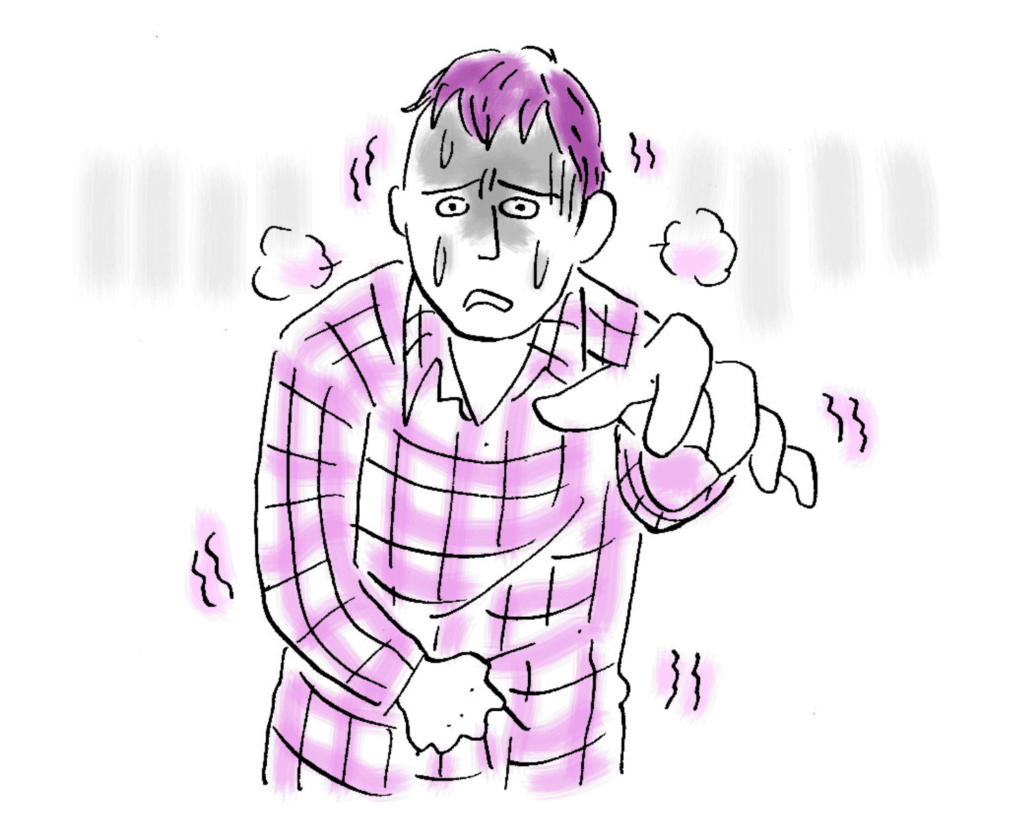
ジミー:がまんできます。
Jimmy: I can’t hold on.
ゆみ:でも、お体が震えていらっしゃいます。
Yumi: But… you are shaking.
Scene 4

ジミー:どこか教えてください、早く!
Jimmy: Tell me where it is, hurry!
ゆみ:あ、保健室へご案内いたします。
Yumi: I’ll take you there. Let the nurse take a look at you.
Maze Navigation / 迷宮ナビ
Let’s break down each scene | それぞれのシーンを理解しよう。
Scene 1 — “Something’s Wrong!”|「なにか変!?」
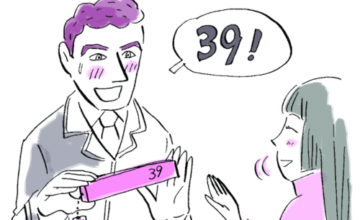
At the information counter, Jimmy, a foreign man, approaches Yumi. He seems restless and troubled.
ビルの案内所で、外国人のジミーがゆみに話しかけます。どこか落ち着かず、困っている様子です。
■ 案内所[information counter]
■ 外国人[foreigner]
■ 様子[appearance / situation]
■ 困る[to be troubled]
■ 緊張[nervousness]
Scene 2 — “The Restroom Riddle”|「レストルームのなぞ」
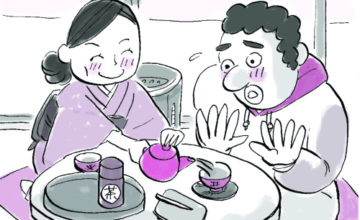
Jimmy asks Yumi where the restroom is. But Yumi thinks he’s looking for a place to rest!
ジミーは「レストルームはどこですか?」と尋ねますが、
ゆみは「休む部屋」を探していると勘違いします。
■ 休む[to rest]
■ 部屋[room]
■ 探す[to look for]
■ 尋ねる[to ask / to inquire]
■ 勘違い[misunderstanding]
■ 通じない[not understood / miscommunication]
Scene 3 — “Can’t Hold It!!”|「もう限界!」
Jimmy is desperate to go to the toilet,
but Yumi doesn’t realize his urgency and only shows concern.
ジミーは今すぐトイレに行きたいのに、
ゆみは心配するばかりで状況を理解していません。
■ 今すぐ[right away / immediately]
■ 震える[to tremble / to shake]
■ 我慢できない[can’t hold it / can’t endure]
■ 状況[situation / condition]
■ 心配[worry / concern]
Scene 4 — “Hospital Instead!?”|「トイレじゃなくて保健室!?」
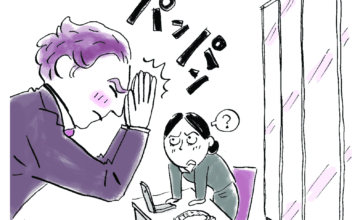
Jimmy gets impatient,
while Yumi, misunderstanding his condition,
decides to take him to the infirmary.
焦るジミーを見て、ゆみは「体調不良」と思い込み、
保健室へ連れて行こうとします。
■ 案内する[to guide / to escort]
■ 看護師[nurse]
■ 焦る[to panic / to be flustered]
■ 診る[to examine / to check (a patient)]
■ 体調不良[feeling unwell]
■ 思い込む[to assume / to believe mistakenly]
Maze Exit / 迷宮出口
What did the punchline reveal? / 今回のオチでわかったこと
Cultural Insight / 新しい発想・文化知識
In Japan, the word “toilet” is the most common expression, and few people know that “restroom” means the same thing.
Another common term is “otearai”, which literally means “a place to wash your hands,” but it is used in the same way as “bathroom” in English.
日本では「トイレ」という言葉が一般的で、「restroom=トイレ」と知る人は少ないのです。
もう一つの言い方に「お手洗い」があり、直訳すると「手を洗う場所」ですが、英語の “bathroom” のようにトイレを意味します。
Most Western-style toilets in Japan come with a variety of advanced features.
You can adjust the seat temperature, and many include a warm-water washing function.
In addition, there are options for water pressure control, warm-air drying, deodorizing, and even sound-masking systems that let users feel more comfortable.
日本の洋式トイレのほとんどには、さまざまな機能がついています。
便座の温度を調整できるほか、お湯でお尻を洗う「温水洗浄」機能もあります。
そのほかにも、水量の調整、温風での乾燥、脱臭、さらに音を気にしないで済む「消音装置」など、多様な工夫がされています。
There is also a saying in Japan that “a toilet reflects the heart of the household.”
A clean and well-kept toilet is seen as a symbol of hospitality.
In both homes and businesses, keeping the toilet clean is considered important, and there is even a belief that cleaning the toilet brings good luck.
また、日本では「トイレはその家の“心”を映す」と言われます。
清潔で整えられたトイレは、おもてなしの象徴です。
家庭や店舗ではトイレ掃除を大切にする文化が根づいており、
「トイレをきれいにすると運が良くなる」という言い伝えもあります。
This article is from the December 2025 issue of Hiragana Times.
この記事は、月刊誌『ひらがなタイムズ』2025年12月号より掲載しています。
味・花・祈りで巡る四国の旅Seasonal Voice-Word Art: “If winter comes, can spring be far behind?” — A gentle reminder that hardship gives way to renewal.
季節の言技:「冬来たりならば春遠からじ」— 辛い時期の向こうに、必ず芽吹きがある。
Information From Hiragana Times


Topics in Japan
-
![Japanese Minka—Homes Alive with Nature <br src=]() 自然の中で生きている日本民家" />
Japanese Minka—Homes Alive with Nature
自然の中で生きている日本民家" />
Japanese Minka—Homes Alive with Nature
自然の中で生きている日本民家 -
![The Man Who Chose Harmony in an Age of Blood | Prince Shōtoku <br src=]() 血の時代に、和を選んだ人 | 聖徳太子" />
The Man Who Chose Harmony in an Age of Blood | Prince Shōtoku
血の時代に、和を選んだ人 | 聖徳太子" />
The Man Who Chose Harmony in an Age of Blood | Prince Shōtoku
血の時代に、和を選んだ人 | 聖徳太子 -
![The Fish That Leads the Way into Autumn <br src=]() 秋の先頭を泳ぐ魚" />
The Fish That Leads the Way into Autumn
秋の先頭を泳ぐ魚" />
The Fish That Leads the Way into Autumn
秋の先頭を泳ぐ魚 -
![The House Has Ears, Eyes—and a Mouth <br src=]() 耳と目と口を持つ家" />
The House Has Ears, Eyes—and a Mouth
耳と目と口を持つ家" />
The House Has Ears, Eyes—and a Mouth
耳と目と口を持つ家 -
![Words the Home Holds <br src=]() 家がつつむ言の葉" />
Words the Home Holds
家がつつむ言の葉" />
Words the Home Holds
家がつつむ言の葉
 自然の中で生きている日本民家" />
 血の時代に、和を選んだ人 | 聖徳太子" />
 秋の先頭を泳ぐ魚" />
 耳と目と口を持つ家" />
 家がつつむ言の葉" />

