
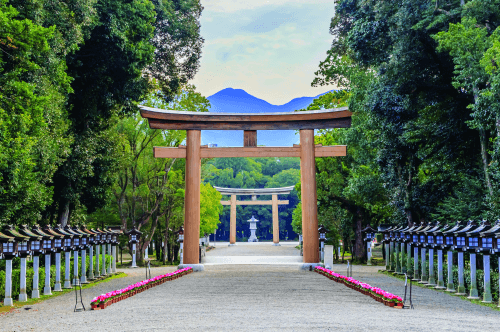
National Foundation Day — A Day to Reflect on Japan’s Beginnings
建国記念の日――日本の「はじまり」を考える日
[Japan savvy – February 2026 Issue]
National Foundation Day — A Day to Reflect on Japan’s Beginnings
建国記念の日――日本の「はじまり」を考える日
February 11th, which is ‘National Foundation Day’, is the day when it is said that the first Emperor, Emperor Jimmu, ascended the throne.
「建国記念の日」である2月11日は、初代天皇・神武天皇が即位したと伝えられる日です。
That year is considered to be 660 BC, and His Majesty the current Emperor corresponds to the 126th generation counting from there.
その年は紀元前660年とされ、現在の天皇陛下は、そこから数えて126代目にあたります。
It was in the Meiji era, when relationships with Western powers began to deepen, that this day was first established.
この日が最初に定められたのは、「西洋列強」との関係が深まりはじめた明治時代でした。
Japan named this day ‘Kigensetsu’ in order to show its own origin to the international community.
日本は国際社会に向けて、自らの起源を示すため、この日を「紀元節」と名づけました。
After World War II, Kigensetsu was abolished once under the occupation policy, but after that, receiving the voices of the people, it revived changing its name to ‘National Foundation day.
第二次世界大戦後、占領政策のもとで紀元節はいったん廃止されますが、その後、国民の声を受けて「建国記念の日」と名を変えて復活します。
In Japanese mythology, there is a story called ‘Kuniyuzuri’ (Transfer of the Land), which is said to have ceded the country to the lineage of Emperor Jimmu.
日本の神話には、神武天皇の系譜に国を譲ったとされる「国譲り」という物語があります。
In it, it is told that a ‘country’ existed in this Japan even before ‘Kigensetsu’.
そこには、「紀元節」以前にも、この日本に「国」が存在していたことが語られています。
National Foundation Day is a day to turn one’s thoughts to Japan’s endlessly long history.
建国記念の日は、日本の果てしなく長い歴史に想いを馳せる日です。
Become a Kenkoku Savvy 建国通になる
WARM UP | Kenkoku JapaNEEDS
Useful Words 役立つ言葉
- 建国記念の日(けんこくきねんのひ) – National Foundation Day
- 即位(そくい) – enthronement; accession to the throne
- 神武天皇(じんむてんのう) – Emperor Jimmu
- 紀元前(きげんぜん) – BCE (Before the Common Era)
- 紀元節(きげんせつ) – National Foundation Day
- 起源(きげん) – origin
- 国際社会(こくさいしゃかい) – international community
- 神話(しんわ) – mythology
- 国譲り(くにゆずり) – transfer of the land (myth)
- 系譜(けいふ) – lineage
- 歴史(れきし) – history
- 想いを馳せる(おもいをはせる) – to reflect on; to think back
Ice Breaker Questions 会話のきっかけ
1.Does your country have a day that commemorates its founding?
あなたの国には、「建国」を記念する日がありますか?
2.What kind of event is that day based on?
その日は、どんな出来事をもとに定められていますか?
3.Do you think a nation’s beginning can be clearly defined?
「国のはじまり」は、はっきり決められるものだと思いますか?
4.Do you see mythology as history, or as a story?
神話は、歴史だと思いますか?それとも物語だと思いますか?
5.What kind of day makes you feel a sense of “beginning”?
あなたにとって、「はじまり」を感じる日はどんな日ですか?
WORK UP | Kenkoku Discussion
DISCUSSION ディスカッション
Michael: America’s Independence Day is July 4th, marking 1776, when the Declaration of Independence was issued.
マイケル:アメリカの建国記念日は、1776年に独立宣言が出された7月4日です。
Mayumi: That was the day George Washington and others declared independence from Britain, right?
まゆみ:ジョージ・ワシントンたちがイギリスからの独立を宣言した日ですね。
Emily: The UK doesn’t actually have a “National Foundation Day.”
That’s because our monarchy and political system evolved gradually over time.
エミリー:イギリスには、実は「建国記念日」はありません。王朝や国の形が、少しずつ変わってきたからです。
Ming:In China, we celebrate National Day on October 1st, marking 1949, when Mao Zedong proclaimed the founding of the People’s Republic of China.
ミン:中国では、1949年10月1日に毛沢東が中華人民共和国の成立を宣言した日を、「国慶節」として祝います。
Pierre: In France, we celebrate July 14th to commemorate the French Revolution of 1789. Our nation begins not with a dynasty, but with the revolution itself.
ピエール:フランスでは、1789年のフランス革命を記念する7月14日を祝います。王朝のはじまりではなく、「革命」そのものが国の出発点なんです。
Mayumi: Looking at it this way, many countries define their beginnings through clear historical events. In Japan, however, the founding of the nation is told alongside mythology.
まゆみ:こうして見ると、多くの国は、はっきりした「歴史的な出来事」を建国の始まりにしているんですね。日本の場合、建国は神話と重ねて語られます。
Emily: That’s the story in which the land of Izumo was said to have been handed over to the lineage of Emperor Jimmu, a descendant of the sun deity, right?
エミリー:出雲の国が、太陽の神の子孫である神武天皇の系譜に、国を譲ったという物語ですね。
Ming: The birth of the nation itself sounds almost like a Studio Ghibli film.
ミン:国の誕生そのものが、まるでジブリアニメみたいですね。
Pierre: Anime, or should I say, animism. That’s what you’d expect from a country rooted in nature worship.
ピエール:アニメならぬ、アニミズム。自然崇拝の国ならではですね。
WORK UP | Kenkoku Discussion
DISCUSSION ディスカッション
In Japan, people are given a posthumous name (okurina) based on how they lived and what they achieved after their death.
日本では、死後その人の生き方や功績などをもとに、諡(おくりな)が与えられます。
The name Emperor Jimmu is also a posthumous title; his name during his lifetime was Iwarebiko (Kamuyamato Iwarebiko).
神武天皇という名も諡であり、生前の名はイワレビコ(神日本磐余彦〈かむやまと・いわれびこ〉)でした。
It is said that before the establishment marked by Kigensetsu, there existed what is often referred to as the Izumo dynasty.
紀元節以前には、「出雲王朝」が存在したと伝えられています。
The Japanese archipelago is crossed by mountain ranges that run like a backbone through the land; the Sea of Japan side is called San’in, while the Pacific side is known as San’yō.
日本列島には山脈が背骨のように連なり、日本海側は山陰、太平洋側は山陽と呼ばれています。
In Japan, Hyuga City in Kyushu is written as “where the sun turns,” Hitachi City in eastern Japan as “where the sun stands,” and Izumo City in the San’in region as “where clouds appear.”
日本には、日が向かうと書く「日向市」が九州に、日が立つと書く「日立市」が東日本に、そして雲が出る「出雲市」が山陰にあります。
“Izumo,” now located in Shimane Prefecture, is thought in ancient times to have extended its influence from the Sea of Japan coast, across the mountains, and into the Nara Basin, a key geographical crossroads.
現在、島根県に位置する「出雲」は、古代においては、日本海側から山々を越えた、地形の切れ目である奈良盆地にまで、その影響を及ぼしていたと考えられています。
Iwarebiko (Emperor Jimmu) is said to have been born in the area around Hyuga in Kyushu.
イワレビコ(神武天皇)は、九州の日向のあたりで生まれたと伝えられています。
In the story of his eastern expedition toward Nara, there appears a figure named Nigihayahi, who is described as having ruled the Kinai region before Jimmu.
イワレビコが奈良へと向かう東征の物語には、ニギハヤヒ(饒速日)と呼ばれる、神武天皇以前に畿内を統治していたとされる存在が語られています。
Some scholars view Nigihayahi as a ruler who preceded Emperor Jimmu—sometimes described as a kind of “zero-generation emperor.”
このニギハヤヒ(饒速日)を、神武天皇以前の支配者、いわば「ゼロ代天皇」のような存在として捉える研究者もいます。
This article is from the February 2026 issue of Hiragana Times.
この記事は、月刊誌『ひらがなタイムズ』2026年2月号より掲載しています。
季節の言の葉:日本の2月「如月(きさらぎ)」— 残る寒さと芽吹きの気配、そして足早に過ぎていく日々。Check in
チェックイン


Information From Hiragana Times


Topics in Japan
-
![Words That Live with Insects <br src=]() 虫と暮らす言の葉" />
Words That Live with Insects
虫と暮らす言の葉" />
Words That Live with Insects
虫と暮らす言の葉 -
![Bugs Live in the Belly <br src=]() 腹に虫が住む" />
Bugs Live in the Belly
腹に虫が住む" />
Bugs Live in the Belly
腹に虫が住む -
![Voices of Insects — The Soundtrack of Autumn in Japan <br src=]() 虫の声 ― 日本の秋のBGM" />
Voices of Insects — The Soundtrack of Autumn in Japan
虫の声 ― 日本の秋のBGM" />
Voices of Insects — The Soundtrack of Autumn in Japan
虫の声 ― 日本の秋のBGM -
![The Worms Within Came from the Universe <br src=]() 腹の虫は、宇宙から来た" />
The Worms Within Came from the Universe
腹の虫は、宇宙から来た" />
The Worms Within Came from the Universe
腹の虫は、宇宙から来た -
![Ito Jakuchū — An Eye for Life <br src=]() 伊藤若冲 ―― いのちを見る眼" />
Ito Jakuchū — An Eye for Life
伊藤若冲 ―― いのちを見る眼" />
Ito Jakuchū — An Eye for Life
伊藤若冲 ―― いのちを見る眼
 虫と暮らす言の葉" />
 腹に虫が住む" />
 虫の声 ― 日本の秋のBGM" />
 腹の虫は、宇宙から来た" />
 伊藤若冲 ―― いのちを見る眼" />

