
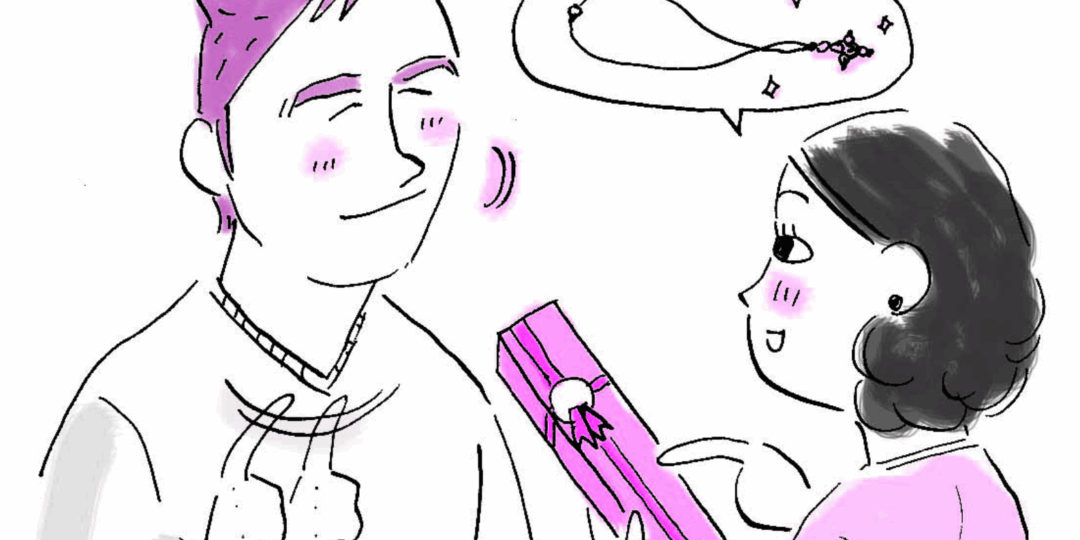
Birthday Present
[JAPAN MAZE | 迷宮ニホン – October 2025 Issue]
You may understand the words, but still get lost in communication. This corner takes you on a fun journey through the maze of Japanese language and culture with four-panel manga. Unlocking the punchline is the key — it reveals the essence of Japanese expression and leads you to the exit, with a smile and a fresh insight.
言葉の意味はわかるのに、なぜか通じない――。日本語と日本文化の迷宮を、4コマ漫画で楽しく探検するコーナーです。“オチ”を読み解けば、日本語の本質が見えてくる。迷宮の出口には、気づきと笑いが待っています。
誕生日の贈り物 | Birthday Present
Scene 1
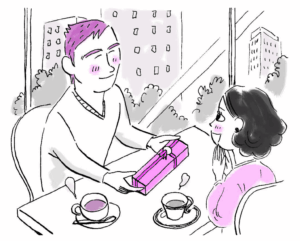 ジョン: これ、誕生日の贈り物です。
John: This is a birthday present.
ユイ: バースデープレゼント? サンキュウ!
Yui: A birthday present? Thank you!
Scene 2
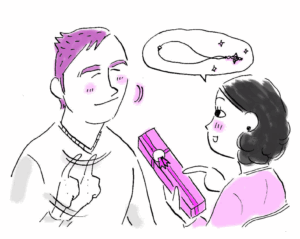 ジョン: 首飾りです。
John: It’s a necklace.
ユイ: ネックレスのことね?
Yui: You mean a necklace?
Scene 3
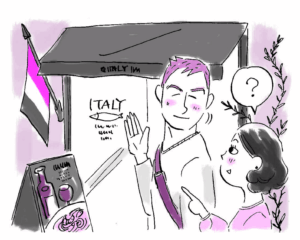
ジョン: 食堂へ行こう。ブドウ酒で乾杯しよう。
John: Let’s go to a restaurant and make a toast with wine.
ユイ: レストランで、ワインで乾杯ということね?
Yui: You mean make a toast with wine in a restaurant?
Scene 4
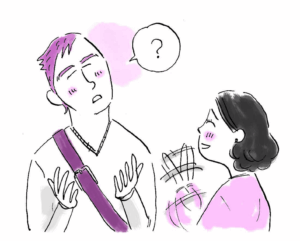 ジョン: ユイ、どうしていちいち英語で確認するの?
John: Why do you confirm each word with the English version?
ユイ: 英語の方がわかりやすいの。
Yui: English terms are much easier to understand.
Maze Navigation | 迷宮ナビ
Let’s break down each scene | それぞれのシーンを理解しよう。
Scene 1
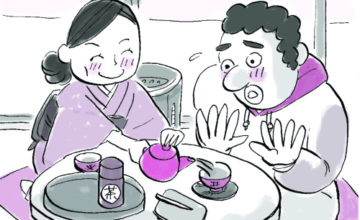
In a cafe, John hands Yui a birthday present, saying in Japanese, “Kore, tannjoubi no okurimono desu.” Nowadays “ba-sudei purezento” is used more frequently than “tanjoubi no okurimono.”
喫茶店。 ジョンはユイに「誕生日の贈り物」と言って箱を手渡します。 今では、「誕生日の贈り物」より、「バースデープレゼント」の方がより使われています。
Keywords:
■ 誕生日 (tanjoubi): birthday ■ 箱 (hako): box ■ 手渡す (tewatasu): hand over / pass
■ 喫茶店 (kissaten): café ■ 〜の方が (〜no hou ga): rather than / is more
Scene 2
John calls that present a kubikazari (neck ornament), but nowadays almost no one uses that word. In Japanese as well, people usually say necklace.
ジョンはそのプレゼントが首飾りといいますが、現在では首飾りという人はほとんどいません。 日本語でもネックレスといいます。
Keywords:
■ 首飾り (kubikazari): necklace ■ 現在 (genzai): now/at present/currently
■ ほとんど (hotondo): almost/hardly/nearl ■ いいます (iimasu): say/call
Scene 3
John invites Yui to have a toast at a shokudo. Shokudo generally refers to a casual, inexpensive eatery, while establishments that serve wine are usually called restaurants. In addition, the word budōshu (“grape liquor”) is now considered old-fashioned; in modern Japanese, the borrowed word wine is commonly used.
ジョンは食堂で乾杯しようとユイを誘います。 「食堂」は一般的に大衆的な飲食店を指し、ワインを提供する店は通常「レストラン」と呼ばれます。 また、「ぶどう酒」という言葉も今では古風な表現であり、日本語でも一般的に「ワイン」という外来語が使われています。
Keywords:
■ 誘う (sasou): invite/ask/suggest ■ 古風 (kofuu): old-fashioned/archaic ■ 一般的 (ippanteki): general/common/typical
Scene 4
John asks Yui why she rephrases these words in English to confirm their meaning. In fact, most of the Japanese words John learned are no longer used in daily life. Today, many English-derived words have taken their place in Japanese.
ジョンはユイに、なぜこれらの言葉を英語に言い換えて確認するのかと尋ねます。 ジョンが学んだ日本語の多くは、もはや日常では使われていません。 今では、その代わりに数多くの英語由来の言葉が日本語として用いられています。
Keywords:
■ 言い換える (iikaeru): rephrase/paraphrase / say differently ■ 由来 (yurai): origin/ derivation/source
Maze Exit| 迷宮出口
What did the punchline reveal? | 今回のオチでわかったこと
Cultural Insight | 新しい発想・文化知識
Lost in Translation: 日本語から英語へ移った言葉
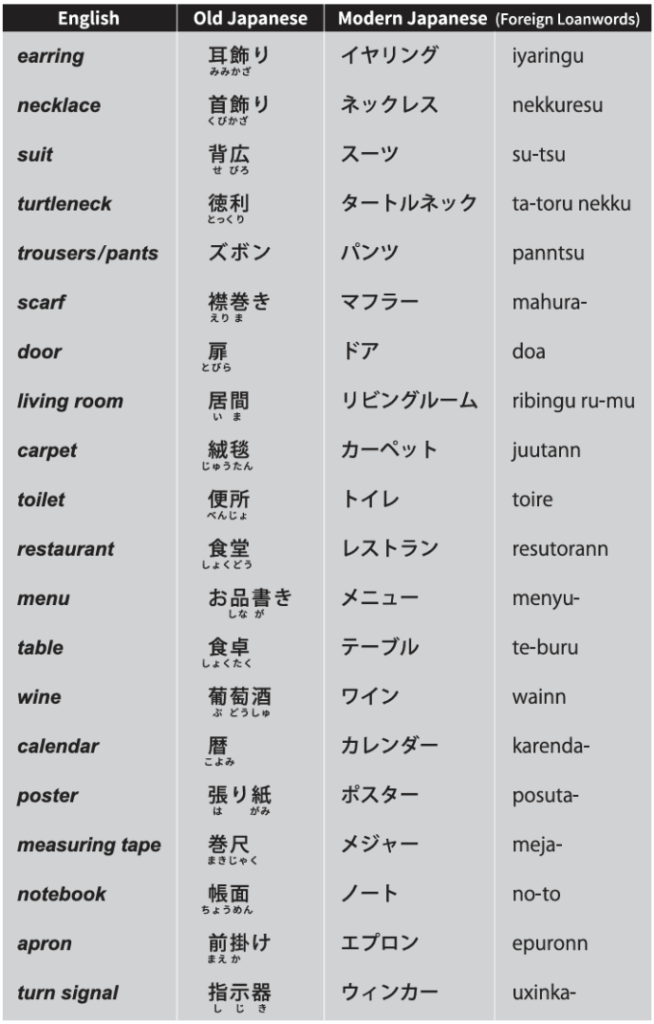
There are various estimates, but according to research by the National Institute for Japanese Language and Linguistics and others, about 10 to 15 percent of the vocabulary used in modern Japanese consists of loanwords, the majority of which are derived from English.
諸説ありますが、国立国語研究所などの調査によると、現代日本語で使われる語彙の約1割〜1.5 割が外来語であり、その大半は英語由来とされています。
In other words, if you are an English speaker, you already naturally know a large part of Japan’ s vocabulary. This reality itself can serve as the foundation for what may be called the “fastest and most effective method” of mastering Japanese.
つまり、あなたが英語話者であれば、すでに日本語の膨大な語彙の一部を自然に知っているのです。 この現実を足がかりにする学習法こそ、「超最短・最速の日本語習得法」といえるでしょう。
This article is from the October 2025 issue of Hiragana Times.
この記事は、月刊誌『ひらがなタイムズ』2025年10月号より掲載しています。
Information From Hiragana Times


Topics in Japan
-
![Japanese Minka—Homes Alive with Nature <br src=]() 自然の中で生きている日本民家" />
Japanese Minka—Homes Alive with Nature
自然の中で生きている日本民家" />
Japanese Minka—Homes Alive with Nature
自然の中で生きている日本民家 -
![The Man Who Chose Harmony in an Age of Blood | Prince Shōtoku <br src=]() 血の時代に、和を選んだ人 | 聖徳太子" />
The Man Who Chose Harmony in an Age of Blood | Prince Shōtoku
血の時代に、和を選んだ人 | 聖徳太子" />
The Man Who Chose Harmony in an Age of Blood | Prince Shōtoku
血の時代に、和を選んだ人 | 聖徳太子 -
![The Fish That Leads the Way into Autumn <br src=]() 秋の先頭を泳ぐ魚" />
The Fish That Leads the Way into Autumn
秋の先頭を泳ぐ魚" />
The Fish That Leads the Way into Autumn
秋の先頭を泳ぐ魚 -
![The House Has Ears, Eyes—and a Mouth <br src=]() 耳と目と口を持つ家" />
The House Has Ears, Eyes—and a Mouth
耳と目と口を持つ家" />
The House Has Ears, Eyes—and a Mouth
耳と目と口を持つ家 -
![Words the Home Holds <br src=]() 家がつつむ言の葉" />
Words the Home Holds
家がつつむ言の葉" />
Words the Home Holds
家がつつむ言の葉
 自然の中で生きている日本民家" />
 血の時代に、和を選んだ人 | 聖徳太子" />
 秋の先頭を泳ぐ魚" />
 耳と目と口を持つ家" />
 家がつつむ言の葉" />

