
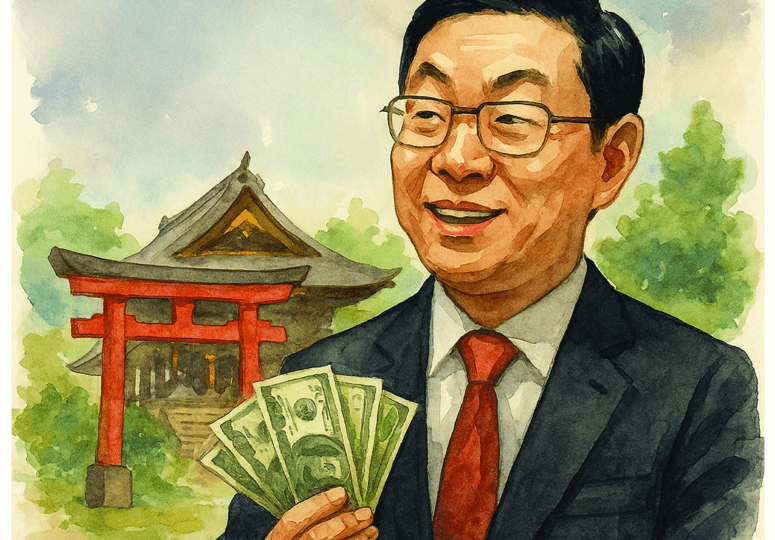
Shrines and Temples Purchase Problem and Japanese People’s Identity
神社仏閣の買収問題と日本人のアイデンティティ
[Close up Japan – November 2025 Issue]
Shrines and Temples Purchase Problem and Japanese People’s Identity
神社仏閣の買収問題と日本人のアイデンティティ
News that ‘Japanese shrines and temples are being bought by foreigners’ has been reported in the overseas media and is causing a stir.
「日本の神社仏閣が外国人に買われている」――そんなニュースが海外メディアで報じられ、波紋を広げています。
The view was introduced that ‘those who wish to purchase are not aiming for noble purposes, but are targeting tax evasion and money laundering by abusing tax incentives’.
「購入希望者は崇高な目的ではなく、税制優遇を悪用した脱税やマネーロンダリングを狙っている」という見方が紹介されました。
For religious corporations, income is non-taxable, and there are preferential treatments where property tax and inheritance tax are also exempted.
宗教法人は収入が非課税で、固定資産税や相続税も免除される優遇措置があります。
It is said that one wealthy Chinese individual spoke shamelessly, saying, ‘There is no business as lucrative as a religious corporation’.
中国人資産家の一人は「宗教法人ほどおいしいビジネスはない」と悪びれもせず語ったといいます。
The realm of faith, which severs worldly desires, is, ironically, being swallowed up by desire.
煩悩を断つ信仰の領域が、皮肉にも欲望に飲み込まれています。
However, the root of this problem also lies with the Japanese temple side, which becomes the seller.
しかし、この問題の「根っこ」には、売り手となる日本の寺院側にもあります。
Temples that have become impoverished due to a lack of successors and a decrease in parishioners are being unavoidably forced into selling.
後継者不足や檀家の減少で困窮した寺院が、やむを得ず売却に追い込まれているのです。
This problem, which relates to the national identity, could have been prevented if there had been political foresight and a national vision.
国民のアイデンティティに関わるこの問題は、政治の先見性と国家観があれば防げたはずです。
Also, within postwar democratic education, the religious faith of the Japanese people became diluted, and a spiritual vacuum spread.
また、戦後民主主義教育の中で、日本人の信仰心は希薄化し、精神的空洞が広がりました。
Many Japanese people treat shrines and temples as ‘power spots,’ and have fallen into a way of thinking centered on selfish desires.
多くの日本人は神社仏閣を「パワースポット」として扱い、我欲中心の発想に陥っています。
Might it not be the case that such an attitude is allowing the ‘commodification’ of Japan’s ‘soul’ by foreigners?
そうした姿勢が、外国人による日本の”魂”の「商品化」を許しているのではないでしょうか。
This problem also has the aspect of ‘happened because it was bound to happen.’
この問題は「起こるべくして起こった」側面もあります。
Perhaps this current event might need to be regarded as a turning point to reconstruct Japan’s religious culture and spiritual foundation.
今回の出来事は、日本の宗教文化と精神的基盤を見直す重要な転機と捉えるべきかもしれません。
This article is from the November 2025 issue of Hiragana Times.
この記事は、月刊誌『ひらがなタイムズ』2025年11月号より掲載しています。
Related Posts




Information From Hiragana Times


Topics in Japan
-
![Eto – An Eastern Philosophy Unraveling the Blueprint of the Universe <br src=]() 干支——宇宙の設計図を紐解く東洋の思想" />
Eto – An Eastern Philosophy Unraveling the Blueprint of the Universe
干支——宇宙の設計図を紐解く東洋の思想" />
Eto – An Eastern Philosophy Unraveling the Blueprint of the Universe
干支——宇宙の設計図を紐解く東洋の思想 -
 “Yurutsura” 「ゆるつら」
-
![Seasonal Voice-Word Art: Hidari-uma (Left Horse)”—Flip a character, turn your fortune. <br src=]() 季節の言技:「左馬」— 文字を反転させ、運を転じる。" />
Seasonal Voice-Word Art: Hidari-uma (Left Horse)”—Flip a character, turn your fortune.
季節の言技:「左馬」— 文字を反転させ、運を転じる。" />
Seasonal Voice-Word Art: Hidari-uma (Left Horse)”—Flip a character, turn your fortune.
季節の言技:「左馬」— 文字を反転させ、運を転じる。 -
![Seasonal Word Leaves: Japan’s March, “Yayoi” — endings, departures, and the quiet momentum toward what comes next. <br src=]() 季節の言の葉:日本の3月「弥生(やよい)」— 締めくくりと別れ、そして次へ向かう静かな動き。" />
Seasonal Word Leaves: Japan’s March, “Yayoi” — endings, departures, and the quiet momentum toward what comes next.
季節の言の葉:日本の3月「弥生(やよい)」— 締めくくりと別れ、そして次へ向かう静かな動き。" />
Seasonal Word Leaves: Japan’s March, “Yayoi” — endings, departures, and the quiet momentum toward what comes next.
季節の言の葉:日本の3月「弥生(やよい)」— 締めくくりと別れ、そして次へ向かう静かな動き。 -
![Politics and Religion — Faith as a Machine<br src=]() 政治と宗教――装置にされた信仰" />
Politics and Religion — Faith as a Machine
政治と宗教――装置にされた信仰" />
Politics and Religion — Faith as a Machine
政治と宗教――装置にされた信仰
 干支——宇宙の設計図を紐解く東洋の思想" />

 季節の言技:「左馬」— 文字を反転させ、運を転じる。" />
 季節の言の葉:日本の3月「弥生(やよい)」— 締めくくりと別れ、そして次へ向かう静かな動き。" />
 政治と宗教――装置にされた信仰" />

