
Politics and Religion — Faith as a Machine
政治と宗教――装置にされた信仰
[Pros and Cons with Insight – March 2026 Issue]
Politics and Religion — Faith as a Machine
政治(せいじ)と宗教(しゅうきょう)――装置(そうち)にされた信仰(しんこう)
 Background | 背景(はいけい)
In Japan, a structure has long existed in which politicians backed by the bloc votes of religious organizations hold national office.
日本(にほん)では、宗教団体(しゅうきょうだんたい)の組織票(そしきひょう)に支(ささ)えられた政治家(せいじか)が国政(こくせい)を担(にな)う構造(こうぞう)が長年(ながねん)続(つづ)いている。
Despite the principle of separation of religion and state, the sense that this is abnormal is fading.
政教分離(せいきょうぶんり)の原則(げんそく)がありながら、それを異常(いじょう)と感(かん)じる感覚(かんかく)すら失(うしな)われつつある。
 Pros | 賛成意見(さんせいいけん)
Participating in politics based on one’s faith is a legitimate right in a democracy.
信仰(しんこう)に基(もと)づいて政治(せいじ)に参加(さんか)することは、民主主義(みんしゅしゅぎ)における正当(せいとう)な権利(けんり)だ。
 Cons | 反対意見(はんたいいけん)
When politicians are elected through bloc votes directed by religious organizations, it can hardly be called the will of the people.
宗教団体(しゅうきょうだんたい)の指示(しじ)による組織票(そしきひょう)で選(えら)ばれた政治家(せいじか)が国政(こくせい)を担(にな)うことは、民意(みんい)とは呼(よ)べない。
 Insight | 洞察(どうさつ)
Japan was once a nation where prayer and governance were one and the same.
日本(にほん)はかつて、祈(いの)りと政(まつりごと)が一体(いったい)の国(くに)であった。
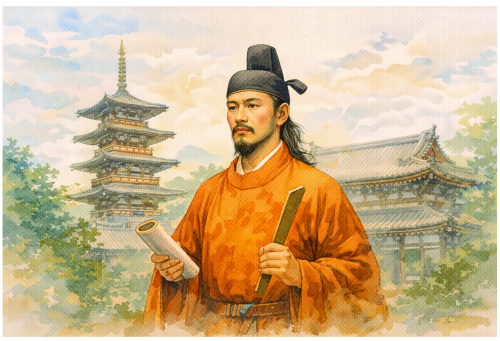
The Emperor was a “priestly sovereign,” devoted to praying for the well-being of the people, who were called “Ōmitakara” — the great treasure of the nation.
天皇(てんのう)は「祭祀王(さいしおう)」として「大御宝(おおみたから)」と呼(よ)ばれた国民(こくみん)の安寧(あんねい)を祈(いの)る存在(そんざい)であった。
In time, Buddhism arrived from the continent — something akin to what we would now call MBA-style management methods.
やがて大陸(たいりく)から、今(いま)でいうMBA式(しき)の経営手法(けいえいしゅほう)のような仏教(ぶっきょう)がもたらされた。
The “CEO” of the era, Prince Shōtoku, established systems of law and rank, and governed the nation through Buddhist principles.
当時(とうじ)の「CEO」聖徳太子(しょうとくたいし)は、憲法(けんぽう)や階位(かいい)を整備(せいび)し、仏教(ぶっきょう)の理念(りねん)で国(くに)を治(おさ)めた。
Yet his ideals were gradually distorted by those who came to power after him.
しかし聖徳太子(しょうとくたいし)の理想(りそう)は、後(のち)の権力者(けんりょくしゃ)たちに歪(ゆが)められていった。
In the Nara period, branch temples called “Kokubunji” were established across the country with Tōdai-ji at the apex. Faith was transformed from something that saved the people into a machine that bred bureaucrats and fed the powerful.
奈良時代(ならじだい)、東大寺(とうだいじ)を頂点(ちょうてん)に全国(ぜんこく)へ国分寺(こくぶんじ)が配置(はいち)され、信仰(しんこう)は国民(こくみん)を救(すく)うものから官僚(かんりょう)を生(う)み権力(けんりょく)を肥(こ)やす装置(そうち)に変(か)わった。
Emperor Kanmu reset everything. He abandoned Nara and built a new capital in Kyoto.
桓武天皇(かんむてんのう)はすべてをリセット(reset)した。奈良(なら)を捨(す)て、京都(きょうと)に新(あら)たな都(みやこ)を築(きず)いた。
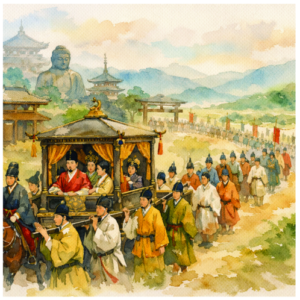
He then entrusted the restoration of faith to Saichō (Mt. Hiei) and Kūkai (Mt. Kōya).
そして最澄(さいちょう)(比叡山(ひえいざん))と空海(くうかい)(高野山(こうやさん))に信仰(しんこう)の立(た)て直(なお)しを託(たく)した。
The two revived Buddhism as a faith that nurtures the hearts of the people, and laid the foundation for Shinbutsu-shūgō — the harmonious coexistence of Japan’s native gods and Buddhist teachings.
二人(ふたり)は仏教(ぶっきょう)を国民(こくみん)の心(こころ)を支(ささ)える信仰(しんこう)へと蘇(よみがえ)らせ、神仏習合(しんぶつしゅうごう)の礎(いしずえ)を築(きず)いた。
The Heian capital endured for over 400 years. Japan, the world’s oldest nation, continues to this day thanks to the selfless decisions of its forebears.
平安京(へいあんきょう)は400年以上(ねんいじょう)続(つづ)いた。世界最古(せかいさいこ)の国家(こっか)・日本(にほん)は、先人(せんじん)たちの私心(ししん)なき英断(えいだん)で今日(こんにち)まで続(つづ)いている。
In the recent election, a political party backed by a religious organization suffered a major defeat. We hope for a Reiwa reset.
今回(こんかい)の選挙(せんきょ)で、宗教団体(しゅうきょうだんたい)を母体(ぼたい)とする政党(せいとう)が大敗(たいはい)した。令和(れいわ)のリセット(reset)を期待(きたい)したい。
This article is from the March 2026 issue of Hiragana Times.
この記事(きじ)は、月刊誌(げっかんし)『ひらがなタイムズ』2026年(ねん)3月号(がつごう)より掲載(けいさい)しています。
季節の言の葉:日本の3月「弥生(やよい)」— 締めくくりと別れ、そして次へ向かう静かな動き。Tsubakuro — The Soul Returns to Jingu
つば九郎 ― 神宮に還る魂
Related Posts


Information From Hiragana Times


Topics in Japan
-
![Japanese Minka—Homes Alive with Nature <br src=]() 自然の中で生きている日本民家" />
Japanese Minka—Homes Alive with Nature
自然の中で生きている日本民家" />
Japanese Minka—Homes Alive with Nature
自然の中で生きている日本民家 -
![The Man Who Chose Harmony in an Age of Blood | Prince Shōtoku <br src=]() 血の時代に、和を選んだ人 | 聖徳太子" />
The Man Who Chose Harmony in an Age of Blood | Prince Shōtoku
血の時代に、和を選んだ人 | 聖徳太子" />
The Man Who Chose Harmony in an Age of Blood | Prince Shōtoku
血の時代に、和を選んだ人 | 聖徳太子 -
![The Fish That Leads the Way into Autumn <br src=]() 秋の先頭を泳ぐ魚" />
The Fish That Leads the Way into Autumn
秋の先頭を泳ぐ魚" />
The Fish That Leads the Way into Autumn
秋の先頭を泳ぐ魚 -
![The House Has Ears, Eyes—and a Mouth <br src=]() 耳と目と口を持つ家" />
The House Has Ears, Eyes—and a Mouth
耳と目と口を持つ家" />
The House Has Ears, Eyes—and a Mouth
耳と目と口を持つ家 -
![Words the Home Holds <br src=]() 家がつつむ言の葉" />
Words the Home Holds
家がつつむ言の葉" />
Words the Home Holds
家がつつむ言の葉
 自然の中で生きている日本民家" />
 血の時代に、和を選んだ人 | 聖徳太子" />
 秋の先頭を泳ぐ魚" />
 耳と目と口を持つ家" />
 家がつつむ言の葉" />

