
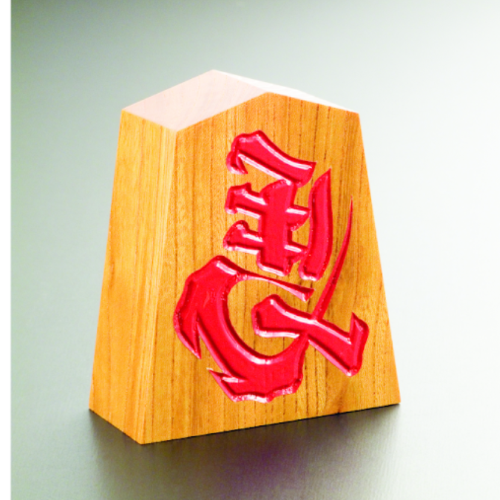
Seasonal Voice-Word Art: “Hidari-uma (Left Horse)”—Flip a character, turn your fortune.
季節の言技:「左馬」— 文字を反転させ、運を転じる。
[NIHONGO DO – Voice-word Art – March 2026 Issue]
Seasonal Voice-Word Art: Hidari-uma (Left Horse)”—Flip a character, turn your fortune.
季節の言技:「左馬(ひだりうま)」— 文字を反転させ、運を転じる。
In this month’s “Voice-Word Art” section, we introduce a uniquely Japanese word art: by simply changing the orientation of a single kanji, a story emerges and meaning multiplies.
今月号の「言技」セクションでは、漢字一文字でも向きを変えるだけでストーリーが生まれ、意味が増幅する、日本語ならではの言葉の技を紹介します。
左馬(ひだりうま) Left Horse
Hidari-uma is an auspicious character created by writing the kanji “馬” (horse) in mirror-reversed form. It has long been cherished as a character that guides fortune in a positive direction. Originating primarily in Tendo City, Yamagata Prefecture—known as the production center for shogi pieces—hidari-uma is said to have spread as decorative shogi pieces from the late Edo period.
左馬とは、漢字の「馬」を左右反転させて書いた縁起文字です。運を良い方向へ導く文字として親しまれてきました。将棋駒の産地として知られる山形県天童市を中心に、江戸時代後期から飾り駒として広まったとされています。
■ Meaning / 意味
By reversing “馬,” the reading “uma” (horse) transforms into “mau” (to dance). The word “mau” carries not only the meaning of dancing, but also evokes images of soaring upward and rising gracefully toward the sky. Hidari-uma has thus been regarded as a symbol of fortune opening up—as if a horse that runs on the ground were galloping through the sky.
「馬」を反転させることで、「うま(馬)」が「まう(舞う)」に転じます。「舞う」という語には、踊ることに加え、上へ舞い上がる、軽やかに天へ向かうというイメージが重なります。左馬は、地を走る馬が空を駆けるかのように、運がひらく象徴として受け取られてきました。
Also, while normally a person leads a horse, with hidari-uma the form suggests that the horse comes bringing people along. In other words, hidari-uma became an auspicious character associated with bringing in customers—leading to a flood of visitors and prosperous business.
また、通常は人が馬を引いて歩くものですが、左馬では馬が人を引き連れてやって来るかたちになります。つまり左馬は、客を連れてくる——千客万来や商売繁盛につながる縁起文字となりました。
Furthermore, horses have a tendency to stumble when mounted from the right side, but remain stable when mounted from the left. From this idea, hidari-uma came to be regarded as an auspicious character meaning “won’t fall” and “won’t stumble,” embodying the wish to walk through life without stumbling.
さらに、馬は右側から乗ると転びやすく、左側から乗ると安定するという性質があります。この考え方から、左馬は「倒れない」「つまずかない」という縁起を持つ文字とされ、人生をつまずくことなく歩めるようにとの願いが込められています。
■ Usage / 使う場面
A: This year is the Year of the Horse. And it’s Hinoe-uma, no less.
A: 今年は午年だね。しかも丙午。
B: That’s right. Let’s gallop through it with full force.
B: そうだね。勢いよく駆け抜けよう。
A: Let’s also keep hidari-uma in mind and make it a stable year.
A: 左馬もイメージして、安定した一年にしよう。
B: And let’s soar upward together.
B: そして、一緒に舞い上がろう。
This article is from the February 2026 issue of Hiragana Times.
この記事は、月刊誌『ひらがなタイムズ』2026年3月号より掲載しています。
季節の言技:「一月往ぬる二月逃げる三月去る」Seasonal Word Leaves: Japan’s February, “Kisaragi” — lingering winter chill, early spring signs, and days that seem to slip away.
季節の言の葉:日本の2月「如月(きさらぎ)」— 残る寒さと芽吹きの気配、そして足早に過ぎていく日々。

Information From Hiragana Times


Topics in Japan
-
![Words That Live with Insects <br src=]() 虫と暮らす言の葉" />
Words That Live with Insects
虫と暮らす言の葉" />
Words That Live with Insects
虫と暮らす言の葉 -
![Bugs Live in the Belly <br src=]() 腹に虫が住む" />
Bugs Live in the Belly
腹に虫が住む" />
Bugs Live in the Belly
腹に虫が住む -
![Voices of Insects — The Soundtrack of Autumn in Japan <br src=]() 虫の声 ― 日本の秋のBGM" />
Voices of Insects — The Soundtrack of Autumn in Japan
虫の声 ― 日本の秋のBGM" />
Voices of Insects — The Soundtrack of Autumn in Japan
虫の声 ― 日本の秋のBGM -
![The Worms Within Came from the Universe <br src=]() 腹の虫は、宇宙から来た" />
The Worms Within Came from the Universe
腹の虫は、宇宙から来た" />
The Worms Within Came from the Universe
腹の虫は、宇宙から来た -
![Ito Jakuchū — An Eye for Life <br src=]() 伊藤若冲 ―― いのちを見る眼" />
Ito Jakuchū — An Eye for Life
伊藤若冲 ―― いのちを見る眼" />
Ito Jakuchū — An Eye for Life
伊藤若冲 ―― いのちを見る眼
 虫と暮らす言の葉" />
 腹に虫が住む" />
 虫の声 ― 日本の秋のBGM" />
 腹の虫は、宇宙から来た" />
 伊藤若冲 ―― いのちを見る眼" />

