
Koshien — Where Baseball Became “Yakyu”
甲子園 —— ベースボールが「野球」になった場所Seasonal Word Leaves: Japan’s March, “Yayoi” — endings, departures, and the quiet momentum toward what comes next.
季節の言の葉:日本の3月「弥生(やよい)」— 締めくくりと別れ、そして次へ向かう静かな動き。
Eto – An Eastern Philosophy Unraveling the Blueprint of the Universe
干支——宇宙の設計図を紐解く東洋の思想
[Japan Savvy – March 2026 Issue]
Eto – An Eastern Philosophy Unraveling the Blueprint of the Universe
干支——宇宙の設計図を紐解く東洋の思想
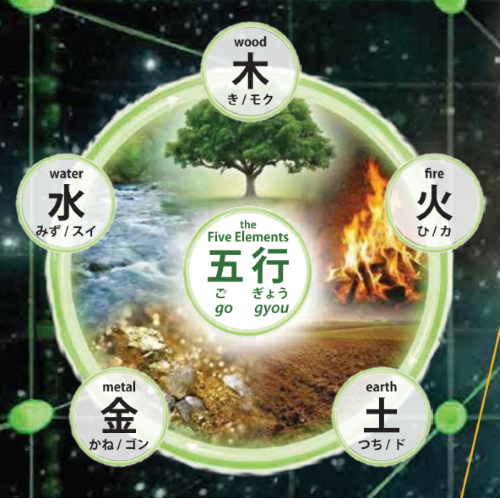
In the East, it is said that this universe revolves through the circulation of five elements.
東洋では、この宇宙は、五つの要素の循環で回っていると言います。
Wood, Fire, Earth, Metal, and Water. These five elements are called Gogyō.
木・火・土・金・水。これら五要素を「五行」と呼びます。
Wood burns Fire, Fire burns out and Earth remains. Within Earth, Metal (minerals) lies, and around the Metal, Water seeps. That Water nourishes Wood —
木が火を燃やし、火が燃え尽きて土が残る。土の中に金(鉱物)があり、金の周りに水が浸る。その水が木を育てる ——
Gogyō refers to “the circulation of the universe” in this way.
五行とは、このような「宇宙の循環」を指します。
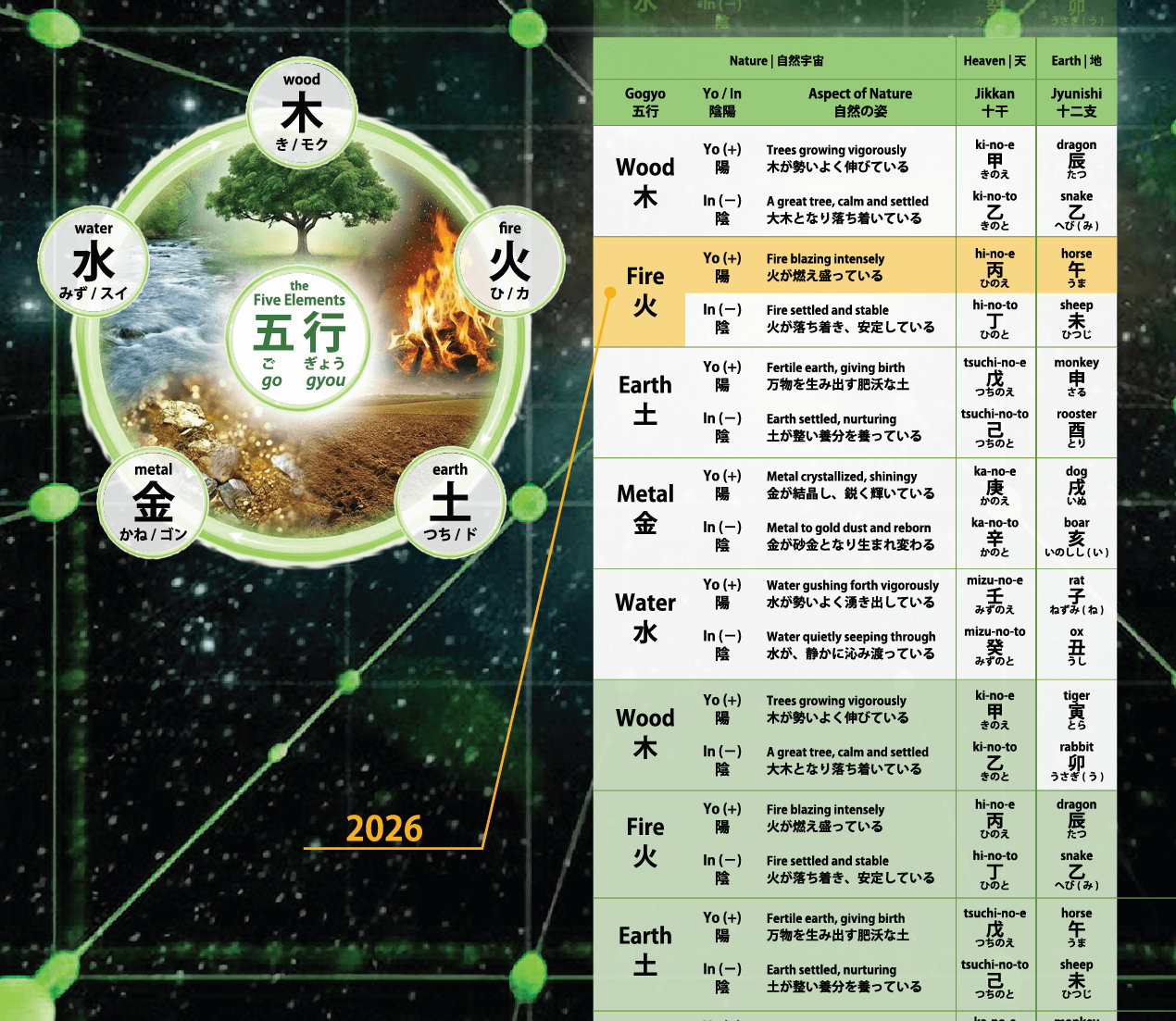
Also, each of these five elements has a time of Yō (positive) and a time of In (negative), and together ten phases are born.
また、これら五つの要素には、それぞれ「陽」の時と「陰」の時があり、合計10の時が生まれます。
Ki (Wood) becomes “甲 (Kinoe, positive)” and “乙 (Kinoto, negative),” Hi (Fire) becomes “丙 (Hinoe, positive)” and “丁 (Hinoto, negative)” . . .
「木」は「甲」(陽) と「乙」(陰)に、火は「丙」(陽) と「丁」(陰)に・・・。
“Ki-no-e” and “Ki-no-to,” “Hi-no-e” and “Hi-no-to” — combine the endings of each pair and you get “e-to.” This is the origin of Eto.
「きの“え”」と「きの“と”」、「ひの“え”」と「ひの“と”」——それぞれの語尾を組み合わせると「えと」になります。これが「干支」の源流です。
These ten phases (Jikkan) represent various aspects of nature. On top of them, the twelve animals of the Jūnishi are layered.
これらの十の時(十干)は、自然の様々な姿を表しています。その上に、十二の動物(十二支)が重なります。
The universe (Gogyō), nature (Jikkan), and animals (Jūnishi) — layered together to divine the year. That is the Eastern way of thinking known as Jikkan Jūnishi.
宇宙の森羅万象(五行)に、自然(十干)、そして動物(十二支)を重ね合わせて、その年を占う。それが、東洋の十干十二支の考え方です。
The year 2026 is the Yō of Fire, Hi-no-e, the Year of the Horse. It is the year of Hinoe-Uma (丙午).
今年2026年は、火の陽、ひのえの午年。丙午の年です。
Become an Eto Savvy 干支通になる
WARM UP | Eto JapaNEEDS
Useful Words 役立つ言葉
- 干支 eto — Eastern zodiac
- 五行 gogyō — five elements
- 循環 junkkan — circulation
- 陽 yō — positive
- 陰 in — negative
- 十干 jikkan — Heavenly Stems
- 十二支 jūnishi — Earthly Branches
- 天 ten — heaven
- 地 chi — earth
- 余白 yohaku — gap
- 天中殺 tenchūsatsu — unlucky period
- 精神的な成長 seishinteki na seichō — spiritual growth
Ice Breaker Questions 会話のきっかけ
- Do you know your Eto (zodiac sign)?
あなたの干支を知っていますか? - What year were you born? What animal is that year?
あなたは何年生まれですか? その年の動物は何ですか? - Do you believe in fortune-telling or astrology?
あなたは占いや占星術を信じますか? - Have you heard of Tenchūsatsu or Daisakkai?
「天中殺」や「大殺界」を聞いたことがありますか? - Do you take time to rest and reflect in your life?
あなたは人生の中で、休息し、内省する時間を取りますか?
WORK UP | Eto Discussion
DISCUSSION ディスカッション
Michael: Did everyone understand Jikkan and Jūnishi?
マイケル: みなさん「十干」と「十二支」は理解できましたか?
Emily: Yes. The twelve animals were familiar, but Jikkan was new to me.
エミリー: はい。動物の十二支は馴染みがありましたが、十干は今回初めて聞きました。
Mayumi: Jūnishi, the animals, represents “earth.” Jikkan, nature, represents “heaven.”
まゆみ: 動物である十二支は「地」を、自然界の十干は「天」を意味すると言われているんですよ。
Ming: So heaven and earth first met at Kō and Ne.
ミン: では、天と地が最初に出会ったのは、甲と子の時ということなんですね。
Pierre: But why ten and twelve? Matching numbers seem more balanced.
ピエール: それにしても、なぜ10と12なんですか? 同じ数字にした方がバランスが良さそうなのに。
Emily: With ten and twelve, there’s a gap of two at the end.
エミリー: 10と12だと、最後に2つの余白ができますね。
Mayumi: That gap keeps the next cycle going. The gap makes it eternal.
まゆみ: その余白を埋めるために次の周が続いていく。余白があるから、永遠に回り続けるんです。
Ming: Designed never to end.
ミン: 終わらないための設計なんですね。
Mayumi: That gap is called Tenchūsatsu or Daisakkai.
まゆみ: そうなんです。そして、その余白の期間を「天中殺」や「大殺界」と呼んだりもします。
Emily: Sounds scary…
エミリー: なんか怖そう…
Mayumi: Don’t worry. It’s a time for spiritual growth, not new challenges.
まゆみ: 大丈夫ですよ。その時期は、新しいことへのチャレンジより、精神的な成長を意識する時期と言われています。
Pierre: Life needs time to maintain mind and body too.
ピエール: 人生、心身をメンテナンスする時間も必要ですね。
Mayumi: Exactly. This gap also appears as two months a year, and two hours a day.
まゆみ: その通りです。実は、この「余白」は、1年の中にも2ヶ月、さらには1日の中にも2時間あるんですよ。
Ming: Study Eto, and we can live in sync with the universe.
ミン: 干支を学べば、宇宙に同期して生きれそうですね。
WRAP UP | Eto Knowledge
NEW KNOWLEDGE 新しい知識
Kanreki (60th birthday) means completing one full cycle of Eto and returning to the year you were born.
還暦(60歳の誕生日)は、干支が一巡して生まれた年に戻ることを意味します。
Kōshien Stadium was built in 1924, the year of Kōshi (甲子) — the first year of the 60-year cycle.
甲子園球場は1924年、甲子(きのえね)の年に建てられました。甲子は60年周期の最初の年です。
Due to the superstition that “women born in Hinoe-Uma years are strong-willed and shorten their husband’s life,” births in 1966 dropped 25%.
「丙午(ひのえうま)年の生まれの女性は気性が激しく、夫の命を縮める」という迷信の影響で、1966年は出生数が前年比25%減少しました。
According to a 2026 government estimate, people born in the Year of the Horse remain the smallest group among all twelve zodiac signs—940,000 fewer than any other.
2026年の政府の人口推計によると、午年生まれは十二支の中で最も少なく、他のどの干支よりも94万人少ないままです。
Some historical events are named after their Eto year: the Jinshin War (672), Boshin War (1868), and Xinhai Revolution (1911).
壬申の乱(672年)、戊辰戦争(1868年)、辛亥革命(1911年)など、その年の干支がそのまま名前になった歴史的事変もあります。
In old Japan, time was also told using the twelve animals. “Ushi no koku” (the Hour of the Ox) meant around 1–3 a.m. The word “Shōgo” (noon) comes from “Uma no koku” (the Hour of the Horse).
昔の日本では、時刻も十二支で表していました。「丑の刻(うしのこく)」は午前1時〜3時頃。「正午」という言葉も「午の刻」から来ています。
In Japan, having three family members born in the Year of the Tiger is considered lucky.
日本では、家族に寅年生まれが3人いると縁起が良いとされています。
If Snake, Tiger, and Monkey are in one household, it is considered bad luck. The pun “mi-tora-saru” sounds like “mitorazaru” (看取らざる = “unable to be at someone’s deathbed”).
巳年・寅年・申年が一つの家庭に揃うと縁起が悪いとされています。「み・とら・さる」=「看取らざる(死に目に会えない)」という語呂合わせです。
This article is from the March 2026 issue of Hiragana Times.
この記事は、月刊誌『ひらがなタイムズ』2026年3月号より掲載しています。
Want to discuss this topic at HT Talk Lounge with a native Japanese coach?


Information From Hiragana Times


Topics in Japan
-
![Japanese Minka—Homes Alive with Nature <br src=]() 自然の中で生きている日本民家" />
Japanese Minka—Homes Alive with Nature
自然の中で生きている日本民家" />
Japanese Minka—Homes Alive with Nature
自然の中で生きている日本民家 -
![The Man Who Chose Harmony in an Age of Blood | Prince Shōtoku <br src=]() 血の時代に、和を選んだ人 | 聖徳太子" />
The Man Who Chose Harmony in an Age of Blood | Prince Shōtoku
血の時代に、和を選んだ人 | 聖徳太子" />
The Man Who Chose Harmony in an Age of Blood | Prince Shōtoku
血の時代に、和を選んだ人 | 聖徳太子 -
![The Fish That Leads the Way into Autumn <br src=]() 秋の先頭を泳ぐ魚" />
The Fish That Leads the Way into Autumn
秋の先頭を泳ぐ魚" />
The Fish That Leads the Way into Autumn
秋の先頭を泳ぐ魚 -
![The House Has Ears, Eyes—and a Mouth <br src=]() 耳と目と口を持つ家" />
The House Has Ears, Eyes—and a Mouth
耳と目と口を持つ家" />
The House Has Ears, Eyes—and a Mouth
耳と目と口を持つ家 -
![Words the Home Holds <br src=]() 家がつつむ言の葉" />
Words the Home Holds
家がつつむ言の葉" />
Words the Home Holds
家がつつむ言の葉
 自然の中で生きている日本民家" />
 血の時代に、和を選んだ人 | 聖徳太子" />
 秋の先頭を泳ぐ魚" />
 耳と目と口を持つ家" />
 家がつつむ言の葉" />

