
Sekku: Five Seasonal Markers That Shape the Year
節句 —— 一年を整える、五つの節目
[Japan Savvy– May 2026 Issue]
Sekku: Five Seasonal Markers That Shape the Year
節句 —— 一年を整える、五つの節目
Japan has a unique rhythm of spending the year, passed down from ancient times.
日本には、古代から受け継がれてきた、一年を過ごす独自のリズムがあります。
On January 7, after passing the ‘New Year period’, people condition their minds and bodies with seven-herb rice porridge, and start the year.
「正月期間」を経た1月7日、人々は七草粥で心身を整え、一年を始動させます。
After that, to safely survive the year, on March 3, May 5, July 7, and September 9, at each turning point where odd numbers overlap, they have warded off impurities and purified themselves.
その後、一年を無事に生き抜くため、3月3日・5月5日・7月7日・9月9日と、奇数が重なる節目ごとに穢れを祓い、身を清めてきました。
These are called “Gosekku”. The soon approaching May 5 is Tango no Sekku.
これらを「五節句」と呼びます。 間もなく訪れる5月5日は、端午の節句です。
In the lunar calendar, falling on the beginning of the rainy season, it was a time when, due to humidity, water and food easily spoiled, and diseases easily spread.
旧暦では梅雨のはじめにあたり、湿気によって水や食べ物が傷みやすく、病が広がりやすい時期でした。
Therefore, people have warded off evil spirits by soaking in a Shobu bath with antibacterial and insect-repellent properties.
そこで人々は、抗菌・防虫の力をもつ菖蒲湯に浸かり、邪気を祓ってきたのです。

Entering the Edo period, since “Shobu” connects to “Shobu” (valuing martial arts), Tango no Sekku transformed into a day wishing for boys’ growth.
江戸時代に入ると、「菖蒲」が「尚武(武を重んじる)」に通じることから、端午の節句は男の子の成長を願う日へと変化しました。
Originating in China, Sekku intertwined with Japan’s nature worship and warrior society’s spirit, and have been passed down to this day as “Gosekku”.
中国を起源とする節句は、日本の自然崇拝や武家社会の精神と結びつき、「五節句」として今日まで受け継がれてきたのです。
Become a Sekku Savvy 侍通になる
WARM UP | Sekku JapaNEEDS
◎ USEFUL WORDS 役立つ言葉
- 五節句(ごせっく)Five Seasonal Festivals
- 奇数(きすう)odd numbers
- 陰陽(いんよう)yin and yang
- 穢れ(けがれ)impurity
- 祓い(はらい) purification
- 邪気(じゃき)evil spirits
- 菖蒲(しょうぶ)Japanese iris
- 鯉のぼり(こいのぼり)carp streamers
- 風習(ふうしゅう)traditional custom
- 登竜門(とうりゅうもん)Dragon Gate
- 行事(ぎょうじ)traditional event
- 五月病(ごがつびょう)May blues
- 魔除け(まよけ)protection against evil
◎ Ice Breaker Question 会話のきっかけ
Are there any festivals in your country that celebrate seasonal transitions?
あなたの国に、季節の節目を祝う行事はありますか?
Are there any traditions in your country that wish for children’s health and growth?
子どもの健康や成長を願う風習は、あなたの国にもありますか?
Are there any numbers that have special meaning in your culture?
あなたの国で特別な意味を持つ数字はありますか?
Have you ever seen carp streamers (koinobori)? What was your impression?
鯉のぼりを見たことがありますか?どんな印象でしたか?
When do you feel that the season has changed?
「季節が変わった」と感じる瞬間はどんなときですか?
WORK UP | Sekku Discussion
DISCUSSION ディスカッション
Raj (India): Why do sekku fall on days with matching odd numbers?
ラージ: なぜ、節句は奇数が重なる日なんですか?
Yuki: In ancient Chinese yin-yang thought, odd numbers are considered “yang,” times when energy grows stronger and begins to shift.
ユキ: 奇数は、中国古来の陰陽思想で「陽」とされ、エネルギーが強まり、転じる時なんです。
Emma: I see. Since they mark turning points, that means people needed to restore their balance during those times.
エマ: なるほど。変わり目だから、その時期はバランスを整える必要があるんですね。
Yuki: That’s right. Among them, May 5 is considered one of the most intense moments, when the year’s energy rises sharply and heads toward its peak.
ユキ:そうなんです。その中でも5月5日は、1年のエネルギーが一気に高まり、ピークへ向かう最も激しい時期とされています。
Carlos: Come to think of it, there’s also the term “May blues” in Japanese, isn’t there?
カルロス: そういえば、「五月病」という言葉もありますね。
Emma: That’s true. In that sense, it may be connected to how people tend to lose their mental and physical balance at that time of year.
エマ: 確かに。時期的に心身のバランスを崩しやすいという点で、どこか通じるものがあるかもしれませんね。
Raj (India): By the way, speaking of odd numbers, isn’t November 11 also a sekku?
ラージ: ところで、奇数といえば、11月11日は節句ではないんですか?
Yuki: Interesting point. Since ten symbolizes completion, the period after November is seen as a time of thanks for the year’s harvest and blessings.
ユキ: 面白い視点ですね。「十」は完成を表すため、11月以降は一年の実りや恵みに感謝する時期とされます。
Carlos: Speaking of blessings, November is also the time of Niiname-sai, isn’t it?
カルロス: 実りといえば、11月は、新嘗祭もありますね。
Yuki: Yes, that’s right. It is not only about the harvest, but also the season of Shichi-Go-San, when children’s growth is celebrated.
ユキ: そうですね。収穫だけでなく、子どもの成長を祝う七五三もこの時期です。
Emma: I see. So “ten” sounds like ten—it’s like reaching heaven and thanking it, right? (laughs)
エマ: なるほど。「十」は英語で ten。つまり、天に到達し、天に感謝するということですね!(笑)
WRAP UP | Samurai Knowledge
NEW KNOWLEDGE 新しい知識
Gosekku, the Five Seasonal Festivals, generally fall on dates where the same odd number is repeated: 3/3, 5/5, 7/7, and 9/9. January alone is different, since New Year’s Day is set apart, so its festival falls on January 7.
五節句は、3月3日、5月5日、7月7日、9月9日と、同じ奇数が重なる日が基本です。ただし1月だけは、新年が別格とされるため、1月7日が節句となっています。
January 7 is known as Jinjitsu no Sekku, the Festival of Human Beings. In ancient China, the first six days were assigned to the chicken, dog, boar, sheep, ox, and horse—animals that supported human life and were known as the “six domestic animals.” The seventh day was for human beings.
1月7日は、「人日の節句」と呼ばれます。古代中国では、1日から6日までを鶏・犬・猪・羊・牛・馬にあて、これら人の暮らしを支える動物は「六畜」と呼ばれていました。そして7日目が「人」です。
Each of the five festivals has its own name: Jinjitsu no Sekku on January 7, Jōshi no Sekku on March 3, Tango no Sekku on May 5, Tanabata no Sekku on July 7, and Chōyō no Sekku on September 9.
五節句はそれぞれ、1月7日「人日の節句」、3月3日「上巳の節句」、5月5日「端午の節句」、7月7日「七夕の節句」、9月9日「重陽の節句」と名付けられています。
Sekku originated in the Chinese concept of jieri. In Japan, it merged with the custom of offering to the gods and nature, becoming sekku, “seasonal offerings.” Over time, through samurai culture and folk customs, it took root as sekku: meaningful milestones in the rhythm of the year.
「節句」のもとになったのは、中国の「節日(节日)」です。それが日本に伝わり、神や自然に供え物をする文化と結びついて「節供」となり、さらに武家社会や民間の習俗の中で、一年のリズムを形づくる意味ある節目としての「節句」へと定着していったと考えられます。
In China, 节日 still exists, but it is not generally organized into a unified set of five like Japan’s Gosekku.
中国の「節日(节日)」は、日本の「五節句」のように五つを一まとまりとして捉える形は一般的ではありません。
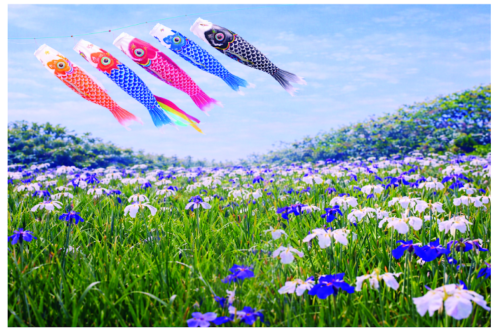
May has long been seen as a season when energy rises and bursts outward. The koinobori displayed for Tango no Sekku derive from the Chinese tale of Tōryūmon, the “Dragon Gate,” in which a carp that climbs the swift current of the Yellow River becomes a dragon.
5月は、エネルギーが高まり、外へ飛び出す時期と考えられてきました。端午の節句に飾られる鯉のぼりは、黄河を登りきった鯉が龍になるという中国の故事「登竜門」に由来します。
The five colors of the streamers attached to koinobori—blue, red, yellow, white, and black—are based on the Chinese Five Elements. Together, they are believed to ward off disorder and evil.
鯉のぼりの吹き流しに使われる青・赤・黄・白・黒の五色は、中国の五行説に基づく色で、すべてが揃うことで乱れや邪気を払うとされています。
This article is from the May 2026 issue of Hiragana Times.
この記事は、月刊誌『ひらがなタイムズ』2026年5月号より掲載しています。
「ティラノサウルスレース」が鳥取県で開催“Good feeding before good breeding.”
「衣食足りて礼節を知る」


Information From Hiragana Times


Topics in Japan
-
![Japanese Minka—Homes Alive with Nature <br src=]() 自然の中で生きている日本民家" />
Japanese Minka—Homes Alive with Nature
自然の中で生きている日本民家" />
Japanese Minka—Homes Alive with Nature
自然の中で生きている日本民家 -
![The Man Who Chose Harmony in an Age of Blood | Prince Shōtoku <br src=]() 血の時代に、和を選んだ人 | 聖徳太子" />
The Man Who Chose Harmony in an Age of Blood | Prince Shōtoku
血の時代に、和を選んだ人 | 聖徳太子" />
The Man Who Chose Harmony in an Age of Blood | Prince Shōtoku
血の時代に、和を選んだ人 | 聖徳太子 -
![The Fish That Leads the Way into Autumn <br src=]() 秋の先頭を泳ぐ魚" />
The Fish That Leads the Way into Autumn
秋の先頭を泳ぐ魚" />
The Fish That Leads the Way into Autumn
秋の先頭を泳ぐ魚 -
![The House Has Ears, Eyes—and a Mouth <br src=]() 耳と目と口を持つ家" />
The House Has Ears, Eyes—and a Mouth
耳と目と口を持つ家" />
The House Has Ears, Eyes—and a Mouth
耳と目と口を持つ家 -
![Words the Home Holds <br src=]() 家がつつむ言の葉" />
Words the Home Holds
家がつつむ言の葉" />
Words the Home Holds
家がつつむ言の葉
 自然の中で生きている日本民家" />
 血の時代に、和を選んだ人 | 聖徳太子" />
 秋の先頭を泳ぐ魚" />
 耳と目と口を持つ家" />
 家がつつむ言の葉" />

