
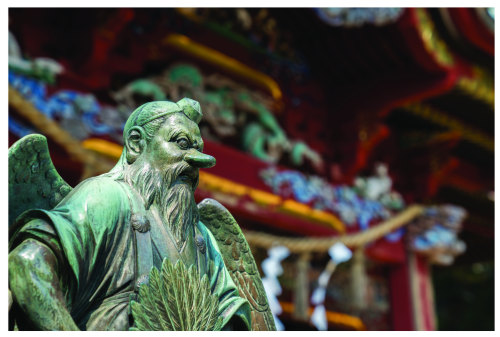
Tengu — Guardians of the Threshold
天狗 ― 境界に立つ者
[Japan Savvy– June 2026 Issue]
Tengu — Guardians of the Threshold
天狗 ― 境界に立つ者
Tengu are known as mountain monsters with red faces and long noses.
天狗は、赤い顔と長い鼻をもつ山の怪物として知られています。
“Tengu” originates from Chinese, is written as the “dog” of “heaven”, and since ancient times, was a word referring to abnormal phenomena (meteors or fireballs) appearing in the sky.
「天狗」とは中国語由来で「天」の「狗」と書き、古来、空に現れる異常現象(流星や火球)を指す言葉でした。
This is because they were said to appear suddenly and fall with an eerie sound like the barking of a dog.
突然現れ、狗(犬)の鳴き声のような不気味な音とともに落ちてくるとされたためです。
It was considered that “abnormalities in heaven connect to abnormalities on earth”, and was perceived as an ominous omen (bad omen).
それは「天の異変は地上の異変に通じる」とされ、不吉な前兆(凶兆)と捉えられていました。
On the other hand, in Japan, in the “Nihon Shoki”, there is a record writing “Tengu” and reading it as “Amatsukitsune” for a mysterious entity falling from the sky to a mountain.
一方、日本では『日本書紀』に、空から山へ落ちてきた謎の存在を「天狗」と書いて「あまつきつね」と読んだ記録があります。
This is because foxes had been known since ancient times as existences changing their appearance and not letting their true identity be caught.
狐は、姿を変え正体をつかませない存在として、古くから知られていたためです。
Eventually, the word “Tengu” transmitted from China intertwined with Japanese mountain worship and transformed into the current image of Tengu.
やがて中国から伝わった「天狗」という言葉が、日本の山岳信仰と結びつき、現在の天狗像へと変化しました。
Mountains are the boundary between heaven and earth. They are places to approach objects of worship such as the sun, moon, and stars.
山は、天と地の境目。太陽や月、星といった信仰の対象に近づく場です。
The interval between heaven and earth, the interval between humans and gods—an existence standing on that boundary. That is “Tengu”.
天と地のあわい、人と神のあわい ― その境界に立つ存在。それが「天狗」です。
Become a Tengu Savvy 天狗通になる
WARM UP | Tengu JapaNEEDS
◎ USEFUL WORDS 役立つ言葉
- 天狗 — tengu (a mythical mountain being)
- 前兆 — omen
- 境目 — boundary
- あわい — liminal space
- 得体の知れない — of unknown nature
- 異常現象 — unusual phenomenon
- 信仰 — faith
- 修行 — ascetic practice
- 導く — to guide
- 山岳信仰 — mountain worship
- 鼻が利く — to have sharp instincts
- 災い — misfortune
◎ Ice Breaker Question 会話のきっかけ
What kind of image comes to mind when you hear the word “tengu”?
「天狗」と聞いて、どのようなイメージを思い浮かべますか?
Have you ever had a moment in your life that you felt was a “turning point”?
あなたは人生の中で「転機」だと感じた瞬間がありますか?
Are there legends in your country related to mountains or nature?
あなたの国にも、山や自然にまつわる伝説はありますか?
Do you believe in unseen forces (such as fate or flow)?
見えない力(運命・流れなど)を信じますか?
Do you think myths and legends influence the way we live today?
神話や伝説は、現代の生き方に影響を与えていると思いますか?
WORK UP | Tengu Discussion
DISCUSSION ディスカッション
Sophie: I heard that if you trace back the ancestors of the current Emperor, you reach Ninigi-no-Mikoto from mythology.
ソフィー:今の天皇陛下のご先祖を遡ると、神話の瓊瓊杵尊(ににぎのみこと)につながると聞きました。
Sayaka:Yes, that’s right. Ninigi-no-Mikoto is said to have descended to earth guided by Sarutahiko.
はい、そうです。瓊瓊杵尊は、猿田彦の導きで地上に降り立ったとされます。
David: So Sarutahiko is the god of guidance.
デイビッド:猿田彦は導きの神なのですね。
Sayaka:Yes. Especially the god of guidance at “boundaries.”
さやか:はい。特に“境目”における導きの神です。
Sophie:Mountains are the boundary between heaven and earth. And tengu dwell there. It’s all connecting.
ソフィー: 山は、天と地の境目。そこに住まう天狗。つながってきますね。
Sayaka: Within mountain worship, the image of Sarutahiko is thought to have overlapped with that of tengu.
さやか:山岳信仰の中で、猿田彦のイメージが天狗と重なったと考えられます。
David:But why does the tengu have such a face?
デイビッド: でも、なぜあのような顔なんですか?
Sayaka:The long nose is a symbol of a wise one with a “keen nose,” and the red face represents vitality and protection from evil.
さやか: 長い鼻は「鼻が利く」賢者の象徴、赤い顔は生命力や魔除けを表しています。
David: I see. Then what about the box on the forehead?
デイビッド:なるほど。では、おでこの箱は?
Sayaka: It comes from the tokin, the headgear of yamabushi (mountain ascetics), and that appearance was incorporated into the depiction of tengu.
さやか: 山伏の頭襟に由来し、その姿が天狗の表現に取り込まれたとされます。
Sophie:Fascinating! Speaking of guidance, the Yatagarasu also comes to mind.
ソフィー: 面白いですね!導きといえば、「八咫烏」も思い浮かびます。
Nikos: When I first learned about Yatagarasu, I thought of it as a wise old man.
ニコス:私は八咫烏を知ったとき、賢者の老人のことだと思いました。
Sayaka:Oh, why is that?
さやか: えっ、どうしてですか?
Nikos: When I was a child, I learned this riddle: “What animal walks on four legs in the morning, two legs at noon, and three legs at night?”
ニコス:子どもの頃に、こんななぞなぞを習いました。 「朝は四本足、昼は二本足、夜は三本足の動物は何?」
Sophie:The answer is “human,” isn’t it? The three legs are an old person with a cane!
ソフィー:答えは「人間」ですよね。三本足は杖をついた老人!
Nikos:Exactly. So I thought the “three legs” of Yatagarasu might also be a symbol of a being with the wisdom to guide.
ニコス:そうです。だから八咫烏の“三本足”も、導く知恵をもつ存在の象徴ではないかと思ったのです。
Sayaka:I see!
さやか:なるほど!
WRAP UP | Tengu Knowledge
NEW KNOWLEDGE 新しい知識
Tengu are divided into “Daitengu” (great tengu) and “Kotengu” (small tengu, also called “Karasu-tengu”). Daitengu are depicted with long noses, while Kotengu are depicted with crow-like beaks.
天狗は「大天狗」と「小天狗(烏天狗)」に分けられます。大天狗は長い鼻、小天狗はカラスのようなくちばしで描かれます。
It has been believed that monks and ascetics who possessed exceptional powers would become tengu after death.
優れた力を持った僧や修験者が、死後に天狗になると信じられてきました。
En no Gyōja (En no Ozunu) is said to have become a Daitengu named “Ishizuchi-san Hōkibō.”
役行者[えんのぎょうじゃ](役小角)[えんのおづぬ]は「石鎚山法起坊」という名の大天狗になったと伝えられています。
It is said that representative “forty-eight tengu” exist on sacred mountains throughout Japan, each connected to a specific mountain.
日本各地の霊山には代表的な「四十八天狗」が存在するとされ、それぞれが特定の山と結びついています。
Kurama-tengu (Sōjōbō), known for the legend of teaching swordsmanship to Ushiwakamaru (later Minamoto no Yoshitsune), is one of the most representative Daitengu.
牛若丸(のちの源義経)に剣術を教えたという伝説で知られる鞍馬天狗(僧正坊)は、代表的な大天狗の一つです。
Including unnamed tengu, it is said that an enormous number of tengu exist — as many as 125,500.
名のない天狗まで含めると、十二万五千五百ともいわれる膨大な数の天狗が存在すると伝えられています。
In Shugendō, it was believed that ascetics entering the mountains would be tested by tengu, or granted power by them.
修験道では、山に入る行者が天狗に試され、あるいは力を授かると信じられていました。
The “Tengu-kyō” lists the names of the forty-eight tengu, and chanting it has been believed to ward off misfortune.
「天狗経」には四十八天狗の名が列挙され、これを唱えることで災いを避けると考えられてきました。
“Tengu ni naru” (to become a tengu) is a phrase that admonishes arrogance, and “Tengu no hana o oru” (to break a tengu’s nose) means to humble that self-conceit.
「天狗になる」は慢心を戒める言葉、「天狗の鼻を折る」はその自信をくじくことを意味します。
While tengu are feared beings, they are also worshipped as protectors of mountains, and are considered beings with both good and evil sides.
天狗は恐れられる存在である一方、山を守る存在としても信仰され、善悪両面を持つ存在とされています。
This article is from the June 2026 issue of Hiragana Times.
この記事は、月刊誌『ひらがなタイムズ』2026年6月号より掲載しています。


Information From Hiragana Times


Topics in Japan
-
![Japanese Minka—Homes Alive with Nature <br src=]() 自然の中で生きている日本民家" />
Japanese Minka—Homes Alive with Nature
自然の中で生きている日本民家" />
Japanese Minka—Homes Alive with Nature
自然の中で生きている日本民家 -
![The Man Who Chose Harmony in an Age of Blood | Prince Shōtoku <br src=]() 血の時代に、和を選んだ人 | 聖徳太子" />
The Man Who Chose Harmony in an Age of Blood | Prince Shōtoku
血の時代に、和を選んだ人 | 聖徳太子" />
The Man Who Chose Harmony in an Age of Blood | Prince Shōtoku
血の時代に、和を選んだ人 | 聖徳太子 -
![The Fish That Leads the Way into Autumn <br src=]() 秋の先頭を泳ぐ魚" />
The Fish That Leads the Way into Autumn
秋の先頭を泳ぐ魚" />
The Fish That Leads the Way into Autumn
秋の先頭を泳ぐ魚 -
![The House Has Ears, Eyes—and a Mouth <br src=]() 耳と目と口を持つ家" />
The House Has Ears, Eyes—and a Mouth
耳と目と口を持つ家" />
The House Has Ears, Eyes—and a Mouth
耳と目と口を持つ家 -
![Words the Home Holds <br src=]() 家がつつむ言の葉" />
Words the Home Holds
家がつつむ言の葉" />
Words the Home Holds
家がつつむ言の葉
 自然の中で生きている日本民家" />
 血の時代に、和を選んだ人 | 聖徳太子" />
 秋の先頭を泳ぐ魚" />
 耳と目と口を持つ家" />
 家がつつむ言の葉" />

