

“Faith” That Carries the Sea’s Bounty Forward
海の恵みをつなぐ「信」Yanagita Kunio: A Life in Dialogue with the Depths of This Land
柳田國男:この国の肚と、対話し続けた生涯

Japan Has a Culture of Hara
日本には、肚の文化がある
Nihongo Do – Voice wave – Hiragana Times August 2026 issue
Listen to the Audio:
Japan Has a Culture of Hara
日本には、肚の文化がある
In the United States, there is an organization called the CIA.
アメリカに、CIAという組織があります。
In Japanese, it is rendered as 中央情報局 — “Central Information Bureau.”
日本語では「中央情報局」と訳されます。
Because of this translation, the “I” in CIA is often thought to mean information — 情報.
この訳のせいで、CIAの”I”は、インフォメーション(情報)だと思われがちです。
But in truth, it stands for Central Intelligence Agency. The “I” is intelligence.
けれど正しくは、Central Intelligence Agency。”I”は、インテリジェンスなのです。
Information, and intelligence. How do these two differ?
インフォメーション(情報)と、インテリジェンス(知)。この二つは、どう違うのでしょうか。
To put it in a Japanese way: if information is the soybean, mame 豆, then intelligence is nattō 納豆, fermented soybeans.
日本語の感覚で言えば、インフォメーション(情報)が「豆」なら、インテリジェンス(知)は「納豆」です。
The CIA gathers vast information — the beans — from around the world, then mixes it, lets it rest, and “ferments” it into nattō: intelligence.
CIAは、世界中から膨大な情報(豆)を集め、それを混ぜ、寝かせ、「発酵」させて、納豆(インテリジェンス)をつくります。
In this way, it produces the wisdom to protect its nation.
そうして、自国を守る知恵を、生み出しているのです。

Curiously, Japanese language has no words that clearly divide these two — information and knowing.
面白いことに、日本語には、この二つ——情報と知——を、はっきり分ける言葉がありません。
And yet, if we turn to the Japanese of old, we find a still deeper stage of knowing: tanshiki 胆識.
けれど、古来の日本人に目を向けると、そこには、それ以上に深い知の段階が見えてきます。「胆識」です。
What is tanshiki? To understand it, let us set some kindred words side by side.
胆識とは、何でしょうか。それを理解するために、似た言葉を並べてみましょう。
First, common sense — jōshiki 常識. Next, knowledge — chishiki 知識. Then, discernment — kenshiki 見識. And last, tanshiki 胆識.
まず「常識」。次に「知識」。そして「見識」。最後に「胆識」です。
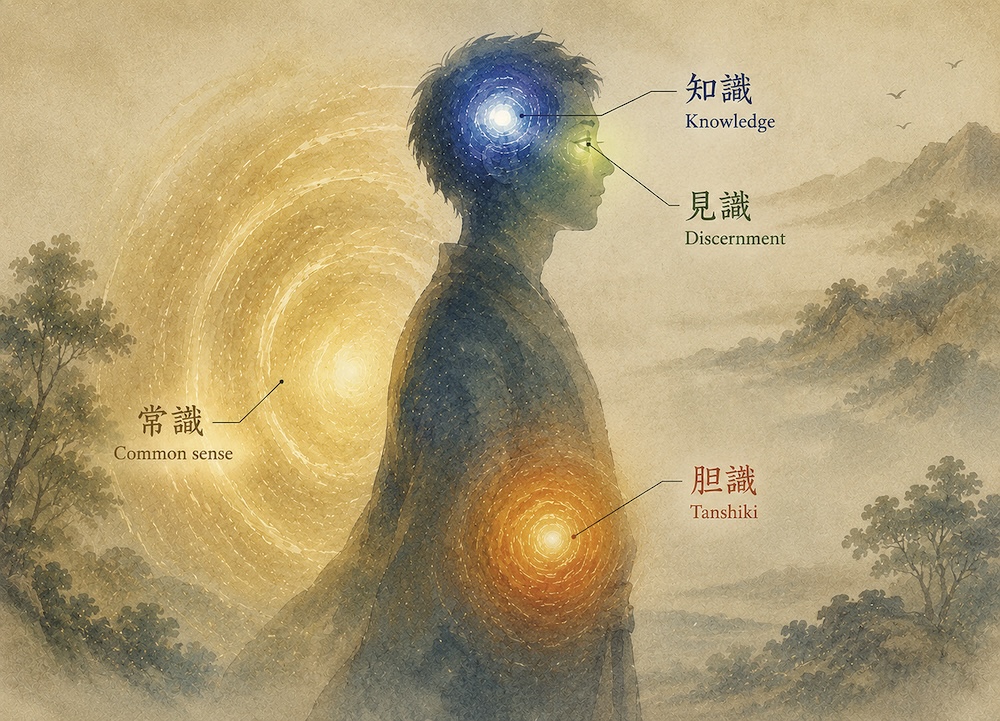
Each of these four is a knowing of a different order.
この四つは、それぞれ別の次元の、知のかたちです。
Long ago, Japanese elementary schools were called jinjō shōgakkō 尋常小学校. Jinjō 尋常 means “ordinary,” “the everyday.”
かつて、日本の小学校は「尋常小学校」と呼ばれていました。「尋常」とは、普通、あたりまえ、という意味です。
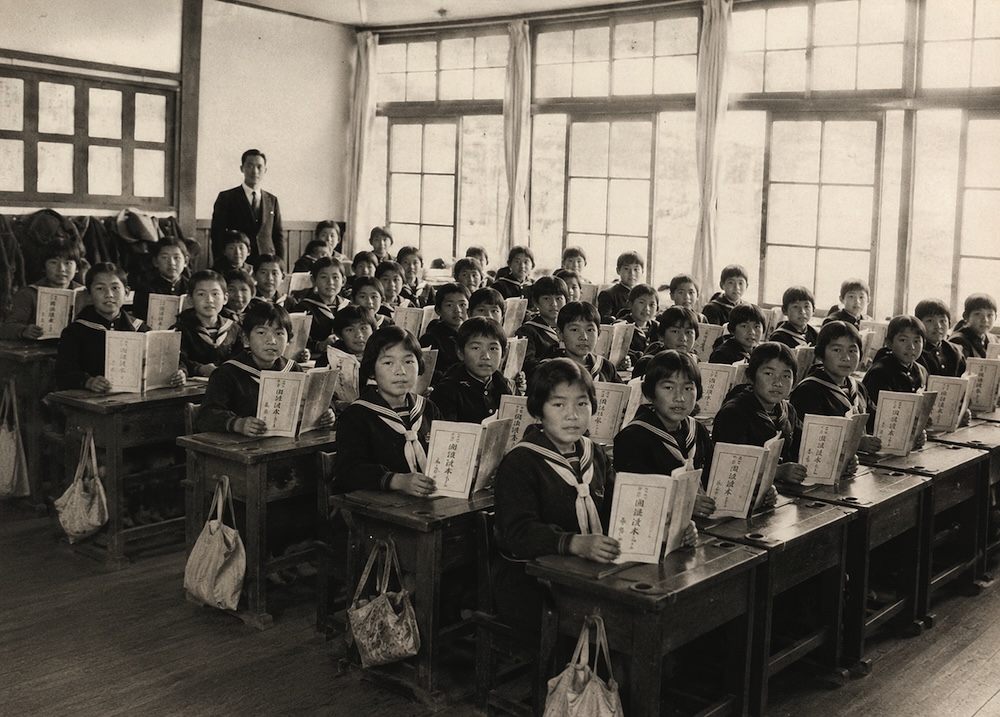
A person first learns the ordinary things — common sense. Next, they gain knowledge.
人は、まず、あたりまえのこと——常識を身につけます。次に、知識をつけます。
And from that knowledge, they cultivate a way of seeing, and come to hold discernment.
そして、その知識をもとに、ものの見方を養い、「見識」を得ていきます。
Common sense, knowledge, discernment — thus the human mind grows. But beyond it lies one more stage: tanshiki.
常識、知識、見識——こうして、人の頭脳は育っていきます。
But deeper within, there lies one more. It is tanshiki 胆識.
けれど、その奥に、もう一つのものがあります。それが「胆識」です。
The tan 胆 of tanshiki can also be read kimo — the liver, an organ that sits within the belly.
「胆」は、「きも」とも読みます。腹の中にある臓器、肝のことです。
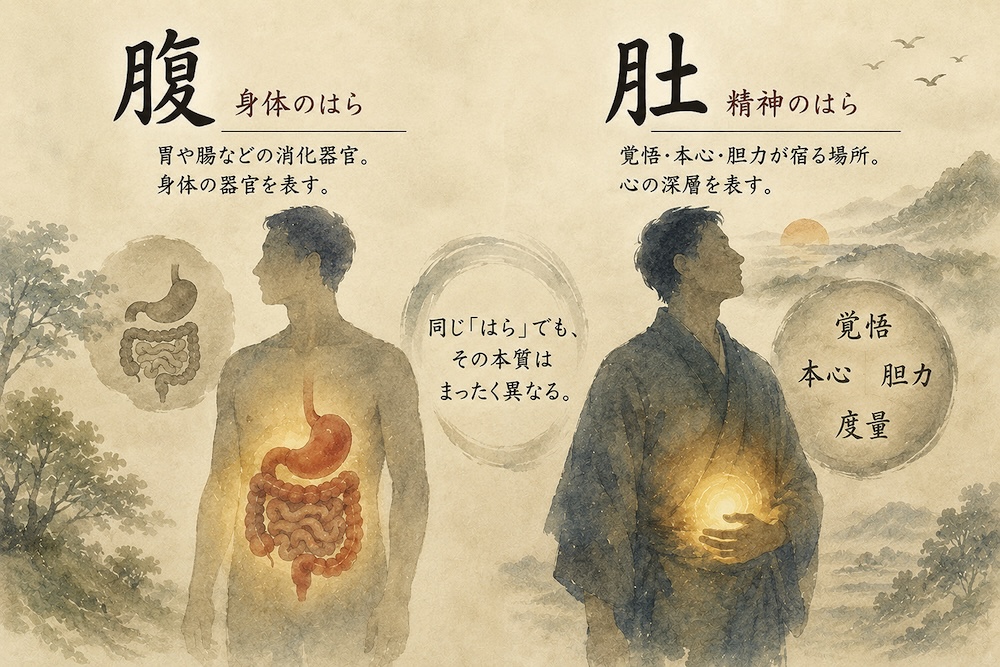
The word for belly, hara, can be written with two different characters: 腹 and 肚.
「はら」は、二つの漢字で書けます。「腹」と「肚」です。
Written 腹, it calls to mind the organs of digestion — the stomach, the intestines.
「腹」と書けば、胃や腸といった、消化の器官を思い浮かべます。
But written 肚, we sense something more of the spirit.
けれど「肚」と書くとき、私たちは、もっと精神的な何かを思うのです。
Even now, Japanese has many expressions that use the belly, 腹.
日本語には、今も、「腹」を使った言葉がたくさんあります。
Hara ga tatsu 腹が立つ — “the belly stands up” — to grow angry. Hara wo kukuru 腹を括る — “to bind up the belly” — to steel one’s resolve. Hara wo watte hanasu 腹を割って話す — “to split open the belly” — to speak from the heart.
腹が立つ。腹を括る。腹を割って話す。
These “bellies” 腹 are no mere organs.
これらの「腹」は、単なる内臓ではありません。
Anger, resolve, true feeling — the belly gives voice to the very deepest places of the human heart.
怒り、覚悟、本心——人の、心の最も深いところを、腹は表しています。
What expresses this depth of spirit most strongly of all is the character 肚, hara.
こうした精神の深みを、とりわけ強く表すのが、「肚」という字です。
Written 肚, the same hara holds within it resolve, magnanimity — the unshakable steadiness of the heart’s core.
同じ「はら」でも、「肚」と書とき、そこには、覚悟や度量といった、心の奥の揺るぎなさが、こめられるのです。
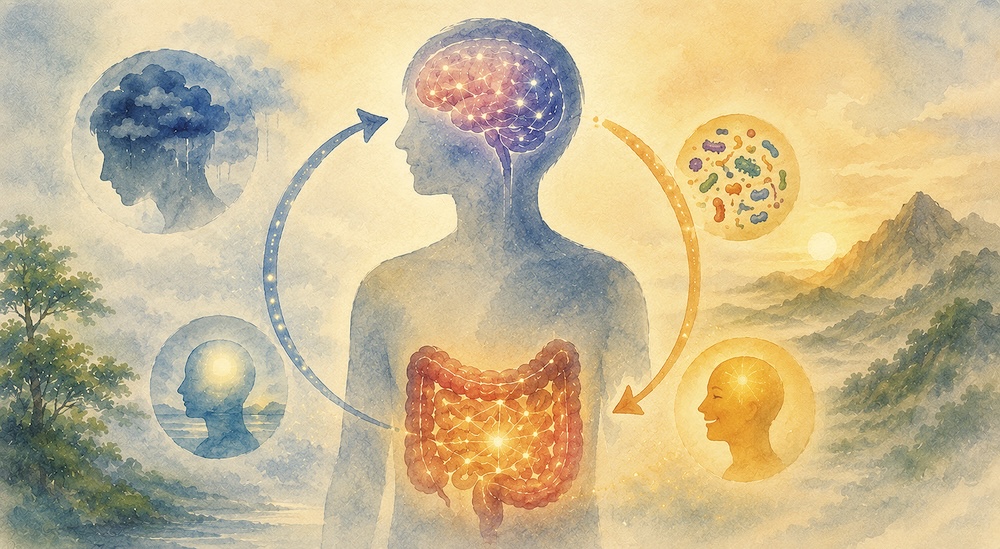
In recent years, medicine too speaks of the “gut-brain axis.”
近年、医学でも「脳腸相関」が説かれています。
The state of the brain affects the gut, and the state of the gut, in turn, affects the brain.
脳の状態が腸に影響し、腸の状態もまた、脳に影響する、というのです。
The gut possesses its own network of nerves, able to judge for itself without command from the brain — and so it is called “the second brain.”
腸は、脳の指令がなくても、自ら判断する独自の神経の網を持ち、「第二の脳」とも呼ばれます。
Continue Reading In Hiragana Times
続きを読む — Hiragana Times 本誌へ
Digital Packages
Read and listen in your browser — available in bundles.
誌面と音声を、パッケージでご利用いただけます。
More From Hiragana Times

Join the Hiragana Times Discord Community — Free!
Connect with readers worldwide — free, open, and always welcoming.
世界の読者とつながる、無料のDiscordコミュニティへようこそ。

Online Japanese lessons, run by Hiragana Times.
One month free for Hiragana Times subscribers.
ひらがなタイムズ定期購読者は、1ヶ月無料でご受講いただけます。




Information From Hiragana Times


Topics in Japan
-
![Hiragana Times App Updated (iOS 8.18.1 / Android 8.19.04) <br src=]() ひらがなタイムズ アプリを更新しました" />
Hiragana Times App Updated (iOS 8.18.1 / Android 8.19.04)
ひらがなタイムズ アプリを更新しました" />
Hiragana Times App Updated (iOS 8.18.1 / Android 8.19.04)
ひらがなタイムズ アプリを更新しました -
![Shogi: The Culture That Turned Enemies into Treasure <br src=]() 将棋 — 敵を宝に変えた文化" />
Shogi: The Culture That Turned Enemies into Treasure
将棋 — 敵を宝に変えた文化" />
Shogi: The Culture That Turned Enemies into Treasure
将棋 — 敵を宝に変えた文化 -
![The Story of “Wa” (倭 and 和) and “Yamato” (大和) <br src=]() 「倭」と「和」と「大和」の物語" />
The Story of “Wa” (倭 and 和) and “Yamato” (大和)
「倭」と「和」と「大和」の物語" />
The Story of “Wa” (倭 and 和) and “Yamato” (大和)
「倭」と「和」と「大和」の物語 -
![People Who Can’t Help Making Things <br src=]() 作らずにいられない人々" />
People Who Can’t Help Making Things
作らずにいられない人々" />
People Who Can’t Help Making Things
作らずにいられない人々 -
![Nobody Tells You <br src=]() でも、伝わってくる" />
Nobody Tells You
でも、伝わってくる" />
Nobody Tells You
でも、伝わってくる
 ひらがなタイムズ アプリを更新しました" />
 将棋 — 敵を宝に変えた文化" />
 「倭」と「和」と「大和」の物語" />
 作らずにいられない人々" />
 でも、伝わってくる" />

