
Depicting a Prayer for Recover
復興への祈りを描く
[Cover story – May 2026 Issue]
Depicting a Prayer for Recovery
復興への祈りを描く
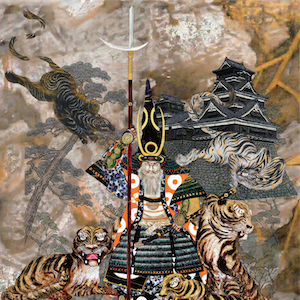
This month’s cover features a work by the mad artist Bunta Inoue, portraying Kato Kiyomasa. With Kumamoto Castle behind him, Kiyomasa gazes straight ahead. At his feet stand three tigers, while above him a black tiger and a white tiger race through the sky, filling the entire image with both powerful intensity and an air of prayer.
今月号の表紙を飾るのは、画狂人・井上文太氏による加藤清正公の作品です。熊本城を背に正面を見据える清正公。足元の三頭の虎に加え、上空には黒虎と白虎が駆け、画面全体に気迫と祈りの気配が満ちています。
This April, when our May issue reaches bookstores, marks exactly ten years since the Kumamoto Earthquake struck on April 14, 2016. The source of this work was a large ceiling painting that Inoue dedicated in April 2025 to Kato Shrine within Kumamoto Castle as a prayer for recovery, and that same prayer is distilled into this cover as well.
5月号が店頭に並ぶこの4月は、2016年4月14日に発生した熊本地震から、ちょうど10年にあたります。この作品のもとになったのは、井上氏が2025年4月、熊本城内の加藤神社に復興祈願として奉納した大天井画で、その祈りがこの作品にも凝縮されています。
Completed in 1607, Kumamoto Castle had preserved its majestic form for more than four centuries. That such a castle suffered severe damage reminds us once again of the overwhelming force of the earthquake. At the same time, the wounding of this symbol of Kumamoto left a deep scar in the hearts of many people.
1607年に完成した熊本城。400年以上にわたって威容を保ってきたこの城が大きな被害を受けたことは、地震の凄まじさをあらためて思い知らせます。同時に、熊本の人々のシンボルであったこの城が傷ついたことは、多くの人の心にも深い傷を残しました。
That is why Inoue dedicated the ceiling painting to Kato Shrine within Kumamoto Castle, praying not only for the recovery of the disaster-stricken area, but also for the return of hope to the hearts of the people of Kumamoto.
それだけに井上氏は、熊本城内の加藤神社に天井画を奉納し、被災地の復興と、熊本の人々の心に再び希望の光が差すことを願ったのです。
Although Kato Kiyomasa is known as a fierce warrior, he is still deeply revered in Kumamoto as the man who built the town and laid the foundations of people’s lives. Inoue portrays Kiyomasa as a figure who longs for peace and coexistence, and the tigers too are shown not as symbols of hostility, but as companions beside him, praying together for recovery.
加藤清正は、勇猛な武将として知られる一方、町を築き、人々の暮らしの基盤を整えた人物として、熊本で今なお深く敬われています。井上氏は、清正公を「平和」と「共生」を願う存在として描き出し、虎たちもまた、敵意ではなく、その傍らでともに復興を祈る存在として表しました。
Bunta Inoue has continued to create works infused with prayers for recovery, including those inspired by the Great East Japan Earthquake and the recent Noto Peninsula Earthquake. Art has the power to draw close to wounded hearts and help restore hope. Recovery is not only about rebuilding buildings and roads, but above all, about restoring a light of hope for the future within people’s hearts.
井上文太氏は、東日本大震災や先般の能登半島地震を含め、復興への祈りを込めた作品を描き続けています。芸術は、傷ついた心に寄り添い、希望を取り戻す力になります。復興とは、建物や道路だけでなく、まず何よりも、人の心に未来への光を取り戻すことにあるのです。
This article is from the May 2026 issue of Hiragana Times.
この記事は、月刊誌『ひらがなタイムズ』2026年5月号より掲載しています。

Information From Hiragana Times


Topics in Japan
-
![Japanese Minka—Homes Alive with Nature <br src=]() 自然の中で生きている日本民家" />
Japanese Minka—Homes Alive with Nature
自然の中で生きている日本民家" />
Japanese Minka—Homes Alive with Nature
自然の中で生きている日本民家 -
![The Man Who Chose Harmony in an Age of Blood | Prince Shōtoku <br src=]() 血の時代に、和を選んだ人 | 聖徳太子" />
The Man Who Chose Harmony in an Age of Blood | Prince Shōtoku
血の時代に、和を選んだ人 | 聖徳太子" />
The Man Who Chose Harmony in an Age of Blood | Prince Shōtoku
血の時代に、和を選んだ人 | 聖徳太子 -
![The Fish That Leads the Way into Autumn <br src=]() 秋の先頭を泳ぐ魚" />
The Fish That Leads the Way into Autumn
秋の先頭を泳ぐ魚" />
The Fish That Leads the Way into Autumn
秋の先頭を泳ぐ魚 -
![The House Has Ears, Eyes—and a Mouth <br src=]() 耳と目と口を持つ家" />
The House Has Ears, Eyes—and a Mouth
耳と目と口を持つ家" />
The House Has Ears, Eyes—and a Mouth
耳と目と口を持つ家 -
![Words the Home Holds <br src=]() 家がつつむ言の葉" />
Words the Home Holds
家がつつむ言の葉" />
Words the Home Holds
家がつつむ言の葉
 自然の中で生きている日本民家" />
 血の時代に、和を選んだ人 | 聖徳太子" />
 秋の先頭を泳ぐ魚" />
 耳と目と口を持つ家" />
 家がつつむ言の葉" />

