

Words That Live with Insects
虫と暮らす言の葉Voices of Insects — The Soundtrack of Autumn in Japan
虫の声 ― 日本の秋のBGM
Bugs Live in the Belly
腹に虫が住む
NIHONGO DO® | Voice – Word Art – Hiragana Times October 2026 issue
Listen to the Audio:
Bugs Live in the Belly
腹に虫が住む
What we call kotowaza is written with the kanji 諺. Here, we go beyond proverbs—from the Analects and waka poetry to modern spoken Japanese—to explore the art of words (言技), in which 言波 (voice waves) and 言の葉 (word leaves) intermingle and nurture our sensibilities. The Japanese have long attributed anger, bad moods, and even likes and dislikes not to themselves, but to the “bugs” living in their belly. In this issue, please enjoy the word art of the bugs that live in the belly.
「ことわざ」は、漢字で「諺」と書きます。ここでは諺にとどまらず、論語、和歌、現代口語まで、「言波」と「言の葉」が融合し、感性を育ててきた言葉のアート「言技」を紹介します。日本人は、怒りも、不機嫌も、好き嫌いも、「自分」ではなく腹の中の「虫」のせいにしてきました。今号では、腹に住む虫の言技をお楽しみください。
The Bug in the Belly Won’t Settle Down
腹の虫が治まらない
The idea of placing emotions in the belly is found all over the world. In English, nervousness is described as having “butterflies in the stomach,” while intuition is a “gut feeling.”
感情を腹に置く発想は、世界各地にあります。英語では緊張を「お腹の中に蝶がいる」と言い、直感を「はらわたで感じる」と言います。
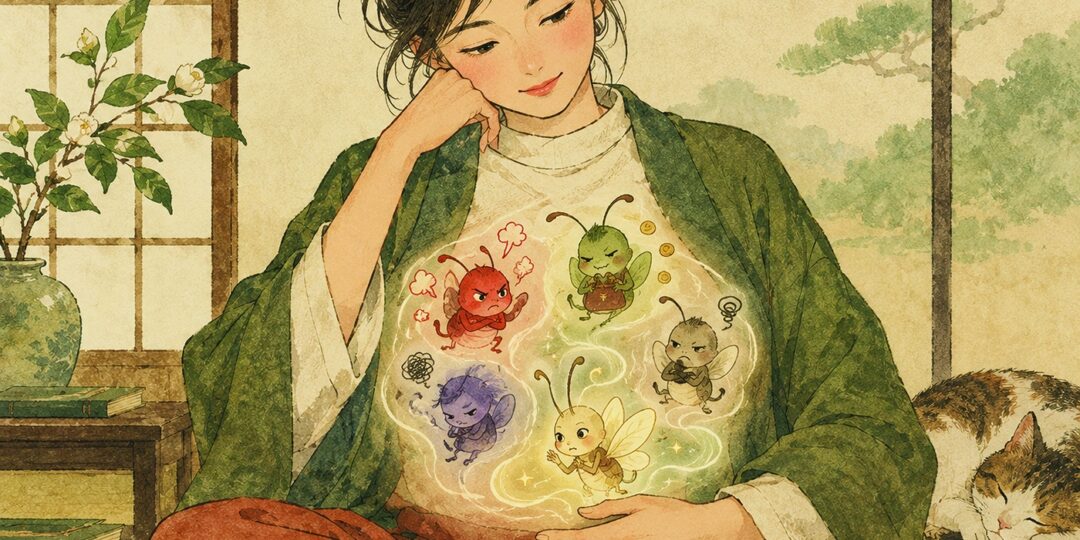
In Japan, “bugs” live in that belly and move people. When anger won’t subside, “the bug in the belly won’t settle down.” When someone is in a bad mood, “the bug is in a bad spot.” When you dislike someone for no particular reason, “the bug doesn’t like them.” When someone says or thinks only what suits them, “their bug is too good.” And when you somehow sense that something is about to happen, it is “a message from the bug.” The one who is angry, the one who dislikes—it is not me, but the bug. The responsibility is left to the bug.
日本では、その腹の中に「虫」が住み、人を動かします。怒りが収まらなければ「腹の虫が治まらない」。機嫌が悪ければ「虫の居所が悪い」。理由もなく嫌いなら「虫が好かない」。自分に都合のよいことを言ったり考えたりすれば「虫がいい」。そして、何かが起こりそうだとなぜか感じると「虫の知らせ」。怒っているのも、嫌っているのも、私ではなく虫。責任は虫に預けるのです。
One theory holds that this idea of a bug living inside the body derives from the “Three Corpses” (sanshi no mushi), worm-like beings said in Chinese Taoism to live inside the human body.
この虫は、中国の道教で人の体内に住むとされた「三尸の虫」に由来するという説もあります。
On the night of Koshin, which comes once every sixty days, they were believed to rise to heaven and tattle on their host’s misdeeds. That is why people stayed awake through the night.
虫は六十日に一度めぐる庚申の夜、天に昇って持ち主の悪事を告げ口する。だから人々は、その夜は寝ずに過ごしたのです。
■ Meaning / 意味
- Hara no mushi: The bug in the belly—the bug said to live there and stir up anger, bad moods, and other feelings.
腹の虫:腹の中に住み、怒りや不機嫌などの感情を起こすとされる虫。 - Osamaranai: Won’t settle down—won’t subside.
治まらない:収まらない。静まらない。
■ Usage / 使う場面
Kenta: The manager’s bug is in a bad spot today.
ケンタ:今日の部長、虫の居所が悪いなあ。
Misaki: Didn’t your “too-good bug” come out at yesterday’s drinking party?
ミサキ:昨日の飲み会で、ケンタが虫のいいことを言ったんじゃない?
Kenta: Huh? How do you know?
ケンタ:えっ、なんで知ってるの。
Misaki: A message from the bug.
ミサキ:虫の知らせ。
Kenta: Somehow, my bug just doesn’t like the manager.
ケンタ:なんか部長は、虫が好かないんだよな。
Discover More Articles | もっと記事を読む
Digital Packages
Read and listen in your browser — available in bundles.
誌面と音声を、パッケージでご利用いただけます。
More From Hiragana Times

Join the Hiragana Times Discord Community — Free!
Connect with readers worldwide — free, open, and always welcoming.
世界の読者とつながる、無料のDiscordコミュニティへようこそ。

Online Japanese lessons, run by Hiragana Times.
One month free for Hiragana Times subscribers.
ひらがなタイムズ定期購読者は、1ヶ月無料でご受講いただけます。


Information From Hiragana Times


Topics in Japan
-
![Shogi: The Culture That Turned Enemies into Treasure <br src=]() 将棋 — 敵を宝に変えた文化" />
Shogi: The Culture That Turned Enemies into Treasure
将棋 — 敵を宝に変えた文化 -
![The Story of “Wa” (倭 and 和) and “Yamato” (大和) <br src=]() 「倭」と「和」と「大和」の物語" />
The Story of “Wa” (倭 and 和) and “Yamato” (大和)
「倭」と「和」と「大和」の物語 -
![People Who Can’t Help Making Things <br src=]() 作らずにいられない人々" />
People Who Can’t Help Making Things
作らずにいられない人々 -
![Nobody Tells You <br src=]() でも、伝わってくる" />
Nobody Tells You
でも、伝わってくる -
![The United Nations That Runs on “Victors’ Justice” <br src=]() 「勝者の正義」で動く国連" />
The United Nations That Runs on “Victors’ Justice”
「勝者の正義」で動く国連
 将棋 — 敵を宝に変えた文化" />
 「倭」と「和」と「大和」の物語" />
 作らずにいられない人々" />
 でも、伝わってくる" />
 「勝者の正義」で動く国連" />

