


Can Humanity Save the Earth?
人類が地球を救う?Dopamine brat
ドパガキ
Cicadas Robbed of the Night
夜を奪われた蝉たち
Close Up Japan – Hiragana Times October 2026 issue
Listen to the Audio:
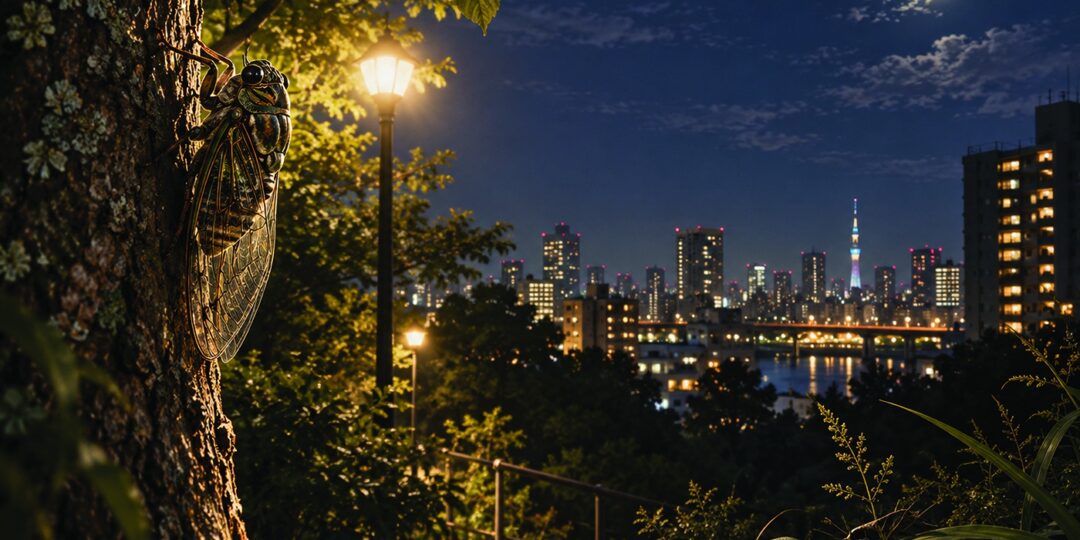
Cicadas Robbed of the Night
夜を奪われた蝉たち
A research group from Tokyo Metropolitan University and other institutions set up recording devices in urban areas and green spaces, and monitored the calls of cicadas for 24 hours a day.
東京都立大学などの研究グループが、都市部と緑地に録音装置を設置し、蝉の鳴き声を24時間観測しました。
In green spaces without streetlights, cicadas stop calling when the sun sets, but in city areas that stay bright at night, they reportedly kept calling until late at night.
街灯のない緑地では日が沈むと蝉は鳴き止みますが、夜も明るい街なかでは深夜まで鳴き続けていたといいます。
Indeed, in today’s Tokyo, the sound of cicadas at night has become a completely ordinary part of summer.
たしかに今の東京では、夜の蝉の声はすっかり夏の日常となりました。
The research group points out that city lighting and the heat stored in concrete are affecting the cicadas’ active hours.
研究グループは、街の照明やコンクリートに残る蓄熱が、蝉の活動時間に影響していると指摘します。
In the “sleepless city” that humans have created, it is as if even the cicadas have forgotten how to sleep.
人間がつくった「眠らない街」では、蝉までもが眠ることを忘れてしまっているかのようです。
Nights that are too bright break down the boundary between day and night for insects, and keep them calling even during the hours when they should be resting.
明るすぎる夜は虫たちの昼夜の境目を壊し、本来休むはずの時間まで鳴き続けさせています。
On the other hand, in the suburbs away from the city center, when the sun goes down, the cicadas fall silent, and in their place, the cool voices of bell crickets and crickets begin to ring out.
一方、都心を離れた郊外では、日が暮れると蝉の声は静まり、代わって鈴虫やコオロギたちの涼やかな声が響き始めます。
The cicada spends long years in the dark soil and at last leaps out onto the ground.
長い年月を暗い土の中で過ごし、ようやく地上へと踊り出た蝉。
Clinging to a tree, its small body trembling, it turns its own life into voice.
木にしがみつき、小さな体を震わせながら、自らの命を声に変えていきます。
Eventually, when it has finished calling, the cicada quietly folds its wings and draws its “hands and feet” together against its body.
やがて鳴き終えた蝉は、静かに羽を畳み、その「手足」を身体の内側に揃えます。
That sight looks as if it were offering a prayer.
その姿は、まるで祈りを捧げているようにも見えます。
It also looks as if it has at last let go of the tree, saying, “I no longer need to hold on.”
「もう、しがみついていなくてもよいのだ」と、ようやく木から手を放したようにも見えます。
What effect continuing to call at night has on the lifespan and ecology of cicadas has not yet been clarified.
夜に鳴き続けることが、蝉の寿命や生態にどのような影響を及ぼすのかは、まだ解明されていません。
Even so, so that they can live out their limited lives to their natural rhythm.
それでも、その限られた命を本来のリズムで全うしてもらうために。
At least at night, we would like to let them rest in the quiet darkness.
せめて夜くらいは、静かな闇の中で休ませてあげたいものです。
Discover More Articles | もっと記事を読む
Digital Packages
Read and listen in your browser — available in bundles.
誌面と音声を、パッケージでご利用いただけます。
More From Hiragana Times

Join the Hiragana Times Discord Community — Free!
Connect with readers worldwide — free, open, and always welcoming.
世界の読者とつながる、無料のDiscordコミュニティへようこそ。

Online Japanese lessons, run by Hiragana Times.
One month free for Hiragana Times subscribers.
ひらがなタイムズ定期購読者は、1ヶ月無料でご受講いただけます。
Related Posts




Information From Hiragana Times


Topics in Japan
-
![Words That Live with Insects <br src=]() 虫と暮らす言の葉" />
Words That Live with Insects
虫と暮らす言の葉" />
Words That Live with Insects
虫と暮らす言の葉 -
![Bugs Live in the Belly <br src=]() 腹に虫が住む" />
Bugs Live in the Belly
腹に虫が住む" />
Bugs Live in the Belly
腹に虫が住む -
![Voices of Insects — The Soundtrack of Autumn in Japan <br src=]() 虫の声 ― 日本の秋のBGM" />
Voices of Insects — The Soundtrack of Autumn in Japan
虫の声 ― 日本の秋のBGM" />
Voices of Insects — The Soundtrack of Autumn in Japan
虫の声 ― 日本の秋のBGM -
![The Worms Within Came from the Universe <br src=]() 腹の虫は、宇宙から来た" />
The Worms Within Came from the Universe
腹の虫は、宇宙から来た" />
The Worms Within Came from the Universe
腹の虫は、宇宙から来た -
![Ito Jakuchū — An Eye for Life <br src=]() 伊藤若冲 ―― いのちを見る眼" />
Ito Jakuchū — An Eye for Life
伊藤若冲 ―― いのちを見る眼" />
Ito Jakuchū — An Eye for Life
伊藤若冲 ―― いのちを見る眼
 虫と暮らす言の葉" />
 腹に虫が住む" />
 虫の声 ― 日本の秋のBGM" />
 腹の虫は、宇宙から来た" />
 伊藤若冲 ―― いのちを見る眼" />

