
Legalization of the Use of Old Surnames, Yet the Controversy over ‘Selective Separate Surnames’ Continues
旧姓使用が法制化、それでも続く「選択的夫婦別姓」論争
[Pros and Cons with Insights / 賛否と洞察] – January 2026 Issue]
Legalization of the Use of Old Surnames, Yet the Controversy over ‘Selective Separate Surnames’ Continues
旧姓使用が法制化、それでも続く「選択的夫婦別姓」論争
 Background | 背景
 Background | 背景
The government has solidified a policy to proceed with the ‘legalization of the use of old surnames,’ expanding the scope where surnames before marriage (old surnames) can be used officially.
政府は、結婚前の姓(旧姓)を公的に使用できる範囲を広げる「旧姓使用の法制化」を進める方針を固めた。
Due to this, the outlook is that practical inconveniences accompanying the change of surname will be significantly alleviated.
これにより、改姓に伴う実務的な不便は大幅に軽減される見通しである。
Even so, the movement seeking the legalization of ‘selective separate surnames’ is still deep-rooted.
それでもなお「選択的夫婦別姓」の法制化を求める動きはなお根強い。
Pros | 賛成意見
 Pros | 賛成意見
The surname is the core of an individual’s identity, and the freedom to maintain it should be recognized.
姓は個人のアイデンティティの核であり、それを維持する自由が認められるべきだ。
Cons | 反対意見
 Cons | 反対意見
If practical inconveniences are resolved, there is no need to change Japan’s tradition that ‘a family takes one surname’.
実務上の不便が解消されるなら、日本の「家族は一つの姓を名乗る」という伝統を改める必要はない。
Insight | 洞察
 Insight | 洞察
Regarding the surname systems of the world, it tends to be talked about as if ‘separate surnames are the mainstream’.
世界の姓制度は「別姓が主流」のように語られがちである。
However, in the West, although there is indeed no legal compulsion, a culture where couples and families take the same surname has taken root.
しかし欧米では法の強制こそないものの、夫婦や家族が同じ姓を名乗る文化が根づいている。
On the other hand, the fact that separate surnames for couples are common in the Muslim sphere and the Chinese sphere is not due to egalitarian thought, but is because historically, women have not been regarded as beings who “enter” the husband’s family line.
一方、ムスリム圏や中国圏で夫婦別姓が一般的なのは、平等思想によるものではなく、歴史的に女性が夫の家系に“入る”存在とは見なされてこなかったためである。
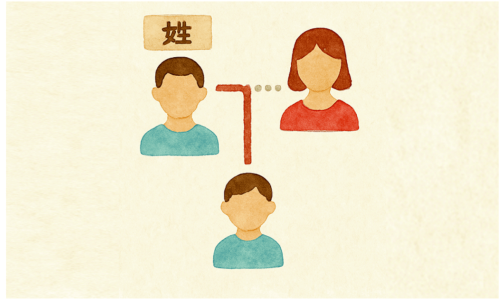
A clear patrilineal structure continues, where the wife is not permitted to take the husband’s surname, and furthermore, the child’s surname is fixed to the paternal line.
妻は夫の姓を名乗ることを許されず、さらに子どもの姓は父系に固定されるという明確な父系中心の構造が続いている。
In other words, ‘separate surnames’ in the world are not necessarily a symbol of equality or respect for the individual.
つまり、世界における「別姓」は必ずしも平等や個人尊重の象徴とは限らない。
The meaning contained in the surname goes beyond the problem of the system, and is a theme that re-questions the values themselves of Japanese society, asking ‘what is a family’.
姓に込められた意味は制度の問題を超え、「家族とは何か」という日本社会の価値観そのものを問い直すテーマである。
This article is from the January 2026 issue of Hiragana Times.
この記事は、月刊誌『ひらがなタイムズ』2026年1月号より掲載しています。
季節の言の葉:日本の1月「睦月(むつき)」— 新年の集いと新たな始まり、そして静かな冬の朝。The Young Hero Who Crossed the Fires of War, Aonishiki, Becomes a New Ozeki
戦火を越えた若き英雄、安青錦が新大関へ
Related Posts




Information From Hiragana Times


Topics in Japan
-
![Japanese Minka—Homes Alive with Nature <br src=]() 自然の中で生きている日本民家" />
Japanese Minka—Homes Alive with Nature
自然の中で生きている日本民家" />
Japanese Minka—Homes Alive with Nature
自然の中で生きている日本民家 -
![The Man Who Chose Harmony in an Age of Blood | Prince Shōtoku <br src=]() 血の時代に、和を選んだ人 | 聖徳太子" />
The Man Who Chose Harmony in an Age of Blood | Prince Shōtoku
血の時代に、和を選んだ人 | 聖徳太子" />
The Man Who Chose Harmony in an Age of Blood | Prince Shōtoku
血の時代に、和を選んだ人 | 聖徳太子 -
![The Fish That Leads the Way into Autumn <br src=]() 秋の先頭を泳ぐ魚" />
The Fish That Leads the Way into Autumn
秋の先頭を泳ぐ魚" />
The Fish That Leads the Way into Autumn
秋の先頭を泳ぐ魚 -
![The House Has Ears, Eyes—and a Mouth <br src=]() 耳と目と口を持つ家" />
The House Has Ears, Eyes—and a Mouth
耳と目と口を持つ家" />
The House Has Ears, Eyes—and a Mouth
耳と目と口を持つ家 -
![Words the Home Holds <br src=]() 家がつつむ言の葉" />
Words the Home Holds
家がつつむ言の葉" />
Words the Home Holds
家がつつむ言の葉
 自然の中で生きている日本民家" />
 血の時代に、和を選んだ人 | 聖徳太子" />
 秋の先頭を泳ぐ魚" />
 耳と目と口を持つ家" />
 家がつつむ言の葉" />

