
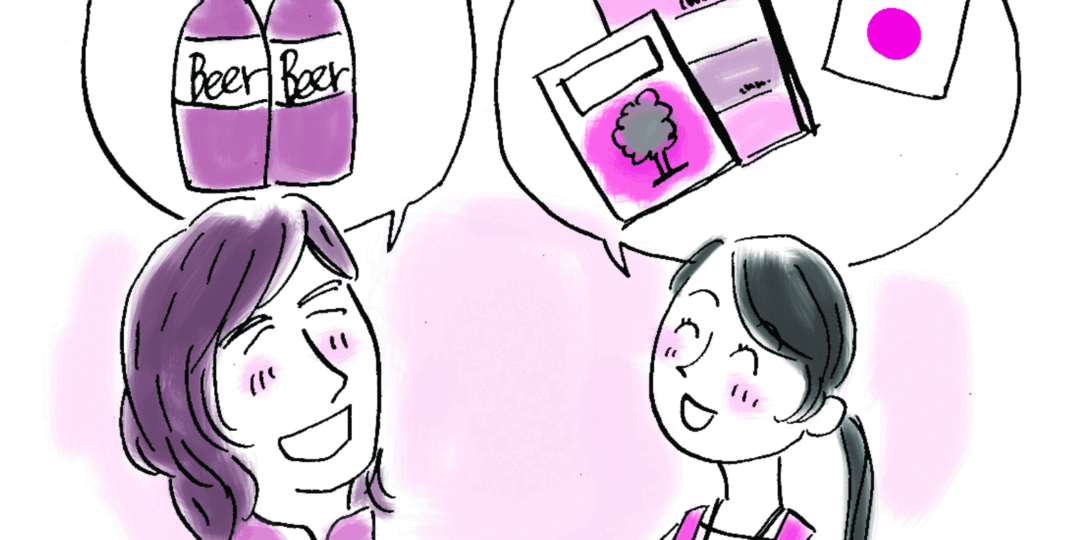
I want to buy Japan.
[JAPAN MAZE | 迷宮ニホン – September 2025 Issue]
You may understand the words, but still get lost in communication. This corner takes you on a fun journey through the maze of Japanese language and culture with four-panel manga. Unlocking the punchline is the key — it reveals the essence of Japanese expression and leads you to the exit, with a smile and a fresh insight.
言葉の意味はわかるのに、なぜか通じない――。日本語と日本文化の迷宮を、4コマ漫画で楽しく探検するコーナーです。“オチ”を読み解けば、日本語の本質が見えてくる。迷宮の出口には、気づきと笑いが待っています。
日本を買いたい。| I want to buy Japan.
Scene 1
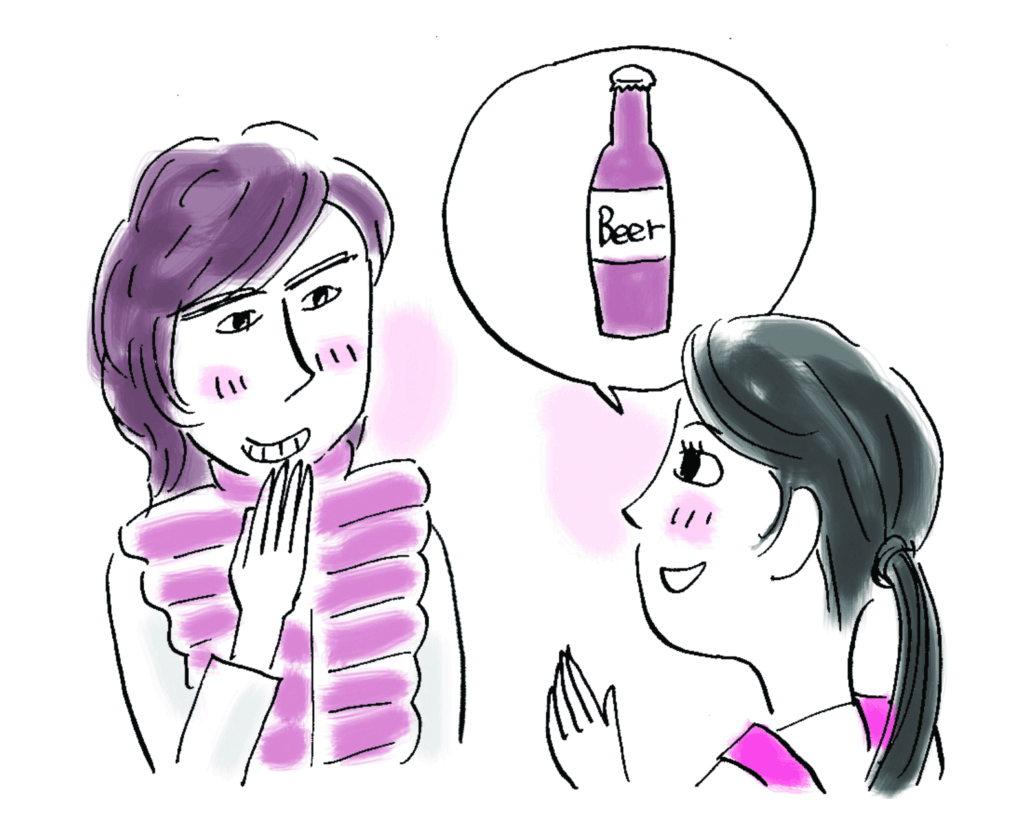
ティム: ニホン、クレジットカードで買えますか。
Tim: Can I buy ‘nihon’ (two books) with my credit card?
ユリ: え!日本を買うんですか。
Yuri: Wow! You want to buy Japan?
Scene 2
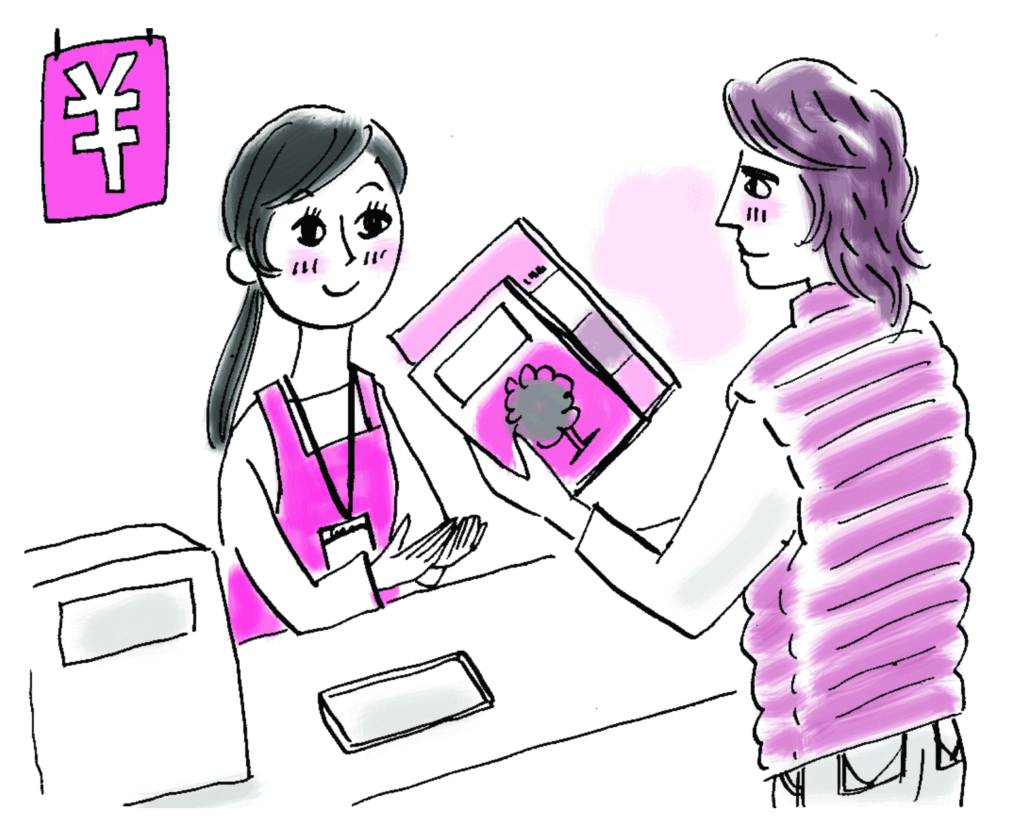
ティム: ツーブックスだから2本でしょう。おかしいですか。
Tim: Two books, so that’s ‘nihon’, am I wrong?
ユリ: 本は冊をつけて数えます。 たとえば、1冊、2冊と。
Yuri: Books are counted by adding “satsu”, for example: ‘issatsu’, ‘nisatsu’.
Scene 3
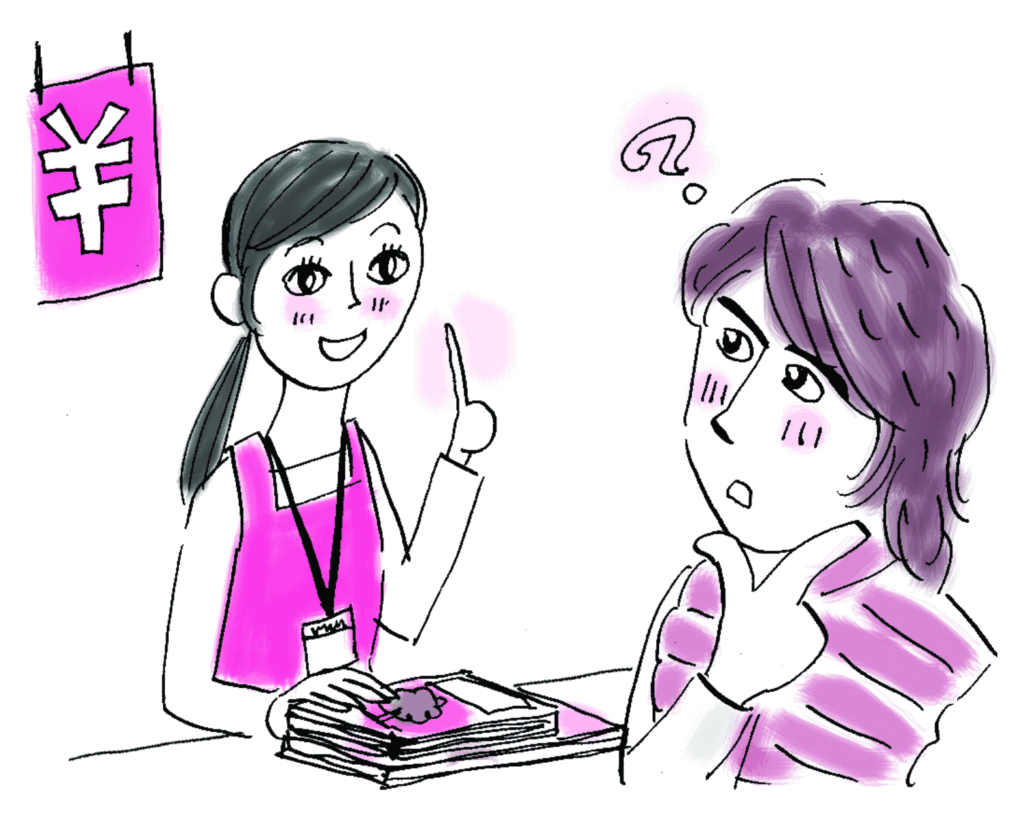
ティム: ホンと?
Tim: ‘Honto’ (Really)?
ユリ: 「ホン」はビール瓶などに使います。
Yuri: “Hon” is used for things like beer bottles.
Scene 4
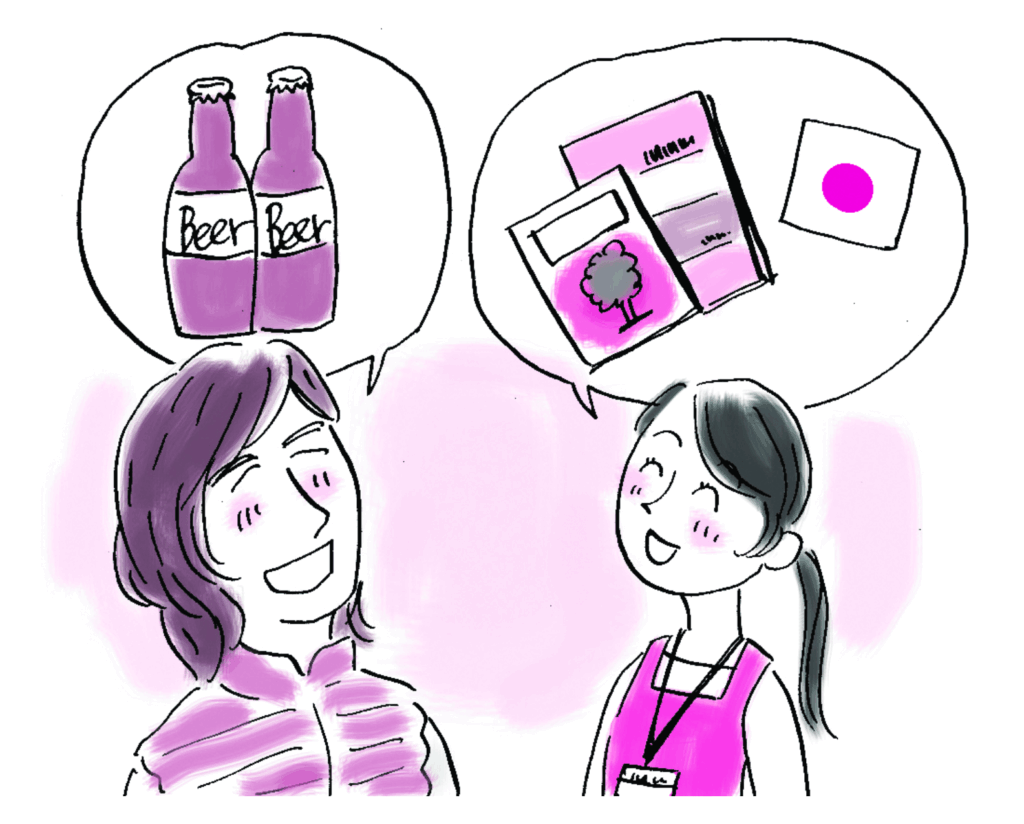
ティム: ビール2本は「ニッポン」ですか、「ニホン」ですか。
Tim: For two bottle of beers, do you say “hippon” or “nihon”?
ユリ: あなたはどうしても「にほん」 買いたいのですね。
Yuri: You reallly want to buy “nihon,” dont’ you?
Maze Navigation | 迷宮ナビ
Let’s break down each scene | それぞれのシーンを理解しよう。
Scene 1
At a bookstore counter, Tim is trying to buy two books. But instead of saying “ni-satsu,” the correct counter for books, he mistakenly says “nihon,” which is used for long objects and Japan.
本屋のカウンターで、ティムが本を2冊買おうとしています。本なら「にさつ」と言うべきところを、間違えて「ニホン(=2本/日本)」と言ってしまいます。
Keywords:
■本屋[bookstore] ■カウンター[counter] ■本[book] ■買う[buy]
Scene 2
Yuri explains that in Japanese, books are counted using “satsu,” and gives examples like “issatsu, nisatsu.”
ユリは、日本語では「冊」を使って本を数えると説明し、「いっさつ、にさつ…」と例を挙げます。
Keywords:
■おかしい [funny, strange] ■挙げる [give (an example)] ■冊 [volume, bound document] ■例 [example]
Scene 3
Hearing this, Tim says “Honto?” — a pun playing on “hon” (book) and “honto” (really?).
それを聞いたティムは、「ホンと?」と言います。「ホン」が入ったダジャレです。
Keywords:
■聞いた [head, listened] ■言う [say, speak] ■ダジャレ [pun]
Scene 4
Tim jokes, “For two beers, is it Nihon or Nippon?” — playing on Japan’s two pronunciations.
ティムは「ビール2本の場合、“ニホン”?“ニッポン”?どっち?」とツッコミます。「日本」の呼び方が二通りあることを踏まえた、彼なりのジョークです。
Keywords:
■どっち [which] ■呼び方 [pronunciation / way of saying] ■ ツッコミ[punchline / quip ] ■二通り [two ways] ■踏まえた [based on / playing on]
Maze Exit| 迷宮出口
What did the punchline reveal? | 今回のオチでわかったこと
Cultural Insight | 新しい発想・文化知識
💡 Do numbers have “shapes”? |「数」には“形”がある?
In English, “two books” and “two bottles” are both simply “two,” but in Japanese, the counter word changes depending on the shape or nature of the item— as in “ni-satsu no hon” (two books), “ni-hon no beer” (two bottles of beer), “ni-hiki no inu” (two dogs), and “ni-wa no tori” (two birds).
英語では “two books” も “two bottles” も “two” で済みますが、日本語では「2冊の本」「2本のビール」「2匹の犬」「2羽の鳥」と、物の形や性質に応じて助数詞が変わります。
This reflects a characteristic of the Japanese language: its sensitivity to how things are perceived. This linguistic nuance also expresses a unique cultural sensibility. For example, long objects (like pens or beer bottles) use the counter “hon,” flat objects (like plates) use “mai,” and small moving animals use “hiki.”
これは、ものをどう見るかに敏感な日本語の特徴であり、文化的な感性が言葉に現れたものです。たとえば、細長いもの(ペン・ビール瓶など)は「本」、平たいもの(皿など)は「枚」、小さくて動くもの(動物など)は「匹」といった具合です。
Furthermore, “hon” is a unique counter whose pronunciation changes with the number. It transforms rhythmically like music: ippon, nihon, sanbon… Similarly, “hiki” changes as ippiki, nihiki, sanbiki, and so on.
しかも、「本」は数によって読み方が変わる不思議な助数詞でもあります。 「いっぽん・にほん・さんぼん…」と、まるで音楽のリズムのように音が変化するのです。同様に、「匹」も「いっぴき・にひき・さんびき」のように変化します。
While the culture of counters is also found in Chinese, Japanese places special importance on sound and rhythm, adding a unique aesthetic sensibility. Counting things correctly may be a shortcut to internalizing the rhythm, sensibility, and culture of the Japanese language.
この助数詞の文化は中国語にも共通するものですが、日本語では音の響きやリズムも大切にされ、独自の美意識が加わっています。正しく数えることは、日本語のリズムや感性、そして文化を体得する近道かもしれません。
This article is from the September 2025 issue of Hiragana Times.
この記事は、月刊誌『ひらがなタイムズ』2025年9月号より掲載しています。
The Role of World Languages and Japanese
情感の記憶を辿るーー世界の言語と日本語の役割 [前半]Kinoko and the Japanese People — A Relationship Nurtured by the Forest
Information From Hiragana Times


Topics in Japan
-
![Hiragana Times App Updated (iOS 8.18.1 / Android 8.19.04) <br src=]() ひらがなタイムズ アプリを更新しました" />
Hiragana Times App Updated (iOS 8.18.1 / Android 8.19.04)
ひらがなタイムズ アプリを更新しました" />
Hiragana Times App Updated (iOS 8.18.1 / Android 8.19.04)
ひらがなタイムズ アプリを更新しました -
![Shogi: The Culture That Turned Enemies into Treasure <br src=]() 将棋 — 敵を宝に変えた文化" />
Shogi: The Culture That Turned Enemies into Treasure
将棋 — 敵を宝に変えた文化" />
Shogi: The Culture That Turned Enemies into Treasure
将棋 — 敵を宝に変えた文化 -
![The Story of “Wa” (倭 and 和) and “Yamato” (大和) <br src=]() 「倭」と「和」と「大和」の物語" />
The Story of “Wa” (倭 and 和) and “Yamato” (大和)
「倭」と「和」と「大和」の物語" />
The Story of “Wa” (倭 and 和) and “Yamato” (大和)
「倭」と「和」と「大和」の物語 -
![People Who Can’t Help Making Things <br src=]() 作らずにいられない人々" />
People Who Can’t Help Making Things
作らずにいられない人々" />
People Who Can’t Help Making Things
作らずにいられない人々 -
![Nobody Tells You <br src=]() でも、伝わってくる" />
Nobody Tells You
でも、伝わってくる" />
Nobody Tells You
でも、伝わってくる
 ひらがなタイムズ アプリを更新しました" />
 将棋 — 敵を宝に変えた文化" />
 「倭」と「和」と「大和」の物語" />
 作らずにいられない人々" />
 でも、伝わってくる" />

