

Contest, Not Conflict — The Olympic Ideal
競うことで、争わない ― オリンピックという思想
[Close Up Japan – April 2026 Issue]
Contest, Not Conflict — The Olympic Ideal
競(きそ)うことで、争(あらそ)わない ― オリンピックという思想(しそう)
The Olympics originate from an athletic festival that began in ancient Greece in 776 BC.
オリンピックは、紀元前(きげんぜん)776年(ねん)に古代(こだい)ギリシャで始(はじ)まった競技祭(きょうぎさい)を起源(きげん)とします。
During the period, a ‘sacred truce’ was declared, and people stopped fighting and gathered safely.
期間中(きかんちゅう)は「聖(せい)なる休戦(きゅうせん)」が宣言(せんげん)され、人々(ひとびと)は戦(たたか)いを止(や)めて安全(あんぜん)に集(つど)いました。
The competitions were not merely a contest of strength, but were also a mechanism to maintain order and peace.
競技(きょうぎ)は単(たん)なる力比(ちからくら)べではなく、秩序(ちつじょ)と平和(へいわ)を保(たも)つ仕組(しく)みでもあったのです。
What revived that spirit in modern times was the 1st modern Olympics held in Athens in 1896.
その精神(せいしん)を近代(きんだい)に蘇(よみがえ)らせたのが、1896年(ねん)にアテネで開催(かいさい)された第(だい)1回(かい)近代(きんだい)オリンピックでした。
A world where nations compete with each other not with weapons but with sports was considered ideal.
国家同士(こっかどうし)が武器(ぶき)ではなく、スポーツで競(きそ)い合(あ)う世界(せかい)が理想(りそう)とされました。
The Winter Games were born in Chamonix, France in 1924.
冬季大会(とうきたいかい)は、1924年(ねん)フランス・シャモニーで誕生(たんじょう)しました。
It was in 1928 that Japan participated in the Winter Games for the first time.
日本(にほん)が冬季大会(とうきたいかい)に初参加(はつさんか)したのは1928年(ねん)。
In 1972, it hosted Asia’s first Winter Olympics in Sapporo.
1972年(ねん)には札幌(さっぽろ)でアジア初(はつ)の冬季(とうき)オリンピックを開催(かいさい)しました。
In 1998, it achieved hosting in its own country again in Nagano, and acquired many gold medals.
1998年(ねん)には長野(ながの)で再(ふたた)び自国開催(じこくかいさい)を果(は)たし、多(おお)くの金(きん)メダルを獲得(かくとく)。
It impressed Japan as a snow country upon the world.
雪国(ゆきぐに)としての日本(にほん)を世界(せかい)に印象(いんしょう)づけました。
After that too, it has accumulated results in figure skating and snowboarding, etc.
その後(ご)もフィギュアスケートやスノーボードなどで成果(せいか)を重(かさ)ねてきました。
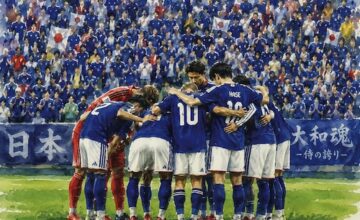
And the 2026 Milan Games. Japanese athletes showed unconstrained performances and powerful gliding.
そして2026年(ねん)ミラノ大会(たいかい)。日本選手(にほんせんしゅ)たちは伸(の)びやかな演技(えんぎ)や力強(ちからづよ)い滑走(かっそう)を見(み)せました。
Athletes of each country also moved the hearts of the spectators with their figures praising each other, more than medals.
各国(かっこく)の選手(せんしゅ)たちも、メダル以上(いじょう)に、互(たが)いを称(たた)え合(あ)う姿(すがた)で観客(かんきゃく)の心(こころ)を動(うご)かしました。
Crossing the time of about 2800 years, inside the Olympic rings, the young generation is embodying the ideals.
約(やく)2800年(ねん)の時(とき)を超(こ)え、オリンピックのリングの内側(うちがわ)では、若(わか)い世代(せだい)が理念(りねん)を体現(たいげん)しています。
Ironically, just a few days after this tournament closed its curtains, new fires of war are rising in the world.
皮肉(ひにく)にも、この大会(たいかい)が幕(まく)を閉(と)じたわずか数日後(すうじつご)、世界(せかい)では新(あら)たな戦火(せんか)が上(あ)がっています。
We hope the ‘sacred truce’ becomes an eternal promise, not a limited-time one.
「聖(せい)なる休戦(きゅうせん)」は、期間限定(きかんげんてい)でなく永遠(えいえん)の約束(やくそく)になってほしいものです。
This article is from the April 2026 issue of Hiragana Times.
この記事(きじ)は、月刊誌(げっかんし)『ひらがなタイムズ』2026年(ねん)4月号(がつごう)より掲載(けいさい)しています。
「国旗損壊罪法案」をどう考えるか“Mental performance” 「メンパ」
Related Posts


Information From Hiragana Times


Topics in Japan
-
![Japanese Minka—Homes Alive with Nature <br src=]() 自然の中で生きている日本民家" />
Japanese Minka—Homes Alive with Nature
自然の中で生きている日本民家" />
Japanese Minka—Homes Alive with Nature
自然の中で生きている日本民家 -
![The Man Who Chose Harmony in an Age of Blood | Prince Shōtoku <br src=]() 血の時代に、和を選んだ人 | 聖徳太子" />
The Man Who Chose Harmony in an Age of Blood | Prince Shōtoku
血の時代に、和を選んだ人 | 聖徳太子" />
The Man Who Chose Harmony in an Age of Blood | Prince Shōtoku
血の時代に、和を選んだ人 | 聖徳太子 -
![The Fish That Leads the Way into Autumn <br src=]() 秋の先頭を泳ぐ魚" />
The Fish That Leads the Way into Autumn
秋の先頭を泳ぐ魚" />
The Fish That Leads the Way into Autumn
秋の先頭を泳ぐ魚 -
![The House Has Ears, Eyes—and a Mouth <br src=]() 耳と目と口を持つ家" />
The House Has Ears, Eyes—and a Mouth
耳と目と口を持つ家" />
The House Has Ears, Eyes—and a Mouth
耳と目と口を持つ家 -
![Words the Home Holds <br src=]() 家がつつむ言の葉" />
Words the Home Holds
家がつつむ言の葉" />
Words the Home Holds
家がつつむ言の葉
 自然の中で生きている日本民家" />
 血の時代に、和を選んだ人 | 聖徳太子" />
 秋の先頭を泳ぐ魚" />
 耳と目と口を持つ家" />
 家がつつむ言の葉" />

