
Is the Gray Zone Really a Safe Zone?
グレーゾーンはセーフゾーンなのか?
[ Pros and Cons with Insight – May 2026 Issue]
Is the Gray Zone Really a Safe Zone?
グレー(gray)ゾーン(zone)はセーフ(safe)ゾーン(zone)なのか?
 Background | 背景(はいけい)
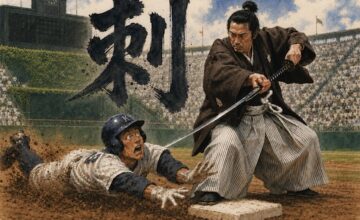
Actions targeting the “gray zone” without clearly violating laws and rules are increasing.
法律(ほうりつ)やルール(rule)に明確(めいかく)には違反(いはん)しない“グレー(gray)ゾーン(zone)”を狙(ねら)った行為(こうい)が増(ふ)えている。
SNS posts provoking outrage, nuisance content, videos stretching the interpretation of copyright, and so on.
炎上(えんじょう)を誘(さそ)うSNS投稿(とうこう)や迷惑系(めいわくけい)コンテンツ(contents)、著作権(ちょさくけん)の解釈(かいしゃく)を広(ひろ)げた動画(どうが)など。
The question, “If it’s not illegal, is it acceptable?”, is being posed to society.
「違法(いほう)でなければ問題(もんだい)ないのか」という問(と)いが、社会(しゃかい)に投(な)げかけられている。
 Pros | 賛成意見(さんせいいけん)
As long as they do not violate the law, actions should be allowed, and excessive regulation stifles freedom of expression and endeavors.
法律(ほうりつ)に違反(いはん)していない以上(いじょう)、行為(こうい)は許(ゆる)されるべきであり、過度(かど)な規制(きせい)は表現(ひょうげん)の自由(じゆう)や挑戦(ちょうせん)を萎縮(いしゅく)させる。
 Cons | 反対意見(はんたいいけん)
Even if not illegal, actions causing disadvantage or discomfort to others should not be allowed.
たとえ違法(いほう)でなくても、他者(たしゃ)に不利益(ふりえき)や不快感(ふかいかん)を与(あた)える行為(こうい)は許(ゆる)されるべきではない。
 Insight | 洞察(どうさつ)
The idea that “as long as it’s not illegal, doing anything is safe” is spreading.
「違法(いほう)でなければ何(なに)をしてもセーフ(safe)だ」という考(かんが)え方(かた)が広(ひろ)がっている。
The trend of defeating opponents with words and logic is also an extension of it.
言葉(ことば)や理屈(りくつ)で相手(あいて)を言(い)い負(ま)かす風潮(ふうちょう)も、その延長(えんちょう)にある。
However, is the gray zone really a “safe zone”?
しかし、グレー(gray)ゾーン(zone)は本当(ほんとう)に「セーフ(safe)ゾーン(zone)」なのだろうか。
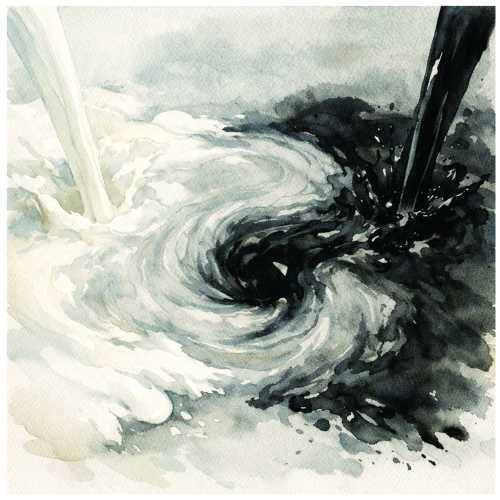
The color gray is created by mixing black into white.
グレー(gray)という色(いろ)は、白(しろ)に黒(くろ)を混(ま)ぜて生(う)まれる。
“Black” is already included in it.
そこにはすでに“黒(くろ)”が含(ふく)まれている。
Laws and rules are merely minimum standards created by humans.
法律(ほうりつ)やルール(rule)は、人間(にんげん)がつくった最低限(さいていげん)の基準(きじゅん)にすぎない。
Humans live as a part of nature. What is questioned is not “whether it is legal”, but a more fundamental sense.
人(ひと)は自然(しぜん)の一部(いちぶ)として生(い)きている。問(と)われるのは「合法(ごうほう)かどうか」ではなく、もっと根源的(こんげんてき)な感覚(かんかく)だ。
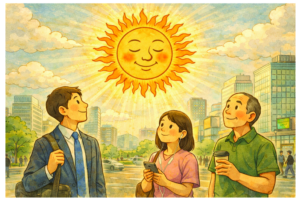
People of the past said, “Heaven is watching.” The sense of being watched, even if no one is looking.
昔(むかし)の人(ひと)は言(い)った。「お天道様(おてんとうさま)が見(み)ている」。誰(だれ)も見(み)ていなくても、見(み)られているという感覚(かんかく)。
In this way, people have faced their own conscience.
そうして人(ひと)は、自(みずか)らの良心(りょうしん)と向(む)き合(あ)ってきた。
The standard is simple. Do not do to others what you dislike being done to yourself.
基準(きじゅん)はシンプル(simple)だ。自分(じぶん)がされて嫌(いや)なことは、他人(たにん)にしない。
Even the Code of Hammurabi, known for “an eye for an eye”, was not originally meant to encourage revenge.
「目(め)には目(め)を」で知(し)られるハンムラビ(Hammurabi)法典(ほうてん)も、本来(ほんらい)は復讐(ふくしゅう)を促(うなが)すものではなかった。
It is a wisdom of restraint, meaning the same thing returns to oneself.
同(おな)じことが自分(じぶん)に返(かえ)るという抑制(よくせい)の知恵(ちえ)である。
Before rules and laws, we think about “whether it is right as a human being”. Shouldn’t we return to that axis?
ルール(rule)や法律(ほうりつ)の前(まえ)に、「人(ひと)として正(ただ)しいかどうか」を考(かんが)える。その軸(じく)に立(た)ち戻(もど)るべきではないだろうか。
This article is from the May 2026 issue of Hiragana Times.
この記事(きじ)は、月刊誌(げっかんし)『ひらがなタイムズ』2026年(ねん)5月号(がつごう)より掲載(けいさい)しています。
季節の言の葉:日本の5月「皐月(さつき)」— 命が伸び、感謝が芽生える月。Cyclists Can Now Face Fines?! A New System Begins
自転車にも反則金?!新制度、スタート
Related Posts

Information From Hiragana Times


Topics in Japan
-
![Nobody Tells You <br src=]() でも、伝わってくる" />
Nobody Tells You
でも、伝わってくる" />
Nobody Tells You
でも、伝わってくる -
![People Who Can’t Help Making Things <br src=]() 作らずにいられない人々" />
People Who Can’t Help Making Things
作らずにいられない人々" />
People Who Can’t Help Making Things
作らずにいられない人々 -
![Shogi: The Culture That Turned Enemies into Treasure <br src=]() 将棋 — 敵を宝に変えた文化" />
Shogi: The Culture That Turned Enemies into Treasure
将棋 — 敵を宝に変えた文化" />
Shogi: The Culture That Turned Enemies into Treasure
将棋 — 敵を宝に変えた文化 -
![The Story of “Wa” (倭 and 和) and “Yamato” (大和) <br src=]() 「倭」と「和」と「大和」の物語" />
The Story of “Wa” (倭 and 和) and “Yamato” (大和)
「倭」と「和」と「大和」の物語" />
The Story of “Wa” (倭 and 和) and “Yamato” (大和)
「倭」と「和」と「大和」の物語 -
![The United Nations That Runs on “Victors’ Justice” <br src=]() 「勝者の正義」で動く国連" />
The United Nations That Runs on “Victors’ Justice”
「勝者の正義」で動く国連" />
The United Nations That Runs on “Victors’ Justice”
「勝者の正義」で動く国連
 でも、伝わってくる" />
 作らずにいられない人々" />
 将棋 — 敵を宝に変えた文化" />
 「倭」と「和」と「大和」の物語" />
 「勝者の正義」で動く国連" />

