-

The statue of Prince Shōtoku is enshrined in the Shōryōin Hall of Hōryū-ji, a World Heritage site in Nara Prefecture.
奈良県の世界遺産、法隆寺の聖霊院に安置されている聖徳太子像。
The cushion, called a “shitone,” that the statue sits on has been newly replaced for the first time in about 200 years.
その像が座る敷物「褥(しとね)」が、約200年ぶりに新調されました。
The old cushion, donated during the Edo period, had deteriorated after many long years.
江戸時代に奉納された古い褥は、長い年月を経て劣化が進んでいました。
The restored cushion, which took about a year to complete, is carefully embroidered with chrysanthemum and arabesque patterns.
約1年をかけて復元された褥には、菊や唐草の文様が丁寧に刺繍されています。
The cushion, which brings back the brilliance of the elegant culture of that time, must feel comfortable to the statue of Prince Shōtoku.
当時の華やかな文化の輝きが蘇った「座布団」に、聖徳太子像も心地よく感じていることでしょう。
It became a moving restoration project that highlights the masterful skills of artisans who preserve cultural properties.
文化財を守る職人たちの匠の技が光る、感動の復元プロジェクトとなりました。
When you visit Hōryū-ji, let this cushion guide your thoughts beyond the passage of time, to the scenery of the past.
法隆寺を訪れる際は、この「褥」を通し、悠久の時を超え、当時の風景に想いを巡らせてください。
-

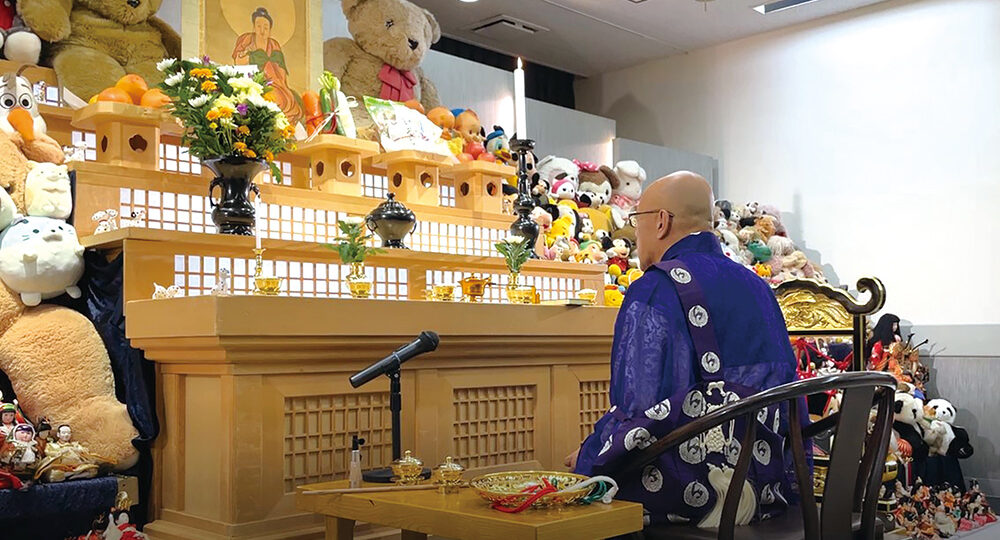
- In Japan, when it comes time to part with beloved dolls or stuffed animals, there is a ritual to offer prayers as a gesture of gratitude.
日本には、大切にしていた人形やぬいぐるみとお別れすることになった際、供養して感謝の気持ちを示す儀式があります。 - In March, a “Nui Memorial Service” was held at a funeral hall in Tokyo.
3月に、東京都内にある葬儀場で「ぬい供養祭」が行われました。 - A “nui” is a stuffed animal modeled after a character or idol favored by a fan.
「ぬい」とは、ファンが推すキャラクターやアイドルを模したぬいぐるみのことです。 - At this memorial service, not only stuffed animals but also fave (favorite) acrylic stands were handled.
この供養祭では、ぬいぐるみだけでなく、推しのアクリルスタンドも扱われました。 - On the day, in addition to the memorial service and lectures by Buddhist monks, there was also a photo session with the memorialized merchandise.
当日は、法要や僧侶による講話のほか、供養するグッズとの撮影会も行われました。
- In Japan, when it comes time to part with beloved dolls or stuffed animals, there is a ritual to offer prayers as a gesture of gratitude.
-
Currently, there are a total of six giant pandas in Japan.
現在、日本にいるジャイアントパンダは、全部で6頭。
Of these, four will be returned to China at the end of June.
このうち4頭が、6月末に中国へ返還されます。
The remaining two at Ueno Zoo will also reach the expiration of their loan agreement next February.
残る上野動物園の2頭も、来年2月に貸与契約の期限を迎えます。
If the agreement is not extended, all pandas will disappear from Japan.
契約が延長されなければ、日本からすべてのパンダが姿を消すことになります。
Behind this lies China’s long-standing “panda diplomacy.”
こうした背景には、中国が長年続けてきた「パンダ外交」があります。
Pandas are widely loved around the world as a form of approachable “soft power.”
パンダは、親しみやすい「ソフトパワー」として、世界中で広く愛されています。
On the other hand, the timing of loans and returns is said to be a “mirror of diplomacy” that reflects the relationship with China.
一方で、貸与や返還のタイミングは、中国との関係性を映し出す「外交の鏡」ともいわれています。 -
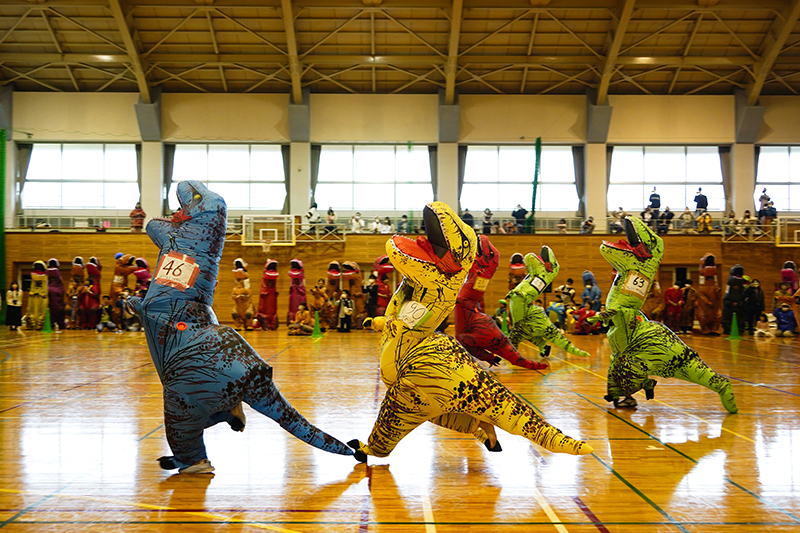
- “Tyrannosaurus Race Daisen 2023” was held in Daisen Town, Tottori Prefecture this April.
今年4月に、鳥取県大山町で「ティラノサウルスレース大山2023」が開催されました。
- Over 200 “tyrannosaurs” from all over Japan competed to see how fast they could run.
全国から集まった200以上の「ティラノサウルス」が、走る速さを競いました。
- When asked why people come to the event, KAWAMOTO Naoki from the Japan Tyrannosaurus Preservation Society answered:
どうして人が集まるのかという質問に対して、日本ティラノサウルス保存会の川本直樹さんはこう答えました。
- “I think a lot of people want to be Tyrannosaurus. Also, people might be tired. They might be thinking that they can’t take humans anymore.”
「ティラノサウルスになりたい人が多いんじゃないでしょうか。それと、みんな疲れてるのかな。人間なんかやってられるかと思っているのかもしれませんね。」
- The event was originally born in the United States. Since 2022, it has been held in various locations in Japan.
もともとアメリカで生まれたイベントで、2022年から日本でも各地で開催されています。
- “Tyrannosaurus Race Daisen 2023” was held in Daisen Town, Tottori Prefecture this April.
-
[Japan Savvy– May 2026 Issue]
Sekku: Five Seasonal Markers That Shape the Year
節句 —— 一年を整える、五つの節目Japan has a unique rhythm of spending the year, passed down from ancient times.
日本には、古代から受け継がれてきた、一年を過ごす独自のリズムがあります。
On January 7, after passing the ‘New Year period’, people condition their minds and bodies with seven-herb rice porridge, and start the year.
「正月期間」を経た1月7日、人々は七草粥で心身を整え、一年を始動させます。
After that, to safely survive the year, on March 3, May 5, July 7, and September 9, at each turning point where odd numbers overlap, they have warded off impurities and purified themselves.
その後、一年を無事に生き抜くため、3月3日・5月5日・7月7日・9月9日と、奇数が重なる節目ごとに穢れを祓い、身を清めてきました。
These are called “Gosekku”. The soon approaching May 5 is Tango no Sekku.
これらを「五節句」と呼びます。 間もなく訪れる5月5日は、端午の節句です。
In the lunar calendar, falling on the beginning of the rainy season, it was a time when, due to humidity, water and food easily spoiled, and diseases easily spread.
旧暦では梅雨のはじめにあたり、湿気によって水や食べ物が傷みやすく、病が広がりやすい時期でした。
Therefore, people have warded off evil spirits by soaking in a Shobu bath with antibacterial and insect-repellent properties.
そこで人々は、抗菌・防虫の力をもつ菖蒲湯に浸かり、邪気を祓ってきたのです。
Entering the Edo period, since “Shobu” connects to “Shobu” (valuing martial arts), Tango no Sekku transformed into a day wishing for boys’ growth.
江戸時代に入ると、「菖蒲」が「尚武(武を重んじる)」に通じることから、端午の節句は男の子の成長を願う日へと変化しました。
Originating in China, Sekku intertwined with Japan’s nature worship and warrior society’s spirit, and have been passed down to this day as “Gosekku”.
中国を起源とする節句は、日本の自然崇拝や武家社会の精神と結びつき、「五節句」として今日まで受け継がれてきたのです。
Become a Sekku Savvy 侍通になる
WARM UP | Sekku JapaNEEDS◎ USEFUL WORDS 役立つ言葉
- 五節句(ごせっく)Five Seasonal Festivals
- 奇数(きすう)odd numbers
- 陰陽(いんよう)yin and yang
- 穢れ(けがれ)impurity
- 祓い(はらい) purification
- 邪気(じゃき)evil spirits
- 菖蒲(しょうぶ)Japanese iris
- 鯉のぼり(こいのぼり)carp streamers
- 風習(ふうしゅう)traditional custom
- 登竜門(とうりゅうもん)Dragon Gate
- 行事(ぎょうじ)traditional event
- 五月病(ごがつびょう)May blues
- 魔除け(まよけ)protection against evil
◎ Ice Breaker Question 会話のきっかけ
Are there any festivals in your country that celebrate seasonal transitions?
あなたの国に、季節の節目を祝う行事はありますか?
Are there any traditions in your country that wish for children’s health and growth?
子どもの健康や成長を願う風習は、あなたの国にもありますか?
Are there any numbers that have special meaning in your culture?
あなたの国で特別な意味を持つ数字はありますか?
Have you ever seen carp streamers (koinobori)? What was your impression?
鯉のぼりを見たことがありますか?どんな印象でしたか?
When do you feel that the season has changed?
「季節が変わった」と感じる瞬間はどんなときですか?
WORK UP | Sekku Discussion
DISCUSSION ディスカッションRaj (India): Why do sekku fall on days with matching odd numbers?
ラージ: なぜ、節句は奇数が重なる日なんですか?Yuki: In ancient Chinese yin-yang thought, odd numbers are considered “yang,” times when energy grows stronger and begins to shift.
ユキ: 奇数は、中国古来の陰陽思想で「陽」とされ、エネルギーが強まり、転じる時なんです。
Emma: I see. Since they mark turning points, that means people needed to restore their balance during those times.
エマ: なるほど。変わり目だから、その時期はバランスを整える必要があるんですね。Yuki: That’s right. Among them, May 5 is considered one of the most intense moments, when the year’s energy rises sharply and heads toward its peak.
ユキ:そうなんです。その中でも5月5日は、1年のエネルギーが一気に高まり、ピークへ向かう最も激しい時期とされています。Carlos: Come to think of it, there’s also the term “May blues” in Japanese, isn’t there?
カルロス: そういえば、「五月病」という言葉もありますね。Emma: That’s true. In that sense, it may be connected to how people tend to lose their mental and physical balance at that time of year.
エマ: 確かに。時期的に心身のバランスを崩しやすいという点で、どこか通じるものがあるかもしれませんね。Raj (India): By the way, speaking of odd numbers, isn’t November 11 also a sekku?
ラージ: ところで、奇数といえば、11月11日は節句ではないんですか?Yuki: Interesting point. Since ten symbolizes completion, the period after November is seen as a time of thanks for the year’s harvest and blessings.
ユキ: 面白い視点ですね。「十」は完成を表すため、11月以降は一年の実りや恵みに感謝する時期とされます。Carlos: Speaking of blessings, November is also the time of Niiname-sai, isn’t it?
カルロス: 実りといえば、11月は、新嘗祭もありますね。Yuki: Yes, that’s right. It is not only about the harvest, but also the season of Shichi-Go-San, when children’s growth is celebrated.
ユキ: そうですね。収穫だけでなく、子どもの成長を祝う七五三もこの時期です。Emma: I see. So “ten” sounds like ten—it’s like reaching heaven and thanking it, right? (laughs)
エマ: なるほど。「十」は英語で ten。つまり、天に到達し、天に感謝するということですね!(笑)
WRAP UP | Samurai Knowledge
NEW KNOWLEDGE 新しい知識Gosekku, the Five Seasonal Festivals, generally fall on dates where the same odd number is repeated: 3/3, 5/5, 7/7, and 9/9. January alone is different, since New Year’s Day is set apart, so its festival falls on January 7.
五節句は、3月3日、5月5日、7月7日、9月9日と、同じ奇数が重なる日が基本です。ただし1月だけは、新年が別格とされるため、1月7日が節句となっています。
January 7 is known as Jinjitsu no Sekku, the Festival of Human Beings. In ancient China, the first six days were assigned to the chicken, dog, boar, sheep, ox, and horse—animals that supported human life and were known as the “six domestic animals.” The seventh day was for human beings.
1月7日は、「人日の節句」と呼ばれます。古代中国では、1日から6日までを鶏・犬・猪・羊・牛・馬にあて、これら人の暮らしを支える動物は「六畜」と呼ばれていました。そして7日目が「人」です。
Each of the five festivals has its own name: Jinjitsu no Sekku on January 7, Jōshi no Sekku on March 3, Tango no Sekku on May 5, Tanabata no Sekku on July 7, and Chōyō no Sekku on September 9.
五節句はそれぞれ、1月7日「人日の節句」、3月3日「上巳の節句」、5月5日「端午の節句」、7月7日「七夕の節句」、9月9日「重陽の節句」と名付けられています。
Sekku originated in the Chinese concept of jieri. In Japan, it merged with the custom of offering to the gods and nature, becoming sekku, “seasonal offerings.” Over time, through samurai culture and folk customs, it took root as sekku: meaningful milestones in the rhythm of the year.
「節句」のもとになったのは、中国の「節日(节日)」です。それが日本に伝わり、神や自然に供え物をする文化と結びついて「節供」となり、さらに武家社会や民間の習俗の中で、一年のリズムを形づくる意味ある節目としての「節句」へと定着していったと考えられます。
In China, 节日 still exists, but it is not generally organized into a unified set of five like Japan’s Gosekku.
中国の「節日(节日)」は、日本の「五節句」のように五つを一まとまりとして捉える形は一般的ではありません。
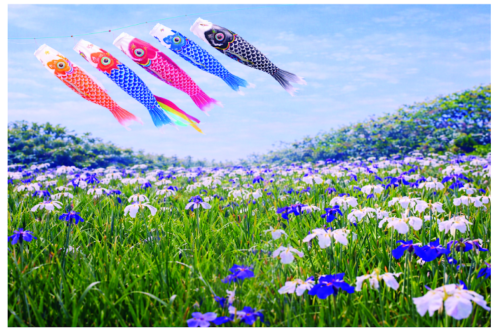
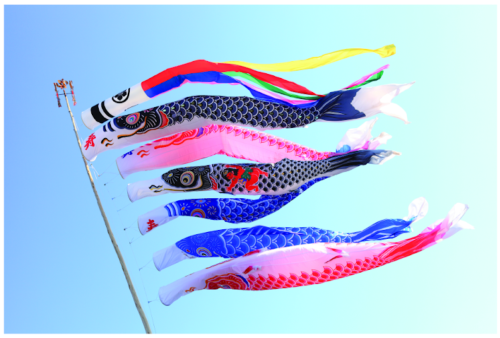
May has long been seen as a season when energy rises and bursts outward. The koinobori displayed for Tango no Sekku derive from the Chinese tale of Tōryūmon, the “Dragon Gate,” in which a carp that climbs the swift current of the Yellow River becomes a dragon.
5月は、エネルギーが高まり、外へ飛び出す時期と考えられてきました。端午の節句に飾られる鯉のぼりは、黄河を登りきった鯉が龍になるという中国の故事「登竜門」に由来します。
The five colors of the streamers attached to koinobori—blue, red, yellow, white, and black—are based on the Chinese Five Elements. Together, they are believed to ward off disorder and evil.
鯉のぼりの吹き流しに使われる青・赤・黄・白・黒の五色は、中国の五行説に基づく色で、すべてが揃うことで乱れや邪気を払うとされています。
This article is from the May 2026 issue of Hiragana Times.
この記事は、月刊誌『ひらがなタイムズ』2026年5月号より掲載しています。
-
[NIHONGO DO – Voice-word Art– May 2026 Issue]
“Good feeding before good breeding.” – When people are well fed and clothed, they come to know courtesy and propriety.
「衣食(いしょく)足(た)りて礼節(れいせつ)を知(し)る」– 国(くに)の品格(ひんかく)は、まず民(たみ)の暮(く)らしの安定(あんてい)から始(はじ)まる。This “Voice-Word Art” section introduces seasonal words related to the time of year. Enjoy the timeless beauty of these artistic expressions.
この「言技(ことわざ)」セクションでは、季節(きせつ)にちなんだ季語(きご)を紹介(しょうかい)しています。時代(じだい)を超(こ)えて響(ひび)く言葉(ことば)のアート(言技(ことわざ))をお楽(たの)しみください。
Good feeding before good breeding.
衣食足(いしょくた)りて礼節(れいせつ)を知(し)る
“Ishoku tarite reisetsu wo shiru.”“Ishoku tarite reisetsu wo shiru” is an expression meaning that only when clothing and food are sufficient do people come to understand courtesy and proper conduct. In other words, human morality and dignity can be nurtured only when they rest on the foundation of a stable daily life.
「衣食足(いしょくた)りて礼節(れいせつ)を知(し)る」とは、衣服(いふく)と食(た)べ物(もの)が満(み)たされてこそ、人(ひと)は礼儀(れいぎ)や節度(せつど)をわきまえるようになる、という意味(いみ)のことばです。言(い)い換(か)えれば、人(ひと)としてのモラル(morality)や品位(ひんい)は、まず暮(く)らしの安定(あんてい)という土台(どだい)があってこそ育(はぐく)まれる、ということです。
In this month’s Japan Style feature, Emperor Nintoku is introduced as a ruler who first turned his attention to the people’s food. The well-known story tells how, seeing no smoke rising from the hearths of the people, he realized their hardship and chose to lighten their burden. Only when the lives of the people are protected can a nation become stable, and only then can great undertakings and culture begin to flourish. Even those magnificent kofun may be seen as having been built upon such a foundation of prosperity.
今月号(こんげつごう)の Japan Style で紹介(しょうかい)した仁徳天皇(にんとくてんのう)も、まず民(たみ)の「食(しょく)」に目(め)を向(む)けました。民(たみ)のかまどに煙(けむり)が立(た)たないのを見(み)て、その困窮(こんきゅう)を察(さっ)し、負担(ふたん)を軽(かる)くしたという逸話(いつわ)はよく知(し)られています。民(たみ)の暮(く)らしが守(まも)られてこそ、国(くに)は安定(あんてい)し、その先(さき)に大(おお)きな営(いとな)みや文化(ぶんか)も育(そだ)っていく――あの壮大(そうだい)な古墳(こふん)も、そうした豊(ゆた)かな土台(どだい)の上(うえ)に築(きず)かれたものと見(み)ることができるでしょう。
Eiichi Shibusawa, whose portrait appears on today’s 10,000-yen note and who is often called the father of Japanese capitalism, is known for the phrase, “The Analects in one hand, the abacus in the other.” In those words lies the idea that while morality and compassion for others must be cherished, economic activity must also be kept moving so that such ideals do not remain mere abstractions.
現在(げんざい)の一万円札(いちまんえんさつ)の肖像(しょうぞう)であり、「日本資本主義(にほんしほんしゅぎ)の父(ちち)」とも呼(よ)ばれる渋沢栄一(しぶさわえいいち)は、「片手(かたて)に論語(ろんご)、片手(かたて)にそろばん(abacus)」という言葉(ことば)で知(し)られています。そこには、道徳(どうとく)や人(ひと)への思(おも)いやりを大切(たいせつ)にしながらも、それを空論(くうろん)に終(お)わらせないために、経済(けいざい)をしっかりと回(まわ)していくことの重要性(じゅうようせい)が込(こ)められています。
Another famous saying comes from Ninomiya Sontoku, known for the philosophy of Hōtoku: “Economy without morality is a crime; morality without economy is empty talk.” A society cannot be sustained by moral teachings alone. Yet if it pursues profit alone, it will inevitably fall into ruin. What matters is to uphold both morality and economy, both ideals and reality.
また、報徳思想(ほうとくしそう)で知(し)られる二宮尊徳(にのみやそんとく)の「道徳(どうとく)なき経済(けいざい)は犯罪(はんざい)であり、経済(けいざい)なき道徳(どうとく)は寝言(ねごと)である」という言葉(ことば)も有名(ゆうめい)です。人(ひと)の道(みち)を説(と)くだけでは社会(しゃかい)は成(な)り立(た)たず、かといって利益(りえき)だけを追(お)えば、そこには荒廃(こうはい)が生(う)まれます。大切(たいせつ)なのは、道徳(どうとく)と経済(けいざい)、理想(りそう)と現実(げんじつ)、その両方(りょうほう)を支(ささ)えることなのでしょう。
If daily life is not secure, it is difficult for people to maintain calmness, compassion, and the dignity proper to human beings. The phrase “Ishoku tarite reisetsu wo shiru” is a kotowaza that teaches this simple yet profoundly essential truth.
まず日々(ひび)の暮(く)らしが安定(あんてい)していなければ、人(ひと)は落(お)ち着(つ)きや思(おも)いやり、そして人(ひと)としての品位(ひんい)を十分(じゅうぶん)に保(たも)つことが難(むずか)しい――「衣食足(いしょくた)りて礼節(れいせつ)を知(し)る」ということばは、そうした素朴(そぼく)でありながらも、きわめて本質的(ほんしつてき)な現実(げんじつ)を教(おし)えてくれる言技(ことわざ)です。
This article is from the May 2026 issue of Hiragana Times.
この記事(きじ)は、月刊誌(げっかんし)『ひらがなタイムズ』2026年(ねん)5月号(がつごう)より掲載(けいさい)しています。
-
[NIHONGO DO – Word Leaves – May 2026 Issue]
Seasonal Words: Japan’s May, Satsuki — A Month When Life Grows and Gratitude Blooms.
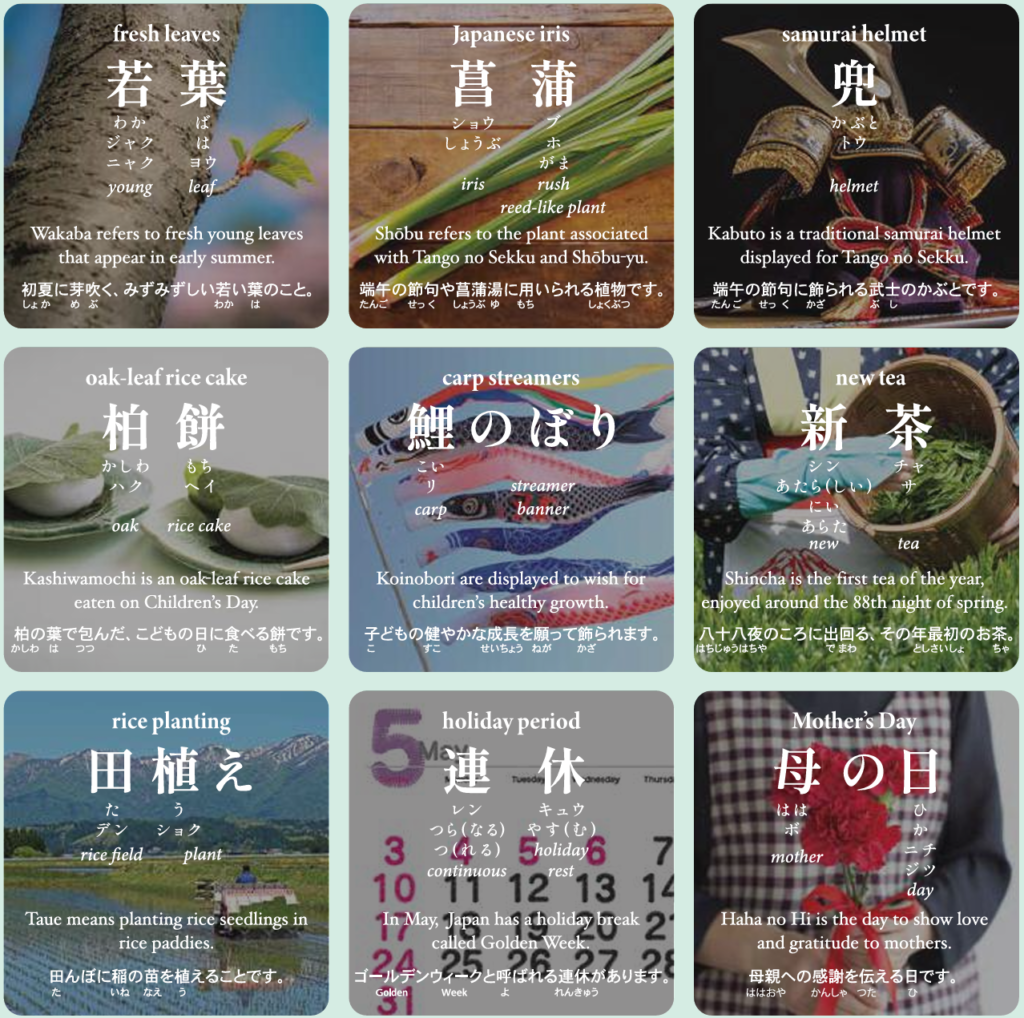
季節の言の葉:日本の5月「皐月(さつき)」— 命が伸び、感謝が芽生える月。In May, Japan fills with wishes for children’s healthy growth. Through kabuto, koinobori, shōbu, kashiwamochi, and chimaki, Tango no Sekku has long carried prayers for strength and safe passage into the future. Yet May also brings Mother’s Day, gently turning our hearts toward gratitude for the mothers who watch over that growth with love and devotion. In this issue, we have gathered words that hold both the vigor of life reaching upward and the quiet warmth of thankfulness.
5月の日本には、子どもたちの健やかな成長を願う思いが満ちています。兜や鯉のぼり、菖蒲、柏餅、ちまきに託されてきたのは、強く、無事に、未来へ伸びていってほしいという祈りです。そして5月はまた、そうした成長をやさしく見守り、支えてきた母へ感謝を向ける「母の日」の季節でもあります。この5月号では、上へ上へと伸びる命の勢いと、それを包み込む感謝のぬくもりを映す言葉を集めてみました。
This article is from the May 2026 issue of Hiragana Times.
この記事は、月刊誌『ひらがなタイムズ』2026年5月号より掲載しています。
-
[ Pros and Cons with Insight – May 2026 Issue]
Is the Gray Zone Really a Safe Zone?
グレー(gray)ゾーン(zone)はセーフ(safe)ゾーン(zone)なのか? Background | 背景(はいけい)
Actions targeting the “gray zone” without clearly violating laws and rules are increasing.
法律(ほうりつ)やルール(rule)に明確(めいかく)には違反(いはん)しない“グレー(gray)ゾーン(zone)”を狙(ねら)った行為(こうい)が増(ふ)えている。
SNS posts provoking outrage, nuisance content, videos stretching the interpretation of copyright, and so on.
炎上(えんじょう)を誘(さそ)うSNS投稿(とうこう)や迷惑系(めいわくけい)コンテンツ(contents)、著作権(ちょさくけん)の解釈(かいしゃく)を広(ひろ)げた動画(どうが)など。
The question, “If it’s not illegal, is it acceptable?”, is being posed to society.
「違法(いほう)でなければ問題(もんだい)ないのか」という問(と)いが、社会(しゃかい)に投(な)げかけられている。
 Pros | 賛成意見(さんせいいけん)
As long as they do not violate the law, actions should be allowed, and excessive regulation stifles freedom of expression and endeavors.
法律(ほうりつ)に違反(いはん)していない以上(いじょう)、行為(こうい)は許(ゆる)されるべきであり、過度(かど)な規制(きせい)は表現(ひょうげん)の自由(じゆう)や挑戦(ちょうせん)を萎縮(いしゅく)させる。
 Cons | 反対意見(はんたいいけん)
Even if not illegal, actions causing disadvantage or discomfort to others should not be allowed.
たとえ違法(いほう)でなくても、他者(たしゃ)に不利益(ふりえき)や不快感(ふかいかん)を与(あた)える行為(こうい)は許(ゆる)されるべきではない。
 Insight | 洞察(どうさつ)
The idea that “as long as it’s not illegal, doing anything is safe” is spreading.
「違法(いほう)でなければ何(なに)をしてもセーフ(safe)だ」という考(かんが)え方(かた)が広(ひろ)がっている。
The trend of defeating opponents with words and logic is also an extension of it.
言葉(ことば)や理屈(りくつ)で相手(あいて)を言(い)い負(ま)かす風潮(ふうちょう)も、その延長(えんちょう)にある。
However, is the gray zone really a “safe zone”?
しかし、グレー(gray)ゾーン(zone)は本当(ほんとう)に「セーフ(safe)ゾーン(zone)」なのだろうか。
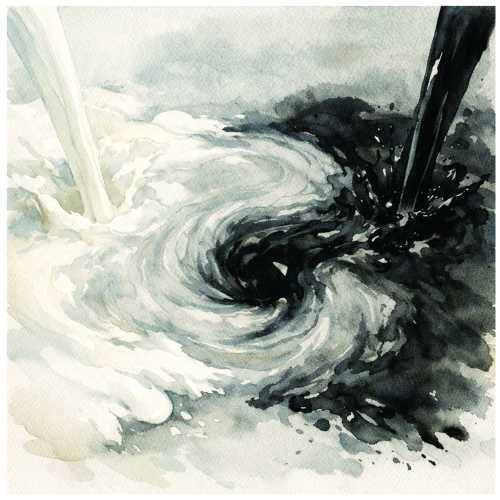
The color gray is created by mixing black into white.
グレー(gray)という色(いろ)は、白(しろ)に黒(くろ)を混(ま)ぜて生(う)まれる。
“Black” is already included in it.
そこにはすでに“黒(くろ)”が含(ふく)まれている。
Laws and rules are merely minimum standards created by humans.
法律(ほうりつ)やルール(rule)は、人間(にんげん)がつくった最低限(さいていげん)の基準(きじゅん)にすぎない。
Humans live as a part of nature. What is questioned is not “whether it is legal”, but a more fundamental sense.
人(ひと)は自然(しぜん)の一部(いちぶ)として生(い)きている。問(と)われるのは「合法(ごうほう)かどうか」ではなく、もっと根源的(こんげんてき)な感覚(かんかく)だ。
People of the past said, “Heaven is watching.” The sense of being watched, even if no one is looking.
昔(むかし)の人(ひと)は言(い)った。「お天道様(おてんとうさま)が見(み)ている」。誰(だれ)も見(み)ていなくても、見(み)られているという感覚(かんかく)。
In this way, people have faced their own conscience.
そうして人(ひと)は、自(みずか)らの良心(りょうしん)と向(む)き合(あ)ってきた。
The standard is simple. Do not do to others what you dislike being done to yourself.
基準(きじゅん)はシンプル(simple)だ。自分(じぶん)がされて嫌(いや)なことは、他人(たにん)にしない。
Even the Code of Hammurabi, known for “an eye for an eye”, was not originally meant to encourage revenge.
「目(め)には目(め)を」で知(し)られるハンムラビ(Hammurabi)法典(ほうてん)も、本来(ほんらい)は復讐(ふくしゅう)を促(うなが)すものではなかった。
It is a wisdom of restraint, meaning the same thing returns to oneself.
同(おな)じことが自分(じぶん)に返(かえ)るという抑制(よくせい)の知恵(ちえ)である。
Before rules and laws, we think about “whether it is right as a human being”. Shouldn’t we return to that axis?
ルール(rule)や法律(ほうりつ)の前(まえ)に、「人(ひと)として正(ただ)しいかどうか」を考(かんが)える。その軸(じく)に立(た)ち戻(もど)るべきではないだろうか。
This article is from the May 2026 issue of Hiragana Times.
この記事(きじ)は、月刊誌(げっかんし)『ひらがなタイムズ』2026年(ねん)5月号(がつごう)より掲載(けいさい)しています。
-
[ Close Up Japan – May 2026 Issue]
Cyclists Can Now Face Fines?! A New System Begins
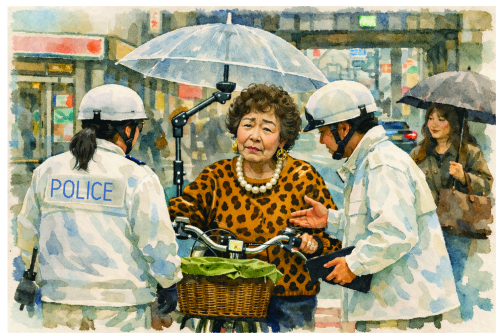
自転車(じてんしゃ)にも反則金(はんそくきん)?!新制度(しんせいど)、スタートIn April 2026, “blue tickets” were introduced for bicycle traffic violations.
2026年(ねん)4月(がつ)、自転車(じてんしゃ)の交通違反(こうつういはん)に「青切符(あおきっぷ)」が導入(どうにゅう)されました。
A blue ticket is a system that handles relatively minor violations with fines.
青切符(あおきっぷ)とは、比較的(ひかくてき)軽(かる)い違反(いはん)を反則金(はんそくきん)で処理(しょり)する制度(せいど)。
Severe violations result in “red tickets”, and proceed to criminal procedures.
重(おも)い違反(いはん)は「赤切符(あかきっぷ)」で、刑事手続(けいじてつづ)きに進(すす)みます。
And “white tickets”, although not an official system name, are used as warnings.
そして「白切符(しろきっぷ)」は、正式(せいしき)な制度名(せいどめい)ではありませんが、警告(けいこく)として使(つか)われます。
Until now, bicycles were exempt from blue tickets even for minor violations.
これまで自転車(じてんしゃ)は、軽(かる)い違反(いはん)でも青切符(あおきっぷ)の対象外(たいしょうがい)でした。
Behind this introduction is the response to ever-increasing bicycle accidents and bad manners.
今回(こんかい)の導入(どうにゅう)の背景(はいけい)には、増(ふ)え続(つづ)ける自転車事故(じてんしゃじこ)とマナー違反(いはん)への対応(たいおう)があります。
Targeted are ignoring traffic lights, failing to stop at stop signs, driving the wrong way, using a smartphone while riding, riding with an umbrella, and so on.
対象(たいしょう)となるのは、信号無視(しんごうむし)、一時不停止(いちじふていし)、逆走(ぎゃくそう)、ながらスマホ、傘差(かささ)し運転(うんてん)など。
Depending on the violation, fines of several thousand to several tens of thousands of yen are imposed.
違反(いはん)の内容(ないよう)によっては、数千円(すうせんえん)から数万円(すうまんえん)の反則金(はんそくきん)が科(か)されます。
This rule change does not end with just bicycles.
このルール変更(へんこう)は自転車(じてんしゃ)だけの話(はなし)では終(お)わりません。
Cars overtaking bicycles are also required to have sufficient distance and a safe speed.
自転車(じてんしゃ)を追(お)い越(こ)す車(くるま)にも、十分(じゅうぶん)な間隔(かんかく)と安全(あんぜん)な速度(そくど)が求(もと)められます。
If violated, there are cases where a 7,000 yen fine is imposed.
違反(いはん)すれば7,000円(えん)の反則金(はんそくきん)が科(か)される場合(ばあい)も。
Due to this, concerns have been raised that “cars won’t be able to overtake bicycles, causing traffic jams.”
それにより、「車(くるま)が自転車(じてんしゃ)を追(お)い越(こ)せず、渋滞(じゅうたい)が起(お)きるのでは」という懸念(けねん)の声(こえ)も上(あ)がっています。
Also, amid continuing high gasoline prices, some say it’s an amendment anticipating an increase in bicycle use.
また、ガソリン価格(かかく)の高騰(こうとう)が続(つづ)く中(なか)、自転車利用(じてんしゃりよう)の増加(ぞうか)を見越(みこ)した改正(かいせい)だという声(こえ)もあります。
Furthermore, even voices of dissatisfaction exclaiming “It’s a new tax!” are popping up.
さらには「新(あら)たな税金(ぜいきん)だ!」との不満(ふまん)の声(こえ)まで飛(と)び出(だ)しています。
On Japan’s narrow roads, positioned once again as official “vehicles” are bicycles.
日本(にほん)の狭(せま)い道路(どうろ)に、あらためて正式(せいしき)な「車両(しゃりょう)」として位置(いち)づけられた自転車(じてんしゃ)。
While understanding the importance of safety, various speculations and concerns are flying around.
安全(あんぜん)の大切(たいせつ)さは理解(りかい)しつつも、さまざまな憶測(おくそく)と懸念(けねん)の声(こえ)が飛(と)び交(か)っています。
This article is from the May 2026 issue of Hiragana Times.
この記事(きじ)は、月刊誌(げっかんし)『ひらがなタイムズ』2026年(ねん)5月号(がつごう)より掲載(けいさい)しています。
-
[New Expressions & Buzzwords – May 2026 Issue]
ミリ(milli)しら | Totally clueless
❓ ミリ(milli)しら
 pronounced: Mirishira
 definition: Totally clueless
It is an abbreviation of ‘not knowing even a single millimeter.’
「1ミリ(milli)も知(し)らない」を略(りゃく)した言葉(ことば)です。
Regarding specific works, characters, and such, it refers to a state of having absolutely no knowledge.
特定(とくてい)の作品(さくひん)やキャラクター(character)などについて、まったく知識(ちしき)がない状態(じょうたい)を指(さ)します。
Purposeley in a ‘Miri-shira’ state, people sometimes enjoy freely guessing the characters’ looks and personalities.
あえて“ミリ(milli)しら”の状態(じょうたい)で、キャラクター(character)の外見(がいけん)や性格(せいかく)を自由(じゆう)に予想(よそう)して楽(たの)しむこともあります。
Born purely from having no knowledge, wild ideas and off-the-mark guesses are the best part of this game.
知識(ちしき)がないからこそ生(う)まれる、突飛(とっぴ)な発想(はっそう)や的外(まとはず)れな推測(すいそく)が、この遊(あそ)びの醍醐味(だいごみ)です。
This article is from the May 2026 issue of Hiragana Times.
この記事(きじ)は、月刊誌(げっかんし)『ひらがなタイムズ』2026年(ねん)5月号(がつごう)より掲載(けいさい)しています。