
Yanagita Kunio: A Life in Dialogue with the Depths of This Land
柳田國男:この国の肚と、対話し続けた生涯
Japan Has a Culture of Hara
日本には、肚の文化がある
Nihongo Do – Voice wave – Hiragana Times August 2026 issue
Listen to the Audio:
Japan Has a Culture of Hara
日本には、肚の文化がある
In the United States, there is an organization called the CIA.
アメリカに、CIAという組織があります。
In Japanese, it is rendered as 中央情報局 — “Central Information Bureau.”
日本語では「中央情報局」と訳されます。
Because of this translation, the “I” in CIA is often thought to mean information — 情報.
この訳のせいで、CIAの”I”は、インフォメーション(情報)だと思われがちです。
But in truth, it stands for Central Intelligence Agency. The “I” is intelligence.
けれど正しくは、Central Intelligence Agency。”I”は、インテリジェンスなのです。
Information, and intelligence. How do these two differ?
インフォメーション(情報)と、インテリジェンス(知)。この二つは、どう違うのでしょうか。
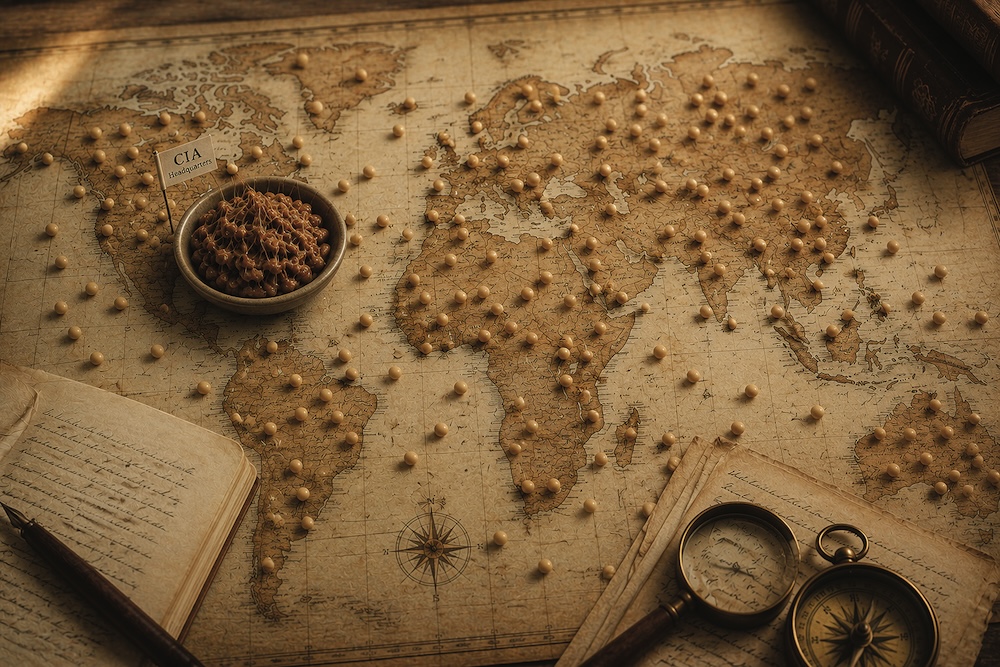
To put it in a Japanese way: if information is the soybean, mame 豆, then intelligence is nattō 納豆, fermented soybeans.
日本語の感覚で言えば、インフォメーション(情報)が「豆」なら、インテリジェンス(知)は「納豆」です。
The CIA gathers vast information — the beans — from around the world, then mixes it, lets it rest, and “ferments” it into nattō: intelligence.
CIAは、世界中から膨大な情報(豆)を集め、それを混ぜ、寝かせ、「発酵」させて、納豆(インテリジェンス)をつくります。
In this way, it produces the wisdom to protect its nation.
そうして、自国を守る知恵を、生み出しているのです。
Curiously, Japanese language has no words that clearly divide these two — information and knowing.
面白いことに、日本語には、この二つ——情報と知——を、はっきり分ける言葉がありません。
And yet, if we turn to the Japanese of old, we find a still deeper stage of knowing: tanshiki 胆識.
けれど、古来の日本人に目を向けると、そこには、それ以上に深い知の段階が見えてきます。「胆識」です。
What is tanshiki? To understand it, let us set some kindred words side by side.
胆識とは、何でしょうか。それを理解するために、似た言葉を並べてみましょう。
First, common sense — jōshiki 常識. Next, knowledge — chishiki 知識. Then, discernment — kenshiki 見識. And last, tanshiki 胆識.
まず「常識」。次に「知識」。そして「見識」。最後に「胆識」です。
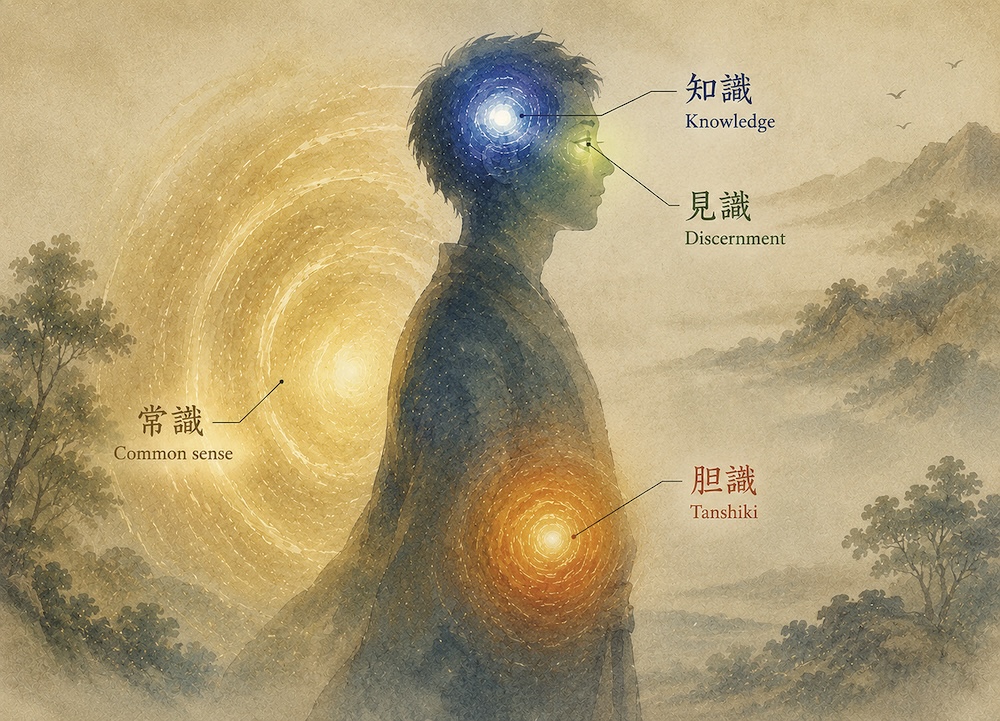
Each of these four is a knowing of a different order.
この四つは、それぞれ別の次元の、知のかたちです。
Long ago, Japanese elementary schools were called jinjō shōgakkō 尋常小学校. Jinjō 尋常 means “ordinary,” “the everyday.”
かつて、日本の小学校は「尋常小学校」と呼ばれていました。「尋常」とは、普通、あたりまえ、という意味です。
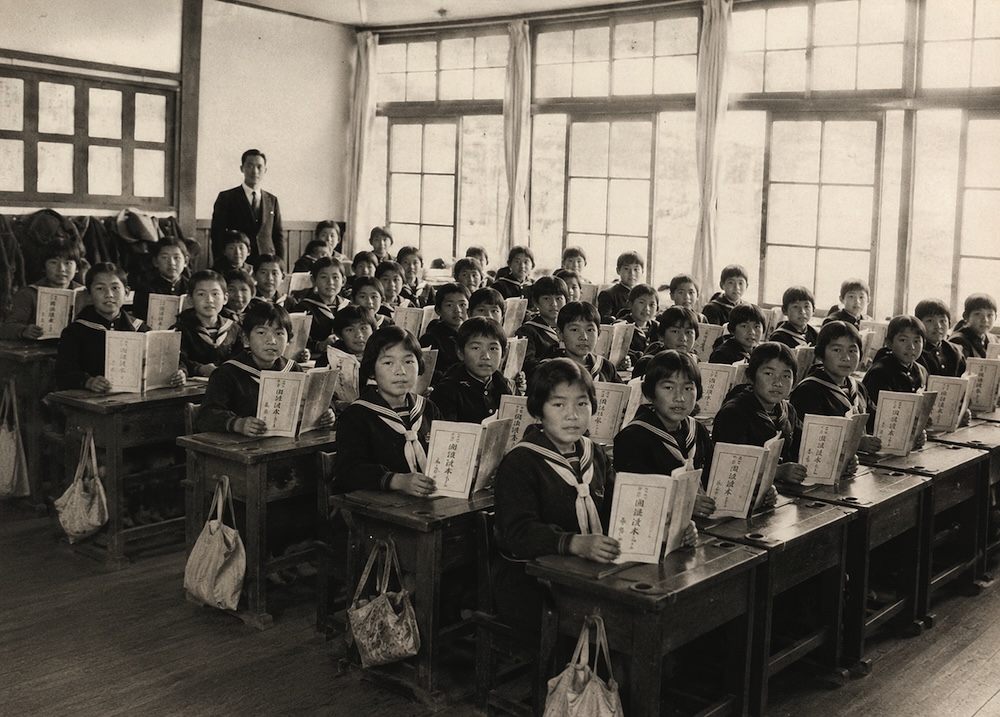
A person first learns the ordinary things — common sense. Next, they gain knowledge.
人は、まず、あたりまえのこと——常識を身につけます。次に、知識をつけます。
And from that knowledge, they cultivate a way of seeing, and come to hold discernment.
そして、その知識をもとに、ものの見方を養い、「見識」を得ていきます。
Common sense, knowledge, discernment — thus the human mind grows. But beyond it lies one more stage: tanshiki.
常識、知識、見識——こうして、人の頭脳は育っていきます。
But deeper within, there lies one more. It is tanshiki 胆識.
けれど、その奥に、もう一つのものがあります。それが「胆識」です。
The tan 胆 of tanshiki can also be read kimo — the liver, an organ that sits within the belly.
「胆」は、「きも」とも読みます。腹の中にある臓器、肝のことです。
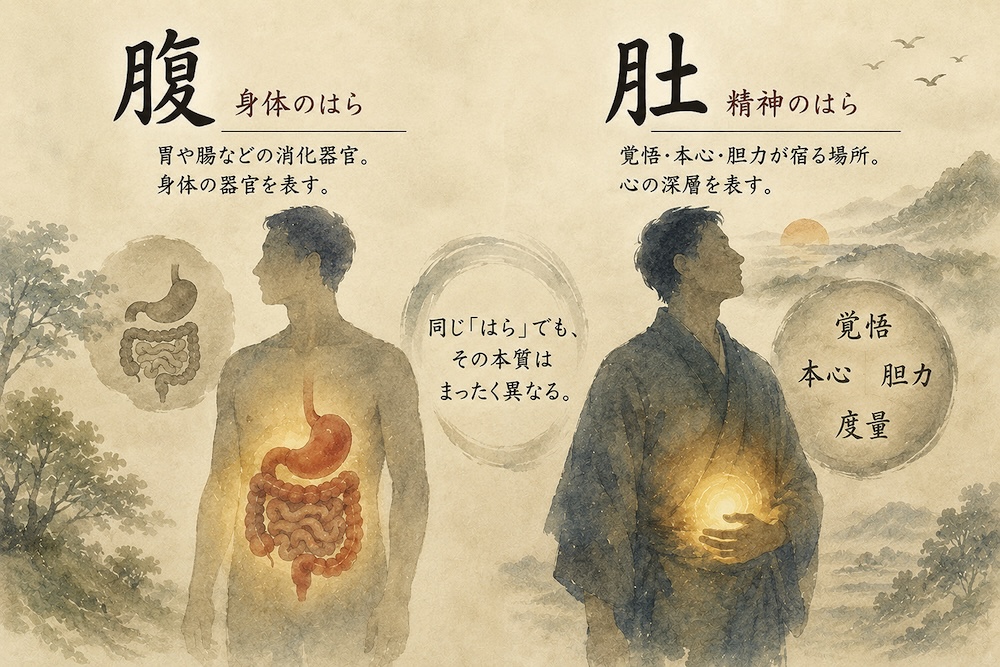
The word for belly, hara, can be written with two different characters: 腹 and 肚.
「はら」は、二つの漢字で書けます。「腹」と「肚」です。
Written 腹, it calls to mind the organs of digestion — the stomach, the intestines.
「腹」と書けば、胃や腸といった、消化の器官を思い浮かべます。
But written 肚, we sense something more of the spirit.
けれど「肚」と書くとき、私たちは、もっと精神的な何かを思うのです。
Even now, Japanese has many expressions that use the belly, 腹.
日本語には、今も、「腹」を使った言葉がたくさんあります。
Hara ga tatsu 腹が立つ — “the belly stands up” — to grow angry. Hara wo kukuru 腹を括る — “to bind up the belly” — to steel one’s resolve. Hara wo watte hanasu 腹を割って話す — “to split open the belly” — to speak from the heart.
腹が立つ。腹を括る。腹を割って話す。
These “bellies” 腹 are no mere organs.
これらの「腹」は、単なる内臓ではありません。
Anger, resolve, true feeling — the belly gives voice to the very deepest places of the human heart.
怒り、覚悟、本心——人の、心の最も深いところを、腹は表しています。
What expresses this depth of spirit most strongly of all is the character 肚, hara.
こうした精神の深みを、とりわけ強く表すのが、「肚」という字です。
Written 肚, the same hara holds within it resolve, magnanimity — the unshakable steadiness of the heart’s core.
同じ「はら」でも、「肚」と書くとき、そこには、覚悟や度量といった、心の奥の揺るぎなさが、こめられるのです。
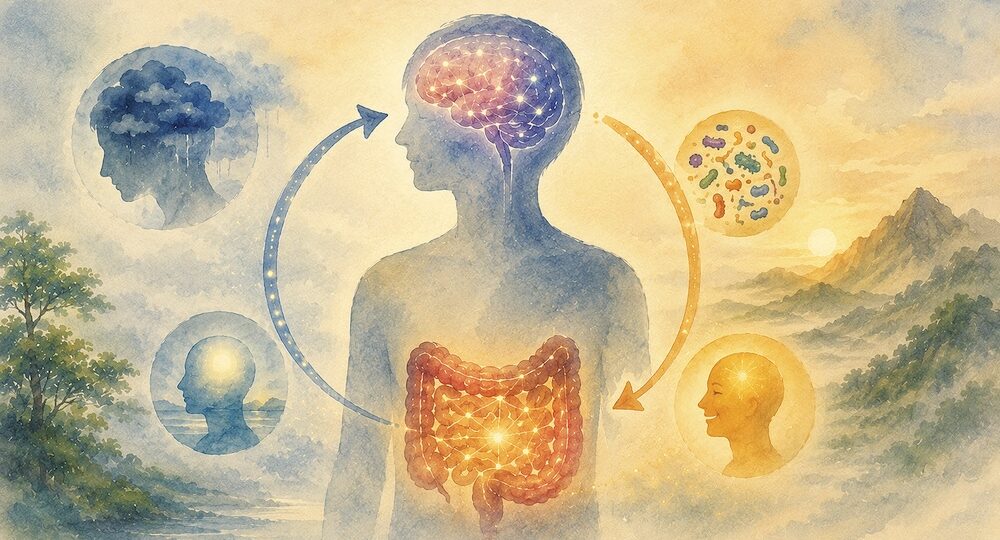
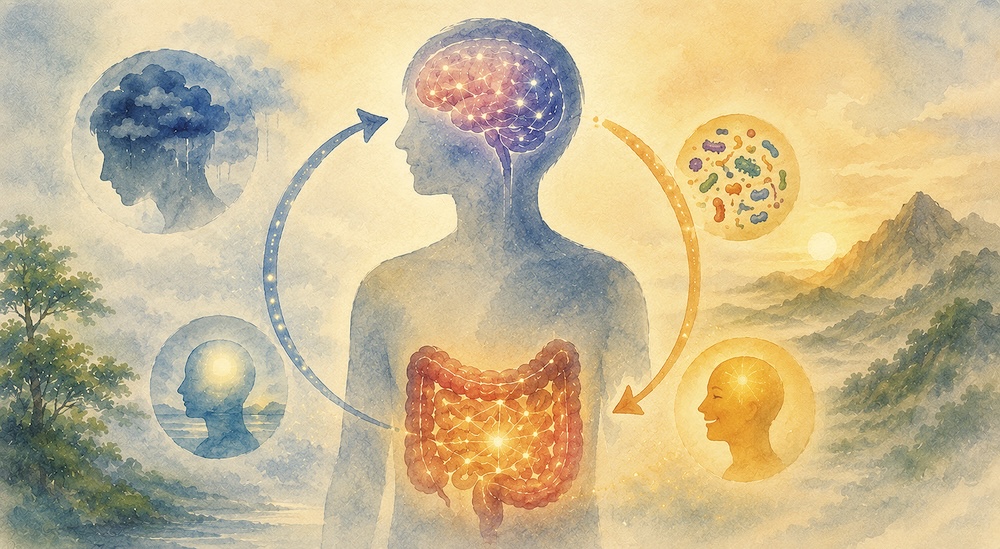
In recent years, medicine too speaks of the “gut-brain axis.”
近年、医学でも「脳腸相関」が説かれています。
The state of the brain affects the gut, and the state of the gut, in turn, affects the brain.
脳の状態が腸に影響し、腸の状態もまた、脳に影響する、というのです。
The gut possesses its own network of nerves, able to judge for itself without command from the brain — and so it is called “the second brain.”
腸は、脳の指令がなくても、自ら判断する独自の神経の網を持ち、「第二の脳」とも呼ばれます。
The Japanese of old must have sensed this.
古来の日本人は、それを感じ取っていたのでしょう。
The hara 肚 is no mere organ of the body. Within it, the spirit dwells, and the wisdom of practice sends down its roots.
肚とは、単なる身体の器官ではない。そこには、精神が宿り、実践の知が根を張っているのです。
Biology, moreover, teaches us something astonishing.
さらに、生物の進化は、驚くべきことを教えてくれます。
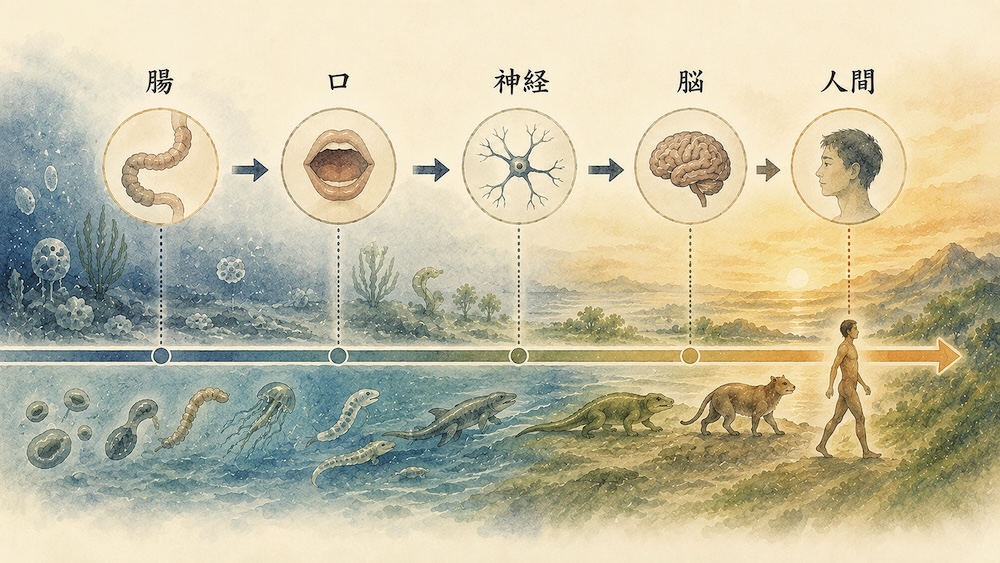
Trace the long history of life, and the very first thing to form was the gut. Then, the mouth.
生命の長い歴史をたどれば、まず生まれたのは「腸」でした。そして、口。
And everything — including us — evolved from that.
私たち人間も含めて、すべては、そこから進化してきたのです。
Far, far later, nerves came, to sense danger and food.
はるか後になって、危険や餌を感じる神経が、生まれます。
And the brain, which makes complex judgments, came long after that.
そして、複雑な判断をする「脳」が生まれたのは、それよりも、ずっと後のことでした。
In other words, as living creatures, the head — the brain — is younger than the hara — the gut.
つまり、生き物として、「頭(脳)」より「肚(腸)」の方が、古いのです。
If so, then perhaps it is not the brain that commands the gut, but rather the gut that moves the brain.
だとすれば、脳が腸に命令しているのではなく、むしろ腸が、脳を動かしているのかもしれません。
Indeed, much of serotonin — the hormone that gives us the feeling of happiness — is made in the gut.
事実、幸福を感じさせるホルモン、セロトニンの多くは、腸でつくられます。
And of the information flowing through the vagus nerve that joins gut and brain, some ninety percent, it is said, travels from the gut to the brain.
脳と腸をつなぐ迷走神経を流れる情報のおよそ九割は、腸から脳へと向かうといいます。
The one giving the commands may not be the head, but the hara.
命令しているのは、頭ではなく、肚の方なのかもしれません。
Within that hara live countless gut bacteria — their number said to be tens, even hundreds, of trillions.
その肚には、無数の腸内細菌が棲んでおり、その数は、数十兆から、数百兆とも言われています。
The cells that make up our own bodies number some thirty-seven trillion.
私たちの体をつくる細胞は、およそ三十七兆です。
Which means that we harbor, within the hara, more living things than the very cells that make us.
つまり私たちは、自分自身の細胞よりも多くの生命を、肚に棲まわせていることになります。
If these gut bacteria hold within them the memory of primordial life, then they are elders far older than the thing we call “myself.”
この腸内細菌こそが、原始の生命の記憶をとどめている——そう考えると、彼らは、私たちが「自分」と思っているものより、はるかに古い「先輩」です。
Then it is the gut bacteria that keep us alive — that we exist for their sake — one could even say as much.
とすれば、腸内細菌が、私たちを生かしている——私たちは、彼らのために存在している——そう言うことさえ、できるのです。
And so, perhaps, we would do well to live as our gut bacteria would have us live. What they favor, it is said, is dietary fiber.
ならば私たちは、腸内細菌の望むように、生きるのがよいのかもしれません。彼らが好むのは、食物繊維だといいます。
The Japanese of old ate it in abundance. And so their guts were lively — which is to say, they had the strength of hara.
古来の日本人は、それを豊かに食べていました。だから、腸が活発で——つまり、「肚」の力があったのです。
But it is not food alone that nourishes the hara. In the Japan of old, education, too, raised the hara.
けれど、肚を養うのは、食だけではありません。かつての日本では、教育もまた、肚を育てるものでした。
Today’s education centers on memorization.
現代の教育は、暗記が中心です。
Edo-period education also had its anshō 暗誦 — recitation.
江戸時代の教育にも、「暗誦」がありました。
At a glance, it looks the same. But its purpose was wholly different.
一見、同じに見えます。けれど、その目的は、まるで違います。
If today’s memorization is for the sake of examinations, the recitation of the Edo period was for taking into the body words that nourish the soul — the Analects, the Rongo 論語, or the old poems, the waka 和歌.
現代の暗記が、受験のためなら、江戸の暗誦は、論語や和歌のような、魂に栄養を与える言葉を、体に取り込むためのものでした。
The memorization for exams vanishes once the test is over.
受験の暗記は、試験が終われば消えてしまいます。
But the recitation of the Edo period was making the human being itself.
けれど、江戸の暗誦は、人間そのものをつくっていたのです。
People today hunger for knowledge.
現代人は、知識を欲しがります。
“Which book should I read?” “Where can I find that information?” — people today are quick to demand the answer.
「どの本を読めばいいか」「どこに情報があるか」——すぐに答えを求めてきます。
Of course, the knowledge our forebears left us is a precious crystallization of their experience.
もちろん、先人が残した知識は、ありがたい経験の結晶です。
But the searching-out of such knowledge is something AI will, from now on, do in our stead.
けれど、そうした知識を探すことは、これからは、AIが代わりにしてくれます。
The work of the head, we may leave to AI. Then what is left to us, as human beings?
頭の仕事は、AIに任せればよい。ならば、人間に残されるものは、何でしょうか。
It is the strength of the hara — a strength we temper through the many experiences of a life.
それは、肚の力です。——その力を、人生のさまざまな経験のなかで、鍛えていくのです。
By the strength of the hara, discernment — kenshiki 見識 — widens of itself, and the small, particular knowledge is no longer needed. What gathers in the hara is tanshiki 胆識.
肚の力によって、見識は、おのずと広がり、細かな知識は、もう要らなくなる。その肚に蓄積されるのが、「胆識」です。
Edo — the city that would become Tokyo — Japan’s revolution was accomplished without its common people shedding a single drop of blood. In the history of the world, this is a rare thing indeed.
のちに東京となった江戸——日本の革命では、庶民が一滴の血も流さずに成立しました。世界の歴史において、これは、まことに稀なことです。
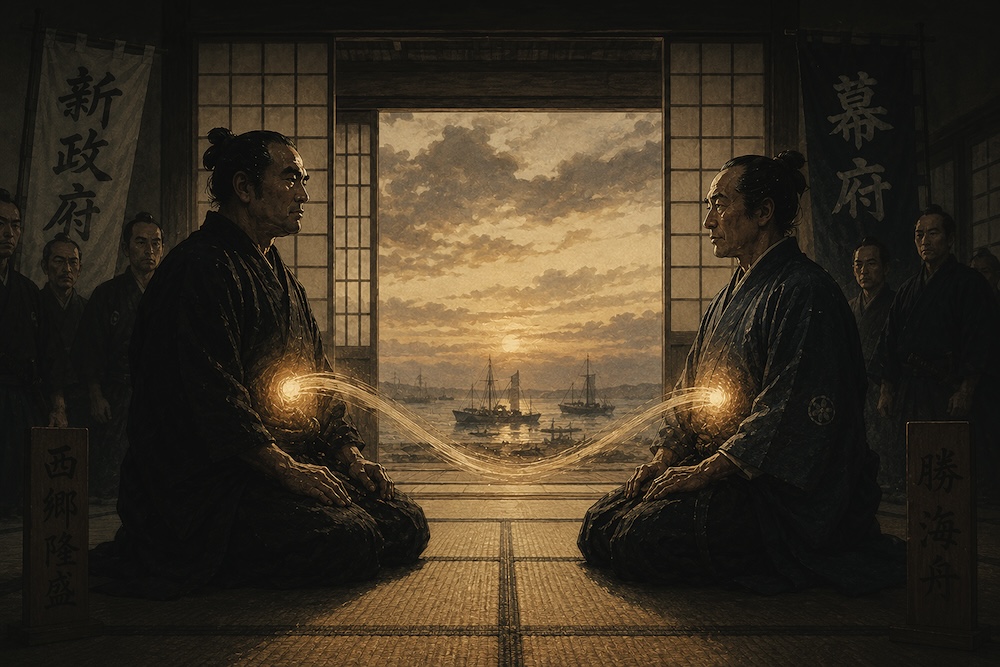
Its climax was decided by the hara-to-hara dialogue of two men: Saigō Takamori, of the new government driving the revolution, and Katsu Kaishū, of the falling shogunate — enemies who, by all rights, could never have met.
その山場を決めたのは、二人の人物の、肚と肚の対話でした。革命を進める新政府軍の西郷隆盛と、倒されゆく幕府の勝海舟——本来なら、相容れぬ敵どうしです。
The two men did not exhaust themselves in words — they simply read each other’s hara, and grasped each other’s truth. And each took the whole weight of the decision upon himself. This was the strength of the hara in both of them.
二人は、言葉を尽くすでもなく——ただ、たがいの肚を読み、その真を掴んだのです。そして、決断のすべての重みを、互いに引き受ける。これが、両者の肚の力です。
The people of old knew it: the very core of a human being lies not in the head, nor in the heart, but in the hara.
昔の人たちは、知っていました。人間のすべての肝は、頭にあるのでも、心にあるのでもない。「肚」に在る、と。
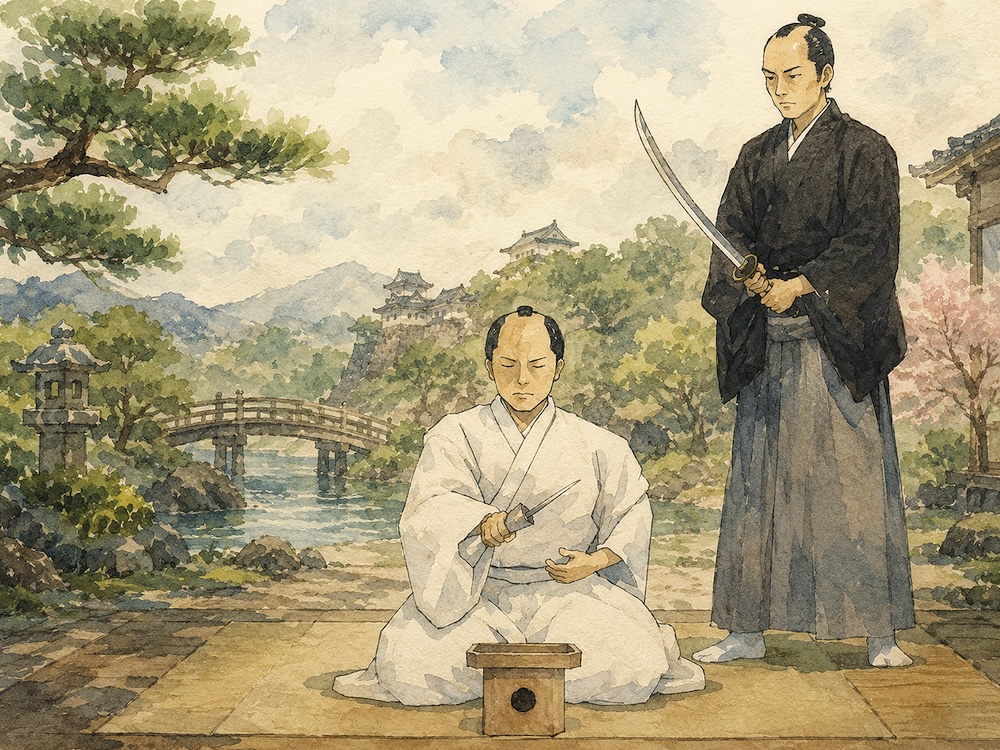
And this is why the samurai, when they took responsibility, cut open neither the heart nor the throat — but the belly. The hara 肚.
だからこそ、侍は、責任を取るとき、心臓でもなく、頸動脈でもなく——「肚」を、切ったのです。
Information From Hiragana Times


Topics in Japan
-
![Japan Has a Culture of Hara <br src=]() 日本には、肚の文化がある" />
Japan Has a Culture of Hara
日本には、肚の文化がある" />
Japan Has a Culture of Hara
日本には、肚の文化がある -
![Yanagita Kunio: A Life in Dialogue with the Depths of This Land <br src=]() 柳田國男:この国の肚と、対話し続けた生涯" />
Yanagita Kunio: A Life in Dialogue with the Depths of This Land
柳田國男:この国の肚と、対話し続けた生涯" />
Yanagita Kunio: A Life in Dialogue with the Depths of This Land
柳田國男:この国の肚と、対話し続けた生涯 -
![Japan: A Nation Built by Matsuri <br src=]() 「まつり」で作られた国家、日本" />
Japan: A Nation Built by Matsuri
「まつり」で作られた国家、日本" />
Japan: A Nation Built by Matsuri
「まつり」で作られた国家、日本 -
![Obon — A Summer Spent with Our Ancestors <br src=]() お盆 ― 先祖と過ごす夏のひととき" />
Obon — A Summer Spent with Our Ancestors
お盆 ― 先祖と過ごす夏のひととき" />
Obon — A Summer Spent with Our Ancestors
お盆 ― 先祖と過ごす夏のひととき -
![After the Festival — Already Too Late <br src=]() 後の祭り" />
After the Festival — Already Too Late
後の祭り" />
After the Festival — Already Too Late
後の祭り
 日本には、肚の文化がある" />
 柳田國男:この国の肚と、対話し続けた生涯" />
 「まつり」で作られた国家、日本" />
 お盆 ― 先祖と過ごす夏のひととき" />
 後の祭り" />

