
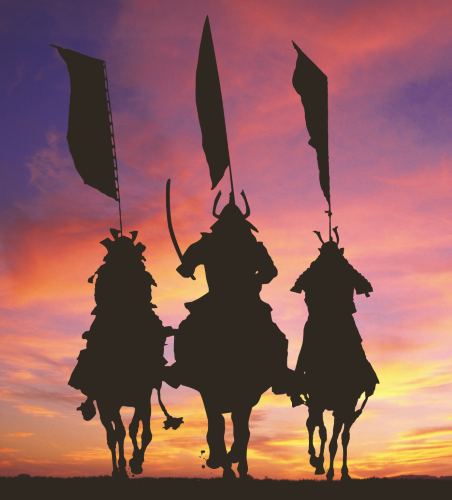
What Are Bushi and Samurai?
武士・侍とは何者か?
[Japan Savvy– April 2026 Issue]
What Are Bushi and Samurai?
武士・侍とは何者か?
Around the world, there have been many kinds of “fighters,” such as soldiers, knights, and guards.
世界には、兵士や騎士団、警備隊など、さまざまな「戦う者」たちが存在しました。
Yet the word “bushi” in Japan carries a somehow unique resonance.
しかし、日本の「武士」という言葉には、どこか特別な響きがあります。
‘Bushi’ consists of ‘bu’ of weapon and ‘shi’ representing an adult male, but it is not a mere combat group.
「武士」は、武器の「武」と成人男性を表す「士」から成りますが、単なる戦闘集団ではありません。
They were entities that supported the order of politics and rituals centered on the Emperor by military force.
彼らは天皇を中心とする政治と祭祀の秩序を、武力によって支える存在でした。
Eventually, by ‘saburau’ (serving) nobles and the imperial family, it comes to overlap with the appellation called ‘Samurai’.
やがて貴族や皇族に「さぶらう(仕える)」ことで、「侍」という呼称と重なっていきます。
In ‘Hagakure’, which recorded the teachings of Bushi, there is a famous passage that says, “Bushidō is to find death.”
武士の心得を記した『葉隠』には、「武士道と云うは死ぬことと見つけたり。」という有名な一節があります。
It is not a simple teaching that tells one to throw away one’s life for one’s lord.
それは主君のために命を投げ出せ、という単純な教えではありません。
When one discards the mind that clings only to protecting oneself, a way out opens up for the first time.
自分を守ることばかりに執着する心を捨てたとき、はじめて活路が開ける。
What lies there is the resolve to let go of egocentrism and self-protection.
そこにあるのは、自己中心や自己保身を手放す覚悟にあります。
“Only by casting oneself aside can one remain afloat.”The core of Bushido lies there.
「身を捨ててこそ浮かぶ瀬もあれ。」そこに武士道の核心があります。
‘Bushi’ and ‘Samurai’ are not the name of a social status, but the way of life itself of living with resolve.
「武士」や「侍」とは、身分の名ではなく、覚悟をもって生きる生き方そのものです。
Become a Samurai Savvy 侍通になる
WARM UP | Samurai JapaNEEDS
◎ USEFUL WORDS 役立つ言葉
- 武士 bushi — warrior
- 侍 samurai — samurai
- 刀 katana — sword
- 武士道 bushidou — the code of the samurai
- 覚悟 kakugo — resolve / preparedness
- 仕える tsukaeru — to serve
- 執着 shuuchaku — attachment / clinging
- 活路 katsuro — way forward
- 刃傷沙汰 ninjou zata — sword incident
- 抜く nuku — to draw (a sword)
- 責任 sekinin — responsibility
- 恥 haji — shame / disgrace
- 真剣 shinken — real sword / serious
◎ Ice Breaker Question 会話のきっかけ
Have you seen any samurai characters in movies or anime?
映画やアニメで見たことのある侍のキャラクターはいますか?
When you hear the word “samurai,” what image comes to mind first?
「侍」と聞いて、まずどんなイメージが浮かびますか?
What does a “strong person” mean to you?
あなたにとって「強い人」とはどんな人ですか?
Does your country have historical warriors similar to the samurai?
あなたの国にも、侍のような歴史的な戦士はいますか?
Do you think the “spirit of the samurai” still exists in modern society?
現代社会に「侍の精神」は残っていると思いますか?
WORK UP | Samurai Discussion
DISCUSSION ディスカッション
Michael: Japanese swords are beautiful, and though they are weapons, they are also treated as works of art.
マイケル:日本刀は美しく、武器でありながら美術品としても扱われていますね。
Emily: I’ve heard that this culture of polishing weapons into beauty comes from the fact that the sword was also something turned toward oneself.
エミリー:武器を美しく磨き上げる文化は、日本刀が自分に向けるものでもあったからだと聞きました。
Mayumi: Yes. A samurai was expected to have the resolve to end his own life rather than live in disgrace.
まゆみ:はい。武士は、恥をさらして生きるくらいなら、自ら命を絶つ覚悟を求められました。
Emily: If it were only a tool to harm others, a rougher blade might actually be more effective.
エミリー:他人を傷つけるだけの道具なら、むしろ荒々しい方が効果的ですよね。
Mayumi: In fact, before battle, the edge was sometimes deliberately roughened to increase its killing power.
まゆみ:実際、戦の前には刃を荒らし、殺傷力を高めることもあったといいます。
Michael: Samurai always carried their swords, yet during the 260 years of the Edo period, violent incidents were said to be extremely rare.
マイケル:武士は常に刀を差して歩いていましたが、江戸時代の260年間、刃傷沙汰はほとんど起きなかったと聞きました。
Mayumi: That is because the moment a sword was drawn, responsibility arose.
まゆみ:刀は、抜いた瞬間に責任が生じるものだったからです。
Pierre: Once drawn, one had to accept either cutting down the opponent or losing one’s own life.
ピエール:抜けば、相手を斬るか、自分が死ぬか——どちらかを引き受けなければならない。
Emily: So whether you drew it or not, your life was always at stake.
エミリー:抜いても、抜かなくても、命がけということですね。
Min: In other words, they lived with a “true sword”—truly in earnest.
ミン:まさに「真剣」に生きていたということですね。
WRAP UP | Samurai Knowledge
NEW KNOWLEDGE 新しい知識
The bushi were also called mononofu. This is an ancient Yamato word meaning “warrior” or “man of arms,” and it is often associated with the Mononobe clan, an early military lineage.
武士は「もののふ」とも呼ばれます。これは「武士」「武人」を表す大和言葉で、古代の軍事氏族・物部氏との関連が指摘されています。
The “mono” in Mononobe is said to refer to weapons, and some theories connect it to mononoke—spiritual or supernatural beings. In ancient times (from the Yayoi to the Nara period), military power and ritual practices were closely intertwined.
物部氏の「物」は武器を意味するとされ、モノノケ(霊的存在)と通じるという説もあります。古代(弥生〜奈良時代)には、軍事と祭祀は密接に結びついていました。
The bushi developed distinctive forms of speech, and their spirit still lives on in modern Japanese. Words such as menbokunai (ashamed), fukaku (carelessness or failure), and kakugo (resolve) reflect values rooted in samurai society
武士は独特の言葉遣いを持ち、その精神は現代日本語にも残っています。「面目ない」「不覚」「覚悟」などは、武士社会の価値観を背景に持つ言葉です。
The proverb “A samurai does not speak twice” expresses the importance of keeping one’s word and upholding one’s honor.
「武士に二言はない」ということわざは、約束を守る信義の精神を表しています。
The hairstyle known as sakayaki, in which the top of the head was shaved, developed to prevent overheating when wearing a helmet.
月代(さかやき)と呼ばれる頭頂部を剃る髪型は、兜をかぶった際に蒸れを防ぐために生まれました。
In 1871, the Edict on Hair and Sword Abolition made hairstyles and the wearing of swords optional, advancing Japan’s modernization.
1871年の散髪脱刀令により髪型や帯刀は自由となり、近代化が進められました。
Furthermore, in 1876, the Haitōrei (Sword Abolishment Edict) prohibited the carrying of swords, which had been regarded as “the soul of the samurai.”
さらに1876年の廃刀令によって「武士の魂」だった刀の携帯は禁止されました。
Even today, Japan’s national teams in baseball and soccer are often referred to as “Samurai Japan,” and the word “samurai” continues to symbolize Japan.
現代でも、野球やサッカーの日本代表は「侍ジャパン」と呼ばれるなど、「侍」は日本を象徴する言葉として使われ続けています。
This article is from the April 2026 issue of Hiragana Times.
この記事は、月刊誌『ひらがなタイムズ』2026年4月号より掲載しています。
「おんな」はやっかい‘Only by throwing oneself away, is there also a shallow to float.’
今月の言技:「身を捨ててこそ浮かぶ瀬もあれ」


Information From Hiragana Times


Topics in Japan
-
![Nobody Tells You <br src=]() でも、伝わってくる" />
Nobody Tells You
でも、伝わってくる" />
Nobody Tells You
でも、伝わってくる -
![People Who Can’t Help Making Things <br src=]() 作らずにいられない人々" />
People Who Can’t Help Making Things
作らずにいられない人々" />
People Who Can’t Help Making Things
作らずにいられない人々 -
![Shogi: The Culture That Turned Enemies into Treasure <br src=]() 将棋 — 敵を宝に変えた文化" />
Shogi: The Culture That Turned Enemies into Treasure
将棋 — 敵を宝に変えた文化" />
Shogi: The Culture That Turned Enemies into Treasure
将棋 — 敵を宝に変えた文化 -
![The Story of “Wa” (倭 and 和) and “Yamato” (大和) <br src=]() 「倭」と「和」と「大和」の物語" />
The Story of “Wa” (倭 and 和) and “Yamato” (大和)
「倭」と「和」と「大和」の物語" />
The Story of “Wa” (倭 and 和) and “Yamato” (大和)
「倭」と「和」と「大和」の物語 -
![The United Nations That Runs on “Victors’ Justice” <br src=]() 「勝者の正義」で動く国連" />
The United Nations That Runs on “Victors’ Justice”
「勝者の正義」で動く国連" />
The United Nations That Runs on “Victors’ Justice”
「勝者の正義」で動く国連
 でも、伝わってくる" />
 作らずにいられない人々" />
 将棋 — 敵を宝に変えた文化" />
 「倭」と「和」と「大和」の物語" />
 「勝者の正義」で動く国連" />

