-
[From August Issue 2013]
Nausicaä of the Valley of the Wind
This is a work by MIYAZAKI Hayao, the world renowned director of animated films. It was serialized in the anime magazine “Animage” from 1982 to 1994. In 1984, an animated movie of the same title, directed by the author himself, was released, receiving rave reviews. The story is set on the Eurasian Continent in the distant future; since the “Seven Days of Fire” war, industrially developed civilization has collapsed.
The main character, Nausicaä, is named after a princess from the island of Scheria who appears in Greek myths. Nausicaä is also modeled on the Japanese folk heroine, Mushi Mezuru Himegimi (the Princess Who Loved Insects), who appears in a short story collection written during the Heian period (8th to 12th centuries) called “Tsutsumi Chunagon Monogatari.” Both the Greek princess and Mushi Mezuru Himegimi are described as being young women who delight in living in harmony with flowers, birds and insects. Just like the princesses, Nausicaä also has a deep love of nature.
Nausicaä particularly loves insects (gigantic creatures that live in the Sea of Decay) called Ohmu and she can read their inner thoughts. She occasionally visits the Toxic Jungle; a dead forest also named the Sea of Decay, home not only to the Ohmu but to a wide variety of giant mutated insects. The inhabitants of the Valley of the Wind do not approve of Nausicaä’s visits to the Toxic Jungle. This is because it’s a wasteland, contaminated with pollution from previous civilizations and covered with fungi that release poisonous spores.
In the forest, without the use of protective masks, human lungs are destroyed within five minutes. However, the forest is gradually spreading and is about to engulf the world inhabited by humans. Living close to the Sea of Decay, the population of the Valley of the Wind is dwindling year by year because of the toxins released by the forest. The human race is fated to gradually die out, but the discovery of the God Warrior, a biological weapon that scorched the world during the “Seven Days of Fire,” changes things.
The kingdom of Tolmekia has acquired the God Warrior and starts a war by invading the Doruku kingdom. As the tribal leader of the Valley of the Wind, Nausicaä joins the Tolmekian forces. To lead her kingdom to victory, the Tolmekian Princess Kushana plans to reactivate the God Warrior. At first, not wanting to annihilate life, whether it be that of friend of foe, Nausicaä stands up to Kushana.
Although a bond grows between the two during intense fighting, eventually they cannot help but go their separate ways. To reactivate the God Warrior, Kushana teams up with the king of the Dorok Empire. But the awakened God Warrior dearly loves Nausicaä and calls her mother. In order to put the God Warrior back to sleep and discover the destiny of the polluted world, Nausicaä heads for the Crypt of Shuwa which holds the secret key to the world.
Nausicaä discovers the cruel truth that “the Sea of Decay is not the cause of the pollution, but exists is to cleanse the world of toxic substances scattered during the Seven Days of Fire. Because humans have adapted to the toxins in the Sea of Decay, they mustn’t continue to live after the world is purified.” When the story concludes, this film leaves us wondering whether the decision Nausicaä makes after this was correct, or whether she has made a mistake. This work makes you ponder what you would have done in her shoes.
Text: HATTA Emiko
[2013年8月号掲載記事]
風の谷のナウシカ
世界的に評価されているアニメ監督、宮崎駿の作品です。アニメ情報誌「アニメージュ」で1982~1994年に掲載されました。1984年には作者自身が監督した同タイトルのアニメ映画が公開され、高い評価を得ました。物語の舞台は遠い未来のユーラシア大陸、発達した産業文明が衰えてしまい「火の七日間」と呼ばれる戦争で崩壊した後の時代です。
主人公ナウシカの名前は、ギリシア神話に登場するスケリア島の王女からきています。平安時代(8~12世紀)の短編物語集「堤中納言物語」に登場する虫愛づる姫君もモデルになっています。王女も、虫愛づる姫君も、花や鳥や虫のような自然と共に生きることを喜ぶ少女として描かれています。ナウシカも少女たちと同じく自然への深い愛を持っています。
ナウシカは王蟲という蟲(腐海に生息する巨大な生物)を特に愛し、彼らの心の声を聞くことができます。そして王蟲の住む死の森、腐海をたびたび訪れます。腐海は王蟲をはじめとする巨大に進化した蟲たちが暮らしているところです。ナウシカが腐海へ行くことを、風の谷の人々はよく思っていません。滅亡した過去の文明に汚染され、有毒ガスを発する菌類に覆われた不毛の大地だからです。
森の中では、人間は防護用マスクなしでは5分で肺が腐ってしまいます。しかし森は徐々に広がり、人間の住む世界をのみこもうとしています。腐海の近くに住む風の谷の住民は、森の毒により年々人口が減っています。ゆっくりと滅んでいくはずだった日々は、巨神兵という「火の七日間」で世界を焼きつくした生物兵器が発見されたことで変わります。
巨神兵を手に入れたトルメキア王国が、土鬼諸候国に攻め込んで戦争が始まります。ナウシカは風の谷の族長としてトルメキア軍に参加。トルメキアの王女クシャナは、自国を勝利に導くため、圧倒的な兵器である巨神兵を再び動かそうとします。敵味方に関わらず、命が失われることを望まないナウシカと、最初は対立します。
やがてはげしさを増す戦いの中で絆が生まれるものの、2人は別々の道を歩まざるを得なくなります。クシャナは土鬼の王と組んで巨神兵を復活させてしまうのです。しかし目覚めた巨神兵はナウシカを母と呼んで慕います。巨神兵を眠らせるため、そして汚染された世界の行き着く先を見定めるため、ナウシカは世界の秘密の鍵を握るシュワの墓所へと向かいます。
ナウシカが知るのは「腐海は汚染の原因ではなく、火の七日間でまき散らされた有害物質を浄化するための存在である。今の人間は腐海の毒に適応しているため、浄化された後の世界では生きていけない」という残酷な真実でした。その後、物語の結末でナウシカが選んだ道を、間違いだと言いきれるのか、自分だったらどうするか、という問いかけを心に残す作品です。
文:服田恵美子
-
[From July Issue 2013]
KidZania is a “city in which the children are the stars” where they can challenge themselves to try any job they fancy. Everything in the building is two-thirds of its normal size in order to suit children’s field of vision and height. Faithful replicas of familiar institutions, including a department store, hospital and police station, line the city streets. Children can try out more than 90 professions and receive services as customers themselves.
There are 13 KidZania located in ten countries around the world. The first facility opened in Mexico. All their facilities incorporate jobs typical of the local culture. For example, Japan had the first “door to door delivery” pavilion. Mexico has “shoe shining” and “archeological dig” pavilions and Indonesia has a “tea factory” pavilion.
“At KidZania Tokyo, some children choose familiar workplaces, such as the bakery or pizza shop, while others go for professions that are easily identifiable by their uniforms, like pilot or fire fighter.” UEDA Hiromi of the PR and Marketing Department says. “Besides occupations such as fashion model or beautician, many girls opt for dynamic jobs at the construction zone or gas station.”
Recently, there’s been a buzz about companies that offer work experience not just to children, but also to adults. Launched in 2011, Shigoto-Ryokousha Co., Ltd, embraces the philosophy of “experiencing a variety of occupations as a traveller.” As part of a day tour, the company offers work experience for a range of some 60 occupations including fisherman, plasterer, waiting staff at an inn and bartender.

Experiences by Shigoto-Ryokousha
The cost is between 8,000 and 20,000 yen and tours run from half a day to two days, depending on the profession. Forty percent of the participants are male and 60% female. The largest age groups are in their late 20s to 30s. All kinds of people take part: casual workers, small business owners and those in full time employment.
The reasons people have for participating varies greatly from simple curiosity, to a desire to find a suitable career for themselves, to those who want to learn more about a certain industry because they are contemplating a change of career.
TANAKA Tsubasa, the company’s representative, says, “These days being a florist, Japanese language teacher or director of traditional crafts is popular. Florist has always been a popular profession with women and many take part in the Japanese language teacher program because they think it’s an easy career switch. As for the director of traditional crafts, some participate because they are interested in crafts, but most have no ambition to become an artisan; they prefer to be involved with traditional crafts for other reasons, one of which is to see which craft is most popular with the majority of people and another is to find out what kind of traditional craft would have suited them as a trade.
For the future, Tanaka is planning to expand into offering work experience in real businesses and into offering work experience packages for groups. Though their numbers are few, there are also foreign participants who enjoy typical Japanese professions, such as being a director of traditional Japanese crafts or being a sushi chef.
KidZania Tokyo
Shigoto-ryokou Co., Ltd.Text: TSUCHIYA Emi
[2013年7月号掲載記事]
キッザニアは、子どもたちが好きな仕事にチャレンジできる「こどもが主役の街」です。館内は子どもの目線や体格に合わせた3分の2サイズで、その中にデパートや病院、警察署など、ふだんの生活でなじみ深い場所や街並みを忠実に再現。90種類以上の仕事を体験したり、お客としてサービスを受けたりすることができます。
キッザニアは、世界10ヵ国13ヵ所にあります。メキシコで始まった施設ですが、それぞれその国の文化に根付いた仕事を取り入れています。例えば、「宅配センター」というパビリオンを最初にはじめたのは日本です。メキシコでは「靴みがき」や「遺跡発掘」、インドネシアでは「紅茶工場」があります。
「キッザニア東京では、身近にあるベーカリーやピザショップを選ぶ子もいますし、ユニフォームから仕事内容がイメージしやすいパイロットや消防士を選ぶ子もいます。ファッションモデルやビューティーサロンのような仕事だけでなく、建設現場やガソリンスタンドなど体を動かす仕事を選ぶ女の子もたくさんいます」と、広報マーケティング部の上田ひろみさんは話します。
最近では子どもだけでなく、大人も職業体験ができるというサービスが注目されています。2011年にサービスを開始した仕事旅行社は、「旅行する感覚でいろんな職業を体験してもらう」をコンセプトに、漁師、左官職人、旅館の仲居、バーテンダーなど、約60種類の職業を一日体験できるツアーを用意しています。
費用は8千~2万円で、半日のものから二日かけて体験するものまでさまざまです。参加者は男性が約4割、女性が約6割、一番多い年齢層は20代後半から30代です。フリーター、自営業、サラリーマンまで、いろいろな立場の人が参加しています。
おもしろそうだからという好奇心から参加する人、自分に向いた職業を見つけたくて参加する人、転職を考えていて業界の状況を知りたくて参加する人など、参加の理由もさまざまです。
代表の田中翼さんは話します。「最近では花屋、日本語教師、伝統技術ディレクターなどが人気です。花屋は昔から女性に人気の高い仕事ですし、日本語教師は今からでもなれるのでは?という期待感から参加する人が多いです。また、伝統技術ディレクターは伝統工芸への興味から参加する人もいますが、工芸職人を目指すのではなく、どのような工芸ならたくさんの人に受け入れられるか、商売になりそうな伝統工芸はどんなものかなど、違った形で伝統技術に関わりたいという人が多いです」。
今後は、企業でできる職業体験や、団体で参加できる職業体験を増やしたいと田中さんは考えています。数は少ないですが、外国人の参加もあり、伝統技術ディレクター、寿司職人などの日本ならではの職業体験が人気です。
文:土屋えみ
-
[From July Issue 2013]
The Hokuriku region is located on the island of Honshu, facing the Sea of Japan; there they have an old saying: “You can forget your lunch, but never forget your umbrella.” In Hokuriku the weather is changeable and it is not unusual for it to suddenly start raining when up until that moment the weather had been fine. That is why it is important to always keep an umbrella handy when travelling in the Hokuriku region.
For this reason, Fukui Prefecture in Hokuriku was home to many companies that manufactured umbrellas. Parts such as the frame, cloth and handle are separately manufactured by different companies and then assembled to make a complete umbrella. Fukui Yougasa Inc. is a major umbrella manufacturer in Fukui; the finished product is made by gathering together all the components, inspecting, cutting and sewing the cloth, assembling the parts, putting on the finishing touches and completing a final inspection.
However, because of a steady influx of cheaper umbrellas from foreign companies, the number of local companies gradually fell, and now Fukui Yougasa is the only company remaining in the region. The president, HASHIMOTO Hajime says, “If we cease to exist, the umbrella industry will disappear from Fukui Prefecture, so I decided to create an umbrella users want.” So, Hashimoto developed two products: “umbrellas that don’t get wet” and “difficult to lose umbrellas.”
The umbrella that doesn’t get wet is made so that it stays dry when it’s folded up and when it touches the body. Therefore, to make the cloth that covers the umbrella frame, a special material called “super high-density polyester thread weaved by a special method” was jointly developed with a local textile company. Just like big lotus leaf, this material repels rainwater.
Therefore, even when raindrops fall on the umbrella, with just one shake, moisture flies off and the umbrella returns to its original dry state in a matter of seconds. This umbrella was named the “Nurenza,” a play on the word “nurenai” which means “doesn’t get wet.” At 30,450 yen, the Nurenza is quite expensive for an umbrella. However, they are so popular that, after an order is placed, it takes about two to three months for the umbrella to arrive.
“Difficult to lose umbrellas” alludes to the fact that umbrellas are often forgotten on street corners and in trains. Hashimoto thought, “The reason why umbrellas are forgotten is because of a problem with the way the handle is shaped.” So rather than having a handle made to be gripped, he designed a cowhide belt loop that would fit snugly into the hand. Its advantage is that the handle can be hung from the arm.
Not only does this handle make it harder to lose, but also it is easier for people who are physically challenged – the elderly and people with a weaker grip – to use. It is a sort of universal design. Hashimoto, who hopes that umbrellas with this kind of handle will become popular, says, “Any product that makes it easier for those who have physical difficulties to use, is sure to catch on.” Of course, this handle can also be used with the Nurenza.
Text: ITO Koichi
[2013年7月号掲載記事]
本州の日本海側に面している北陸地方には昔から「お弁当は忘れても、かさを忘れてはいけない」という言い伝えがあります。北陸地方は天気が変わりやすく、いままで晴れていたと思ったら、急に雨が降り出すことが珍しくありません。ですから、北陸地方を旅するときには、いつでもかさの準備をしておくことが大切だという意味です。
このような理由で、北陸地方の福井県にはかつて、かさを作る会社がたくさん集まっていました。かさは骨組みや布地、持ち手など、別々の会社で作られた部品が組み合わされることで完成します。福井の代表的なメーカーである株式会社福井洋傘では、それらの部品を集めて、布地の検査、切断、縫製、組立、仕上げ、最終検査などを行い、製品化しています。
ところが、海外から安いかさがどんどん入ってくるようになったため、地元の会社は次第に減り、福井洋傘だけになりました。社長の橋本肇さんは「うちがなくなれば福井県からかさの産業が消えてしまうので、使う人が求めているかさを作ろうと考えました」と話します。そのなかで、橋本さんは2つの商品を開発しました。「ぬれないかさ」と「忘れにくいかさ」です。
ぬれないかさは、たたんだときや体にふれたときに、決してぬれないことを目指したものです。このため、かさの材料の大部分を占める布地には、地元の繊維会社と共同開発した「超高密度ポリエステル糸」という特別の素材を使い特別な織り方をすることで、ハスの葉が水をはじくように雨粒をはじきます。
ですから、かさに雨粒がついても一振りで水分は飛び散り、たちまち乾いた状態に戻すことができます。このかさは「ぬれない」という意味を込めて「ヌレンザ」と名づけられました。ヌレンザは1本30,450円と、かさとしてはとても高価です。しかし、注文してから手元に届くまでに2~3ヵ月待たなければならないほど人気があります。
「忘れにくいかさ」は、かさが電車の中や街中などでよく忘れられることからヒントを得ました。橋本さんは「かさが忘れられるのは、持ち手の形に問題がある」と考えました。そこで、持ち手をつかむのではなく、ループ状にした牛革ベルトにし、手になじむように形を変えました。この持ち手は腕に引っ掛けるようにするので、なくしにくいのがメリットです。
この持ち手はなくしにくいばかりでなく、体が不自由な人や高齢者など、物を握る力が弱い人でも楽に使えるのが特徴。一種のユニバーサルデザインにもなっています。この持ち手を使ったかさが広まることを願う橋本さんは「持つことが一番大変な人にやさしい製品は必ず普及するはずです」と話します。もちろん、ヌレンザにも使われています。
文:伊藤公一
-
[From July Issue 2013]
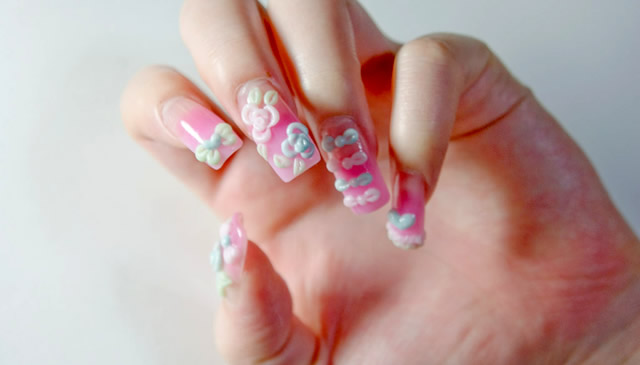
Recently, “gel nail” is trending, especially with young women. Gel nail is a type of gel applied to nails and hardened with a special light. Lasting from three weeks to a month, simple to intricate designs with a decorative element can be enjoyed.
The appeal of gel nail is that it can be done at home, dispensing with the need to go to a salon, and lasts much longer than a conventional manicure. “Even if you’re doing housework such as washing things with water, you do not need to worry about it coming off,” says KOBAYASHI Misaki, an office worker who has been into gel nail for about a year. “They are not only fashionable, but also strengthen the nails of people with thin nails and correct misshapen nails,” she adds.
Nail salons charge upwards of 5,000 yen for one visit. But self gel nail kits can be purchased online for approximately 3,000 to 10,000 yen. Kobayashi says, “Until you get used to it, it is difficult to apply the gel with your non-dominant hand (left hand if you’re right handed), but after repeating it a number of times, you get better at it.”
Once you’re done, nobody will have exactly the same nails as you. Because there are so many lovely colors and designs, the overall effect is stunning. Kobayashi says she is encouraged when people admire them saying things like: “it’s pretty,” “it’s stylish,” and “it’s feminine.”
However, nails that are too long, or designs that are too flashy do not necessarily go down well with family members and men. In addition, compared to conventional polish, it is slightly more difficult to remove, taking about an hour to shave the gel off with a nail file and remove with a special liquid.
Even so, on the plus side it’s fun to apply it while watching TV at home, listening to music, or casually together with friends. In addition, coming up with an original design and creating it oneself delivers an enjoyable sense of achievement and pleasure, which is why many women are captivated by it.
Women enjoy adapting their clothes, hairstyle and makeup according to the season or mood, and in the same way they enjoy changing up nail designs as part of their own style. In addition, caring for one’s nails is an essential part of personal grooming.
Text: TAKAHASHI Reiko
[2013年7月号掲載記事]
最近、若い女性を中心に「ジェルネイル」がはやっています。ジェルネイルとは、ジェルを爪にのせて、専用のライトで固めて作るネイルです。シンプルなものから、パーツを使ったさまざまなデザインのものまで、およそ3週間から1ヵ月間楽しむことができます。
ジェルネイルの魅力は、サロンに行かず自分で行うことができ、マニキュアと比べてずっと長持ちすることです。「水洗いなどの家事をしても、はげる心配はありません」と、話すのはジェルネイルにはまって1年ほどの会社員、小林美咲さん。「おしゃれのためだけでなく爪のうすい人には補強になったり、爪の形の矯正になったりします」と言います。
サロンに行くと1回で5千円以上します。しかしセルフジェルネイルキットはインターネット通販で、3千~
1万円ほどで購入できます。小林さんは「慣れるまでは、利き手でない手(右利きの場合は左手)でネイルをするのは難しいですが、何度もやっているうちに上達していきます」と、言います。できあがったものに同じものはひとつもありません。かわいい色やデザインがたくさんあるので、その出来栄えには驚きます。まわりから、「かわいい」「おしゃれだね」「女性らしいね」などとほめられると、ますますはりきってしまうと小林さんは言います。
しかし、爪が長すぎる、デザインが派手すぎるなど家族や男性からの印象は、必ずしもよいとはいえないようです。また、マニキュアに比べて、落とすのも少し大変です。ジェル部分をやすりで削り、専用の液体で落とすという作業は、およそ1時間かかります。
それでも、家でテレビを見たり、音楽を聴きながら、あるいは友達と一緒に気軽に楽しめるなど、メリットの方が多いようです。また、自分でオリジナルのデザインを考えて、実際に自分の手で形にするという達成感や喜びが楽しさにもつながり、はまってしまう女性が多いのです。
女性は服装や髪形、メイクを、季節や気分によって変えて楽しみますが、彼女たちはネイルもファッションのひとつとして、デザインを変えて同じように楽しんでいます。また、爪の手入れに気を使うのも、身だしなみのひとつ、という考え方も持っています。
文:高橋礼子
-
[From July Issue 2013]
Mt. Fuji, located between Shizuoka Prefecture and Yamanashi Prefecture, has been designated as a World Heritage Site. At 3,776 meters high, Mt. Fuji is Japan’s highest mountain and is known for the beautiful symmetry of its coned shape. Mt. Fuji appears to soar particularly high because there are no other tall mountains around it. Its majestic appearance has made it an object of spiritual worship for Japanese as well as an inspiration for artists. According to UNESCO, the mountain is a symbol of Japan, blending religious and artistic traditions.
Mt. Fuji was not registered as a natural heritage site, but as a cultural heritage site. Since ancient times Mt. Fuji has been regarded as an object of worship, so there are many shrines around its base as well as one on the top. Many people climb up to the summit. The highlight for them is to see the sunrise from the summit. During the summer climbing season, it is as crowded as streets of Tokyo.
Since the view of Mt. Fuji changes daily and each moment has its own particular beauty, some photographers take photos of the mountain every day. They shoot a variety of different scenes, such as “diamond Fuji,” with the sun rising from its summit, and “upside down Fuji,” of the mountain reflected in a lake. In the Edo period, artist KATSUSHIKA Hokusai drew the famous “36 Views of Mt. Fuji” which included “Red Fuji.” Mt. Fuji has always inspired artists.
Many people say that Mt. Fuji is more beautiful when it is viewed from a distance. There are some superb spots from which to view Mt. Fuji at resorts such as Hakone and Enoshima. “Miho no Matsubara” in Shizuoka Prefecture is known as one of the most beautiful spots from which to view Mt. Fuji and has been designated as one of “New Three Famous Sites of Japan,” and as one of the “Three Scenic Pine Groves of Japan.” It was requested that it be considered to be part of Mt. Fuji in the application for world heritage designation. Though since it is located 45 kilometers away from Mt. Fuji, it was excluded.
Although Kamakura applied at the same time as Mt. Fuji to be registered as a cultural world heritage site, its application was rejected. Located in Kanagawa Prefecture, next to Tokyo, Kamakura was the location of the feudal government from the late 12th to 14th century, in spite of this, there was insufficient evidence to prove its universal cultural significance. Japan now currently has 17 registered World Heritage sites: 13 cultural and four natural.
Uneasy Aspect of Mt. Fuji
Mt. Fuji is a volcanic mountain and might possibly erupt in the future. The last eruption occurred in 1707. This eruption created a large crater and lump (Houeizan) on the base.
At the foot of the mountain there are five lakes, but recently the water level has fallen. Some people say that this is a sign that there will be an earthquake or an eruption, but this cannot be verified.
Since there are so many climbers, garbage dropped on mountain trails has been a problem. However, it is likely that this will improve now it has been registered as a world heritage site.
[2013年7月号掲載記事]
静岡県と山梨県の間に位置する富士山が世界遺産に登録されました。高さ3,776メートルの富士山は日本で最も高く、左右均等の美しい円錐形の山です。周りに高い山がないので、富士山だけが高くそびえて見えます。その神々しい姿から、日本人の信仰、芸術の対象になってきました。ユネスコは日本の象徴で、信仰と芸術がブレンドされているとしています。
富士山は自然遺産ではなく文化遺産として登録されました。富士山は古くから信仰の対象とされ、頂上の他、麓にはいくつかの神社があります。多くの人が山頂を目指して登ります。頂上から日の出を眺めるのが最大の楽しみです。登山シーズンの夏は、東京の街のような混雑ぶりです。
時間と共に日々その表情が変わり、それぞれが美しいために富士山を毎日撮影しているフォトグラファーもいます。頂上に太陽が昇る「ダイヤモンド富士」、湖に映る「逆さ富士」など、さまざまなシーンが撮影されます。江戸時代には葛飾北斎が、「赤富士」などを描いた有名な富士山シリーズの浮世絵「富嶽三十六景」を描くなど、富士山は常に芸術の対象でした。
富士山は遠くから見た方が美しいとの評価もあります。箱根や江の島など、他の観光地にも富士山絶景スポットがあります。静岡県にある三保の松原は富士山が最も美しく見えるスポットの一つとして知られ、「新日本三景」「日本三大松原」にも数えられています。富士山と一体のものとして世界遺産登録申請に入っていました。しかし、富士山から45キロ離れていることから除外となりました。
また、富士山と共に世界文化遺産登録を目指していた鎌倉は不登録となりました。鎌倉は東京の隣の神奈川県にあり12世紀後半から14世紀まで武家政治の中心でしたが、普遍的な価値を証明する証拠が欠けていると指摘されました。日本にはこれで文化遺産が13、自然遺産が4、あわせて17の世界遺産があります。
富士山の不安な側面
富士山は火山で、今後も噴火する可能性もあります。最後に噴火したのは1707年です。そのときの爆発で麓には大きなくぼみと、こぶのような盛り上り(宝永山)ができました。
山麓には5つの湖がありますが、最近は水位が下がっています。噴火や地震の兆候などがうわさされていますが、確かなことはわかっていません。
登山者がたくさんいるため、山道沿いにはごみが散乱していることが問題とされてきました。しかし、この度の世界文化遺産の登録で改善されていくと思われます。
-
[From July Issue 2013]
Facing the Sea of Japan, Akita Prefecture is located in the Tohoku region of Honshu Island. Because daylight hours are shorter there than in other prefectures, there are many beautiful women with fair skin; the expression, “Akita bijin,” refers to attractive women from Akita. In Yuzawa City, a legend persists about the incredible beauty of ninth century poet, ONO no Komachi.
Hachiko (Sir Hachi), the loyal dog who continued to wait at the train station for his dead master to return, is from Akita. Although the bronze statue of Hachi in front of Shibuya Station in Tokyo is famous, Odate City also has numerous monuments and plaques honoring Hachi. Recently, Akita was featured in the popular Korean drama series “Iris,” and an increasing number of tourists come to visit locations used for the show.
In Akita you can enjoy the changing seasons. In spring, you might want to visit Bukeyashiki-dori in Kakunodate, Semboku City. The avenue is lined with shidarezakura; these weeping cherry trees are often seen in tourism posters. It is said that these trees grew from three seedlings that were part of the trousseau of a Kyoto noblewoman 350 years ago; now 153 trees line the avenue. In Kakunodate you can also find cherry trees growing for about two kilometers alongside the Hinokinai-gawa River.
Cherry trees at the Bukeyashiki-dori in Kakunodate
Cherry trees at the Hinokinai-gawaA forest of beech trees formed about 8,000 years ago, ranging from the north of Akita Prefecture to Aomori Prefecture, covers the Shirakami Mountains. The mountains were designated as a World Natural Heritage site in 1993. The symbol of this area is a 400-year-old beech tree. Normally beech trees live for about 300 years, but this one has survived much longer than that. To better appreciate the scenery, a guided tour is recommended. There are some guides who speak English and Korean.
Besides Shirakami Mountains, there are numerous other mountains and waterfalls where it’s possible to go trekking. Shishigahana wetlands are a 40 minute walk along a trail from Nikaho City. Large patches of “choukai marimo” moss are worth a look. You can also see “mototaki fukuryuusui,” which is the sharp contrast between the rich green moss and white spray on the river bed, as well as “Agariko-daiou,” a deformed beech that is the thickest tree in Japan.
Yasuno-taki (Yasu Falls), located in Kita-Akita City, was designated as “one of the top 100 waterfalls in Japan.” There are many other small and large falls in this area. The Kazuno Forest Therapy Road in Kazuno City is paved with woodchips, making it easy to walk on. It’s come to be recognized as a therapeutic forest.
Mototakifukuryuusui / Yasuno-taki
Akita has two large lakes. Straddling the border between Akita and Aomori prefectures, Lake Towada is known for its picturesque fresh green leaves and autumn foliage. At 423.4 meters, Lake Tazawa is the deepest lake in Japan, and its iconic landmark is a statue of Princess Tatsuko, who is believed to have been transformed into a lake goddess, as a result of her search for eternal youth and beauty.
Summer in Akita is short, but to make up for this, numerous festivals are held and people get quite fired up. Drawing over one million visitors each year, the Kanto Festival, held annually from August 3 to 6 in Akita City, is one of the three great festivals of the Tohoku region. Kanto poles, each with 46 lanterns hanging from them, are lifted up in the night sky by performers called “sashite.” The sight of more than 250 poles rising up all at once is spectacular.
Other festivals attracting huge crowds are Noshiro-yaku-tanabata, held in Noshiro City in early August and Hanawabayashi in Kazuno City on August 19 and 20. At either festival you can hear flutes and drums and see beautiful street stalls and lanterns lining the streets. The All Japan Fireworks Competition takes place on the fourth Sunday of every August. First-class pyro technicians from around the country compete to be the best in Japan.
Hanawabayashi / The All Japan Fireworks Competition
In Akita, where it snows a lot, festivals and events are held to celebrate this fact. More than 100 kamakura (small snow houses) are constructed in Yokote City. This event has a 400 year history and is dedicated to the God of water. Inside the kamakura, it’s warm, and amazake (sweet sake) and rice cakes are served. Lamps are lit in numerous other small kamakura, illuminating the town.
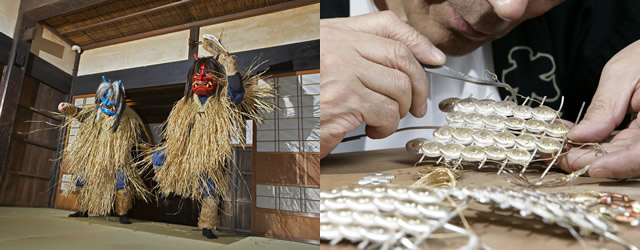
Namahage is another winter event; it’s said that Namahage descends from the mountain once a year to get rid of evil and disease, bringing good fortune and a rich harvest. This god wears a demon mask and goes from house to house, yelling: “Are there any naughty kids? Are there any crybabies?”
Known for promoting beautiful skin, Akita has many hot spring resorts, but the most popular is Nyuutou Onsenkyou in Semboku City – a hot spring with its characteristic milky-white water. You can buy a yumeguri-chou (a card that allows you to use designated hot springs at a discounted price) and visit seven hot springs, enjoying the waters at each place. Kawarage Ooyutaki in Yuzawa City is a unique hot spring. The spring cascades down from a height of 20 meters into a pool that functions as a bathtub.
With a supply of clean water, Akita is particularly known for its delicious rice and sake. The Akitakomachi rice brand is sold across the country. Local dishes include: kiritanpo, which are pieces of pounded rice on skewers grilled over charcoal; inaniwa udon noodles; hatahata (sandfish); and shottsuru seasoning made from hatahata. Butter rice cakes and yokote yakisoba stir-fried noodles, which won a B-1 Grand Prix (local cuisine tournament), are also popular.
Namahage / Akita ginsen-zaiku
“Magewappa,” or bent wood, that uses the wood grain of Akita cedars to best effect, is a well-known local product. Other traditional crafts include: bouzaiku, crafted from the skin of cherry trees; and handmade Akita ginsen-zaiku accessories made from fine 0.2 millimeter thick silver threads. Kawatsura lacquer ware has an 800 year history, and there are about 200 lacquer ware stores lining the streets of Kawatsura-cho, Yuzawa City.
It takes approximately four hours to get to JR Akita Station from JR Tokyo Station on the Akita Shinkansen. From Haneda Airport in Tokyo, you can fly to Akita Airport in about one hour.
Akita Prefectural Tourist Federation
[2013年7月号掲載記事]
秋田県は本州の東北地方に位置し、日本海に面しています。日照時間が他の県と比べて短いため肌が白くきれいな人が多く、秋田のきれいな女性を指す「秋田美人」という言葉があります。湯沢市には9世紀の歌人でとても美しかったといわれている小野小町の伝説が残っています。
飼い主が亡くなった後も駅で帰りを待ち続けた忠犬ハチ公は秋田犬です。東京の渋谷駅前にある銅像が有名ですが、大館市にもハチのモニュメントや看板がたくさんあります。最近では韓国の人気ドラマ「アイリス」シリーズのロケ地としても知られ、ロケ地めぐりのために訪れる観光客が増えています。
秋田は四季の変化が楽しめます。春に訪れたいのは仙北市角館の武家屋敷通りで、通りを彩るしだれ桜はよく観光ポスターなどに使われます。350年前、京都から迎えられたお姫様の嫁入り道具のなかにあった3本の苗木が始まりだったといわれていますが、今では153本が並んでいます。同じ角館市内にある桧木内川沿いにも約2キロにわたる桜並木があります。
県北から青森県にかけて広がる白神山地は、約8千年前につくりあげられたブナ林です。1993年に世界自然遺産に登録されました。シンボルともいえるのは「400年ブナ」です。通常ブナの寿命は約300年といわれていますが、これはそれよりはるかに長く生きています。
白神山地の他にも、トレッキングできる山や滝がたくさんあります。にかほ市にある獅子ヶ鼻湿原は遊歩道を40分ほど歩いたところにあります。「鳥海マリモ」と呼ばれる大きなこけは見ごたえがあります。また、こけの緑と水しぶきの白があざやかな「元滝状流水」や、奇形ブナのなかでは日本一の太さの木「あがりこ大王」が見られます。
また、北秋田市にある「安の滝」は日本の滝百選に選ばれていますが、この周辺には他にも大小さまざまなたくさんの滝があります。鹿角市にあるかづの森林セラピーロードはウッドチップがしかれているため歩きやすくなっています。癒しの森としても注目を集めています。
秋田には大きな湖が二つあります。十和田湖は秋田県と青森県にまたがり、新緑や紅葉がきれいなところとして知られています。田沢湖は日本一深い湖(423.4メートル)で、永遠の若さと美を求めて湖の神になったと伝えられているたつこ姫の像がシンボルです。
秋田の夏は短いですが、そのぶんたくさんのお祭りが開催され、盛り上がります。秋田市で毎年8月3~6日に開催される竿燈祭りは東北三大祭りの一つで、毎年100万人以上の観客でにぎわいます。46個のちょうちんをつるした竿燈が「差し手」と呼ばれる人たちによって夜空に浮かびあがります。250本以上の竿燈が一度に立ち上がる様子は迫力があります。
8月上旬に能代市で行われる能代役七夕や19~20日に鹿角市で行われる花輪ばやしも多くの人でにぎわうお祭りです。どちらも笛や太鼓の音にあわせ、美しい屋台や灯籠が立ち並びます。毎年8月第4土曜日に行われるのは全国花火競技大会。全国から一流の花火師たちが日本一の座をかけて技を競います。
雪がたくさん降る秋田にはそれを楽しむお祭りや行事があります。横手市では100をこえるかまくら(雪でつくられた小さな家)がつくられます。これは水神をまつる行事で、400年の歴史があります。かまくらの中は暖かく、甘酒やおもちがふるまわれます。他にも小さなたくさんのかまくらの中に灯りがともされ、町を彩ります。
年に一度、山から下りて悪や疫病をはらい、吉事や豊作をもたらすといわれているなまはげも冬の行事として知られています。鬼のお面をつけた神、なまはげは「悪い子はいねが(いないか)、泣く子はいねが」と叫びながら家々を歩き回ります。
秋田には美肌の湯として知られるたくさんの温泉地がありますが、一番の人気は仙北市の乳頭温泉郷です。乳白色の湯が特徴で、「湯めぐり帖」(決められた温泉を割引料金で利用できるカード)を買い、7つの温泉を巡ってそれぞれのお湯を楽しむこともできます。変わった温泉としては、湯沢市の川原毛大湯滝があります。20メートルの高さから温泉が流れ落ち、滝つぼが湯ぶねになります。
秋田の水はきれいなので、特に米や酒がおいしいことはよく知られています。米のブランド、あきたこまちは全国で販売されています。棒に巻き付けたごはんを炭火で焼き、食べやすく切ったきりたんぽ、稲庭うどん、ハタハタとこの魚からつくる調味料しょっつるも名物です。バター餅や、B-1グランプリになった横手やきそばも人気です。
特産物でよく知られているのは秋田杉の木目を活かした曲げわっぱです。桜の木の皮を使った棒細工、0.2ミリほどの細い銀の線を手作業で加工してアクセサリーにする秋田銀線細工も伝統工芸品です。川連漆器は800年の歴史があり、湯沢市川連町には約200の漆器の製造業者の店が並びます。
JR東京駅から秋田駅までは秋田新幹線で約4時間。羽田空港(東京)から秋田空港までは約1時間です。
-
[From July Issue 2013]
ASANO Shigeto
Have you heard of rafting? It is an outdoor sport involving teams of six riding in a rubber raft and paddling skillfully as they are pulled down rivers on strong currents. River currents are not always gentle; sometimes there are big surges and rapids with steep drops. Sometimes, rafts can flip over, or members can be thrown out.
ASANO Shigeto, an athlete who became interested in this competitive sport, formed Japan’s national team in 1999. The first time he participated as a coach and athlete in an international event, his team came 15th out of 16 teams, but in 2010 and 2011, his team won the championship. What was the secret behind the team’s sudden ascent to the position of best in the world?
Rafting is popular in countries such as Brazil, the Czech Republic, the United States, and Italy. There was a big difference in experience and physical strength between Japanese athletes and athletes from other countries. That is why it was said that: “It will take 50 years for Japan to become best in the world.” Asano overturned such conventional wisdom; he surprised people in the industry both at a domestic and international level, by becoming world champion eight years after putting together a professional team – just ten years after he made his debut.
Asano cites “the power of teamwork” as one of the reasons for the team becoming world champions. “During the race, team members become both rudder and engine. Therefore, we cannot reach our full potential unless the feelings of our team members are united.” Since the condition of the river, which sets the stage for the competition, changes from moment to moment, “it is important to always be of one mind in order to make decisions in an instant.”
During the actual race, “when the current flows against us around rocks, we intentionally do not fight against it, but instead just drift along with it. On the other hand, if there is a chance to advance, we aggressively take full advantage of it,” Asano divulges. “For this reason, there is no substitute for the sense of accomplishment that comes with adapting to a situation that can vary from moment to moment. This excitement buoyed me up, allowing me to become world champion.”
The World Championships are held once every two years, but the location and date varies. The next championships will be held in New Zealand in November this year. “Team Japan will attempt to win their third consecutive victory, however, I will not participate, but rather work on supporting the team,” says Asano. After withdrawing from the front line, by making use of his experiences, Asano has energetically put his energies into teaching through workshops and lectures.
The attraction of rafting lies in being thrown into violent currents, traversing dangerous ground time after time through great effort, and adapting to a variety of changes; a skill set that can be applied to work or study. Attitudes developed through rafting, such as “proactively adapting to change, “at times going with the flow,” and “valuing teamwork,” might also be useful skills for people to apply to their own lives.
Text: ITO Koichi
[2013年7月号掲載記事]
浅野 重人さん
ラフティングという競技を知っていますか? 6人が1組となってゴムボートに乗り、かいを巧みに操って、はげしい流れの川を下るアウトドアスポーツです。川の流れはいつもおだやかではなく、川とは思えない大きな波や落差のある滝にも見舞われます。ボートがひっくり返ったり、そこから投げ出されたりすることもあります。
この競技に興味を持ったアスリートの浅野重人さんは、1999年に日本代表チームを結成。監督兼選手として初めて参加した世界大会の成績は16チーム中15位でしたが、2010年と11年には優勝の栄冠を勝ち取りました。短期間で世界の頂点に上りつめることができた秘訣は何だったのでしょう。
ラフティングはブラジルやチェコ、アメリカ、イタリアなどで盛んに行われています。これらの国々の選手に比べると、日本選手は経験でも体力の面でも大きな差があります。ですから「日本が世界一になるには50年かかる」と言われていました。浅野さんは、そんな常識をくつがえし、プロチーム結成から8年、初出場から10年で世界一となり、国内外の関係者を驚かせたのです。
浅野さんは、世界一を極めた理由のひとつに「チーム力」をあげます。「レース中はチーム全員が舵にもエンジンにもなります。ですから、全員の気持ちがひとつになっていないと力を発揮できません」。競技の舞台となる川の状況は絶え間なく変わるため、「瞬時に判断できるよう、常に意思統一をしておくことが大切です」と普段の心がけを語ります。
実際のレースでも、浅野さんは「岩場の周りの逆流では、あえて逆らわず、流されるままにします。反対に、前進できる機会が訪れたら、ひるまず、積極的に攻めてみます」と川と向き合う秘訣を明かします。「それだけに、刻々と変わる局面を乗り切ったときの達成感は何物にもかえがたいものです。この、わくわくする気持ちが世界一獲得への支えとなりました」。
世界大会は現在、2年に1度の割で開催されていますが、場所や時期は年によって変わります。次の大会は今年の11月にニュージーランドで開かれます。「日本は3連覇をかけて大会にのぞみますが、私は出場せず、応援にまわります」と浅野さんは話します。浅野さんは第一線を退いた後、これまでの経験を生かしたチームワークの講習会や講演会などの活動を精力的に行っています。
はげしい流れの中に放り込まれ、危ない場所を乗り越える努力を重ねることで、さまざまな変化に打ち勝つラフティングのおもしろさは、仕事や学習に対する構え方に似ています。「変化を前向きにとらえる」「ときには、流されてみる」「チームワークを大切にする」といったラフティングの姿勢は、人として生きていく上でも大いに参考になるでしょう。
文:伊藤公一
-
[From July Issue 2013]
Detective Conan (Case Closed)
First published in 1994 in the “Weekly Shonen Sunday,” “Detective Conan (Case Closed)” is an ongoing manga mystery series. It depicts the life of KUDO Shinichi, a high school student and detective, whose body has been shrunk by a mysterious organization. Going by the name of EDOGAWA Conan, Kudo solves difficult cases one after the other. So far, 79 volumes of the comic have been released. The TV animation that began in 1996 is still being broadcast and there have also been animated film versions and TV dramas. It’s a series popular with both children and adults.
One day, Shinichi goes to an amusement park with his childhood friend, MORI Ran. There, he observes the mysterious organization (the Black Organization) making a deal. The members detect his presence and force him to swallow some poison. When he comes to, the poison has taken effect and he has the body of a child. Believing that if this becomes public knowledge, it will put the people around him in danger, he begins to hide his true identity and goes by the name of Edogawa Conan.
In order to gather information about the organization, Conan goes to stay with Ran and her detective father, MORI Kogoro. Helped by inventor AGASA Hiroshi – who knows Conan’s true identity – he uses the tools that Agasa has developed, such as a bowtie-shaped voice changer and a wristwatch-shaped tranquilizing gun, to solve case after case, in Kogoro’s place, in order to get to the heart of the mystery surrounding the Black Organization.
Besides Agasa, Conan’s true identity is also known to: Shinichi’s parents, HATTORI Heiji, a high school student detective from Osaka, and HAIBARA Ai, a former member of the Black Organization, who, just like Shinichi, was transformed into a child after being poisoned. Just like Conan, Haibara was enrolled in the same first-grade class at Teitan Elementary School. She carries out research into antidotes at Agasa’s. She’s the only person with whom Conan shares the same fate.
Sometimes Conan teams up with his classmates to form a five-strong detective team: with the bubbly YOSHIDA Ayumi; TSUBURAYA Mitsuhiko, whose powers of reasoning put adults to shame; KOJIMA Genta, a headstrong muscular guy; and Haibara. When the FBI and the CIA turn up in pursuit of the Black Organization, or interesting characters, such as Conan’s arch enemy, Phantom Thief Kid, appear, things get even more exciting.
Many episodes deal with the love affairs of people close to Conan, including detectives in the Tokyo Metropolitan Police Department. The affair between detectives TAKAGI Wataru and SATO Miwako is a recurring theme. Though Tagaki and Sato are in a relationship, Sato is so popular with male colleagues that they are always trying to get between them. The writer himself describes the series as a “murder mystery romantic comedy manga.”
Detective Conan is so popular that a movie adaptation has been released in theatres every year since 1997. These movies are always big box-office hits. The 17th movie version, “Private Eye in the Distant Sea,” was released in April. Can Conan reveal the true identity of the Black Organization? Will Shinichi return to his normal size? And where is his relationship with Ran going?
Text: YAMASHINA Saori
[2013年7月号掲載記事]
名探偵コナン
「名探偵コナン」は、1994年から「週刊少年サンデー」で連載が始まり今も続いている推理まんがです。謎の組織によって体を小さくされた高校生探偵の工藤新一が、江戸川コナンと名乗り、難解な事件を解き続ける姿が描かれます。コミックスは現在までに79巻まで発売されています。1996年に開始したテレビアニメは現在も放映中で、アニメ映画化、テレビドラマ化もされています。子どもから大人まで支持される人気の高い作品です。
ある日、新一は幼なじみの毛利蘭と遊園地に遊びに行きました。そこで新一は、謎の組織(黒ずくめの組織)の取引現場を目撃しました。その姿を組織の仲間に気づかれてしまい、毒薬を飲まされてしまいます。新一は、気がつくと毒の影響で子どもの姿になっていました。新一は、このことが知れわたれば周りの人たちに危害がおよぶと考え、正体を隠すため江戸川コナンと名乗ります。
コナンは組織の情報をつかむため、父親である毛利小五郎が探偵をしている蘭の家に居候します。コナンの正体を知っている、発明家である阿笠博士の協力の下、蝶ネクタイ型変声機、腕時計型麻酔銃など阿笠が発明した道具を使い、小五郎の代わりに次々と起こる事件を解決しながら、謎に包まれた黒ずくめの組織に迫っていきます。
コナンの正体を知っているのは阿笠の他に、新一の両親、大阪の高校生探偵である服部平次、組織の元メンバーで、新一と同様に毒薬を飲み幼児化した灰原哀などがいます。灰原は、コナンと同じく帝丹小学校1年生のクラスに編入し、阿笠の家に居候しながら解毒剤の研究をしています。ただ一人、コナンと同じ境遇にある人物でもあります。
コナンは同級生であるムードメーカーの吉田歩美、大人顔負けの理論派である円谷光彦、切り込み隊長的な力自慢の小嶋元太、そして、灰原の5人で少年探偵団を結成し、事件を解決することもあります。また、黒ずくめの組織を追うアメリカの警察組織FBIや諜報機関のCIA、コナンの宿敵である怪盗キッドなど個性的なキャラクターが面白さを引き立たせています。
コナンを取り巻く人々や警視庁の刑事らの恋愛を題材にしたエピソードも多くあります。その中でも、高木渉刑事と佐藤美和子刑事の恋模様は何度も題材にされています。高木刑事は、職場で人気の佐藤刑事と恋愛進行中なのですが、いつも佐藤刑事を好きな男性の同僚達からじゃまをされてばかりです。作者自身もこの作品を「殺人ラブコメまんが」と称しています。
1997年から毎年上映される劇場版名探偵コナンシリーズも人気が高く、毎回大ヒットの興行収入成績を収めています。4月には17作目「絶海の探偵」が公開されました。今後、コナンが組織の正体を暴けるのか、また本来の姿である新一に戻れるのか、そして蘭との恋愛がどうなるのかも注目です。
文:山科沙織
-
[From June Issue 2013]
Although some people say that the taxes and infrastructure of Japan makes it difficult to start up a business here, non-Japanese startups do exist. But due to the reluctance of Japanese companies to hire non-Japanese, until now, these foreigners had no choice but to become translators or restaurant owners serving up their native cuisine. These days, however, the numbers of a new breed of non-Japanese company presidents are swelling.
“Japanese people are very enthusiastic about their hobbies. Ordinary office workers go to schools after five pm to learn English, or to take music classes. I thought I’d like to teach guitar to people who have such a love of learning,” says American, Michael KAPLAN. Overcoming many difficulties, he established American Guitar Academy, a guitar school in Bunkyo Ward, Tokyo.
Having majored in guitar at college, Kaplan is a professional guitar instructor with a master’s degree. He had taught guitar in the USA. When he visited Japan on holiday in 2006, he loved the country. “With its beauty and cleanliness, it made a good impression on me and I came back in 2008. Because Japan is a wealthy country, many people love art. There are so many people who go to art museums, and there are many jazz-clubs, too. Jazz is close to my heart, so the numerous jazz fans impressed me very much.”
Kaplan wanted to teach guitar in Japan, so he looked into how to do this. Then he found out that not only is it difficult for non-Japanese to live in Japan, but that it is even more difficult to start up a business. It’s hard to acquire a visa, also, if you want to start up a company, it’s necessary to establish an office, but landlords are reluctant to rent to non-Japanese. “Some people advised me to use a small place with only a telephone line and post box as an office. But I had my Japanese friends help to convince a landlord to rent out an office to me.”
Kaplan came to Japan to open his school in February, 2011. He was badly hit by the Great East Japan Earthquake that occurred one month later, but he says with a smile, “Dreams come true if you don’t give up. If there are difficulties, all you have to do is just change your approach and try again.” His policy of teaching guitar in English went down well, and now the number of his pupils has swelled to 80, he has taken on new instructors. “My next goal is to make my school the most recognized guitar school in Japan,” he says.
Having established Langtech, a software company, that produces apps, in his native country, Canadian Alain BRETON continues to develop his business in Japan. The Great East Japan Earthquake was the trigger for starting up his business. “Until then, I was an English teacher, but after the earthquake, work dried up. I had a lot of time on my hands and I needed to earn money to live,” he says.
Breton visited Japan in 2004 while travelling around many countries. “It was April,” he remembers. “Tokyo was filled with cherry blossoms and people were happily enjoying cherry blossom viewing; after seeing this I fell in love with Japan,” he smiles. “Of course after a while I found out that I had come during the best season in Japan, but even to this day my positive feeling about Japan hasn’t changed.”
Alain BRETON / App LEXI
Breton returned to Japan once again as an English teacher, while also attending a Japanese language school. Then he got the idea for the business he runs today. “There were many Chinese and Korean students in my class. They improved really quickly.”
Taking into account his experience at the Japanese language school and the environment he grew up in, Breton, who speaks English, French, and Spanish, came to the conclusion that vocabulary was vital to learning foreign languages. “The reason why Chinese and Korean students learned to speak faster was because there are similar words to Japanese in Chinese and Korean. That is why I developed the educational app ‘LEXI’ in which you touch a photo of an item when you hear a native speaker saying the name of that thing out aloud. Colorful pictures help with memorization, so you can learn words while playing a game.”
He then received an email from a user asking him to“please make an app for children.” “Children of immigrants and children who have learning difficulties want to use iPads and iPhones, so they can learn without becoming bored. That is why I quit my job as an English teacher and established my company.” He is saddened by the fact that, except for teaching a language, it is very difficult for non-Japanese to make a living in Japan. “Because there was little variation in the routine of an English teacher, I wanted to change things up and to continue developing my skills. Starting up a business has made my life more varied and I am very happy now.”
There are some people who choose to start a business by collaborating with Japanese partners. Ariawan, an Indonesian national who went to university in his own country and was hired by a big corporation, left his job after six months. He then established an IT company with three of his friends. “The corporation managed their business in an inefficient way. I created software and recommended it to them. They then said, ‘Start your own company. We will buy in your software from that company.’”
Ariawan eventually wanted to go abroad to study further. So, he sold his company and came to Japan. After getting a master’s degree, he began to work in Japan, where he met and partnered up with Japanese citizen, KAKIYAMA Takehiro. The two established FlutterScape Inc. in May, 2010.
“Kakiyama was in charge of setting up our company,” says Ariawan. “Our company runs a membership based shopping site named MONOCO that sells unique merchandise. I am in charge of the technical side of our website.” Though they’ve gone through some tough times, sales have increased by 20% in one year and they now employ a staff of nine of various nationalities.
“English is mainly used in our company. Our headquarters is currently located in Tokyo, but we might move to a country with more favorable tax laws. As for myself, I wouldn’t mind going back to start a business in Indonesia someday. Because the economy is now rapidly growing,” says Ariawan. It seems that even in Japan, the time has come for people and businesses to move beyond borders.
The American Guitar Academy
Langtech
MONOCOText: SAZAKI Ryo
[2013年6月号掲載記事]
税金や制度が起業には向いていない、という人もいる日本ですが、それでも日本で起業する外国人はいます。これまでは、日本の企業が外国人を雇いたがらないため、しかたなく自分で翻訳業や自国料理のレストランを始める、というケースが一般的でした。しかし最近は、別のタイプの外国人社長も増えてきています。
「日本人はとても趣味に熱心です。会社員がアフター5に英語を習いに行く、音楽の教室へ行く。習うことがこんなに好きな人たちに、ギターを教えたいと思いました」。そう話すのは、アメリカ人のマイケル・カプランさんです。カプランさんは苦労してアメリカン・ギター・アカデミーというギター教室を東京都文京区に開きました。
カプランさんは大学でギターを専攻し、修士号を取ったギター教育の専門家です。ずっとアメリカでギターを教えていました。しかし2006年に旅行で日本へ来て、日本が好きになりました。「美しくて清潔でいいなと思って、2008年にまた来ました。日本は豊かで、芸術を愛する人がたくさんいますね。美術館へ行く人は多いですし、ジャズクラブもたくさんあります。ジャズは私の心に満ちている音楽ですから、このジャズ人口の多さは印象的でした」。
カプランさんは日本でギターを教えたいと思い、実現させる方法を調べました。そして外国人が日本に住むのはとても大変で、起業はさらに大変なことを知りました。在留資格は取りにくく、起業するにはオフィスを用意しなければなりませんが、日本の大家は外国人に貸したがりません。「電話と郵便受けしかない小さな部屋を名ばかりのオフィスにするよう勧める人もいました。でも私は日本人の友達に手伝ってもらい、大家さんを説得してオフィスを借りました」。
カプランさんは2011年2月、開校の準備で来日しました。一ヵ月後に起きた東日本大震災で大きなダメージを受けましたが、カプランさんは「夢はあきらめなければかなうんですよ。困難があったら、やり方を変えてまたトライすればいいんです」と笑います。英語でギターを教えるという方針が好評で、今では生徒も約80人に増え、教師も新たに増やしました。「ここを日本でいちばん認められたギター学校にすることが次の夢ですね」。
カナダ人のアラン・ブレトンさんは、母国でアプリの会社、ラングテックを起こし、日本で開発を行っています。東日本大震災がビジネスのきっかけになりました。「それまで英語の教師をしていたんですが、震災後、仕事がぐっと減りました。時間はたくさんありますし、生活のためにはお金が必要です」。
ブレトンさんは2004年に、いろいろな国を旅していて日本へやって来ました。「4月でした。東京は桜に満ち、人々は幸せそうに花見をしていて、それを見て日本と恋に落ちたんです」と笑うブレトンさん。「たまたま最高の季節に来合わせたんだ、と後でわかりましたけど、日本が大好きな気持ちは今も変わりません」。
ブレトンさんは再来日して英語教師になり、同時に日本語学校にも通い始めました。そして今のビジネスのアイディアを得ました。「クラスには中国人や韓国人の学 生がおおぜいいました。彼らの上達が、とても早かったんです」。
英語、フランス語、スペイン語を話せるブレトンさんは、この日本語学校での経験や自分の育ってきた環境を考え、言語の習得には単語力が重要という結論に達しました。「中国人や韓国人が私より早く話せるようになったのは、中国語、韓国語には日本語と似た単語が多いからです。ですから、ネイティブスピーカーが読み上げる物の名前を聞いて、その物の写真にすばやくふれるという教育アプリLEXIを開発しました。カラフルな絵が記憶の助けになるし、ゲーム感覚で単語が覚えられるのです」。
すると利用者から「子ども向けのアプリをつくってほしい」というメールが来ました。「移民の子どもや学習障がいのある子どもは、iPadやiPhoneなら使いたがるので、あきずに学べるというのです。それで英語教師をやめて起業しました」。外国人が、語学教師にならずに日本で暮らすのは難しいとブレトンさんは嘆きます。「英語教師の生活は変化がないので、もっと変わり続けたい、成長したいと思っていました。起業して人生が多様になり、とても幸せです」。
日本人と共同で起業する人もいます。インドネシア人のアリアワンさんはインドネシアで大学に通い、大企業に就職しましたが、6ヵ月で退職。友人3人と一緒にITの会社をつくりました。「その企業では非効率的なやり方で仕事を管理していました。だから便利なソフトウェアをつくって勧めました。そうしたら『独立しなさい。このソフトウェアを買い取りますから』と言われたのです」。
やがてアリアワンさんは外国でもっと勉強したいと思うようになりました。そこで会社を売って来日しました。そして大学院を出て日本で働いていたとき、日本人の柿山丈博さんと知り合い、2010年5月、共同でフラッタースケープ株式会社を設立しました。
「会社の設立は柿山さんがやってくれました」とアリアワンさん。「MONOCOという会員制のショッピングサイトを運営する会社で、個性的な雑貨を売っています。私の担当はサイトの技術面です」。大変な時期もありましたが、今は売り上げが1年で20%伸びて、さまざまな国籍の社員が9人います。
「社内では主に英語で話しています。今は日本に本社がありますが、もしかしたら税金面などで有利な国へ移るかもしれません。私自身も、いずれはインドネシアで起業してもいいと思っています。今、経済成長が著しいですから」とアリアワンさん。日本でも、人やビジネスが国境を越えて動く時代が来たようです。
文:砂崎良
-
[From June Issue 2013]
The Harajuku area in Shibuya Ward, Tokyo, is a spawning ground for new trends. Crepes have long been the confection of choice in Harajuku, but recently there’s been a pancake boom. Cafes are increasingly adding pancakes to their menus, and recipes and techniques for making great pancakes at home can be found on the Internet.
In the past few years, from JR Harajuku to Omotesando Avenue – including the Jingu-mae area – shops specializing in pancakes have been popping up one after another. “Eggs’n Things” is so popular that customers line up outside before the store opens. About 900 people of different sexes and ages visit the shop each day and the wait can be as much as two and a half hours.
Eggs’n Things is a popular breakfast restaurant in Hawaii. President OGINO Shinobu says, “Hoping to spread the Western custom of eating a hearty meal for breakfast, we opened our first store in Japan in March 2010.” Word quickly spread, and their fluffy, crispy Hawaiian style pancakes became a huge hit. It’s been said that the pancake boom originated from this shop.
The most popular item on the menu is pancakes with strawberry whipped cream and macadamia nuts. The plentiful whipped cream has a light texture, so the dish appeals not only to women, but also to men. The pancakes themselves aren’t sweet, so they go very well with stir-fried potatoes and ham. The store offers a number of Hawaiian dishes such as “Spam & Eggs” and “Loco Moco,” and after 5 p.m. you can enjoy alcoholic drinks, such wine and beer, while eating pancakes.
“Pancakes used to considered to be a sweet confection, but since they began to be enjoyed as a savory meal, their appeal has broadened across the generations,” says Ogino. “I don’t think pancakes would have become this popular if they had remained a mere confection.”
Pancakes are called “hottoke-ki” (hot cakes) in Japan. Their dough tastes slightly sweet, so they are usually eaten with butter and jam. Hot cakes first appeared on the menu of a department store restaurant in Tokyo in 1923. In those days they were considered to be a luxury Western dish; something people aspired to eat.
Before long, pancake mix became available in stores and people could easily prepare and eat them at home. SUZUKI Hideko, a homemaker in Toshima Ward, Tokyo, says: “It’s great that you can make something delicious with only eggs and milk. To reproduce the taste of shop bought pancakes, I add ricotta cheese and yogurt to the dough. The charm of pancakes is that you never get tired of their simple taste, and you can also devise different variations, depending on the ingredients you use.”
Civitas is a coffee shop in Ota Ward, Tokyo, which has been around since 1968. Since the shop opened, their pancakes have been popular. They are thick, crispy on the outside and moist on the inside. People come from miles away, taking a number of different trains, just to get a taste. This pancake boom has once again put the spotlight on Japanese-style “hot cakes.”
Text: MUKAI Natsuko
[2013年6月号掲載記事]
東京の渋谷区、原宿周辺は流行の発信地です。これまで原宿を代表するお菓子といえばクレープでしたが、最近はパンケーキが大ブームです。パンケーキをメニューに加えるカフェが増えたり、家庭でもおいしく作れるようにレシピやテクニックがインターネットで公開されています。
JR原宿駅から表参道、神宮前周辺にかけて、数年前からパンケーキ専門店の出店が相次いでいます。「Eggs’n Things」は、開店前から既に行列ができるほどの人気店です。男女年齢問わず1日900人ほどが訪れ、長いときで2時間半待つこともあります。
Eggs’n Thingsはハワイで人気のブレックファーストレストランです。代表取締役の荻野忍さんは話します。「日本でも朝からしっかりとした食事をとる欧米の朝食文化を広めたいという思いから、2010年3月に日本第1号店をオープンしました」。看板メニューである、ふんわりとして香ばしいハワイアンスタイルのパンケーキは、たちまち話題を呼び、人気となりました。パンケーキブームは、この店から始まったといわれています。
一番人気は「ストロベリーホイップクリームとマカダミアナッツ」のパンケーキです。たっぷりのホイップクリームはとても軽く、女性だけでなく男性にも好まれています。パンケーキそのものが甘くないので、いためたポテトやハムにもよく合います。「スパム&エッグス」や「ロコモコ」などのハワイアンメニューも豊富なうえ、17時以降にはパンケーキを食べながらワインやビールなどのアルコールも楽しめます。
荻野さんは「これまでは甘いお菓子のひとつだったパンケーキが、食事として食べられるようになったことで、幅広い年代から人気を得ることになりました。単なるお菓子では、ここまで広がることはなかったと思います」と話します。
パンケーキは、日本では「ホットケーキ(温かいケーキ)」と呼ばれています。生地は少し甘く、バターやジャムをぬって食べるのが一般的です。1923年に東京のデパートの食堂に初めて登場しました。当時は洋食と同様に高級品で、人々の憧れでした。
やがてホットケーキミックスが発売されるようになってからは、家庭でも手軽に食べられるようになりました。東京都豊島区に住む主婦の鈴木英子さんは話します。「卵と牛乳を用意するだけでおいしくできるのがうれしいです。生地にリコッタチーズやヨーグルトを入れたりして、専門店の味を再現しています。シンプルな味はあきないですし、材料次第で工夫できるのがホットケーキの魅力です」。
東京都大田区にある「シビタス」は1968年から続く喫茶店です。開店以来、人気なのがホットケーキで、分厚く、外側は香ばしく内側はしっとりとしています。この味を求めて電車を乗り継いで遠方からわざわざ食べに来る人もいるほどです。パンケーキブームで、日本スタイルのホットケーキも再び注目を浴びています。
文:向井奈津子