-

Expanding Our Features on note & Medium
Hiragana Times is now actively publishing its main feature articles on our official note and Medium channels. Alongside our magazine and website, these platforms bring you deeper, more dynamic explorations of Japanese language and culture.
Main Series Currently Featured
- Japan Style – Exploring the essence of Japanese aesthetics, lifestyle, and spirituality.
- Ibuki – Highlighting the living pulse of Japan: people, regions, and cultural movements.
- The Voice Wave (Kotoba) – A philosophical journey into the depth, sound, and spirit of the Japanese language.
note features Japanese-language articles with interactive engagement.
Medium shares English articles to reach a global audience and introduce Japan’s cultural perspectives to the world.

Explore these channels together with our official website blog — and discover Japan from every angle.
note・Mediumにて特集記事を展開中
ひらがなタイムズでは、メイン特集を中心とした記事を公式note・Mediumにて発信中。雑誌やWebサイトと連動しながら、日本語と文化の世界をより深く、より自由にお届けしています。
主な掲載シリーズ
- Japan Style – 日本の美意識・暮らし・精神性を探るシリーズ。
- Ibuki – 人物・地域・時代の息吹を描く企画。
- 日本語道(言波) – 日本語の響きと哲学を辿る連載。
noteでは日本語での深掘り記事を、Mediumでは英語で世界へ向けた発信を展開。それぞれの媒体の特性を活かし、日本語×文化×世界をつなぐ場を広げています。
本サイトブログと併せて、ぜひご活用ください。
-
[Cover story – December 2025 Issue]
Discovering Shikoku through Flavor, Flowers, and Faith
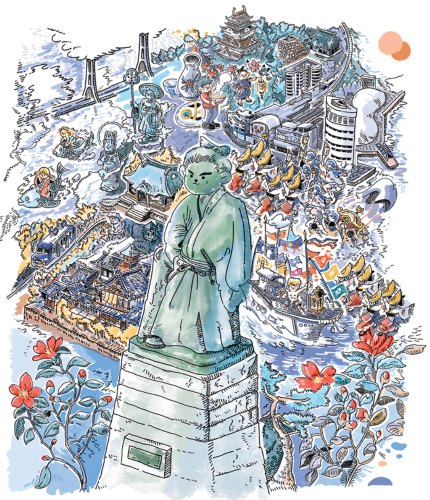
味・花・祈りで巡る四国の旅This month’s cover is themed around the island of Shikoku. Seen through the vibrant lens of Hong Kong-based illustrator Angryangry, the illustration offers a whimsical yet deeply respectful view of this often-overlooked cultural gem.
今月の表紙は、四国がテーマです。香港在住のイラストレーター・Angryangryの鮮やかな視点を通して、見過ごされがちなこの文化の宝庫を、ユーモラスかつ敬意をもって描き出しています。
From the statue of Ryoma Sakamoto in Kochi, famous for its katsuo (bonito), to the castles of Marugame and Matsuyama that echo with samurai heritage, the map is a vibrant celebration of Shikoku’s rich layers of history and flavor.
鰹で有名な高知の坂本龍馬像から、武家文化を今に伝える丸亀城や松山城まで、歴史と味わいが折り重なる四国の魅力が、賑やかに描かれています。
The featured theme this month, umami, is deeply intertwined with the natural and cultural landscape of Shikoku. Dashi made from dried bonito flakes is not merely a soup base—it serves as a vital “pulse” that guides the entire flow of Japanese cuisine. Kochi, in particular, has long been at the heart of this tradition.
特集テーマである「旨味」は、こうした四国の風土と深く結びついています。鰹節を用いた出汁は、単なるスープの素ではなく、日本料理を導く“脈”のような存在。とりわけ高知は、その伝統の中核を担ってきました。
The culinary journey through Shikoku continues into Kagawa. Known for its Sanuki udon, this region offers a bowl where clear dashi—made from dried sardines (iriko), kelp, and bonito flakes—beautifully intertwines with firm, chewy noodles. Simple yet profoundly flavorful, each serving of udon reflects a perfect harmony of local ingredients and artisanal skill. In every bowl, the essence of Shikoku’s umami culture is richly condensed.
さらに、四国の味の旅は香川へと続きます。讃岐うどんで知られるこの地では、いりこや昆布、鰹節などから取った澄んだ出汁が、コシのある麺と絡み合い、素朴ながらも奥深い味わいを生み出します。土地の恵みと職人技が結晶した一杯のうどんには、四国の旨味文化が凝縮されています。
In addition to food, the illustration highlights Shikoku’s spiritual depth: the famed 88-temple pilgrimage route, or henro, winds through the mountains, while Awa Odori dancers evoke centuries-old celebration in Tokushima.
食の魅力に加え、四国の精神的な深みも表現されています。山間を巡る八十八ヶ所巡礼の道、そして徳島に息づく阿波踊りの熱気が、土地の祈りと祝祭を象徴します。
Seasonal flora, like the camellia sasanqua featured in the “Ibuki” section, blossom across the island’s landscape, further enriching its cultural and natural profile.
「息吹」コーナーで紹介されるサザンカをはじめ、四国各地には季節の花が咲き誇り、文化と自然が調和した風景を彩ります。
This article is from the December 2025 issue of Hiragana Times.
この記事は、月刊誌『ひらがなタイムズ』2025年12月号より掲載しています。
-
[Cover story – August 2025 Issue]
The Spirit of Summer in Hiroshima : Peace, Memory, and the Bloom of Morning Glories
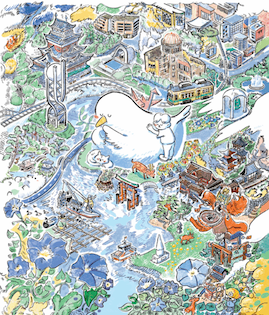
夏のいぶき、広島に宿る—— 平和と記憶、そして朝顔の花This month’s cover takes us to Hiroshima, a city that carries the weight of history and the hope for peace. At the center of the artwork is a pure white dove—symbol of peace—spreading its wings over a tranquil river, as if to gently protect the city below.
今月号のカバーが描き出すのは、深い歴史と平和への願いを抱く広島の風景。作品の中央には、翼を広げる白い鳩——平和の象徴——が、静かな川の上を舞い、街を優しく包み込むように浮かんでいます。
This year marks the 80th anniversary of the end of World War II. On the morning of August 6, 1945, at 8:15 a.m., when the atomic bomb was dropped on Hiroshima, morning glories must have quietly opened their blooms—just as they did on any other morning—only to be swept away in an instant by the blast.
今年は終戦から80年。1945年8月6日午前8時15分、あの原爆が投下されたその朝にも、朝顔はきっと、いつもの朝と同じように静かに花を広げ、そして儚く、爆風に吹き飛ばされたことでしょう。
And yet today, those same morning glories bloom again, vivid and full of life—having endured across time, they now live on as symbols of life pulsing through the summers of Japan.
その朝顔は、いま、色鮮やかに――時を超えて生き抜き、今も日本列島の夏に息づく命として、いきいきと咲いています。
Also featured in this issue’s Ibuki section, this humble summer flower carries with it both a quiet memory and the strength to look forward.
今号の「いぶき」コーナーでも特集しているこの夏の花が、静かな記憶と、前を向く強さを同時に伝えてくれます。
Landmarks such as the Atomic Bomb Dome, the Peace Memorial Park, and Hiroshima Castle are thoughtfully illustrated, reminding us of the city’s journey from devastation to rebirth. In the bay, a vermilion torii floats on the sea—an iconic image of Itsukushima Shrine, one of Japan’s three most scenic spots.
原爆ドーム、平和記念公園、広島城など、街の歴史を物語る建築物が、丁寧に描き込まれています。広島湾には、日本三景のひとつ、厳島神社の朱塗りの鳥居が海に浮かび、この地の美と信仰を象徴しています。
On the back cover, we find a scene from Bugaku, a ceremonial court dance passed down through centuries at Itsukushima Shrine. Originating in ancient India and traveling through China and Korea to Japan, this art form now survives only here. Still today, traditional pieces like Ranryōō and Banzeiraku are performed on the shrine’s stage, echoing the pulse of time.
裏表紙には、厳島神社で今も奉納される舞楽の様子が描かれています。インドを発祥とし、中国、朝鮮半島を経て伝わったこの芸能は、現在、世界で唯一この神社にのみ伝承されています。蘭陵王や万歳楽など、千年を超えて受け継がれる舞と音が、今も神前に響きます。
Through this vibrant and poetic artwork, Hiroshima is not only a place of memory, but one of living culture and hope. May the breath of peace continue to flow through each passing summer.
この色彩豊かで詩的な作品を通じて、広島は、記憶の地であると同時に、今も生きる文化と希望の場所であることを語りかけてきます。平和のいぶきが、これからも夏ごとにこの街に流れ続けますように。
This article is from the August 2025 issue of Hiragana Times.
この記事は、月刊誌『ひらがなタイムズ』2025年8月号より掲載しています。
-
[Cover story – November 2025 Issue]
Autumn’s Breath in Tokyo — A Map of Chrysanthemums, Towers, and Memory
東京に咲く秋のいぶき —— 菊と塔と記憶の地図A cityscape bathed in autumn hues stretches across the cover of our November issue. Surrounding the iconic Tokyo Tower at the center, a nostalgic and lively depiction of the city unfolds — one that traces memories from the Edo period to the present day.
11月号の表紙には、秋色に染まる東京の街が広がります。中心にそびえる東京タワーのまわりに、江戸から現代へと続く都市の記憶が、どこか懐かしく、にぎやかに描かれています。
This red-and-white iron tower was completed in 1958 as a symbol of Japan’s postwar recovery. It embodied the hopes of the high-growth era, and even now, it remains a “beacon of the heart” for many.
この赤白の鉄塔は、戦後日本の復興の象徴として1958年に誕生しました。高度経済成長期の希望を体現しながら、今も多くの人にとって「心の灯台」のような存在です。
At its base, chrysanthemums — the flowers of autumn — bloom in full glory. In Tokyo, the season is brightened by unique chrysanthemum events like the Meiji Shrine exhibition, the Bunkyo Festival at Yushima Tenjin, and the “Chrysanthemum Skytree” at Kameido Tenjin.
足元には、秋の花・菊が豊かに咲き誇っています。
明治神宮の菊花展、湯島天神の文京菊まつり、亀戸天神の「菊のスカイツリー」など、東京各地で個性豊かな菊の名所が秋を彩ります。The chrysanthemum has long been used as the imperial crest of Japan. This city is also home to the Emperor, who resides in the Imperial Palace where official ceremonies still take place. The Emperor’s presence at the heart of Tokyo reminds us that this is not just the political capital, but also the symbolic center of the nation. In this light, the chrysanthemum is more than just an autumn bloom — it quietly illuminates the cultural core of Japan.
また、菊は古くから天皇家の紋章としても用いられてきました。この街には、今も天皇が暮らし、公的儀式が執り行われる皇居が存在しています。都市の中心に天皇がいるという事実は、東京が単なる首都ではなく、「象徴の都」であることを物語っています。そうした文脈において、菊は単なる秋の花ではなく、日本文化の核心を静かに照らす特別な存在なのです。
This month’s cover was once again illustrated by Hong Kong–based artist Angryangry. At the end of November, they will hold their first solo exhibition outside of their home country, titled Outsiders’ Outlines, in Asakusabashi, Tokyo. New works inspired by their keen observations of Japanese towns and people will also be on display.
今月も表紙を手がけたのは、香港在住のイラストレーター・Angryangry。 11月末には、東京・浅草橋にて初の海外個展「Outsiders’ Outlines」が開催されます。 日本の街や人々を観察して描いた、新作の数々も披露される予定です。
This article is from the November 2025 issue of Hiragana Times.
この記事は、月刊誌『ひらがなタイムズ』2025年11月号より掲載しています。
-
[Cover story – October 2025 Issue]
The Autumn Light Rises Again — Memories of Osaka Expo and Cosmos Flowers
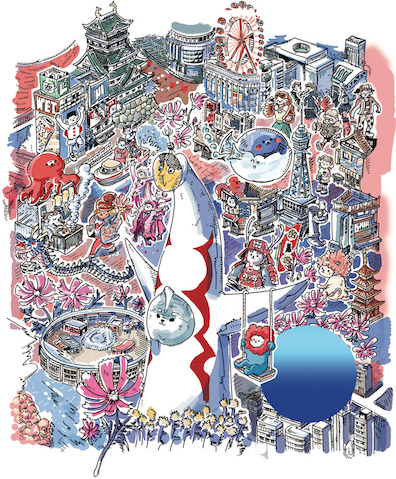
秋の光、再び空へ――大阪万博とコスモスの記憶Featured on this month’s cover is Osaka, the city of the World Expo. Towering in the center is the “Tower of the Sun,” a symbolic structure built for the 1970 Osaka Expo — the first World Exposition held in Japan.
今号のカバーに描かれているのは、万博の街・大阪。中央にそびえるのは、1970年に開催された日本初の万国博覧会「大阪万博」のシンボルとして建てられた「太陽の塔」です。
Created by artist Taro Okamoto, the tower embodied the Expo’s theme, “Progress and Harmony for Mankind.” Its three symbolic faces — past, present, and future — left a lasting impact. Even after 50 years, it still rises like a symbol of Earth’s raw energy.
この塔は、芸術家・岡本太郎が「人類の進歩と調和」をテーマに制作。太古・現代・未来の三つの顔をもつその斬新なデザインは、人々に強烈な印象を与えました。50年以上の時を経た今も、大地のエネルギーの象徴として空を見上げています。
In 2025, Osaka once again plays host to the World Expo. As the event approaches its final day on October 13, the “Expo Commemorative Park” beneath the tower comes alive with a vibrant display of seasonal flowers.
今年2025年、大阪では再び万博が開催されています。その最終日となる10月13日を前に、塔のふもとに広がる「万博記念公園」では、秋を彩る花々が見ごろを迎えています。
Among them, the cosmos — this issue’s featured “Ibuki” flower — takes center stage.
In the “Hill of Flowers” area, some 140,000 cosmos bloom each year from early to late October, their pink, white, and red petals dancing gently in the autumn breeze.なかでも「いぶき」コーナーで特集している花、コスモスは、この季節の主役。園内の「花の丘」には、例年14万本ものコスモスが咲き誇り、ピンク、白、赤の花が風に揺れて、秋空をやさしく彩ります。
Surrounding the scene are Osaka’s beloved landmarks — Tsutenkaku Tower, Dotonbori, Osaka Castle — all adding rich layers of Kansai’s bold and colorful culture.
周囲には、通天閣や道頓堀、大阪城など、個性あふれる大阪の名所も数多く描かれ、ユニークで力強い関西の文化がにじみ出ています。
The Tower of the Sun, once built to dream of the future, continues to shine upon those who look skyward. At its base, the cosmos flowers whisper quietly of life’s resilient breath — gentle yet enduring.
かつて未来を夢見て建てられた太陽の塔は、今も空を見上げる私たちを照らし続けています。 そのふもとに咲くコスモスの花々は、小さくも確かな、命のいぶきを伝えてくれます。
This article is from the October 2025 issue of Hiragana Times.
この記事は、月刊誌『ひらがなタイムズ』2025年10月号より掲載しています。
-
Tracing the Memory of Sentiment — The Role of World Languages and Japanese
情感の記憶を辿るーー世界の言語と日本語の役割 [前半]
About 4.6 billion years ago, the Earth was born. Then, roughly 600 million years later, life emerged in the ocean.
46億年前に地球が誕生し、その後約6億年を経て生命が海で誕生しました。
All living creatures, including us humans, share a common origin in this primitive form of life.
私たち人間を含むすべての生物は、この原始生命を共通の起源としています。
While all organisms possess a fundamental “will to survive,” animals were also gifted with “sentiments.”
すべての生物は共通して「生存欲求」を持っていますが、動物にはさらに「情感」が与えられました。
Among them, humans developed this ability most profoundly, leading to a rich capacity for emotional expression.
特に人間はこの情感を高度に発達させ、豊かな感情表現を生み出しました。
Fear, joy, sorrow, and love—these emotions evolved as intuitive tools to help us make survival decisions.
恐怖、喜び、悲しみ、愛情——これらの感情は、生存に必要な判断を直感的に行う力として進化してきました。
Eventually, humans created “logic” to regulate their sentiments and live more efficiently.
人間はやがて、情感を制御し、より効率的に生きるために「論理」を築きました。
Logic brought order and productivity—but when taken too far, it often served self-interest and disrupted harmony.
論理は秩序や効率をもたらしましたが、時として自己都合に偏り、調和を乱すこともありました。
To correct this imbalance, humanity awakened to “ethics” and moral sensibility.
こうした歪みを正すため、人類は「倫理」(道徳心)を芽生えさせました。
Survival instinct, sentiment, logic, and ethics—these four elements can be said to form the foundation of human harmony and progress.
生存欲求、情感、論理、倫理——調和と人類の真の発展には、これら四つが基本的要素だと言えます。
However, over the past 2,000 years of recorded history, the world has largely favored those who suppressed sentiment and prioritized logic.
しかし、人類は有史以来の約2000年間、情感を抑制し論理を発達させた民族が勝利する世界を築いてきました。
As a result, material civilization and science have advanced at an astonishing pace.
その結果として物質文明や科学技術は飛躍的に発展しました。
But at the same time, this imbalance gave rise to tragedies like war—where logic and strategy determine victory, not sentiment.
一方で戦争という悲劇も生み出しました。戦場では情感よりも論理的な戦略・戦術が勝敗を決するからです。
Today, there is no question that English is the most influential language in the world.
現在、世界で最も影響力のある言語は言うまでもなく英語です。
Highly logical in nature, English traces its roots to Proto-Indo-European, the ancestral language of many modern European tongues.
英語は論理性に優れ、「インド・ヨーロッパ祖語(印欧祖語)」を起源としています。
This ancient language is believed to have originated in the grasslands north of the Black Sea and west of the Caspian Sea.
この祖語が生まれたのは、黒海の北、カスピ海の西の草原地帯とされています。
The nomadic people who lived there mastered horses and wheels, and developed strong military power.
そこに暮らしていた遊牧民は馬と車輪を使いこなし、優れた戦闘能力を有していました。
Through conquest and migration, their language spread far and wide, becoming the foundation of many European languages we know today.
彼らの言葉は移動と征服によって広範囲に拡散し、現代のヨーロッパ諸語の源流となりました。
English, French, German, and most other European languages are descended from this Proto-Indo-European origin.
英語をはじめ、フランス語、ドイツ語など、今日のヨーロッパ言語の大半は、この「インド・ヨーロッパ祖語」を起源としています。
In contrast, Japanese is considered an isolated language, not belonging to any known language family.
一方、日本語はどの語族にも属さない「孤立言語」だと言われています。
As an island nation surrounded by sea, Japan remained relatively untouched by foreign invasions for centuries, allowing its people to cultivate a sentiment-rich way of life.
四方を海に囲まれた島国であったため、長らく外敵の侵略を免れ、情感豊かに暮らしてきました。
Even during the Age of Exploration, when Spain and Portugal posed colonial threats, Japan preserved its peaceful society through strong leadership and national seclusion policies.
大航海時代にスペインやポルトガルの脅威が迫った際にも、強力なリーダーシップのもとで鎖国政策を採用し、平穏な暮らしを維持しました。
Thanks to this, the Japanese language maintained a deep connection with nature and human sentiment, preserving a wealth of delicate and nuanced expressions.
その結果、日本語は自然や情感との深い結びつきを保ち、微妙で繊細な表現を豊富に残すことができたのです。
This article is from the December 2025 issue of Hiragana Times.
この記事は、月刊誌『ひらがなタイムズ』2025年8月号より掲載しています。
-
[Cover Story – September 2025 Issue]
The Breath of Autumn Illuminates Kyoto — A Tower of Light and the Memory of Red Spider Lilies
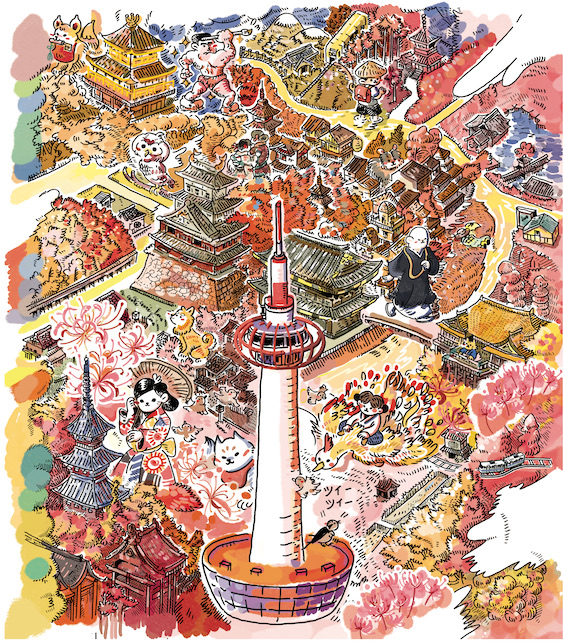
秋のいぶき、京都に灯る——塔の光と彼岸花の記憶This month’s cover captures a quiet autumnal view of Kyoto, wrapped in warm, seasonal hues.
今月号のカバーは、秋色に染まる京都の街並みを描いた一枚です。
At the center of the scene stands Kyoto Tower, located at the city’s gateway near Kyoto Station. Resembling a tall candle, the tower was inspired by the idea of “a light without fire” in a city filled with wooden architecture.
画面中央にそびえるのは、京都の玄関口・京都駅前に建つ「京都タワー」。まるで一本の大きな蝋燭のようなこの塔は、伝統的な木造建築が多い京都の街に「火を使わない灯り」を灯す、という発想から生まれました。
The tower was completed in 1964—the year of the Tokyo Olympics, a symbolic time when Japan was reemerging on the world stage after World War II. In Kyoto, a city with over a thousand years of history, the tower quietly took its place as a beacon pointing toward the future.
建設されたのは1964年――東京オリンピックの年であり、日本が戦後から立ち上がり、世界に向けて再出発した象徴的な年でもあります。千年の都・京都に立てられたこの塔は、「未来へのともしび」として、人々の希望を静かに照らしてきました。
In the depicted landscape, Kyoto’s iconic temples and shrines—such as Kiyomizu-dera, Kinkaku-ji, Nijō Castle, and Fushimi Inari—are nestled among trees adorned in brilliant autumn leaves, deepening the richness of the scene.
描かれた風景には、紅葉に染まる京都の街並みに、清水寺や金閣寺、二条城、伏見稲荷など、数多くの歴史的建築が点在し、秋の彩りとともに風景に深みを添えています。
Adding a vivid accent of red to the scene are the red spider lilies, or higanbana. Blooming around the autumn equinox, these flowers are also featured in this issue’s Ibuki section, gently evoking memories of ancestors and quiet moments of remembrance.
そこに、鮮やかな赤のアクセントとして咲くのが「彼岸花」。今号の「いぶき」コーナーでも特集しているこの花は、ちょうど秋のお彼岸の頃に咲き、故人を偲び、静かに手を合わせる心を呼び起こします。
In autumnal Kyoto, layers of time overlap, and memory and prayer pass gently through the air.
秋の京都には、時間の層が折り重なり、記憶と祈りがそっと行き交います。
This article is from the September 2025 issue of Hiragana Times.
この記事は、月刊誌『ひらがなタイムズ』2025年9月号より掲載しています。
-
The World of Words Connected by Those Who Hope [Part 1] | 希望するものたちがつなぐ言葉の世界 (前編)
[Japan Style – March 2025 Issue]
Looking back at human history, conflicts between ethnic groups have continued without end. In the latter half of the 19th century, one person began to wonder: “Could language differences be the cause of misunderstandings and conflicts?” “If people had a common language, wouldn’t it be possible to build an equal and peaceful society?”
人類の歴史を振り返ると、民族間の対立は絶えず続いてきました。19世紀後半、ある人物が「言語の違いが誤解や争いの原因ではないか」「共通の言語を持つことで、平等で平和な社会を築けるのではないか」と考えました。That person was Ludwik Lejzer Zamenhof (1859–1917). He was born in Białystok, in northeastern Poland. At the time, this region was under the rule of the Russian Empire and had a complex history with many ethnic groups living together. In this town, which had a population of only about 20,000 people, as many as five or six different languages were spoken in daily life.
その人物こそが、ルドヴィコ・ザメンホフ(Ludwik Lejzer Zamenhof, 1859–1917) です。彼はポーランド北東部のビャウィストクで生まれました。当時、この地域はロシア帝国の支配下にあり、多民族が混在する複雑な歴史を持つ土地でした。人口わずか約20,000人の町で、5~6種類もの言語が日常的に使われていたのです。In 1887, Zamenhof published a book under the pen name “Doktoro Esperanto” (Doctor Hoper), rather than using his real name. The book was titled Unua Libro (The First Book of the International Language). What he proposed was a neutral, common language that would transcend ethnic and national borders. Over time, the pen name Esperanto (meaning “one who hopes”) itself became the name of the language.
1887年、ザメンホフは本名ではなく、「Doktoro Esperanto(エスペラント語で希望する医師)」というペンネームで、一冊の本を発表しました。その本の名は「国際語 第一書(Unua Libro)」。彼が提案したのは、民族や国境を超えた中立的な共通言語でした。やがて、「Esperanto(希望する)」というペンネーム自体が、そのまま言語の名前として定着していきます。Ludwik Lejzer Zamenhof
Zamenhof’s ideal was not merely to create an international common language, but rather, he believed that “the very act of learning Esperanto itself would cultivate a desire for peace within people.” Even today, his philosophy lives on, as Esperantists around the world continue to learn the language and deepen their connections. His ideals remain alive, passed down among those who aspire for peace.
ザメンホフの理想は、単に国際共通語を作ることではなく、「エスペラント語を学ぶこと自体が、人々の中に平和を目指す意思を育む」と考えることでした。現在も彼の思想を受け継ぎ、世界各地のエスペランティストたちがこの言語を学び、交流を深めています。その理念は今も息づき、平和を願う人々の間で受け継がれています。Zamenhof had experience as an ophthalmologist and is thought to have valued “regularity” from a scientific perspective. The grammar of Esperanto, which he designed, completely eliminates exceptions and irregular changes, forming a “perfectly regular structure.” This was the result of his goal to create “a language that is fair to everyone and can be learned in the shortest time.”
ザメンホフは眼科医としての経験を持ち、科学的な視点から「規則性」を重視していたことが想像できます。そんな彼が設計したエスペラント語の文法は、例外や不規則変化を一切排除した「完全に規則的な構造」を持っています。これは、「誰にとっても公平で、最短で習得しやすい言語」を目指した結果でした。On the other hand, English, which has now become the world’s common language, is full of exceptions and irregularities. English has many irregularities, such as verb conjugations, plural forms, and inconsistencies in pronunciation, making it almost the opposite of Esperanto. Yet, why did English, with all its irregularities, spread across the world?
一方、今や世界の共通語となった英語は、例外や不規則変化に満ちています。動詞の活用、複数形の変化、発音の不統一など、エスペラント語とは正反対ともいえる「不規則性」が数多く存在します。にもかかわらず、なぜ英語は世界に広まったのでしょうか?Perhaps, from a human perspective, something that includes a certain degree of irregularity feels more natural and easier to get used to than something that is entirely systematic. And it may not be a coincidence that nations with flexible languages were the ones that expanded their influence throughout history.
もしかすると、人間の感覚としても、すべてが整然としているより、ある程度の不規則性を含んだほうが、自然でなじみやすいのかもしれません。そして、そうした柔軟性を持つ言語を操る国が、歴史の中で影響力を広げていったのも、自然な成り行きだったのかも知れません。So, as English spread across the world, when and how did it reach Japan? In this issue, we trace that history. Japan’s first encounter with the English language dates surprisingly far back—to the late Sengoku period, in the year 1600, when the Battle of Sekigahara took place.
では、英語が世界へ広がる中で、日本にはいつ、どのようにして伝わったのでしょうか? 今回は、その歴史をたどってみました。日本人が初めて英語に触れたのは意外にも古く、戦国時代後期、関ヶ原の戦いが起こった西暦1600年までさかのぼります。That year, a Dutch ship called De Liefde drifted ashore on the coast of Ōita Prefecture. This ship was one of five vessels that had set out from the Netherlands in 1598, aiming for East Asia. At the time, the Netherlands was competing with Portugal and Spain to establish trade routes with Asia, and De Liefde’s voyage was part of that effort.
この年、大分県の海岸に1隻のオランダ船、リーフデ号が漂着しました。この船は、1598年にオランダを出発し、東アジアを目指した5隻の船団のうちの1隻でした。当時のオランダは、ポルトガルやスペインと競いながら、アジアとの貿易路を確立しようとしており、リーフデ号の航海もその一環だったのです。The journey was extremely harsh, and out of the five ships, only De Liefde managed to reach its destination. The crew, which had initially numbered about 110, had been reduced to just 24, finally making landfall in Japan in a state of extreme exhaustion.
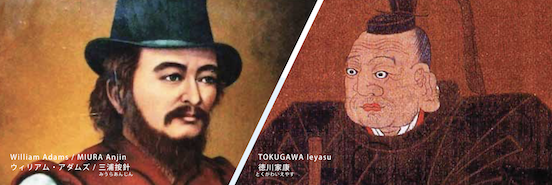
航海は過酷を極め、5隻のうち目的地に到達できたのはリーフデ号ただ1隻のみでした。乗組員も当初の約110名からわずか24名にまで減少し、極限状態の中でようやく日本にたどり着いたのです。Among the crew was an English navigator named William Adams. He is said to be the first Englishman ever to set foot in Japan.
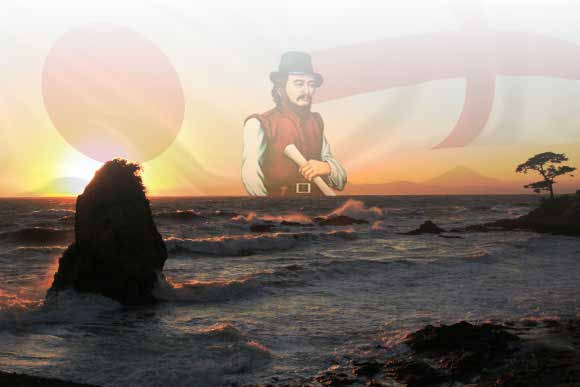
この船には、イギリス人航海士ウィリアム・アダムズが乗船していました。彼こそが、日本に初めて足を踏み入れたイギリス人とされています。Encounter Drawn by Nobuyuki Tamada (2000)
At the time, the Netherlands was a maritime power, excelling in shipbuilding technology and engaging in trade with countries around the world. Amsterdam was a bustling international commercial hub, a thriving port city where many ships came and went. People dreaming of great fortunes and adventurous sailors eager to explore unknown lands joined Dutch ships, even from neighboring countries, in an attempt to ride the waves of the Age of Exploration.
当時、オランダは造船技術に優れ、世界と交易を行う海洋大国でした。アムステルダムは活気あふれる国際商業の中心地で、多くの船が行き交う港町として栄えていました。一攫千金を夢見る者や、未知の世界に憧れる冒険心あふれる船乗りたちが、周辺国からもオランダ船に乗り込み、大航海時代の波に乗ろうとしていたのです。Adams was one such sailor, but his experiences in Japan were entirely unexpected. After drifting ashore, he was suspected of being a “foreign spy” or even a “pirate” and was held in confinement for some time. This suspicion is believed to have been fueled by Spanish and Portuguese missionaries already in Japan, who had warned the shogunate to be cautious.
そんなオランダ船の乗組員の一人だったアダムズですが、日本での体験はまったくの想定外でした。漂着後、彼は「異国のスパイ」や「海賊」として疑われ、しばらく幽閉されることになります。その背景には、すでに日本に滞在していたスペインやポルトガルの宣教師たちが、幕府に警戒を呼びかけていたともされています。However, Adams’ fate took a dramatic turn when he met Tokugawa Ieyasu. Ieyasu, known for his curiosity, took an interest in Adams’ knowledge and skills and had lengthy discussions with him through an interpreter. Adams explained the political situation in Europe and advised Ieyasu to be particularly wary of the influence of Catholic nations like Portugal and Spain. It is said that this advice later influenced Japan’s policy of national isolation.
しかし、彼の運命を大きく変えたのが、徳川家康との出会いでした。好奇心旺盛な家康は、アダムズの持つ知識と技術に関心を示し、通訳を介してじっくりと話を聞いたとされています。アダムズはヨーロッパの情勢を伝え、特にカトリック国であるポルトガルやスペインの影響力には警戒が必要だと進言しました。この助言は、後の鎖国政策にも影響を与えたとされています。Ieyasu also recognized Adams’ expertise in navigation and ordered the construction of Japan’s first Western-style sailing ship. Working alongside Japanese craftsmen, Adams helped build an approximately 80-ton ship, and this technology was later applied to the shogunate’s trading vessels, known as shuin-sen (red-seal ships).
また、家康はアダムズの航海技術にも注目し、日本で初めて西洋式帆船を建造させました。アダムズは日本の技術者と協力しながら約80トン級の帆船を完成させ、その技術はのちに幕府の貿易船(朱印船)にも受け継がれていきます。Furthermore, Ieyasu granted Adams samurai status and an estate in the Miura Peninsula (in present-day Kanagawa Prefecture). He was also given the Japanese name “Miura Anjin,” with “Anjin” meaning “navigator”—a reference to his profession.
さらに、家康はアダムズに武士としての身分を与え、三浦半島(現在の神奈川県)に領地を授けました。そして、「三浦按針」という日本名を与えます。「按針」とは航海士を意味する言葉で、その職務に由来しています。Though Adams had no choice but to remain in Japan, he had a wife and children in England and repeatedly requested permission to return home. However, Ieyasu highly valued Adams and would not let him go, leaving Adams’ wish to return home unfulfilled.
その後、日本での生活を余儀なくされたアダムズでしたが、イギリスには妻子がいたため、何度も家康に帰国を願い出ました。しかし、家康は彼を重用し、手放すことはありませんでした。こうして、アダムズの帰国の願いはかなわぬままとなりました。Ironically, in 1613, when the English trading ship Clove arrived in Hirado, Nagasaki, Adams served as an interpreter and successfully facilitated trade negotiations between England and Japan. However, he did not take this opportunity to return home.
皮肉なことに、1613年、イギリスの商船「クローブ号」が長崎県平戸に到着した際、アダムズは通訳として関与し、イギリスとの交易交渉を成功させます。しかし、彼はこれを機に母国へ帰ることはありませんでした。By this time, Adams had already accepted life in Japan, married a Japanese woman, and started a family. He made significant contributions to Japan through his work in interpretation, shipbuilding, and navigation instruction, and later engaged in trade voyages alongside Japanese merchants.
アダムズはすでに日本での生活を受け入れ、日本人の妻を娶り、家庭を築いていました。彼は通訳、造船、航海術の指導を通じて日本に多大な貢献を果たし、さらに日本人商人たちとともに貿易航海にも携わるようになりました。Then, on May 16, 1620, at the age of 55, he passed away in Hirado, Nagasaki. In his will, he specified that his estate should be divided between his families in Japan and England.
そして、1620年5月16日、55歳で長崎県平戸にて生涯を閉じました。彼の遺言には、日本とイギリスの両方の家族に財産を分配することが記されていました。Among the crew of De Liefde was another Dutch navigator, Jan Joosten, who, like Adams, served under Ieyasu. Joosten resided in what is now Tokyo’s Yaesu district, which was named after him.
また、リーフデ号の乗組員には、アダムズ同様に家康に仕え、現在の東京・八重洲(ヤン・ヨーステンの名に由来)に居住していたことで知られるオランダ人航海士ヤン・ヨーステン(Jan Joosten)もいました。After Adams’ death, Japan established a trade system with the Netherlands as its only European trading partner for nearly 200 years. In 1639, the shogunate expelled the Portuguese and fully implemented its policy of national isolation. The only remaining European trading post was the Dutch trading house on Dejima in Nagasaki.From then on, Japan’s knowledge of the West was limited to what came through the Dutch, and the study of Dutch (Rangaku, or “Dutch learning”) flourished.
アダムズが亡くなってから約200年間、日本はオランダをヨーロッパ唯一の交易相手とする体制を築きました。1639年、幕府はポルトガル人を追放し、鎖国政策を本格化。ヨーロッパとの唯一の窓口として長崎・出島にオランダ商館が残されました。以降、日本の西洋に関する知識はオランダ経由のものに限られ、オランダ語(蘭学)が発展していきます。Coast of Miura Peninsula
However, this situation drastically changed with the Phaeton Incident of 1808. One day, a ship suddenly appeared in Nagasaki Bay, flying the Dutch flag. The magistrate’s office responded as usual, sending interpreters and Dutch trading post staff to the ship, but events took an unexpected turn.
しかし、その状況が一変するきっかけとなったのが、1808年の「フェートン号事件」でした。その日、長崎湾に1隻の船が静かに姿を現し、オランダ国旗を掲げていました。奉行所は通常通り対応し、通訳や在留オランダ商館員を船に派遣しましたが、事態は予想外の展開を迎えます。Two Dutchmen who boarded the ship were suddenly taken hostage. The ship then lowered the Dutch flag and raised the British flag, revealing itself as an enemy vessel. This was nothing short of “piracy disguised as diplomacy.” From the ship, a threatening voice rang out: “Provide water, food, and firewood—or we will kill the hostages!”
船に乗り込んだオランダ人2名は、突如として乗組員に拘束され、人質にされました。さらに、船はオランダ国旗を降ろし、新たにイギリスの国旗を掲げたのです。これは、まさに「友好の仮面をかぶった海賊行為」でした。船上からは「水、食料、薪を供給せよ。さもなくば、人質を殺害する!」という脅迫の声が響き渡り、長崎の町に緊張が走りました。The magistrate’s office was outraged, declaring, “Foreigners residing in Japan are under our protection, just like our own people. We must do everything in our power to rescue the hostages!” However, Japan had no means to resist the ship’s overwhelming firepower and had no choice but to comply with its demands.
奉行所は激怒し、「たとえ外国人であろうと、日本に在留する者は我が国の人々同然。全力を尽くして人質を奪還せよ!」と命じたのです。しかし、圧倒的な武力を持つフェートン号に対抗する手段はなく、日本側はやむなく要求を受け入れるほかありませんでした。Thus, Japan provided water and firewood, and the hostages were released. However, the Phaeton continued to prowl Nagasaki Bay for three days, firing warning shots and disrupting the peace of the harbor. Finally, as if nothing had happened, the British ship left.
こうして、日本側は水や薪を供給し、人質は解放されました。しかし、フェートン号は威嚇の砲声を響かせながら長崎湾内を徘徊し、3日間にわたり港の平穏を揺るがし続けました。最終的に、何事もなかったかのように長崎湾を離れ、イギリス船は姿を消しました。The person who took the greatest responsibility for this incident was the Nagasaki magistrate at the time, Matsudaira Yasuyasu. Feeling deeply accountable for the disgrace brought upon Japan, he took his own life by committing seppuku.
この事件の責任を最も重く受け止めたのが、当時の長崎奉行・松平康英でした。彼は、日本の尊厳を傷つけたことへの責任を痛感し、自ら切腹してその命を絶ちました。Furthermore, during the incident, the interpreters on board made a shocking discovery. They learned that the once-dominant Netherlands had been occupied by France and Britain and was in decline. This alarming report heightened the shogunate’s sense of crisis, making it impossible for Japan to ignore the presence of English-speaking nations.
また、事件の際、船上で通訳を担当した通詞たちは驚くべき事実を耳にします。それは、かつての覇権国家であったオランダが、フランスやイギリスに占領され、衰退しているという情報でした。この衝撃的な報告は幕府の危機感を与え、日本は英語圏諸国の存在を無視できなくなります。 -
The Messenger of the Blue Ocean | 蒼き海の使者
[Cover Story – March 2025 Issue]
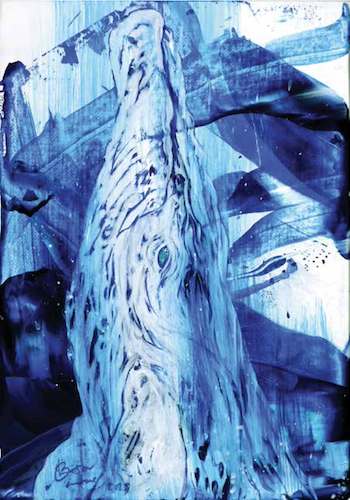
The cover of this month’s issue, which will be available in bookstores during the Pisces season (February 19 to March 20), features “The Messenger of the Blue Ocean.” painted by Bunta Inoue.
魚座の期間(2月19日〜3月20日)に書店に並ぶ今月号の表紙は、井上文太氏による青木海の使者です。The whale’s voice, known as the “whale song,” is said to be the farthest-reaching sound made by any animal on Earth.
ホエールソングと呼ばれるクジラの声は、地球上で最も遠くまで届く動物の声として知られています。Using extremely low-frequency sound waves, whales are believed to communicate with each other across thousands of kilometers – roughly the distance from Japan to Hawaii.
極低周波音を使い、数千きろ、つまり日本からハワイほどの距離を隔てた個体同士が交信していると考えられています。Considering that vast distance, it would not be surprising if whales had a universal language shared across the world.
その距離を思えば、クジラが世界(地球)共通の言語を持っていたとしても不思議ではありません。However, whale calls are not uniform. According to research, their sounds vary by region, showing differences similar to “dialects.”
しかし、クジラの鳴き声は一様ではありません。研究によると、地域ごとに異なり、まるで「方言」のような違いがあることが確認されています。Imagining whales exchanging messages through song in the mysterious depths of the ocean is truly fascinating.
私たちが知ることのない深海の世界では、クジラたちが歌でメッセージを交わし合っていることを想像する審美的です。This month’s issue introduces Esperanto, a language created based on the idea that a shared language could help build a peaceful society. It also explores the historical encounter between English – now the de facto global language – and the Japanese people.
今月号では、「共通の言語を持つことで、平和な社会を築けるのではないか」という理念から生まれたエスペラント語の紹介をはじめ、事実上世界共通語となった英語と日本語の歴史的な出会いについても触れています。A universal language, while existing, still allows for difference to be respected. Perhaps such an ideal, harmonious society already exists beneath the vast ocean, beyond our sight.
共通の言語を持ちながら、それぞれの違いを尊重し合う。そんな理想の調和社会が、私たちの目には見えない大海原の下には既に存在しているのかもしれません。 -
Fushimi Inari Taisha Hatsuma Taisai | 伏見稲荷大社初午大祭
[Cover Story – February 2025 Issue]
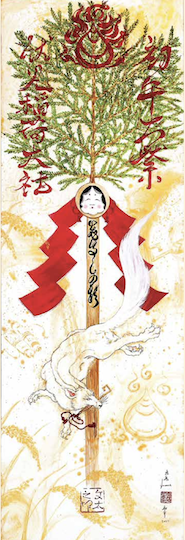
The cover of this month’s issue features a painting by Bunta Inoue, which was dedicated to the 2024 Hatsuma Taisai at Fushimi Inari Taisha in Kyoto.
今月号の表紙は、井上文太氏が2024年の京都・伏見稲荷大社初午祭に奉納した絵画です。The deity of Inari is known as the guardian of agriculture and commerce, and the key to the rice granary, held in the mouth of the deity’s messenger, the fox, is regarded as a symbol of protecting rice, the fundamental source of life for people.
稲荷神は農業や商業の守護神として知られ、その神使である狐がくわえている米蔵の鍵は、人々の命の根源である米を守る象徴とされています。The main subject of the painting, the “Shirushi no Sugi” (Symbolic Cedar), is cherished as a good luck charm.
絵の主題である「しるし(験)の杉」は、縁起物として親しまれています。Its origins are believed to lie in the Kumano Pilgrimage, which was widely practiced from the Heian to Kamakura periods.
その起源は、平安時代から鎌倉時代にかけて広く行われた熊野詣にあるとされています。The Kumano Kodo is famous as a network of pilgrimage routes that span the mountainous regions of the Kii Peninsula.
熊野古道は紀伊半島の山岳地帯に広がる巡礼路として有名です。It might be called the Japanese version of the Camino de Santiago.
日本のカミーノ・デ・サンティアゴと言えるかもしれません。The people of Kyoto would visit Fushimi Inari Taisha on their way back from the Kumano Pilgrimage and receive a “Shirushi no Sugi” as a token of their pilgrimage’s fulfillment and as a symbol of prayers for the prosperity of their families and communities.
京都の人々は熊野詣の帰路に伏見稲荷大社を訪れ、巡礼成就の証として、そして家族や地域の繁栄を祈願したしるしとして「しるしの杉」を受け取っていました。The Hatsuma Taisai is held on the first “Day of the Horse” (in a 12-day cycle) of the new year, and its key ceremonies take place during the “Hour of the Horse” (11:00 a.m. to 1:00 p.m.).
初午祭は、新年最初の「午の日」(12日周期)に行われ、重要な儀式は「午の刻」(午前11時~午後1時)にとり行われます。In traditional Japanese cosmology, “Horse” represents summer in the seasons, south in direction, and the time when the sun is at its highest point.
「午」は四季では夏、方角では南、太陽が最も高い位置にある時を表します。Originally, the festival’s purpose was to pray for abundant crops in the coming year, timed to this specific day and hour.
この日のこの時間に合わせ、その年の五穀豊穣を祈願するのが初午祭の本来の目的でした。Today, it has become an important event not only for agriculture but also for praying for business prosperity.
現在では、農業だけでなく商売繁盛も祈願する重要な行事となっています。