-

[From December Issue 2013]
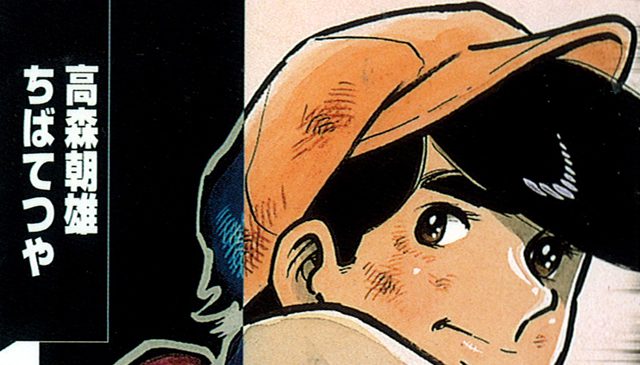
Nodame Cantabile
Set in a music college, “Nodame Cantabile” was serialized between 2001 and 2010 in the women’s manga magazine “Kiss.” “Nodame” is the nickname of protagonist NODA Megumi who is studying at the piano studies department. “Cantabile” is a musical term that means “songlike.”
Living in a room filled with junk, Nodame is an eccentric character who sometimes emits strange cries, such as “hagya” or “mukya.” She dreams of becoming a kindergarten or elementary school teacher in the future, but she is not a diligent student at college and her grades are not so good. In fact, CHIAKI Shinichi, who attends the same college, sees that she is exceptionally talented.
Shinichi is one year senior to Nodame and is also taking piano studies. His father is a famous pianist, so he spent his youth in European countries. He gets the best grades in piano studies, and although he is better at playing the violin, he wants to become a conductor in the future. He hopes to study abroad, but has become traumatized because of an accident in the past and is unable to travel by either airplane or ship. He is secretly anguished by the fact that he may never leave the island of Japan.
Shinichi is handsome, is talented musically, and is good at cooking. Living in the room next door to Shinichi, Nodame forces herself on him. Other eccentric characters include a drop out from violin studies, a male timpani student who has a crush on Shinichi, and Shinichi’s proud ex-girlfriend who enrolls for choral studies and is still in love with him.
Musical performances and classical pieces are featured in many scenes. Just as in a real college of music, the dialogue is peppered with musical terms. However, it’s been said that the author, NINOMIYA Tomoko, having no knowledge at all of classical music, thoroughly researched the subject before beginning the series. As a result, although the work was intended to be a comedy, it is also realistic. Some believe that the author is a graduate of a music college herself. The manga is popular with music students.
However, the story centers not on music, but on the development of the characters of Nodame and Shinichi; on how Nodame changes from being a person who does not take the piano seriously, despite having had her talent recognized from an early age. It also deals with what Shinichi, who is unable to go abroad, should do in Japan. It’s an inspired work that seriously gets to grips with the world of music, while delivering laughs at the same time and is widely appreciated, even by people who have no knowledge of music. There are 25 volumes of this manga. With more than 36 million copies printed, it was a huge hit.
When the story appeared on TV as a live action drama and animation, the number of people interested in classical music increased. On the day following a broadcast, CD shops would receive many inquiries about musical pieces used in the program. Seven sets of Nodame-related CDs were released. Increasing numbers of people attended classical concerts and purchased classical CDs, on top of the classical music fans that already existed, and a boom got underway.
Text: ICHIMURA Masayo[2013年12月号掲載記事]のだめカンタービレ
「のだめカンタービレ」は音楽大学を舞台にしたまんがで、2001~2010年まで女性向けまんが雑誌「Kiss」に連載されました。「のだめ」とはピアノ科で学ぶ主人公、野田恵の愛称で、「カンタービレ」とは音楽用語で「歌うように」という意味です。
のだめはごみで埋めつくされた部屋に住み、時々「はぎゃ」「むきゃー」など奇声を発する不思議なキャラクターです。将来の夢は幼稚園か小学校の先生になることですが、大学ではあまりまじめな学生ではなく、成績もよくありません。そんなのだめに実はすばらしい才能があるということを見抜いたのが同じ大学に通う千秋真一です。
真一はのだめと同じピアノ科の1年先輩です。父は有名なピアニストで、幼い時期をヨーロッパ諸国で過ごしました。ピアノ科ではトップの成績で、バイオリンはそのピアノよりも得意ですが、将来は指揮者になりたいと思っています。留学を希望していますが、昔経験した事故がトラウマとなり飛行機にも船にも乗ることができません。島国の日本から出られないという悩みをひそかに抱えています。
真一はハンサムで音楽の才能があり料理も得意です。のだめは隣の部屋に住む真一に強引にアプローチしていきます。登場人物はほかにも、バイオリン科のおちこぼれや真一に思いを寄せるティンパニー奏者の男子学生、真一に未練のある元彼女でプライドの高い声楽科の女子学生など個性的なキャラクターがそろっています。
物語には演奏シーンも多く、クラシックの曲目もしばしば登場します。音楽大学らしくせりふには音楽用語も出てきます。しかし作者の二ノ宮知子にはクラシック音楽の知識が全くなく、連載を始めるにあたり徹底して取材したといいます。その結果、コメディー仕立てではあってもリアリティーのある作品になりました。読者の中には作者が音楽大学出身者だと思っていた人もいます。音楽大学の学生にも人気が高いです。
しかし、物語の軸となっているのは音楽そのものではなく、のだめと真一をはじめとする登場人物の成長です。幼いころからピアノの才能を認められながらも、本気で音楽と向き合ってこなかったのだめがどう変わるのか。また海外に行けない真一が日本で何をすべきなのか。刺激を与え合いながら音楽に真剣に取り組んでいく様子を笑いに包んで表現したこの作品は、音楽の知識のない人にも広く支持されています。コミックスは全25巻。発行部数3,600万部を超える大ヒット作になりました。
物語がドラマやアニメとなってテレビに登場するようになると、クラシック音楽そのものに興味を持つ人が増えました。放送の翌日には、番組の中で使用された楽曲に関する問い合わせがCDショップにたくさん寄せられるようになります。のだめ関連のCDも7組発売されました。それまでのクラシックファンだけでなく、積極的にコンサートへ出かけたりCDを購入する人を増やすなど、ブームを巻き起こしたのです。
文:市村雅代 -

[From December Issue 2013]
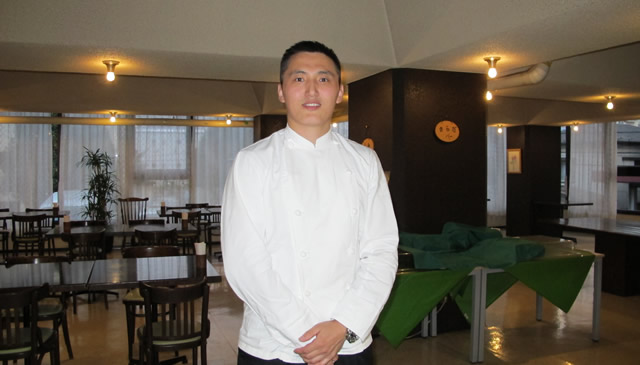
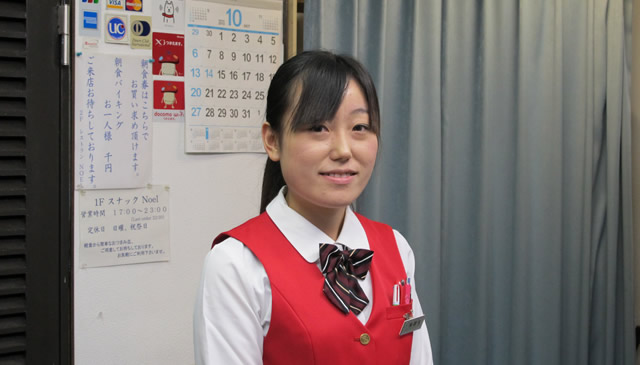
Both from China, Urgenbayar and LIU Sichen work for Tokyo Business Hotel (Shinjuku Ward, Tokyo). Urgenbayar comes from Chifeng in the Inner Mongolia Autonomous Region. Lui was born in Mudanjiang, Heilongjiang.
Urgenbayar came to Japan in 2004. After graduating from college in China, he spent two years searching for a job but was unable to find one. Thinking that as Japan was an economic powerhouse there’d be work, he enrolled in a Japanese language school in Hohhot for half a year. His nomad parents approved and gave him money after selling about a third of the livestock they owned.
After coming to Japan, he studied for a year at a Japanese language school and then went on to study at the Faculty of International Development in Takushoku University. His major was Japanese culture and language. The university alone cost 800,000 yen a year, and he struggled economically. One of the ways he saved money was to share the rent of a four-and-a-half-tatami room with a shared bathing room and toilet, with a student friend of Mongolian descent, reducing his rent to 22,000 yen a month.
“I worked at an izakaya (Japanese pub / restaurant) to pay for part of my living expenses. Teachers spoke slowly to me, but patrons spoke rapidly and were hard to understand. I had difficulties with honorific language, too,” says Urgenbayar. After graduation, HASHIMOTO Taiitsu, President of the Tokyo Business Hotel and the father of a friend, gave him a job on the basis of his good character. He first worked at the front desk. Now he’s a cook.
“I want to work in Japan for the foreseeable future because there’s no work in the countryside in China and the pollution is awful. In Japan, your salary is always paid and the food and water are safe. But I intend to return to China eventually to inherit my father’s job,” says Urgenbayar.LIU Sichen
Liu came to Japan because she had studied Japanese in high school. “Japanese and English were compulsory. Teachers of the Japanese language were usually serious, but at parties they would liven things up with karaoke,” she recalls. She majored in Japanese at college and became an interpreter for a Japanese company.
The salary, however, wasn’t very good for a recent graduate. “Besides, while I was working with Japanese people, I felt my Japanese wasn’t good enough. So I came to Japan in 2010 and went to a language school for a year and then studied business Japanese at a post-graduate course at Musashino University,” says Liu.
The school and her living expenses of a little less than 100,000 yen a month were paid for with money sent by her parents and with her salary from her job at a convenience store. “My parents approved of my studies in Japan at first, but after the Great East Japan Earthquake, they suggested I return. But I had just been admitted to a post-graduate course. I wanted to further improve my Japanese after graduation, so I got a job at this hotel. Besides, Japan is a convenient place to live.”
“At first, sushi disgusted me because it is raw, but I love it now. There was a period when I was obsessed by ramen, too,” laughs Liu. After starting to work at the hotel’s front desk, she began dreaming of having a shop or a hotel of her own in the future. “One day, a Chinese guest fell ill and I went to the hospital with him as an interpreter. That made him so happy that I was glad, too. In the future I’d like to do work that makes people happy. I’d also like to act as a bridge between Japan and China.”
Tokyo Business Hotel
Text: SAZAKI Ryo[2013年12月号掲載記事]東京ビジネスホテル(東京都新宿区)で働くウルゲンバヤルさんと劉思忱さんは、ともに中国出身です。ウルゲンバヤルさんは内モンゴル自治区赤峰市から来ました。劉さんは黒竜江省牡丹江市生まれです。
ウルゲンバヤルさんは2004年に来日しました。中国で大学を卒業した後2年ほど仕事を探したのですが見つかりませんでした。そこで経済大国の日本なら仕事があるかもしれないと考え、フフホトの日本語学校に半年通いました。遊牧民の両親も日本語の勉強に賛成してくれて、所有していた家畜の3分の1ほどを売り、お金を出してくれました。
来日後は1年間日本語学校で勉強し、その後拓殖大学国際開発学部に進学しました。専攻は日本文化と日本語です。学費だけでも年に80万円かかるので、経済的には大変でした。風呂トイレ共同の四畳半の部屋を借り、モンゴル系留学生の友達とシェアして、家賃を月2万2千円におさえるなど工夫をしました。
「居酒屋でバイトして生活費の足しにしました。先生はゆっくり話してくれますが、お客様は早口で聞き取るのが大変でした。敬語も難しかったです」とウルゲンバヤルさん。卒業後は、友達の父親である東京ビジネスホテル社長、橋本太乙さんが、ウルゲンバヤルさんの人柄を見込んで雇ってくれました。最初はフロントで働き、今はコックをしています。
「中国の田舎のほうは仕事がないですし環境汚染もひどいので、当分は日本で働きたいです。日本ではお給料もきちんと出ますし食べ物や水も安全ですから。でも最終的には帰国して、父の仕事を継ぎたいと思います」とウルゲンバヤルさんは話します。劉さんは、高校時代に日本語を習ったのがきっかけで来日しました。「日本語と英語が必修でした。日本語の先生方は、ふだんはまじめなのにパーティーのときにはカラオケで盛りあげてくれました」と振り返ります。大学で日本語を専攻し、日系企業の通訳になりました。
しかし新卒だったので給料はあまりよくありませんでした。「それに日本人と働いて、日本語の勉強不足も感じました。それで2010年に来日して1年間語学学校に通い、それから武蔵野大学の大学院でビジネス日本語を勉強しました」と劉さんは話します。
留学の費用や月に10万円弱かかる生活費は、親からの仕送りとコンビニのバイト代で払いました。「最初は留学に賛成していた両親ですが、東日本大震災後は帰国を勧めるようになりました。でもそのときは大学院に合格した直後でしたし、卒業した後はもっと日本語をみがきたいと思ってこのホテルに就職しました。日本の生活は便利ですし」。
「最初は生でいやだと思っていた寿司が、今は大好きです。ラーメンにも一時期はまっていましたよ」と笑う劉さん。このホテルのフロントで働き始めてから、いつかお店かホテルを持ちたいと思うようになりました。「ある日、中国人のお客様が急病になったので一緒に病院へ行って通訳を務めたのです。するとお客様が大変喜ばれたので、私もうれしくなりました。将来も人を喜ばせる仕事をしたいです。日本と中国の架け橋にもなりたいですね」。
東京ビジネスホテル
文:砂崎良 -
[From November Issue 2013]
Ousmane Youla SANKHON
“Forty years have passed since I arrived in Japan. I’ve been to all 47 prefectures. Japanese people praise me saying, ‘You know Japan better than I,’” says Ousmane Youla SANKHON in fluent Japanese. He became famous appearing in variety shows and in commercials on TV. Nowadays he is busy travelling all over Japan for events and lectures.
Sankhon was born in 1949 in the state of Bofa, Guinea. Watching planes fly overhead, as a young boy he dreamed of becoming a pilot. In those days, most children in Guinea didn’t go on to higher education. Sankhon, however, went on to study in the capital at the University of Conakry at the suggestion of his parents who attached great importance to education. Coming top in an exam taken by some 10,000 people, he won a state-sponsored scholarship to study in France.
After studying economic politics at the Paris-Sorbonne University, Sankhon returned to Guinea to become a diplomat. He was then ordered to “go to Japan.” Sankhon’s studies had focused on Europe and he had no knowledge whatsoever of Asia nor Japan. “I saw Burma and Vietnam in transit and got worried thinking, ‘These countries are less developed than Guinea. Japan is even further away. Just how backward can it be?’” Sankhon says, laughing.When he was diplomat
However, what waited for Sankhon in Japan was streets lined with skyscrapers and roads thronged with cars. “I was stunned when the car I was in got on a highway. The car was rushing along at the same height as the third floor of a building,” says Sankhon. “In Marunouchi, even in the middle of the night, there were always some lighted windows. I understood that Japan was a success because Japanese are such hard workers.”
Sankhon was in a hurry to study Japanese in order to perform his duties as a diplomat. “I decided I didn’t have enough time to learn kanji, as I was to be transferred to another country in a few years. So, using the Roman alphabet, I listened to everything very carefully, pronouncing it exactly as I had heard it.” Also, by writing down words he’d been taught, he made his own dictionary and memorized two words each day.
He was later transferred to the US before returning to Guinea. But before his first son was born, he took a leave of absence from the Foreign Service to come back to Japan. “At 64, I’m still on my leave of absence,” says Sankhon, laughing.
Because even though he had intended to stay for just a short while until his son was born, he became popular on TV. “I didn’t know that it was an audition,” says Sankhon. He was told by someone from the Japan-Guinea Friendship Association to go to a TV station to do some PR for Guinea. There were many non-Japanese there. Unaware of the circumstances, he spoke frankly about a variety of things. Then someone said “What an interesting man!” And with that, he was hired for a variety show.When he was on TV
“My office had always been lively; a place where people gathered together.” He started to make frequent appearances on TV, attracting attention because of the contrast between his cheerful, humorous speech and his intelligence as a speaker of six languages, including Japanese. “I stood out because there were no other black TV personalities in those days.”
Some programs made a joke out of his black skin, for example, “Searching for Sankhon in a dark place.” “Some said it was discriminatory and questioned whether a diplomat should appear in such programs,” says Sankhon. “But I didn’t mind a bit because I didn’t have an inferiority complex about my black skin. Besides, everyone’s jokes were so full of affection that I enjoyed the shows myself.”
Sankhon’s success opened doors to other TV personalities from Africa. African TV personalities aren’t rare anymore today. Sankhon himself doesn’t appear so much on TV these days. He puts his energies into giving lectures and into social welfare activities.
“Education in Guinea is still very backward,” says Sankhon. “Some children must walk half a day to get to their elementary school. That’s why I built one in Bofa. I also donate stationery to orphans. The children get really excited,” says Sankhon. With help from local Japanese government and other organizations, he has also donated fire engines and farming machinery to Guinea.
Sankhon became interested in the welfare of others because of a personal experience. “I broke my leg when I was a child. The treatment I received from my Guinean doctor was inadequate, so this leg became permanently damaged. My mother massaged me everyday for years, but it didn’t help.” When she got old, Sankhon took care of her, inviting her to Japan to have her eyes operated on.Visiting a nursing home
Meanwhile one of his acquaintances, an administrator for a nursing home, said to him, “Why don’t you study nursing and obtain a license as a caregiver?” So he trained in the nursing home by pushing wheelchairs and bathing the elderly. “I spent a night in a diaper. Kanji was the hardest part of studying for the exams.” After a concerted effort, he successfully gained a second grade qualification. Now he visits nursing homes, entertaining the elderly by doing things like singing enka ballads.
After the Great East Japan Earthquake, he went as a volunteer to areas affected by the disaster. “I was impressed to see victims queuing up properly to receive food.” His welfare activities in Guinea and Japan over the years have been recognized and this July, Sankhon received an award from the Minister of Foreign Affairs. “My skin is black, but in my soul I’m completely Japanese,” he says humorously. “Japanese values of duty and empathy are really fantastic. Because I feel that these have been on the decline over the last 40 years, I continue to emphasize their importance in my lectures.”
Ousmane Sankhon Official Website
Text: SAZAKI Ryo[2013年11月号掲載記事]オスマン・ユーラ・サンコンさん
「来日して40年経ちました。47都道府県全てに行きましたし、日本人に『私より日本のことに詳しいですね』とほめられますよ」と、流ちょうな日本語でオスマン・ユーラ・サンコンさんは話します。サンコンさんは日本でテレビのバラエティー番組やCMに出演して有名になりました。今はイベントや講演会に出るために、日本全国を忙しく飛び回っています。
サンコンさんは1949年にギニアのボッファ県に生まれました。頭上を飛ぶ飛行機を眺めて、パイロットになりたいと夢見る少年でした。当時のギニアでは進学しない子どもが多かったのですが、サンコンさんは教育熱心な両親の勧めで首都にあるコナクリ大学に進学しました。そして約1万人が受けた試験で1番になって、フランスへの国費留学の奨学金を勝ち取りました。
パリのソルボンヌ大学で経済政治学を学んだサンコンさんは、ギニアに戻って外交官になりました。すると、「日本へ行きなさい」と命じられました。ヨーロッパを中心に学んできたサンコンさんには、アジアや日本についての知識が全くありませんでした。「経由地のビルマ、ベトナムを見て、『ギニアより発展が遅れている。この先にある日本はどれほど遅れた国だろう』と心配になったほどです」とサンコンさんは笑います。しかしサンコンさんを待っていたのは、高層ビルが建ち並び、車がたくさん走っている日本でした。「私を乗せた車が高速道路へ入ったときはびっくりしました。建物の3階と同じ高さを車が走るのですから」とサンコンさん。「それに丸の内のビルは夜でもいつもどこかの窓に灯りがついていました。日本人はよく働くのだなと、日本が成功した理由を知りました」。
外交官の役目を果たすために、サンコンさんは急いで日本語を勉強しました。「数年間で別の国へ転勤になってしまいますから、漢字を覚えている時間はないと判断しました。それでローマ字を使い、ひたすらよく聞いて、聞いたままに発音しました」。また、教えられた単語を書きとめて手製の辞書をつくったり、一日二つずつ単語を覚えたりしました。
その後アメリカへ転勤となり、さらにギニアへ帰国しました。しかし長男が生まれるとき、外交官の仕事を休職して再来日しました。「そして64歳の今でも休職したままになっています」とサンコンさんは笑います。
なぜなら、子どもが生まれるまでの短い滞在のつもりが、テレビで活躍することになってしまったのです。「あれがオーディションだなんて、知らなかったんですよ」とサンコンさんは言います。日本ギニア友好協会の人に、ギニアの広報のためと言われてテレビ局へ行きました。そこにはたくさんの外国人がいました。事情を知らないサンコンさんは、素直にいろいろと話しました。すると「おもしろい人ですね!」とバラエティー番組に採用されました。「もともと、私のオフィスにはいつも人が集まってきて、にぎやかだったんですよ」。明るくてユーモラスなおしゃべりと、日本語など6ヵ国語を話す高い知性とのギャップが話題となって、テレビによく出演するようになりました。「当時、他に黒人のタレントがいなかったから、目立つことができました」と言います。
番組の中には「暗い場所でサンコンさんを探す」など、黒い肌をジョークの種にするものもありました。「差別だとか、外交官がそんな番組に出ていいのかと言う人もいました」とサンコンさん。「でも私は肌の黒さにコンプレックスがありませんから、何を言われても平気でした。それにみんなのジョークには愛情がこもっていましたから、私も番組を楽しめたんですよ」。
サンコンさんの活躍は、他のアフリカ出身のタレントに道を拓きました。今では日本のテレビで黒人のタレントを見ることはめずらしくありません。一方で、サンコンさん自身は最近はあまりテレビに出なくなりました。今は講演や福祉活動に力を入れているのです。
「ギニアではまだまだ教育が遅れています」とサンコンさん。「小学校に行くために半日歩かなければならない子どももいます。それでボッファに小学校を建てました。孤児に文房具を贈る活動もしています。もらった子どもたちは本当に大喜びするんですよ」とサンコンさんは話します。また、日本の自治体などに協力してもらって、消防車や農業用の機械もギニアに寄付しました。
サンコンさん自身の経験も、福祉に関心をもつきっかけになりました。「私は子どものとき足を骨折したことがあります。ギニアの医者は治療が下手だったので、足が不自由になってしまいました。母が何年間も毎日マッサージしてくれましたがだめでした」。母親がとしをとったとき、サンコンさんは日本に呼んで目の手術を受けさせたり介護をしました。そのうちに、介護施設の園長をしている知人から「介護の勉強をして、ヘルパーの資格を取ってみたらどうですか」と勧められました。そこで施設で車いすを押したり、高齢者を入浴させたりという実習を積みました。「おむつをはいて一晩過ごすという体験もしました。試験勉強では漢字がいちばん大変でしたね」。努力のかいがあって2級に合格し、今は介護施設を訪れて、演歌を歌ったりして高齢者を楽しませる活動もしています。
東日本大震災のときには、被災地へボランティアに行きました。「被災者がきちんと列をつくって食べ物をもらう順番を待っている姿を見て感銘を受けました」。このように長年のギニアと日本での福祉活動が認められて、サンコンさんは今年7月、外務大臣から表彰されました。「肌は黒いけど、心はもう完全に日本人です」とユーモラスに言います。「日本人の義理や人情は本当にすばらしいです。この40年でそれらが薄れてきていると感じるので、講演でその大切さを呼びかけ続けていますよ」。
オスマン・サンコン公式サイト
文:砂崎良 -
[From November Issue 2013]
“University Brand Foods” that utilize ingredients developed in university research labs are attracting attention. The processes and developments that lead to the creation of these foods vary, from products with a modern take on famous local produce, to products that are the result of research. They’ve been growing in popularity to such an extent that department stores in Tokyo regularly host food fairs called “Universities are Delicious!!” bringing together products from over 30 universities.
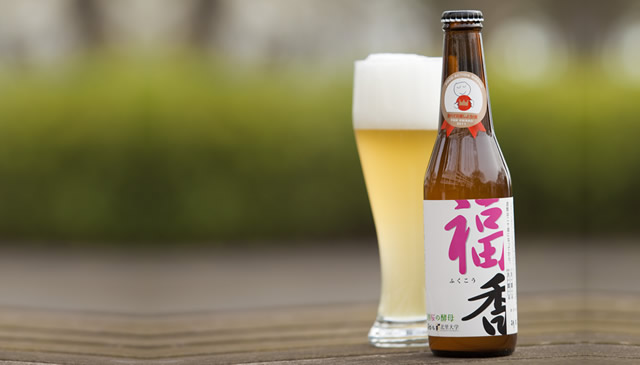
At Kamaishi Institute, Kitasato University Research Organization for Infection Control Sciences (Ofunato City, Iwate Prefecture) beer is made using yeast collected from a cherry tree. The research facility stores Ishiwarizakura yeast extracted from a cherry tree. Located in Morioka City, Iwate Prefecture, Ishiwarizakura is a 360 year old cherry tree that grew from a fissure in a rock. When the tree blooms, between mid-April to early May, many people from both within and without the city come to view its blossoms.
The research institute was damaged in the Great East Japan Earthquake, and the building was partially destroyed, but miraculously the Ishiwarizakura yeast remained intact. Fukukou Beer had been successfully brewed from this yeast. Though the beer factory collapsed in the earthquake, it was reconstructed in just two months. They were somehow able to start brewing again, but experienced repeated failures in the beer making process.
“In the space of a year, local sake brewers joined forces with the university to create a commercial product. It is imbued with our hopes for renewal,” says INOMATA Yukie, who developed the product. The beer has gained a reputation for its delicious taste and characteristic refreshing fragrance. A portion of the sales profits is contributed to the revitalization of the Sanriku area.Cakes made with rice
In addition, Tokyo Kasei University began work on the “Shirafuji Project” seven years ago in order to bring back the so called, legendary Shirafuji sake rice. Professor NAKAMURA Nobuya dreamed up the idea in order to let his students try their hand at rice cultivation.
Students cultivated rice in Niigata Prefecture, an area renowned nationwide for producing delicious rice. Before long, hoping to give more people a taste of Shirafuji rice, some students put forward the idea that they sell confectionary made from this rice instead of from wheat flour. From then on, they began cooperating with Gateau Senka, confectionary shops to develop their own confectionary.
Trial versions, particularly in the form of cakes, were made one after the other to try to make it look delicious. One of the students involved in the developmental stage, SEO Moemi says, “We have been participating in the ‘Daigaku-ha Oishii!!’ fair for three years. Recently, so many people have come to buy it for children with wheat allergies. As it’s rather difficult to get hold of deserts that do not contain wheat, there’s been a call for us to put it on sale more regularly.”
Having gained a reputation for good quality and high safety standards, university brand foods will surely become more popular from now on.
Kamaishi Institute, Kitasato University Research Organization for Infection Control Sciences
Tokyo Kasei University
Text: TSUCHIYA Emi[2013年11月号掲載記事]大学の研究室で行われた研究を食品に活用した「大学ブランド食品」が話題を呼んでいます。地元の名産品を新たな視点で製品化したり、実習の成果を応用するなど、その開発のきっかけや過程はさまざまです。その注目度は高まっており、30以上の大学の食品を集めたフェア「大学は美味しい!!」が定期的に都内の百貨店で開催されるようになったほどです。
北里大学感染制御研究機構 釜石研究所(岩手県大船渡市)では桜から採取した酵母を使ったビールをつくっています。研究所では「石割桜」から採取した酵母、「石割桜の酵母」を保管していました。石割桜とは岩の割れ目から育った樹齢360年以上の桜で、岩手県盛岡市にあります。花が咲く4月半ばから5月上旬には、市内だけでなく遠くからもたくさんの人が花見に訪れます。
研究所は東日本大震災の被害を受けて建物が半壊しましたが、石割桜の酵母は奇跡的に被害を免れました。この酵母をもとに完成させたのが福香ビールです。ビール工場も震災の影響で倒壊しましたが、2ヵ月かけて工場を修理しました。なんとか醸造を始めることができましたが、ビールづくりは失敗を繰り返しました。
「大学と地元酒造メーカーが協力して商品化するのに1年かかりました。復興への願いがこもっています」と開発した猪又幸江さんは言います。ビールはすっきりした香りが特徴的でおいしいと評判です。売り上げの一部は三陸地域の復興に役立てています。また、東京家政大学では、幻の酒米と呼ばれていた白藤米を復活させる「白藤プロジェクト」を7年前に開始しました。学生に米作りを体験させたいという中村信也教授の発案がきっかけです。
学生たちは、おいしい米がたくさんとれることで全国に知られる新潟県で米作りを行いました。やがて、より多くの人に白藤米を食べてほしいという思いから、小麦の代わりに米粉を使ったお菓子を販売したらどうかという声が上がりました。そこで洋菓子店、ガトウ専科の協力を得て、お菓子の開発が始まりました。
なかでも特にケーキは見た目にもおいしそうになるよう試作を重ねました。開発を行った学生の一人、背尾萌実さんは言います。「『大学は美味しい!!』フェアには、3年前から出展しています。最近は小麦アレルギーをお持ちのお子さんのために買いに来たという方が多く見られました。小麦を使わない洋菓子はなかなか手に入らないので、定期的に売ってほしいという声もいただきました」。
品質が良く安全性が高いことで定評を得ている大学ブランド食品は、これからますます広まっていくようです。
北里大学感染制御研究機構 釜石研究所
東京家政大学
文:土屋えみ -
[From November Issue 2013]
PILOT Corporation
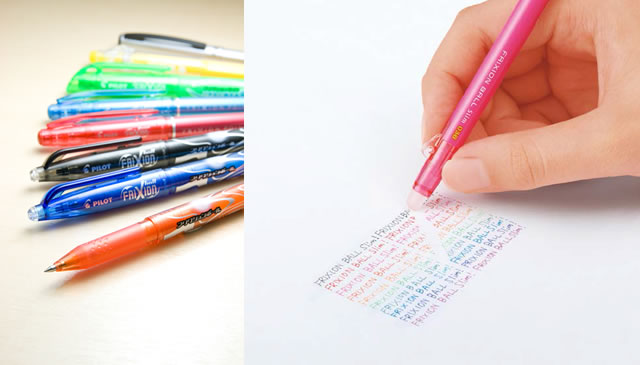
If you want to change or rewrite what you’ve written in your schedule or memo pad, it’s not possible to erase the text written with a normal ballpoint pen or fountain pen in the same way you would with a pencil. The “Frixion” series developed by PILOT Corporation came into being with the concept that “it would be convenient if there were a pen that could be erased no matter how many times you wrote with it.”
Frixion uses special ink that disappears when a certain temperature is exceeded. The unique property of this ink is that when it is rubbed with a special rubber attached to the tip of the pen, the frictional heat created renders it transparent. Therefore, once the ink has been erased, it’s possible to write on that surface over and over again. Besides this ballpoint pen, the product lineup includes felt tip pens and highlighters.
Until now, those wanting to erase text written in pen had to rely on erasers containing sand particles, or on correction fluid. The pen is designed so that the ink becomes colorless with the change in temperature and this means that even when the ink is rubbed with the rubber tip of the pen, residue is not produced. Because of this, the pen has caused quite a stir, and since it was released in France in 2006, more than 600 million pens have been sold in over 90 countries around the world.
It all started in 1975 when the company developed writing tools that used “ink that changes color with temperature.” “It began with toys that would change color in the bath and with applications for printing, but came to fruition with writing instruments, becoming our core business in 2005. To achieve the ideal pigment more than 1,000 kinds of compounds were created, over more than 30 years of study,” says TANAKA Mari of the Sales and Promotion Division.
Tanaka says, “The biggest difficulty was widening the temperature range within which the ink reacts, and to make the grain of the pigment fine enough. At first the original ink we developed changed color with the only the slightest change in temperature, so it was not practical. In addition, in order for the pigments to flow smoothly from the small crevice in the pen nib, the ink grains have to be very small and uniform in size,” she says, looking back on the developmental stage.
Frixion ink uses unique microcapsules that act as pigment. The capsule contains three components and it’s these that combine to react with frictional heat, making the ink turn transparent. The ink has been engineered to change color at a temperature of minus 20 to 65 degrees Celsius. The research lab was given the nickname “fuyajyou” (nightless district) within the company because in order to carry out this research, development continued day and night.
This pen is very convenient for studying. By writing in pink or orange, text can be hidden with a transparent sheet of red plastic, making it especially useful for memorizing important information.
PILOT Corporation
Text: ITO Koichi[2013年11月号掲載記事]株式会社パイロットコーポレーション
手帳に書いた予定が変わったときやノートに書いたメモを直したいとき、普通のボールペンや万年筆で書いた文字は、鉛筆のように消しゴムで消すことができません。株式会社パイロットコーポレーションの開発した「フリクション」シリーズは「何度でも書き直すことのできるペンがあれば便利ではないか」という考えがもとになって生まれました。
フリクションには一定の温度を超えると色が消える特殊なインクが使われています。このインクは軸の頭部にある専用ラバーでこすると、摩擦熱で透明になる性質があります。ですから、一度消した箇所には何度でも繰り返し書くことができます。ボールペンのほか、サインペンや蛍光ペンなどの製品があります。
これまでペンで書いた字を消すには、砂消しゴムで消したり、修正液を使ったりしなければなりませんでした。このペンは温度の変化でインクを無色にする仕組みのため、ラバーでこすっても消しかすが出ません。こうした特長が関心を集め、2006年にフランスで発売されて以来、これまで世界90ヵ国以上で6億本以上が販売されるほど人気を集めています。
この筆記具の始まりは同社が1975年に開発した「温度で色が変わるインク」です。「初めはお風呂に入れると色が変わる玩具や印刷用として利用されていましたが、本業である筆記具として完成したのは2005年。30年をかけて研究を続け、理想的な色素を探すために1,000種類以上もの化合物を作り出しました」と営業企画部の田中万理さんは話します。
田中さんは「最も苦労したのは反応する温度の幅を広げることと、色素の粒を非常に細かくすることでした。開発当初のインクは、わずかな温度変化で色が変わってしまうため、実用的ではありませんでした。また、筆記具はペン先のわずかな隙間からなめらかにインクを出すために色素の粒を細かく均一にすることを求められました」と開発時を振り返ります。
フリクションインキは特殊なマイクロカプセルが色素の役割を果たします。カプセルに含まれる3種類の成分の組み合わせが摩擦熱で変化することでインクが透明になるのです。このインクは-20~65℃で変色するように調整されています。こうしたことを研究するため、昼も夜も開発を続けていたので、研究室は社内で「不夜城」(夜も昼のように明るいこと)と呼ばれていました。
このペンは勉強するときなどにとても便利です。特にピンクとオレンジで書いた部分は赤いシートを乗せると色が隠れるので、大事なことを覚えているかどうか確かめるのにも役立ちます。
株式会社パイロットコーポレーション
文:伊藤公一 -
[From November Issue 2013]
Shimane Prefecture is located in the Chugoku region of Honshu (Japan’s main island) on the coast of the Sea of Japan. Until recently many Japanese people didn’t know where Shimane Prefecture was, or confused it with neighboring Tottori Prefecture, but now the prefecture is drawing more attention because of the historic Izumo Taisha (Izumo Grand Shrine) and the Iwami Ginzan silver mine, which has been designated as a World Culture Heritage Site. A land with a deep connection to Shinto legends, the surnames of many of its citizens have a connection to Shinto gods.
Izumo Taisha is dedicated to Okuninushi no Okami, a deity associated with matchmaking. The shrine has such a long history that it’s even mentioned in Japan’s oldest historical chronicle, the “Kojiki.” The tenth month of the old lunar calendar is known as kanna-zuki (month without gods) throughout Japan, but in Shimane Prefecture it is known as kamiari-zuki (month the gods are present). This is because all the gods from across Japan gather at Izumo Taisha during this period. To this day the Shinto ritual of kamimukaesai (god welcoming festival) is performed around November.
For the first time in 60 years, a process known as senguu (transfer ritual), involving the temporary removal of the goshintai (objects of worship believed to contain the spirit of the gods) to repair the shrines, was performed recently. In May this year the main deity, Okuninushi no Okami, was successfully transferred back to the honden (main hall). It is believed that this process not only helps to preserve the wooden building, but also helps to purify the resting place of the deity, thereby restoring his energy.
Lake Shinji
Besides this shrine, there are many other shrines associated with the Shinto gods in the Izumo area, as well as “power spots” (locations thought to be flowing with mystical energy). At Yaegaki Shrine in Matsue City people use coins placed on washi (Japanese paper) to have their fortunes told. Legend has it that Suga Shrine in Unnan City was the first palace that Susanoo no Mikoto built. One of the deities appearing in the Kojiki, Susanoo defeated the Eight-Forked Serpent, Yamata no Orochi – a monster that had been devouring one young woman each year.
Next to Izumo Taisha is Shimane Museum of Ancient Izumo. Bronze swords and other artifacts related to ancient Izumo, as well as documents concerning the history of Shimane Prefecture itself can be found on display there. In addition, there are an array of gift shops and food stalls lining Shinmon Dori, the road that leads up to the shrine.
The prefecture capital, Matsue City is also known as the Water City. Built in the 17th century, Matsue Castle is an important cultural property of Japan. English speaking volunteer tour guides are always available here. A popular attraction even in winter is the “Horikawa Meguri Yuransen” (Hori River Sightseeing Cruise). The Hori River surrounds the castle and it takes about 50 minutes to sail along it. Lake Shinji, located within the city itself, is known for shijimi clam fishing. However, the lake is also a popular destination for lovers wanting to catch a beautiful sunset.
Arriving in Japan in the 19th century as a correspondent for an American publishing company, Lafcadio HEARN is a Greek man who introduced Japan to the rest of the world. A collection of Japanese ghost stories that Hearn compiled and simplified is well known to Japanese. In 1896 he acquired Japanese citizenship and changed his name to KOIZUMI Yakumo. His house and a memorial hall dedicated to his memory are located in Matsue.
Adachi Museum of Art
The Adachi Museum of Art is located in Yasugi City, about 15 kilometers east of Matsue. Known for its beautiful, spacious Japanese garden, the museum contains numerous works of art, including sculptures and Japanese-style paintings by artists such as YOKOYAMA Taikan. An American magazine about Japanese gardens has listed this garden as the best in Japan for ten years in a row.
In terms of world renowned sites, Iwami Ginzan, in Ohda City, is a must see. The remains of an old silver mine that was worked for 400 years, there – except for the year-end and New Year holidays – you can see tool-scored walls, deep pits, and tunnels which are so high as to make you crane your head right back. The mines were registered in 2007 as a World Cultural Heritage Site. To get a better understanding of the site it’s necessary to have a tour guide explain its significance. Portable audio guides, in English, Chinese, Korean and Japanese, are available for 500 yen. Close to the mines are: the Iwami Ginzan World Cultural Heritage Center and the “Streets of Omori,” which still retains the atmosphere of the Edo period (17th-19th centuries).
For those wishing to view nature at its most dynamic, a visit to Oki Islands is highly recommended. This chain of over 180 small and large islands contains geoparks in which are located the Matengai Sea Cliffs – which look as if the earth has been sliced open with a knife – and the Sekiheki Cliffs (Red Cliffs). Also popular is Akao Observatory where you can see cows and horses roaming around eating grass, and Amanbou Seaview Cruise where you can enjoy the feeling of taking a stroll out in the middle of the sea.
Iwami Ginzan
In 2012, a cosmetic company conducted a dermatological survey and announced that the people of Shimane Prefecture have the fairest skin in Japan. It is thought that this is because the ratio of smokers there is relatively low and that the favorable climate conditions in the prefecture naturally moisturizes the skin. In Shimane Prefecture there are over 60 hot springs, including one named “Bijin no Yu” or Spring of Beauties. Renowned as “nature’s skin lotion,” the waters of Tamatsukuri Hot Spring are especially thought to promote beautiful skin. Tonbara Hot Spring (Ramune Ginsen) is one of only a few naturally carbonated springs in Japan.
Since Shimane faces the ocean, a large amount of fish and shellfish can be caught there. When boiled in a salty-sweet soup, shijimi clams harvested in Lake Shinji are used in a popular dish called kanroni. In Shimane the tobiuo flying fish is known as “ago” and is consumed as kamaboko (a paste of minced and cooked fish). Izumo soba (buckwheat noodles) and Shimane beef are also local specialties.
Items traditionally crafted in the prefecture include stone garden lanterns and Japanese abacuses. Shussai tableware, Hii River washi, and intricate metal candle holders and vases are recommended as souvenirs.
Kagura
Kagura (traditional song and dance numbers performed in honor of the gods) are popular in the Iwami area – in the western part of the prefecture – and performances depicting the defeat of the Eight-Forked Serpent are particularly colorful. Typically traditional performing arts have suffered from a lack of fresh blood, but here in Shimane Prefecture children become extremely familiar with kagura from an early age, even to the extent that some kindergartners play at putting on performances. Prajna masks are used in kagura plays and are also sold as decorative charms used to ward off evil spirits at the entrance of homes.
The flight from Haneda Airport in Tokyo to Izumo Enmusubi Airport is about 80 minutes. The flight time to Hagi Iwami Airport is 90 minutes and to Yonago Airport about 80 minutes. The overnight limited express sleeper train “Sunrise Izumo” departs from JR Tokyo Station every day and takes roughly 12 hours to arrive at Izumoshi Station. Known as the “traveling business hotel,” passengers can relax in privacy. It is popular with women on their way home from work wishing to enjoy a comfortable trip to Shimane in the company of good friends.
Shimane Prefectural Tourism Federation
[2013年11月号掲載記事]
島根県は本州中国地方、日本海側に面しています。少し前までは島根がどこにあるのかわからない人やお隣の鳥取県と間違える人がいましたが、長い歴史を持つ出雲大社や世界遺産になった石見銀山があることで最近注目されています。神話にゆかりのある地のため、神に関する名字の人が多い県です。
縁結びの神様として知られる大国主大神をまつる出雲大社。日本で一番古い歴史書とされている「古事記」に登場するほど歴史のある神社です。旧暦の10月を神無月(神のいない月)ともいいますが、島根では神在月(神がいる月)といいます。これは日本国中の神様がこの時期に出雲大社へ集まるからです。今も神様たちを迎える神事「神迎祭」が毎年11月頃に行われます。
ここでは60年ぶりに御神体を一時的に移動させ、神社を修造する「遷宮」が行われました。5月には主祭神の大国主大神が修理を終えた本殿に戻りました。遷宮によって木造建築の建物が維持されるだけでなく、神様のいる場所が清らかに保たれ、神様の力をリフレッシュさせるといわれています。
この他にも出雲地方には神話ゆかりの神社やパワースポットがたくさんあります。八重垣神社(松江市)は和紙に硬貨を乗せる占いが人気ですし、須我神社(雲南市)はスサノオが初めて建てた宮といわれています。スサノオは古事記に登場する神の一人で、年に一度娘を食べていた怪物、ヤマタノオロチを退治しました。
出雲大社の隣には島根県立古代出雲歴史博物館があります。銅剣など古代出雲に関する展示や島根県全体の歴史について学べる資料が展示されています。また、大社前の神門通りはおみやげ屋や食べ物屋などが並びます。
県庁所在地の松江市は水の都といわれています。17世紀に建てられた松江城は国の重要文化財です。ここには常に英語を話すボランティアガイドがいます。松江城を取り囲む堀川を約50分かけて遊覧する「堀川めぐり遊覧船」は冬でも人気です。市内にある宍道湖はシジミ漁で知られていますが、夕日のきれいなデートスポットでもあります。
19世紀にアメリカの出版社の通信員として来日したラフカディオ・ハーンは日本を世界に紹介したギリシャ人です。ハーンによってわかりやすくまとめられた日本の怪談話は日本人に親しまれています。1896年に日本国籍を取り、小泉八雲と名乗るようになりました。松江には住んでいた家や記念館があります。
松江から東へ15キロほど行ったところにある安来市には足立美術館があります。横山大観などの日本画や彫刻など多くの美術品を所蔵していますが、広く美しい日本庭園があることでも知られています。アメリカの日本庭園専門誌で10年連続で日本一の評価を受けました。
世界に知られた場所としては約400年にわたって採掘された鉱山遺跡、石見銀山(大田市)は外せません。年末年始を除き、削り跡の残る壁や、深い穴、見上げるほどの高さにある坑道を見学することができます。2007年に世界文化遺産に登録されましたが、その価値をより理解するにはガイドの説明が必要です。音声ガイド機(500円)を借りれば、英語、中国語、韓国語、日本語で説明を聞くことができます。近くには、石見銀山世界遺産センターや江戸時代(17~19世紀)の雰囲気が残る「大森の町並」などがあります。
ダイナミックな自然を見るなら大小180以上の島からなる隠岐諸島へ。ジオパークがあり、大地をナイフで切り取ったような摩天崖や赤壁が見られます。牛や馬がのんびりと草を食べる姿が見られる赤尾展望所や海中散歩気分が楽しめる海中展望船あまんぼうも人気です。
2012年の化粧品会社による肌調査で「美肌県グランプリ」になったのは島根県です。肌のうるおいによい気象条件がそろっていることや喫煙率が低いためと考えられています。島根には温泉地が60ヵ所以上、なかには美人の湯といわれる温泉もあります。特に玉造温泉の水は美肌効果が期待できる天然の化粧水といわれています。また頓原天然炭酸温泉(ラムネ銀泉)は日本では珍しい炭酸泉です。
島根は海に面しているため、魚介類が多くとれます。宍道湖でとれるシジミを甘辛く煮付けた甘露煮は人気です。また、島根ではトビウオを「あご」と呼び、かまぼこ(すり身にして加熱したもの)にして食べます。出雲そばや島根和牛も名産です。
伝統工芸は、石灯ろう、そろばんなどがあります。おみやげには出西窯の食器や斐伊川和紙、また、ろうそく立てや花器などの鉄細工もおすすめです。
県西部、石見地方では神楽(神へ奉納するための歌や舞い)が盛んで、特にヤマタノオロチ退治の演目は華やかです。通常、伝統芸能は後継者不足に悩まされるものですが、ここでは幼稚園児が神楽ごっこをして遊ぶほど子どもの頃から慣れ親しんでいます。神楽に登場する般若の面は玄関に飾る魔除けとしても販売されています。
羽田空港(東京)から出雲縁結び空港までは約80分、萩・石見まで約90分、米子まで約80分です。JR東京駅からは寝台特急列車サンライズ出雲が毎日運行しており、約12時間で出雲市駅に着きます。「走るビジネスホテル」といわれるほどプライバシーが保たれているため、仕事帰りに友達同士で楽しく過ごしながら島根へ行くのが女性に人気です。
-
[:ja]
[2013年11月号掲載記事]
ART COMPLEX
京都市中京区で、口コミで人気を集めているエンターテイメント「ギア」が行われています。ビルのなかにある小劇場に入ると、本物の工場のようなセットが現れます。やがて舞台には5人のパフォーマーが登場し、様々な動きで物語を表現していきます。せりふは一言もありません。
時は、荒れてすさんでしまった未来社会。人間型ロボット「ロボロイド」が働き続ける元おもちゃ工場に、かつて工場の製品だった人形「ドール」がやってきます。お互いに交流をすることで、好奇心や遊びを体験し、少しずつ人間に近づいていきます。そんななか、事故がきっかけでロボロイドに危機が訪れます。1人残されたドールに変化が表れ、物語はドラマチックに展開していきます。
無言劇ですが、観客はユーモラスな動きに笑ったり、感動する場面では涙を流したりします。主催するART COMPLEXプロデューサーの小原啓渡さんは話します。「2010年にギアを制作しました。グローバルな催しをしたいと考えたとき、言葉の壁が一番大きいと思い、この形になりました。世代や国籍を超えて楽しめるものを目指しています」。
ギアではプロジェクションマッピングと呼ばれる、物体の形に合わせて映像投影するライトアップなど、最新の技術も使っています。振り付けは、ダンスカンパニー「コンドルズ」の主宰者として知られる近藤良平さんです。
世界大会で優勝するほどのダンサーやパントマイマーが何人も出演しています。しかし、ギアでは今までに経験したことのない動きや表現が求められます。最初は「どうしてこんなことをしなくてはいけないのか」という声が出演者から出たといいます。観客も10人程度という苦しい時期もありました。
小原さんは公演の内容にアンケートの声を積極的に取り入れるなど地道な努力を続けました。出演者も、自ら進んでアイディアを出すようになりました。ここではスタッフや出演者、観客までもが演出家です。そのかいあって2012年に始まった公演は2013年9月に400回公演を達成、来場者数は2万人を突破しました。
観客からは「言葉がなくても楽しめる。言葉がないからおもしろい」「技や仕掛けが効いていながら、最後には『人間』に感動する」といった声が届きます。外国人観光客からの感想で多いのは「今まで見たことのないパフォーマンスだ」というものです。「3歳の子どもが最後まで集中して見ていました」という声を受けて、3歳未満の子どもの入場も可能なキッズデーを設けました。
「京都にいくつもの小劇場ができたらうれしいです」と小原さんは話します。「将来的には、本場のブロードウエイでロングラン公演をしたいですね。日本人のロングラン公演はまだ前例がないので、挑戦したいです」。小原さんの夢は広がります。
文:瓦谷登貴子
[:en]
[From November Issue 2013]
ART COMPLEX
“Gear,” a show performed at Nakagyo Ward, Kyoto City, is becoming popular by word of mouth. Once you enter the small theatre located within a building, a set that resembles a genuine factory appears before you. Before long, five performers appear on stage and express the story through various movements. Not a single word is used.
The story is set in a tempestuous and desolate future society. A former toy factory, where humanoid “Roboroid” robots continue to labor, is visited by “Doll,” a former product of this factory. As they interact they experience curiosity and play, gradually becoming more like human beings. Meanwhile, an accident occurs and the Roboroids have to deal with a crisis. The story takes a dramatic turn when, left all alone, a change appears in Doll.
Although the play is silent, the audience laughs at the slapstick comedy and sheds tears during the emotional scenes. KOHARA Keito, the producer of ART COMPLEX – an organization that sponsors the show – says, “I created Gear in 2010. The show took this form because I wanted to produce a global event, but believed that the language barrier would be my greatest challenge. The aim was to create something that could be enjoyed regardless of age or nationality.”
Gear utilizes the latest technologies, including something called projection mapping, projecting an image or lighting up an object by adapting itself to that object’s shape. The choreography was created by KONDO Ryohei who is also known as the leader of the dance company “Condors.”
Numerous world championship winning dancers and mime artists make an appearance. However, Gear demands movements and expressions that have never before been experienced. At first the performers had concerns, saying, “Why do we have to do something like this?” They also went through a tough period when there would only be about ten people in the audience.
Kohara continued to make steady progress by taking into account the opinions given on questionnaires about the show. The cast themselves began to put forward their own ideas. Here, the crew, cast and audience all direct the show. Because of their hard work, the show, which was first performed in 2012, was performed for the 400th time in September, 2013, and more than 20,000 people have been to see it.
Audience members have commented that: “I could enjoy it even without dialogue. In fact, it is more interesting because there are no words.” “While the tricks and devices are effective, in the end, it was the ‘people’ who moved me.” A non-Japanese tourist commented that: “I’ve never seen a performance like it.” Kid’s Day – when children under the age of three can attend – was created after they received a comment saying that, “Our three year old child was able to concentrate and watch it until the end.”
“I would be delighted if many more small theatres were created in Kyoto,” says Kohara. “In the future I want to do a long running performance on the real Broadway. There’s no precedent for Japanese people performing a long run yet, so I’d like to set myself this challenge.” Kohara’s dreams are growing bigger.
Text: KAWARATANI Tokiko
[:]
-
[From November Issue 2013]
Ashita no Joe (Tomorrow’s Joe)
“Ashita no Joe” (Tomorrow’s Joe) is a work that focuses on its main character, YABUKI Jou (Joe) who is a boxer. It was serialized in the weekly Shukan Shonen Magazine between 1967 and 1973. The anime version was serialized twice on TV and so far it has also been adapted into both animated and live action movies. The show had such a big impact on the public that halfway through the season when Joe’s rival RIKIISHI Tooru dies, an actual funeral service held for him was attended by approximately 700 fans.
At the beginning of the story, Joe appears drifting aimlessly through a downtown district. He does not have any family, and we do not know where he came from, or how he lived up until then. Many day laborers live in the area. Joe meets TANGE Danpei there. A former boxer, Danpei recognizes Joe’s talent and tries to turn Joe into a first-class boxer. However, far from responding to Tange’s enthusiasm, Joe gets mixed up in crime, is arrested then sent to a reform school.
There he encounters Rikiishi who is destined to be his rival. Joe has never lost a fight before, but is defeated by Rikiishi. When he discovers that Rikiishi was a professional boxer, he seriously takes up boxing. NISHI Kanichi, one of his friends at reform school who also later becomes a boxer, senses that Joe becomes unhappier as his strength increases. His unease, like a bad omen, brings an air of tension to the story.
Rikiishi and Joe intend to fight each other as professional boxers after they are released from reform school, but there is a big problem. They are ranked in a different class as there is a weight difference between the two. In order to fight, Rikiishi goes on a strict diet to bring his weight under the limit. Although Rikiishi wins after a desperate struggle through eight rounds, he dies right after the match from a brain hemorrhage caused by weight loss and damage sustained during the fight.
The final blow to Rikiishi was a punch to the temple and, suffering from guilt over killing Rikiishi, Joe can no longer bring himself to deliver this punch. Even though he is repeatedly defeated, Joe cannot give up boxing. Carlos RIVIERA, the uncrowned emperor, arrives on the scene. Rising to the challenge of Carlos’ seemingly unlimited ability, Joe overcomes his trauma. During his match with Carlos, Joe fights intensely, delivering punches to his opponent’s face.
After the match against Joe, Carlos is knocked out in a World title match against Jose MENDOZA. Suffering from punch drunk syndrome there is no hope that Carlos will recover. Moreover, the rumor spreads that it was not Jose who inflicted the damage on Carlos, but Joe, who he had fought right before the title match. At the same time Joe had been trying to suppress the weight he’d gained through his natural physical development, by undergoing an impossible weight loss program.
Furthermore, Joe has also been affected by punch drunk syndrome, too. Those close to him recommend retirement, but, just like the late Rikiishi, he pushes his body to the limit and challenges Jose to a potentially fatal confrontation. The depictions of Joe’s victories and struggles are not romanticized or glorified, which is all the more reason why Joe’s vigorous dedication to boxing is so touching.
Text: HATTA Emiko
[2013年11月号掲載記事]
あしたのジョー
「あしたのジョー」は、ボクサーの矢吹丈(ジョー)を主人公にした作品です。週刊少年マガジンに、1967~1973年まで掲載されました。これまでに二度テレビアニメがシリーズ化され、アニメと実写の両方で映画化されています。連載中の社会的反響が大きく、ジョーのライバルである力石徹が死んだときには、実際に葬儀が行われ、700人ほどのファンが参列しました。
物語の冒頭、ある下町にジョーはふらりと現れます。親兄弟はなく、どこから来たのか、どうやって生きてきたのかもわかりません。日雇い労働者が多く住むその町で、ジョーは丹下段平に出会います。元ボクサーだった段平はジョーの才能を見抜き、一流のボクサーに育てようとします。しかしジョーは段平の熱意に応えるどころか、犯罪に手を染めて逮捕され、少年院に送られます。
そこで宿命のライバル、力石と出会います。けんかで負け知らずだったジョーは初めて力石に負けます。力石がプロボクサーだと知り、本気でボクシングにのめり込んでいきます。少年院仲間で、後に同じくボクサーになる西寛一は、ジョーが強くなるたびに不幸になっていくと感じます。この不安は予言のように物語に緊張感をもたらしています。
力石とジョーが少年院を出た後、正式にプロボクサーとして戦うはずでしたが、大きな問題がありました。二人には体重差があり、階級が違っていました。対戦するため、力石は過酷な減量を行い、限界まで体重を落とします。そして8ラウンドにおよぶ死闘の末に力石が勝利するものの、減量と打撃による脳内出血が原因で、試合直後に死んでしまうのです。
力石を殺したという罪の意識に苦しみ、ジョーは致命傷を与えたこめかみへのパンチを打てなくなります。敗北を重ねながらもボクシングを捨てられないジョーの前に、無冠の帝王カーロス・リベラが現れます。底知れない実力を持つカーロスに刺激され、ジョーはトラウマを克服します。カーロス戦では、顔面への打撃を繰り出す激しい試合をします。
ところがそのカーロスも、ジョーとの試合後に行ったホセ・メンドーサとの世界タイトルマッチで、KO負けしてしまいます。そして、パンチドランカーの症状により再起不能になります。しかもカーロスを壊したのはホセでなく、直前に戦ったジョーだという噂がささやかれます。一方でジョーは、体の成長による体重増加を無理な減量で抑え込もうとしていました。
さらにジョーもまたパンチドランカーに侵されていました。周囲は引退を勧めますが、かつての力石のように限界まで体をしぼり、命を落としかねないホセとの対決へと突き進んでいきます。作中では、ジョーの勝利や努力は、賛美も美化もされることなく描かれています。だからこそ、ボクシングにすべてを捧げたジョーの生きざまが胸を打つのです。
文:服田恵美子
-
[From November Issue 2013]
Melodie ALRIC
“It’s been exactly a month since I came to Japan. I can’t speak Japanese yet and it’s frustrating. But at the same time, it also gives me an incentive to study harder,” Melodie ALRIC from France says cheerfully. Melodie is 20 years old and a student at the University of Lyons. She’s been studying the Japanese language for two years. “In my college, the emphasis was on reading and writing. So even if I can communicate with my Japanese friends on Facebook, I can’t talk to them face to face,” she laughs.
Melodie became interested in Japan and the Japanese language through Japanese anime and manga which she became familiar with from a young age. “Naturally I saw and read them in French. I loved a manga called ‘NANA.’ I also found “MONSTER” interesting because it’s set in Germany and has scenes where the main character, who’s Japanese, prepares Japanese dishes for Germans.”
Melodie also gradually became interested in Japanese culture and history. “Japan’s culture and history are completely different from France’s. That’s why I wanted to know more and took Japanese language classes. There’s a student exchange program between the University of Lyon’s and Japan’s Musashi University. I used it and came to Japan with a plan to stay for a year.”
Because of the exchange program between the universities, there’s no need to pay tuition at Musashi. For a place to live, she chose a shared house near the university after consulting with Tulip Estate, an organization that manages many women-only shared houses and actively welcomes non-Japanese. The living room and kitchen are shared. The rent including utilities is 59,000 yen a month.
“The room is small but private. As we are all women, I feel safe. Another good thing is I can walk to the university and have no transportation expenses. We’re now six or seven in the house and everyone else is Japanese, so it’s the best environment for studying Japanese. When there’s some word I don’t understand, they all explain it to me by writing kanji or drawing images.”
“Because I’ve just arrived in Japan, I needed an extra 1,000 euros this month. I had to pay some insurance fees,” says Melodie. “From now on, I think I’ll only need from 800 to 900 euros a month. It’s for the rent, eating expenses, money to go out with friends and what have you.” She has saved about 4,000 euros because she wants to travel. Her parents gave her 3,500 euros for expenses for September through to December.
In Japan, she strolls around visiting different neighborhoods or museums. “Unlike France where shops are closed on Sunday, convenience stores are always open and handy,” says Melodie.
Melodie likes traveling and wants to work in the travel industry in the future. “I’d like to plan out trips for leisure and business people and organize events.” She intends to travel around and see a lot of Japan in her one year here. “I’m now planning a trip to Kyoto. I want to travel around Japan from Hokkaido to Okinawa.”
Text: SAZAKI Ryo
[2013年11月号掲載記事]
メロディー・アルリックさん
「日本に来てちょうど1ヵ月になります。日本語がまだあまり話せなくてもどかしいです。でも同時に、もっと勉強しようという気もわいてきますね」と、フランス人のメロディー・アルリックさんは明るく話します。メロディーさんは今20歳、リヨン大学の学生です。2年前から日本語を勉強しています。「大学では読み書きの勉強が中心でした。だから日本人の友達とFacebookではコミュニケーションできるのに、対面では話せないんです」と笑います。
メロディーさんが日本や日本語に興味を持ったのは、小さいころから日本のアニメやまんがにふれていたからです。「もちろんフランス語で見たり読んだりしたのですが、『NANA』というまんががとても好きでした。『MONSTER』は舞台がドイツで、日本人の主人公がドイツ人に日本料理を作ってあげたりする場面があるので、これもおもしろいと思いました」。
メロディーさんは次第に、日本の文化や歴史などにも興味を持つようになりました。「日本の文化や歴史はフランスとまったく違います。だからもっと知りたいと思って、日本語の授業を取りました。リヨン大学と日本の武蔵大学の間には交換留学生プログラムがあります。それを利用して1年間の予定で来日しました」。
大学同士の交換プログラムなので、武蔵大学に授業料を払う必要はありません。住む場所は、女性専用シェアハウスを多く運営していて外国人の受け入れにも積極的なチューリップ不動産に相談。大学近くのシェアハウスにしました。リビングや台所は共用で、家賃は光熱費も入れて月に5万9千円です。
「部屋は小さいですが個室です。女性ばかりなので安心ですし、大学には歩いていけるので交通費がかからないのもいい点です。今は6~7人が入居していて、私以外はみな日本人なので日本語の勉強に最適です。わからない言葉があると、みんなが漢字を書いたり絵を描いたりして説明してくれるんですよ」。
「今月は、来日したばかりなので1,000ユーロくらいお金が余分に必要でした。保険を払ったりしなければならなかったので」とメロディーさん。「今後は、毎月800~900ユーロくらいで済むと考えています。家賃や食費、友達と遊びに行くお金などですね」。旅行をしたいと思っていたので、約4,000ユーロ貯めていました。また両親も9~12月までの費用として、3,500ユーロくれました。
日本ではあちこち歩いたり博物館などへ行ったりしています。「日曜日にはお店が閉まってしまうフランスと違って、コンビニがいつも開いているのは便利ですね」とメロディーさん。
メロディーさんは旅行が好きで、将来は旅行業界で働きたいと思っています。「レジャーの旅行やビジネスパーソンの出張、そしてイベントを企画したいですね」。この1年の間に、日本の国内をたくさん見て回るつもりです。「今、京都旅行を計画しています。日本を北海道から沖縄まで旅したいです」。
文:砂崎良
-
[From October Issue 2013]
OOSUNAARASHI Kintarou
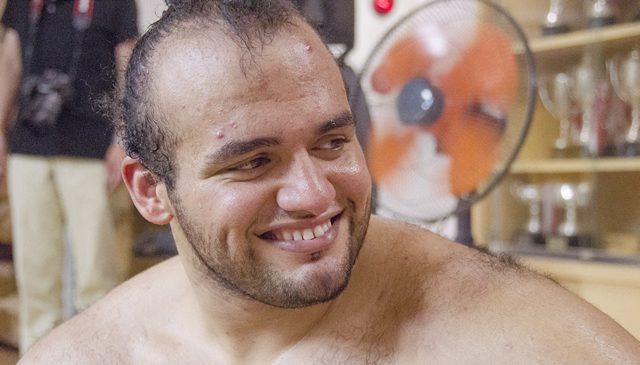
Real name: Abdelrahman SHALAN“I was very happy when I qualified as a ranking wrestler (sekitori),” says OOSUNAARASHI Kintarou. Oosunaarashi is a sumo wrestler. Sumo is a traditional martial art in Japan. There are about 700 professional sumo wrestlers, but only 8% of them are recognized as sekitori (fully-fledged wrestlers). Oosunaarashi is now 21. He was promoted to juuryou (the second highest division) only two years after making his debut.
Even though the history of sumo in Japan’s stretches back over 1,000 years, there has never been a wrestler like Oosunaarashi until now. Oosunaarashi is the first Egyptian, the first African and the first Muslim. Moreover, he’s risen through the ranks so quickly that he’s famous enough to be invited to the Japanese Prime Minister’s parties.
Oosunaarashi was born in 1992 in the Dakahlia Governorate of northern Egypt. His father was a professional soccer player, but because he didn’t like soccer, Oosunaarashi trained as a bodybuilder since childhood.
When he was 14, he met someone at a bodybuilding gym who was into sumo. He was invited to have a go himself. Sumo is not widely practiced in Egypt. There are only about 50 enthusiasts. “Two overweight men were pushing each other; they looked just like jostling elephants,” says Oosunaarashi candidly.
Oosunaarashi weighed around 120kg then. He challenged a wrestler who weighed 75kg. He thought he could “win easily,” but lost every time. Shocked, he thought, “What kind of a sport is this?” As soon as he got home he did some research on the Internet. He was impressed when he watched the famous wrestler Takanohana in a bout.
Oosunaarashi went to the gym the following day and told his trainer, “I want to be a pro wrestler in Japan.” Of course, he wasn’t taken seriously, so he practiced everyday by watching footage on the Internet. As a result he came second place at the Egyptian championships a month later and took first place the next year. He performed exceptionally well at the World Championships, too. However, when he posted that he wanted “to go to Japan to be a sumo wrestler” on a sumo chat site, he was mocked. He wrote letters to people involved in sumo in Japan, too, but got few answers.
However, his enthusiasm was eventually recognized, and he was able to go to Japan in September 2011. Since it was soon after the Great East Japan Earthquake, his mother was vehemently opposed to the idea. Oosunaarashi was able to come to Japan by persuading her that, “I’ve been dreaming of going to Japan for five whole years. I’ll do my best for you, too.”
There are considerable cultural differences between Japan and Egypt. For example, when a problem occurs, Egyptians make their opinions known, whereas Japanese immediately apologize. Men walk hand in hand in Egypt, but not in Japan. Japanese are used to the sight of near-naked wrestlers, but Egyptians are uncomfortable with this. This is because, according to Islamic doctrine, men must also cover their midriffs.
“In Egypt, everyone wore sport shorts under their loincloths. I was ashamed, too, at first, but I soon began to joke about it. Mawashi (loincloth) means cow in Arabic.” Oosunaarashi says bellowing like a cow. “I’m already used to it. This is my formal attire now,” he laughs.
Oosunaarashi is a positive person, but he often experiences culture shock. “Egypt and Japan are worlds apart. Moreover, the culture of sumo isn’t exactly the culture of Japan.” Sumo has a strict hierarchy with elders giving orders to their juniors. Newcomers can’t come and go as they please because they have to do chores like cleaning, laundry and dishwashing. Such customs in sumo seem quite conservative even to Japanese eyes.
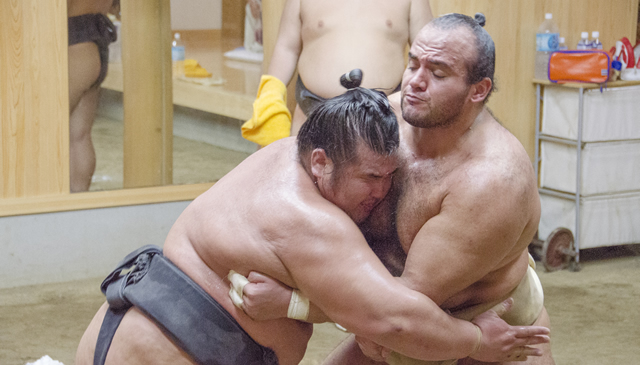
“When I was new, I lived in a room for six and did a lot of chores,” says Oosunaarashi. In sumo, there are other peculiar customs, such as being given a wrestling name like “Oosunaarashi Kintarou,” having an old samurai hairstyle, and wearing a kimono as part of your everyday routine. There are unique words like “heya” which means a stable for sumo wrestlers.
Right: master, OOTAKE Tadahiro
Even Japanese quit if they can’t adapt to the world of sumo. “Quite honestly, I haven’t overcome my culture shock yet. The food, the people and the culture are all really different. I encounter problems every day. I’m learning Japanese by listening to others talking around me, but I can’t speak well yet,” he says with a sad look on his face. “But I’m training hard every day and studying the culture. All I can do is my best,” he says.
In the world of sumo, sekitori wrestlers get special treatment. They are allowed to wear high quality kimono and have someone to look after them. They also customarily perform a ceremony before each bout in a spectacular apron-like loincloth. “I felt good, but I was nervous.” Non-ranking wrestlers only get six payments a year of 70,000 to 150,000 yen each. Ranking wrestlers (sekitori) get more than a million yen a month.
But Oosunaarashi says, “Money isn’t everything. You can’t buy health with money.” During sumo bouts wrestlers shove each other violently and quite a few get injured. “My mother tells me ‘You don’t have to buy anything to bring back from Japan. Just stay well.’ It’s a great thing being a ranking wrestler, but it’s also tough. I feel I have a duty to remain in the sekitori (above juuryou division).”
During Ramadan, Oosunaarashi won despite not having eaten anything since the morning. Although Islamic diet and customs are often controversial, he swears that, “Religion isn’t a barrier. I haven’t been a victim of any prejudice, either. There’s pressure from being in the spotlight, but I try not to think about it too much.” Oosunaarashi’s dream is to become yokozuna (champion). “My idol is Takanohana. He’s a man with a good heart. I too would like to be a wrestler loved by family and friends, who everyone is proud of.”
In cooperation with: Embassy of Egypt Tourism Office
Nihon Sumo Kyokai
Ootake-beyaText: SAZAKI Ryo
Photos: HAMANO Yutaka[2013年10月号掲載記事]
大砂嵐金太郎関
本名:アブドエルラハマン・シャラーンさん「関取になれたときはとても幸せでした」と大砂嵐金太郎関は言います。大砂嵐関は日本の伝統的な格闘技、相撲の力士(レスラー)です。プロとして相撲を取っている人は約700人いますが、一人前の力士として認められる関取になれる人はその約8%しかいません。大砂嵐関は今21歳、入門からわずか2年で十両に昇進しました。
日本の相撲は千年以上の歴史がありますが、大砂嵐関のような力士は今までいませんでした。大砂嵐関は初のエジプト人でアフリカ出身、イスラム教徒の力士なのです。その上とても早く昇進したので、日本の総理大臣のパーティーに招かれるほど注目されています。
大砂嵐関は1992年、エジプト北部のダカリーヤ県に生まれました。父親はプロのサッカー選手でしたが、大砂嵐関はサッカーが嫌いで子どものときからボディービルをやっていました。
14歳のとき、ボディービルのジムで相撲を趣味としている人に出会いました。そして「やってみませんか」と誘われました。相撲はエジプトではマイナーな競技です。愛好者は50人くらいしかいません。「太りすぎた男二人が押し合っていて、まるで象がぶつかり合っているみたいだと思いました」と大砂嵐関は正直に言います。
大砂嵐関はそのとき体重が約120キロありました。そして75キロくらいの人に挑戦しました。「簡単に勝てる」と思っていましたが、何度やっても負けてしまいました。「これはなんというスポーツだ」とショックを受け、家に帰ってすぐインターネットで調べました。そして貴乃花関という有名な力士の取組の映像を見て感動しました。
大砂嵐関は翌日ジムへ行き、「日本でプロの力士になりたい」と監督に言いました。もちろん相手にされなかったので、インターネットの動画を見て毎日練習しました。その結果1ヵ月後にはエジプト大会で2位、翌年には1位になりました。世界大会での成績も優秀でした。しかし相撲のチャットに「日本へ行って力士になりたい」と書き込んでもばかにした答えが返ってくるだけでした。日本の相撲関係者に手紙も書きましたが、返事はほとんど来ませんでした。
しかしやがて熱意が認められて、2011年9月、日本へ行けることになりました。東日本大震災の後だったせいもあって、母親は大反対しました。大砂嵐関は「この5年間ずっと、日本へ行くことを夢に見てきたんです。お母さんのためにも全力でがんばるから」と説得して来日しました。
日本とエジプトでは、文化の違いがかなりあります。例えば何か問題が起きたとき、エジプト人は自分の考えを主張しますが日本人はすぐ謝ります。エジプトでは男性同士でも手をつなぎますが日本人はしません。力士の裸に近い姿は日本人には見慣れたものですが、エジプト人は抵抗を感じます。イスラム教では男性でも腰回りは覆うべきだとしているからです。
「エジプトでは皆、まわし(力士の帯)の下にスポーツ用パンツをはいていました。私も最初は恥ずかしかったのですが、すぐにジョークの種にするようになりました。まわしってアラビア語で牛という意味なんです」と、大砂嵐関は牛の鳴きまねをしてみせました。そして「もう慣れました。今はこれが私のフォーマルな服装です」と笑います。
前向きな大砂嵐関ですが、カルチャーショックを受けることもよくあります。「エジプトと日本は全く違う世界です。その上、相撲の文化は日本の文化とも違うところがあるんです」。相撲の世界では上下関係がはっきりしていて、先輩は後輩に命令します。新人は掃除や洗濯、茶碗洗いなどをしなければならないので、自由に外出できません。相撲のこのような習慣は、日本人の目から見てもかなり保守的なものです。
「新人のときは六人部屋に住んでいて、雑用をたくさんしました」と大砂嵐関。その他にも「大砂嵐金太郎」という力士としての名前をもらったり、昔の侍と同じ髪型をしたり、着物を日常的に着たりと特殊な習慣があります。力士が所属する組織(ジム)を「部屋」と呼ぶなど、独特な言いまわしもします。
日本人でも相撲の世界になじめないで辞めてしまう人がいます。「私も正直、まだカルチャーショックを克服できていません。食べ物も人も文化も、本当に全然違う。毎日問題がたくさん起きます。それに日本語も、周りの人が話すのを聞いて覚えていますが、まだうまく話せません」と悲しい顔になりました。「でも日々稽古に励んで、文化も学んでいます。がんばることしかできませんから」と言います。
相撲の世界で関取は特別な存在です。高級な着物を着ることが許されたり、身の回りの世話をしてくれる人も付きます。華やかな化粧まわしを着けて、取組前に儀式を行う習慣もあります。「快感でしたが、とても緊張しました」。関取でない力士は年に6回、7~15万円の手当を受け取るだけですが、関取は月に100万円以上の給料をもらいます。
しかし大砂嵐関は「お金が全てではありません。お金で健康は買えませんから」と言います。相撲は激しくぶつかり合う競技なので、けがをしてしまう力士も少なくないのです。「母も『日本からは何も買ってこなくていい、ただ元気でいて』と言います。関取になることは、いいことですが大変です。関取でい続けなければならないという責任も感じます」。
大砂嵐関はラマダン(断食)のとき朝から何も食べずに戦い、勝ちました。このようにイスラム教徒の食事や習慣が話題になることが多いですが、「宗教が障害になることはありません。偏見を持たれることもありません」と言い切ります。「注目されるプレッシャーもありますが、考え過ぎないようにしています」。大砂嵐関の夢は横綱(地位が一番高い力士)になることです。「理想は貴乃花関です。よい心を持った方なので。私も家族や友達、皆から誇りにされ愛される力士になりたいです」。
文:砂崎良
写真:浜野裕