-
[From May Issue 2013]
Many people are interested in kimono, but feel they are expensive and difficult to take care of. Recently, more and more shops sell reasonably priced, easy-to-wear kimono. They appeal to a variety of different age groups.
“Nadeshiko Asakuka EKIMISE,” a shop operated by Yamato Co., Ltd. is popular among women in their 20s and 30s. PR representative, MIYOSHI Tomoko, says, “The interiors of our shops are intentionally bright and staff are around the same age as our customers. The range of kimono we sell includes many inexpensive items made of polyester, as well as silk kimono that cost less than 50,000 yen.” Customers who are after inexpensive “obijime” (decorative string used to hold a kimono sash in place), or “tabi” (traditional Japanese socks) also visit the shop.
Their kimono and accessories appeal to young women because, just as with western clothes, the design of the products displayed is cute. “We organize events, such as the first visit to the temple in the New Year, for customers who have bought a kimono at our store, so they will have more opportunities to wear kimono,” says Miyoshi.
At “Nagamochiya,” where they sell recycled kimono, customers are mainly women in their 40s to 60s. The plus side of buying recycled kimono is that, unlike new items, you have a chance to get your hands on a rare kimono.
Usually, a kimono is tailor made after the customer buys the cloth. Since recycled kimono is already tailored, the benefit is that you do not need to pay to have it sewn for you and you can wear it as soon as you have bought it.
“The recycled kimono that sells the best is priced from 20,000 to 50,000 yen. The majority of customers are people who wear kimono for a discipline like tea ceremony, and those who simply love kimono. The majority of our customers wanted inexpensive kimono for a hobby or for practicing a discipline, but these days there is more demand from people who are searching for rare items,” says IDA Mayumi, PR representative for Shinso Ohashi, Co., Ltd., which operates Nagamochiya.
It’s not only kimono that’s become popular, now more and more people are casually wearing yukata (kimono for summer). Yukata, not only made of cotton, or linen, but also polyester which is cool and is dries quickly, is now bought by many people and worn outside during summer.
UENO Satoko, who manages a community for women who like kimono and yukata says, “Just as with western clothes, when you begin to wear a kimono, you feel that you’d like more than just one item, so we’re glad that it’s possible to get hold of cheap kimono. Because it’s difficult to store some kimono without it getting damaged, it is a big help to us that we now find more items that are made of easy care fabrics.” The number of people who casually enjoy wearing kimono may continue to increase.
Nadeshiko Asakusa EKIMISE
NagamochiyaText: TSUCHIYA Emi
[2013年5月号掲載記事]
着物に興味はあっても、値段が高そう、手入れが大変そうと思う人は多いのではないでしょうか。最近は、手頃な価格で気軽に着られる着物のお店が増えています。利用する人の年代はさまざまです。
株式会社やまとが経営する「なでしこ浅草EKIMISE店」は20~30代の女性に人気があります。広報担当の三好智子さんは話します。「店内は明るい配色を意識し、スタッフはお客様と同年代にしています。また、取りそろえている着物はポリエステル素材の低価格商品や、100%絹でも5万円以下のものを多く扱っています」。安価な帯締め(帯をとめる飾りひも)や足袋(日本古来の靴下)を買うために来店する人もいます。
着物や小物は、若い女性に受け入れられやすい、洋服と同じ感覚でかわいいと思われるデザインの商品を置いています。「着物を購入した方のために、お正月なら初もうでなど、着物を着て参加できるイベントを開催し、着る機会を増やしてもらえるようにしています」と、三好さん。
リサイクル着物を販売する「ながもち屋」の、主な利用層は40~60代の女性です。リサイクル着物の良い点は、新品と違い、今では入手困難な希少価値のある着物が手に入るチャンスがあることです。
また、着物は反物を購入してからお店で自分の体形に合うように仕立ててもらうのが一般的ですが、リサイクル着物の場合はすでに仕立ててあるので、仕立て代がかからず、すぐに着られるという利点もあります。
「2~5万円の価格帯のリサイクル着物がよく売れています。購入するお客様の大半は茶道などの稽古事で着物を着る方、また、着物が好きという方です。以前は、趣味やお稽古などで着るための安いものを買い求めるお客様が多かったのですが、最近は、希少価値のあるものを探したいという方が増えています」と、ながもち屋を運営する株式会社新装大橋の広報、井田真由美さんは言います。
着物だけでなく、最近は浴衣(夏用の着物)も気軽に買って着る人が増えています。綿や麻だけでなく、すずしくてすぐに乾くポリエステルの浴衣は、夏場のお出かけ用に買う人が多く、活用されています。
着物と浴衣が好きな女性のための女子会のコミュニティを運営する上野聡子さんは言います。「着物も洋服と同じで、一枚だけでなく何枚か欲しいなと思うようになるので、価格が安い着物があるのはうれしいです。自宅での保管方法が悪いと傷みやすいものもあるので、手入れがしやすい素材のものが多くなるのは助かります」。着物を気軽に楽しむ人がますます増えてくるかもしれません。
文:土屋えみ
-
[From May Issue 2013]
Except for major events, the Japanese media doesn’t report much foreign news. That being said, there are almost daily reports about the USA, China and Korea – countries that have a great deal of influence on Japanese affairs. In the case of North Korea – which by developing nuclear power and launching missiles, in addition to having kidnapped Japanese citizens, poses a threat to Japan – any time there is any kind of incident, it’s given coverage.
The Japanese media only reports about Russia when a new development in territorial disputes takes place. This phenomenon not only occurs in Japan, but is typical of the media in other nations too. The media is apt to only cover news that directly affects its audience.
Headline domestic news is generally about politics and economics, but, unless it’s election time, people do not show much interest. Looking at it from a different point of view, it might be said that though Japan has its problems, it’s mostly politically stable and serious crises do not happen on a daily basis. However, in recent years, social problems such as the increase of temporary labor, the pension crisis, the declining birthrate and the aging population, are reported on daily.
Since Japan has a low crime rate compared to other countries, murder cases and other crimes receive a lot of coverage. Recently, the problem of bullying is often covered. Sports reports are popular, and, as well as being in the news, there are also sports programs on TV. There are many specialist sports newspapers.
There are many entertainment programs on TV including comedy, gourmet, travel and music programs. Nowadays these are an indispensable part of the information the media provides.
Japanese Media
Japanese are, for the most part, racially homogenous, so media reports are only in Japanese (some broadcasts are available in English and there are some English newspapers). Therefore newspapers cover stories nationwide and key TV stations report news from all parts of Japan. As a result, almost all Japanese people share the same information.
Japan has five national newspapers: Asahi, Yomiuri, Mainichi, Sankei and Nikkei. Nikkei specializes in economic news. There are three types of TV broadcasting: terrestrial digital broadcasting, satellite broadcasting and paid satellite broadcasting. There are several private major TV stations besides the nationalized NHK station.
NHK TV has four channels: terrestrial, terrestrial education, BS and BS premium. Major TV stations have ties with newspapers (Nippon TV with Yomiuri, TBS with Mainichi, Fuji TV with Sankei, TV Asahi with Asahi and TV Tokyo with Nikkei).
Because it is a medium that can be enjoyed while working, radio stations are still supported by listeners, such as drivers. Since the Great East Japan Earthquake, its value has been reassessed.
[2013年5月号掲載記事]
日本のメディアは大きなニュース以外、外国のニュースをあまり報道しません。しかし、日本に大きな影響力を与えるアメリカ、中国、韓国のニュースは毎日のように報道しています。また、核開発やミサイルの打ち上げ、さらには日本人拉致事件などで日本に脅威を与える北朝鮮については、騒動が起きるたびに、大きく取り上げます。
ロシアに関しては、領土紛争に動きがみられるときに、大きく報道するくらいです。これは、日本だけでなく、他の国の報道においても同じで、読者に身近なものを取り上げるメディアの特質です。
国内でのトップニュースは政治、経済が主ですが、選挙でも行われない限り一般の国民はそれほど関心を示しません。見方をかえれば、いろいろな問題があっても日本の政治は安定していて、深刻な問題は日常的に起きていないからともいえます。しかし、近年は、非正規労働者の増加、年金問題、少子高齢化などの社会問題が毎日のように報道されています。
日本は外国と比べ犯罪事件が少ないため、殺人事件などは大きく報道されます。最近では、いじめ問題がひんぱんに取り上げられています。スポーツ報道は盛んで、ニュースとなります。テレビにはスポーツ番組もあります。新聞にはスポーツ専門紙がたくさんあります。
テレビには、お笑い、グルメ、旅行、音楽などエンターテイメント番組がたくさんあります。今や、これらはメディアにとって欠かせない情報となっています。
日本のメディア
日本はほぼ単一民族ということもあり、報道言語は日本語のみです(一部に英語放送、英字新聞はあります)。そのため、新聞は全国をカバーし、テレビのキー局の報道は日本各地に行きわたります。その結果、日本人は同じ情報を共有することができます。
日本の全国紙には朝日、読売、毎日、産経、日経(日本経済新聞)の5紙があります。日経は経済に特化しています。テレビは、地上デジタル、BS、および有料のCS放送があります。公共のNHKの他にいくつかの大手放送局があります。
NHKテレビには総合、教育、BS1、BSプレミアムの4つの放送があります。主な民間テレビ放送は、新聞と結びついています(日本テレビは読売、TBSは毎日新聞、フジテレビはサンケイ、テレビ朝日は朝日、テレビ東京は日経)。
ラジオ放送は、仕事をしながら音楽番組などを楽しめることから、ドライバーをはじめとするリスナーの根強い支持があります。特に、東日本大震災以降、再評価されています。
-
[From May Issue 2013]
Developed as a dormitory suburb for commuters, Saitama Prefecture lies to the north of Tokyo. The western Chichibu district is a mountainous area, rich with nature’s bounty. The Kanto plains take up the rest of the prefecture. Kawagoe, a city in the south-western part of Saitama, is a sightseeing spot where visitors can get a flavor of a historical cityscape. It is popular because it is about one hour away from the metropolitan Tokyo area.
Having prospered during the Edo era (17–19th centuries) as the castle town of the Kawagoe clan, Kawagoe is also known as Koedo, or “little Edo” (Edo being the former name of Tokyo). Visitors should first make their way to Kura-zukuri Street, a shopping street lined with black warehouses. Built to withstand fires, a peculiar feature of these buildings is their thick walls and well-tiled roofs. Telling the time since the Edo era, the eye-catching Toki-no-kane bell tower is Kawagoe’s most famous landmark.
Continuing north-east, on Ichiban-gai Street, the Hikawa shrine sits surrounded by trees. With a history stretching back 1500 years, this Shinto shrine is known for honoring the god of marriage. Held every autumn, the Kawagoe festival is one of the events celebrated at this shrine. Approximately eight meters tall, splendid dashi, or floats, are wheeled around the downtown area and the sight of these floats passing by each other is really impressive. These dashi, along with footage of the festival, can be seen on display and on screen at the Kawagoe Matsuri Kaikan (festival hall).
By providing an important line of defense to the north for the Edo Shogunate, the Kawagoe clan played an important role during the Edo era. Symbolizing this is the Honmaru-goten, (where the lord of the castle carried out his daily life and dealt with affairs of state); part of the entrance and the big hall of this building still remains standing and has a distinct architectural style. A deeper insight into the history of Kawagoe can be attained at the the Honmaru-gotten and Kawagoe City Museum.
Another 15 minutes’ walk away is Kitain. During the Edo era, this temple had ties to the Tokugawa Shogunate. Buildings, such as the reception hall where the third shogun, Iemitsu, was born, were moved from Edo castle and reconstructed in the temple grounds. Also worth seeing are the Gohyaku Rakan: 538 carved stone statues of Buddha’s disciples lined up in rows. The poses and expressions of the stone statues vary, and it is said that among them, it’s possible to find a statue that is your spitting image.
A local specialty of Kawagoe is the satsumaimo sweet potato. In the Edo era, when roast sweet potato become popular, Kawagoe was known for producing good quality sweet potatoes. That is why Kawagoe produces many snacks, including noodles, which contain sweet potatoes. Futomen yakisoba (thick fried noodles) has also become a popular local dish. Those who grew up in Kawagoe during the Showa era (1926–1989) fondly remember this snack.
Chichibu is another tourist spot worth visiting. Once the site of a flourishing silk trade, the town of Chichibu sits in a valley surrounded by mountains, such as Mt. Bukouzan. The buildings of Chichibu, especially Chichibu Furusato-kan, have a charming old-world feel. Those feeling hungry might like to try local koduuhan (small lunches) such as “okkirikomi” or the “miso-potato.” Hitsujiyama Park commands a view of the town below. In spring shiba-zakura blossom covers the park.

Chichibu Night Festival / Chichibu Kawase Matsuri
Held in Chichibu shrine, Chichibu is particularly well known for its festivals. During the summer, men carry a mikoshi (portable shrine) into the waters of the Arakawa river for the Chichibu Kawase Matsuri (Chichibu rapids festival), and during the winter at the Yomatsuri (Night Festival), flamboyant and striking floats and firework displays impress visitors. In addition, Chichibu is a historically famous site for pilgrimages. At the 34 Kannon reijou (holy Kannon sites), amulets are given out as proof of worship and, as they worship the Kannons (goddesses of Mercy), visitors can also enjoy the various gardens and flora of each temple.
In western Chichibu away from urban areas, a unique tradition has been passed down from generation to generation. Handmade rockets are launched for the Ryuusei Matsuri; a festival that started out in the Edo era and takes place at the Muku shrine in Yoshida. In Ogano-machi, a Ogano kabuki performance is held six times a year, using a mobile festival float and others as a stage.
To enjoy nature go to Nagatoro. Here there is a 500-meter long rocky ravine running along the Arakawa river; a protected habitat, this wild and rocky gorge, is a beautiful sight to behold. Enjoy the exhilarating rush as boatmen daringly guide the boat downstream. The area is crowded with tourists during cherry blossom season in spring and when the leaves change color in autumn.
Deeper into the mountains is the sacred mountain, Oku-Chichibu. It takes approximately one hour by bus to get there from Mitsumineguchi station. Thought to be the birthplace of the legendary prince Yamato Takeru no Mikoto, Mitsumine shrine is located 1,100 meters above sea level. Deep within tall trees, the atmosphere is very mysterious. To the west, beyond Lake Chichibu, lies the 50-meter high Fudoutaki (the motionless waterfall). Another fantastic sight is the Misotsuchi-no Tsurara; icicles that grow along the Arakawa river to a length of approximately eight meters.

Float downstream at Nagatoro / Hitsujiyama Park
With its fertile natural environment, Chichibu is the center of production for Chichibu soba (buckwheat noodles). Other excellent souvenirs from Chichibu are Chichibu wine and Bukou Masamune sake made with Chichibu’s delicious waters. In Oku-Chichibu, you can try wild boar and sushi made with char caught in the mountain streams.
There are also hot-spring ryokan (inn) in Chichibu. Hatago Ichiban, which has been in business since the Edo era, and Araki Kousen Ryokan, with a history stretching back for more than 180 years, are both examples of ryokan with long histories. If you’re just on a day trip, affordable outdoor hot springs with views over the ravine include the excellent Chichibu Onsen Mangan no Yu in Oku-nagatoro and the popular Ootaki Onsen in Oku Chichibu.
To get to Kawagoe station from Ikebukuro station, it takes 30 minutes by express on the Tobu Tojo Line. On the Seibu Shinjuku Line it takes approximately 45 minutes from Seibu Shinjuku station to Hon-Kawagoe station on the Koedo-Express. To get to Seibu Chichibu station, it takes approximately one hour and 20 minutes from Ikebukuro station on the Chichibu Express along the Seibu Ikebukuro Line. In addition, recently the Tokyu-Toyoko line and the Fukutoshin line were connected, and from Yokohama you can go directly to Kawagoe and Chichibu without transferring.
Kawagoe City
Koedo Kawagoe Tourism Association
Chichibu City
Chichibu Tourism Association
Nagatoro Tourism AssociationText: YAMAZAKI Yuriko
[2013年5月号掲載記事]
埼玉県は、東京都の北側に接していて、東京に通勤する人々のベッドタウンとして発展しています。西側の秩父地方は山岳地帯が広がり、自然に恵まれています。それ以外の地域は、関東平野の一部です。川越は南西部に位置する都市で、歴史の町並みを味わえる観光地です。都心から1時間ほどで行けるので人気です。
江戸時代(17~19世紀)に川越藩の城下町として栄えた川越は、小さな江戸のような都市という意味で、小江戸とも呼ばれています。まず訪れたいのは、蔵造りの町並みで、黒い商家の蔵などが立ち並んでいます。火事で燃えないように造られた厚い壁と、ずっしりした瓦屋根が特徴です。ひときわ目を引く塔、時の鐘は、江戸時代から時を知らせてきた川越のシンボルです。
一番街を北東へ行くと、木々の中に氷川神社があります。1500年の歴史があり、縁結びの神社としても知られています。毎年秋に行われる川越まつりはこの神社の行事です。高さ約8メートルある豪華な山車(祭りのときに使う屋台)が、何台も町中をひきまわされ、すれ違う様子は迫力です。川越まつり会館では、この祭りの様子を山車の展示やスクリーンで見ることができます。
江戸時代、川越藩は江戸幕府の北の守りとして重要な役割を担っていました。そのシンボルだった川越城の本丸御殿(城主の日常生活や政務をおこなう場所)の玄関部分や大広間が、風格ある建築物として今も残っています。本丸御殿と川越市立博物館では、川越の歴史を深く知ることができます。
さらに15分ほど歩いて喜多院へ。ここは江戸幕府の徳川家ゆかりの寺でした。境内には三代将軍、家光が生まれた客殿などの建造物が、江戸城から移築されています。また、538体の聖者の石像が並ぶ五百羅漢も見どころの一つです。石像のポーズも表情もさまざまで、その中には自分に似た表情があるといわれています。
川越の名物といえば、さつまいも料理です。江戸時代、庶民に焼きいもがはやったとき、川越は質のいいさつまいもの産地でした。そのため今もさつまいもを使ったそばやお菓子がたくさんあります。またご当地グルメとして、太麺やきそばも人気です。これは昭和(1926~1989年)の川越の子どもたちが、おやつとして親しんできたなつかしい味です。
秩父地方は、ぜひ行きたいもう一つの観光地です。秩父の街は武甲山などの山々に囲まれた盆地にあり、かつて絹織物業で栄えました。秩父ふるさと館など、レトロな街並みが魅力です。おなかがすいたら、「おっきりこみ」や「みそポテト」などの郷土料理「小昼飯」を食べるのもおすすめです。街を見下ろせる羊山公園は、春には芝桜が一面に咲きます。
秩父では、秩父神社の行う祭りが知られています。夏の秩父川瀬祭では、男たちがみこしをかついで荒川に入る儀式、冬の夜祭では豪華で迫力ある山車と打ち上げ花火が人々を圧倒します。また秩父は歴史的に有名な巡礼の地でもあります。34ヵ所の観音霊場には参拝のしるしをもらう札所があり、寺それぞれの庭園や花を楽しみながら、お参りできます。
市街地を離れた西秩父では、ユニークな伝統文化が受け継がれています。吉田地区の椋神社では、江戸時代に始まった、手作りロケットを打ち上げる龍勢祭が行われています。小鹿野町では、移動可能な祭り屋台などで演じる、小鹿野歌舞伎が年6回上演されます。
自然を楽しむなら、長瀞へ。荒川の峡谷で、長さ500メートルにわたる天然記念物の岩畳や荒々しい渓谷美を眺めることができます。船頭のこぐ船で豪快に川を下るライン下りではスリルと爽快感も味わえます。桜や紅葉のシーズンは観光客でにぎわいます。
さらに山深い奥秩父は山岳信仰の場所です。三峰口駅からバスで約1時間。標高1,100メートルの場所に日本武尊の創建とされる三峯神社があります。巨木に囲まれ神秘的な雰囲気です。秩父湖を通りさらに西へ行くと、50メートルの落差のある不動滝も見られます。冬に荒川にできる、高さ約8メートルの三十槌の氷柱も幻想的です。
自然豊かな秩父は、秩父そばの産地です。また、秩父ワインや、秩父のおいしい水でつくられた日本酒「武甲正宗」などはおみやげにも喜ばれます。奥秩父では、イノシシ料理や渓流でとれるイワナを使ったすしも味わえます。
秩父には温泉宿もあります。江戸時代から営んできた旅籠一番や、180年以上の歴史を持つ新木鉱泉旅館などは歴史のある宿です。日帰り温泉なら、名湯といわれる奥長瀞の秩父温泉満願の湯や奥秩父の大滝温泉など、安い料金で渓谷を眺めながら露天風呂につかれる温泉も人気があります。
川越駅へは、池袋駅から東武東上線の急行で約30分。西武新宿線の場合は西武新宿駅から本川越駅まで、特急小江戸号で約45分。西武秩父駅へは、西武池袋線の池袋駅から特急ちちぶで1時間20分。また、最近東急東横線と副都心線がつながりました。これにより横浜方面から川越や秩父に乗り換えなしで行けるようになりました。
川越市
社団法人小江戸川越観光協会
秩父市役所
社団法人秩父観光協会
社団法人長瀞町観光協会文:山崎百合子
-
[From May Issue 2013]
SAKURA HOUSE Co., Ltd.
“We wanted to create an opportunity for Japanese to see how calm and highly moral Muslim people are,” says NAMIKI Masayo, sales manager for SAKURA HOUSE Co., Ltd. SAKURA HOUSE is a company that manages hotels and apartment buildings for non-Japanese. This February, they opened up the shared house, “Yoyogi-uehara Muslim House” in Yoyogi-uehara, Tokyo.
Muslims have all kinds of religious customs. They can’t drink alcohol nor eat pork. Women cannot show their skin to men outside their family. Muslims also customarily pray five times a day and go to mosque on Fridays. In Japan, many foods contain alcohol and pork ingredients and there are few places for praying. “Life wasn’t easy for Muslims in Japan, especially for women,” says Namiki.
Up until now, Japan had little contact with Muslim societies. Lots of oil is bought from the Middle East, so while many Japanese travelled there on business, few Muslims visited Japan. However, an increasing number of Muslims from south east Asia, the middle east and Africa are coming to Japan in recent years to study and work.
“Many Muslim customers have begun to visit our company, too,” says Namiki. “A Saudi student who understood neither English nor Japanese came after translating our website using Google Translate. Muslims ask us where they can find a mosque and where they can buy halal foods. That’s why we had the idea for this shared house for Muslims.”
The Muslim House was designed so that Muslims could live comfortably there. There’s a prayer room in which an arrow indicates Qibla (the direction in which to face towards Holy Mecca). The second floor is for women only and is separated from the first floor by a curtain. In the neighborhood there’s Tokyo Camii, one of few large-scale mosques in Japan.
“But the proximity to the mosque wasn’t that important for me,” says tenant Anfal SEDDIK, smiling. “I chose this place because there’s a floor reserved for women and because it’s new and clean.” Anfal is French and she’s staying in Japan for an internship. “I like it here because the surroundings are quiet. I can pray like I always do and it’s also good that it’s a typical Japanese house.”
“The idea for the Muslim House was partly inspired by a Muslim, Mohamed IBRAHIM, who started working for SAKURA HOTEL Hatagaya, one of the hotels we administer,” says Namiki. “Japanese are still far from being familiar with Muslims. Unfortunately some are scared of them as they hear about Islamic extremists in the news. In a town where Japanese and Muslims cross paths daily, in our own little way we’d like to encourage interaction between Japanese and Muslims.”
Text: SAZAKI Ryo
[2013年5月号掲載記事]
株式会社サクラハウス
「ムスリム(イスラム教徒の人たち)が、どんなにおだやかでモラルの高い人たちかということを、日本の人に知ってもらうきっかけになればと思いました」と株式会社サクラハウスの営業部長、並木雅代さんは言います。サクラハウスは外国人向けのホテルやアパートなどを経営する会社です。今年2月、東京の代々木上原にムスリム向けのシェアハウス「代々木上原ムスリムハウス」を開きました。
ムスリムにはいろいろと宗教上の決まりがあります。お酒を飲んではいけませんし、豚肉を食べてはいけません。女性は家族でない男性に肌を見せてはいけません。また、一日に5回お祈りしたり、金曜日にモスクへ行く習慣もあります。日本では、多くの食品にお酒や豚肉の成分が入っていたり、お祈りのための場所もほとんどありません。「日本にいるムスリムの人たち、特に女性は、きゅうくつな思いをしてきました」と並木さん。
これまで日本は、イスラム社会との接点がほとんどありませんでした。中東から石油をたくさん買ってはいますが、日本人が現地へ行って買うことが多く、日本にムスリムが来ることはあまりありませんでした。しかし近年、東南アジア、中東やアフリカから勉強や仕事のために来日するムスリムが増えました。
「弊社にもムスリムのお客様が多くいらっしゃるようになりました」と並木さん。「サウジアラビア人の学生さんが、英語も日本語もわからず、グーグルの翻訳機能で弊社のサイトを翻訳して来社されたり。モスクはどこですかとか、ハラール食品(ムスリムが食べてもいい食品)はどこで買えますかと聞かれたり。それでムスリム向けのシェアハウスを企画しました」。
ムスリムハウスは、ムスリムが暮らしやすいようになっています。お祈り用の部屋があって、礼拝するべき方向がわかるよう、キブラ(聖地メッカの方角)で示されています。2階は女性専用になっていて、1階とはカーテンで仕切られています。近くには、日本には数少ない本格的なモスク、東京ジャーミィがあります。
「でもモスクに近いことは、私にはあまり重要じゃなかったです」と、入居者のアンファル・セディクさんは笑います。「女性専用のフロアがありますし、新しくてきれいなのでここにしました」。アンファルさんはフランス人で、インターンのために滞在しています。「ここはまわりが静かなので気に入っています。普段通りにお祈りもできますし、日本らしい家なのもいいですね」。
「ムスリムハウスの企画にあたっては、弊社が経営するサクラホテル幡ヶ谷に、ムスリムのモハメッド・イブラヒムが入社したのもきっかけになりました」と並木さんは言います。「ムスリムは日本人にとってまだまだなじみの薄い存在です。イスラム過激派のニュースを聞いて、ムスリムを怖がっている人たちも残念ながらいます。日々の生活をする町で、ムスリムの方々と一緒に生活することによって、少しでも日本人とムスリムとの橋渡しができたらいいと思います」。
文:砂崎 良
-
[From May Issue 2013]
Kitan Club Co., Ltd.
Birds that look as if they are about to fly, cute rabbits and cats: these are all palm-sized figurines. Easily obtained from capsule toy vending machines, known as “gachagacha” and toy shops, they are quite popular among children and adults.
Kitan Club Co., Ltd. (Shibuya Ward, Tokyo), is a company founded in September 2006, which plans, designs, manufactures and sells capsule toys. The company is well established with a reputation for creating fully-imagined toys. Drawing inspiration from plants and animals in the natural world, their “Nature Techni Colour” series is especially popular.
Nature Techni Colour signifies: “Figurines of all kinds of natural objects in natural colours.” Creatures are grouped according to their ecosystem; for example, sea turtles go together with dolphins and whales. There are about ten animals in each set. When you have collected the set, it’s as if the natural world has invaded your desktop.
The director of the company who created this series, SATO Junya, relates how they got started on the series: “Since we could not find high-quality figurines of living creatures, we decided to make them ourselves. The models of mushrooms and edible wild plants are mostly life-sized. We hear about children surprising their families by secretly attaching models of frogs and lizards to the refrigerator with magnets. We receive a lot of requests and take these into account when we make new products.”
Some items in the Nature Techni Colour series come with a pedestal useful for display, a magnet or a cell-phone strap. The popular “Kaiyo I” (Ocean No. 1) is sold in souvenir shops in aquariums around Japan.
Each individual figurine is designed by an artisan called a genkei-shi. The person in charge of planning discusses the specifications of each item – shape, size, etc. – with the genkei-shi and modifications are made until they are satisfied with the product. Up until the product is completed in the factory, strict quality control checks are carried out.
As a company, Kitan Club has also been active in supporting reconstruction efforts after the earthquake. Since April, 2011, just a short time after the earthquake, a portion of the profits from the sale of the Nature Techni Colour series has been donated. Furthermore, the company has been periodically holding workshops to create dioramas of disaster struck areas using their figurines of living creatures. By turning the tree frog, a local mascot, which is a symbol of reconstruction, into a figurine, and also by returning a portion of sales profits to damaged areas, the company demonstrates its close links with the disaster-struck areas.
Sato says, “We would be delighted if children from around the world became interested in living beings and nature as a whole as a result of getting their hands on our Nature Techni Colour figurines.”
Text: MUKAI Natsuko
[2013年5月号掲載記事]
株式会社奇譚クラブ
今にも飛びたちそうな鳥や、かわいいうさぎや猫、これらはすべて、手のひらに収まるほど小さくつくられたフィギュア(模型)です。ガチャガチャと呼ばれるカプセル自動販売機やおもちゃ屋などで気軽に手に入れることができるので、子どもから大人まで人気があります。
株式会社奇譚クラブ(東京都渋谷区)は2006年9月に設立された、カプセル玩具の企画、デザイン、製造および販売を行う企業です。手がけるおもちゃはどれも本格的で定評があります。なかでも自然界の植物や生き物などがモチーフとなっている「ネイチャーテクニカラー」シリーズは大人気です。
ネイチャーテクニカラーは「あらゆる自然物の総天然色フィギュア」という意味です。動物の生態系をもとにウミガメ、イルカ、クジラなど、さまざまな生き物たちを一つのグループとして認識できるように構成されています。一つのグループには10種類ほどのフィギュアがあり、全部集めると自分の机の上に大自然が広がります。
シリーズの生みの親である佐藤純也さんは、「出来がよいと思える生き物フィギュアがなかったので、自分たちで作ろうと思いました」と、シリーズ始まりのきっかけを話します。「キノコや山菜をモチーフにしたフィギュアはほぼ原寸大です。冷蔵庫などにこっそりカエルやトカゲのマグネットをくっつけておいて、家族を驚かせる子どももいると聞きます。リクエストもたくさん寄せられるので、商品を作る際の参考にしています」。
ネイチャーテクニカラーシリーズのフィギュアは、飾っておくのに便利な台座付きのものや、マグネットやストラップ付きのものがあります。人気の「海洋I」は全国の水族館のおみやげコーナーなどで販売されています。
これら一つひとつのフィギュアは、原型師と呼ばれる職人の手から生まれます。企画担当者と原型師が一緒になって形や大きさなどを話し合い、納得いくものが出来上がるまで修正を重ねます。その後、工場での最終的な仕上がりまでに、品質が落ちないようにきびしくチェックし、生産を管理しています。
奇譚クラブでは震災復興にも企業として力を入れています。震災直後、2011年4月以降に発売されたネイチャーテクニカラーシリーズを対象に、売上の一部を寄付しています。また、被災地で生き物のフィギュアを使ったジオラマ制作のワークショップを定期的に開催。被災地のご当地キャラや復興のシンボルとなっているモリアオガエルなどを商品化し、その地域に売上を還元するなど、被災地に密着した商品づくりも行っています。
佐藤さんは話します。「世界中の子どもたちにネイチャーテクニカラーのフィギュアを手に取ってもらい、生き物や自然に興味を持つきっかけになってもらえたら嬉しいです」。
文:向井奈津子
-

[From May Issue 2013]
Saint Young Men
“Saint Young Men” is a humorous comic that was first serialized in a manga magazine for young adults in 2007. It has been so popular that, when published in book form, it sold more than two million copies in one year. In 2009, it received the short story award for the Tezuka Osamu Cultural Prize. The two heroes are Buddha (Gautama), the founder of Buddhism, and Jesus Christ, the Christian messiah.
In the story, in order to enjoy a vacation in this world, Buddha and Jesus live happily together, sharing an apartment in Tachikawa City, Tokyo. They live in a small room without a bath, and wear casual clothes such as hand-made T-shirts and jeans. Sometimes they are like a family, at other times, like close friends who are considerate of each other and respect each other.
Buddha is a very level-headed kind of guy and takes charge of most of the household chores: cooking, cleaning and managing the domestic finances. He is like a mother. When he says something virtuous, a halo shines around his head. When he walks outside, many animals gather around him. In one episode he reads TEZUKA Osamu’s “Buddha,” and, deeply moved by his own life story, becomes a fan and buys up all the volumes.
Jesus has an easy-going temperament and often laughs. When there is something to be glad about, he works miracles. Although he isn’t very physically robust, he cures the sick just by drawing near. He can change stones into bread and water into wine. He is up to date with the latest technological developments in personal computing, enjoys using the Internet and even writes a blog. He is aware that people say that he looks like the American actor Johnny DEPP.
The story is not only about Buddha and Christ; legends and figures from other religions also appear. These incidents are depicted as occurring in real life. For instance, when the two face a crisis, their apostles come flying down from heaven to rescue them and solve their problems. Even if the reader knows little of these religions, each episode is bound to bring a smile to reader’s faces.
Readers sympathize when, laughing and crying, they read about these great men, who have been the focus of such ardent worship and respect, leading ordinary lives. Also, while many modern manga are high octane and fast paced, this work has no extreme storylines, villains or criminals. For fans of the work, its main appeal is the aura of Buddha and Jesus.
Exhibited at the British Museum from January to February 2011, this work really struck a chord with the general public. The work was exhibited in the museum’s Asian galleries where Japanese culture is introduced alongside bronze ware, ukiyo-e (woodblock prints) and haniwa (clay figurines) with explanatory labels. According to reports, a spokesman for the British Museum said, “Although it deals with religion, I am impressed by the witty content, which encourages tolerance in a cheerful, easygoing manner.”
Text: KOMIYAMA Ranko
[2013年5月号掲載記事]
聖☆おにいさん
「聖☆おにいさん」は、青年向けのまんが雑誌で2007年に連載がスタートしたコメディーまんがです。単行本が年間200万部以上売り上げるほどの人気作品であり、2009年には手塚治虫文化賞短編賞を受賞しました。主人公は二人の聖人、仏教の開祖であるブッダ(釈迦)と、キリスト教の救世主、イエス・キリストです。
ブッダとイエスが、下界でのバカンスを楽しむために東京の立川市でアパートをシェアし、仲良く共同生活をしているという設定です。お風呂のない狭い部屋に住み、手作りのTシャツにジーンズといった気軽なスタイルの二人。あるときは家族のように、またあるときは親友のように、お互いをいたわり尊敬しあっています。
ブッダはとてもしっかり者で、料理や掃除などの家事すべてを担当し、経済的なやりくりもしています。まるでお母さんのような存在です。すばらしい言葉を言うと後光がさしたり、外を歩けば動物がたくさん集まってきたりします。手塚治虫が自分の生涯を描いた「ブッダ」を読んで感動し、ファンになって全巻を買ってしまうというエピソードもあります。
イエスはノリが良く、よく笑う人です。嬉しいことがあると、小さな奇跡をたくさん起こします。体が丈夫な方ではありませんが、近づくだけで病人が治ったり、石をパンに、水をぶどう酒に変えたりできるのです。最新型のパソコンに敏感で、インターネットを楽しみ、ブログまで書いています。アメリカの人気俳優、ジョニー・デップに似ていると言われたことがあり、彼を意識しています。
また、ブッダやイエスだけでなく、各宗教の逸話や登場人物が実在のものとして次々に登場します。例えば、二人に何かあるたびに、それぞれの弟子たちが天界から飛んで来て、二人を守り、気遣うというような展開です。どの話も読者に宗教の知識がなくてもわかるような内容で、思わずくすりと笑ってしまうよう楽しくアレンジされています。
本来ならば絶対的な崇拝と尊敬の対象であるはずの偉人たちが、庶民的な生活を送りながら、私たちと同じように泣き笑いする姿が共感を呼んでいるようです。また、現代のまんがは、刺激的でスピード感あふれる作品が多く見られますが、この作品には、過激な描写や冷酷な悪人、犯罪者などは出てきません。ブッダとイエスのオーラが、多くのファンにとって最高の魅力となっているのです。
2011年1~2月には大英博物館にこの作品が展示され、大きな反響を呼びました。日本の文化を紹介する「アジア地区展示コーナー」において、青銅器、浮世絵、はにわなどと共に、解説付きで展示されたのです。大英博物館の担当者は「宗教を扱っていながら、ウィットに富み、陽気に寛容さを奨励する内容に感心しました」と話したといわれています。
文:小宮山蘭子
-
[From April Issue 2013]
Wagashi are sweets made since ancient times with traditional Japanese methods. Wagashi are distinct from yougashi, or western sweets, which were relatively recently introduced to Japan during the Meiji era in the 19th century. However, many Japanese get yougashi muddled up with nanbangashi, which are European-style sweets introduced by Portuguese missionaries during the Azuchi-momoya era in the 16th century. Some examples of similar nanbangashi and yougashi are kasutera (castella) and sponge cake; bisuketto (biscuits) and kukki- (cookies); or konpeitou (confetti) and kyandi- (candy).
An example of a sweet that anyone would regard as wagashi is “dango.” Dango are small rounded mochi (or rice cakes), commonly eaten off a bamboo skewer. Mitarashi-dango (glazed dumplings) are dumplings glazed with a sauce made from soy sauce and sugar; kusa-dango (grass dumplings) are dumplings kneaded with yomogi (Japanese mugwort); and san-shoku dango (three-colored dumplings) are a set of pink, white and green dumplings. Other than dango, there are many other kinds of Japanese sweets that use a kneaded mixture of glutinous rice and water called mochi.
Though known by the same name, sakura mochi actually refers to a different kind of sweet in Kanto and Kansai. Kanto-style sakura-mochi is a crepe made from wheat flour and water baked in an oven, with an in the center, wrapped in a salt-pickled cherry tree leaf. On the other hand, Kansai-style sakura-mochi is mochi – that still has the residual texture of the rice grain in it – with an an center, wrapped in a salt-pickled cherry tree leaf.
An (anko) is made from a concentrated mixture of adzuki beans, combined with sugar and water. An that retains the texture of the beans is called tsubu-an. Smooth, strained an is called koshi-an. It is such an essential ingredient, that Japanese people would say that, “If it uses an, then it is a Japanese sweet.”
Another Japanese sweet is daifuku, which is an wrapped in gyuuhi. Gyuuhi is a case made out of mochi. Mame-daifuku has black soy beans in the gyuuhi; kusa-daifuku has yomogi kneaded in; shio-daifuku has added salt; and ichigo-daifuku has a whole strawberry inside its an filling.
Manjuu (steamed buns) is another Japanese sweet which is made in a similar way to daifuku. Instead of a mochi coating, manjuu has an outer shell made of wheat or some other kind of kneaded dough. One of the most famous rakugo (the art of traditional storytelling) stories is “Manjuu Kowai” (I’m scared of Manjuu). In the story a man confesses that, “What scares me the most is manjuu!” When his friends play a mean joke on him and throw a manjuu into his room, he chows down on the manjuu saying, “I’m so scared of tea now.”

Sakura-mochi / Ichigo daifuku (tsubuan)
Just like manjuu and daifuku, there are many other Japanese sweets made by wrapping a piece of an in mochi or dough. The name of the sweet changes, depending on the ingredients and the way it is made. For example the casing for the wagashi known as monaka is made from powdered rice mixed with water. This mochi is then steamed, rolled out and baked in an oven giving the sweet its signature crisp coating. A taiyaki casing is made from flour mixed with water that is baked in a metal mold in the shape of a tai (sea bream). In Japan, sea bream is considered to be a “medetai” or auspicious fish.
Dorayaki is a Japanese sweet made by sandwiching a piece of an between two pieces of castella sponge cake. Castella is nanban-gashi, made to a recipe specific to Japan that involves adding honey or starch syrup for a moist texture. There are other variations of this treat: mixing fresh cream in with the an filling, or substituting chestnut and custard cream for the an. The Japanese animated cartoon character “Doraemon” really loves dorayaki.
Made by pouring an into a mold, then chilling it and hardening with kanten (agar) or kuzu (arrowroot) starch, youkan allow you to savor the flavor of an on its own. There are other variations of youkan such as imo-youkan with added sweet potato, kuri-youkan with chestnut, and mizu-youkan which has a higher ratio of water to an. Another Japanese sweet which uses mizu (or water) as a prefix is mizu-manjuu (also called kuzu-manju) which is an wrapped in a transparent case made from kuzu.

Anmitsu / Taiyaki
Mizu-youkan, mizu-manjuu, and kuzu kiri (a chilled confection in noodle form made from the same ingredients as mizu-manjuu, eaten with kuro-mitsu or black syrup) are all summer wagashi designed to give a cooling impression. Many Japanese sweets reflect the changing seasons. For example, as the name suggests, sakura-mochi is a wagashi served when cherry blossoms are blooming (in other words, in springtime).
Sometimes the same wagashi might be called by a different name depending on the season you consume it. The springtime bota-mochi is a piece of mochi wrapped in an; the reverse of the way daifuku and Kansai-style sakura-mochi is made. However, in autumn, bota-mochi is called ohagi. Bota-mochi is named after the botan or peony, which is a spring flower, and ohagi is named after hagi or bush clover, which is an autumn flower.
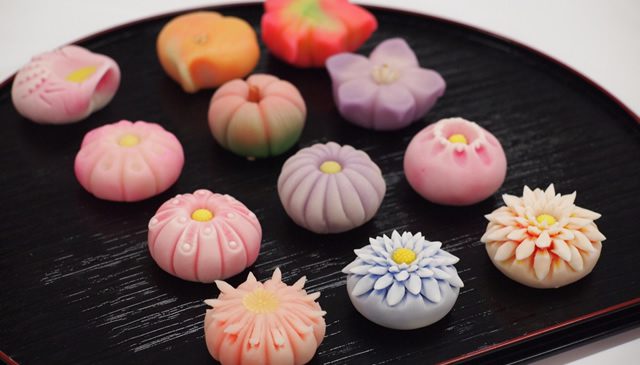
The appearance of Japanese sweets is a reflection of the seasons and of ka-chou-fuu-getsu – an idiom made up of the four kanji of flower, bird, wind and moon, which denotes the beauty of the natural world. Kougei-gashi are a kind of decorative wagashi that are especially designed to be pleasing to the eye. It’s hard to believe that they are only made from mochi, an and sugar and are so beautiful that it seems a waste to eat them. When it comes to these sweets, appearance is considered to be more important than taste. About once every four years, sweets from all over Japan are displayed at the National Confectionary Exhibition; the highlight of this event is the kougei-gashi.

Kougei-gashi
Making kougei-gashi brings out the best in wagashi artisans, who put together their creations using materials like “unpei” and “anpei.” There are different kinds of unpei: “momi unpei” is made by mixing baked mochi flour with sugar and lukewarm water and “mushi unpei” is made from steamed mochi. These ingredients are fragile, but are useful for the intricate molding of things like petals and leaves. Made from an, mochi flour and sugar, anpei is a more resilient ingredient better suited to molding into the shape of tree trunks.
Wagashi allow us to enjoy not only sweet flavors, but also savory flavors like soy sauce and salt. Small pieces of dried mochi roasted until golden and flavored with soy sauce or other ingredients are called arare. Larger pieces are called okaki and flattened pieces are called senbei. Whether sweet or salty, many wagashi utilize mochi rice in various ways. Mochi and an are indispensable ingredients for creating wagashi.
National Confectionary Exposition in Hiroshima
Text: MATSUMOTO Seiya
[2013年4月号掲載記事]
和菓子とは、日本古来の製法で作られたお菓子で、19世紀の明治時代以降に、西洋から新しく日本に入ってきた洋菓子と区別する言葉です。ただ、16世紀の安土桃山時代にポルトガルの宣教師によって伝えられた南蛮菓子は、洋菓子と似ているので、両者を混同する日本人も少なくありません。南蛮菓子と洋菓子の似ている例として、カステラとスポンジケーキ、ビスケットとクッキー、こんぺいとうとキャンディーなどがあります。
日本人の誰もが和菓子とみなすお菓子の例といえば、だんごです。もちを小さく丸めたもので、多くの場合、竹串に刺した状態で食べます。しょうゆに砂糖などをまぜたたれをかけたみたらしだんご、もちに、よもぎを練りこんだ草だんご、ピンク、白、緑をセットにした三色だんごなどがあります。もち米と水を練り合わせたもちを使った和菓子は、だんご以外にもたくさんあります。
桜もちは、同じ名前でも、関東風と関西風で形が違います。関東風の桜もちは、水で溶いた小麦粉をクレープ生地のように焼いてあんをはさみ、その外側を桜の葉で包んでいます。一方、関西風の桜もちは、米粒の食感が残るもちの中にあんを入れて、その外側を塩漬けした桜の葉で包んであります。
あん(あんこ)は、小豆に水と砂糖を加えて煮詰めたもので、小豆の食感が残るものをつぶあん、裏ごしでなめらかにしたものをこしあんといいます。ほとんどの日本人が、「あんが使われているお菓子であれば、それは和菓子である」と感じるほど、重要な材料です。
大福は、あんをぎゅうひで包んでいます。ぎゅうひとは、もちでできた皮のこと。ぎゅうひに黒豆を入れた豆大福、よもぎをねりこんだ草大福、塩を加えた塩大福、あんの中にいちごを丸ごと入れたいちご大福などがあります。
大福と似たような作り方をするものに、まんじゅうがあります。まんじゅうは、皮の部分に、ぎゅうひではなく、小麦粉などを練って作った生地を使って、あんを包みます。落語(伝統的な話芸)の「まんじゅうこわい」は、最も有名なはなしのひとつです。男が「おれは、まんじゅうがこわい」と告白。友人たちが意地悪をしてまんじゅうを男の部屋に放り込んだところ、男は夢中になってまんじゅうを食べながら一言。「今度はお茶がこわい」。
まんじゅうや大福のように、「もちや小麦粉などの生地であんを包む」という形の和菓子はたくさんあります。生地の材料や作り方が変わると、その名前も変わります。たとえば、もなかは、もち米の粉に水を入れてこねたものを蒸し、薄く延ばして焼いたもので、さくっとした歯ざわりが特徴です。たい焼きの生地は、水で溶いた小麦粉を、鯛の金型に流しこんで焼いたもの。鯛は日本で「めでたい」とされる魚です。
どら焼きは、あんをカステラの生地ではさんでいます。カステラは南蛮菓子ですが、日本独自の製法として、はちみつまたは水あめを加えて、しっとりとした食感に仕上げています。あんとホイップした生クリームを混ぜたものや、あんの代わりに栗やカスタードクリームを入れたものもあります。日本のアニメキャラクター「ドラえもん」の大好物です。
あんをそのまま味わうようかんは、あんを型に流しこみ、寒天またはくずで冷やし固めたもの。さつまいもを入れたいもようかん、栗を入れた栗ようかん、水分の割合が多い水ようかんなどがあります。水が名前の頭につくものとしては、くずで作った透明の生地であんを包む水まんじゅう(別名:くずまんじゅう)もあります。
水ようかんや水まんじゅうの生地と同様のものを麺状にして冷やし、黒砂糖から作った黒蜜をかけて食べるくずきりなどは、見た目で涼しさを感じるように工夫された夏の和菓子です。季節感を大切にした和菓子は数多くあります。たとえば桜もちは、その名のとおり、桜の花が咲く季節(つまり春)に食べられます。
同じ和菓子でも、食べる季節によって名前が変わるものもあります。大福や関西風の桜もちなどとは逆に、もちの外側をあんで包みこむぼたもち(牡丹もち)は、春の和菓子です。ところが、秋に食べる場合には、おはぎ(お萩)と呼ばれます。ぼたもちは、春の花である牡丹に見立てていて、おはぎは、秋の花である萩に見立てているの
です。和菓子は、季節感や花鳥風月(花や鳥や風や月。「あらゆる自然や動植物」という意味の四字熟語)などを見た目で表現します。特に工芸菓子は、見た目を楽しみます。もち、あん、砂糖などでできているとは思えないほど精巧で、食べるなんてもったいないという感想をもつでしょう。味よりも見た目を優先しているのが特徴です。ほぼ4年に一度開催される全国菓子大博覧会は日本全国からお菓子が集まりますが、一番の見どころは工芸菓子です。
和菓子職人としての高い技術が必要な工芸菓子は、雲平や餡平など数々の和菓子を組み合わせています。雲平には、もちを焼いて粉にしたものと砂糖をぬるま湯に溶いて練った揉み雲平、蒸して作る蒸し雲平などがあります。割れやすいですが、花びらや葉など、細かな造形に重宝します。あん、もち粉、砂糖などを材料とする餡平は、雲平より丈夫でつやが出やすく、木の幹を形作るのに向いています。
和菓子には、甘いものだけでなく、しょうゆ味や塩味を楽しむものもあります。もちを乾燥させて、きつね色になるまで焼き上げ、しょうゆなどで味付けしたもののうち、小粒のものをあられ、大粒のものをおかき、平たいものをせんべいと呼んでいます。甘いものも塩気のあるものも、和菓子の多くは、もち米をさまざまな形に変えて使っています。もちとあんこは、どちらも和菓子には欠かせない材料なのです。
文:松本誠也
-
[From April Issue 2013]
Alcohol-free drinks are now a firm fixture in Japan because they don’t give you a hangover and, by consuming them, those who have a low tolerance for alcohol don’t have to be afraid of ruining the atmosphere at boozy get-togethers. The reason why alcohol-free drinks are now so popular is that the police are now monitoring drivers more carefully after an increase in drink driving accidents. In addition, the youth of today doesn’t tend to drink as much.
Available in Japan for a long time, non-alcoholic drinks can be found in places serving food and drink. KAWAI Yasuyuki, the PR representative of Reins International, a company that operates a chain of yakiniku (barbecue) restaurants called “Gyu-kaku” and a chain of pubs, says, “There has been a certain level of demand from those who are driving and from those who can’t drink alcohol. There are also those for whom the last glass is non-alcoholic.”
NAGAI Jean Marks Norihiko, Director of the Alcohol-free Cocktail Association, says, “Drinks like oolong tea have always been available in bars and have been the beverage of choice for non-drinkers. Because it’s so apparent that they’re not alcoholic drinks, I’ve often observed that they spoil the atmosphere.”
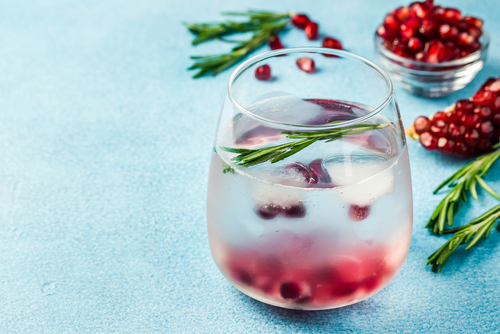
Alcohol-free cocktails look as if they contain alcohol. There is now a wider selection of alcohol-free cocktails, especially alcohol-free cocktails with interesting flavor combinations. In recent years, the range of alcohol-free drinks available has expanded to include beer, shouchuu (a kind of Japanese liquor) and umeshu (plum wine).
This trend has delighted non-Japanese, too. Hariom SINGH from India often orders alcohol-free beer and says, “Good alcohol-free drinks are very welcome.” Many people from India and the Middle East cannot drink alcohol for religious reasons. Other people prefer alcohol-free drinks because they are more conscious of health issues, a trend that has not just occurred in Japan, but all over the world.
With more alcohol-free drinks available, people are no longer ordering non-alcoholic drinks because they have no other choice; rather they’re ordering them because they really want to drink them.
Non-alcohol Cocktail Organization
Gyu-kakuText: TSUCHIYA Emi
[2013年4月号掲載記事]

二日酔いにならない、お酒が苦手な人が飲み会の雰囲気をこわさないよう気を遣わなくて済むなどの理由で、ノンアルコールドリンクが定着してきました。その理由として、飲酒運転による事故が増えていることを受け、取り締まりが強化されるようになったという背景や、若者のアルコール離れがあげられます。
日本にもノンアルコールドリンク自体は昔からあり、飲食店にも置いてありました。「車を運転される方やお酒が飲めない方に一定の割合で需要がありました」と、「牛角」などの焼き肉や居酒屋チェーンを経営する株式会社レインズインターナショナルの広報担当、川合康幸さんは言います。「最後の一杯をノンアルコールにする方もいらっしゃいますね」。
ノンアルコールカクテル協会の代表、永井ジャンマークス典比古さんは話します。「元々お酒を飲めない人の定番ということで、ウーロン茶などはバーで用意されていました。でも見た目からして明らかにお酒とは異なり、場の雰囲気をこわしてしまうという話をよく見聞きしました」。
ノンアルコールカクテルの見た目はアルコール入りのものと変わりません。たくさんの組み合わせで様々な味わいを作り出せるカクテルを中心に、ノンアルコールドリンクのレパートリーは広がってきています。近年ではビールや焼酎、梅酒などノンアルコールドリンクは広がっています。
この傾向は外国人にも喜ばれています。「おいしいノンアルコールドリンクが増えるのは大歓迎です」と、よくノンアルコールビールを注文するインド人のハリオム・シンさんは言います。インドや中東では、宗教的な理由からお酒を飲むことができない人たちもたくさんいます。また、日本だけでなく世界的にも健康志向が高まっているので、そのような理由からノンアルコールドリンクを選ぶ人たちもいます。
ノンアルコールドリンクが多くなることで選択肢が増え、仕方なくアルコール抜きの飲み物を選ぶのではなく、あのノンアルコールドリンクが飲みたいとすすんで選ぶ人が増えてくるかもしれません。
文:土屋えみ
-
[From April Issue 2013]
The newly renovated Kabukiza theatre will be reopening this April. The traditional art of kabuki has a 400 year old history. Integrating drama, dance and music, it’s possible to see the Japanese sense of beauty up on a kabuki stage expressed through things like the four seasons and gorgeous costumes. The word “kabuki” comes from “kabuku,” which means “extraordinary.”
Kabuki is unique in that roles are performed by men only. Actors playing female roles are called “onnagata,” and one of the attractions of kabuki is that they appear to be more feminine that women themselves. Kabuki plays can be roughly divided into two categories. The first is “period drama” that portrays the world of the samurai or battles. The second is “human empathy drama” that portrays the trials and tribulations of the citizens of the Edo period.
The stage itself is another attraction of kabuki. A walkway called hanamichi leads up to the stage through the audience. Actors make their entrances and exits on this. Sometimes actors will stop and perform here allowing the audience to get a look up close. Besides this other devices include a revolving stage allowing for quick scene changes and trapdoors that allow actors to make an entrance in the middle of the stage.
Some scenes in kabuki get both actors and audiences really fired up. When an actor appears on the stage or his performance reaches its climax, the audience yells out “Yamashiroya!” or “Otowaya!” These are yagou, or stage names. This custom arose because in the old days actors were not allowed to have surnames. Instead they used stage names.
Kabuki performances are generally held twice a day: once during the day and once at night. Each play lasts about three to four hours and there are intermissions between dramatic and musical scenes. Kabukiza theaters sell tickets for one act only. Headsets that provide an explanation of the play can be rented. English versions are also available for a fee.
Traditional Kabuki and the “New Movement”
The majority of kabuki actor’s names have been passed down from generation to generation. Actors acquire different stage names as they progress up the ranks, until they acquire the most elevated title of their clan. In the kabuki world, not only stage names, but also an acting style and the plays that one specializes in are inherited; it’s normal for children of actors to inherit all of this.
Last December, the 18th generation NAKAMURA Kanzaburo, who was a popular kabuki actor, and this February ICHIKAWA Danjuro, who was known for his stupendous performances, passed away. It was a great loss for those in kabuki circles.
In 1986 “super kabuki,” a form of theatre that adopted a contemporary theatrical style appeared in the traditional kabuki world. The 3rd ICHIKAWA Ennosuke (currently called Enoh) incorporated other kinds of theatrical styles such as western opera or Beijing opera into his acting style. It had a big impact on the theatrical community both in Japan and abroad. Since then performances have been held at theatres including Shimbashi Enbujo Theatre, Tokyo.
[2013年4月号掲載記事]
今年4月、新装された歌舞伎座がオープンします。歌舞伎は、400年の歴史を持つ伝統芸能です。演劇、舞踊、音楽がミックスされた総合芸術で、日本の四季や豪華な衣装など、日本の様式美を舞台でみることができます。「歌舞伎」とは、「並はずれている」という意味を持つ「傾く」という言葉がもとになっています。
歌舞伎の大きな特徴は男性だけで演じられることです。女役は「女形」と呼ばれ、女性以上に女性らしく演じるところは、見どころの一つです。演目は大きく二つに分けられます。一つは、武士の世界や合戦を描いた「時代物」。もう一つは人間味があふれる江戸時代の町人を描いた「世話物」。
歌舞伎の楽しみは舞台の構造にもあります。舞台に向かって観客席を貫く「花道」があります。ここからも役者が、登場したり退場したりします。そこで、立ち止まって演技することもあり、観客は身近で役者を見ることができます。他にも場面転換をすばやくする「回り舞台」や役者が舞台の中央から登場する「せり」などの仕掛けがあります。
歌舞伎は役者と観客が一体となって盛り上げる場面もあります。役者が登場するときや演技が最高潮に達すると、客席から「山城屋!」「音羽屋!」などのかけ声があがります。ここでかけられる言葉は屋号(トレードネーム)といいます。このしきたりは、かつて役者は苗字を持つことが許されていなかったためです。そのため、屋号を使いました。
歌舞伎の上演は、通常、昼の部と夜の部があります。それぞれが3~4時間ほどで、話や演目の区切りで休憩時間が設けられています。歌舞伎座では一幕だけを見るチケットも販売されています。また、解説が聞けるイヤホンガイドの貸し出しもあります(英語もあり。有料)。
歌舞伎界の伝統とニュームーブメント
歌舞伎俳優の名前の多くは、代々受け継がれます。各一門の最高位の名前を継ぐまでには段階的な名前を得ます。歌舞伎の世界では、名前だけでなく芸風や得意な演目なども含めて継がれていきますが、子どもが後を継ぐのが一般的です。
昨年12月に人気歌舞伎俳優の18代目、中村勘三郎が、そして今年2月には圧倒的な存在感のあった12代目市川團十郎が相次いで亡くなりました。歌舞伎界にとって大きな損失です。
伝統的な歌舞伎界において現代にマッチした演劇を試みる「スーパー歌舞伎」が1986年に登場しました。3代目市川猿之助(現:猿翁)が、オペラ、京劇など他の演劇スタイルを取り入れたもので、内外の演劇人に大きな衝撃を与えました。それ以降、東京の新橋演舞場などで公演が行われています。
-
[From April Issue 2013]
Located roughly in the center of Honshu, Shizuoka Prefecture is home not only to Mount Fuji – Japan’s national symbol – but also to other beautiful natural features: mountains, the sea and lakes. This prefecture can be divided into three regions: the eastern region which includes the foothills of Mount Fuji and the Izu peninsula; the central region which includes the Gulf of Suruga and the mountains leading to the Southern Japanese Alps; and the western region around Hamanako (Lake Hamana). The climate is generally mild throughout the year, but there is a distinct difference between the seasons and as a result it’s possible to enjoy different scenery depending on the season.
The Tokaido road was one of the highways developed during the Edo period (17–19 century). Inns within Shizuoka Prefecture that ran along this route prospered. Many famous places and historic sites still remain in the prefecture. Easily accessible from the capital, to take in its numerous sightseeing spots, it’s suitable for day trips or longer vacations.
To kick off a trip to Shizuoka, it’s best to go and check out Mount Fuji. Mount Fuji can be viewed from many places in the eastern to central areas of Shizuoka Prefecture. At an altitude of 3,776 meters, it is the highest mountain in Japan. Its strong and beautiful form has greatly influenced many artists. Mount Fuji has even been depicted by Edo period ukiyoe (woodblock print) artists: by KATSUSHIKA Hokusai in his “Fugaku Sanjurokkei” (Thirty-six Views of Mount Fuji) and UTAGAWA Hiroshige in his series “Tokaido Gojusan Tsugi” (Fifty-three stages on the Tokaido highway). This landscape has long been treasured and is close to the hearts of the Japanese people.

Mount Fuji / Mount Fuji Hongu Sengen Taisha
Ever since ancient times Mount Fuji has been considered to be a sacred place by religious groups; the Asama sect was founded on the belief that Mount Fuji is a deity. This sect was said to have been founded in order to calm the frequent eruptions of Mount Fuji. The main temple of this Buddhist sect is the Mount Fuji Hongu Sengen Taisha in Fujinomiya City. Designated as an important cultural property, the main building stands in front of Mount Fuji. It is 13 meters in height, built in two sections and has multiple stories.
A little distance away from Mount Fuji is the Izu peninsula which is one of the main sightseeing areas in Shizuoka. The peninsula with its mountains running down it like a spine jutting up through the sea has been loved by both people in positions of power and by artists alike. Izu is also known as the setting of many literary works including “Izu no Odoriko” (The Dancing Girl of Izu) by KAWABATA Yasunari, which portrays the love between a woman of a travelling dance troupe and a lonely young man.
Named after Shuzenji temple built by Kuukai in 807 AD, the Shuzenji area also appears in this novel. Shuzenji is also the place where the Genji clan defeated the Heike clan and rose to power establishing the Kamakura era (12–14th century), before subsequently falling from power. Originally a Shingon Buddhist temple, after a fire, it was reduced to ashes during the war. It was resurrected by HOUJOU Souun as a Soutou sect temple during the Muromachi Era (14–16th centuries). These days many people visit the temple throughout the year and the area has come to be renowned as a spot for viewing the autumn leaves.

Scenic view at Izu / Koibito Misaki
Izu has a special tourist attraction that sweethearts should visit. This is “Koibito Misaki” (Lovers’ Cape) in Izu City. Located at the end of the 700 meter Fujimi path, it’s possible to see the Suruga Gulf and Mount Fuji on the opposite bank of the cape. There you will find an adorable bell called the “Love Call Bell;” by ringing this bell and calling out the name of your lover it is said that you can make your love a reality. This place is also known for having beautiful views around sunset.
Shizuoka Prefecture is a health resort and many artists have moved here to concentrate on their work, making it a center for artistic activity. There are over 30 art galleries and museums within Shizuoka, each with its own unique characteristics.
One example is the Shizuoka Prefectural Museum of Art, located in Shizuoka City in the central part of the prefecture. This art museum is the only museum in the country that has 32 works of the sculptor, RODIN, on display, in addition to well-known works of exquisite art by both western and eastern artists including MONET, GAUGUIN, and YOKOYAMA Taikan. Since the museum concentrates its efforts on displaying modern art and putting on special exhibitions, it has a diverse collection of art works that attracts fans of modern art from all over Japan.
With its fertile environment, Shizuoka has a variety of delicious produce, but, producing more tea than any other prefecture in the country, it’s most famous for Shizuoka tea. Blessed with conditions that include a warm climate, pure water and fertile soil, high quality tea leaves are cultivated.
Delicious inexpensive “gotouchi gourmet” – local cuisine that can only be enjoyed within a particular region – is increasingly popular in Japan. “Fujinomiya yakisoba” (fried noodles), from Fujinomiya City, Shizuoka, was the catalyst for this trend. This dish is made with al dente noodles, oilcake of pressed lard, and powdered sardines.
There are so many hot springs in Shizuoka that it has been dubbed the “hot spring kingdom.” Encircled by sea and mountains, Atami onsen is one of Japan’s foremost onsen towns, garnering popularity with its female customers because its waters moisturise and promote beautiful skin. Effective in treating skin problems, the waters are recommended for people with sensitive skin.
The western part of the prefecture is the area around Hamamatsu City and Hamanako, a lake with a circumference of 141 kilometers is located there. Rich in minerals, because seawater flows into its brackish waters, it is home to a wide variety of fish and is excellent for eel farming. Around the lake, flowers bloom throughout the year and it’s possible to enjoy leisure facilities like Hamamatsu Flower Park there.

Hamanako / Hamamatsu Museum of Musical Instruments
Because Yamaha, the global musical instrument manufacturer has its head office in Hamamatsu City, music has flourished in this town. Many music fans visit the Hamamatsu Museum of Musical Instruments because it is one of the largest museums in Orient. These instruments include rare musical instruments native to particular regions and even instruments that have been used by well-known composers. From its collection of over 3,000 musical instruments, approximately 1,300 pieces are on display. In the “experience room,” visitors can try playing various musical instruments.
To get to eastern Shizuoka, from JR Tokyo station it takes approximately 45 minutes by Shinkansen to JR Atami station and to JR Mishima station 53 minutes. To get to central Shizuoka, it takes approximately one hour and ten minutes to JR Shin-fuji station or one hour and 30 minutes to JR Shizuoka station. To get to western Shizuoka, it takes one hour and 45 minutes to JR Kakegawa station, or two hours to JR Hamamatsu station. It takes about three to six hours by bus departing from nearby Tokyo station.
Photos courtesy by Shizuoka Prefectural Tourism Association
Text: OMORI Saori
[2013年4月号掲載記事]
本州のほぼ中央に位置する静岡県は、日本のシンボルでもある富士山をはじめ、山、海、湖など豊かな自然を持つ土地です。県は3つのエリア--富士山麓及び伊豆地方を含む東部、駿河湾から南アルプスに続く山間部が中心の中部、浜名湖を中心とした西部--に分けられます。年間を通じて全体的に温暖な気候ですが、四季がはっきりしているため、季節ごとに違った景観を楽しむことができます。
静岡県は、江戸時代(17~19世紀)に整備された街道の一つである東海道の宿場町として発展してきました。県内には名所や旧跡も多く残っています。首都圏からのアクセスがよいこともあって、日帰りや長期旅行にも向いています。
旅の始まりに見ておきたいのが富士山です。県の東部から中部辺りまでは、多くの場所でその姿を見ることができます。標高3,776メートルで日本一の高さです。力強く優美な姿はたくさんの芸術家に大きな影響を与えてきました。江戸時代の浮世絵作家、葛飾北斎の「富嶽三十六景」や歌川広重の連作「東海道五十三次」にも描かれており、日本人の心の風景として長く愛されてきました。
古代より信仰の対象として神聖なものとされてきた富士山は、富士山を神として信仰する浅間信仰発祥の地です。たびたび噴火した富士山を鎮めることを目的として始まったといわれています。この浅間信仰の総本山が、富士宮市内にある富士山本宮浅間大社です。富士山を背景に、二重構造で高さ約13メートルの本殿は重要文化財に指定されています。
富士山周辺から少し移動すると、静岡の中でも主要な観光地である伊豆地方があります。海と山が、まるで背中を合わせるようにしてくっついているような景観が特徴の伊豆地方は、時の権力者や文化人に愛されてきました。旅芸人一座の女性と孤独な青年との恋を描いた、川端康成の「伊豆の踊り子」など、多くの文学作品の舞台となった場所としても知られています。
この小説の舞台の一つ、修善寺地域の地名の由来となった修禅寺は、807年に空海によって建てられました。平家を倒したことで権力を握り、鎌倉時代(12~14世紀)の基盤を築いた源氏が滅亡した地でもあります。かつては真言宗の寺院でしたが、戦乱による大火災が起こり全焼。室町時代(14~16世紀)に北条早雲によって曹洞宗の寺院として再興されました。現在は紅葉の名所としても知られるようになり、年間を通じて多くの人たちが訪れています。
伊豆には、恋人と一緒に訪れたい観光スポットがあります。伊豆市にある恋人岬です。約700メートルの富士見遊歩道の先端にある恋人岬からは、駿河湾や対岸の富士山を見ることができます。この恋人岬には「ラブコールベル」と呼ばれるかわいらしい鐘があり、これを鳴らして恋人の名前を呼ぶと、愛が実るといわれています。また、夕日が沈む美しい光景を見ることができる場所としても知られています。
静岡県は保養地であることから多くの芸術家たちが移住し、創作活動に取り組んでいる背景もあり、芸術活動が盛んです。県内には個性豊かな美術館や博物館が30件以上あります。
その代表が、県の中部、静岡市にある静岡県立美術館です。国内でただ一つ、彫刻家ロダンの作品32点を常設展示しており、その他にもモネ、ゴーギャン、横山大観など西洋・東洋の著名な作品を所蔵しています。現代アートや企画展にも力を入れているため作品の幅は広く、全国からも多くのファンが訪れています。
自然豊かな静岡県にはおいしいものがたくさんありますが、最も有名なのが生産量全国一の静岡茶です。温暖な気候、清らかな水、豊かな土壌という地形条件にも恵まれ、高品質のお茶が栽培されています。
日本では、安くておいしい、また、その土地でしか食べることができないご当地グルメがブームです。この火付け役が、静岡県富士宮市の「富士宮やきそば」です。こしのあるめんとラードをしぼった後の油かす、イワシの削り粉を使って作られます。
静岡県には温泉王国といわれるほど温泉がたくさんあります。特に、海と山に囲まれた日本有数の温泉都市である熱海温泉は美肌、保湿などに効果があることから、女性客の人気を集めています。皮膚疾患にも効果があるため、肌の弱い人にもおすすめです。
県西部は浜松市を中心とした地域です。また、周囲141キロメートルの浜名湖があります。栄養分も豊富で海水が流れ込むため、魚の種類も多く、ウナギの養殖が盛んです。湖の近くには、1年を通じてそれぞれの季節の花が見られる、はままつフラワーパークなどのレジャー施設もあります。
浜松市は世界的な楽器メーカーであるヤマハの本社があることから、音楽が盛んな街です。浜松市楽器博物館は、東洋では最大級の楽器専門の博物館のため、音楽ファンがたくさん訪れています。地域特有のめずらしい楽器や、著名な作曲家たちが使用していた楽器3,000点以上を収蔵しており、そのうち約1,300点を展示しています。体験ルームでは、楽器を自由に演奏することもできます。
JR東京駅を起点にすると、静岡県東部エリアへはJR熱海駅まで新幹線で約45分。JR三島駅まで約53分。中部エリアへはJR新富士駅まで約1時間10分。または、JR静岡駅まで約1時間30分。西部エリアへはからJR掛川駅まで約1時間45分。またはJR浜松駅まで約2時間。東京駅周辺から出発する高速バスでは約3~6時間かかります。
大森沙織