-
[From May Issue 2011]
With giant video display monitors in Shibuya, Flat Screen TVs in many storefronts and the proliferation of high-resolution cell phone cameras, daily life in Japan is replete with continuous imagery. And advanced Japanese technology plays an essential role in making all of this possible.
Located in Odaiba, Tokyo, the National Museum of Emerging Science and Innovation (Miraikan) will be newly exhibiting a giant, spherical video monitor. Named Geo-Cosmos, it has a diameter of approximately 6 meters and will be suspended from the ceiling, hanging from the sixth to the first floor. On it will be shown images of the earth taken from outer space as well as various other data collected in observation of our planet.
“This display was born from Director and astronaut MOHRI Mamoru’s idea,” explains Operational Division member JINGU Rie. “Our director says that he was moved when he saw Earth shining out there in dark space and remarked to himself that, ‘There are living beings there.’ His desire was then to ‘share images of the earth as seen from outer space’” she says.
Weighing roughly 14 tons, Geo-Cosmos is made mainly of aluminum. Its surface is covered by 10,362 organic electroluminescent (OEL) tiles, each measuring 96 mm squared and placed just 3 mm apart. Its total resolution is more than 10 million pixels.
“Upon Geo-Cosmos viewers can see that the earth is boundless. We will also show simulated images of the planet’s changes due to global-warming. We hope people will become more aware of earth’s current reality and think more seriously about its future,” says Jingu.
In the departure area of Osaka’s Kansai International Airport there is another large video display monitor measuring 3 meters long by 4 meters high. With a thickness of only 1 mm, this film-type monitor is unidirectional, and can be placed in many different positions, such as being wrapped around a pillar as a digital sign board. Furthermore, it is easily portable.
The company that developed SHiPLA, the Shinoda Plasma Co., Ltd., is located in Kobe’s Hyogo Prefecture. To do so, they lined 1 mm glass tubing with electrode-embedded film through which emanate red, blue and green colors, creating an extremely thin display surface. “We came up with this idea in 1998 and acquired the basic technology in 2003, but it was difficult to make tubularly-even structure,” explains Director ISHIMOTO Manabu.
“Since there has never before been a way to display images on a bendable surface, people are in awe when they first see it,” he says. “People who have seen our flexible display remark that, ‘It looks as though the images are being displayed from within a transparent pillar.’”
While Geo-Cosmos uses small, flat tiles, SHiPLA’s uses a shaved panel to realize its flexible display. So, in shapeable display monitors you not only find high-tech gadgetry, but also an infusion of the technician’s spirit.
National Museum of Emerging Science and Innovation
Shinoda Plasma Co., Ltd.Text: SAZAKI Ryo
[2011年5月号掲載記事]
東京・渋谷の屋外スクリーン、店頭に飾られた薄型テレビ、高画素のカメラがついた携帯電話--日本人の生活には映像があふれています。その陰には高度な技術でつくられたディスプレイの存在があります。
東京・お台場にある日本科学未来館では、ボールのような形の大きなディスプレイをリニューアル展示する予定です。その直径は約6メートルで、1階から6階まで吹き抜けの天井から吊り下げられています。名前はジオ・コスモスといいます。宇宙から撮影した地球の映像をはじめ、さまざまな地球の観測データを映し出すことができます。
「このディスプレイは宇宙飛行士でもある館長、毛利衛の思いから生まれました」と、運営事業部の神宮里江さんは言います。「館長は、真っ黒い宇宙の中で輝いている地球を見たとき、『ああ、そこに生き物がいる』と感動したのだそうです。『宇宙から見た地球の姿を皆さんと共有したい』、それが館長の思いなんですよ」。
ジオ・コスモスは重さが約14トンあります。主な素材はアルミで、表には四角い有機EL(電圧をかけると発光する物質を利用したディスプレイ)のパネルが10,362枚貼られています。1つのパネルは直径96ミリで、パネルとパネルとの間は3ミリです。画素は全体で1,000万画素以上です。
「ジオ・コスモスが映すのは国境の描かれていない、1つの星である地球です。温暖化に関するシミュレーション映像なども流す予定です。これを見て、地球の今を感じながら地球の未来を考えてほしいです」と神宮さんは話します。
関西国際空港(大阪府)の出国エリアにも、縦4メートル、横3メートルの大きなディスプレイが置かれています。これはフィルム型のディスプレイで、厚さが1ミリしかありません。そのため、一方向にある程度曲げることができます。直径1メートルの柱に巻きつけてデジタルサイネージ(画像の看板)に使えますし、別の場所に運んだりするときにも便利です。
このディスプレイ、SHiPLAをつくったのは、神戸市(兵庫県)の篠田プラズマ株式会社です。直径1ミリのガラスチューブを並べ、電極付きのフィルムで挟み、それぞれ赤、青、緑の3色に光らせることによって、薄さを実現しました。「1998年にアイディアを思いついて、基本の技術は2003年にはできたのですが、ガラスチューブの中に、均一に構造をつくることがとても難しかったですね」と、取締役の石本学さんは説明します。
「これまで、これほど曲がった面に映像を映す技術はなかったので、見た人はとても不思議がります」と石本さんは言います。「柱型のディスプレイを見た方は、『まるで透明な柱の中に実物があるようだ』とおっしゃいました」。
ジオ・コスモスは平たくて小さなパネルを並べて、SHiPLAは薄型化によって、曲げられるディスプレイを実現しました。曲面ディスプレイには高度な技術だけでなく、技術者の根性が集約されているといえそうです。
文:砂崎 良
-
[From May Issue 2011]

Sado Island, Niigata Prefecture draws on a rich and distinctive history. Once considered suitably wild and remote enough to make it a place of exile for former emperors, outcast men of religion and common criminals, the island later became the site of an Edo-era gold rush. Today, it’s known as much for its tempestuous beauty and performing arts as it is for its past.
An hour’s hydrofoil ride off the coast of Niigata, Sado is a fairly large island, almost 30km across at its widest, with two low mountain ranges protecting its central plain from the brutality of the Japan Sea. In winter the weather is harsh and unforgiving, yet in summer it can swelter – so it’s of little wonder why a stint in exile here was considered punishment. But Sado can be spectacular whether rain or shine.
For many visitors, a jaunt to Sado begins with Konpon-ji Temple, the most compelling remnant of Nichiren, founder of the eponymous Buddhist sect and his time in exile on Sado from 1271 to 1274.
The calming temple compound, defined by its thatched roofs, oversized wooden gateways and giant, robed statue of Nichiren, was built by his followers not long after he was allowed to return to the mainland. It is one of several worthwhile temples in central Sado with connections to this influential monk.
In Sado, noh performances remain popular, where more than 30 distinct noh stages make up roughly half of the total number across Japan. Noh’s history is also tied to yet another one of Sado’s illustrious exiles: Zeami. Credited with formalizing noh theater in the 15th century, Zeami spent the last eight years of his life on Sado, after having fallen from grace at court. Annually, about 20 noh performances are hosted by the islanders. However, especially fantastic are the evening performances of takigi noh which have become quite popular among foreign tourists.
Located in the Mano district is the Sado History and Traditional Museum. Here you can see real-looking, life-size robot replicas of Zeami, Nichiren and several Buddhist monks. And while they move only slightly, they help explain the island’s extreme historical importance.
Leaving the central plains behind, many then head to the tiny southern coastal village of Ogi. This is where, every August, Sado hosts their Earth Celebration, a three-day festival attracting percussionists from around the world, bringing the village’s otherwise sleepy streets to life with pulsating, primeval rhythms.
The event is organized by the island’s world-renowned Kodo Drummers whose dynamic taiko performances are a highpoint of any island visit. You may even be inspired to try your own hand at taiko through one of the regular workshops held by drummers at the Sado Taiko Experience Exchange Hall (Tatakou-kan).
While in Ogi you may also encounter one of Sado’s more unusual traditions: tarai-bune. Taking to the water in what resembles a half-cut Kentucky whiskey barrel might not seem like the steadiest way to stay afloat, yet for centuries these distinctive boats were the vessel of choice for islanders collecting seaweed and shellfish along the treacherous, jagged shorelines. Today, Ogi’s fisherwomen earn their living by taking visitors out on the water for 10-minute spins.
For something less touristy, venture to the calmer northern coast, where you’ll be rewarded with stunning coastal vistas including Futatsugame, as well as ample opportunities for picturesque cliff-top walks. Although these days it is quiet, the population of northern Sado rocketed to almost 100,000 after gold was discovered in the former hamlet of Aikawa in 1601, just two years prior to the onset of the Edo era.
Now, with the gold gone Aikawa slumbers once again and one of the former mine shafts has become the Sado Kinzan Museum, where the only prospectors are mechanical robots who offer a glimpse at the horrific conditions Sado’s largely convict miners were once forced to endure. Fortunately, more than 400 years later, today’s conditions on this beautiful island are far more appealing.
From the port of Niigata, take either a 1-hour hydrofoil or a 2.5 hour passenger ferry ride to eastern Sado’s port of Ryotsu. Once there, you can reach most destinations on the local buses which crisscross the island. Alternatively, the Ryotsu tourist office can also suggest several car or bicycle rental options.
Niigata Prefectural Government
Sado Tourism Association
KodoText: Rob Goss
[2011年5月号掲載記事]
新潟県の佐渡島は豊かで特有の歴史を持っている。かつては、遠い荒れた地ということで、天皇や宗教および一般犯罪者の流刑地にふさわしいと思われていたが、後の江戸時代にはゴールドラッシュの舞台となった。今日、島は昔と同じように荒々しい美しさと公演芸術で知られている。
新潟の岸を離れてジェットフォイル(高速船)に乗ること1時間。佐渡はかなり大きい島で、一番幅のあるところは30キロメートル近くある。二つの低い山が、荒々しい日本海から中央の平野を守っている。冬の寒さはとてもきびしい一方、夏はうだるように暑い。ここに流されること自体が厳しい罰と見なされたのも不思議ではない。しかし佐渡は降っても照っても素晴らしいところだ。
多くの観光客が佐渡で最初に訪ねるのが根本寺。感動する日蓮の遺物だ。日蓮は仏教の開祖で、1271年から1274年まで佐渡に流されていた。
静かな寺の境内の特徴は、かやぶき屋根や木製の特大の出入り口、それに衣をまとった巨大な日蓮像だ。像は、日蓮が本州に戻ることを許されてからまもなく日蓮の信徒が建てたもので、有力な僧と縁のある、佐渡中心部では立派な寺のうちの一つだ。
佐渡は今でも能が盛んで能舞台が30以上ある。これは全国の半分の数にあたる。これは島流しにされたもう一人の著名な世阿弥と関係がある。15世紀に正式に能楽堂をつくった世阿弥であるが、宮廷で失脚した後、佐渡で晩年の8年間を過ごしたのだった。年間約20回の公演が島民によって行われ、とりわけ夜行われる薪能は幻想的で外国人にも人気だ。
真野地区には佐渡歴史伝説館がある。世阿弥だけでなく仏教の僧、日蓮の本物そっくりで等身大のロボットもあり、動きは小さいが著名な歴史場面を再現している。
中央に広がる平野を後にして、観光客の多くは、次に南岸沿いにある小さな村、小木に向かう。ここは毎年8月に佐渡がアース・セレブレーションを主催している場所。3日間にわたるお祭りで、世界中からパーカッショニストが集まり、普段はのんびりとした村の道を躍動感あるリズムで活気づかせる。
イベントを始めたのは、島を拠点とする世界的に名高い太鼓集団、鼓童だ。そのダイナミックな太鼓の演奏で佐渡訪問は最高潮に達する。佐渡太鼓体験交流館(たたこう館)では太鼓奏者が定期的に行うワークショップで太鼓演奏を行っている。自分でもやりたくなるかもしれない。
小木にいる間に、佐渡のもっと珍しい伝統も目にするだろう。それはたらい舟だ。ケンタッキー・ウイスキーの樽を半分に切った形に似たもので水の中に入れることが最も安定して浮かぶ方法だとは思えないかもしれない。けれども、何世紀もの間、島民たちはこの特徴的な舟に乗ることを選び、ぎざぎざした危険な海岸線から海藻や貝類を採っている。現在では小木の海女(女性の漁師)たちは、観光客を10分間、舟でひと回りさせることで生計を立てている。
もっと観光客向きでないものに触れるには、思い切って住民の少ない北岸へ行ってみるとよい。二ツ亀など、とても美しい海岸の景色が見通せる上、絵のように美しい絶壁を歩くこともできる。今は静かだが、1601年、当時の相川村に金鉱が発見されてから、佐渡北部の人口は急速に増え、ほぼ10万人になった。江戸時代が始まる2年前のことだ。
金が採れなくなると共に村は再び静かになり、以前の鉱山のなかには佐渡金山資料館もある。ここでの唯一の採掘者であるロボットが、佐渡の、その多くが罪人だった鉱夫たちが耐えさせられた厳しい環境を見せてくれる。幸運にも400年以上たった今、この美しい島の環境はとても魅力的だ。
新潟港からジェットフォイル(所要1時間)かカーフェリー(所要2時間30分)で、佐渡の東部にある両津港に着く。佐渡に上陸したら、島を交差するように走る路線バスを使って、ほとんどの場所へ行くことができる。バス以外の乗り物としては、両津の観光案内所で、レンタカーかレンタサイクルを借りられる場所を教えてもらうこともできる。
文:ロブ・ゴス
-
[From May Issue 2011]
Kamedatomi Corporation
Located in Ukyo-ku, Kyoto City, the Kamedatomi Corporation started out as a dyeing factory for kyou-yuuzen (delicate patterned fabric) kimonos in 1919. Today, Kamedatomi is regaining popularity for their Hawaiian aloha shirts made using traditional kimono patterns. Initially, over 100 employees worked at the factory when kimonos were still in demand. But as the kimono-wearing population decreased, so too did their business start to diminish, and from around 1989, 100% of their factory-dyed fabrics were used for western clothing.
Kamedatomi Corporation president KAMEDA Kazuaki’s long-term goal was to revive the several thousand treasured designs now being stored in the company’s collection. So, after learning about Japanese immigrants in Hawaii who started making aloha shirts from their old kimonos, he decided to try it out for himself. “When I wore it to the Kamogawa Noryo festival, my shirt got a lot of attention,” he explains. And thus began the aloha shirt manufacturing business, his tough road to success.
Kamedatomi Corporation sometimes uses over 20 different color shades to express its intricate kimono designs. The dyeing process starts when his craftsmen measure the exact amount of dye and glue to be used for keeping the color intact. Next, the cloth is laid out on a nasendai, or dyeing table, where a stencil is used to hand dye the colors. Endurance and perseverance are necessary as the dying process for a full, 30-meter piece of material restarts for each newly added color. Additionally, over Japan’s scorching summers this process usually takes place in rooms where temperatures can reach more than 40 degrees Celsius.
Prices for silken aloha shirts, which range in size from SS to LL for both men and women, start from 18,900 yen. They are not mass-produced because they are all hand-dyed, and are currently only available in stores, not online. Each shirt comes with an explanation about its own pattern or symbolic design, including ryuujin (dragon god).
This homage to kabuki style further gave Kameda the opportunity to host a hand-drawn performance, in English, of the “Sukeroku Yukari-no Edo-zakura” (Flower of Edo) at a Singaporean Isetan store. The images, created by employees of the Kamedatomi Corporation, were positively received by the audience of both young and old alike. During the summer, Kameda’s good fortune continued as a film director helped recreate a full-sized haunted mansion set, which was then opened for free to the public. Kameda wanted the haunted mansion to be more than just scary, he wanted it to be artistically enjoyable, so he covered the walls with yuuzen-dyed fabric.
Kameda has also organized many other events including a fashion show at a car dealership. This past January, he and fashion designer KATSURA Yumi co-designed an evening dress which was then submitted to the Paris Collection Haute Couture.
Says Kameda, “I am most concerned with how we can satisfy our customers and not how we can sell our products.” Kameda believes that the sky’s the limit when it comes to the idea of mixing traditional and contemporary techniques.
Text: KAWARATANI Tokiko
[2011年5月号掲載記事]
株式会社亀田富染工場
京都市右京区で1919年から京友禅(華やかで美しい文様が特色の染物)の染屋として創業した株式会社亀田富染工場は、今では着物柄のアロハシャツなどを製作して注目を集めています。着物の需要が多かった時期は100人以上の従業員が働いていましたが、着物を着る人口が減るにつれて業務縮小となり、1989年頃からは、染めの仕事の100パーセントが洋服地になりました。
代表取締役の亀田和明さんは、蔵の中に残された貴重な図案数千枚を復活させたいという思いを長く抱いていました。ハワイの日系移民が着物をほどいてシャツを作ったことがアロハシャツの始まりと知り、試しに1枚だけ仕立ててみました。「私が鴨川の納涼祭へ着て行きましたら、注目の的となりました」。このことがきっかけとなり、試行錯誤を繰り返しながらアロハシャツなどの製作を始めることになります。
亀田富染工場では、着物地ならではの濃淡を出すために、多いときは20色以上を使用しています。染めの工程は、専門の職人が染料と、布地に色を定着させるためののりを正確に計ります。次に捺染台と呼ばれる台へ布地を張り、この上に型を置いて手作業で色を染めていきます。長さ30メートルの台で色が変わるごとに何度も繰り返す作業は、根気と忍耐が必要です。猛暑の時期は、40度以上の部屋の中での作業です。
アロハシャツ(男女兼用サイズ、SS~LL)は、絹製で18,900円から。全て手染めで大量生産ができないために、インターネット販売は行わずに店頭でのみ販売を行っています。龍神(龍の姿をした神)など、購入したシャツに描かれた図柄の説明が、必ず商品のなかに入っているのも特徴です。
歌舞伎の舞台衣装からアロハシャツを作ったのがきっかけとなり、亀田さんは、伊勢丹シンガポール店で紙芝居「助六由縁江戸桜」を英語で実演を行いました。亀田富染工場の社員が作ったものでしたが、子どもから大人まで多くの人に好評でした。夏の時期には映画監督に依頼し、セットのように組んだ本格的なおばけ屋敷を無料で開催しました。ただ怖いだけではなく、芸術的な楽しさも伝えようと壁一面に友禅染めの生地を張りめぐらしました。
亀田さんは車の販売店でファッションショーを開いたりと数々の催しを行っています。2010年1月には、パリ・コレクション・オートクチュール部門に、ブライダルファッションデザイナーの桂由美さんと共同製作のイブニングドレスを出展しました。
「どうやったら商品が売れるかではなく、どうやったらお客様に喜んでもらえるかをいつも考えています」。と亀田さんは話します。伝統の技を広く伝えるアイディアはつきません。
文:瓦谷登貴子
-

[From May Issue 2011]
The Yellow Handkerchief (Directed by YAMADA Yoji)
This is director YAMADA Yoji’s film adaptation of a New York Post newspaper column written by American journalist Pete HAMILL. It was awarded the 1977 First Japan Academy Prize for Best Picture, Best Director and Best Actor in a Leading Role, among several others. The actual movie location is still preserved and the leading character’s red car can be seen on exhibit in Yubari, Hokkaido. In 2008 the movie was remade independently starring William HURT.
Kinya, who is disappointed with love, quits his job and buys a red car with his retirement money, in which he takes a ferry ride to Hokkaido. There, he unexpectedly meets Akemi with whom he enjoys a drive down to the beach. Upon their arrival, they ask Yusaku, a recent ex-convict, to take their photo. After doing so, he joins them on their ride.
They invite Yusaku, who has no immediate plans, on a trip to a hot spring. Slowly, the rashness of Kinya’s character comes to light while Akemi gradually becomes more talkative. Conversely, Yusaku seems reticent and preoccupied by something. Accidentally, Kinya and Akemi are given the same room in which he makes a pass at her, unsuccessfully. Akemi resists and starts crying. Yusaku then enters to scold Kinya for his actions.
Although they quarrel, the three continue traveling together. A few days later, Kinya gets attacked by a lowly thug, but the three escape by car with Yusaku driving. However, they are soon stopped at a police check point where it was discovered that Yusaku doesn’t have a driver’s license and that he also just got out of prison. Finally, Yusaku explains his past.
Yusaku used to work in a coal mine and had a wife named Mitsue. When she had a miscarriage, he became very distraught, started to drink heavily, eventually fighting with and killing a man. For that, he was imprisoned. A few days before the end of his six-year sentence, he wrote to his estranged wife. His message was simple: “If you will take me back, please hang a yellow handkerchief from the pole in front of our house.”
Kinya and Akemi decide to help a fearful Yusaku find out her answer by taking him to Yubari. Once there, on a high pole in front of the house that Yusaku and his wife once shared, they see dozens of yellow handkerchiefs all fluttering in the breeze. As he walked towards the house from the car, he sees Mitsue waiting for him. Then, with tears rolling down her cheeks, she helps him with his bag, as the film comes to an end.
[2011年5月号掲載記事]
幸福の黄色いハンカチ(山田洋次 監督)
アメリカ人ジャーナリスト、ピート・ハミルによるニューヨーク・ポストのコラムを山田洋次監督が映画化した。1977年に公開され、第1回日本アカデミー賞の最優秀作品賞や最優秀監督賞、最優秀主演男優賞などを受賞した。北海道夕張市では撮影現場が保存され、主人公たちが使った赤い乗用車も展示されている。2008年にはウィリアム・ハート主演でリメイク版が作られた。
失恋した欽也は仕事を辞め、退職金で買ったばかりの赤い乗用車をフェリーに乗せ、北海道へ旅立つ。そこでたまたま声をかけた女の子、朱美と一緒にドライブを楽しみながら海岸にたどり着く。その場に居合わせた、刑務所を出たばかりの勇作に写真を撮ってもらったことがきっかけで、二人は勇作を同乗させる。
行き先を決めていないという勇作を、二人は温泉に誘う。お調子者の欽也と、次第に打ちとけておしゃべりになる朱美。一方の勇作は、あまり多くを語らず、何かを悩んでいる様子だ。温泉宿でたまたま欽也と朱美が同室になり、欽也は一方的に朱美を口説こうとするが、抵抗されたあげくに泣かれてしまう。隣室の勇作が現れ、欽也を叱りつける。
けんかをしながらも、3人は旅を続ける。数日後、欽也は駐車場でチンピラ風の男に殴られるが、勇作が助けに入り、そのまま勇作の運転で3人は逃げ去る。しかし、たまたま警察の検問で止められ、勇作が無免許で刑務所から出所したばかりであることがわかる。そして、勇作は自分の過去を語り始める。
炭坑夫だった勇作には、光枝という妻がいた。あるとき、光枝の流産がもとでやけを起こし、酒に酔って街でけんかをして相手を殴り殺してしまったことが服役していた理由だった。そして6年の刑期を終えて出所した数日前、服役中に別れた妻、光枝に手紙を出していた。「俺を待っていてくれるのなら、家の前の竿に黄色いハンカチをぶらさげておいてくれ」と。
しかし、最後までそれを確かめる決心がつかない勇作を、欽也と朱美が背中を押して3人で夕張に向かう。すると、かつて光枝と暮らした家の前の高い竿に、何十枚もの黄色いハンカチが風にはためいていた。車を降りて家に向かう勇作の前には光枝が待っていた。涙でほおをぬらしながら光枝は勇作のかばんを受け取り、映画は終わる。
-
[From April Issue 2011]
Most middle and high school students in Japan wear “uniforms” their schools have chosen. Some exceptions to that rule include private middle and high schools that allow street wear, and elementary schools that also prefer uniforms. The most common colors for school uniforms are black or navy, with summer uniforms costing between 20,000 to 30,000 yen, and winter uniforms between 40,000 to 50,000 yen. Additionally, Japanese school uniforms are considered formal attire, so students can wear them to attend funerals and other similar formal events.
School uniforms were first introduced in Japan during the late 19th century. This was because a more comfortable western alternative was needed to replace Japan’s more formal attire, kimono. Thus the uniforms took on a military design, with hard collared shirts for boys and sailor-style uniforms for girls. Additionally, since there was also a wide economic gap between the rich and poor back then, uniforms helped everyone seem equal to one another.
In the 60’s, students demonstrated their opposition to obligatory uniforms declaring that “uniforms were mere tools to control the students.” As a result of this movement, some schools decided to abolish them. But after a while, the students’ crusade faded as more fashionable uniforms, including suits and jackets, became popular. Today, even some private schools that initially permitted students to wear street clothes have reintroduced the uniform, while other schools have enticed prospective students just because of their attractive clothing.
However, sometimes students get a bad reputation for the way they wear their uniform, such as when girls “wear their skirt hems too short.” There are even schools that impose strict guidelines on such “dressing down” alterations. Some teachers may measure with a ruler the length of a skirt while others stand watch outside school grounds.
“The interpretation of the school uniform differs from school to school,” says NISHI Kentaro, the editor of “Koukousei Shimbun (High School Newspaper).” “There are some schools that strictly police such actions while others give freedom to uniforms that resemble street clothes. Schools in Tokyo compared to schools in other cities, and public schools rather than private schools, tend to have more freedom.”
“Uniforms have the power to control the overall atmosphere of a school,” says Nishi in analyzing their effects. “When schools become rowdy, teachers police hairstyles, uniforms and tardiness, which really calms students down. That is why I understand when some schools get strict on such matters.”
“I was told to wear my school uniform when I went to town,” says student TAKEDA Shiori from Oita prefecture. “That is why everyone stayed out of trouble. Because of the knowledge that people would immediately recognize which school you went to, it was a good break from temptation.”
When Takeda was attending school, the “in” thing was to tie the uniform ribbons very short. “There is at least one student in each class who is the trend setter. With time, everyone dresses like that person. I think the short ribbon became popular because it made everyone look taller,” she explains.
But Takeda herself was not influenced by this trend. “I am tall so I felt longer ribbons looked better on me. Since everyone wears the same uniform, I became more interested in expressing my individuality. I looked at how I could wear the uniform to better suit me. Sometimes I looked at other girls and thought ‘I should be careful not to dress like her. It looks sloppy,’ and thanks to that I was able to look at myself objectively,” she says.
HARUTA Nana is a manga (comic) artist who has written stories that take place in middle and high school. She arranges the way her characters wear their school uniforms based on their personality. “I put active characters in hoodies and t-shirts under their uniforms to make them look casual. On the other hand, I will not let mature characters dress down their uniforms,” she explains.
Haruta debuted as a comic artist when she was in 9th grade and continued writing throughout her high school years. “The uniforms that I was issued for middle and high school were dreary, navy, jacket-style blazers. I longed to wear sailor-type tops and checked skirts so I wrote a lot of that in to my work. But in those days, I did not know that students living in other parts of Japan dress themselves differently, so all I drew was what was ‘in’ in my town,” she laughs.
“Manga is written in black and white. So, some cute clothes do not look as adorable as I want them to be, which can be a concern,” she says. “But uniforms have an invincible cuteness,” she continues. “Now that I am no longer a school girl, I cannot help myself from being attracted to all kinds of uniforms, even dull jackets and sailor style.”
“Everyone is in school for sometime in their life, but once you graduate, you can never go back. That is why adults long for the “student” look and the students understand that they are in their prime. Uniforms are a representation of this look and that is why they are so attractive,” says AIURA Takayuki, president of Conomi Co., Ltd.
His company sells standard uniform items including ribbons, cardigans and sailor-style outfits under the CONOMi brand name. “Silhouettes, materials and manufacturing style make these uniforms unique,” says vice president YOKOYAMA Toyoko. “For example, cardigans for students have looser weaves. Tighter weaves give cardigans an office girl look. And while uniforms do evolve, some things remain unchanged over time. The school uniform is a combination of unchanging elements – that is why it has a universal ‘uniform’ look.”
“I was active in the freedom of clothing choice when I was in high school,” says Aiura. “When I was in school, uniforms were uncool, so the students who hated them chose to dress them down, which the teachers strictly supervised and scolded us for. But today’s uniforms are adorable. So students are happy to wear them with care, and the teachers are relieved. I think both sides of the party are happy now,” he concludes.
“Uniforms should be more than good looking. It is school clothing so it must be easy to move in and comfortable to wear so students can enjoy their life at school. But it is also fashion and must be socially acceptable,” Aiura explains about his company’s policy. “It’s fashionable clothing but within the standard dress code appropriate for school.” So, it seems that students won’t stop wearing contemporary uniforms anytime soon.
Koukousei Shimbun Company
Ribon Editorial Dept., Shueisha Inc.
Conomi Co., Ltd.Text: SAZAKI Ryo
[2011年4月号掲載記事]
日本の中学生・高校生の多くは、学校が定めた服「制服」を着ています。私服の中学校や高校、制服のある小学校もありますが、いずれも少数派です。制服に多く使われる色は黒と紺で、値段は一式、夏服が2~3万円、冬服が4~5万円です。制服はフォーマルな服でもあります。葬式などに出席するとき、よく制服が着用されます。
日本の学校は19世紀後半に制服を採用しました。和服より動きやすい洋服が必要だったからです。それで軍服をもとにデザインした男子の詰めえり、女子のセーラー服が定着しました。また当時の日本では、貧富の差が今より大きかったため、生徒同士を平等に見せるためにも、制服が必要とされました。
1960年代には「制服は生徒を管理する道具だ」と、生徒たちが着用反対の運動を起こしました。実際、いくつかの学校はこのとき制服を止めました。しかしその後運動は止み、逆にスーツやブレザーなど、おしゃれな制服が人気になりました。今では私服の学校が制服を新たに採用したり、かわいい制服の学校に、入学希望者が集まったりしています。
一方で、おしゃれを意識した着こなしが、「スカートが短すぎる」などと、悪評を買うこともあります。一部の学校ではこのような着くずしを、厳しく指導しています。先生がものさしを使って生徒のスカートの丈を測ったり、学校の外でも生徒を見張ったりしています。
「制服に対する考え方は、学校ごとに違います」と「高校生新聞」の編集者、西健太郎さんは言います。「厳しく取り締まる学校もありますし、私服に近いくらい自由な学校もあります。傾向としては、東京は地方より、公立は私立より自由度が高いですね」。
「制服には学校の雰囲気をコントロールする力があります」と西さんは制服の効果を分析します。「学校が荒れたときなど、頭髪、制服、遅刻を取り締まると、生徒たちが本当に落ち着くんですよ。ですから厳しく取り締まる学校があるのも理解できますね」。
「街へ遊びに行くときは制服を着なさいと、先生に言われていました」と大分県出身の竹田志織さんは言います。「だから誰も悪い遊びはしませんでした。どこの生徒かすぐわかってしまうという気持ちが、ブレーキになっていたのだと思います」。
竹田さんの学校では、当時、首の周りに結ぶリボンを短くするのがはやりました。「クラスに、ファッションリーダーみたいな子が一人はいるんですよ。するとみんながその子の真似をするんです。リボンを短く結ぶと目の錯覚で、背が高く見えますからはやったんでしょう」と説明します。
しかし竹田さん自身は、その流行に乗りませんでした。「私は背が高いので、長いリボンの方が似合うと感じたんです。みんなが同じ制服を着ているので、逆に自分らしさへのこだわりが生まれるんですね。自分の体形に合う着こなしを研究しましたよ。ほかの子を見て「この服をこう着るとこんなにだらしなく見えるのか。私は気をつけよう」と思ったこともあります。自分を客観的に見る力がつきましたよ」。
マンガ家の春田ななさんは、中学校や高校を舞台にしたマンガを描いてきました。そして制服の着こなしを、キャラクターの描き分けに利用してきました。「活発なキャラクターにはパーカーやTシャツを制服のインナーにしたりして制服をラフに着させます。反対に落ちついたキャラには、くずした着こなしをさせません」と話します。
春田さんは中学3年生のときマンガ家としてデビューし、高校に通いながらマンガを描いてきました。「私の中学校と高校は紺の上下で地味なブレザーでした。ですからセーラー服やチェックのスカートにあこがれがあって、作品にたくさん描きました。でも当時は、制服の着こなしが地方によって違うことに気づいていなくて、自分の町だけのはやりを描いてしまいましたよ」と笑います。
「マンガは白と黒の二色だけで描きます。そのため、かわいい服もかわいく見えないことがあって困ります」と言う春田さんですが、「制服には無敵なかわいさがあります」と語ります。「私ももう学生を卒業しましたから、制服というだけで魅力を感じずにはいられなくなりました。地味なブレザーやセーラー服でさえ魅力的です」。
「学生である時期はどんな人にもあるけれど、過ぎてしまうと二度と戻りません。だから大人は学生というブランドをうらやましく思いますし、学生たちは自分たちが旬だと理解しています。制服はそのブランドに必要なアイテムだから魅力的なんですよ」と話すのは、株式会社このみの社長、相浦孝行さんです。
同社ではCONOMiというブランドで、リボンやカーディガン、セーラー服など、制服の定番といえる商品を販売しています。「制服らしさを出すのはシルエットや素材、つくりなどです」と副社長の横山豊子さんは言います。「例えばカーディガンでいうと、制服向けは目が粗いんです。目が細かいとOL(オフィスで働く女性)のニットの雰囲気になるんですよ。制服は進化していますが、変わっていない部分もあります。その変わらない部分を積み重ねてコーディネートするので、誰が見ても『制服』だと感じるんですよ」。
「僕自身は高校生のとき、私服の自由を求めて運動しました」と相浦さんは語ります。「当時の制服はかっこ悪かったので、生徒は嫌がって着くずしましたし、先生はルールを守らせようと厳しく叱り、指導しました。でも今の制服はかわいいです。だから生徒は喜んできれいに着ますし、先生はそれを見て安心します。双方が幸せになったと思います」。
「制服は見た目がいいだけではだめです。学生服ですから動きやすくて、学校生活を楽しめるものでなければなりません。ファッションですから、世間に認められるものでなくてはなりません」と相浦さんはポリシーを語ります。学校に着ていける服という基準を守りつつ、その中で最大限おしゃれできる服--今のところ、生徒が制服を着るのをやめることはないようです。
文:砂崎 良
-
[From April Issue 2011]
Japan is the world’s manga superpower. Manga books and magazines are published here on an almost daily basis. Of all the sections at a typical bookstore, it’s the manga section that attracts the most customers. Weekly Shonen Jump, a manga magazine for younger readers, has the largest circulation in Japan and once, one of its issues even reached a circulation of 6.53 million. Manga is the center of modern Japan’s entertainment industry.
Part of manga’s charm is its many unique characters, to which readers form an emotional attachment to. More recently, even some public elementary schools have started using learning materials featuring manga-style characters. And, there are also manga in which characters popular among children, such as Doraemon, Chibi Maruko-chan and Crayon Shin-chan, help teach subjects that children study at school.
While reading manga, students can learn how to do arithmetic or the proper stroke order of kanji. Children who love Doraemon say: “Doraemon and Nobita-kun talk in their usual way, so it is easier for us to remember things. Because manga is fun, we just keep turning the pages. It doesn’t feel like we’re studying.”
In using these new study materials, now children who don’t like studying not only enjoy it, but also better retain what they have learned. Furthermore, the number of manga characters appearing in such learning materials continues to increase each year. Now, mothers can no longer scold their children while saying, “Stop reading manga all the time and start studying.”
KASHIWABARA Junta, who is responsible for editing educational manga at the Shogakukan Inc., publishing company, says, “We started publishing educational comic books around 1975 so that through reading manga children would take interest in science and history and enjoy studying those subjects.”
“Popular series ‘Shonen Shojo Nihon no Rekishi’ (Japanese History for Boys and Girls) has had a circulation of 17 million copies, ‘Gakushu Manga Jinbutsu Kan’ (Educational Manga: Museum of Famous Figures) 2.3 million copies and ‘Doraemon Fushigi Tanken’ (Doraemon’s Wonder Exploration) 1.8 million copies,” continues Kashiwabara. Talking about these characters, he adds, “Doraemon is perfect as a guide for educational manga because he can travel to different ages and worlds using secret gadgets such as his time machine and the dokodemo door (go-anywhere door).”
Shogakukan Inc. continues to receive many positive comments from children who have read their manga and who say that “It was very easy to understand because of the format” “I’ve learned a lot” and “I was impressed with the way great people lived.” One parent even remarked with a sense of relief and expectation that “My child was reading the material with a lot of interest just because they were manga.”
And recently, more and more public libraries are also carrying educational manga. One staff member, who handles these type of manga for the International Library of Children’s Literature, says: “Our library has about 3,000 educational manga titles. And while they are not all classified as official manga, there are some that plainly explain science and social studies topics using manga.”
In modern Japan, where the rate of visual literacy and access to information is accelerating, it seems that manga characters could be the ones teaching children from now on.
Shogakukan Inc.
International Library of Children’s LiteratureText: OBAYASHI Hitoshi
[2011年4月号掲載記事]
日本はまんが大国です。専門のまんが雑誌や単行本が毎日のように出版されています。書店のコーナーの中でも一番お客が集まるのはまんが売り場です。日本で最大部数を発行する少年まんが雑誌「週刊少年ジャンプ」は、一号で653万部発行されたことがあります。現代の日本の娯楽産業の中でまんがは中心的な存在です。
まんがが持つ魅力は、個性的なキャラクターがたくさん登場し、読む人に親しみやすさを感じさせることです。公立の小学校でもまんがキャラクターが使われた学習教材が採用されています。子どもたちに人気のあるキャラクターの「ドラえもん」「ちびまる子ちゃん」「クレヨンしんちゃん」などが、学校で習う勉強を教えてくれます。
まんがを読みながら、計算の仕方や漢字の書き順が勉強できるのです。ドラえもんの大好きな子どもたちは、「ドラえもんやのび太くんが、いつもの口調で話してくれるから、覚えやすいよ。まんがが面白いから、どんどんページが進んじゃうね」「勉強してるって感じじゃないな」と話します。
おかげで勉強嫌いの子どもたちも、楽しみながら勉強できる上に、内容がしっかりと記憶に残っていきます。年々学習教材に登場するキャラクターの数も増え続けています。「まんがばかり読んでいないで、勉強しなさい」と母親が子どもをしかることができなくなってきました。
多くの学習まんがを出版する株式会社小学館、学習まんが編集担当の柏原順太さんは、「子どもたちがまんがを読みながら科学や歴史に興味を持ち、楽しく学習することを目的として、1975年頃から発行し始めました」と話します。
「人気シリーズの『少年少女日本の歴史』は1,700万部、『学習まんが人物館』は230万部、『ドラえもんふしぎ探検』は180万部発行されています」と柏原さんは続けます。さらにキャラクターについて、「ドラえもんは、タイムマシンやどこでもドアなどのひみつ道具を使うことによってさまざまな時代や世界に移動できるため、学習まんがのナビゲーターとして適しています」と話します。
出版社には読者の子どもたちから、「まんがなのでとてもわかりやすかった」「勉強になった」「偉人の生き方に感動した」という感想が多く届きます。親も、「まんがなので子どもがとても興味を持って読んでいた」という安心感、期待感が強いようです。
最近では、公立の図書館にも学習まんがが置かれるようになっています。国立国会図書館国際子ども図書館の担当者は、「当館では約3,000タイトルの学習まんがを所蔵しています。学習まんがに分類されてはいませんが、理科や社会科で学習するようなテーマをまんが入りでわかりやすく解説している本もあります」と言います。
情報の視覚化が加速する現代の日本においては、今後もさまざまなキャラクターが子どもたちに語りかける場面が増えていくことでしょう。
文:大林等
-
[From April Issue 2011]
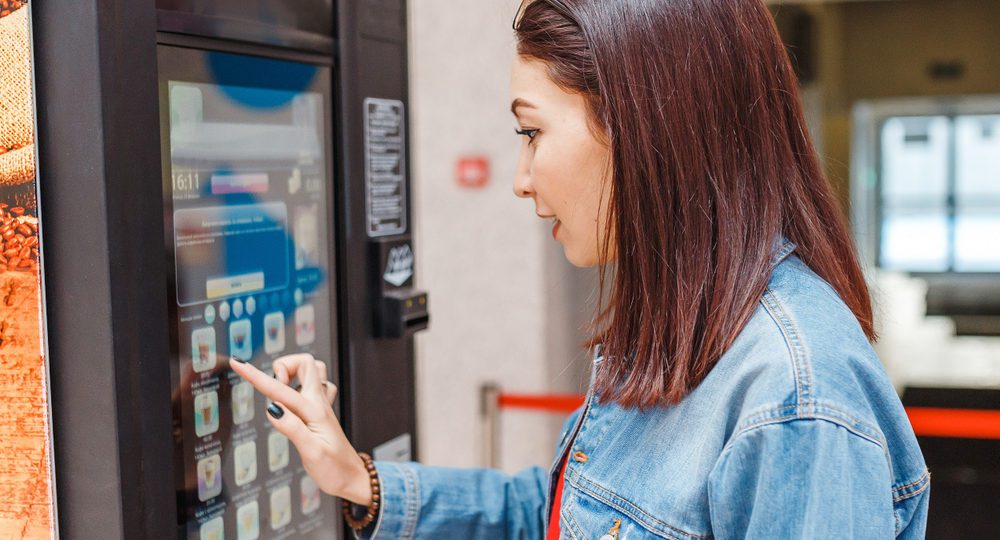
In Japan, there are many vending machines found at train stations and along the streets. They are also very prominent in downtown areas, where they stand side-by-side. And, they can even be found on rather deserted streets. But Japanese vending machines offer more functions than just offering items for money.
JR East Water Business Co. has installed “next-generation” vending machines at many of its JR East stations. These new machines have new digital displays on which many images and messages can be seen. For instance, after a customer buys a drink, a “Thank you!” message is displayed. These smart-machines can also sense when there is a person standing nearby, and make purchase suggestions, or show other animated images, before displaying all its contents to people standing directly in front of it.
What is most notable about these machines is that they communicate a vast amount of information wirelessly. So, in the event of a natural disaster, a “Give out drinks for free” command can be sent from its Internet server. Furthermore, while users’ private information is not recorded, they can recognize whether a person is a man or a woman, and their approximate age. They do all this using sensors that collect data, then use statistical information such as “Men in their 30s tend to buy sweet drinks in the evening,” to make possible suggestions, which people standing in front of it may then decide to purchase.
“We developed this vending machine with the aim of entertaining customers who buy items through it,” says planning department member MUTO Ayano, “We get responses from our customers saying that ‘It’s interesting,’ or ‘It’s pretty.’ The resulting sales are twice that of a regular vending machine. So, we are getting quite a good reaction.”
Some DyDo Drinko Inc. vending machines offer point card and voice functions. Machines with these installed issue point cards when customers press the “issue a card” button. So, customers who frequent these machines can get a point for each drink they purchase by inserting the point card into a machine. Gifts are then sent to those who redeem cards with enough accumulated points.
The voice function was developed to help more easily explain to customers how the point cards work. But now, the machines can also greet customers according to the time of day, or the season, using their pre-installed calendar functions. For instance, they say “Good morning” in the morning, while also saying “Thank you for being our customer this year” at the year’s end. Some machines can also speak in a Kyoto or Nagoya dialect, with a few even operating in English.
“We consider each vending machine to be a store. So, a vending machine with voice functionality is just a further developed version, ‘a guiding salesperson,’” says KITAGAWA Ryoichiro, a member of the sales planning department, who adds that “We hope that many more people will enjoy communicating with these new vending machines in the near future.”
In Japan, it seems that vending machines are not just item-selling boxes, but box-shaped robots that can also entertain their potential customers.
JR East Water Business Co., Ltd.
DyDo Drinko Inc.Text: SAZAKI Ryo
[2011年4月号掲載記事]
日本の駅や通りには、自販機(自動販売機)がよく見られます。繁華街には何台も並んでいますし、人通りが少ない道に置いてあることもめずらしくありません。日本の自販機はお金を入れてただ商品を出すだけでなく、いろいろな機能をそなえています。
株式会社JR東日本ウォータービジネスは、2010年8月から、次世代自販機をJR東日本の駅に置いています。この自販機は電子看板(デジタルサイネージ)機能を持っていて、正面の上部にいろいろな画像を映すことができます。例えば、お客が飲み物を買うと「Thank you!」と表示します。また、近くに人がいるかを認識する機能もあるので、通常はおすすめ商品やキャラクターの顔などを表示していますが、前に人が立つと商品を表示します。
この自販機の特徴は、電波で大容量の情報をやりとりしていることです。それにより災害が起きたときには、「飲み物を無料で配りなさい」という指示をサーバーから出すことができます。また、お客の顔など個人情報は記録されませんが、「買った人が男性か女性か、何歳くらいか」を認識することができます。それで買った人のデータを電波で集計し、「30代男性は甘い飲み物を夕方よく買う」などと統計を取ることができます。それらの情報を参考にしながら、自販機の前に立った人が好みそうな飲み物を、おすすめとして表示します。
「お客様に自販機でのお買い物を楽しんでいただきたいという思いから、この自販機を開発しました」と企画部の武藤彩乃さんは言います。「お客様から『おもしろい』『きれい』というご感想をいただきますし、売上も通常の自販機の約2倍です。とても手ごたえを感じています」。
ダイドードリンコ株式会社の自販機には、ポイントカード機能とおしゃべり機能がついているものがあります。ポイントカード機能がついている自販機は、飲み物を買って「発行」ボタンを押すと、ポイントカードが出てきます。次回から飲み物を買うときに、自販機にこのカードを差し込むと、1本につき1ポイントがたまります。そして、一定のポイントがたまったカードを送ると、もれなく景品がもらえます。
おしゃべり機能はポイントカード機能を、お客にわかりやすく説明するために開発されました。今では自販機のカレンダー機能を使って、時間や季節に合わせた挨拶ができるようになっています。例えば、朝には「おはようございます」、年末には「1年間ありがとうございました」と話すのです。さらに京都弁や名古屋弁、英語で話す自販機もあります。
「当社は自販機を一つのお店と考えています。おしゃべり機能を加えた自販機はさらに進化したバージョン、『お客様を案内するセールスマン』です」と営業企画部の北川亮一郎さんは言います。「これからも多くの方に自販機とのコミュニケーションを楽しんでいただきたいと思います」。
日本の自販機は商品を売るだけの箱ではなく、お客を楽しませる「箱型ロボット」であるようです。
株式会社JR東日本ウォータービジネス
ダイドードリンコ株式会社文:砂崎 良
-
[From April Issue 2011]
Wakayama Prefecture’s Koyasan is considered to be one of Japan’s holiest places ever since the Buddhist monk Kobo Daishi (a.k.a Kukai) founded the Shingon sect of Japanese Buddhism among its towering cedars in the 9th century. In 2004, along with two other nearby locations, Koyasan was designated as a UNESCO World Heritage Site “Sacred Sites and Pilgrimage Routes in the Kii Mountain Range.”
Nowadays, 117 Shingon monasteries cluster around the mountain’s main temple where 1,000 monks and 3,000 people live, attracting a steady stream of pilgrims. But it’s not just the pious that make the several-hour long trip south of Osaka – many visitors come just to spend a night as a monk would, at one of the 52 monasteries offering lodging called “shukubou.”
The accommodation tend to be rather Spartan, typically no more than a simple tatami mat room with a low table and futon mattress, plus communal washrooms with deep, piping hot baths. The price, which is usually around 10,000 yen per person per night, includes a beautifully presented breakfast and dinner, served in your room.
Strictly vegetarian, you can expect the meals to include numerous small dishes using ingredients such as tofu, yuba, and seasonal vegetables, as well as rice, pickles, miso soup and perhaps some soba noodles.
One particular area specialty (although readily available across Japan) that you will most likely be served at Koyasan is a freeze-dried tofu called koyadofu, which once rehydrated, has a moist, spongy texture perfect for retaining the flavor of the soup or broth it is cooked in. Traditionally, the monks here used to freeze the tofu by leaving it out on the mountain overnight.
Another highlight of a monastic stay is the opportunity to attend morning prayers with the monks. In inner temple rooms that are usually faintly lit, the air thick with incense, you’ll be able to watch close at hand as the monks recite their early morning sutra in an almost hypnotic droning chant, sporadically accompanied by a heavy, driving drum beat.
At some monasteries guests can also attend a morning fire ceremony, where a lone, seated monk burns 108 pieces of wood in a spectacular ceremony representing the 108 defilements to be overcome on the road to enlightenment.
Staying at a monastery is not the only reason to visit Koyasan. The Okuno-in is another sacred part of Koyasan, where more than 200,000 grave stones and monuments sprawl across this heavily wooded area. It has a wonderfully mysterious feel to it as you wander among its tall cedars, mossy stone stupas and small jizou statues dressed in vivid red bibs. At its eastern end, the cemetery gives way to the Hall of Lanterns, richly decorated and lit by 10,000 constantly burning oil lanterns, behind which, almost hidden in a cloud of incense and dense woodland, is the off-limits mausoleum of Kobo Daishi.
It’s also worth paying a visit to the other side of town and Kongobu-ji, the Shingon sect’s main temple, which is home to a famed collection of 16th-century paintings. The 500 yen entry fee includes green tea and a confectionery, taken in one of the temple’s newer halls, but the real highlight is the landscaped rock garden. As one of Japan’s largest, this garden is called “Banryuutei” and the sizable rocks represent two dragons.
Nearby, you’ll also find Koyasan’s sacred inner precinct, the Danjou-garan, a collection of several wooden halls and colorful stupas where Kobo Daishi erected the mountain’s first monastery. Although most of the structures in this sandy compound are modern rebuilds, they do house some impressive antiquities. Inside the vivid orange Konpon Daito (Great Stupa), a towering structure located at the compound’s center, the most impressive of these are the five giant, golden-gilded Buddhas.
From Shin-Osaka shinkansen station take the Midosuji subway line to Namba station and transfer to the Nankai-Koya Line. Services run almost hourly from Namba to Gokurakubashi station, some requiring a change at Hashimoto station, and take between 70 and 100 minutes. The last leg of the trip is a five-minute cable car ride from Gokurakubashi up to Koyasan.
Text: Rob Goss
[2011年4月号掲載記事]
仏僧、弘法大師(空海)は9世紀に、そびえ立つ杉の木々の中に仏教の真言宗を開きました。それ以来、和歌山県にある高野山は日本で最も神聖な場所の一つと考えられています。2004年には近隣の2ヵ所と共にユネスコの世界文化遺産に「紀伊山地の霊場と参詣道」が登録されました。
現在、高野山の主要な寺院の周りには真言宗の寺が117集まっています。1,000人の僧と3,000人の人が住んでおり、絶えずやってくる巡礼者をひきつけています。大阪の南の方へ数時間かけて来るのは宗教心からだけではありません。多くの訪問者は、宿泊を受け入れている52の宿坊(寺に隣接する宿舎)の一つで、僧侶のような一晩を過ごしにやってくるのです。
宿泊設備はやや質素な傾向にあります。一般的には、低い食卓と布団があるだけのシンプルな畳の部屋に、深さのあるあつい風呂付きの共同洗面所があるくらいです。料金は通常1人1泊1万円で美しく盛り付けられた朝食と夕食が付いており、自室でとることができます。
菜食主義が厳しく守られています。ご飯、漬け物、味噌汁、そしておそらくそばも、豆腐、湯葉、旬の野菜を使った料理を盛った数々の小皿と共に出されるでしょう。
高野山で食事に出ると思われる、この土地ならではの特産品は(とはいえ全国で食べられますが)高野豆腐と呼ばれる乾物の豆腐です。一旦水で戻すと水気を含んでスポンジ状になり、スープ、だし汁などの味や香りを保つのに最適です。ここの僧侶たちは伝統的に夜通し山に置き、豆腐を凍らせるのが常でした。
宿坊に滞在するもう一つの目的は、僧侶と共に朝の祈祷に出る機会があることです。寺院内の部屋はたいてい弱い光で照らされ香がたきしめられており、僧侶が朝のお経を読むのを間近に見ることができるでしょう。それは眠くなりそうで、うなるようで、時々重く激しい太鼓の音が加わります。
宿坊によっては宿泊客が朝の炎の護摩行(木をたいて仏に祈る)に出ることもできます。座った僧侶が独り、見応えのある儀式の中で、悟りを開くために克服すべき108の煩悩(欲望)を象徴する108片の薪をたきます。
宿坊に泊まることだけが高野山訪問の理由ではありません。奥之院は高野山の信仰の中心であり聖地で、20万を超える墓石や祈念碑などが広大な森の中に立ち並びます。歩き回ると、杉がそびえ立ち、苔むした石の仏舎利(仏の骨)塔や鮮やかな赤のよだれかけをまとった小さな地蔵像がいくつも目に入り、驚くほど神秘的な感じを受けます。東の端に進むと燈籠堂に行きつきます。きらびやかに装飾された広間は常に1万の油灯明(仏に供える火)に照らされているのです。この裏には、香の煙とうっそうとした林でほとんど見えませんが、立ち入り禁止の弘法大師御廟(墓)があります。
町の反対側や金剛峯寺も訪れる価値があります。金剛峯寺は真言宗の総本山寺院で、16世紀の絵画のコレクションが有名です。拝観料500円で新しい広間でお茶とお菓子をいただくことができますが、最大の見物は美しく造られた石庭です。日本最大級の大きな岩は蟠龍庭といい、二匹の龍を表しています。
近くには高野山の神聖な境内、壇上伽藍もあります。弘法大師が最初の寺を山に開いた場所にある、いくつかの木造のお堂と色とりどりの仏舎利塔の集まりです。この砂地の敷地内にある建物の大部分は現代に再建されたものですが、印象的な古代の遺物がいくつか収容されています。朱色の根本大塔(大きな多宝塔)という、構内の中心に高くそびえる建物にある中で、最も印象的な物は、金箔を施した5体の巨大な仏像です。
新幹線の新大阪駅から地下鉄御堂筋線でなんば駅まで行き、南海高野線に乗り換えます。なんばから極楽橋駅まで、ほぼ1時間おきに電車が運行されていますが、橋本駅で乗り換えなければならない場合もあります。所要70~100分ぐらい。旅の最後は、極楽橋駅から高野山駅まで5分間のケーブルカーです。
文:ロブ・ゴス
-
[From April Issue 2011]
Hanakobo
Japanese Hairpin Artistry, ARAKAWA ToshioARAKAWA Toshio runs Hanakobo, an ornamental hairpin and hair accessory manufacturing and sales company located in Tokyo’s Adachi Ward. These are Japanese-style accessories all hand made by Arakawa himself, that are worn by young girls and women in kimono on such occasions as the Seven-Five-Three Festival celebrating children’s growth, the coming-of-age ceremony and for school graduations, as well as weddings and Japanese dance recitals.
From the age of 18 Arakawa studied accessory design for two years at a technical college, and after graduating, he trained at his father’s studio. “Technically, I was training there, but my father didn’t really teach me anything, so I learned the skills by closely watching and copying the way he did it,” he recalls. Going independent in 1992, Arakawa began to work with hairpins and hair accessories made of plastic materials.
While expensive materials such as ivory and tortoiseshell are often used for hairpins, Arakawa uses plastic, which is easier to obtain and helps reduce each item’s retail price. He thinks that “the most important thing is to establish the trade as a business and continue to grow it, rather than merely pursuing artistic beauty.” “Although acrylic and acetate are both plastic, their wholesale prices are different and one is easier to process than the other,” explains Arakawa, who chooses different types of plastic depending on the item’s design and its production budget.
“Basically, my works features the beauty of nature throughout the seasons, such as chrysanthemums in autumn or snow in winter,” explains Arakawa, who draws all the designs himself. He mostly deals with other businesses and the distributed items are then sold at kimono stores, beauty parlors and variety shops. Arakawa, who sometimes get requests to create items for foreign brands, says, “I design the items so that they can also match Western-style clothing. That’s why they are also so well received by young people who don’t wear kimono.”
In recent years, he has also unexpectedly expanded his “business overseas.” “When my niece studied in Britain, she took my hairpins as souvenirs for local people and they liked them more than expected,” he recounts. “Then, on my nephew’s recommendation, I started showing my work for some years at an exhibition in Los Angeles where traditional Japanese culture was being introduced and that led to our items being sold in the Singapore Changi International Airport.”
Furthermore, last September special hairpins commemorating the 35th anniversary of the birth of Hello Kitty, a world-famous, original Japanese character, started to sell. “When I was asked to incorporate Hello Kitty into my traditional craft, I tried to create a design which would appeal to people from a wider age group, a design most suitable for a character loved by all generations,” he says.
Arakawa’s plan is simple. “I would like to take advantage of this opportunity to actively spread the charm of my handmade hairpins and hair accessories overseas,” he says. “More and more individuals are buying our items over the Internet, so I would like to further enhance our product line and services.” Presently, Arakawa is hard at work creating new hairpins and hair accessories that feature seasonal plum and cherry blossoms.
[2011年4月号掲載記事]
華工房
かんざし職人 荒川 敏雄さん荒川敏雄さんは、東京都足立区でかんざしや髪飾りなどを製造、販売する華工房を経営しています。ここで作られる和風アクセサリーは、すべて荒川さんの手作りです。女の子や女性が和服を着るときに身につけるもので、子どもの成長を祝う七五三や成人式、学校の卒業式、結婚式や日本舞踊の発表会などで使われます。
18歳から2年間、荒川さんはアクセサリーのデザインを専門学校で学び、卒業後は父親が営んでいた工房で修業しました。「修業といっても、父親は何も教えてくれませんでしたから、見よう見まねで技術を習得しました」と振り返ります。1992年に独立し、プラスチック素材を使ったかんざしや髪飾りなどを手がけるようになりました。
かんざしなどの素材は高価な象牙やべっ甲が有名ですが、荒川さんは手に入りやすく販売価格も抑えられるプラスチックを使います。「芸術性よりもビジネスとして成立させ続けることが第一」との考えです。しかし、「同じプラスチックでもアクリルとアセテートだと、仕入れ値も加工のしやすさも違います。デザインや予算によって使い分けます」と言います。
デザインから荒川さん自身が描きますが、「基本は秋なら菊の花、冬なら雪といった四季の自然美です」と説明します。業者との取引が中心で、卸した製品は着物店や美容室、雑貨店で販売されています。海外のブランド商品として製作を頼まれることもあり、「洋服にも似合うようにデザインするので、和服を着ない若者にも受けています」と言います。
また、思いがけず近年は「海外進出」も果たしています。「イギリスに留学している姪が、現地の人たちにお土産として私のかんざしを持って行ったら、予想以上に喜んでくれたみたいです。甥の紹介で、アメリカ・ロサンゼルスで日本の伝統文化を紹介する展示会にも数年ほど出品していて、シンガポール・チャンギ国際空港での販売につながりました」。
さらに、日本生まれの世界的キャラクター、ハローキティの誕生35周年を記念したかんざしも、昨年9月に販売を開始しました。「伝統工芸とハローキティをコラボレーションさせる企画を依頼され、あらゆる世代に愛されているハローキティにふさわしく、幅広い年齢層に好まれるようなデザインを心がけました」と話します。
「この機会を活かして、手作りかんざしや髪飾りの良さを積極的に海外にも発信していきたいと考えています。インターネットの個人購入も増えているので、商品やサービスもより充実させたいですね」。今、荒川さんは梅や桜をあしらったかんざしや髪飾りの新商品の製作にとりかかっています。
-
[From April Issue 2011]
Lupin III Episode 0: First Contact (Directed by OHARA Minoru)
Lupin III was originally based on an action-manga magazine serial that ran for about two years starting in 1967. It was then turned into an animated TV series years later, at which time the magazine resumed publishing as an accompaniment. Though comical, the Lupin III series are well-liked by all generations for the characters’ philosophies and style.
Monkey Punch, the writer of Lupin III, was inspired by Maurice LEBLANC’s “Arsène Lupin.” The series’ main character is supposed to be the original character’s grandson. He steals treasures all over the world and is hunted for by each country’s police forces. Millionaires and crime organizations want him dead. But he really isn’t a treasure hunter or collector. His raison d’être is in the art of the steal.
This program was specially broadcast in 2002. It tells of how four characters encountered one another: Lupin III, who is nimble and good with disguises, but also easily excitable with a weakness for beautiful women; JIGEN Daisuke, quiet and stubborn, but a crack shot; ISHIKAWA Goemon, a master fencer, who is a direct descendent of ISHIKAWA Goemon, a historically famous Japanese thief and, MINE Fujiko, the beauty who uses men to get money and jewels. Inspector ZENIGATA also makes an appearance as he attempts to incessantly track them all down.
The setting is New York City. At the request of a female journalist, Jigen begins to recount his encounter with Lupin. It happened while he was working as a bodyguard for the mafia boss, Galvez. Jigen spotted Lupin sneaking into Galvez’s residence to steal an unbreakable metal tube harder than diamonds. A shootout ensued and Lupin gave up, fleeing without it.
Later on, Fujiko, who is being pursued by Japanese police, successfully steals the tube with her boyfriend Brad. However, now she needs the “key” to open it. Brad is then killed by one of Galvez’s men. So, she uses Lupin to get it for her. Meanwhile, Inspector Zenigata and Goemon finally arrive in New York. Zenigata is after Fujiko while Goemon is searching for a special, steel-cutting sword.
It turns out that the sword that Goeman is after is the key to cutting open the tube. Contained within the tube are instructions detailing how to reproduce the metal’s indestructible formula. The four come into contact with one another as enemies who are all seeking the same treasure. Initially, they deceive and try to kill each other, eventually having no other choice but to join forces in order to bring down the Galvez gang while eluding Zenigata and the New York Police Department.
As Jigen finishes his story, Goemon, Fujiko and another person also named Jigen all arrive on the scene. It seems that the person the journalist was talking with was really Lupin in disguise. Quickly, the four disappear before the story’s veracity could be checked. The journalist then looks back onto the Federal Reserve Bank, where the four thieves are trying to break in, with Zenigata in hot pursuit, as the film ends.
[2011年4月号掲載記事]
ルパン三世 EPISODE 0:ファーストコンタクト(大原実監督)
原作は、1967年から約2年間、漫画雑誌に連載されたアクション漫画。数年後にテレビアニメ化され、それに合わせて漫画連載も再開された。コミカルながら、主人公たちの美学や流儀が描かれ、子どもから大人まで幅広い年齢層から支持されている。
原作者モンキー・パンチは、モーリス・ルブランの「怪盗ルパン」をヒントに作品を生み出した。主人公のルパン三世は、アルセーヌ・ルパンの孫という設定で、世界中で財宝を盗み出し、各国の警察から追われ、大富豪や犯罪組織から命を狙われている。しかし、財宝そのものより、いかに鮮やかに盗み出すかに魅力を感じている。
本作は、スペシャル番組として2002年にテレビ放映された。身軽で変装術に長けるがお調子者で美女に弱いルパン三世、もの静かで頑固な性格ながら超一流の拳銃使い次元大介、日本史に名を残す盗賊・石川五右衛門の子孫で剣豪の石川五ェ門、男を利用して金や宝石を手に入れる美女・峰不二子の4人の出会いが描かれている。彼らを追い続けることになる警視庁の銭形警部も登場する。
舞台はニューヨーク。女性記者に頼まれた次元が、ルパンとの出会いを語り始める。それは、次元がマフィアの親分ガルベスの用心棒をしていた頃のことだった。ガルベス邸に潜入し、ダイヤモンドよりも硬い金属製の筒を盗もうとしたルパンは、次元に発見される。二人は撃ち合うが勝負はつかず、ルパンは筒をあきらめて逃げる。
その後、日本の警察から追われていた不二子が、ボーイフレンドのブラッドと組んで筒を盗み出す。だが、筒を開けるには「鍵」が必要だった。ガルベスの手下にブラッドを殺された彼女は、ルパンを利用して鍵を盗ませる。そんななか、銭形警部と五ェ門がニューヨークにたどり着く。銭形は不二子を追い、五ェ門は、鋼鉄でも斬れるという斬鉄剣を追い求める。
鍵とは筒を斬るための刀であり、それこそが五ェ門が探し求める斬鉄剣であることが明かされる。そして、筒の中にはその金属の作り方が記された巻物が入っている。同じ財宝を求めて4人は敵として出会う。だまし合い、命を奪い合おうとするが、ガルベス一味を倒し、銭形とニューヨーク市警から逃れるため、協力し合うことになる。
こうして昔話を終えた次元の前に、五ェ門、不二子、そしてもう一人の次元が現れる。記者に話をしていたのは、次元に変装したルパンだったのだ。記者が話の真意を確認する間もなく、4人は姿を消す。記者が振り向いた先には連邦準備銀行がある。その銀行を襲う4人と、彼らを追う銭形の姿が映し出され、映画は終わる。