-
[From October Issue 2012]
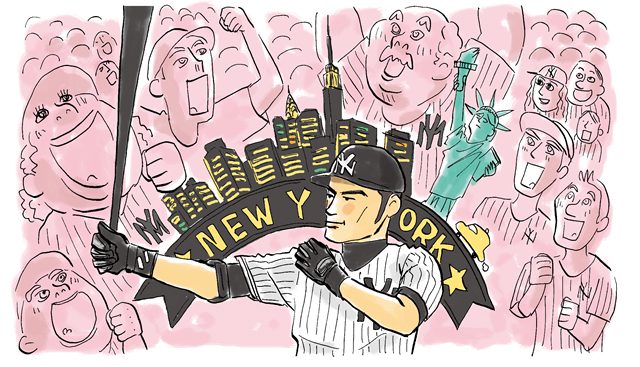
This July Ichiro, the Japanese star player for the Seattle Mariners, was suddenly traded to the New York Yankees. Baseball evolved in the USA, but, together with soccer, it is the most popular sport in Japan. So this news surprised Japanese.
Ichiro won seven consecutive batting titles in professional Japanese baseball. After moving to the Seattle Mariners, he did extremely well, scoring 200 hits a season for ten consecutive years, a record number in the history of major league baseball. He hasn’t been on top form these past couple of years, but is still a big star in the major league. Besides Ichiro, a few other Japanese players, such as pitcher DARVISH Yu, who joined the Texas Rangers this year, are doing well.
In Professional Japanese baseball there is the Central League and the Pacific League with six teams in each league. From around April to around October there are 144 matches in both leagues; the winning team becomes the league champion. Besides that the top three teams in each league compete against each other in a separate round of matches (the Climax Series) and the winner from each league qualifies for the Japan Series. The team that wins four games out of seven games in the series becomes the Japan Series Champion.
In Japanese baseball the Central League, in particular the Yomiuri Giants, has been popular for a long time. Thanks to superstar players NAGASHIMA Shigeo and OH Sadaharu, the Giants once won the Japan Series nine consecutive years in a row. However, in recent years the teams are more evenly matched and the franchise system has been widely accepted, so that each team enjoys its own popularity.
Baseball is enjoyed by both children and adults. Come spring and summer, NHK broadcasts the National High School Baseball Championships and the whole nation gets caught up in the excitement. In addition to this, baseball matches between universities or cities are also held. The standard of Japanese baseball is high; in the World Baseball Classic held once every four years, Japan has won twice in a row.
Baseball rules
Baseball fields are fan shaped. The outfield zone is covered with turf and the infield zone bare dirt, which marks out a square shape with a base placed at each corner. Nine players in a team are selected for a match. Teams play offence and defense nine times each and the team scoring the most amount of points wins. For offence, players go up to the batting box and hit the ball the pitcher throws.
If a player hits a ball that cannot be caught by the defense, it becomes a “hit” and that player goes to first base. If the ball is hit well, players can advance to second or third base. Points are scored when a player returns to home base. Points are also scored if the ball goes over the fence into the spectator’s stand and becomes a home run. If the ball is a “grounder” (the batted ball rolls or bounces along the ground) the player runs to first base. If the player can reach the base before a defensive fielder can arrive there with the ball, this constitutes a hit and the player is able to stay at first base.
Offence play continues till three players are out. When the batted ball goes out of the field, the player takes his turn again. When the pitcher’s balls do not fly over the home base four times, the batter walks to the first base. If the batter doesn’t take a swing at balls passing over the strike zone, or fails to connect with the ball even if he swings three times, he is out.
[2012年10月号掲載記事]
今年の7月、メジャー・リーグ・ベースボール、シアトル・マリナーズの日本人スタープレーヤーのイチローが、突然、ニューヨーク・ヤンキースに移籍しました。野球はアメリカで生まれたスポーツですが、日本ではサッカーと並び最も人気のあるスポーツであることから、日本人はそのニュースに驚きました。
イチローは日本のプロ野球で7年連続首位打者となりました。マリナーズに移籍した後も、メジャー・リーグ史上初となる10年連続200本安打を達成するなど大活躍しています。ここ2年は不調ですが、今でもメジャー・リーグのビッグスターです。イチローの他にも、今年テキサス・レンジャーズに入団したダルビッシュ有投手などの日本人プレーヤーがメジャー・リーグでも活躍しています。
日本のプロ野球にはセントラルリーグとパシフィックリーグがあり、それぞれに6チームずつあります。4月頃から10月頃まで各リーグで144試合を戦い、最も勝ったチームがリーグチャンピオンとなります。それとは別に、各リーグの上位3チームで数試合を争うクライマックスシリーズがあり、勝者は各リーグを代表して、日本シリーズへ進みます。日本シリーズでは、7試合のうち先に4勝したチームが日本チャンピオンとなります。
日本のプロ野球は長い間セントラルリーグ、とりわけ、巨人軍(読売ジャイアンツ)が人気でした。巨人は、かつて長嶋茂雄、王貞治というスーパースターの活躍で、9年連続日本一になりました。しかし、近年は各チームの実力の差が少なくなり、またフランチャイズ制がより受け入れられて、各チームはそれぞれに人気があります。
野球は子どもから大人まで親しまれています。春と夏にはNHKが全国高校野球選手権大会を全国放送し、国民は熱狂します。この他、大学野球や都市対抗野球なども行われています。日本の野球のレベルは高く、4年に1度行われるワールド・ベースボール・クラシックでは、2回連続で日本が優勝しました。
野球のルール
野球場は扇型にできています。外野一帯は芝生で、内野は土のままで四角くラインが引かれ、それぞれの角にはベースが置かれています。試合には1チーム9人のプレーヤーが選ばれます。攻撃と守備を各9回行い、得点を多くあげたチームが勝ちとなります。攻撃は、一人ずつバッターボックスに入り、ピッチャーが投げる球を打ちます。
守りの選手が捕れないところにボールを打てば、ヒットとなり1塁に進みます。よい当たりの場合には、2塁、あるいは3塁まで進めます。その走者がホームベースに戻ると得点になります。打ったボールが観覧席に入った場合にはホームランとなり、得点となります。当たりがゴロになった場合は、一塁に向けて走ります。ボールを持った野手が1塁を踏む前に打者が1塁ベースを踏めばヒットとなり、1塁に進みます。
3人の打者がアウトになるまで攻撃は続きます。打ったボールがフィールドの外に落ちた場合、打ち直しとなります。ピッチャーが投げた球がホームベースから4度はずれた場合には、打者は1塁に進みます。バットがストライクゾーンの上を通過する球を3度振らなかった場合、あるいは振っても当たらなかった場合にはアウトとなります。
-
[From October Issue 2012]
Ueno, located in Taito Ward, Tokyo, is a sight-seeing area the Japanese are well acquainted with. A five-minute train ride away from Tokyo Station, Ueno Station is a railway terminus at which a number of trains, including bullet trains stop at. A number of songs have been written about the fact that it has been the gateway to the Tohoku region for about 20 years.
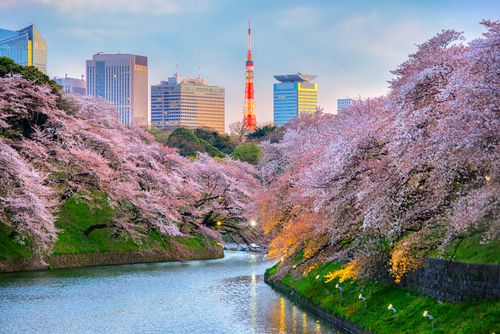
Located right by Ueno Station, Ueno Onshi Koen (Ueno Park) is a spacious green park. Built at the suggestion of Anthonius Franciscus BAUDUIN, Holland’s surgeon general, at a time when the word “park” didn’t even exist in the national vocabulary, it was the first ever park in Japan. The park often appears on the news and on other TV programs as a place bustling with activity, with live broadcasts of events such as cherry-blossom viewing being shown. One of the most photographed spots in the park is a bronze statue of SAIGO Takamori, known to tourists as “Ueno no Saigo-san” (Mr. Saigo of Ueno). A historical Japanese figure, Saigo is typically depicted with a dog by his side.
In the park is a zoo, a shrine and a number of museums. The Tokyo National Museum houses 110,000 items ranging from archaeological documents to arts and crafts works, including 87 designated national treasures and 631 important cultural assets. The National Museum of Western Art contains the Matsukata collection and other art works dating from the late Middle Ages to the early 20th century. The National Science Museum is also known for its unique exhibits, such as its models of outer space and dinosaur skeletons, and is the only national science museum in Japan that covers all scientific disciplines. Because so many important cultural assets are on display, these national museums are well worth checking out.
The Ueno no Mori Museum (The Ueno Royal Museum) exhibits works donated by members of the public, and also holds special exhibitions to display items borrowed from art museums in other countries. At the Tokyo Bunka Kaikan, internationally and domestically renowned performances of classical music, opera and ballet are held. On top of all of this, the Tokyo Metropolitan Art Museum, which opened in 1926, has just been reopened in April after two years of renovation work.
Opened in 1882, Ueno Zoo is the oldest zoo in Japan. Housing about 3,000 animals of 500 species, the zoo is famous for keeping rare animals and giant pandas. With its pond, rocks and bamboo groves, the renovated panda house is an environment that closely resembles the natural habitat of pandas. At “The Sea of Polar Bears and Seals,” you can watch seals and polar bears in action from every angle as they swim about the tank.
Passing by the children’s amusement park located opposite Ueno Zoo, you can see Ueno Toshogu Shrine in front of you. Designated as a national important cultural property, at Ueno Toshogu Shrine, TOKUGAWA Ieyasu, the founder of Tokugawa shogunate is worshiped as a god. Known as a good spot for viewing cherry blossoms in spring, and the changing colors of leaves in autumn, the shrine can get crowded, especially during the New Year holidays with tourists visiting the shrine for the first visit of the New Year, or with people coming to see peonies that bloom in winter. It also attracts those who pray for good luck or success in entrance examinations, as well as a number of people interested in Japanese architecture from abroad as an example of authentic Edo period architecture.
There are a number of famous spots inside the park, one of which is Shinobazu Pond. When an inlet of Tokyo Bay was reclaimed, part of it remained to form the pond. Two kilometers in circumference, the pond consists of three sections: U no Ike (the Cormorant Pond), Hasu Ike (the Lotus Pond), and the Boating Pond, which gets crowded with couples and families. In spring, cherry blossoms blooming around the pond are reflected in the water, and in summer lotus flowers, for which the pond is famous, bloom over its surface.
At the southern end of the park, beside Shinobazu Pond, you will find Suijo Ongaku-do (the Waterfront Concert Hall). There are various events held there according to the season, such as classical concerts in spring and Japanese drum performances in summer. Some concerts cost only 500 yen while other events can be enjoyed free of charge.
If you’re looking for a place to eat in Ueno Park, then Ueno Seiyoken and Ueno Inshotei, both have views out over Shinobazu Pond. Loved by Japan’s great literary figures, Ueno Seiyoken offers authentic French cuisine. Opened in 1875, Inshotei is a restaurant with a long history that serves kaiseki-ryouri (traditional Japanese cuisine consisting of a number of small dishes). Dishes are made using ingredients that vary according to the season.
Inside the park, there’s a traditional Japanese sweet shop called “Shin Uguisutei.” The shop opened in 1915, and the most popular item on its menu are delicious uguisu dango dumplings made from sweet red bean paste and pounded rice. There you can also enjoy seasonal sweets, such as shaved ice in summer and oshiruko (sweet red-bean soup with rice cake) in winter. For a light meal or to buy souvenirs, you can go to Ueno Green Salon, a cafe right next to the entrance of Ueno Park. Panda-themed merchandising and dishes are popular there.
The Shitamachi Fuzoku Shiryokan (Downtown Museum), located by the Shinobazu Pond, exhibits quite a few precious items that bring back memories of the good old days. Many houses collapsed during the Great Kanto Earthquake in 1923 and in the war in 1945, but here you can see lost scenes from the Edo period. In addition, antique fairs, where old tools and coins are sold, are held regularly near the museum.
Besides the park, there are other popular tourist spots in Ueno.Walking from Ueno Station toward Okachimachi, you come to a shopping street called Ameya Yokocho. Also known as Ameyoko, the street is lined with more than 400 shops, and around the end of the year it gets crowded with customers stocking up on food for the New Year holidays. The shops carry not only domestically produced items, but also imported items, and are known for selling food products, such as fish and dried goods, clothing, jewelry and shoes. Known for its cheap prices, the shopping street is popular with tourists from abroad too.
Ueno Tourist Association
Tokyo National Museum
The National Museum of Western Art
National Museum of Nature and Science,Tokyo
Ueno Zoological Gardens
The Ueno Royal Museum
Tokyo Bunka KaikanText: BOTAMOCHI Anko
[2012年10月号掲載記事]
上野は東京都台東区に位置する、日本人になじみの深い観光地です。上野駅は東京駅から電車で5分ほどの場所にあり、新幹線を含むたくさんの電車が停車することでも知られているターミナル駅です。約20年くらい前までは東北地方の玄関口だったため、それをテーマにした歌がたくさんつくられました。
上野駅のすぐそばにある上野恩賜公園は緑ゆたかな広い公園です。日本に公園という言葉すらなかった時代に、オランダの一等軍医、アントニウス・フランシスカス・ボードワンの提言をきっかけにできた国の公園第一号です。お花見の中継が行われるなど、にぎわいの象徴としてニュースやテレビ番組でよく紹介されます。園内にある西郷隆盛の銅像は「上野の西郷さん」として知られ、観光客の写真撮影スポットです。西郷隆盛は日本の歴史上の人物で、犬を引いている姿が特徴的です。
公園内には動物園や神社、また、たくさんのミュージアムがあります。東京国立博物館では国宝87件、重要文化財631件を含め、考古資料から美術工芸品まで11万件を所蔵する博物館です。また国立西洋美術館では松方コレクションを中心に中世末期から20世紀初頭までの美術作品を所蔵。国立科学博物館は、国内でただ一つの国立の総合科学博物館で、宇宙のしくみや恐竜の骨格標本など展示品がユニークなことでも知られています。国立のミュージアムは重要文化財を多く展示しているため、見応えがあります。
上野の森美術館では公募展や、海外の美術館の所蔵品を借り受けての特別展などが開催されます。東京文化会館では、国内、海外の著名なクラシックコンサートやオペラ、バレエなどが行われます。また1926年開館の東京都美術館は、2年間の改修工事を経て4月にリニューアルオープンしました。
1882年に開園した上野動物園は、日本で一番古い動物園です。約500種類3,000点の動物が飼育されており、希少動物やジャイアントパンダの飼育で知られています。リニューアルされたパンダ舎は、池や岩、竹林があり、自然に近い環境です。また、「ホッキョクグマとアザラシの海」ではダイナミックに泳ぐアザラシやホッキョクグマなどの姿をあらゆる角度から見ることができます。
上野動物園の前にあるこども遊園地の脇を通ると、正面に上野東照宮が見えてきます。上野東照宮は日本の重要文化財に指定されており、徳川幕府を開いた徳川家康を神様としてまつる神社です。春は桜の名所として、秋は紅葉狩り、お正月は初詣や冬ぼたんを見る観光客でにぎわいます。また、開運・合格を願う人や、本格的な江戸建築を間近で見られる神社として日本建築に興味がある外国人も多く訪れます。
公園内にはいろいろな名物がありますが、その一つに不忍池があります。不忍池は、東京湾の入り江の部分を埋め立てたときに残った池といわれています。池は周囲2キロにわたり、「鵜の池」と呼ばれる池や「蓮池」と呼ばれる池の他にカップルや親子連れなどでにぎわう「ボート池」の3つに分かれています。春は池周辺に咲く桜の花が水面に映り、夏は一面に広がるはすの花が咲くことでも知られています。
公園の南端の方へ行くと、不忍池のほとりに野外ステージ「水上音楽堂」があります。春はクラシックコンサート、夏は和太鼓ライブなどが行われ、季節ごとにさまざまなイベントが開催されています。中には500円で見られるコンサートや、無料のイベントなども楽しむことができます。
上野恩賜公園を望む食事処といえば上野精養軒と上野韻松亭で、どちらも不忍池を見下ろす場所にあります。上野精養軒は日本の文豪たちからも愛された、本格的なフランス料理を楽しむことができるレストランです。また上野韻松亭も1875年に創業された歴史のある懐石料理店です。季節ごとに違うこだわりの食材を使った料理を楽しむことができます。
公園内には1915年創業の甘味屋「新鶯亭」があり、定番メニューは「鶯だんご」という口当たりのなめらかなあんこが楽しめるだんごです。また、夏はかき氷、冬はお汁粉(おもちの入った甘いあんこの汁)と、季節の甘味も味わえます。また軽く食事をしたりお土産を買いたいときは、上野公園口すぐそばに、カフェ「上野グリーンサロン」があります。パンダをモチーフにしたグッズやメニューが人気です。
不忍池の脇にある下町風俗資料館は、古き良き時代の生活を懐かしむことができるようにと、たくさんの貴重な資料が展示されています。1923年の関東大震災や1945年の戦災により家屋などが崩壊したため、江戸の面影をすっかりなくしてしまった下町の風景を見ることができます。また、資料館の近くでは定期的に骨董市が行われ、古い道具やお金などが販売されています。
上野には公園以外にも人気の観光名所があります。上野駅から御徒町方面に進むとアメヤ横町(通称アメ横)という商店街に着きます。商店街には400軒以上の商店が並び、年末はお正月の買い出しなどで混みあいます。商店は国産品をはじめ、海外から輸入された雑貨や、魚介類や乾物などの食品、衣類、宝飾品、靴が安いことで知られており、外国人観光客にも人気の商店街です。
上野観光連盟
東京国立博物館
国立西洋美術館
国立科学博物館
上野動物園
上野の森美術館
東京文化会館文:牡丹餅あんこ
-
[From September Issue 2012]
Insects are very close to the hearts of Japanese because they are living creatures that allow people to sense the changes in seasons. For example in summer, TV programs use the noise and image of cicadas to convey the heat of the summer sun. Travel agencies offer tours to go and see fireflies, or opportunities to take part in contests to photograph fireflies. In autumn, many people listen to the autumnal cries of the insects and go into raptures over its beauty or feel a surge of sadness because they sense that winter is around the corner.
Insects are also popular models for cartoon characters. Photos of insects are printed on stationary designed for children, and adorable looking insects sing songs on television programs for kids. Insects are not only for children. Dragonflies and butterflies are used in traditional patterns for kimono and furoshiki (cloth used for wrapping), and some kamon (family crests) use insects as a motif.
Why are Japanese people so fond of insects? This is because children living in Japan have many opportunities to interact with insects when they are young. Catching and taking care of insects is thought to be a normal form of play for children. Many adults, especially women, are not very fond of insects, so during an event featuring insects, you can see ecstatic children besides horrified mothers.
Facilities related to insects have been built in tourist resorts. Typically specimens of foreign and unusual insects are on display at these facilities. Insects are also sold as pets and visitors are allowed to play with insects. Some facilities are run by insect lovers, and others are set up in amusement parks to attract families.
Some insect facilities are established by municipal governments. In rural areas, kasoka (depopulation) is a major problem, so these local governments are active in machi-okoshi (projects to economically develop the area). A few local authorities make the best of the bounty of their natural environment by using bell crickets, fireflies and giant purple butterflies called oomurasaki, to revitalize their towns.
“Kabutomushi Shizen Oukoku: Kodomo-no Kuni Mushi Mushi Land” located in Tamura City, Fukushima Prefecture is an example of this kind of machi-okoshi project. This area is a farming district, and its soft soil is the perfect environment for rhinoceros beetles to lay their eggs. This is a nuisance to local farmers, but even so, there were many people in Tokyo who wanted to see these larvae. And so with the idea in mind that the rhinoceros beetle could be the key to reviving the town, Mushi Mushi Land was established. Not only can visitors stay overnight and play on giant playground equipment, they can also interact with plenty of rhinoceros beetles in their natural environment.
“At the end of March each year, we purchase a hundred thousand rhinoceros beetle larvae from the local farms,” says the Manager of Tamura City Tokiwa Public Corporation, YOSHIDA Yoshinori. “Then we take each larva, check for infections and remove tiny parasites by hand. Once they are grown, we gather the beetles and let them roam free in the park grounds or sell them to visitors.”
“In a single night we may have upwards of 1,000 grubs hatching into beetles, and since rhinoceros beetles only live for around two weeks, it is a very demanding job to take care of them so that they can live as long as possible,” says Yoshida. “Children who love insects will watch them for hours, so we’re not too popular with the mothers,” he laughs.
“Breeding rhinoceros beetles teaches children that some larva will not hatch into beetles, no matter how much effort they put into it. And so through the experience of the death of the insect they learn about life spans,” Yoshida says. “We also teach the children that, thanks to the bounty of nature rhinoceros beetles can thrive and that we shouldn’t spoil such an environment. We are sometimes asked to visit elementary schools to teach lessons too.”
People don’t only breed insects in order to enjoy them as pets. There is also a type of competition called kabutomushi sumo (rhinoceros beetle wrestling). Using the beetle’s natural instinct to fight for food or a female mate, beetle owners raise their beetles to fight against an opponent’s beetle to see which is stronger. In the summer this kind of competition is held all over Japan. There is also stag beetle sumo and sumo that pits beetles of different breeds against each other; enthusiasts will stop at nothing to raise the strongest beetles.
Though strictly speaking, they are not insects, there is also a competition in which spiders fight each other. In Kajiki Town, Kagoshima Prefecture, there is an event called “Kumo Gassen” (Spider Battle) which is said to be a tradition that started over 400 years ago, and has been designated as an intangible national cultural asset. The town’s young and old gather together to battle their prized spiders against each other – which have been raised by feeding them shouchuu (an alcoholic beverage) and the like.
In this way, raising insects is a common hobby in Japan. Popular insects, such as rhinoceros beetles, stag beetles, and bell crickets, can even be purchased at supermarkets. There are a wide variety of products for insect rearing. Jellies to feed insects with are as colorful as sweets eaten by humans and come in a variety of flavors like melon and grape. To maintain the health of your insect, sterilized twigs and tick brushes are sold.
“I think for Japanese, breeding insects can be equated with growing flowers,” says TSUBOUCHI Toshiharu, representative of Dorcus Dake a shop devoted to stag and rhinoceros beetles. “Just as the seedlings of a flower grows from a seed and the flower blooms, insects begin as a small egg that grows into a larva, pupa and finally into an adult. This process can be enjoyed.”
Raising insects used to be thought of as child’s play, but about 20 years ago, the numbers of adults raising insects began to increase. As a result, rare and foreign insects are traded for high figures that reach tens or hundreds of thousands of yen, and high quality feed has also been developed. There are even insect breeders who aim to breed bigger or more beautifully colored or shaped insects by obsessing over blood lines and country of origin.
“Since it’s not only professionals, but also the general public who’ve stared to rear insects, guidelines for breeding techniques have been established and with this the development of innovative products has been continuing. Once one person has made their mark, it sets the bar higher for others and this means that Japanese breeding techniques have reached a very high standard. Insects that became rare in their country of origin are sometimes being carefully bred in great numbers here in Japan. So we are also contributing to the preservation of insects,” says Tsubouchi.
In the classic novel “Genji Monogatari” (The Tale of Genji) which was written approximately 1,000 years ago, characters are portrayed raising insects in order to enjoy their singing. Also, in haiku, the names of insects are included to reflect the seasons. Japanese have been fond of insects for a very long time.
Club Tourism Co., Ltd.
Kabutomushi Shizen Oukoku: Kodomo-no Kuni Mushi Mushi Land
Dorcus DankeText: SAZAKI Ryo
[2012年9月号掲載記事]
日本人にとって虫は身近で、季節を感じさせてくれる生き物です。例えば夏、テレビ番組はセミの姿や鳴き声を放送してその日の暑さを表現します。旅行会社はホタルを見に行ったり写真を撮ったりするツアーを企画します。秋になると多くの人が虫の声に耳を傾け、美しいとほめたり、寒い冬が近づいていることを知りさびしがったりします。
虫はキャラクターとしても人気です。子ども向けの文房具に虫の写真がプリントされていたり、かわいらしくデザインされた虫が子どものテレビ番組で歌っていたりします。子ども向けのものだけではありません。トンボやチョウは着物やふろしきの定番の模様ですし、家紋(家のマーク)にも虫をデザインしたものがあります。
虫はなぜこれほど日本人に身近なのでしょうか。それは子どものとき虫とふれあう機会が多いからです。虫をつかまえたり飼ったりすることは子どもの一般的な遊びだと考えられています。大人、特に女性には虫が苦手な人が多いため、虫をあつかうイベント会場では、子どもは喜んでいるのにお母さんは怖がっているという光景が見られます。
行楽地に、虫と関係ある施設がつくられていることもあります。それらの施設はたいてい虫の標本をたくさん展示したり外国産の貴重な虫を見せたり、虫を売っていたり虫と遊べたりします。虫好きな人が経営していることもありますし、遊園地が子ども連れのお客を集めるためにそういう施設を設けていることもあります。
自治体が虫の施設をつくることもあります。日本の地方では過疎化(人口が減ってしまうこと)が問題になっているので、町おこし(町を活性化させる運動)をしているのです。いくつかの自治体が豊かな自然をいかし、スズムシやホタル、オオムラサキというチョウなど、見た目や鳴き声のよさで人気のある虫を利用して、町おこしを行っています。
福島県田村市にある「カブトムシ自然王国こどもの国ムシムシランド」も町おこしの一例です。この地域では農業が盛んで、農業のためのやわらかい土にカブトムシの幼虫が育ち、じゃまになっていました。ところがその幼虫を東京で見せたところ、欲しがる人がたくさんいたのです。そこでカブトムシで町おこしをしようと考え、ムシムシランドを作りました。泊まったり大きな遊具で遊んだりできるだけでなく、自然の中で多くのカブトムシとふれあえるのが売りです。「毎年3月下旬にカブトムシの幼虫を町内の農家から10万匹買います」と株式会社田村市常葉振興公社、総括部長の吉田吉徳さんは話します。「そして手作業で1匹ずつ調べて病気の虫や小さい虫を取り除きます。そして大人になった虫を集めて園内に放したり売ったりします」。
「多い日は一晩で1,000匹以上が成虫になりますし、成虫は2週間前後しか生きられませんから長生きできるよう世話するのが大変です」と吉田さん。「虫好きの子は何時間も観察しているのでお母さんには不評ですよ」と笑います。
「カブトムシの飼育を通して子どもたちは、どんなに一生懸命世話をしても成虫になれない虫がいることを学びます。そして育てた虫の死を体験して寿命というものを知ります」と吉田さんは言います。「豊かな自然があるおかげでカブトムシが生きられること、そのような環境を壊してはいけないことも教えています。小学校から頼まれて教えに行くこともあるんですよ」。
虫を飼う目的は見て楽しむだけではありません。カブトムシ相撲という競技もあります。えさやメスをめぐって闘うカブトムシの習性を利用し、自分のカブトムシを他の人のカブトムシと闘わせて強さを競うのです。夏になると日本各地で行われます。クワガタ相撲、種類が違う虫同士を闘わせる相撲もあり、愛好家は強い虫を育てようと手をつくします。
厳密には虫ではありませんがクモを闘わせる大会もあります。鹿児島県の加治木町には400年以上の伝統があるといわれる「くも合戦」という行事が残っていて、国の無形民俗文化財に指定されています。子どもから大人まで町ぐるみで参加し、焼酎を飲ませて鍛えたりした自慢のクモを闘わせます。
このように日本では、虫の飼育はありふれた趣味です。カブトムシやクワガタ、スズムシといった人気の虫はスーパーでも買えるほどです。虫を飼うための用品も充実しています。えさのゼリーは人間向けのお菓子に見えるほどカラフルで、メロンやグレープなどさまざまな味があります。虫の健康を保つために、消毒した木の枝やダニ取りブラシも売られています。
「日本人にとって虫を育てることは、花を育てることと同じ感覚なのだと思います」とクワガタ・カブトムシ専門店ドルクスダンケの代表、坪内俊治さんは言います。「小さな種から芽が出てつぼみができ、花が咲くように、虫も小さな卵から幼虫になりサナギに変わり成虫になります。その過程を楽しむことができます」。
虫の飼育は子どもの遊びだと思われていましたが、20年ほど前から大人が飼うことも増えてきました。その結果、外国産のめずらしい虫が数万円という高値で取引されたり、高価で高品質なえさが開発されたりするようになりました。より大きい虫や、形や色がより美しい虫をめざして、産地や血統にこだわり大事にブリードしている人たちもいます。
「プロだけでなく一般の人もブリードするようになったため、飼育方法が確立され、それに伴って用品の開発や改良も進みました。誰かによって一つの目標が達成されると、他の人がさらに次の目標を達成しようとがんばり、日本のブリード技術はとても高くなりました。原産地でとても少なくなってしまった虫が、日本でたくさん大切にブリードされていたりもするので、貴重な虫を保護することにも役立っています」と坪内さん。
約千年前の文学「源氏物語」にも、虫を飼って鳴き声を楽しむ様子が書かれています。また俳句にも、季節を表すことばとして虫の名前が詠まれます。日本人は長年虫に親しんできたのです。
クラブツーリズム株式会社
カブトムシ自然王国こどもの国ムシムシランド
ドルクスダンケ文:砂崎良
-
[From September Issue 2012]
Manga libraries are libraries that specialize in handling comic books. In Tokyo, there is the Contemporary Manga Library, which has been going for more than 30 years, and the Yoshihiro Yonezawa Memorial Library, which specializes in manga and subculture. Elsewhere, there is the Hiroshima City Manga Library, the Ryugasaki City Urban Renewal Center (Main) in Ibaraki Prefecture and in Fukushima, a lending library (Aomushi) that specializes in Showa-era manga.
The appeal of manga libraries is that besides new titles, volumes that are hard to get hold of, as well as valuable issues, are available to be read. Popular collections include manga that are no longer available to buy in the stores and back issues of manga magazines. Some users let out a cry of joy when they come across a volume that they have long been searching for, or a comic strip that has been serialized in a magazine, but never published in book form.
The Contemporary Manga Library was opened in 1978 with the private collection of NAIKI Toshio. They now have about 180,000 volumes of manga; the biggest private collection in Japan. They not only have books, but also many back issues of manga magazines, so that users can look up material going back 40 years.
“It seems that we are the first to establish a manga library based on a private collection. Since we had also been operating a book rental store from that time, our collection of works from the 70s onwards is pretty comprehensive. As we buy in new titles and are given free copies by publishing companies, it’s getting hard to find room for our growing collection. We even get customers from overseas who have come to study Japanese culture,” says staff member NAIKI Yuuko.
Hiroshima City Manga Library is the only public manga library in Japan. A special feature of the library is the “Hiroshima Corner,” an area that gathers together and introduces manga written by artists from the city and works that are related to the city. They also have a collection of old books and reprints that reflect the history and roots of manga in Japanese culture.
OKAMOTO Mio, the library’s PR manager, says, “We offer a service to users from outside the prefecture and from other countries that allows them to borrow up to five books a day even without a membership card. In order to provide a deeper understanding of manga culture, we offer lectures about manga history and lessons in manga illustration.”
Japan is actively engaging in activities to promote the manga culture that it is so proud of. Kyoto International Manga Museum is a joint collaboration between Kyoto Seika University, which has a manga department, and Kyoto City. In addition, on August 3, the Kitakyushu City Manga Museum is being opened as a center to promote manga culture. As the collection and study of manga works progresses, surely manga culture will become even more enriched.
Contemporary Manga Library
Hiroshima City Manga LibraryText: HATTA Emiko
[2012年9月号掲載記事]
まんが図書館は、まんがを専門に扱っている図書館です。東京には、30年以上の歴史を持つ現代マンガ図書館と、まんがとサブカルチャーの専門図書館である米沢嘉博記念図書館があります。地方では広島市まんが図書館や、茨城県の龍ヶ崎市市街地活力センター「まいん」、福島県の貸本まんが専門図書館・昭和漫画館青虫などがあります。
まんが図書館の魅力は、新しい作品はもちろん、手に入れるのが難しい貴重な資料を読めることです。人気を集めているのは、すでに販売されていない貸本まんがや雑誌のバックナンバーです。特に雑誌に掲載されただけで単行本に収録されていない作品は、長い間探し続けてやっと見つけたと喜びの声を上げる利用者もいるほどです。
現代マンガ図書館は、1978年に内記稔夫さんが自身のコレクションをもとに開館しました。現在は約18万冊が収蔵されており、個人のコレクションとしては日本で最大級です。単行本だけではなくまんが雑誌のバックナンバーも数多くそろえ、今から40年分をさかのぼって調べることができます。
「個人のコレクションから図書館を設立したのは、うちが初めてのようです。その前から貸本屋をやっていたので70年代以降の作品はかなりそろっています。新刊を購入しますし出版社からも寄贈されますから、増え続ける本の保管が大変です。日本文化を研究するために、海外からいらっしゃるお客様もいます」とスタッフの内記ゆうこさんは話します。
広島市まんが図書館は日本でただ一つの公立のまんが図書館です。広島出身および在住の作家の作品や、作品のテーマが広島に関わるまんがを集めて紹介する「ひろしまコーナー」があるのが特徴です。また日本文化の流れの中でまんがの歴史をたどり、ルーツを探る資料として、古書や復刻版などを収集、所蔵しています。
広報担当の岡本美緒さんは話します。「県外や海外から来てくださる方のために、貸出券がなくても1日5冊まで外に持ち出すことができるサービスがあります。まんが文化への理解を深めてもらうため、漫画史講座やまんがイラスト講座を開いています」。
まんがを日本が誇る文化として発信していく動きは活発になっています。マンガ学部を持つ京都精華大学と京都市の共同事業として京都国際マンガミュージアムがありますし、8月3日には、まんが文化を発信する拠点として北九州市漫画ミュージアムが開館しました。作品の収集と研究が進んでいけば、まんが文化はより豊かになっていくでしょう。
文:服田恵美子
-
[From September Issue 2012]
At this July’s sumo tournament (basho), ozeki (champion) Mongolian wrestler, Harumafuji won the tournament for his third time. If he wins the tournament in September, he will be assured of a promotion to the highest rank of yokozuna, or grand champion. Sumo is said to be Japan’s national sport, but in fact, over the past ten years, 55 tournaments out of 60 were won by wrestlers (rikishi) from foreign countries. Of these victories, the majority were won by former yokozuna Asashoryu and reigning yokozuna Hakuho. Both men come from Mongolia.
Having won 25 tournaments, Asashoryu holds the third most tournament victories, after Taihou’s 32 and Chiyofuji’s 31. Kitanoumi, who has 24 victories, comes in fourth place. With 22 wins, Hakuho shares fifth place with Takanohana. Currently Hakuho is the only person holding the title of yokozuna. At the next rank down of ozeki there are six rikishi, but only two of these – Kotoshogiku and Kisenosato – are Japanese. The rest are Harumafuji and Kakuryu from Mongolia, Baruto from Estonia and Kotooshu from Bulgaria.
The ranking below ozeki is sekiwake, followed by komusubi and maegashira. Those rikishi holding these ranks fight in the makuuchi which is the top division in sumo; roughly equivalent to the first division in football. Juuryou is the second division. Below juuryou is makushita, followed by sandanme, jonidan and jonokuchi. At juuryou and above, rikishi are called sekitori, and are considered to be fully developed.
For the shikona, which is the name wresters use in the ring, it’s popular to use the name of the ocean, mountain or river of their place of birth or the shikona of their stable master (oyakata). For instance, Baruto’s name was derived from the Japanese name for the Baltic Sea, which borders his native Estonia. The “koto” in Kotooshu’s name is derived from his stable master’s name, while “oushuu” refers to Europe, where his native Bulgaria is located.
In sumo there are many ceremonies and unique traditions. Rikishi wear their hair in samurai style called mage. Rikishi wear only a loincloth, but before makuuchi bouts begin they appear before spectators wearing a ceremonial apron. Yokozuna perform a ring-entering ceremony called dohyou-iri. At the end of a day of sumo bouts, a bow twirling ceremony called yumitori-shiki is performed. NHK broadcasts every sumo tournament nationwide on TV and radio.
How is the Tournament Champion Chosen?
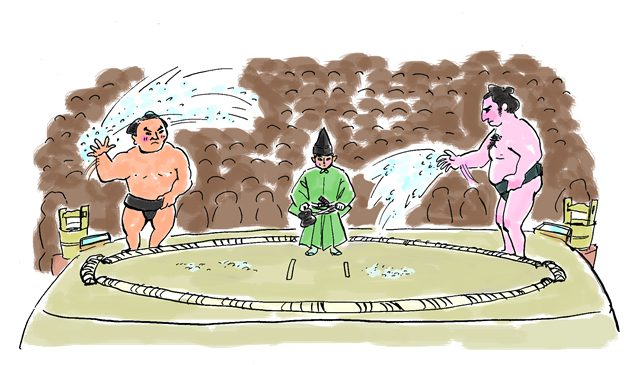
Rikishi are generally large men, but they can differ in weight. Despite this, they don’t fight in weight categories. In exciting matches sponsors offer prize money to winners. Rikishi enter the ring (dohyou) when called by the yobidashi (usher), then scatter salt to purify the dohyou. Before the fight begins, a ceremony called “shikiri” (warming up) is carried out to boost the confidence of the rikishi.
Bouts are won by pushing an opponent out of the 4.55 meter wide dohyo, or by making the opponent touch the ground with another part of his body. Usually a bout is over in few seconds. The referee (gyoji) in kimono raises his fan to the winner. If the result is controversial, five judges sitting beneath the ring choose the winner by checking video footage and conferring amongst themselves. There 82 ways to win a fight.
Sumo tournaments are held six times a year. One tournament lasts 15 days and each day rikishi fight against a different opponent. The champion is the one with the highest number of wins over the 15 days. Besides the winner, three prizes for outstanding achievement are given to those of sekiwake rank and below. They are the Shukunshou (Outstanding Performance Award) given to those who managed to defeat a yokozuna or ozeki, the Kantoushou given to those who did well and displayed fighting spirit, and the Ginoushou for excellent technique. The rank (banzuke) of wrestlers is set depending on the result of the tournament.
[2012年9月号掲載記事]
7月場所でモンゴル出身の大関・日馬富士が3度目の優勝を果たしました。9月場所で優勝すれば最高位の横綱になることはほぼ確実です。相撲は日本の国技といわれてきましたが、実はこの10年間の60場所で外国から来た力士の優勝は55回にのぼります。そのうちのほとんどが、元横綱朝青龍と現横綱白鵬です。二人ともモンゴル出身です。
朝青龍の優勝回数は25回で、大鵬の32回、千代の富士の31回に次いで第3位です。4位は24回の北の湖。白鵬は22回で貴乃花と共に現在5位です。現在、横綱は白鵬一人です。次の位の「大関」は6人いますが、日本人力士は琴奨菊と稀勢の里の二人のみです。後は、モンゴル出身の日馬富士と鶴竜、エストニア出身の把瑠都、ブルガリア出身の琴欧州です。
大関以下の位は「関脇」「小結」「前頭」と続きます。ここまでは「幕内」と呼ばれ、最高優勝を争います。サッカーに例えれば1部リーグです。2部リーグに相当するのが「十両」、以下、「幕下」「三段目」「序二段」「序の口」と続きます。十両以上の力士は「関取」と呼ばれ、一人前と見られます。
しこ名(力士の名前)は、力士の出身地の海や山、川などの名前、あるいは部屋の親方のしこ名を取り入れたものが一般的に使われます。たとえば、把瑠都はリトアニアが面しているバルト海に由来します。琴欧州の「琴」は所属する部屋の親方に由来し、「欧州」はブルガリアがあるヨーロッパを取り入れています。
相撲にはさまざまな儀式、ユニークな伝統があります。力士の頭は「まげ」と呼ばれるサムライスタイルです。力士はまわしだけしかつけません。幕内の取組が始まる前に力士は化粧まわしをつけて登場し、お客に披露します。横綱は土俵入りと呼ばれる儀式を行います。その日の全部の取組が終わると、弓取り式という儀式があります。NHKが毎場所テレビとラジオで全国放送しています。
優勝はどのようにして決まるのか
一般的に力士は体が大きいですが、体重差があります。それでも無差別で戦います。良い取組にはスポンサー企業からの懸賞金がつき、勝った力士に贈られます。力士は呼び出しの声で土俵(リング)に上がり、土俵を清める塩をまきます。勝負が始まる前に数分の仕切り(士気を高めていくためのもの)があります。
勝負は相手を先に直径4.55メートルの土俵の外に出すか、相手の体の一部を土俵につけさせれば勝ちです。勝負は通常数秒で決まります。着物スタイルの行司(レフリー)は、勝った力士に軍配を上げますが、きわどい勝負のときには土俵の下にいる5人の審判員がビデオも参考にし、相談して勝者を決めます。決まり手(技)は82手あります。
相撲は1年に6場所開催されます。1場所15日間で、毎日違う相手と戦い一番多く勝った力士が優勝となります。また、優勝の他に、関脇以下の活躍した力士に与えられる三賞があります。殊勲賞(横綱、大関を破った力士)、敢闘賞(闘志あふれる相撲を取り、良い成績をあげた力士)、技能賞(すぐれた技で活躍した力士)。今場所の成績により次の場所の番付(ランク)が決まります。
-
[From October Issue 2012]
Whereas Western-style candles are usually made from paraffin, Japanese traditional candles are made of wax extracted from the berries of the hazenoki (rhus) tree. The wick is made of Japanese paper.
As the materials used are derived from plants, the smoke produced by Japanese candles is less oily and the melting candles give off a natural, pleasant scent. Unlike Western candles that use strings as wicks, the Japanese candle produces a large, bright flame that is not easily extinguished. Real aficionados of Japanese candles use special scissors to trim the wick while it is burning in order to maintain a perfectly shaped flame.
Candles with the typical “ikari” shape are narrow at the bottom and flare out at the top. Traditional Japanese candles are made of red or white wax. They are often used in temples, shrines and at festivals. These candles are often found in Japanese households and hand-painted candles are growing in popularity both in domestically and abroad. Flowers or Chinese Zodiac symbols are popular motifs. These can be colorful or drawn with black Japanese ink.
As ash from the wax adheres to the surface, natural Japanese candles lose their sheen over time. In the case of red or white candles this gives the candle a beautiful matte finish. Colored ones can simply be rubbed with a cloth to restore their sheen. Industrially-produced Japanese candles have been treated with chemicals so that they always look shiny, but lack this natural beauty.
Japanese candles are most beautiful on a traditional cast-iron stand. The dark black iron creates a nice contrast against the red or white color of the candle.
Japanese candles have a long history. The first candles to be introduced to Japan were made from beeswax and came over to Japan from China in the Nara Period (8th century). Production of Japanese-style candles increased and peaked during the Edo Period (17~19 century). Nowadays there are only a few artisans that produce handmade Japanese-style candles.
Matsui Candle Atelier was established in the Meiji Period (19~20 century), and MATSUI Noriaki is the third generation owner. His daughter Hihiro creates the paintings on the candles. Mr. Matsui learned how to make candles from his father. In order to stay true to the tradition of candle making, he makes sure that he sources organic materials that are free from chemicals. His passion for creating candles with a perfect flame even led to a joint research project with Nagoya University.
http://www.ANYTHING-FROM-JAPAN.COM/?Click=94
Text: Nicolas SOERGEL
[2012年10月号掲載記事]
西洋のキャンドルは通常パラフィンでできていますが、日本の伝統的なキャンドル(ろうそく)はハゼの木の樹液から取り出したろうからつくられます。芯は和紙からできています。
使用される原料が植物なので、日本のキャンドルから出る煙は油脂が少なく、とけると天然のよい香りがします。糸を芯として使用する西洋キャンドルと異なり、日本のキャンドルは簡単には消えず、大きく、明るい炎をつくり出します。日本のキャンドルの熱心な愛好家は、芯を特別なはさみを使いトリミングするので、炎は完璧な形を保ちながら燃えます。
いかり型のキャンドルは底が狭く上の部分が広がっています。日本の伝統的なキャンドルは赤、または白いろうでつくられます。それらは寺、神社、祭りなどでよく使われています。家庭でも使われ、手描きデザインのキャンドルは国内ばかりでなく海外でも人気が高まっています。人気のデザインは花や十二支などです。それらは色つきで、あるいは墨で描かれます。
ろうから出た灰は表面につくので、天然の日本のキャンドルは時間がたつにつれ輝きを失います。赤、または白いキャンドルの場合、光沢のない美しい仕上がりになっています。色つきのものは、布で簡単にこすって光沢を取り戻すことができます。工業生産された日本製キャンドルは化合物が使われ、いつも輝いていますが、天然の美しさに欠けます。
日本のキャンドルは伝統的な鋳造のスタンドの上で最も輝きます。真っ黒の鉄は、赤や白のキャンドルとすばらしいコントラストをつくります。
日本のキャンドルには長い歴史があります。日本初のキャンドルは蜜のろうが使われ、奈良時代(8世紀)に中国から伝わりました。和式のキャンドルの製造は増え、江戸時代(17~19世紀)にピークを迎えました。今日では手づくりで日本スタイルのキャンドルをつくる職人はほとんどいません。
松井本和蝋燭工房は明治時代(19~20世紀)に設立され、現オーナーの松井規有さんは三代目です。キャンドルの絵柄は娘のHIHIROさんがつくります。松井さんは父親からキャンドルの作り方を学びました。キャンドルづくりの伝統を守るために、化合物とはかけ離れたオーガニックの原料を求めています。完璧な炎を生み出すキャンドルをつくる情熱は、名古屋大学との共同研究プロジェクトへと進展しました。
http://www.ANYTHING-FROM-JAPAN.COM/?Click=94
文:ニコラ・ゾェルゲル
-
[From October Issue 2012]
Pradahan VIKAS
“Actually, I did not know what Twitter was,” confesses Pradahan VIKAS honestly. “And still, I do not understand how it really works.” Vikas, originally from Nepal, is a chef. He runs a restaurant located in Itabashi Ward, Tokyo. Because Vikas’ restaurant is famous on Twitter, customers visit from all over Japan, forming a queue in front of his restaurant.
“The reason why my restaurant is doing so well is all thanks to the kindness of the Japanese people,” says Vikas. When he opened the restaurant, there were hardly any customers. His tweets like, “I hand out fliers, but no customers come,” and “What will become of Vikas if this keeps up?” elicited sympathetic comments and were retweeted over and over again. As a result, his followers grew to almost 80,000 and huge numbers of customers began to show up.
Vikas came to Japan in 1995 and started working at an American restaurant. “When I was in Nepal, I heard that jobs in Japan were very easy; that all the hard labor was done by machines. But the reality was completely different. Yes, there was a dishwasher, but Japanese people pay close attention to detail, so even the smallest speck left on a dish is not tolerated. That’s why the dishes need to be rinsed off before putting them in the dishwasher. I was washing dishes from morning till night. It was really tough.”
After a few months of this he finally said that he wanted to quit. Then the head chef apologized for making him just wash dishes and began teaching him how to cook. “If I had not met the head chef, I probably would never have become a chef. He never got angry, but taught me by telling me, ‘it’s delicious;’ by encouraging my efforts,” Vikas reflects.
As a result of his hard work, Vikas became so good that soon people started to say, “We can’t trust anyone but Vikas when it comes to cooking meat.” One day, someone said, “You can make curry since you are Nepalese, right?” So he was suddenly called upon to make curry. The curry was popular with customers and became a regular item on the menu.
Before long the head chef left. Then Vikas soon became a victim of bullying. He could not take it anymore, so he too left the restaurant. “Thanks to that, I was able to work at a different restaurant and gain more experience. So, I think the bullying was all part of God’s plan for me,” says Vikas.
In 2010, Vikas opened his own restaurant. “Everyone has a small dream. When that dream comes true, people work hard to achieve their next dream.” Vikas’ Japanese friends who were concerned about Vikas tweeted his comments and created a logo and website for his restaurant. The restaurant got back on track, and he was able to open a second restaurant in Harajuku this May.
Vikas named his restaurant “Daisuki Nippon” (I Love Japan). The walls of the restaurant are decorated with messages from customers like, “Mr. Vikas has a wonderful personality,” and “His warm Tweets are very comforting.” Vikas, who loves Japanese, is loved in turn by many Japanese people.
Text: SAZAKI Ryo
[2012年10月号掲載記事]
プラダハン・ビカスさん
「実は、ツイッターがどういうものか知らなかったんですよ」。プラダハン・ビカスさんは正直に言います。「そして今も、しくみがあまりわからない」。ビカスさんはネパール出身のシェフです。東京都板橋区でレストランを経営しています。ビカスさんの店はツイッター上で有名で、日本全国からお客が来て行列ができるほどです。
「うちの店がうまくいったのは日本の人たちがやさしいからです」とビカスさんは話します。開店したころ、ほとんどお客が来ませんでした。「ちらし くばりましたが おきゃくきません」「このままだと びかす どうなっちゃうだろ」というビカスさんのツイッターが同情的なコメントと共に何度もリツイートされました。その結果、フォロワーが8万人近くまで増えてお客がたくさん来るようになったのです。
ビカスさんは1995年に来日し、アメリカンレストランに就職しました。「ネパールにいた頃、日本での仕事はとても楽だと聞いていました。きつい労働は全部機械がやってくれると。現実はまったく違いました。確かに食洗機はありましたが、日本人は細かいのでちょっとの汚れも許しません。だからお皿は食洗機に入れる前に一度手洗いするんです。毎日朝から晩までお皿を洗いました。本当につらかったです」。
数ヵ月後ビカスさんはついに辞めたいと言いました。すると料理長は、皿洗いだけさせて悪かったと謝って、料理の作り方も教えてくれるようになりました。「その料理長に出会わなかったら、私は料理人になっていないと思います。けして怒らず『おいしい』とほめて育ててくれました」とビカスさんは振り返ります。
がんばった結果ビカスさんは、「肉を焼くのはビカス以外任せられない」と言われるほどの腕前になりました。あるとき「ネパール人ならカレーが作れるでしょう」と言われて突然カレーを作ることになりました。そのカレーは評判がよく、店のメニューの一つになりました。
やがて料理長が退職しました。するとある人がビカスさんをいじめるようになりました。耐えられなくなってビカスさんも店を辞めました。「おかげで他の店へ転職して、いい経験を積めたんですよ。だからいじめも神様が計画してくださったことだと思っています」とビカスさんは言います。
2010年、ビカスさんは自分の店を出しました。「誰だって小さい夢が一つあるでしょう。それがかなったら次の夢に向かってがんばるのです」。日本人の友人たちが心配して、ビカスさんのコメントをツイッターで公開したり、店のロゴやサイトを作ってくれたりしました。店は軌道に乗り、今年5月には原宿に2号店を出すことができました。
ビカスさんは店に「だいすき日本」という名前をつけました。店にはお客の書いた「ビカスさんは人柄もすてきです」「あたたかいツイッターにいつも癒されています」というカードがたくさん飾ってあります。日本人が大好きなビカスさんは、日本人にも好かれています。
文:砂崎良
-
[From October Issue 2012]
Red Beard (Directed by KUROSAWA Akira)
This is a human drama set in Koishikawa Yojosho, a free clinic built for the poor in 1772 by the Edo government. The film opened to the public in 1965. Winning a prize at the Venice International Film Festival, it was highly regarded not only in Japan, but also abroad. The film is based on a novel whose protagonist is the doctor who put forward the idea of building Yojosho. The novel has been adapted into TV dramas many times.
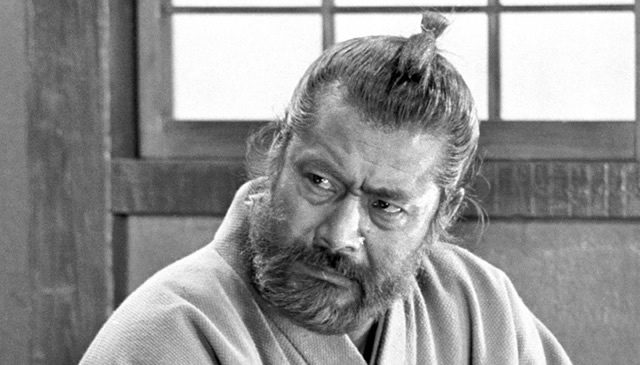
The film was directed by KUROSAWA Akira and the part of NIIDE Kyojo – affectionately nicknamed Red Beard – was played by MIFUNE Toshiro, an actor who often appeared in Kurosawa films. The film is also known for being the last Kurosawa work in which Mifune starred. The plot develops through the eyes of YASUMOTO Noboru, a young man who sets out to learn how to be a physician from Red Beard. Yasumoto is played by KAYAMA Yuzo, an actor who was known for appearing in a series of comedies about campus life.
Having just finished his studies in modern Western medicine in Nagasaki, Yasumoto’s future as a top physician at a government medical institution is guaranteed. However, while he was pursuing his studies in Nagasaki, his fiancée fell in love with another man, so Yasumoto finds himself in the depths of despair. In this state of mind he reluctantly visits Yojosho after being ordered by the government to go and meet Niide.
Instructed by Niide to practice medicine in a small room packed with patients wearing filthy clothes, Yasumoto takes offence. So by taunting Niide – breaking the rules by drinking alcohol on the job and taking naps when he should be treating patients – he tries to provoke Niide into kicking him out, but these tactics do not work.
One day, Yasumoto was ordered to accompany Niide on a house call and is told to take care of a twelve-year-old girl, his first patient. After being forced to work in a brothel she’s suffering both mentally and physically. At first she refuses to have her temperature taken or to take any medicine, but as Yasumoto devotes himself to caring for her, she begins to open up her heart and her health improves. This gives him confidence as a physician and he begins to admire Niide who sweats blood for the poor.
Meanwhile the younger sister of Yasumoto’s former fiancée visits again and again to apologize on behalf of her sister. Touched by this gesture, feelings of forgiveness towards his ex-fiancée begin to take root. His parents then advise him to marry this younger sister and he finally accepts the suggestion after giving it some hard thought. Around the same time, the order comes in from the government to go and work for a medical institution. When Yasumoto comes face to face with both sets of parents for yuinou (exchanging engagement gifts), he tells them about a decision he’s come to.
Built inside Koishikawa Oyakuen, a garden in which the Edo government cultivated medicinal herbs and other plants, Koishikawa Yojosho was known as being a medical facility for treating the poor for some 140 years, up till the end of Edo era. Today Oyakuen is a postgraduate botanical research facility of Tokyo University and under the name of Koishikawa Botanical Gardens it is open to the public. A well that has been kept in good condition since the Edo era was used to provide citizens with drinking water in the wake of the Great Kanto Earthquake in 1923.
[2012年10月号掲載記事]
赤ひげ(監督:黒澤明)
1722年に江戸幕府が貧しい人々のために建てた無料の医療施設、小石川養生所を舞台にした人間ドラマ作品。1965年に公開された。日本だけではなく海外でも高く評価され、ベネチア国際映画祭でも賞を獲得した。原作は、この養生所の建設を提案した町医者を主人公にした小説。これまで何度もテレビドラマ化されている。
映画では黒澤明が監督を務め、赤ひげの愛称で呼ばれる新出去定は、黒澤作品には欠かせない三船敏郎が演じた。三船が主演した最後の黒澤作品としても知られる。物語は、赤ひげの下で医者とは何かを学ぶことになる青年、保本登の視点で進行する。保本には当時、大学生の青春を描いたコメディー作品シリーズで大人気だった加山雄三が演じた。
当時、長崎で最新の西洋医学を学んできたばかりの保本は、エリート医師として幕府の医学機関での将来が約束されていた。しかし、結婚を約束した女性が長崎留学中に他の男と恋に落ちてしまい、保本は絶望していた。そこへ、幕府から新出に会うよう命じられ、仕方なく養生所を訪れる。
汚い着物に身を包んだ患者が押し込められた狭い部屋で、新出からそこで医者として働くよう言われた保本は腹を立てる。そこで、新出を困らせて自分を追い出させようと考えた保本は、禁じられている酒を飲んだり、診察もせずに眠ったりするが、新出には通用しない。
ある日新出に命じられて往診に同行した保本は、最初の患者として12歳の娘を任される。娘は売春宿で働かされ、心身ともに病んでいた。最初は熱を測らせず、薬も飲もうとしないが、保本の必死の手あてにより心を開き、元気になっていく。これがきっかけで保本は医者としての自信をつけ、貧しい人々のために汗水流す新出を尊敬するようになる。
一方、結婚を約束していたかつての恋人の妹が、姉の代わりに保本のもとを何度も謝罪に訪れる。その姿にふれ、保本はかつての恋人を許す気持ちが芽生える。そんな矢先、この妹との結婚を親に勧められ、悩んだ末に受け入れる。同時に、江戸幕府からは幕府の医学機関で働くように命じられる。保本は両家が顔を合わせた結納の席で、ある決意を打ち明ける。
小石川養生所は、江戸幕府が薬草の栽培などを行った小石川御薬園内に造られ、幕末まで約140年にわたり貧しい人々の医療施設として親しまれた。現在小石川御薬園は東京大学大学院の植物学の研究施設として、小石川植物園の名で一般にも公開されている。園内に保存されている当時の井戸は、1923年に起きた関東大震災では飲み水として利用された。
-
[From September Issue 2012]

Okayama Korakuen
Okayama Prefecture, situated in the southeast of the Chugoku region, has been called the “land of fine weather,” due to the fact that for many days during the year less than one millimeter of rain falls. To the north is the grandeur of the Chugoku Mountains and to the south is the beautiful Seto Inland Sea. The prefecture enjoys a mild climate and is extremely fertile. It’s blessed both with the bounty of nature and the fact that natural disasters, such as typhoons, rarely occur. Its capital Okayama City is a historical city that has thrived as a castle town since the Warring States Period.
In front of Okayama Station is a statue of “Momotaro” (Peach Boy), the hero of the fairy tale Momotaro. Okayama is the birthplace of Momotoro, who set off from the region towards Oniga-shima (Demon Island) with a dog, monkey and pheasant. It is said that the statue of Momotaro is still looking towards of Demon Island.
Okayama Castle, about a ten minute bus ride from Okayama Station, is a famous castle of great historic value and is the most important historical landmark in the prefecture. It was built in 1597 by UKITA Hideie – one of the five daimyou (lords) chosen to form the Council of Five Elders by TOYOTOMI Hideyoshi to rule Japan. It’s is said that the castle was modeled after ODA Nobunaga’s Azuchi Castle. Because of its black exterior, the castle has been nicknamed “U-jou” or “Crow Castle.” With three stories and six levels, the keep has valuable items on display such as matchlocks and suits of armor. Built for defense there is also a tsukimiyagura observation post, which has been designated as an important cultural asset.

Okayama Castle / Saidaiji Hadaka Festival
Spread out beneath Okayama Castle, is Korakuen, a beautiful Japanese garden that is counted among Japan’s three most famous gardens. IKEDA Tsunamasa, the feudal lord of Okayama, ordered one of his vassals to build the garden, and it took 13 years before it was complete. Featuring a spacious lawn, a pond, a miniature hill, and a tea house, the garden allows visitors to enjoy a traditional Japanese atmosphere and the beauty of each season. Seasonal events are held there, such as cherry blossom viewing in spring and moon viewing in autumn. You can drink maccha (powdered green tea) inside the garden while enjoying the views.
Taking the JR Ako Line from Okayama Station for about 20 minutes, get off at Saidaiji Station, from there walk about ten minutes and you’ll come upon Saidaiji Kannonin Temple. In February each year, the Saidaiji Hadaka Festival is held to determine the year’s fuku-otoko (lucky men). This festival, which is also known as “Saidaiji Eyo,” is one of Japan’s three most bizarre festivals. Held to herald spring, men wearing nothing but a loincloth fight for the shingi – a sacred, cylindrical, wooden stick about 20 centimeters in length – at this traditional event.
Also known as “The Fruits Kingdom,” Okayama produces large amounts of quality fruits, such as white peaches and muscat grapes. Plump and bursting with juice, white peaches make especially pleasing gifts.

Seto Bridge / Kurashiki Bikan Area
Reflecting the bounty of the nearby mountains and sea, Okayama’s most famous local dish is bara-zushi. It’s a kind of chirashi-zushi: a rice bowl, topped generously with ingredients harvested from the mountains and the sea. Each ingredient is cooked separately to bring out its optimum flavor and this dish has been loved by the people of Okayama since the old days. It’s often eaten on festive occasions.
Bizen-yaki (Bizen ware), is a handicraft that has a history going back 1,000 years and is produced at one of Japan’s six oldest kilns. Because glaze is not applied, these pieces of ceramic look simple, but are imbued with the deep warmth of the soil. Bizen-yaki has been appreciated by people for a long time, but these days aficionados come not only from outside the prefecture, but also from abroad. Increasingly, new bizen-yaki artists are establishing their own studios.
Taking the JR Sanyo Main Line from Okayama Station and traveling for about 20 minutes, you arrive at Kurashiki Station. A short walk from the station takes you to the Kurashiki Bikan Historical Quarter. These highly prized rows of buildings, with their white walls and latticed windows, have been designated to be preserved as part of the townscape. These beautiful streets are known throughout the country, and rickshaws that fit in with the atmosphere of the neighborhood are popular among tourists. At night, the area is lit with streetlights, lending the scenery a rather different beauty to that of the day.

Ohara Museum of Art / Yubara Onsen
The Ohara Museum of Art, established by OHARA Magosaburo, a businessman from Kurashiki, was the first private art museum in Japan to house mostly Western artworks. It exhibits world-famous paintings and sculptures such as “Annunciation” by El Greco and “Waterlilies” by Claude MONET. The museum is also a champion of contemporary art and is active in supporting young artists by inviting them to Kurashiki. The museum is currently participating in the Google Art Project, where people can view works exhibited at art museums all over the world on the Internet.
About a 30 minute drive from the center of Kurashiki is the Seto-Ohashi Bridge, which connects Honshu and Shikoku. In addition to linking islands in the Seto Inland Sea, the Seto-Ohashi Bridge has long been cherished as a symbol of Okayama. From Mount Washu, you can enjoy a panoramic view of the beautiful Seto Inland Sea. In Shimotsui, rows of old houses with tiled roofs and earthen walls give the port town a retro feel.
Hotels and inns located in the suburbs of Kurashiki City that command views of the Seto Inland Sea are especially popular; in summer they’re also great for bathing in the sea. There you can enjoy delicious vegetables, and fresh seafood from the Seto Inland Sea. Okayama and Kurashiki cities also have hot springs, but particularly popular are Yunogo and Yubara; hot spring towns in the northern part of the prefecture. These springs are said to be effective in healing injuries and illnesses.

Peach (left) and muscat (right)
It takes about one hour and ten minutes to fly from Haneda Airport to Okayama Airport. From the airport, located in the suburbs of Okayama City, there are limousine buses available to take you to Okayama Station. If travelling by the JR rail network, you can take the Tokaido Shinkansen from JR Tokyo Station and get to Okayama Station in roughly three hours and ten minutes. It takes approximately ten hours by highway bus.
Okayama Visitors & Convention Association
Ohara Museum of Art
Kurashiki Convention & Visitors Bureau
Okayama Castle
Okayama Korakuen
Okayama Prefectural Tourism FederationText: OOMORI Saori
[2012年9月号掲載記事]
中国地方の南東部に位置する岡山県は、年間降水量が1ミリ未満の日が多いことから「晴れの国」と呼ばれています。北は雄大な中国山地、南は美しい瀬戸内海に面し、温暖な気候と豊富な栄養分のある大地、台風などの災害が少ない自然豊かな土地です。県庁所在地の岡山市は、戦国時代から城下町として栄えてきた歴史ある街です。
岡山駅前にはおとぎ話「桃太郎」の主人公、桃太郎の像があります。岡山は、犬、猿、キジの家来を連れて鬼ヶ島へ鬼退治に行った桃太郎のゆかりの地です。桃太郎像は今でも鬼ヶ島のある方向を見張っているといわれています。
岡山駅からバスで約10分のところにある岡山城は、歴史的に価値ある名城として岡山を代表する史跡の一つです。日本を統治していた豊臣家五大老の一人、宇喜多秀家が1597年に造りました。天守閣は織田信長の安土城を参考にしたといわれています。黒い外観からカラスを意味する「烏城」とも呼ばれています。3層6階の天守閣には、火縄銃や鎧などの貴重な資料が展示されています。また重要文化財に指定されている月見櫓と呼ばれる見張りや防御を目的とした建物もあります。
岡山城の真下に広がる後楽園は、日本三名園に数えられる美しい庭園です。岡山藩主、池田綱政が家臣に命じ、13年の歳月をかけて完成させました。広い芝生や池、築山、茶室などがあり、和の雰囲気、そして四季の美しさを感じられる場所です。春には満開の桜、秋には月見会など季節に応じた催しが開催されています。園内では庭園の景色を眺めながら抹茶を飲むことができます。
岡山駅からJR赤穂線で約20分、西大寺駅からさらに徒歩10分のところにあるのが西大寺観音院です。毎年2月には、その年の福男を決める「西大寺裸祭り」が行われます。「西大寺会陽」とも呼ばれ、日本三大奇祭の一つでもあります。男性たちがふんどし一丁になり、宝木という約20センチほどの円柱形の神聖な木の棒をめぐって争う様子は、春を告げる恒例の伝統行事となっています。
岡山は「フルーツ王国」とも呼ばれており、白桃やマスカットといった高品質な果物がたくさん作られています。特に白桃は、果肉があつく甘い果汁がたっぷりとあって、贈り物としても喜ばれています。
山と海の両方に恵まれた岡山を代表する郷土料理が「ばら寿司」です。山の幸、海の幸が豪華に盛り付けられたちらし寿司の一種です。具はすべて別々に煮炊きし、各材料の持ち味が生かされた料理で、昔から岡山県人に愛されてきました。お祝いごとがあるときによく食べられます。
備前焼は日本六古窯の一つで、一千年の伝統を持つ工芸品です。陶芸で一般的に使われる釉薬と呼ばれる薬品を使わないので、素朴で味わい深く土のぬくもりが感じられる仕上がりになっています。昔から根強いファンは多くいますが、最近では県外だけでなく海外からも魅了された人々がやって来て、備前焼作家として工房を持つことも増えました。
岡山駅からJR山陽本線で約20分で倉敷駅に着きます。駅から少し歩くと、倉敷美観地区に到着します。町並み保存に指定されている白壁と格子窓の建物群はとても貴重です。美しい町並みは全国的にも有名で、町の雰囲気にあった人力車は観光客にも人気です。また、夜には夜間景観照明で照らされ、昼とはまた一味違った美しい景観を見ることができます。
倉敷の実業家、大原孫三郎が設立した大原美術館は、日本最初の西洋美術を中心とした私立美術館です。エル・グレコの「受胎告知」やクロード・モネの「睡蓮」などの、世界的な名画や彫像などが多く展示されています。また、現代アートにも力を入れており、若手作家を倉敷に招いて支援する活動も積極的に行っています。現在、インターネット上から世界中の美術館の作品を見ることができる「グーグルアートプロジェクト」にも参加しています。
倉敷の中心部から車で約30分のところにあるのが、本州と四国を結ぶ瀬戸大橋です。瀬戸内海の島々を結ぶ瀬戸大橋は、岡山を象徴するものとして人々に愛されてきました。また、鷲羽山からは、美しい瀬戸内海の風景が一望できます。本瓦葺きの屋根や土蔵の下津井の古い家並みは、レトロな港町の雰囲気を感じることができます。
倉敷市郊外にある瀬戸内海が一望できる宿泊施設は特に人気で、夏には海水浴もできるのでお薦めです。瀬戸内海の新鮮な海産物や、おいしい野菜を味わうことができます。また、岡山や倉敷市内にも温泉はありますが、特に人気があるのが県北の湯郷温泉、湯原温泉などです。けがや病気の治癒に効果があるといわれています。
東京・羽田空港から岡山空港まで約1時間10分。岡山市郊外にある空港からはJR岡山駅までのリムジンバスが運行しています。JRでは、東海道新幹線でJR東京駅から岡山駅までが約3時間10分。高速バスでは約10時間かかります。
おかやま観光コンベンション協会
大原美術館
倉敷観光コンベンションビューロー
岡山城
岡山後楽園
岡山県観光連盟文:大森沙織
-
[From September Issue 2012]
Yamanashi Prefecture is well known for its mountains and woods, and for being home to a large population of deer. It is also the home of koshu inden – a Japanese craft with 400 years of history that uses deerskin to make soft, durable parts for samurai armor, or everyday objects like bags.
To make koshu inden, deerskin is first dyed and then smoked over a straw fire until the leather has a natural bright yellowish hue. The leather is then colored with Japanese lacquer, with foundation colors typically being black, red or blue. Over this background, decorative patterns are then applied.
Traditional patterns are typically inspired by nature. Fireflies, tortoise shells, waves and various flowers have been popular decorative motifs for many years. Some patterns are more suitable for men, whereas other patterns are more popular amongst women.
The craft’s name, inden, refers to India, where some of these leather dying and coloring techniques originated. It takes many weeks to make a piece of inden. Each layer of lacquer needs to dry and harden and each step in the process must be done by hand by skilled artisans.
Contemporary inden products include purses, wallets, bags and key holders, which come in a wide range of designs and color combinations. Recently inden leather craft has been combined with other crafts and is applied to glass or wood as a decorative touch.
The most prominent maker of inden is Inden-ya Uehara Yushichi Co., Ltd. Located in Kofu City, Yamanashi, the company was established in 1582 and is now run by the 13th descendent of the Uehara family. The quality of their handmade leather goods and the patterns and color combinations of Inden-ya make each product easily distinguishable from other producers of inden.
Over time Inden-ya Uehara Yushichi has come up with a few secret techniques to give the leather a specially hardened coat of lacquer. In recent years some of these techniques were disclosed to other craftsmen in order to allow the craft of inden to prosper and grow.
Recently Inden-ya Uehara Yushichi is making inroads abroad with the opening of the first overseas showroom in New York and many foreigners now appreciate the beauty of this craft. Inden-ya products are not only beautiful, but last for many years and are an ideal gift for your friends in Japan and abroad.
http://www.ANYTHING-FROM-JAPAN.COM/?Click=94
Text: Nicolas SOERGEL
[2012年9月号掲載記事]
山梨県は、山や森林、また鹿がたくさん生息している地として知られています。そして400年の歴史を持つ日本の工芸品、甲州印伝--鹿革を使ったやわらかく丈夫な鎧、またバッグなどの日用品--をつくり出している本拠地でもあります。
甲州印伝をつくるには、まず鹿革を最初に染めて革が明るいナチュラルな黄色になるまでわら火でいぶります。革には漆が塗られますが、下地の色は通常、黒、赤、または青です。これらの色の上に模様が装飾されます。
伝統的な模様は自然を取り入れたものです。長年、蛍、亀、波、さまざまな花などのモチーフの装飾が人気です。それらには男性に似合うもの、女性の方が似合うものがあります。
印伝という名前は、革の染色や色付けの技法の発祥地であるインドに由来します。印伝一つつくるにも数週間かかります。漆は何層にもぬられ、それぞれの工程は熟練の職人により行われます。
今日の印伝の製品には、さまざまなデザインや色の組合せでつくられた財布やバッグ、キーホルダーなどがあります。最近は他の工芸と組み合わされたり、装飾感覚でガラスや木にも使われます。
最も有名な印伝メーカーは株式会社印傳屋 上原勇七です。山梨県甲府市にあり、1582年の創業で現在は上原家13代目が経営しています。手づくりの革製品や模様、色の組み合わせでつくられた印傳屋の製品は、他社のものとの質の違いが一目でわかります。
時を重ねるにつれ印傳屋には革に強力な漆をぬる秘伝ができました。近年、印伝工芸品の成長と繁栄をもたらすために、他の職人に技法の一部を公開しました。
最近、印傳屋は海外で最初のショールームをニューヨークに開くなど外国への進出をはかり、今や多くの外国人はその美しさを称賛しています。製品は美しいだけでなく何年も長持ちし、日本や外国にいる友人への理想的なお土産です。
http://www.ANYTHING-FROM-JAPAN.COM/?Click=94
文:ニコラ・ゾェルゲル