-
[From September Issue 2011]
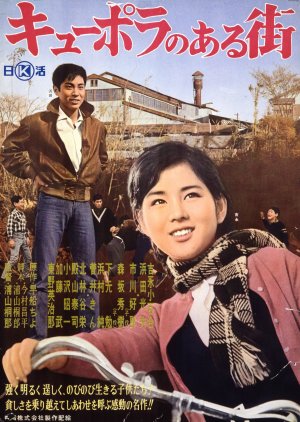
Cupola, Where the Furnaces Glow (Directed by URAYAMA Kirio)
This is a drama set in Kawaguchi City, Saitama Prefecture, where numerous foundries stand side by side. The “cupola” in the movie’s title refers to a furnace for heating and melting metals. Released in 1962, the film is famous for having won the Blue Ribbon Award in 1962 for Best Film and YOSHINAGA Sayuri won the Blue Ribbon Award for Best Actress. That same year, the film was also entered in the Competition Category at the Cannes International Film Festival.
Kawaguchi City, Saitama Prefecture, located right across the Arakawa River to the north of Tokyo, has been known as a foundry town since the Edo period. Jun (Yoshinaga) is a third-year middle school student whose father works as a laborer at a small foundry. But the foundry is bought out, and her aging father is fired. That night, her mother gives birth to her third brother.
Her father is invited to work at an automated modern foundry, but as a proud artisan, he resists the idea and soon quits. The family cannot survive on the income from the work that her mother does at home. Moreover, it is Jun who takes care of her naughty brother, a sixth grader, instead of her mother and father.
Jun, who has good grades and likes studying, wants to go on to a prefectural high school. She tries her best to pay for her tuition by doing a part-time job, but her father, who is out of work and always drunk, objects to her going to high school, saying, “You have to work after graduating from middle school.” Feeling disgusted with her mother, who has started working as a hostess at a bar for good money, Jun gives up on taking the high school entrance exam and decides not to go on a school trip.
Before long, Jun starts skipping school, telling herself, “If I can’t go to high school, there is no point in studying.” Her homeroom teacher pays her a visit and urges her to attend night school while working, saying, “If you have the motivation, regardless of where you are, you find some way to study.” Around that time, a North Korean friend of hers decides to move to her father’s native country along with her father and younger brother.
Jun goes to the station with her teacher and classmates to see her friend off. Despite feeling sad about leaving Japan, where she was born and raised, her friend expresses concern for Jun, who has been absent from school. That encourages Jun to choose to work her way through school. At the same time, the foundry where her father used to work expands and he begins to work there again at the start of the New Year. For the first time in a long while, laughter and peace returns to the family.
Despite this, Jun tells her parents that she will work her way through school without relying on her father. Although they can’t understand Jun’s way of thinking, her parents don’t object to the idea. As he prepares to go on to middle school, her mischievous brother comes to keenly realize the difficulties confronting his sister and starts a part-time job as a newspaper delivery boy. One morning, on the way to a job interview, Jun asks her brother, who is delivering newspapers, to see her off at the station. The film ends with a shot of their silhouettes fading away as they head towards the station.
[2011年9月号掲載記事]
キューポラのある街(浦山桐郎 監督)
鋳物工場が建ち並ぶ埼玉県川口市を舞台にした人間ドラマ。タイトルの「キューポラ」は、鉄を熱して溶かす炉を意味する。1962年に公開され、ブルーリボン賞の作品賞および吉永小百合が主演女優賞を取ったことでも知られる。また、その年のカンヌ国際映画祭のコンペティション部門でも上映された。
荒川を挟んで東京都のすぐ北に位置する埼玉県川口市は、江戸時代から鋳物の街として知られる。中学3年生のジュン(吉永)の父も、小さな鋳物工場の職人として働いている。しかし、工場が買収され、年老いた父は首になってしまう。その夜、母は3番目の弟を出産する。
職人としてのプライドが高い父は、オートメーション化された近代的な工場での仕事を紹介されても、その考えに反発してすぐにやめてしまう。母の内職だけでは、生活が成り立たない。おまけに、小学校6年生の弟はいたずらばかりで、ジュンは父や母に代わって面倒を見ている。
成績がよく、勉強が好きなジュンは、県立高校への進学を希望する。アルバイトで少しでも学費を稼ごうとするが、仕事に就かず、酒浸りの父から「中学を出たら働くんだ」と進学を反対される。給料の良い飲み屋のホステスを始めた母に対する嫌悪感もあり、ジュンは高校受験をあきらめ、修学旅行も取り止めてしまう。
やがてジュンは「高校に行けないなら、勉強なんてしても意味がない」と、学校を休むようになる。担任教師がジュンをたずね、「気持ちさえあれば、どこでもどうやっても勉強はできる」と、働きながら夜間学校に通うことを勧める。そんなおり、在日朝鮮人の友人が、父親と弟と3人で、父の故郷、北朝鮮へ帰国することを決意する。
ジュンは、教師や級友たちと駅まで友人を見送りに行く。生まれ育った日本を離れる寂しさに耐え、学校を休んでいたジュンを心配する友人にはげまされ、ジュンは教師の勧め通り、働きながら学校に通う道を選ぶ。時を同じくして、父は、かつて勤めた工場の拡大にともない、年明けから再び働くことになる。久しぶりに一家に笑いと平和が戻る。
それでもジュンは父に頼らず、働いて学校に行くことを両親に告げる。ジュンの考えが理解できない両親だが、反対はしない。悪さばかりしていた弟も、中学校進学を控え、姉の苦労が身にしみるようになり、新聞配達のアルバイトを始める。ある朝、新聞配達の途中だった弟は、就職試験に向かうジュンに頼まれ、駅まで見送る。駅に向かう二人の背中が小さくなり、映画は幕を閉じる。
-
[From August Issue 2011]

Tetsudou mokei are models that are made to resemble real trains as closely as possible. Many of these models run on electricity. They are popular with people around the globe and the Japanese are no exception. As there are a range of different ways to enjoy the hobby, there’s no stereotypical model train fan.
“Two prominent types of fans exist: Some enjoy the train carriages, and others enjoy the sight of trains running along tracks,” says FUJII Yoshihiko, Chairman of Japan Association of Model Railroaders (JAM). “Some carriage fans enjoy building the carriages themselves and others enjoy collecting carriages. Some people who enjoy the trains running along tracks enjoy making dioramas (miniature landscapes) or running the trains on train timetables.”
“However, these are mere preferences. Not all fans can be divided into categories such as ‘diorama makers’ and ‘carriage collectors’,” continues Fujii. “Most fans love to both watch the trains running and to create dioramas. I myself love to purchase carriages and to add parts to them. I also enjoy making dioramas.”
One of the ways Fujii enjoys his hobby is to take photos of the model trains. Depending on the lighting and diorama used for background, model train photography can express a variety of scenes: One can also recreate favorite locations, seasons, and eras. “Sometimes, landscapes can be expressed using photos or pictures. When you place photos and pictures near to a window under natural light, these landscapes look surprisingly realistic,” Fujii points out.
JAM has been hosting summer conventions since 2001. At the event, visitors can enjoy model trains using “modules.” In model train jargon, module means a miniature diorama built to a given scale. For example, if a group of model train fans agree on the size “60 centimeters x 80 centimeters,” each member brings their own module of the same dimensions. The modules are put together at a venue to form a large diorama on which trains can then run freely. The total size of the diorama may turn out to be an impressive 8 meters x 12 meters.
In Japan where space for housing is limited, it is not easy to create a large-scale diorama. That is why the “rental layout” business exists. Large dioramas, built in storage space, are rented out to customers by the hour. Since customers can use dioramas that will never fit in standard households, and show off their prized cars to other model train fans at the same time, it is a popular service.
There are other businesses making money from large scale dioramas. At the Akihabara Washington Hotel located in Akihabara, Tokyo, a large diaorama is located in a hotel room. The diorama measures 4 meters x 4 meters and its track length totals approximately 30 meters. There is also a paid train rental service for hotel guests.
IMON Yoshihiro has a flamboyant way of enjoying his hobby. Imon is the president of Imon Corporation, a company that owns electronics stores and other outlets. Imon is not only a model train fan, but also the president of Models IMON, a model train store.
“Approximately 20 years ago, I thought that ‘eventually furniture and electronics stores will become a difficult business.’ So I began to look for a business that had good future prospects. A model train shop storekeeper who I was close to told me that the model train business would not make a profit, but I was confident that I could succeed in the field,” says Imon. “Not only that, I would be able to make my mark on the history of Japanese model trains.”
Models IMON not only sells, but also manufactures model trains. “I have taken in a whole group of artists from manufacturers who shut up shop. It would be unfortunate to lose their skills,” reflects Imon. Imon’s diligence and strategy succeeded and Models IMON is now a profit making business.
“Up until today model train manufacturers have continued to create products in a way that suited their own convenience. They have not met the needs of model train fans,” Imon reasons. Fully utilizing his expertise as a model train fan, he created a new model train standard. “Creating new products for the future of the model train industry is my pride and joy,” beams Imon.
At the home of SUZUKI Noriko, three generations get a kick out of model trains. “I myself am not very knowledgeable about model trains. I actually prefer real trains, especially British ones: when I travel, I cannot help but look at them with affection,” says Noriko. “After my grandson Jin was born, at the age of around three he became interested in model trains. So I bought some for him.”
However, once she bought the model trains, the other family members also got caught up in the craze. Both Noriko’s son, Seiichi and her husband Morio got interested in model trains. “Seiichi is especially into them. He connected track after track and now it has grown into a 180 centimeter x 120 centimeter masterpiece,” says Noriko. Jin, who has turned six, fully understands how to properly use the tracks his Uncle Seiichi has laid. He sometimes attends model train events with his grandfather, Morio. But they each have their preferences: while Morio is attracted to locomotives, Jin’s favorite is the Hayabusa (the new bullet train that connects Tokyo and Aomori).
Seiichi modified one of his train collections and mounted lights on the inside. “I do not have a deep understanding of model trains, but I like doing this: When I run the cars in the dark, it is very beautiful, just like the scene from the movie ‘Spirited Away’ by MIYAZAKI Hayao,” smiles Noriko.
Some people say model trains are “complicated” or “only for enthusiasts,” but there are restaurants that use model trains to bring meals to the table and bars that keep “personalized cars” instead of “personalized bottles.” There is no limit to the ways in which model trains can be enjoyed, though some ways are simpler than others.
Japan Association of Model Railroaders (JAM)
Akihabara Washington Hotel
Models IMONText: SAZAKI Ryo
[2011年8月号掲載記事]
鉄道模型とは、実物の鉄道にできるだけ似て見えるように作られた、精巧な模型のことです。多くの鉄道模型は、電気で走らせることができます。世界的に人気がある趣味で、日本にも愛好家がおおぜいいます。ひと口に、鉄道模型の愛好家といっても、その楽しみかたはいろいろです。
「大きく分けて、車両を楽しむ人と、鉄道が走るようすを楽しむ人がいます」と、日本鉄道模型の会(JAM)理事の藤井良彦さんは言います。「車両を楽しむ人には、自分で模型を作ることが好きな人もいれば、模型を買い集めてコレクションすることが好きな人もいます。鉄道が走るようすを楽しむ人は、ジオラマ(風景の模型)を作ったり、ダイヤ通りに運転したりしますね」。
「もちろん、これはあくまでも傾向です。愛好家がみな、ジオラマを作る人と車両のコレクターなどと、明確に分けられる訳ではありません」と藤井さんは続けます。「たいていの人は、車両も走るようすを見るのも、両方好きです。私自身、車両を買うことも好きですが、パーツを加えて改良したり、ジオラマを作ったりすることも楽しんでいます」。
藤井さんの楽しみかたの一つに、鉄道模型の写真撮影があります。鉄道模型の撮影は、光の当てかたや背景のジオラマを工夫することによって表現の幅が広がりますし、自分の好きな場所や季節、時代を再現することもできるのです。「風景をジオラマでなく、写真や絵にすることもあります。窓の近くに置いて自然光を当てると、背景が写真や絵でもリアリティーが出るんですよ」と藤井さんは話します。
JAMは、2001年から夏にコンベンションを開催しています。この会場では、「モジュール」を使った楽しみかたを見ることができます。モジュールとは、鉄道模型の用語で、箱庭のような一定の大きさのジオラマを指します。例えば仲間と「大きさは60センチ×80センチにしよう」などと決めておいて、当日、各自がその大きさで作ったモジュールを持参します。そして会場で仲間のモジュールと組み合わせて、大きなジオラマの中で模型を走らせて楽しむのです。その大きさは8メートル×12メートルになることもあり、迫力があります。
家が狭い日本では、大きなジオラマを持つことは簡単ではありません。そのため、レンタル・レイアウトと呼ばれるビジネスがあります。これは、店が店内に大きなジオラマを作って、時間単位でお客に使ってもらうサービスです。自分の家には置けないくらい大きなジオラマを使えるだけでなく、自分の自慢の車両をほかの愛好家に見てもらうことができるので、広く利用されています。
大きなジオラマを利用したビジネスはほかにもあります。東京・秋葉原にある秋葉原ワシントンホテルには、大きなジオラマのある部屋が一室あります。そのジオラマの面積は約4平方メートル、線路の長さは全部で約30メートルあります。鉄道模型を持っていないお客のために有料で模型を貸し出したりもします。
井門義博さんの楽しみかたは、とても豪華です。井門さんは井門コーポレーションという、家電店などいろいろなお店を持っている会社の社長です。井門さんは鉄道模型の愛好家であると同時に、models IMONという鉄道模型店の社長でもあるのです。
「20年ほど前、家具の店と家電の店は今後経営が厳しくなると思いました。そこで、もっと将来性のあるビジネスをさがし始めたのです。親しくしていた模型店の店主は、鉄道模型はもうからないと忠告してくれましたが、私には成功させられる自信がありました」と井門さんは言います。「それに、自分の名のモデルを日本の鉄道模型史に残せますしね」。
models IMONは鉄道模型を販売するだけの店ではなく、メーカーでもあります。「事業をやめたメーカーから、技術者たちをまとめて引き取ったことがあります。彼らのすぐれた技術が失われてしまうのは残念ですから」と井門さんはふり返ります。井門さんの努力と戦略が成功して、models IMONの売上げは好調です。
「これまでの模型メーカーには、作る側にとって都合のよい製品を作ってきた面があると思います。そしてそれは愛好家の希望とは合っていなかった部分があります」と井門さんは分析します。井門さんは自分自身が鉄道模型好きであることを活かして、新しい規格の鉄道模型を作り出しました。「鉄道模型業界の未来を考えて、新しい製品を作る。それが何よりも楽しいんです」と井門さんは笑います。
鈴木紀子さんの家では、3世代で鉄道模型を楽しんでいます。「私自身はあまり鉄道模型にくわしくないんです。むしろ実物の鉄道、特にイギリスのものが好きで、旅行したときには、いいなぁと眺めていました」と紀子さんは話します。「でも孫の時雲が生まれて、3歳くらいから鉄道模型に興味をしめすようになりました。それで買ってやったのです」。
ところが、いざ鉄道模型を買ってみると、ほかの家族も夢中になりました。紀子さんの息子の誠一さんや、夫の盛男さんも、実は鉄道模型に興味があったのです。「特に熱心なのが誠一です。レールを増やして、結局180センチ×120センチの大きさにまでしてしまいました」と鈴木さんは言います。今6歳の時雲君は、おじの誠一さんが組んでくれたレールを、ちゃんと理解して使いこなしています。祖父の盛男さんと鉄道模型のイベントに行くこともあります。ただし、盛男さんがSLにひかれるのに対して、時雲君ははやぶさ(東京と青森の間にできた新しい新幹線)が好き、という違いはあります。
誠一さんは模型の一つを改良して、中に電灯が灯るようにしました。「模型にあまりくわしくない私も、これは好きです。部屋を暗くしてこれを走らせると、宮崎駿のアニメ『千と千尋の神隠し』のシーンのようにきれいですから」と紀子さんは目を細めます。
鉄道模型は「難しい」とか「マニアックだ」と言う人もいますが、鉄道模型が料理を運んでくるレストランや、自分の模型を、「ボトルキープ」ならぬ「模型キープ」できるバーもあります。その楽しみかたはさまざまで、かんたんに楽しむこともできるようです。
特定非営利活動法人日本鉄道模型の会(JAM)
秋葉原ワシントンホテル
Models IMON文:砂崎良
-
[From August Issue 2011]
The number of people who have created “veranda saien” on their apartment balconies, by growing edible herbs and vegetables, has grown. Lined with pots full of fruit and vegetables, these balconies resemble small patches of farmland. People have various reasons for planting their saien: some don’t have a real garden but want to enjoy gardening, and others want to cut down on their food expenses.
SASAKI Yumiko, who lives in an apartment in Yokohama, Kanagawa Prefecture, has been working on her balcony garden for about two years. “I think the vegetables I grow and harvest myself are much tastier. It also makes economic sense because I don’t have to buy vegetables, and since I now use kitchen scraps for fertilizer, it is ecologically friendly, too,” she says.
At a DIY center in Saitama City, there is a wide selection of vegetable seedlings and seeds for growing tomatoes, eggplants, and cucumbers. The store clerk says that pots that are easy to use on balconies are selling well, and low maintenance mini-tomato seedlings are also popular.
Many customers ask for advice on how to start a balcony garden, and some of them have surprising ambitions to grow larger vegetables and fruit such as pumpkins and melons. Another popular vegetable that sells well every year and can tolerate the intense summer heat is goya (or bitter gourd), which many people use to create “green curtains.”
Green curtains are vines grown from goya or Japanese morning glory, whose rich foliage forms a green shade. KIKUMOTO Ruriko, an elementary school music teacher and an executive board member of the nonprofit organization Midori no Kaaten Ouendan (Green Curtain Support Group), has been promoting the green curtains since 2003.
Green curtains have become popular in recent years as a measure against global warming, since, in the severe heat of summer they block direct sunlight and external heat. There’s approximately a 10 degree (Celsius) temperature difference between a room with a green curtain compared to one without. These green curtains are now appearing, not only in households, but also in hospitals and corporate buildings.
“Thanks to the green curtains, summers can be very comfortable and cool. It’s even possible to go all summer long without turning on the air conditioning. The sunlight gently seeping through the leaves has a healing effect, as if you were in a forest,” Kikumoto says. Creating a green curtain also contributes to energy conservation because it’s not necessary to use the air conditioner, which in turn prevents air conditioner sickness. Moreover, it is a healthy, and appetizing enjoyable eco-friendly option.
Recently, Kikumoto has started the “temporary housing × green curtain” project to aid survivors of the Great East Japan Earthquake. She is touring the temporary housing in disaster-stricken areas and evacuation centers to set up green curtains. With hopes to further conserve energy and expense, the popularity of balcony gardens and green curtains is sure to increase in Japan.
KIKUMOTO Ruriko
Nonprofit organization Midori no Kaaten OuendanText: MUKAI Natsuko
[2011年8月号掲載記事]
マンションなどのベランダで野菜やハーブなど食べられる植物を栽培し収穫する「ベランダ菜園」を楽しむ人たちが増えています。野菜や果物がなっているプランターが並べられたベランダは、まるで小さな畑のようです。庭がなくてもガーデニングを楽しみたいという人や、食費を節約したいという人など、理由は様々です。
神奈川県横浜市に住む佐々木由美子さんは、2年ほど前から自宅のマンションでベランダ菜園を始めました。「自分で育てた野菜を収穫すると一層おいしく感じます。野菜を買わなくてもよいので経済的にも助かりますし、肥料に生ごみを使うようになったので環境にもいいと思います」と話します。
埼玉県さいたま市のホームセンターでは、トマトやナス、キュウリなどの野菜の苗木や種が豊富に取り揃えられています。販売員によると、ベランダでも扱いやすい形のプランターが売れていて、簡単に実がなるミニトマトの苗木が人気だということです。
お客にベランダ菜園のやり方をアドバイスする機会も増え、なかにはメロンやカボチャなどのやや大きめな野菜や果物に挑戦する人もいて驚くと話します。また夏の暑さに強いゴーヤは毎年人気で「緑のカーテン」として利用する人が多いです。
緑のカーテンとはゴーヤやアサガオのように、ツルが巻き付いて伸びるツル性植物で作る自然のカーテンのことで、ベランダ菜園のひとつです。小学校の音楽教諭で、NPO法人緑のカーテン応援団の理事である菊本るり子さんは2003年頃から緑のカーテンの普及活動に取り組んでいます。
強い日差しや外部からの熱をさえぎる緑のカーテンは、猛暑の続く夏の温暖化防止対策として近年注目されています。緑のカーテンを作った部屋の窓側とそれがない部屋の窓側で比べると、約10℃も温度に違いがでています。家庭だけでなく学校や病院、企業で緑のカーテンを取り入れるところが増えてきています。
菊本さんは「緑のカーテンがあるととても涼しくて快適に感じます。夏はエアコンなしで過ごすこともあります。また葉の間からこぼれる光は優しく、まるで森の中にいるようで癒されます」と話します。ベランダに緑のカーテンを作ることは、エアコンを使わないため節電にもなるし、冷房病にもなりません。その上、健康的でおいしいエコ活動になります。
現在、菊本さんは東日本大震災で被災された人たちのための「仮設住宅×緑のカーテン」プロジェクトを始動し、避難所や被災地の仮設住宅に出向いて緑のカーテン作りに取り組んでいます。より一層の節電・節約のためベランダ菜園と緑のカーテンは、この先ますます増えそうです。
文:向井奈津子
-
[From August Issue 2011]
At kindergartens and schools in Japan, sports days are held once a year. Parents bring along cameras and root for their children. Among the many sporting activities held on the day, the most popular is the “footrace” (a short sprint round a circular course). Focussing on this event, Achilles Corporation has developed “Syunsoku,” shoes that enable runners to turn corners without sliding.
TSUBATA Yutaka, Deputy Director General of Product Planning and Development, has been recording the movements of children’s feet on camera at sports days since 2000. He has discovered that as they run around the course counterclockwise, many of them lose their balance when turning corners. “When we started our developmental research we thought, ‘Can’t we make shoes that stabilize runners going around corners?’”
The planning stage began by taking a fresh look at the lives of elementary school pupils. Though schools differ in the enthusiasm they bring to sports, sports day remains an activity common to all schools.
To counter centrifugal force at corners, you tend to tilt your body to the left. Tsubata thought that if protuberances were placed correctly on the sole, they could develop a shoe that gave reliable support, even when the runner goes around a corner.
Made to prevent feet from sliding round corners, the totally new technology of Syunsoku was inspired by the design of products like studless tires that are used on snow covered roads. “Even at the production stage, we received inquiries from the factory, worrying that the asymmetrical design might be a mistake,” Tsubata says with a laugh.
Up until then, for shoes and other fashion items, designs that incorporated Disney characters and such like, were in vogue. None of these shoes had a practical appeal. “We launched the shoes with the catch phrase, ‘Be the leader in the corner!’ Attracted by this advertising strategy, parents introduced the product in blogs or by word of mouth, making the campaign a big hit,” Tsubata explains.
Tsubata, who has been recording athletic meets for 11 years says he still comes up with various ideas. He discovered, for instance, that since 2009, many children’s shoes accidentally slip off. The cause was the smaller width, lower instep and less-developed arches of children’s feet. Last year, taking this into account, they released “Syunsoku Slim,” which became the No. 1 hit product for girls footwear.
Now they release somewhere in the region of 200 Syunsoku designs every year and they have become such a hit item that one in every two Japanese children are wearing a pair of them.
Text: TAKAHASHI Yoshinori
[2011年8月号掲載記事]
日本の幼稚園や学校では、運動会という行事が年に1回行われます。親はカメラを片手に子どもたちを応援します。様々な競技が行われますが、一番の人気は徒競走です。そこに焦点をあてたのが、アキレス株式会社が開発した、コーナーを滑らないで速く走れる靴「瞬足」です。
商品企画開発本部副本部長の津端裕さんは、2000年から毎年運動会で子どもたちの足元を撮影していました。競技場を左回りで走っていること、そしてコーナーを走るときにバランスを崩す子どもが多いことに気付きます。「コーナーを安定して走れる靴は作れないか」と考えたのが開発のきっかけです。
企画は小学生の学校生活を一から見直そうということから進められました。学校によって熱心に取り組むスポーツは異なりますが、運動会だけは昔から変わらぬ学校行事としてあります。
コーナーでは遠心力がかかるため、体も左に傾きがちになります。滑り止めの働きをする突起物の配列を工夫すればコーナーを走る際にも、踏ん張りがきくのではないかと津端さんは考えました。
いかにコーナーを滑らないで走れるかは、雪道のスタッドレスタイヤを参考にするなど、まったく新しい発想で瞬足は作られました。「実際に作る段階になると、設計図を見た工場側から左右非対称になっているのは間違っているのではないかという問い合わせが来ました」と津端さんは笑います。
それまでディズニーなどキャラクターを使った靴やおしゃれなものが流行っていましたが、機能面をアピールする靴はありませんでした。「そこで、『コーナーで差をつけろ!』というキャッチコピーで販売しました。宣伝のアピールより、子ども達の親御さんがブログなどで紹介したり口コミで広がったりしたのが大きな宣伝効果になったと思います」と津端さんは話します。
津端さんは11年にわたって運動会の撮影を続けていますが、今でもまだ様々なアイディアが浮かんでくると話します。2009年から、靴が脱げてしまう子どもが多いことに気づきました。原因は、子どもたちの足幅が細く、甲も低くなり、土踏まずが未発達になっていることでした。そこで昨年は「瞬足スリム」を発売したところ、女児用靴で売れ筋一位になりました。
瞬足のデザイン数は今では年間約200、日本の子ども2人に1人が購入している大ヒット商品になりました。
文:高橋義則
-
[From August Issue 2011]
Shikoku is one of Japan’s four main islands. Tokushima Prefecture is in the eastern part of this island. The population of the prefecture is approximately 800,000. Eighty percent of Tokushima is mountainous. Bordered by the ocean and rivers, it is rich in natural beauty. Because of its lush greenery and mild climate, a variety of different crops can be harvested there throughout the year. Among these crops, the sudachi (which is similar to lime) is a specialty of Tokushima. The prefecture’s charm lies in its delicious food and wild vegetation.
Tokushima also boasts Mount Tsurugi, which is known as a sacred mountain. Standing at 1,955 meters high, the mountain provides spectacular views of the sun rising through a sea of clouds. In the precincts of Ohtsurugi Shrine, near the summit, water gushes out from a natural spring. The spring is considered to be one of the top 100 water sources in Japan. Fascinated by its abundant nature, a number of foreign artists have visited Tokushima. Kamiyama, one of the largest production areas of plums in western Japan, actively encourages artists to visit and engages them in a variety of artistic activities.
A gorge cuts through the deep mountains. Driving along a highway past dizzying cliffs, you come to Iya Valley, one of Japan’s three most secluded regions. A number of poignant legends concerning the Genpei War (a battle between the Taira and Minamoto clans) are told about this beautiful village. The village is built on the steep slopes of the surrounding mountains. Terraced rice paddies appear differently in the morning and evening light. Suspension bridges called kazura-bashi made from wild vines have been designated as Important Intangible Folk Cultural Property of Japan.
The Iya River, flows from its source at Mount Tsurugi, under unsteadily swaying vine bridges. Running into Oboke-kyo gorge, the Iya River connects with the Yoshino River. The Yoshino River, flows rapidly, throwing up spray and white water rafting along it is popular. After enjoying the sport to the limit, it may be a good idea to eat Iya soba noodles while gazing down at the gorge. In summer, you can eat outside while listening to the murmur of the river.
The Yoshino River is sometimes called Shikoku Saburo, which is a male nickname. The reason being, it used to be a violent waterway and often caused floods. Old jizo statues in this area are mounted on high plinths so that they do not get submerged if there’s a flood. This violent river doesn’t just bring floods, it also deposits a huge amount of nutrients in the soil.
Because of the fertile soil brought by the Yoshino River, Tokushima used to be a major producer of indigo plants. Since the dye from those plants acts as a pesticide and also as a disinfectant, samurai warriors are said to have worn indigo-dyed underwear beneath their suits of armor. In Wakimachi, aka “Udatsu Town,” the former residences of indigo-dye merchants remain to this day. Those merchants built their houses with expensive fire protection walls called udatsu and competed with their neighbors to erect the most splendid facades.
The famous Awa Odori (The Awa Dance Festival) began 400 years ago, a period in which Tokushima flourished thanks to its monopoly of the indigo and salt trade. Awa Odori events are held in all parts of the prefecture, kicking off with Naruto-City’s Awa Odori tournament, which takes place in early August. Tokushima-City’s Awa Odori is the most popular, attracting crowds of tourists every year. The way groups of more than ten performers (ren) dance is so dynamic that you cannot help being excited when you see it.
If you visit Tokushima during the festival, you’ll hear festival music in the distance. The scent of grilled squid and dishes from food stands wafts through the air. It’s not a bad idea to wander aimlessly around the town and check out the street stalls, but if you start from Tokushima Station for Aibahama Enbujo and then walk past the yatai (food stalls) toward Mizugiwa Park, you will be able to watch the Awa Odori performance. There is a tourist information center near the station, where you can receive advice on which route to take.
While walking around the prefecture, you may come across people dressed in white wearing straw hats similar to those seen in period dramas. These are the “ohenro-san” pilgrims, who journey to visit 88 Buddhist temples located throughout Shikoku. In the past, those pilgrims must have been fiercely committed to undertaking the trip: It is said that if a pilgrim dies during the journey, their white garments serve as burial vestments and the cane, in which the spirit of Kobo-Daishi (a great teacher of Buddhism) dwells, can be used as their grave marker.
Ohenro-san travel 1,200 to 1,400 kilometers, visiting the hallowed grounds of Shikoku Hachiju Hakkasho (88 temples in Shikoku), which were built around 1,200 years ago. The journey takes about 40 days on foot and roughly ten days by car. Temples (known as fuda-sho) number one to 23 and 66 are located in Tokushima. In modern times, not only Buddhists, but also those seeking solace often undertake the journey.
If you have made it to the first fuda-sho, Ryozenji Temple, in Naruto City, you might as well go to see the uzushio (whirlpools) while you are at it. Up to 20 meters in diameter, uzushio whirl vigorously at speeds of up to 20 kilometers per hour. A cruise in which you leisurely watch these currents from a boat is very popular. You can experience yet another side of Tokushima, by sailing along the rough Naruto Strait for 30 minutes, while deeply inhaling in the fresh ocean air.
Some restaurants in Naruto City serve fresh seafood that the owners themselves have caught by setting out early in the morning in fishing boats. Fish that have endured the rapid currents of the Naruto Strait are firm and tasty. Popular dishes include fresh fish eaten raw with sudachi juice, kamameshi (rice cooked in a small iron pot) with plenty of sea bream, and miso soup with locally grown wakame seaweed.
When you come to Tokushima, don’t forget to eat Tokushima ramen. Tokushima ramen is divided into three types according to the color of its broth: white, yellow and black. It’s the black broth ramen which is famous nationwide. Thinly sliced pork is placed on the noodles instead of char siu (Chinese-style barbecued pork). Quite a few customers visit the prefecture just to eat this unusual ramen topped with a raw egg.
The journey from Tokyo to Tokushima takes one hour by air and about ten hours by overnight bus. If you’re coming from the Tokai or Kinki region, it’s convenient to cross the Akashi-Kaikyo Bridge by express bus. From Wakayama Prefecture or Kyushu, you can also use a ferry. To travel around the prefecture, it’s convenient to rent a car. August is peak season so you’ll need to book a hotel room well in advance.
Photos courtesy of the Tokushima Prefectural International Exchange Association
Text: NARUTO Kouji
[2011年8月号掲載記事]
四国は日本の主要な島の一つ。徳島県はこの島の東部にあります。人口は約80万人。面積の約8割は山。海や川に囲まれた、自然豊かなところです。広がる緑と、温暖な気候のおかげで、年間を通じ様々な農作物が栽培されています。中でもスダチ(ライムに似た果物)は徳島の名産です。おいしい食べ物とワイルドな植物が魅力の県です。
また、徳島には霊山として有名な剣山があります。標高は1,955メートル。雲海の中を朝日が昇る様は壮観です。山頂近くの大剣神社では、名水百選に選ばれた湧き水もあります。この豊かな自然に魅せられ、徳島を訪れる海外の芸術家もたくさんいます。西日本最大級の梅の郷・神山は、そういった人々を積極的に受け入れ、様々な芸術活動を行っています。
深い山を切り込む渓谷。目が眩むばかりの断崖を眺めながら街道を走ると、日本三大秘境の一つ、祖谷に着きます。源平合戦にまつわる悲しい伝説が数多く残された、美しい村です。山の急斜面に張り付くように建つ集落。朝夕で表情を変える棚田。野生の植物を編んで作られた吊り橋は、かずら橋と呼ばれ、国の重要有形民俗文化財にも指定されています。
不安定に揺れるかずら橋の下を流れるのは、剣山を水源とする祖谷川です。祖谷川は、渓谷、大歩危峡に流れ込み吉野川につながっています。水しぶきを上げる吉野川では、激流に挑むラフティングが人気です。思う存分遊んだ後は、渓谷を見下ろして祖谷そばを食べるのも良いでしょう。夏には川のせせらぎを聞きながら外で食べることもできます。
吉野川は、男性の名前でもある「四国三郎」とも呼ばれています。かつてよく洪水を起こす暴れ川だったからです。この地にある古い地蔵は、洪水にあっても水に沈まないよう高い台座にのっています。しかし、この暴れ川がもたらしたのは洪水だけではありません。豊富な栄養分もまた、この地に運んで来たのです。
吉野川がもたらした肥沃な大地を利用し、かつて徳島は藍の一大産地になりました。藍には防虫、殺菌の効果があり、武士は鎧の下に藍で染めた肌着を着て身を守ったといわれています。現代でも、うだつの町並みと呼ばれる藍商人達の屋敷が脇町に残されています。彼らは高価なうだつと呼ばれる防火壁のある屋敷を建て、豪勢さを競っていました。
有名な阿波踊りは400年前、藍や塩の専売で徳島が豊かになった頃に始まりました。8月初めに行なわれる鳴門市選抜阿波踊り大会を始めに、阿波踊りは県内各地で開催されます。最もにぎわうのは徳島市です。毎年たくさんの観光客が訪れます。数十人が連と呼ばれるグループになって踊るさまは、ダイナミックで見るものを興奮させずにはいられません。
祭りの期間中に徳島を訪れると、どこからともなくお囃子の音が聞こえてきます。風にのって、イカ焼や屋台の食べ物の匂いもします。露天をのぞきながらあてもなく町を散策するのもよいですが、徳島駅前から藍場浜演舞場へ行き、屋台を覗きながら水際公園へ行くと、効率よく阿波踊りを見ることが出来るでしょう。駅のそばには観光案内所があるのでルートを相談することもできます。
県内を歩いていると、時代劇に出てくるような笠をかぶった、白い衣装の人々を見かけるかもしれません。彼らは四国中にある八十八の仏教寺院を巡って旅する巡礼者で、お遍路さんと呼ばれています。昔は並々ならぬ覚悟で旅をしていたのでしょう。白い衣装は死装束、弘法大師の宿る杖は、旅の途中で亡くなったときに墓の代わりになるといわれています。
お遍路さんは、約1200年前に創建された、四国八十八ヵ所霊場と呼ばれる四国にある寺院を巡り、1,200~1,400キロの旅をします。徒歩だと約40日。自動車でも10日程かかる旅程です。徳島にあるのは、この1番から23番までと66番の札所と呼ばれる寺院です。現代では仏教徒だけではなく、癒しを求め旅をする人も多いといわれています。
鳴門市にある、一番札所の霊山寺まで来たら、足をのばして渦潮を見に行きましょう。大きなもので直径20メートルで、20キロの速度で豪快に渦を巻きます。その渦潮を観潮船に乗ってゆったりと見るクルーズが人気を集めています。潮の香りを胸いっぱいに吸い込みながら、30分かけて荒々しい鳴門海峡を巡ると、また違った徳島の一面を見ることができます。
鳴門にある料理屋の中には、早朝自ら漁船で漁に出掛け、採ってきた新鮮な魚介類を料理に出しているところもあります。鳴門海峡の速い潮でもまれた魚介類は、身が引き締まっていて絶品。その他、スダチをかけた新鮮な刺身、鯛をふんだんに使った釜飯、鳴門わかめのお味噌汁なども人気です。
徳島に来たら、徳島ラーメンを食べるのを忘れてはいけません。「白系」「黄系」「黒系」に分けられる徳島ラーメンですが、全国的に知られているのは、濃厚な黒系のラーメンです。チャーシューの代わりに豚ばら肉がのっています。生卵を上に乗せる独特なラーメンを食べるためだけに、県外からお客が来るのも珍しくありません。
アクセスは東京からは飛行機で一時間。夜行バスだと約10時間かかります。東海や近畿地方からなら、高速バスで明石海峡大橋を渡るのが便利です。和歌山や九州から来るのなら、フェリーを使うことも出来ます。県内各地を巡るのであれば、レンタカーを借りた方が便利です。8月は最も混む時期なので、早めにホテルを予約する必要があります。
文:鳴兜柑子
-
[From August Issue 2011]
At Takarazuka City, Hyogo Prefecture, on the sandbank of the Muko River, the kanji character for life (sei) has been created using piles of stones. ARIKAWA Hiro, a novelist living in the city, says that this art installation inspired her to write the novel, “Hankyu Densha” (the Hankyu Line). The beginning of the novel contains a description of how this kanji character comes into view just as the train is crossing a bridge over the Muko River.
This kanji character was created in 2005 by modern artist OHNO Ryohei, who was born and still lives in Takarazuka City. Ohno says, “On the tenth anniversary of the Great Hanshin-Awaji Earthquake, I was planning an art exhibition on the theme of “reproduction,” and I was wondering if there was any place outside the venue where I could express this concept. It was then that I thought of this place. The fact that there was a big river with a beautiful sandbank flowing through the middle of the city really made an impression on me and I decided to create the character “sei” in order to offer up prayers for the dead.
In 2006, the river swelled and the installation disappeared. But in 2010, when “Hankyu Densha” was made into a movie, it was decided that the artwork would be reproduced in cooperation with volunteers, including students from Takarazuka University (Ohno’s alma mater), local residents and children. UEOKA Hidehiro, assistant professor at the art and design department of Takarazuka University, who also participated in the effort along with the students, says: “The sandbank was overgrown with grass that reached the tops of our heads, so it was really hard work to cut it back. The students were all working silently, carrying the cut grass across the river in high boots. Since they had already developed mental and physical strength through creating their own works of art, I think they were able to toil away without too much difficulty.
Ueoka says that, starting with the largest, he put his heart and soul into piling up stones one by one. “At the time of the Great Hanshin-Awaji Earthquake, I was buried alive for three to four hours under the beam of a Japanese-style house,” he says. “Because of this experience, as I added each stone, I thought about those who had died.” The huge art installation, measuring about 20 meters long and 10 meters wide, was restored in December 2010 with the help of a total of 100 volunteers.
This art installation was much talked about after it was shown at the ending of the film, and was also featured in “Masashi to Yuki no Monogatari” (The Story of Masashi and Yuki), a spin-off TV drama taking the theme of the letter “sei.” The installation was also featured in various media, including newspapers and TV. Having received a lot of attention as a new tourist attraction in Takarazuka City, the big character vanished again last April, when the water rose.
Ohno continues, “It was sad, but it makes us want to cherish moments that have disappeared. From the outset, rather than using concrete, I decided to use materials that would harmonize with nature. Every tangible thing disappears eventually, but I think the feelings of those who piled up the stones will surely remain. This time, the installation was filled with so many people’s emotions that it became a piece of art that captivated the hearts of even more people than the last one.”
By popular demand, a movement to reproduce the character “sei” has begun again. Ohno says, “From Takarazuka, which has recovered from a disaster, we would like to send the victims of the Great East Japan Earthquake the message that it is possible to reproduce what has been washed away.
Photos courtesy of the Project to Reproduce the Character “Live”
Text: KAWARATANI Tokiko
[2011年8月号掲載記事]
兵庫県宝塚市武庫川の中洲に、石を積んで造られた「生」という文字がありました。市内在住の小説家、有川浩さんは、このオブジェを見て創作意欲がわき、小説「阪急電車」を書くきっかけの一つになったといいます。武庫川にかかった鉄橋を渡るときに、ちょうどこの文字が見える様子が、小説の冒頭に登場しています。
この文字は、宝塚市で生まれ現在も在住の現代美術家、大野良平さんが2005年に造りました。「阪神・淡路大震災から10年目に、再生というテーマの美術展を企画していて、会場のビルから出た表現をできる場所はないかと考えていたんです。そんなときにこの場所を思いつきました。街の中心に大きな川が流れていて、きれいな中洲があることに新鮮な感動を覚え、鎮魂の想いを込めて『生』の文字を造ることにしました」。
2006年に川の増水で消えてしまいましたが、2010年「阪急電車」の映画化をきっかけに、大野さんの母校でもある地元の宝塚大学の学生や住民、子ども達などボランティアの協力で再現することになりました。学生と共に参加した宝塚大学造形芸術学部助教、上岡秀拓さんは、「中洲には身の丈ほどの草木が生い茂っていて、刈り取る作業が大変でしたね。長靴で川に入って、刈り取った草を向こう岸へ運ぶ作業を学生達は黙々とやりました。普段、芸術作品に取り組むための精神力と体力を養っているから、苦労と思わずにがんばれたのだと思います」。
大きい石から順に積んでいく作業に思いを込めたと上岡さんは話します。「私は阪神・淡路大震災のとき、日本家屋の梁の下敷きになって3~4時間生き埋めになりました。この経験があるので、1個、1個の石に亡くなった人を思って積みました」。縦約20メートル、幅10メートルの巨大なオブジェは、延べ100人のボランティアの手によって2010年12月に完成しました。
映画のエンディングに流れたり、この「生」の文字を題材にした映画のスピンオフドラマ(映画本編とは別に作られた番外編ドラマ)「征志とユキの物語」の映像にもおさめられました。新聞やテレビなど様々なメディアで取り上げられて話題になりました。宝塚市の新しい観光名所として注目を集めていましたが、今年5月の増水で再びなくなってしまいました。
「残念ですが、消えてしまったこの期間も大切にしたいと思っています。元々、コンクリートで固めたものではなく、自然と共存するものをと考えていました。形あるものはいつかはなくなりますが、石を積んだ人達の想いは確かに残ると思います。今回も、たくさんの人達の想いが込められているので、より多くの人の心に伝わる芸術作品になったのだと思います」と大野さんは続けます。
周囲の強い要望もあり、再び「生」の文字を再現する動きが始まっています。「震災から復興した宝塚の街から、流されても再生できるというメッセージを、東日本大震災で被害にあわれた方に向けて送りたいですね」と大野さんは話します。
文:瓦谷登貴子
-
[From August Issue 2011]
Yunagi City, Sakura Country (Directed by SASABE Kiyoshi)
This movie is adapted from a manga written by the Hiroshima-born artist, KOUNO Fumiyo. The book received many awards, including the Tezuka Osamu Creative Award, and the translated version is published all over the world. This adaptation was released in 2007. The movie consists of two parts: Part one is about the atomic bomb survivors 13 years after the bomb was dropped on Hiroshima and part two tells the contemporary story of the next generation.
Part one is set in 1958 Hiroshima. The central character HIRANO Minami, who lives an impoverished life with her mother, Fujimi, is a survivor of the atomic bomb. In order to avoid radiation exposure, her younger brother Asahi has been placed in the care of relatives who live far away.
One day, one of Minami’s colleagues, UCHIKOSHI, confesses his love to her. Although she secretly has a crush on him, Minami cannot accept his feelings. His confession of love triggers a memory of her younger sister calling “oneechan” (older sister) out to her.
When the atomic bomb was dropped, Minami was safe inside a warehouse, but Midori was exposed to the blast. Minami found her and then carried Midori on her back as she wandered around the devastated streets. “Oneechan, you live a long life, okay?” said Midori, after which she died, while still on Minami’s back. Ever since, every time Minami feels happiness, she begins to feel guilty for surviving the bomb.
After hearing her story, Uchikoshi holds Minami in his arms and says, “Thank you for staying alive.” But soon after, Minami starts exhibiting symptoms of radiation exposure. Then, with Asahi and Uchikoshi by her side, she breathes her last and dies.
Part Two of the film is set in 2007 Tokyo. The story revolves around Asahi who has retired, his daughter Nanami, and son, Nagio. Asahi’s wife was also exposed to radiation when she was young and died when Nanami was in elementary school. One night when Nanami sees that something’s the matter with Asahi, she decides to follow him when he goes out for a walk. By chance, in front of the station, she meets Touko. Touko is her childhood friend and Nagio’s colleague (she works with him at a hospital). Touko becomes interested and joins Nanami in the chase, following her father onto a bus heading for Hiroshima.
As she tails her father, Nanami finds out that Nagio and Touko are intimate, and that Touko’s parents are against the match as Nagio is the child of a bomb survivor. After returning to Tokyo, Nanami creates an opportunity for Nagio and Touko to talk. Asahi confesses that he went to Hiroshima to commemorate the 50th anniversary of Minami’s death, and that he met Uchikoshi and other people who knew Minami. He says, “Nanami, there’s a slight resemblance between you and my sister. So it’s your turn to become happy.”
[2011年8月号掲載記事]
夕凪の街 桜の国(佐々部 清 監督)
原作は広島出身の、こうの史代による漫画。手塚治虫文化賞新生賞などを受賞し、世界中で翻訳本が出版されている。映画は2007年に公開。広島に投下された原子爆弾で被爆した人たちの13年後を描いた第1部と、現代に生きる次世代の人たちを描写した第2部からなる。
第1部の舞台は1958年の広島。主人公の平野皆実は原爆から生き延び、母・フジミと二人で貧しい暮らしを送っている。弟の旭は、遠い親戚の家に預けられていたため被爆を逃れ、そのままそこに暮らしている。
あるとき、皆実は同じ会社で働く打越から愛を告白される。密かに思いを寄せていた人なのに、その気持ちを受け入れることができない。皆実の頭に「お姉ちゃん」と言う妹・翠の声がよみがえるためだった。
原爆が落とされたとき、皆実は倉庫にいたため助かったが翠は被爆した。探し出した翠を背負って焼け野原を歩き回っているうち、翠は「お姉ちゃんは長生きしてね」と言って皆実の背中で死んでしまう。それ以来、皆実は幸せだと感じるたびに、自分は生きていていいのだろうかという思いにとらわれていた。
すべてを聞いた打越は「生きとってくれてありがとう」と言い、皆実を抱きしめる。だが、その後すぐ皆実に被爆の後遺症が出始める。そして、旭と打越の前で息を引き取る。
第2部の舞台は2007年の東京。定年退職した旭と、娘の七波、息子の凪生を描く。旭の妻は子どもの頃被爆しており、七波が小学生のとき亡くなった。ある日、旭の様子をおかしいと思った七波は、その晩、散歩に出るという父の後を尾行。偶然にも駅前で幼なじみで、凪生と同じ病院に勤める東子に会う。そして尾行に興味をもった東子と共に、広島行きの夜行バスに乗り込む父を追う。
父を追ううち、七波は、凪生と東子が交際していたこと、そしてそのことを東子の両親が反対していることを知る。理由は凪生が被爆者の子どもだからだった。東京に戻った七波は凪生と東子が話し合う機会をつくる。旭は、皆実の50回忌で広島に行ったこと、そして打越をはじめ、姉を知る人達に会っていたことを七波に明かす。そして「七波はお姉ちゃんに少し似ているような気がする。だから、お前が幸せにならないとな」と話すのだった。
-
[From July Issue 2011]
The Great East Japan Earthquake on March 11, with its epicenter off the coast in the Pacific Ocean, was the worst disaster in Japan since the end of World War II with 23,000 dead or missing. Miyagi Prefecture was hit the hardest, with 15,000 people dead or missing and most of its coast swept away by the tsunami. In Ishinomaki, the biggest city in the prefecture after Sendai, more than 5,700 people are dead or missing.
Volunteer activities in the city are carried out using the “Ishinomaki method,” which is attracting attention. The method effectively organizes volunteer staff so they can engage in activities that meet the needs of the victims in the stricken area. The spacious campus of Ishinomaki Senshu University is being used as its base, with about 500 to 1,000 volunteers on weekdays camping out on its sports fields.
NGO Peaceboat was the first group to arrive in Ishinomaki after the disaster and is sending down more than 100 volunteers every week from Tokyo. Coordinator UENO Yoshinori feels three fortunate elements combined to make the Ishinomaki method successful in engaging so many in volunteer activities.
First, the city was able to secure land for its base. Ishinomaki Senshu University and Ishinomaki City had been indiscussions for more than a year about how to use the campus in case of a tsunami. The city had been expecting to use that space to store relief goods, as a heliport, and as a good location to house about 1,000 volunteers. The inland university with its spacious grounds met the requirements and, in preparation, possible supply routes were prepared in case of a disaster. The fact that the mayor of Ishinomaki City, KAMEYAMA Hiroshi had been a professor at the university helped in obtaining the institution’s full cooperation to facilitate the intake of the volunteers after the earthquake.
Secondly, Ishinomaki City Social Welfare Council (SWC), a local organization set up to liaise with volunteers, responded flexibly to offers of help. ABE Yoshinori, subsection chief in charge of planning and general affairs looks back and says, “Since the damage was so extensive, we had no reason to decline offers from organizations coming to help us.” SWC is in a position to directly listen to the problems of the local people. “When people speaking standard Japanese arrive, the locals become rather reserved. It’s easier for them to communicate their needs to people who speak the same dialect,” says Abe explaining the merits of dialogue between people of the same area.
Thirdly, Ishinomaki Disaster Recovery Assistance Council (IDRSC) was established. In fact, it is impossible to talk about the Ishinomaki method without mentioning the IDRSC. More than 220 NPOs and NGOs have registered with this council as of May 17, 2011. If these organizations act independently, they run the risk of having two or more groups engaging in the same activity at the same time at the same place. In order to prevent that, the organizations get together in the evening and report on how their activities are progressing.
ITO Shuki, the chairperson of IDRSC had been aware that it would be difficult to divide the requests brought to SWC and IDRSC among the NGOs and NPOs so that the tasks would match up with each organization’s particular strengths. “Each NGO or NPO were created with a particular purpose in mind, they have a strong sense of purpose and specialized skills to deal with specific problems. Our work is to match their skills to the needs of the local people,” says Ito.
Volunteers first register at the SWC or the IDRSC. There are nine subcommittees of the IDRSC, handling medical care, mental health care, transportation, childcare, hot meals, “mud-busting” work (raking out sludge from houses and shops), relaxation, a psychological assessment survey and daily life support (involving the distribution of goods). As members of organizations, people participate in activities they are suited to.
Among the subcommittees, the one with the biggest numbers of volunteers registered is mud-busting.Flooded buildings have sludge in them and it is hard work getting rid of it. Just looking at this state of affairs made many locals feel that they had lost their drive to “get back on their feet” or to“carry on.”
In the shopping streets in the center of the city, many shopkeepers looked at the interior of their shops covered with sludge and decided they could not stay in businesses. In response to the situation, SWC and IDRSC dispatched mud-busters. Many shops could have sludge cleared in a day or two with the help of a unit of about five people. There have been cases in which shopkeepers, who had given up, started to make plans to reopen their businesses, after their shops were cleaned up by the volunteers.
One of the organizations that is sending the biggest number of mud-busters out is Peaceboat, although the original purpose of the NGO is to promote international friendship through cruises around the world. “We are used to deploying many members of staff and to coordinating transport,” says Ueno. The organization has also brought in chefs who have previously worked aboard its ships. Ueno feels that the abilities of the staff is matching the work, keeping Peaceboat active while still maintaining its identity.
Matching the needs of the local people with the abilities of volunteers sounds simple but it is a difficult task, which has not often been discussed. The Ishinomaki method has shown that local administration can join in the effort by acting as a bridge to connect the power of the volunteers with the needs of the local people, making their activities more effective.
IDRSC does not have the kanji meaning “city” in its name. Ito says that this decision was made with the idea of applying this method to other areas. Now 16 years have passed since the Great Hanshin-Awaji Earthquake. During that time the general public felt inspired to volunteer their help; now a developed form of volunteerism is helping the reconstruction of the Tohoku area.
Ishinomaki Disaster Recovery Assistance Council
Peaceboat
Ishinomaki City Social Welfare CouncilText: ICHIMURA Masayo
[2011年7月号掲載記事]
3月11日に起こった東北地方太平洋沖地震は死者行方不明者数が23,000人にのぼる日本の戦後史上最悪の災害となりました。なかでも宮城県は多数の沿岸部が津波にさらわれ、死者行方不明者の合計は約15,000人。宮城県で仙台市に次ぐ人口の石巻市では、5,700人以上が死亡もしくは行方不明という大きな被害を受けました。
その石巻市で日々行われているボランティア活動は「石巻方式」と呼ばれ、注目を集めています。これは被災者の需要に合った活動ができるよう、ボランティアスタッフを効率よく組織化したものです。石巻専修大学の広大な敷地がその拠点となっており、敷地内の陸上競技場には平日でも500~1,000人のボランティアがテントを張って寝泊まりしています。
最も早い段階で石巻入りし、毎週100人以上のボランティアを東京から送り込んでいるのはNGO団体ピースボートです。そのコーディネーター、上野祥法さんは、これほど多くのボランティアがうまく活動ができている石巻方式には3つの幸運が重なった、と感じています。
まずは、市が活動拠点となる土地を確保できたこと。現在拠点となっている石巻専修大学と石巻市は、実は一年以上前から津波被害にあった場合の使用について交渉を進めてきました。市は救援物資の保管場所やヘリポート、そして1,000人規模のボランティアの受け皿づくり、環境づくりが必要であると想定していたのです。内陸部にあり、広いグランドを持つ同大学は、その必要条件を満たしており、被災時の動線まで想定されていました。石巻市長の亀山紘さんが同大学の元教授だったこともあり、震災後は大学の全面協力のもと、ボランティアの受け入れはスムーズに進んだのです。
第二に、地元でボランティア受け入れの窓口となる石巻市社会福祉協議会(以下社協)が、フレキシブルに対応したこと。企画総務係長、阿部由紀さんは、「被害があまりに大きすぎて、来てくれる団体の受け入れを断る理由はありませんでした」と当時を振り返ります。社協は地元民に最も近い立場として、悩みの聞き取りも行っています。「標準語を話す人が来ると、こちらの人は遠慮しがち。同じ方言を話す人間には悩みを話しやすいんです」と阿部さんは地元民ならではの強みを語ります。
第三に石巻災害復興支援協議会(以下協議会)が作られたこと。実際、協議会の存在なしに、石巻方式を語ることはできません。220以上のNPO、NGO団体が協議会に登録していますが(5月17日現在)、これら団体が、それぞれ独自に活動を行うと、炊き出しで同じ場所に行ってしまうなど活動内容が重なるおそれがあります。そうならないよう毎日夜に活動の進行状況を報告しあっています。
社協や協議会に寄せられたボランティアの要請を、各NGO、NPO団体の得意分野に振り分けるのはとても大事なことだと協議会会長の伊藤秀樹さんは当初から考えていました。「NGO、NPOは元々目的を持った団体で得意分野もあり、問題意識も強い。彼らのスキルを地元民の要求とどうマッチングさせるか考えるのが我々の仕事なんです」と伊藤さんは言います。
ボランティアを希望する人たちはまず社協か協議会に登録します。協議会にはメディカル、心のケア、移送、キッズケア、炊き出し、マッドバスターズ(浸水した家屋や店舗などからのヘドロのかき出し作業)、リラクゼーション、復興マインド(調査)、生活支援(物資配布)の9つの分科会があり、各団体に所属する人たちは自分たちが得意とする活動に参加します。
分科会のうち、最も人数を割いているもの、そして社協に登録したボランティアのほとんどが参加するのがマッドバスターズです。浸水した建物にはヘドロが流れ込んでおり、取り除くのは大変な作業です。その状況を見ただけで「再び立ち上がろう」「がんばろう」という気持ちを失ってしまった人もたくさんいました。
石巻市中心部の商店街でも、何人かの店主たちはヘドロに埋まった店内の状況を見て今後の営業をあきらめていました。そこで社協と協議会はマッドバスターズを派遣。5人単位のグループで集中して働けば1~2日でヘドロを取り除ける店も多く、一人ではなすすべもなく呆然としていた店主が、ボランティアの活動後、きれいになった店内を見て営業再開の計画を立て始めるということもありました。
マッドバスターズに最も人を送り込んでいる団体の一つがピースボートです。本来は世界一周の船旅を通じて国際交流を図るNGO団体ですが、「多くのスタッフに無駄なく動いてもらうことや移動手段を手配することなどは通常の活動内容とほぼ同じなんです」と上野さんは言います。また炊き出し班では、船上で腕を振るっていたシェフが活躍するなど人脈も生かされています。得意とするジャンルと仕事の内容が合っており、ピースボートの独自色を出しつつ活動ができていると上野さんは感じています。
地元民の要求とボランティアの得意ジャンルをマッチさせる。簡単なようで難しく、これまではあまり論じられてこなかったことです。行政も一丸となって、ボランティアパワーと地元民の需要の間にうまく橋を渡せば効率的な活動ができることを、この石巻方式では示したのです。
実は協議会の名称にはあえて「石巻市」の「市」の文字を入れていません。石巻からこの活動形式を他の地域へ持っていきやすいようにとの思いをこめたと伊藤さんは言います。一般市民が積極的にボランティアに参加するようになった阪神・淡路大震災の「ボランティア元年」から16年。進化したボランティアの形が東北の復興を助けています。
文:市村雅代
-
[From July Issue 2011]
The term “konkatsu” which denotes the “matchmaking activities of an individual seeking a wedding partner” became common parlance approximately three years ago. Many private companies have helped build this industry, but in recent years, municipalities have also been participating proactively. Of them, Shinagawa Ward (Tokyo) is considered to be the industry’s pioneering municipality because it established the “Shinagawa Marriage Support” program in 2008. Three times a year the municipality partners up with O-net Inc. marriage service company to throw matchmaking events.
Each event starts with a seminar in which participants learn about their own personality type and how to communicate with the opposite sex, before the real party begins. “Before, we used to divide the men and women for the seminar. But now, we have all the participants attend the seminar together. Initially, these events were hosted at popular venues within the ward such as the aquarium, places which stimulated interaction. But after we combined the seminars, we saw that at the party the participants opened up quicker than before,” says KATO Toshiaki of O-net’s PR Group.
As of April 20, 2011, Akita Prefecture, which recorded the lowest marriage rate in Japan for 2009, introduced a data-based marriage matchmaking (omiai) system. Akita Prefecture established the “Akita Kekkon Shien (Wedding Support) Center” in 2010, to provide young men and women with information about matchmaking parties hosted by local companies. As a result, they have succeeded in bringing together a total of 5,400 party goers, with 11 couples reported to have tied the knot.
“Some question why the prefecture has to go so far. But because of Akita’s current situation, the government decided that there is a need to go this far in order to stop the declining annual birthrate. That is why the municipality decided to introduce the matchmaking system,” says KIMURA Masahiko. The supervisor for the Akita Prefecture Declining Birthrate Policy Team, explains, that, “Although the system aimed for 500 annual registrations, there were already 60 applications submitted a mere five days after the system launched. This number reflected the high interest of the local citizens in this kind of municipal service.
These matchmaking services have unparalleled trust from the users because they are hosted by the municipality. Additionally and on a positive note, since the local government provides monetary support for the service, the fees are affordable in comparison to those of private companies’. Hence, the choices in the field of konkatsu are now more varied. However, psychiatrist Dr. ONO Hiroyuki feels there are cases where people fall into a depressed state because they have a hard time finding a partner.
“During konkatsu activities an individual evaluates themself from many angles. Because of this, when the match does not work, one feels like the entire self is being rejected,” he explains. As a result, Dr. Ono has established the “konkatsu hirou gairai (matchmaking burnout care service)” at the Kawamoto Mental Clinic (Sumida Ward, Tokyo) where he is an advisor. Furthermore, he additionally learned that just visiting a mental health clinic has a negative impact on konkatsu activity, so he also set up a Skype counseling service.
To prevent becoming “konkatsu depressed,” Dr. Ono also advises people to find konkatsu friends of the same sex to talk to about their inner feelings with, and not to set severe limitations, such as a certain age by which to get married, etc. So in this day and age when konkatsu is no longer a trend, it seems that industry-related businesses have taken on greater roles, including municipal participation and mental health care.
Shinagawa Marriage Support
Akita Kekkon Shien Center
Kawamoto Mental ClinicText: ICHIMURA Masayo
[2011年7月号掲載記事]
結婚相手を探す活動をさす「婚活」という言葉が使われてからすでに約3年。民間企業が中心となって取り組んできた事業に、近年では自治体が積極的に参加するようになっています。なかでも品川区(東京)は自治体婚活事業の先駆けとなる存在で、2008年から「しながわマリッジサポート」を展開。結婚情報サービス業の株式会社オーネットに委託して、年3回イベントを開催しています。
このイベントでは、まずセミナーで自分自身の性格傾向を知り、異性との接し方を学んでからパーティーで交流するという流れになっています。「当初は男女別にセミナーを受けパーティーで合流という流れでしたが、現在は男女一緒にセミナーを受けています。会場は以前から話が盛り上がるような区内の水族館などを選んでいましたが、セミナーを男女一緒に受けるようにしてからは参加者同士が打ち解けるのがより早くなりました」とオーネット広報グループの加藤寿章さんは言います。
今年4月20日からデータによるマッチング(お見合い)システムを導入したのは婚姻率が全国最下位(2009年)の秋田県です。秋田県では2010年に「あきた結婚支援センター」を立ち上げ、地元企業が行うお見合いパーティーの情報をまとめて婚活中の若い男女に提供してきました。その結果、のべ5,400人が参加し、報告されているだけでも11組が結婚するなど成果をあげてきました。
「そこまで県がするのかという意見もありましたが、秋田の現状を考えると行政がそこまでしないと少子化は止まらないという判断で、マッチングシステムを導入することにしたのです」。秋田県少子化対策推進監の木村雅彦さんは話します。年間500人の会員登録を目標に掲げていましたが、開始5日ですでに60人が登録を予約。県民のサービスへの関心の高さが現れています。
これらの婚活事業は自治体が主催するため利用者からの圧倒的な信頼感があります。また、自治体からの補助があるため、民間主催のものよりも安い価格でサービスを受けられるメリットがあります。このように婚活の選択肢が増えた一方で、相手がなかなか見つからず、うつ状態になる人もいると精神科医の小野博行先生は感じています。
「婚活では、自分を多面的に評価されます。その結果、断られると自分のすべてを否定されたように感じてしまうのです」。小野先生はそのような人のために、顧問を務める河本メンタルクリニック(東京都墨田区)で「婚活疲労外来」を開設しました。しかし、精神科を訪れること自体が婚活の障害になると考えている人が多いことがわかり、Skypeでのカウンセリングも開始しました。
小野先生は婚活うつに陥らないためには同性の婚活仲間を見つけて悩みを分かち合うこと、そして何歳までに結婚するなどの目標を厳しく設定しないことをあげています。婚活が一過性のブームでなくなったいま、自治体の取り組みやメンタルケアなど多方面に関連事業が展開しています。
しながわマリッジサポート
あきた結婚支援センター
河本メンタルクリニック文:市村雅代
-
[From July Issue 2011]
Located in Tokyo’s Hachioji City, Tokyoites are very familiar with Mount Takao. The train station closest to the base of the mountain is Takaosan-guchi station. A mere 50-minute train ride from Shinjuku Station, central Tokyo plus a five minute walk from the station, brings visitors to the entrance to a mountain carpeted with verdant greenery.
The mountain was rated a “must see” receiving three stars from France’s Michelin Guide because of its rich greenery and proximity to the metropolitan area. The only mountains in Japan that have achieved a three star rating are Mount Takao and Mount Fuji.
Standing at only 599 meters, Mount Takao is not so high. It is a one to two hour climb from the base to the summit on foot. There is a cable car and two-seater lift up the mountain to allow visitors who don’t want to walk long distances to enjoy the mountain with ease. The lift is highly recommended during the summer season for the enjoyable sensation of a refreshing breeze.
It is about 40 minutes on foot from the Takaosan cable car station or the Sanjo lift station to the summit. On a very sunny day Yokohama’s Landmark Tower is visible from the summit. An observation deck is located to the right of the funicular station for visitors who aren’t feeling up to the hike to the top. There, visitors can enjoy the view of dense green foliage and a view of Hachioji City without hiking to the summit.
Seven hiking trails with distances of one to four kilometers are available on Mount Takao. All the trails are equipped with restrooms and rest stops. One of the most popular routes is trail number four, which covers a distance of approximately 1.5 kilometers from Takaosan cable car station to the summit. The gradual uphill climb allows visitors to savor the flourishing greenery which includes beech and fir trees. It is also called the “suspension bridge course.”
Another reason for Mount Takao’s popularity are the various facilities that give pleasure to members of both sexes and people of different ages on a day out, including the Monkey Park, Wildflower Garden and the Takaosan Yakuoin Temple. At the Monkey Park, there are approximately 50 monkeys and the adorable baby monkeys born in the spring bring a smile to the faces of visitors. In the Wildflower Garden there are approximately 300 varieties of native plant species currently growing in their natural habitat.
The highlight of the summer in Mount Takao is the beer garden. Every year on July 1, the mountainside observation point transforms itself into the “Takaosan Beer Mount,” and is bustling with people trying to get away from the city heat (this year it is open until October 2). The nighttime scenery is the perfect accompaniment to a beer, so drinking a beer at Mount Takao after dark has become somewhat of a summer tradition.
Various Japanese and Italian dishes are on Takaosan Beer Mount’s buffet-style menu. The specialty is tororo-soba. Tororo-soba is soba (buckwheat) noodles with grated yamaimo (yam) topping. It is said that this dish was originally served to hikers by locals, giving visitors energy for the climb. These days the dish is valued for its slow release of energy.
Now Mount Takao is popular with the citizens of Tokyo, but formerly, Mount Takao was revered as a spiritual mountain by the local citizens. The Takaosan Yakuoin Temple was built on the mountain in 744 by Gyoki Bosatsu. Izuna Daigongen is enshrined there. Izuna Daigongen, who has a beak and wings, is a Buddhist god that is said to bring wealth to its worshipers.
Protecting the honzon (principal sacred object in the shrine) of this temple is the tengu. A tengu is a creature with a red face, long nose or a crow-like beak, who wears the robes of a monk training in the mountains. Depending on the region, tengu are thought to be either devils or gods, but at Takaosan, they are the protectors of the temple’s honzon. Here, the long-nosed tengu is referred to as daitengu (great tengu), and the beaked tengu as shoutengu (small tengu) or karasu tengu (crow tengu). Statues of these tengu can be found in the temple grounds.
There are many tengu legends in Mount Takao. One of them concerns the Tako Sugi (Octopus Cedar), which is now a popular photo location. This huge cedar attracts attention not because of its size – the tree is 37m high with a trunk circumference of 6m – but because of the shape of its roots. They rise above the ground and resemble octopus legs, thus the name “Tako Sugi.”
Long ago when people were trying to maintain the route to the approach of the temple, this huge cedar was in the way. Legend has it that when the tengu tried to take it down with its special powers, the tree decided that being cut down would be painful and used its roots to move itself, allowing the people to clear the trail. The sight of the thick roots entwined around the trunk makes the legend convincing.
Mount Takao with its verdant wildlife is still home to musasabi (flying squirrels) which visitors can see jumping from tree to tree after dark. Long ago when there was less light after sunset, people may have confused the musasabi with tengu. As a familiar avatar of the gods, the tengu of Mount Takao have watched over the lives of humans with kindness and diligence.
Photos courtesy by Hachioji City Tourism Section
Photos courtesy by Takao Tozan Dentetsu Co., Ltd.
Photos courtesy by Takaosan Yakuoin TempleText: ICHIMURA Masayo
[2011年7月号掲載記事]
東京都八王子市にある高尾山は、都民に最も親しまれている山です。東京の中心部である新宿駅から電車を使って約50分で最寄りの高尾山口駅に到着。そこから約5分で登山口というアクセスのよさにもかかわらず、たっぷりとした自然が楽しめます。
都心から近いところで自然が楽しめるという点は、フランスのミシュランガイドでも評価され、「必ず行くべき」という評価の三つ星を与えられています。日本国内で三つ星を与えられている山は高尾山と富士山の二つだけです。
高尾山は標高599メートルとそれほど高い山ではありません。登山口から山頂まで自分の足で歩いて登っても1~2時間、山腹まではケーブルカーや2人乗りリフトを使って登ることができるので、長距離を歩きたくない人も気軽に訪れることができます。特にリフトは爽快な風を感じることができるので夏にはおすすめです。
山腹にあるケーブルカー高尾山駅もしくはリフトの山上駅から山頂までは40分ほどの道のりです。よく晴れた日には、山頂から横浜方面にランドマークタワーの姿を見ることができます。体力に自信のない人にはケーブルカー下車後、山腹にある展望台へ。山頂まで行かなくても濃い緑と八王子市内を眺めることができます。
高尾山には約1~4キロの7つの登山コースが整備されています。コース内にはトイレや休憩所があります。ケーブルカーの高尾山駅から山頂まで約1.5キロの4号路は人気コースの一つです。ゆるやかな坂道を歩きながらブナやモミの木などの緑を満喫できます。「吊り橋コース」とも呼ばれています。
さる園や野草園から髙尾山薬王院というお寺までさまざまな施設があり、老若男女を問わず、一日中楽しむことができるのも高尾山の人気の理由です。さる園には約50頭のサルがおり、なかでも毎年春に誕生する小猿の愛らしいしぐさは人々を和ませています。野草園では元々高尾山周辺で自生していた草花の保護を目的にしており、現在約300種を自然に近い形で見ることができます。
夏限定の高尾山の楽しみといえばビアガーデン。毎年7月1日から山腹の展望台が「高尾山ビアマウント」となり、都心の熱気を逃れてきた人でにぎわいます。夜景をつまみに飲むビールは最高だと、高尾山の夏の風物詩となっています。
高尾山ビアマウントはバイキング形式で和食からイタリアンまでさまざまな料理を楽しめます。また、高尾山の名物といえばとろろそば。山芋をすりおろしたものとそばを一緒に食べる料理です。昔、高尾山に登る人に精をつけてもらおうと振る舞ったのが始まりだといいますが、現代では滋養強壮の面よりも長時間エネルギーを保つことができる点で優れた料理であることが判明しています。
このように都民から親しまれている高尾山ですが、かつては崇拝の対象である霊山として近隣の住民にあがめられていました。山中にある髙尾山薬王院は744年、行基菩薩によって開山されました。まつられているのは飯縄大権現。民衆にあらゆる利益をもたらす仏神で、くちばしと翼を持っています。
このご本尊をお守りしているのが天狗です。天狗は赤ら顔に高い鼻、もしくはカラスのようなくちばしを持つもので、山中で修行を積む修験道者の姿をしています。地域によっては魔物とも神ともいわれるものですが、高尾山ではご本尊の護衛として考えられています。高尾山では鼻の高い天狗を大天狗、くちばしを持つものを小天狗もしくは烏天狗と呼んでおり、境内にはその像もあります。
高尾山には天狗にまつわる伝説がたくさんあります。撮影スポットでもあるたこ杉にまつわるものもその一つです。この杉の木は高さ37メートル、幹周り6メートルと巨大ですが、その大きさよりも目を引くのはその根の形です。根が地上に盛り上がっているのですが、その姿がまるでタコの足のように見えるため、たこ杉と呼ばれているのです。
かつて薬王院への参道を整備しようとしたとき、この大杉がちょうど道の真ん中にあり整備を邪魔していました。天狗の特別な力で木を倒してしまおうとしたところ、切り倒されては大変と杉がその根を使って動いたので、道を作ることができたという話が残っています。幹にからみつく太い根を見るとこの伝説が本当に思えてきます。
高尾山は自然が多く残っているため、夜になるとムササビが木から木へ飛び移る姿を今でも見ることができます。明かりが少なかった昔では、空を飛ぶムササビの姿を天狗と勘違いした人もいたかもしれません。天狗は高尾山では身近な神の化身として、時としてやさしく、時として厳しく人々の生活を見守ってきたのです。
写真提供:八王子市観光課
写真提供:高尾登山電鉄株式会社
写真提供:髙尾山薬王院文・市村雅代