-
[From October Issue 2010]

Ingredients [Serves 2]
- 2 pcs kinmedai (alfonsino/sea bream) (240g)
- 1 small pc ginger (5g)
<Sauce>
- 1/2 cup water
- 1/4 cup sake
- 3 tbsp mirin
- 1 & 1/2 tbsp soy sauce
<Garnish>
- 20g seaweed
- 5-6 (30g) banno-negi (konegi, young leeks)
Pre-preparations
- Kinmedai: With a knife, make one or two cuts on the skin of the fish. This is to make it easy for the flavor of the sauce to soak through. It also prevents the fish from arching.
- Ginger: Keep the skin and cut into thin layers.
- Seaweed: Wash and leave it in water for 2 to 3 minutes then cut into pieces of 2 to 3 cm.
- Banno-negi: Cut into 5cm lengths.
1. Put the ginger and the ingredients for the sauce into the pot then over a high flame. Dry the kinmedai and put into the sauce when it comes to a boil.
2. Pour the sauce over the kinmedai with a spoon. This makes the surface of the fish solidify in a short time and will ensure the fish retains its flavor. It also prevents the skin from sticking to the small lid that rests directly on the fish.
3. When it returns to a boil, skim the sauce, lower the flame to medium and place a smaller lid on the fish. To prevent the fishy smell from filling the pot, do not cover the pot.
4. Simmer for about 10 minutes, basting the fish a couple of times along the way.
5. Remove the smaller lid, turn the flame to high and boil for 2 to 3 minutes. When the kinmedai has become shiny, and while there is broth still left at the bottom, turn off the flame.
6. Since the fish crumbles easily right after it is cooked, let it cool for 1 to 2 minutes before carefully removing it. Put it in a deep saucer with the skin facing up.
7. Add seaweed and banno-negi to what is left of the broth and boil it for less than one minute. Place it to the right front side of the kinmedai. Pour the remaining sauce over the fish as the final touch.
[2010年10月号掲載記事]
材料(2人分)
- きんめだい 2切れ(240g)
- しょうが 小1かけ(5g)
<煮汁>
- 水 カップ1/2
- 酒 カップ1/4
- みりん 大さじ3
- しょうゆ 大さじ1 1/2
<前盛り>
- わかめ 20g
- 万能ねぎ 5~6本(30g)
下ごしらえ
- きんめだい:皮に1~2本切れ目を入れます。これは魚に味をしみこみやすくします。また魚のそり返りを防ぎます。
- しょうが:皮付きのまま薄切りにします。
- わかめ:水で洗って水に2~3分つけもどし、2~3cmの長さに切ります。
- 万能ねぎ:5cmの長さに切ります。
1. 鍋に煮汁の材料、しょうがをいれ、強火にかけます。きんめだいの水気をふきとり、煮汁が煮立ったところに入れます。
2. スプーンで、煮汁をきんめだいの上にかけます。こうすると魚の表面が早く固まり、うま味が逃げるのを防ぐとともに、皮が落しぶたにつきにくくなります。
3. 沸騰したらアクをとり、中火にして、落しぶたをします。生臭さがこもらないように、鍋ぶたはしません。
4. 途中2回ほど、きんめだいに煮汁をかけながら、約10分煮ます。
5. 落しぶたをとり、強火でさらに2~3分煮詰めます。煮汁が鍋の底に残り、きんめだいのつやがよくなったところで火を止めます。
6. できたては形が崩れやすいので、1~2分おいて少し冷まして(あら熱をとる)から、そっと取り出します。深さのある皿に皮が向こうになるように盛りつけます。
7. 残った煮汁にわかめと万能ねぎを入れ、さっと(1分弱)火を通して、きんめだいの右手前に添えます。煮汁をかけてできあがりです。
-
[From October Issue 2010]
Galaxy Express 999 (Directed by RIN Taro)
This film is based on the science fiction, manga masterpiece written and drawn by artist MATSUMOTO Leiji. It was serialized in manga magazine format for about four years starting in 1977, and was later adapted for an animated television series, a musical and has appeared in many other forms. The film was released in 1979, and was followed by two other movies.
The story is set on a future Earth, where the hero, HOSHINO Tetsuro, is a boy whose mother is murdered while they travel to Megalopolis. From there, wealthy people become cyborgs, gaining immortality along with mechanical bodies. Some cyborgs hunt humans for fun. One day, Tetsuro tries to steal from a passenger a pass for the Galaxy Express 999, a train that travels between planets, but fails. While fleeing from the police, he is rescued by Maetel, a mysteriously beautiful woman who is the spitting image of his dead mother.
“I want to get a mechanical body and live an eternal life and travel in the Sea of Stars forever,” Tetsuro tells Maetel, adding that he will also kill Count Mecha, the character responsible for his mother’s murder. But in order to accomplish all this, he needs to board the 999 to the planet where mechanical bodies are given away for free. Maetel offers Testuro a pass for the 999 if he travels with her. And this is how their journey begins.
Their first stop is Titan where they are attacked by bandits who kidnap Maetel. Given a gun by an old lady, Tetsuro sets out for the bandits’ lair. Antares, the bandit leader, returns Maetel after he finds out that Tetsuro is a human like him. Learning of Testuro’s plan to fight Count Mecha, Antares advises him to, “Shoot before being shot. If you hesitate or flinch, you are done for.”
Emeraldas, a female pirate whom Tetsuro meets during his journey, informs him that Count Mecha’s Time Castle is located on the planet Heavy Melder. While wandering around planet, Tetsuro meets up with Tochiro, the only son of the lady who gave him the gun. But Tochiro soon dies, having been severely weakened by years of fighting. The villains then suddenly appear and attack Tetsuro. But fortunately he is saved by the pirate Captain Harlock, Tochiro’s best friend.
After Testuro sneaks into Time Castle, Antares comes to his rescue. Antares then sacrifices his own life to save Testuro, who eventually kills Count Mecha. However, Tetsuro soon realizes that happiness is not just about living forever, and that one can work hard and be considerate and kind to others only when life is finite. With that in mind, he is determined to destroy planet Andromeda, where mechanical people are created.
Finally, Tetsuro and Maetel arrive on Andromeda where he learns that it is ruled by her mother. Tetsuro feels betrayed by Maetel, who cannot forgive her. With the help of Emeraldas and Harlock, they all destroy the planet and return to the Earth on the 999. Tetsuro bids farewell to Maetel, who sets out on another journey.
[2010年10月号掲載記事]
銀河鉄道999(りんたろう監督)
原作は、漫画家、松本零士の代表的なSF漫画として知られている。1977年から4年ほど漫画雑誌で連載され、テレビアニメやミュージカルなどジャンルを問わず取り上げられてきた。この映画は1979年に公開され、その後も続編が2本上映された。
近未来の地球が舞台。主人公は、メガロポリスに向かう途中に母を殺された少年、星野鉄郎。金持ちは機械の体とともに永遠の命を手に入れて機械人間になり、なかには貧しい人間を遊び半分に殺す者もいた。ある日鉄郎は宇宙の惑星を行き来する 999 号の定期券を乗客から盗もうとするが失敗する。警察に追われる鉄郎は、死んだ母そっくりな謎の美女メーテルに救われる。
鉄郎はメーテルに「機械の体になって永遠に生きて、永遠に星の海を旅したい」と語る。そして母を殺した機械伯爵をこの手で殺すのだ、とも。しかし、そのためには、999号に乗ってただで機械の体をくれるという星に行かねばならない。メーテルは、自分と一緒に旅をするのならただで定期券をあげると鉄郎に提案する。こうして二人の旅が始まる。
最初の停車駅はタイタン。二人は山賊におそわれ、メーテルはさらわれる。鉄郎はある老女から銃をもらい山賊のアジトに向かう。山賊のボス、アンタレスは、鉄郎が自分と同じ生身の人間だとわかるとメーテルを返す。さらに、鉄郎が機械伯爵と戦う計画を知り「撃たれる前に撃て。たじろいだり、ひるんだりしたら、お前の負けだ」と忠告する。
鉄郎は、機械伯爵が住む時間城がヘビーメルダーという惑星にあると、旅の途中で知り合った女海賊エメラルダスに教えられる。惑星をさまよううち、鉄郎は銃をくれた老女のひとり息子トチローと出会うが、長年の戦いで傷ついたトチローは間もなく死んでしまう。そこへ悪者が現れ鉄郎をおそう。運良く、鉄郎はトチローの親友、海賊キャプテン・ハーロックに救われる。
時間城にもぐり込んだ鉄郎のもとにアンタレスが駆けつける。アンタレスは自分の命を投げ出して鉄郎を助け、鉄郎は伯爵を殺す。だが、鉄郎は「永遠に生きることだけが幸せじゃない。限りある命だから、人は精一杯がんばるし、思いやりや優しさがそこに生まれる」と気づき、機械人間を作っている星「アンドロメダ」を破壊することを決意する。
こうして鉄郎はメーテルとともにアンドロメダに到着する。しかし、そこを支配するのはメーテルの母だった。鉄郎はメーテルに裏切られた気持ちになるが、メーテルも母を許せずにいた。エメラルダスやハーロックの力も借り、鉄郎とメーテルは惑星を破壊し、999号で地球に戻る。そして再び旅立つメーテルを鉄郎は見送るのだった。
-
[From September Issue 2010]
In Japan many things include the words “koukin (anti-bacterial)” and “jyokin (degerms)” on their labels. Most often, they can be found printed on escalator handrails and cleaning products. Japan also has toilets with built-in bidets for better personal hygiene. And, there are even some hotels and department stores that offer disinfectants in each toilet stall for people to wipe the toilet seats with. So why is Japan so obsessed with hygiene?
The Takayama Green Hotel located in Gifu Prefecture is one place where guests can enjoy Japanese hot springs. Part of their service is the sterilization of their guests’ slippers. This service is available from 4 pm to 9 pm in front of the daiyokujou (the big communal bathing area). Guests who wear their complimentary slippers to the bathing area can enjoy the hot spring while the hotel staff sterilizes their footwear.
“We prepare about 5 to 6 dusters (cleaning cloths) to wipe the slippers with. Before using them, we dunk them into a sterilizing solution,” explains KIMURA Hisashi, the person responsible for slipper cleaning. “We place 5 sets of slippers on the work table and then clean them. We spray rubbing alcohol all over them, and then wipe it off. We sometimes wash the slippers in water if they are very dirty. Then we place the slippers in rows ready to be worn. Afterwards, we clean the dusters in washing machines, and then hang them up to dry. The dusters and working tables are used solely for this purpose,” he adds.
“We have 700 guests staying at our hotel on a busy day, and about 300 on a slow day. During the bathing rush, usually from 5 pm to 6:30 pm, we can get over 200 pairs of slippers,” says Kimura, adding that “many of our guests are pleased with our service, mentioning that this is the first hotel that they ever stayed at that wiped clean their slippers. On our guest survey, we see many comments such as ‘I was very pleased with the slipper-cleaning service,’ or ‘I wore them without any worry.’”
“Japanese people are accustomed to wearing different footwear indoors and outdoors to prevent dirt from entering the household. Since slippers are often worn on bare feet, it is only natural to want a pair that is clean,” says Kimura.
P&G Japan, which deals in various sundry products such as detergents and shampoos, sells the “Febreze” product line. Febreze is a spray-on fabric refresher that eliminates odors and degerms soft surfaces that are hard to wash, including sofas, curtains and clothes. Since its launch in 1999, approximately 300 million bottles of Febreze have been sold. Currently, the brand offers 38 different products including solid air fresheners and car fresheners with different scents for different occasions.
The “Febreze W Jyokin” (double degerming mechanism) product has the same disinfecting power as sunlight. “It was created to ultimately solve the odor problem through sterilization. Not just limited to the deodorizing effect, we developed various products that would also be useful for the Japanese lifestyle, such as hanging laundry indoors,” says Marketing Manager, TAKENAKA Nobu.
The younger generation has even coined the terms “fabu-suru” and “fabu-ru,” both meaning, “to use Febreze.” Additionally, a survey conducted by P&G found that almost 100% of Japanese housewives “know Febreze,” and that close to 90% “have already used Febreze product(s).” Now, many other companies offer various, similar kinds of degerming products. And because the word “degerming” is so often used on product labels, the Japan Soap and Detergent Association has created a standard for what kind of products can be legitimately labeled as having a “degerming” effect.
“It is said that Japanese people are very sensitive to smell. One reason may be because Japan’s hygienic environment is in very good order, so people can sense the subtle smells of everyday life,” says Takenaka.
TOTO Ltd., is the Japanese company that sells the “Washlet,” a warm-water, spray cleaning toilet seat (personal rinsing system similar to a bidet). There are many types of Washlets available today that include basic functions such as a warm toilet seat and a warm water cleaning system. These kinds of toilet seats were originally designed for the physically challenged, but TOTO Ltd., developed the Washlet for the general public and launched them in 1980. Other companies also started manufacturing similar toilet seats, and today approximately 70% of Japanese families now have them installed in their homes.
Of all of these kinds of toilet seats, the Washlet does more than just spray warm water – it also allows the user to adjust the water jet’s pulsation rate, shape, strength and its angle of spray. These result in a better cleaning than a simple spray of warm water can deliver.
In addition to the Washlet function, TOTO’s Neorest Hybrid Series toilets have even better features. They are made of a material on to which marks do not adhere, and that is specially coated for extreme surface smoothness. Moreover, the water flow is designed to rotate and clean the bowl while it is flushed.
Another popular feature is that it’s easy to clean. The personal water nozzle is self-cleaning both before and after it used. And, the toilet lid is easily removable. These easy-to-clean and hard-to-stain product features are the result of continuous modifications based on users suggestions.
“The reason why these toilet seats are so popular in Japan is because Japanese people are early adopters,” says YAMASAKI Akiko, TOTO’s PR representative. “Also, it is because we, the manufacturers, have a tendency to follow through with good products,” she adds. Those early adopters who have the passion for cleanliness, along with the efforts of the companies who try to fulfill their requests, is why there is such a clean, hygienic environment throughout Japan.
Takayama Green Hotel
P&G Japan
TOTO Ltd.Text: SAZAKI Ryo
[2010年9月号掲載記事]
日本で生活していると、「抗菌(菌が増えにくいこと)」や「除菌(菌を殺すこと)」という文字をよく見かけます。エスカレーターの手すりや掃除グッズのラベルなどに印刷されています。また、おしりを洗うことのできるトイレもあります。ホテルやデパートなどではトイレの横に、座る部分を消毒する薬を置いてあることもあります。どうして日本には清潔グッズが多いのでしょうか。
岐阜県にある高山グリーンホテルは、温泉が楽しめるホテルです。このホテルではお客のスリッパを除菌するサービスがあります。時間は午後4時から午後9時の間で、場所は大浴場(全てのお客が利用できる大きなお風呂場)の前です。お客は部屋から大浴場までスリッパをはいて来ます。そしてお客が温泉に入っている間に、スタッフはスリッパを除菌します。
「スリッパ除菌用のダスター(掃除用の布)を5~6枚用意しています。除菌効果のある洗剤につけてから使います」と担当者の木村久さんは話します。「作業台にスリッパを5足ほどのせてふきます。それからアルコールを吹きつけ、もう一度ふいて仕上げます。汚れがひどい場合は水で洗います。そしてお客様がはきやすい向きに並べておきます。ダスターは作業のあと、洗濯機で洗って乾かします。ダスターも作業台も、このサービスのためだけに使われているものです」。
「このホテルには多いときで700人、少ない日でも300人ほどのお客様がいらっしゃいます。大浴場がこむ5時から6時半の間には、200足以上のスリッパが並ぶことがありますよ」と木村さんは言います。「スリッパをふいてくれるホテルは初めてですと多くのお客様が喜んでくださいます。アンケートでは、『スリッパをふいてくれるので感心しました』『安心してはけます』というコメントをたくさんいただきます」。
「日本人は外の泥を持ち込まないよう、家の中と外ではく物を分けています。特にスリッパははだしで使うものですから、きれいな物をはきたいと思うのではないでしょうか」と木村さんは言います。
洗剤やシャンプーなど生活用品を扱うP&Gジャパン株式会社は、「ファブリーズ」という製品を販売しています。ソファやカーテン、洗いにくい服などの消臭(においを消す)や除菌ができるスプレー式の布製品用消臭剤です。1999年の発売以来、約3億本にあたる量が売れました。現在は、置き型や車用など用途や香りが違うものも含め全部で38種類が売られています。
「ファブリーズW除菌」を使うと、日に当てて消毒した場合と同じくらい除菌する効果があります。「除菌によって、においの原因を根本的に解決しようという視点から生まれた製品なのです。消臭効果だけでなく、洗濯物を部屋の中で干す場合を考えた製品など、日本人の生活に合ったいろいろなタイプを開発しました」とマーケティングの竹中野歩さんは言います。
若い人の間では、ファブリーズを使うことを意味する「ファブする」「ファブる」という俗語も使われています。また、P&Gが日本の主婦を対象にアンケートを取ったところ、100%に近い人が「ファブリーズを知っている」と答えました。また、「ファブリーズを使ったことがある」と答えた人も90%にのぼりました。P&G以外の会社も除菌効果のある製品をたくさん販売しています。あまりに「除菌」ということばがよく使われるので、日本石鹸洗剤工業会が、「除菌」という表示をしてもよい基準を決めたほどです。
「日本人はにおいに敏感であると言われています。その理由の一つは、日本は衛生環境が整っているため、生活のなかのわずかなにおいでも感じることができるからだと考えられます」と竹中さんは言います。
TOTO株式会社は、温水洗浄便座(温かいお湯でおしりを洗うことができる便座)「ウォシュレット」を販売している会社です。ウォシュレットには種類がたくさんありますが、基本的な機能はトイレの座る部分を温かくすること、おしりを洗うためにお湯を出すことの二つです。このような機能をもつトイレはもともと、体が不自由な人向けのものでしたが、TOTOは一般の家庭向けにウォシュレットを開発し、1980年に発売しました。他の企業も温水洗浄便座をつくるようになり、今では日本の約70%の家庭が使っています。
温水洗浄便座のなかでもウォシュレットは、お湯を出すだけでなく、大きい水玉と小さい水玉をかわるがわる出したり、お湯を出す位置を動かしたりできます。そのため、ただお湯を出すだけよりもきれいにおしりを洗えます。
また、TOTOの「ネオレストハイブリッドシリーズ」というトイレは、ウォシュレット機能だけでなく、たくさんの特徴があります。汚れがつきにくい素材に特別な加工を加えて、さらに表面をなめらかにしています。水を流すと便器の内側を回るように流れて、汚れが落ちるようにくふうされています。
掃除がしやすいのも特徴の一つです。おしりを洗うためのお湯を出す部分は、使う前と後、自動的にお湯が流れて洗われるしくみになっています。また、トイレのふたもはずせるようになっています。このような汚れにくさ、掃除のしやすさは、利用者の意見を聞いて改良を重ねてきた結果です。
「日本で温水洗浄便座が人気なのは、日本人が新し物好きだからではないかと思います」と、TOTO広報部の山崎明子さんは言います。「私たちメーカーの、よい物を徹底的に追求する性格のためでもあるでしょうね」。清潔好きで新し物好きな日本人と、その希望にこたえようとする人たちの努力によって、日本の清潔な環境は保たれています。
高山グリーンホテル
P & G ジャパン株式会社
TOTO 株式会社文:砂崎 良
-
[From September Issue 2010]
In 1253, when Kamakura (present day Kamakura City) was still Japan’s capital, the Kenchoji Temple of the Rinzai school of Zen was founded. “Zen,” which teaches universal acceptance, arrived from China and spread across Japan. TAKAI Shoushun, Kenchoji’s present Chief Priest, considers that, as one of its functions, the temple must spread the message of Zen to the world. With that goal in mind, he is offering “zazen-kai” (a Zen meditational retreat) in English for non-Japanese.
Takai says that “Zazen-kai for non-Japanese,” which started last April, is held once every three months. He adds that “Kamakura is a historical city and there are many temples and other things to see. It is also rich in nature with the Bay of Sagami and the surrounding mountains. It is a popular sightseeing spot not only among Japanese, but also among non-Japanese tourists. If you are coming to Kamakura, I strongly suggest that you experience zazen.”
The zazen practice is lead by three priests from different temples who are all fluent in English. FUJIO Soin, a priest from Dokuonji Temple, Yokosuka City is one of them. With previous experience working as a banker in New York and several other foreign cities, he says that “the explanation is made in English but the message is the same as in Japanese. The guests easily understand it since the desire to look within oneself is universal.”
Although the basic posture is to sit cross-legged on the floor, seats are available for those who want, or need them. A 15-minute set is repeated three times. The proper breathing and gaze are explained in detail. Then, during the breaks, participants can stand up and walk around to cure the numbness in their legs. After meditating, participants all chant the sutra (hannya shingyo) together, which is written in romaji. Lastly, tea and confectioneries are served while the guests chat with the priest.
Reservations can be made via fax. Last minute applications made on the same day are also accepted. A reception starts at 1 pm followed by Zazen-kai at 1:30 pm with the entire course finishing around 3:30 pm. The participation fee is 1,000 yen plus 300 yen to enter the temple. While everyone leaves the temple satisfied, Takai has greater aspirations: “We need to do more advertising. If the number of participants grows, we would gladly make it a monthly event.”
So far, Kenchoji has practiced zazen with people from many foreign organizations. People of all nationalities and occupations, including managers of Western companies, psychology counselors, and research groups from the United Nations University, have all had firsthand Zen experience. Even Fujio has been lecturing at these retreats for ten years. Takai concluded by saying that “Zen Buddhism lies at the heart of Japanese culture. So through this Zen experience, I hope that Japan’s qualities will be better understood by more people from other countries.”
[2010年9月号掲載記事]
鎌倉(現在の神奈川県鎌倉市)に都があった1253年、臨済宗建長寺は建てられた。すべてをあるがままに受け入れる心「禅」が中国からここに伝わり、日本各地に広まった。宗務総長を務める高井正俊さんは、禅を世界に向けて発信することが寺の役割のひとつと考え、一般の外国人向けに英語による座禅会を開いている。
昨年4月に始まった「外国人のための座禅会」は現在、3ヵ月に一度行われている。「鎌倉には歴史があり、お寺など見どころもたくさんあります。相模湾があり、山々にも囲まれており自然も豊か。日本人だけでなく、外国人観光客にも人気です。鎌倉に来られたら、ぜひ座禅を体験してほしいです」と高井さんは語る。
実際の進行は、それぞれ別の寺で僧侶をしている英語を上手に話す3人が務める。横須賀市にある独園寺の住職、藤尾聡允さんもその一人だ。銀行員としてニューヨークなどに住んでいた経験をもつ藤尾さんは、「解説は英語ですが、内容は日本人向けと同じ。自分を見つめ直したいという気持ちは万国共通なので、すぐに理解してもらえます」と話す。
姿勢は両ひざを開いて足を組むのが基本だが、必要な人には椅子も用意している。1回15分前後で、3回くり返す。呼吸法や視線の位置などもていねいに説明し、合間には足のしびれを直すために立ち上がったり、歩いたりする。その後、ローマ字で書かれたお経(般若心経)を合唱。最後は茶や菓子が出され、僧侶と話をする。
ファクスでの申込のほか、当日の参加も受付ている。受付は午後1時からで、座禅会は1時30分に始まり、すべてが終わるのは3時半くらい。参加者は、1,000円と拝観料300円を支払う。みんなが満足して帰るが、高井さんは「まだまだ宣伝が足りません。もっと参加者が増えれば、毎月でも開きたいです」と抱負を語る。
これまでも建長寺では、外国人の団体を対象にした座禅研修を行ってきた。欧米企業の経営者や心理カウンセラー、国連大学の研究グループなど、あらゆる国籍や職業の外国人たちが禅の世界にふれてきた。藤尾さんも10年来、講師としてたずさわっている。最後に高井さんはこう結ぶ。「日本の文化の基は禅です。禅体験を通して、日本の良さをより多くの外国の方々に知ってほしいです」。
-
[From September Issue 2010]
TAKAYA, Hanayuishi
Kyoto resident TAKAYA is a “hanayuishi,” one who decorates people’s hair uniquely with fresh flowers. Takaya invented the word himself to describe the concept of somebody who handles flowers like a stylist treats people’s hair. People who see his work are surprised at how many flowers he uses in his designs. His work has been reported on TV and in other media, bringing him much notoriety.
TAKAYA was initially a licensed cook of French cuisine. When he was 24 years old he opened a cafe and started decorating the interior with flowers. That’s when he had the idea of creating floral hair styles. “I had a hobby taking photographs, and I imagined taking pictures of women whose hair was adorned with flowers, something I had communed with since my childhood,” he recalls.
When TAKAYA was a cook, he was fond of food arrangement, a skill he acquired through training. However, his flower arranging was completely self-taught. “I don’t sketch designs. Each flower has its own face. Their conditions change by the moment. And, from the start, I considered speed as an important factor. During a bride’s wardrobe change at her wedding reception, I make it a rule to complete her hair design within five minutes so that it will not slow down the event.”
For one hair style TAKAYA charges 50,000 yen. Many orders come from women who want to make their special occasion the most memorable day of their lives. TAKAYA charges 300,000 yen for two hair styles during a wedding ceremony. “Everyone has childhood memories of making flower rings with white clover. I would be glad if my decorating their hair brings back such memories,” he says.
Although it seems like doing this type of work came easily, it was not always so. Because it was such a new art form – neither simple hair design, nor mere flower arranging – his work has sometimes been considered exceptional and other times received critiques concerning his techniques.
“When I came up with the idea of “hanayui,” I had the image of a Paris Collection. Like producing a fashion show, I take into account the volume of the woman’s hair and face that I’m going to decorate with flowers in order to create a form that will wholly harmonize with her kimono or dress. Since I consider myself an artist, I get most satisfied with good results,” he says.
TAKAYA’s skills, which accentuate a bride’s beauty, are garnering a lot of attention through his participation in designer KATSURA Yumi’s “Bridal Fair.” In spite of that, his intention now is to teach his staff so that they can eventually take over from him. “I’m aiming at an operation of bridal services that will be carried out by my staff independently. I’m now planning to offer classes to pass on my skills to the general public.”
While his “hanayui” work is growing, TAKAYA is also conquering new challenges. “I’ve been actively engaged in performance art such as including “hanayui” in original, contemporary dance routines. I also have plans to collaborate with solo performers. I would further like to spread my work into magazines and advertisements too,” he adds.
Text: KAWARATANI Tokiko
[2010年9月号掲載記事]
花結師・TAKAYAさん
京都市に住むTAKAYAさんは、髪に生花で独創的な飾りを作り上げる仕事をしている花結い師(髪を結うように花を扱う意味で、TAKAYAさんが考えた)です。TAKAYAさんの作品を目にした人は、たくさんの花が飾られたデザインに驚かされます。テレビなどメディアにも多く取り上げられ、注目を集めています。
TAKAYAさんは、元々はフランス料理の調理師として働いていました。24歳でカフェをオープンして店内に花を飾り始めました。そのとき、現在の花結いのデザインがわき出てきたといいます。「趣味で撮っていた写真の被写体に、子どもの頃から親しんできた花を女性の髪に飾るイメージがふくらんだのです」。
調理師のときは、修業で身につけた盛りつけが得意で好きでした。しかし花を飾るのは全て独学です。「最初にデザイン画を描いたりはしません。花にはそれぞれの顔がありますし、その時々で状態も違います。ただし、はじめからスピードにはこだわっていました。披露宴のお色直し(衣裳を変えること)の場合、進行のさまたげにならないようにしなければならないので、5分で仕上げられるようにしています」。
料金は1スタイル5万円。一生の思い出にと、記念日に飾ってほしいという女性の依頼が多く、結婚式で2種類仕上げた場合は30万円です。「子どもの頃に誰もが白つめ草で花の輪を作る体験をしていると思います。花を飾ることを通してそんな思い出がよみがえってくれたらうれしいですね」。
順調に仕事を進めてきたように見えますが、いつもそうだったわけではありません。ヘアーメイクでもフラワーデザインでもない独自のジャンルを生み出したため、髪に花を飾ることは特別なことのように思われたり、技術について忠告されたこともありました。
「花結いを思いついた時に、パリ・コレクションをイメージしていました。ファッションショーをプロデュースするように、花を飾る女性の髪の量や、顔の雰囲気なども考えて、着物やドレスに全体的に調和する形を考えます。自分はアーティストだと思っているので、うまくいったときは一番やりがいを感じますね」。
デザイナーの桂由美さんのブライダルフェアに参加し、花嫁を花で引き立たせるTAKAYAさんの技は支持を集めています。それにもかかわらず、現在はスタッフに指導をして、その技を引き継いでもらおうとしています。「いずれはスタッフだけでもブライダルの運営ができるようにと考えており、一般の人へ向けての教室を開こうと思っています」。
花結いの仕事が広まりつつある中で、TAKAYAさんは新たな挑戦もしています。「舞台上で独創的なコンテンポラリーダンスと花結いを見せる公演など、パフォーマンスも積極的に行ってきました。1人芝居との共演も計画しています。今後は雑誌、広告の仕事などにも広げていきたいですね」。
文:瓦谷登貴子
-
[From September Issue 2010]
Mini Chuubouan
KAWAI Yukio and KAWAI TomokoFor the last 30 years KAWAI Yukio has been running the small factory that he took over from his father. In addition, he and his wife Tomoko also manage Mini Chuubouan, a small atelier housed in a rebuilt part of the factory. At this atelier, they produce and sell miniature kitchen utensils for dollhouses. Yukio is in charge of producing machined ironware while his wife is responsible for hand-making fake food and other small articles out of clay. Their customers come from all over Japan.
It was because of Tomoko’s hobby that they turned part of the small factory into an atelier. “I’d been attending a dollhouse-making class, and I always wanted miniature pots made of copper, just like real ones,” recalls Tomoko. “When I asked my husband to make them, he agreed to, saying that we can try by making use of our traditional skills.” “Incorporating all of her requests, I made sample pieces one after another, and it took me a few months to produce exactly what she wanted,” Yukio remembers.
The finished products were made of real copper or stainless steel, and their designs resembled those of real pots. Those miniatures were so well received by Tomoko’s fellow students, that they were soon flooded with orders. “Due to the recession, the amount of work at the factory had been declining, but we got busy with the dollhouse thing as if it was our main business,” Yukio says with a laugh.
Most of their pieces are no bigger than a 10 yen coin, and Yukio makes them while wearing special magnifying glasses. He pays attention to every little detail by making patterns, smoothing out the surface and attaching the handles, but the machines he uses are mostly outdated ones that he inherited from his father. Yukio believes that his method adds more warmth to them, compared to the ones created with modern computerized equipment.
Now even their daughter Asami, a fine art college graduate, is involved in their business. “In the beginning, she was just helping us out, but I guess she found it interesting,” says Yukio. “Now the three of us talk about things together when we are working or attending events.” Just like her mother, Asami also makes food and small articles by hand out of clay, and enjoys joining her parents at various organized events.
Dollhouse artists and collectors can be found all over the world. This past April, Mini Chuubouan participated for the first time in an event held in Chicago, and came away inspired by dollhouse miniaturists from other countries. “We would like to keep creating items that can be highly praised not only in Japan but in other countries as well,” says Yukio.
Tomoko says that the good problem they are now facing is that they are so busy that they don’t have enough time to create new items. She adds that their website receives an average of about 2,000 hits daily, and on weekends, when many people visit their shop or they participate in events, they just get too busy to do anything else. Despite this inconvenience, Yukio says that they don’t intend to hire additional help because they only want to produce pieces that they are completely satisfied with. “As a family, we understand each other and that makes the creative process work. But the most important thing is to make pieces that will please our customers.”
[2010年9月号掲載記事]
ミニ厨房庵
河合行雄さん、河合朝子さん河合行雄さんは父親から引き継いだ町工場を経営しておよそ30年になります。現在、工場の一部を改築した「ミニ厨房庵」を妻の朝子さんと共に経営しています。この工房で、ミニチュア・ドールハウス用の調理器具を製造、販売しています。機械を使って作る金物類は行雄さんが、粘土を使って手で作る食品や小物類は朝子さんが担当しています。お客は全国から来ます。
町工場を工房にしたきっかけは、朝子さんの趣味でした。「ドールハウスの教室に通っているのですが、本物のような銅製のお鍋がほしかったんです」と朝子さんは振り返ります。「夫に頼むと、今までの技術を活かして挑戦してみようと引き受けてくれました」。「要望を聞き入れて試作を重ね、数ヵ月かかってできました」と行雄さんは話します。
完成品は、銅やステンレス製で、実物と同じ作りです。朝子さんのドールハウス仲間にも評判になり、注文が相次ぎました。「不景気で工場の仕事が減っていましたが、ドールハウスの方が本業のように忙しくなってしまいました」と行雄さんは笑います。
作品は10円玉硬貨程度の小さなものが多く、行雄さんは特別なルーペをかけて製作します。型をとったり、削ったり、取っ手をつけたりと細かい部分までていねいに作りますが、使う機械はすべて父親の代から受け継いだ旧式のものばかり。コンピューターによる最新式のものよりも、作品に温かみが出せると、行雄さんは信じています。
今は、美術系の大学を卒業した娘のあさみさんも製作にたずさわっています。「最初は手伝う程度でしたが、面白くなったみたいですね。今では3人で話し合いながら、作品作りやイベントに出展しています」と行雄さんは話します。あさみさんは朝子さんと同じく粘土で食品や小物類を作り、イベントにも参加します。
ドールハウスは世界中に作家や収集家がいます。ミニ厨房庵も、4月にアメリカ・シカゴで行われたドールハウスのイベントに初めて出展し、各国の作家たちからも刺激を受けました。「日本だけでなく、各国で認められるような作品をこれからも作っていきたいです」と行雄さんは言います。
今の悩みは忙しすぎて作品を作る時間が足りないと朝子さんは話します。ホームページのアクセス数は一日平均約2,000件、週末は多くの人が店を訪れ、イベントへの出展もあり、その対応に追われています。それでも、人手は増やさず、納得のいく作品だけを送り出したいと行雄さんは言います。「私たち家族はお互いを理解して作品を作っています。お客様に喜んでいただける作品を作ることが一番大事なんです」。
-
[From September Issue 2010]
Tottori Prefecture is located in western Japan, facing the Sea of Japan. Abundant in myths, ruins, and nature, this prefecture is known for its Tottori Sand Dunes. From spring through autumn, the weather is mostly fine, but it does snow during the winter. Many Japanese people admit that they don’t know where Tottori Prefecture is, and as a result, souvenir T-shirts saying “Tottori is located to the right of Shimane!” have been sold.
Tottori Prefecture has produced two famous manga artists. In Hokuei-cho, where the creator of Detective Conan (Case Closed), AOYAMA Gosho, comes from, you will find the Gosho Aoyama Manga Factory, a testament to his work. His manga is about a high school detective who solves difficult cases, but whose body has been transformed by poison into that of a small boy. Both the manga and anime movie versions are very popular. And, in the museum, you can attempt for yourself the same, locked-room murder trick that is depicted in his Detective Conan manga.
Sakaiminato City is known as the home to manga GeGeGe-no-Kitaro creator MIZUKI Shigeru, and as the city of youkai (Japanese monsters). His manga features storylines in which the main character, Kitaro, fights against evil alongside his fellow youkai Medama Oyaji (Eyeball Father) and Nezumi Otoko (Rat Man), in pursuit of a world where humans and youkai can live together peacefully. Mizuki Shigeru Road, located just outside JR Sakaiminato Station, is lined with 139 bronze youkai statues depicting characters from his manga.
Along the same road is the Mizuki Shigeru Museum where his work and activities as a writer are simply explained, making it an enjoyable time for people of all ages. Exhibits such as “The Workplace of Mizuki Shigeru” and “The Youkai Apartment,” where Kitaro lives, invite visitors into the world of youkai. The museum’s most popular attraction, “The Youkai Cave,” is a must-see. It showcases 40 different youkai all with differently-timed lighting and sound effects. There is also an audio guide service available for more detailed exhibit explanations, in Japanese, Korean, Russian, Chinese and English.
Heading from Mizuki Shigeru Road towards Sakai Port about thirty minutes away, you will come to Sakai Daiba Park. Here, in spring, about 350 cherry trees blossom throughout the park, which are then illuminated nightly by a lighthouse. Next to the park is Sea and Life Museum. It’s an aquarium exhibiting 4,000 stuffed specimens and samples of 700 kinds of fish, crabs and sea shells. The specimens of a huge, 2.8-meter long headfish, and a 4.2-meter long great white shark (carcharodon carcharias) are both very powerful to look at.
In Yonago City, located just next to Sakaiminato City, you will find the Yonago Waterbird Sanctuary, a protected wetland registered during the 2008 Ramsar Convention. With an area of about 28 hectares, the park is rich in nature, with a maximum of 10,000 wild birds of over 100 species landing there yearly from autumn through winter. From mid-October to mid-March, Bewick’s swans arriving from Russia can also be observed. At the park’s Nature Center, there is an observation hall with a huge, glass picture window, through which visitors can enjoy bird-watching to their heart’s content.
For its citizens, Mt. Daisen is the symbol of Tottori. Standing 1,709 meters high, the mountain is home to beech trees, mizu-nara (quercus crispula) and hornbeams, and is inhabited by such rare, wild animals as golden eagles, hawk eagles and yamane (Japanese door mice). Near its summit is a cluster of Daisen kyaraboku (Daisen yew trees), which is designated as a Special Natural Treasure of Japan. There are also a number of camp sites and ski resorts in the mountain’s vicinity.
The Shoji Ueda Museum of Photography, which commands a clear view of Mt. Daisen, exhibits works by world famous photographer SHOJI Ueda. In France, the birthplace of photography, the photographs he created are introduced as Udeda-cho (Ueda style), as they originally were in Japanese. The Picture Exhibit Room is the main attraction, where you can experience the feeling of actually being inside a camera. The museum also has one of the world’s largest camera lenses focused directly on Daisen National Park.
One of Totottri Prefecture’s signature products is the Nijisseiki Pear. At the Nashikkokan (Tottori Nijisseiki Pear Museum) in Kurayoshi City, 11 exhibits, including pear trees with trunks 3 meters in diameter, explain the Nijisseiki Pear. At the Pear Kitchen Gallery, you can try pear samples and pear-flavored teas.
Just next to Kurayoshi City is Yurihama-cho, you’ll find the Encho-en Chinese garden, Japan’s largest, and famous as the host venue for the Chinese Cosplay Convention, and other grand events. This Chinese garden was designed and built in Hebei province, China, then reconstructed here under the direction of Chinese engineers. With a total area of 10,000 square meters, this vast garden was used as a location for the TV drama “Saiyuki,” which was broadcast in 2006. Chinese acrobatics and martial arts, including juujutsu, are performed in this garden on a daily basis.
The highlights of this tour are the Tottori Sand Dunes in Tottori City. As one of Japan’s three great sand dunes, they stretch 16 kilometers from east to west and 2 kilometers from north to south, with a difference in height of up to 90 meters from their highest to lowest points. The dunes were created by seasonal winds blowing sand from the Chugoku Mountains. They were magnificently formed over a long period of time and are now a major tourist attraction, one designated in 1955 as a national natural treasure. Located along the Sea of Japan, the sand dunes also overlook the ocean.
On the Tottori Sand Dunes, you can see camels leisurely walking about and horses pulling carriages. On the dune slopes, also called “the horse’s back,” you can further enjoy sandboarding, a sport similar to snowboarding and surfing, where you slide down (the sand-covered hills) on a flat board. You can also fly over the dunes with a paraglider.
OKANO Teiichi, who wrote “Furusato” (hometown), a song that most Japanese would have sung as a child, is from Tottori City. And because many other artists who have greatly contributed to Japanese music are also from this city, the Warabekan was established in 1995. Within the building’s retro-styling, you can listen to nostalgic Japanese songs and look at many toys.
From Haneda Airport (Tokyo), it takes about one hour and 10 minutes to fly to Tottori Airport, and 1 hour and 15 minutes to Yonago Kitaro Airport. From Tokyo Station, it takes about 5 hours and 20 minutes to get to Tottori Station using Nozomi Shinkansen and Super Hakuto, and about 5 hours and 20 minutes to Yonago Station using Nozomi Shinkansen and Super Yakumo.
Culture and Tourism Bureau, Tottori Prefectural Government
Text: KAKUTANI Risa
[2010年9月号掲載記事]
鳥取県は日本の西、日本海側に面しています。たくさんの神話や遺跡、豊かな自然があり、鳥取砂丘などがよく知られています。春から秋はよい天気の日が多く、冬には雪が降ります。「鳥取県がどこにあるかわからない」という日本人は多く、「鳥取は島根の右側です!」とプリントされたTシャツがおみやげに売られています。
鳥取県は、二人の有名なまんが家を生んでいます。「名探偵コナン」の作者、青山剛昌の出身地である北栄町には「青山剛昌ふるさと館」があります。薬で体が小さくなってしまった高校生探偵が難しい事件を解決するこのまんがは、アニメや映画も大人気です。ここでは名探偵コナンで描かれていた密室トリックの再現を自分で試してみることができます。
境港市はまんが「ゲゲゲの鬼太郎」の作者、水木しげるの故郷で、妖怪の街として知られています。このまんがは、人間と妖怪が仲良く暮らす世界をめざして、主人公の鬼太郎が、目玉おやじ、ねずみ男らと協力して悪と戦う話です。JR境港駅を出てすぐの「水木しげるロード」には139体の妖怪のブロンズ像が立ち並んでいます。
水木しげるロードの一角に「水木しげる記念館」があります。作品や作家活動がわかりやすく紹介されており、子どもからお年寄りまで楽しむことのできる施設です。「水木しげるの仕事場」や鬼太郎が住む「妖怪アパート」などの展示物で妖怪の世界を見ることができます。館内で一番人気の「妖怪洞窟」は見どころです。時間差で移り変わる照明と音響で40体の妖怪を演出します。日本語、韓国語、ロシア語、中国語、英語の5ヵ国語で展示説明を行う音声ガイドシステムのサービスもあります。
水木しげるロードから境漁港方面へ歩いて30分ほど行くと、境台場公園があります。春には約350本の桜が咲き、夜になると灯台の光が桜を照らします。公園のとなりには「海とくらしの史料館」があります。魚、カニのはく製、貝の標本の700種・4,000点を展示する、はく製水族館です。体長2.8メートルの巨大マンボウと4.2メートルのホホジロザメのはく製は、迫力があります。
境港市のとなり、米子市にある「米子水鳥公園」はラムサール条約登録湿地です。約28ヘクタールの自然豊かな公園で、秋から冬には最大1万羽、毎年100種類以上の野鳥が確認されています。10月中旬から3月中旬頃まではロシアから訪れるコハクチョウを観察できます。園内のネイチャーセンターにある観察ホールは前面がガラス張りになっており、バードウォッチングに熱中できます。
鳥取に住む人にとって大山は鳥取のシンボルです。標高1,709メートルで、ブナ、ミズナラ、シデなどが育ち、イヌワシ、クマタカ、ヤマネなど貴重な野生動物がいます。山頂近くのダイセンキャラボク群は国の特別天然記念物です。また、山の近くにはキャンプ場やスキー場などがたくさんあります。
その大山を望む「植田正治写真美術館」は、世界でも注目された日本人の写真家、植田正治の美術館です。植田正治が演出した写真は、写真誕生の地であるフランスで日本語表記そのままに「Ueda-cho(植田調)」と紹介されています。カメラ内部にいるような感覚が体験できる映像展示室が見どころです。世界最大級のカメラレンズが国立公園大山を映し出しています。
鳥取県の名産の一つに二十世紀梨があります。倉吉市にある「なしっこ館(鳥取二十世紀梨記念館)」では、幹の周りが3メートルもある梨の木をはじめ、11ヵ所の展示物で二十世紀梨を紹介しています。「梨のキッチンギャラリー」では、梨の試食や梨を使用した紅茶を試飲することができます。
倉吉市のとなりにある湯梨浜町には、中華コスプレ大会などのイベントでも知られる中国庭園「燕趙園」があります。これは設計から加工までを中国の河北省で行い、中国人技術者の下に建設された中国庭園です。総面積10,000平方メートルの広大な園内は、2006年に放送されたテレビドラマ「西遊記」のロケ地です。アクロバティックな中国雑技の公演は毎日開催されています。
クライマックスは鳥取市にある鳥取砂丘です。東西16キロメートル、南北2キロメートル、最大高低差90メートルにわたる日本三大砂丘の一つです。中国山地から流れ出た砂が季節風により吹きよせられてつくられました。長い年月をかけてつくられた雄大な砂丘は、1955年、国の天然記念物に指定された観光名所です。日本海側にあるため、砂丘からは日本海が見渡せます。
鳥取砂丘では、ゆうゆうと歩くラクダや、馬車を引く馬の姿が見られます。また、この砂丘では「馬の背」と呼ばれる斜面を利用して、ボードに乗ってすべり降りるサンドボード(スノーボードやサーフィンのようなスポーツで、平たいボードですべる)というスポーツが楽しめます。パラグライダーで飛ぶこともできます。
日本人なら誰でも子どもの頃に歌ったことのある歌「ふるさと」を作詞した岡野貞一は鳥取市の出身です。他にも日本の音楽教育に大きな役割をはたした音楽家が多くいることなどから、1995年に「わらべ館」が建てられました。レトロな雰囲気の建物で、日本人にはなつかしい歌やたくさんのおもちゃにふれることができます。
羽田空港(東京)から鳥取空港へは約1時間10分、米子鬼太郎空港へは1時間15分。東京駅から鳥取駅は新幹線のぞみ、スーパーはくとで約5時間20分。米子駅までは新幹線のぞみ、スーパーやくもで約5時間20分。
文:角谷理紗
-
[From September Issue 2010]
Something that non-Japanese must find inconvenient is restaurant menus. Called “oshinagaki” in Japanese, the term “menu” is now also casually used. Nevertheless, most restaurants still only provide ones written in Japanese.
What many restaurants in Japan do provide are menus with photos so that customers can see what food is available, however, it is still difficult to know what ingredients make up each dish.
On most menus you will often see the following kanji: “肉” (niku) or meat, “魚” (sakana) or fish and “野菜” (yasai) or vegetable. Meat dishes usually include these kanji: “牛” (gyuu) or beef, “豚” (ton / buta) or pork and “鶏” (tori) or chicken. Most Japanese know these English words, so you can use them when ordering from the waiter/waitress, just in case you forgot the kanji.
However, most Japanese do not know the English names of specific fish or vegetables, for instance, maguro (tuna), katsuo (bonito), negi (leek) and nasu (eggplant).
Other important kanji to know are “ご飯” (gohan) or rice and “麺” (men) or noodles, as they are Japan’s staple foods. Also cooking terms such as “~焼” (yaki) or grilled/baked, “~炒め” (itame) or fried, “~揚げ” (age) or deep fried and “~煮” (ni / niru) or boiled are also essential. “甘” (ama / amai / kan) or sweet, “辛” (kara / karai / sin) or hot and “酢” (su / suppai) or sour are also often used.
Regarding drinks, sake is usually written in kanji as “酒.” Sake traditionally means Japanese rice wine, but it can also refer to any alcohol, including beer, wine, whisky, shochuu, and so on.
“O.cha” is generally translated as “tea” in Japanese. Usually in Japan, restaurants serve free drinks such as water “水” (mizu) and Japanese tea “お茶” (o.cha). But if you ask a waiter/waitress for “tea,” he/she will probably bring you red tea, for which you have to pay, just like coffee. So if you want free Japanese tea, please ask for “o.cha” or “green tea.”
Most restaurant signboards written in Japanese read like “日本料理” (Japanese cuisine), “居酒屋” (izakaya) or pub and “寿司” (sushi). Inside some izakaya that many non-Japanese enjoy, there are more menu items written in Japanese on the walls. So, in order to truly enjoy Japanese food, it is necessary to learn a minimum amount of kanji.
While katakana is generally used for the names of animals and plants, so can both kanji and hiragana.
[2010年9月号掲載記事]
外国人が日本で困るのはレストランのメニューに違いありません。日本語では「お品書き」と言いますが、英語の「メニュー」の方が一般的に使われています。にもかかわらず、ほとんどのレストランが日本語のみで書かれたメニューを出しています。
日本の多くのレストランはどんな料理かわかるように、写真入りのメニューを用意しています。しかし、どんな食材で作られているかはなかなかわかりません。
次の漢字、「肉」「魚」「野菜」は、多くのメニューでよく見かけるでしょう。肉料理では、「牛」「豚」「鶏」。これらの英語はほとんどの日本人が知っています。漢字が思い出せない場合には、店員に注文するときにこれらの英語を使ってください。
しかし、マグロやカツオ、ネギ、ナスなど魚や野菜の個々の名称についての英語名は、ほとんどの日本人が知りません。
他に大切な漢字は、日本の主食の「ご飯」と「麺」。また、「~焼」「~炒め」「~揚げ」「~煮」など料理法の用語も重要です。「甘」「辛」「酢」も、よく使われています。
飲み物については、さけは漢字で「酒」と書きます。酒は一般的に日本酒を意味しますが、ビール、ワイン、ウイスキー、焼酎など、アルコール全般を意味することもあります。
「お茶」は、日本語で「ティー」と訳されます。通常、日本のレストランでは水やお茶(日本茶)などは無料でサービスされます。しかし、店員に「ティー」と言って頼むと、おそらく紅茶を持ってくるでしょう。コーヒーなどと同じく有料です。日本茶が欲しいときには、「お茶」(日本茶)あるいは、「グリーンティー」と言って下さい。
レストランの看板は、「日本料理」「居酒屋」「寿司」などのように、ほとんどが日本語で書かれています。多くの外国人が好む居酒屋の壁には、日本語だけのメニューが貼られています。日本の食事を十分に楽しむには、最低限の漢字の知識は必要です。
動物や植物の名前を書くときには、漢字、ひらがなとともに、カタカナも一般的に使われます。
-
[From September Issue 2010]
Ingredients [Serves 2]
- 1 cup rice (use a rice measuring cup)
- 200ml dashi (cooking stock)
- 1 1/2 cup water
- 3g shaved bonito
(A) 1/2 tbsp soy sauce
1/2 tbsp rice wine - a pinch of salt
- 1/4 sheet abura-age (deep-fried tofu)
- 20g burdock root
- 10g carrots
- 1 shiitake mushroom
- 2 split peas
- 30g chicken leg meat
- 1/4 tsp soy sauce
- 1/2 tsp rice wine
When using a rice cooker:
Follow all instructions up to (8) then use the rice cooker. Mix the rice when the cooking is done and the warmer is turned on.Tips on cooking a delicious takikomi-gohan:
Add seasoning right before cooking, but beware of using sodium (salt) as it stops the rice from absorbing enough water. The cooked rice will not turn out soft this way.1. Make the cooking stock by boiling a predetermined amount of water, reduce heat then add shaved bonito. Bring to a boil once again then heat on low for 2 minutes, strain and set aside to cool.
2. Wash rice. Pour rice into a bowl and quickly add water. Rinse briefly by hand then immediately drain the milky-colored water. Swish rice around by hand about ten times then rinse with water another 2 or 3 times or until the water is no longer milky. Drain with a colander then place it in pot with the stock. Set aside to soak for about 30 minutes.
3. Pour boiling water over the abura-age to rinse off excess oil. Then slice it into 3 cm long, 3~4 mm wide strips.
4. Shave the burdock roots into 1.5 to 2 cm strips. Soak in water to remove dirt. Then, drain with a colander.
5. Peel the carrots then cut them into 2 cm julienne slices. Separate the cap and stem of the shiitake mushroom. Thinly slice the cap into 3 mm wide slices, and finely chop the stem length-wise.
6. Remove the string from the split peas. Briefly boil (about one minute) then cut them diagonally.
7. Dice the chicken leg into 1 cm pieces, then season with soy sauce and rice wine.
8. Put (A) (soy sauce, rice wine, and salt), the meat and vegetables into the pan with the rice, and then mix just before steaming.
9. Let sit to steam, then remix to loosen.
10. Fill bowl 70~80% full, leaving space to sprinkle split peas before serving.
[2010年9月号掲載記事]
材料(2人分)
- 米 米用カップ1
- だし カップ1
- 水 カップ1+1/2
- けずりかつお 3g
- (A) しょうゆ 大さじ1/2
酒 大さじ1/2
塩 ひとつまみ - 油揚げ 1/4枚
- ごぼう 20g
- にんじん 10g
- しいたけ 1個
- さやえんどう 2個
- とりもも肉 30g
- しょうゆ 小さじ1/4
- 酒 小さじ1/2
炊飯器で炊くときは:
作り方8まで準備し、炊飯器のスイッチを入れます。炊き上がり、保温になったら、全体を混ぜます。炊き込みごはんをおいしく炊くには:
米を水につけるとき一緒に調味料を入れてしまうと、塩分の働きで米が充分に水を吸うことができず、ふっくらと炊き上がりません。調味料は炊く直前に加えましょう。1. だしをとります。鍋に分量の水をいれて火にかけ、ふっとうしたらけずりかつおをいれます。再びふっとうしたら火を弱め、約2分煮出して火を止め、こして冷まします。
2. 米をとぎます。ボールに米とたっぷりの水を一気に入れ、さっとかき混ぜ白くにごった水を手早く捨てます。手のひらを使いシャッシャッと10回程度とぎ、再び水を入れ、水のにごりがなくなるまで2~3回すすぎます。ざるにあげ水気をきり、米を鍋に移し、分量のだしに30分以上つけます。
3. 油揚げは、熱湯をかけ油抜きします。3cm長さ、3~4mm巾程度の細切りにします。
4. ごぼうは1.5~2cm長さに削ります。水に放し、あく抜きする。ざるにとり、水気をきります。
5. にんじんは皮をむき、2cm長さの太めのせん切りにする。しいたけは石づきをとり、かさと軸を離します。かさは3mm巾の薄切りにする。軸は縦に細かく切ります。
6. さやえんどうは、筋をとり、1分ほどさっとゆでます。斜めに切ります。
7. とりもも肉は1cm角に切り、しょうゆ、酒で下味をつけます。
8. 鍋の米に(A)(しょうゆ、酒、塩)と具を混ぜて炊きます。
9. ごはんを蒸らし終わったら全体を大きく混ぜてほぐします。
10. 茶碗の7~8分目まで盛り、さやえんどうを散らしてできあがりです。
-
[From September Issue 2010]
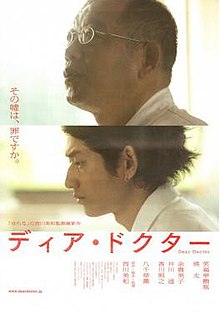
Dear Doctor (Directed by NISHIKAWA Miwa)
This motion picture was released in June 2009. It is the third feature-length film by director NISHIKAWA Miwa. She also wrote the script which won the Japan Academy Prize for Best Screenplay. SHOFUKUTEI Tsurubei who is a rakugo-ka (comic storyteller) and a popular TV personality, played the doctor, his first-ever leading role in a movie.
The story is set in a mountain village where over half of the population is elderly. It begins when Dr. INO Osamu (played by Tsurubei), the only resident doctor at the only village clinic, suddenly disappears, and the villagers start to panic. As two detectives start investigating, some of Ino’s past is gradually revealed.
Three and a half years ago, after a chance meeting with the village mayor, Ino was asked to become their resident doctor. He was very diligent in giving the villagers medical care, and along with OHTAKE, the veteran nurse, they even made house calls to conduct medical check ups. The villagers learned to respect him more than “God and Buddha.” Soon after, SOMA, an intern fresh out of a Tokyo medical school, arrived at the village. Soma also learned to appreciate the diligence and kindness Dr. Ino puts into his work and that all the villagers enjoy.
One day, the widower TORIKAI Kazuko collapses. Dr. Ino and his staff rush to her aid after receiving the emergency call, but she insists that there is nothing wrong with her. Concerned, Dr. Ino revisits her again that night. Kazuko pleads with him, “Doctor, please lie with me,” as she wishes to avoid burdening her daughters, who have their own lives to lead. She even insists that her condition be kept secret from one of her daughters, herself a Tokyo-based doctor.
Dr. Ino concedes to Kazuko saying “very well, as you wish,” but in return he makes her promise to take a gastroscopy test. Although he told her that she suffers from a stomach ulcer, he is concerned that she might have cancer, and so requests without telling her, a closer examination at a specialized institution. Her results reveal that she has terminal cancer. However, the doctor, not wanting to depress her, keeps the truth to himself. Then he calls upon his regular pharmaceutical salesman to take the same test, and switches the results.
Kazuko’s three daughters then visit her for the first time in quite a while. Ritsuko, the doctor, realizes that her mother is taking pills and decides to visit the clinic. Ritsuko bombards Dr. Ino with questions as they look at her mother’s swapped gastric photos, and finally accepts the situation. After Ritsuko tells Dr. Ino that she’ll visit her mother again in one year, he suddenly jumps on his motorcycle and disappears.
Despite their intense investigation, the police fail to locate Dr. Ino’s whereabouts. They soon find out that Dr. Ino had no medical license, after which the villagers’ concern quickly turns to accusation. Later, Kazuko is admitted into the hospital where Ritsuko works. There, a man wearing a white cap and a mask and serving tea to patients comes to her hospital room. Ino’s familiar and friendly smiling eyes make Kazuko’s face light up, as the movie comes to a close.
[2010年9月号掲載記事]
ディア· ドクター(西川美和監督)
2009年6月に公開された作品。長篇映画三作目となる西川美和が監督を務めた。西川は脚本も手がけ、日本アカデミー賞の最優秀脚本賞を受賞した。落語家でありテレビタレントとしても人気の笑福亭鶴瓶が医師役で映画初主演を果たした。
高齢者が人口の半分以上という山あいの村が舞台。村でただひとつの診療所でたった一人の医師として働く伊野治(笑福亭鶴瓶)がある日、突然姿を消し、大騒ぎになるところから映画は始まる。二人の刑事が捜査を進めるうち、伊野の過去が少しずつわかってくる。
伊野は3年半前、たまたま知り合った村長から頼まれ、医師として村に迎えられた。ベテラン看護師、大竹と診療にあたり、家々を訪ねて健康診断もする熱心さで、村人たちからは「神様仏様」よりも尊敬されている。そこに最近、東京の医大を出た研修医、相馬がやって来た。皆に優しい伊野の人柄と仕事ぶりに、相馬もひかれていく。
ある日、夫に先立たれてから一人で暮らしている鳥飼かづ子が倒れる。連絡を受けて伊野たちは駆けつけるが、かづ子はどこも異常はないと答える。気がかりな伊野はその晩、かづ子を再び訪ねる。かづ子は、それぞれの人生を歩む娘たちには迷惑をかけたくない、東京で医師をしている娘にも体調不良を知らせたくないと言い、「先生、一緒にうそついてくださいよ」と訴える。
かづ子の気持ちを理解した伊野は「よし、引き受けました」と答えるが、その代わり胃カメラ検査を受けさせる。かづ子には胃かいようだと伝えたが、がんを心配した伊野は専門機関に検査を依頼する。その結果、彼女が末期がんに冒されていることがわかる。かづ子を気落ちさせたくない伊野は、真実を告げない。そこで、診療所に出入りする製薬会社の男を呼び出し、胃カメラを飲ませ、診察結果をすり替える。
しばらくして、かづ子のもとに3人の娘たちが久しぶりに里帰りする。母親が薬を飲んでいることに気づいた医師のりつ子は、診療所を訪れる。すり替えられた胃の写真を見ながら伊野を質問攻めにするりつ子だったが、最後は納得する。りつ子がまた1年後に母親を訪ねるつもりと話すと、伊野は突然、バイクで診療所を飛び出し、姿を消す。
警察は必死で捜査するが、伊野の居場所はわからない。やがて伊野に医師免許がなかったとわかると、村人たちの心配の声は非難の声に変わる。かづ子はりつ子の勤める病院に入院する。彼女の病室に白い帽子とマスク姿でお茶を配る男が入っていく。伊野と思われるその男の人懐っこい笑顔にかづ子は微笑みかえし、映画は終わる。