-
[From March Issue 2011]

March 3rd is Hina Matsuri (the Japanese Doll Festival) or Girl’s Day. This day of celebration is to pray for young girls to grow up healthy, during which it is also customary to display a set of traditional dolls, called hina-ningyou, along with peach blossoms and sweet sake. Behind this custom lies the belief that the dolls will absorb all of life’s suffering, such as illnesses and injuries, instead of the young girls. In some regions, small, simple hina dolls, made out of paper or grass, are put afloat into rivers or the sea.
Typical hina dolls usually include a couple clad in gorgeous garb from the Heian period (794~1192). They share a multi-level display, which resembles a short staircase covered with red cloth, on which not only they stand, but also musicians and a variety of other dolls and some daily tools. And while less expensive dolls sets are available, it’s not unusual for the average household to spend upwards of 100,000 yen for a set.
“The Doll Festival began in earnest in the Edo period (1600~1867),” recounts YOKOYAMA Hisatoshi, assistant administrative manager at Kyugetsu Co., Ltd., a doll manufacturer with almost 170 years of history. “During that period, there were hina-ichi, markets where hina dolls were sold, all across Edo (present-day Tokyo). Even in Asakusabashi, where Kyugetsu’s main store is now located, there was once a hina market,” he says. And today, Asakusabashi’s Edo-dori is still lined with a number of doll shops.
March is not the only time during the year when dolls are displayed. On May 5th (the day of tango no sekku) Gogatsu ningyou (May dolls) are put on display as part of the ceremony during which people pray for boys to grow up healthy. To further ensure a boy’s health, a samurai suit of armor (protective battle gear) may sometimes accompany the dolls. During the New Year’s holidays, hagoita rackets with accompanying dolls may also be seen. Furthermore, it is also customary for Japanese grandparents to give their grandchildren dolls as presents.
“New Year’s, the Doll Festival and tango no sekku (the Boy’s Festival) were originally all celebrations of sekku (the change of seasons),” says Yokoyama, adding that “At the turn of each season, the Japanese have long displayed dolls to pray for their good health and safety.” Yokoyama, who is in charge of hina doll design, explains his process: “I consider what kind of hina doll to make, and then decide on every detail one by one, such as its countenance, the colors and textures of its clothes, and the design of the accompanying tools. When I studied old documents and reproduced the costume colors of the old days, I was quite surprised to find out that their finish was mostly modern pastel colors.”
Bunraku is traditional Japanese puppet theatre, during which puppets are manipulated to the tune of old songs. Bunraku puppets are about 120 to 150 centimeters tall, and require dexterity to handle them. For example, a puppet that plays an integral role is usually manipulated by three people. One person moves the body and the puppet’s right hand, another moves the left hand, and a third manipulates the legs.
Bunraku puppets are meticulously designed to mimic human movement. Some puppets’ necks and eyebrows can even be articulated using special strings, while others have two faces so that they can transform into different characters. Depending on its role, a puppet may even wear different costumes and hairstyles, and sometimes its face is also painted different colors. Because of their detailed expressiveness, bunraku puppets have been registered on UNESCO’s (United Nations Educational, Scientific and Cultural Organization) list of Masterpieces of the Oral and Intangible Heritage of Humanity.
The Japanese obsession with refined movement is also found in their karakuri ningyou (automata or mechanized puppets). Modeled on mechanical clocks from Europe, these puppets were designed by craftsmen of the Edo period to move using wheels and gears. For example, if you put a small, tea-filled cup in the hand of a mechanized puppet, a gear stopper would release and the puppet would start moving. These automata were featured in puppet theatres of the entertainment business during the Edo period.
Japanese children sometimes create teru teru bouzu dolls when they are going to wish for good weather. Shaped like a badminton shuttlecock, this doll is made by stuffing cotton or some other material into white paper or cloth and then tying it up with a string. It is said that if you hang one outside your window and pray, the weather will be fine the next day. However, it is also said that if you hang one upside down, then the following day will be rainy.
Kokeshi are the dolls that ordinary Japanese people have long been familiar with. Originating from the Tohoku region (the northernmost part of Japan’s main island), they are made by shaving down a piece of wood on a rokuro (or lathe). Around the late Edo period, kokeshi were sold as souvenirs at hot spring resorts in the Tohoku region, and then gradually became familiar children’s toys. The craft of creating traditional kokeshi has been handed down from skilled craftsmen to their apprentices, thus maintaining uniquely regional styles, of which there are about 11 presently available.
After the war (from 1945 onward), traditional kokeshi, as well as new “sousaku kokeshi” (creative kokeshi) were being made. Soon, people started appreciating the kokeshi’s artistic quality, which created more national interest. As a result, the All-Japan Kokeshi Festival of Naruko-Onsen, Osaki City that started in 1953, and the All-Japan Kokeshi Exhibition in Shiroishi City that started in 1959, have both been held annually in Miyagi Prefecture.
“When we were children, we weren’t that well-off, so our parents couldn’t buy us hina dolls for the Doll Festival. Instead, we celebrated the occasion by arranging kokeshi dolls,” says TAKAHASHI Yukie of the Nihon Kokeshi-kan (Japan Kokeshi Museum) located in Miyagi prefecture. “The charm of kokeshi is its simple shape. And because traditional Japanese houses are made of wood, I think Japanese people feel at ease with them,” she adds.
There are even temples and shrines in Japan that hold memorial services for dolls. Some Japanese customarily burn and pray for their dolls to show their appreciation and affection for their unconditional friends, rather than merely discarding them. So, it can be said that the Japanese attitude toward dolls reveals their notion that objects also have a life to live.
Text: SAZAKI Ryo
[2011年3月号掲載記事]
3月3日はひな祭りです。これは、女の子の健康な成長を祈る行事で、ひな人形と呼ばれる人形に、桃の花や甘い酒をそなえる習慣があります。人形が、病気やけがなど悪いことを本人の代わりに引き受けてくれる、という考え方があるからです。地方によっては紙や草などで、小さくてシンプルなひな人形を作り、川や海に流したりもします。
ひな人形の代表的なものは、平安時代(794~1192)の豪華な衣装をまとった男女一対の人形です。階段のような台をセットして赤い布を敷き、男女一対の人形だけでなく、音楽家や他の人形、生活の道具などもならべる、豪華な飾り方もよく見られます。値段は、安いものもありますが、一般的な家庭が10万円以上のものを買うこともめずらしくありません。
「ひな祭りが盛んになったのは、江戸時代(1600~1867)です」と、約170年の歴史をもつ人形のお店、株式会社久月の総務部次長、横山久俊さんは言います。「江戸時代には、江戸(今の東京)のあちこちにひな市という、ひな人形を売る市場がありました。久月本店がある浅草橋にも、ひな市がありました」。今も浅草橋の江戸通りには、人形のお店がたくさんあります。
人形を飾るのは3月だけではありません。端午の節句と呼ばれる5月5日には、五月人形が飾られます。これは、男の子の健康と成長を祈るためのものです。元気な男の子に育つように、という願いをこめて、侍のよろい(戦いのときに身を守るための道具)を飾ることもあります。お正月にも、人形のついた羽子板がよく飾られます。祖父母が孫に人形をプレゼントする習慣もあります。
「お正月、ひな祭りも端午の節句は、もともと節句(季節の変わり目)を祝うお祭りでした」と横山さんは言います。「季節の変わり目ごとに、日本人は人形を飾り、健康や安全を祈ってきたんです」。横山さんが担当しているのは、ひな人形をデザインする仕事です。「どのようなひな人形をつくるかを検討し、顔だち、服の色や生地、道具のデザインをひとつひとつ決めていきます。昔の資料を研究して衣装の古い色を復元したら、意外にもパステル調のモダンな衣装に仕上がって驚いたこともありますよ」。
日本の伝統芸能「文楽」は、古い歌に合わせて人形を動かし、芝居を演じさせる芸能です。文楽の人形は、身長がだいたい120~150センチくらいで、細かい操作が必要です。例えば、重要な役の人形は、3人で動かします。一人が人形の全体と右手を、もう一人が人形の左手を、残る一人が人形の足を動かします。
文楽の人形には、人間らしい演技をさせるための細かい工夫がたくさんあります。細い糸を使って首や眉を動かせる人形、変身できるようにふたつの顔をもっている人形などがあります。演じさせる役に合わせて衣装や髪形を替えますし、ときには顔の色も塗り替えます。文楽人形の表現力は高く評価されていて、ユネスコ(国連教育科学文化機関)の無形文化遺産にも登録されています。
「からくり人形」にも、細かい動きに対する日本人のこだわりが感じられます。この人形は江戸時代の職人が、ヨーロッパの機械時計を参考にして、車輪や歯車で動くように工夫しました。例えばお茶の入った湯飲みを人形に持たせると、ストッパーがはずれて人形が動きだす、という仕掛けです。このようなからくり人形は「人形芝居」として、江戸時代のショービジネスにもなりました。
日本の子どもたちは、晴れになってほしいと思うとき、「てるてる坊主」という人形を作ります。これはバドミントンの羽のような形をした人形です。白い紙や布に綿などを入れ、ひもでくくって作ります。これを窓辺などにつりさげてお祈りすると、次の日よい天気になるといわれています。逆さにつるすと翌日雨になる、ともいわれます。
「こけし」は日本の庶民に親しまれてきた人形です。東北地方(本州の北部)の特産品で、ろくろ(回転する台)に木をのせ、けずって作ります。江戸時代の後期ごろから、東北地方の温泉などで土産物として売られるようになり、子どもたちの身近なおもちゃになっていきました。伝統的なこけしは、職人からその弟子へと作り方が伝えられたため産地ごとに個性があり、11通りほどに分けることができます。
戦後(1945年以降)は、伝統的なこけしだけでなく、「創作こけし」と呼ばれるこけしも作られるようになりました。また、こけしの芸術性が評価されるようになり、全国的に有名にもなりました。1953年からは宮城県大崎市鳴子温泉にて「全国こけし祭り」が、1959年からは宮城県白石市にて「全日本こけしコンクール」というこけしのイベントも開かれています。
「私たちが子どものときは、生活があまり豊かではありませんでした。ですからひな祭りにひな人形を買ってもらえず、こけしを並べてお祭りしたものです」と、日本こけし館(宮城県)の髙橋ゆきえさんは言います。「こけしの魅力はそぼくな形です。それに、日本の伝統的な家は木でできているでしょう。だから日本人は、木でできたこけしに安らぎを感じるのだと思いますよ」。
日本には「人形供養」をしてくれるお寺や神社があります。日本人には壊れたり古くなったりした人形をただ捨てるのではなく、一緒に遊んでもらった感謝と愛情を込めて焼いて供養する習慣があるからです。人形に対する考えには、物にも命を感じる日本人の感性が現れていると言えるかもしれません。
文:砂崎 良
-
[From March Issue 2011]
The demand for “joshikai” is booming. These are women-only events. Joshikai members eat out, go shopping, travel, throw home parties and do much more. This new phenomenon is currently being widely reported on in magazines and on TV.
And more restaurants are expressing their interest by offering “joshikai sets” which include many vegetables dishes and desserts that women find pleasing. Any group of like-minded women can get together for a joshikai. But why is this kind of a women-only event gaining such popularity?
On one weeknight, a joshikai of eight women in their 30s was held at an Italian restaurant in Tokyo. They are like-minded colleagues who all work at the same company. The moment a pizza arrives at the table hot from the oven, they devour it. “We want to eat delicious food to our hearts’ content. With men present, it is hard to satisfy our appetite because we become self-conscious around them,” they explain.
SERIKAWA Nako, who was in charge of the dinner arrangements, says she was most careful in choosing the right restaurant. “Women attach importance not only to the taste of the food but also to the atmosphere of the place. When it is a women-only event, we also feel like getting dressed up. So, I tried to choose a place with an upmarket feel.”
Weekend joshikai are usually held at someone’s home. The women go shopping for ingredients, prepare the food and cook together. AKASHI Asuka, who hosted an event at her apartment, says “It’s fun to get together and cook. It brings back childhood memories of girls playing house.” The women discuss many things, including romance, fashion and gourmet meals.
According to the “Survey of Joshikai,” carried out by the Macromill Inc. research company in March 2010, about half of the working women aged 20~49 living in the Kanto region participate in at least one joshikai per month.
One participant says, “In these women-only situations, we can really be ourselves, sympathize with each other and be encouraged. I would say that men would never understand these kinds of feelings. To tell the truth, I have more fun at joshikai than when spending time with men. It is a very pleasant diversion.”
In January of this year, the Silky Style Company launched “jo4-kai.com,” a joshikai service information and reservation website. The director, YAMADA Naoko, says, “Many women felt empathy for the American movie ‘Sex and the City’ which described the friendships and lives of four women in their 30’s. I think the movie greatly influenced joshikai. They were reassured about their friends’ importance, about being able to share stories about their unhappy and hard days, and then have their friends help revitalize them for the next day.”
Joshikai.com
Text: MUKAI Natsuko[2011年3月号掲載記事]「女子会」がブームを呼んでいる。「女子会」とは女性だけで集まった会のことで、食事、買い物、旅行、ホームパーティーなどを楽しむ。最近、雑誌やテレビでもよく取り上げられている。
レストランなどの飲食店では、女性が喜びそうな野菜やデザートに力を入れたメニューを取り入れた「女子会プラン」などで、女子会を歓迎するところが増えている。気の合う女性同士であれば、それらはなんでも女子会となる。ところで、なぜ女性だけで集まるのが人気なのだろうか。
平日の夜、東京都内のイタリアンレストランでのある女子会には、30代の女性8人が集まった。彼女たちは同じ会社に勤める気の合う仲間同士だ。テーブルに運ばれてきた焼きたてのピザは、一瞬のうちに彼女たちの胃袋に消えていく。「本当においしいものを思いっきり食べたいです。男性がいると異性の目が気になってなかなかお腹いっぱいになるまで食べられないです」と話す。
幹事を務めた芹川奈子さんは、お店を選ぶのに一番気を使ったという。「女性は、料理のおいしさはもちろんですが、雰囲気も大事にします。女子だけの集まりだとおしゃれもしたくなるので、高級感のあるお店を選ぶように心がけました」と話す。
週末の女子会はホームパーティーだ。材料から一緒に買い出しに行き、調理をする。部屋を提供した明石あすかさんは、「みんなでキッチンに立つのは楽しいです。子どものころ女の子同士で夢中になって遊んだおままごとを思い出します」と話す。女子会での話題は、恋愛、ファッション、グルメについてなどさまざまである。
大手調査会社、株式会社マクロミルが、2010年3月に行った「女子会に関する調査」によると、関東首都圏在住の仕事を持つ20歳から49歳までの女性の過半数が、1ヵ月に1回以上女子会に参加している。
参加者の一人は、「同じ女性同士だから本音で話せて、悩みや考え方に共感し、励まされます。こういう気持ちは男性には絶対わからないと思います。正直言って男性といるよりも楽しいし、良い気分転換になります」と話す。
株式会社シルキースタイルはこの1月から、女子会の情報発信と予約サービスのサイト「女子会.com」を運営している。代表取締役、山田奈央子さんは話す。「30代の独身女性4人の友情や生活などを描いたアメリカのドラマ『セックス・アンド・ザ・シティ』にたくさんの女性が共感し、女子会にも影響を与えたと思います。いやなことや、つらいことがあっても、自分の話を聞いてわかってくれる友達のありがたさを改めて確認できるので、明日からまたがんばろうと思う女性たちのパワーの源になるのだと思います」。
女子会.com
文:向井奈津子 -
[From March Issue 2011]
Most people in Japan, young and old alike, own a keitai (a mobile phone, where keitai means “to carry around.”) Some people use it constantly, every day. This is because Japanese mobile phones offer so many functions.
Three of the most standard functions on any given mobile device include an “e-money application,” a “One-Seg (mobile digital TV broadcasting) service,” and “infrared data transaction” abilities. And while text messaging and taking photos are the most basic functions offered, some mobile phones can also play music, or download it to set as a personal ringtone.
In December, 2010 NTT Docomo Inc. released the T-01C, a.k.a. the REGZA Phone. This smart phone has the three standard functions, but is also waterproof. And since it is a Japanese custom to take nightly, long, hot baths, mobile phones that can be used in the bathroom have become very popular.
The T-01C also comes with an extremely high-resolution, 12.2 mega pixel camera. “A mobile-phone camera is a handy device for capturing life’s everyday moments since people always carry it around. And sharing photos helps strengthen communication among friends. This is why high resolution photos and movies are so popular, and therefore, it pushes us to continue developing better keitai cameras,” says SASAHARA Yuko, an NTT Docomo Product Division representative.
In November, 2010, the KDDI brand au released its IS03 model ketai. As expected, this smart phone also comes with the three standard functions. But, it also includes a permanent LCD clock display and an option to play music stored in-phone on a car’s audio system using an FM transmitter.
Another IS03 feature is the Skype communication application. “Computer and iPhone users can communicate using Skype via the Internet. However, on an au keitai, Skype communication can be made over our high quality mobile phone network,” reports MONJI Keiko, a KDDI’s PR department representative.
Softbank Mobile Corp. released the GALAPAGOS SoftBank 003SH in December, 2010. This keitai not only has the standard three functions, but it also comes with a 3D movie player for which no 3D glasses are needed. Furthermore, it comes with a business card reader that stores information by merely clicking the built-in camera.
“Mobile phones in Japan are developed so that ‘anything can be done on one keitai device,’” says FURUKAWA Masako, a member of Softbank’s Mobile Corp. MD Management Department. “This is why Japanese mobile devices now include built-in cameras and various other functions such as television, an e-wallet, a train pass, computing power, games, books and newspapers,” she adds.
In Japan, even novels are written on mobile phones, while contests are held for the best mobile phone photo accompanied by a haiku poem. And, it is thanks to such high-technological mobile phone functionality that Japan has developed such a phenomenally rich ketai culture.
NTT Docomo Inc.
KDDI Corporation
Softbank Mobile Corp.Text: SAZAKI Ryo
[2011年3月号掲載記事]
日本では子どもからお年よりまで幅広い年代の人がケータイ(携帯電話)を持っています。一日に何時間も使う人もいます。それはケータイにたくさんの機能がついているからです。
各機種で定番の機能は「電子マネーとして使えること」「ワンセグ(ケータイ向けのデジタルテレビ放送)が見られること」「赤外線を使ってデータをやり取りできること」の3つです。カメラ機能やメール機能も一般的ですし、音楽プレーヤーとして使えたり、歌をダウンロードして着信音にしたりすることもできます。
株式会社エヌ・ティ・ティ・ドコモは2010年12月にREGZA Phone T-01Cを発売しました。このケータイには定番の3機能がついています。その他防水性もあります。日本人の多くはバスタブにお湯をためて長時間お風呂に入るので、お風呂場でも使えるケータイは、人気があります。
T-01Cには約1,220万画素の高画質カメラがついています。「ケータイはいつも持っているものですから、そのカメラでいろいろな場面を手軽に撮影できます。それを友達に見せることで、深くコミュニケーションをとることができます。ですから美しい写真や動画が望まれ、その声にこたえてケータイのカメラが進歩したのだと思います」とNTTドコモプロダクト部の笹原優子さんは言います。
KDDI株式会社のケータイ・ブランドauからは、2010年11月、IS03が発売されました。このケータイにも定番の3機能がついています。その他、液晶画面の一部に時刻をいつも表示したり、FM電波を介してIS03内の音楽を車のオーディオに送ったりすることもできます。
IS03のもう1つの特長は、Skype通話ができることです。「パソコンやiPhoneでSkype通話をする場合は、インターネット網を使って通話を行います。でもau携帯の場合はauの高品質な携帯電話網を使って通話を行います」とKDDI広報部、門司慶子さんは話します。
ソフトバンクモバイル株式会社は2010年12月、GALAPAGOS SoftBank 003SHを発売しました。このケータイには定番の3機能のほか、専用の眼鏡をかけなくても3Dの写真や動画が見られる機能がついています。また名刺を撮影してその情報をケータイに記録する機能もあります。
「日本のケータイは、『ケータイ一つで何でも出来る』ことを目ざして開発されてきました」と、ソフトバンクモバイル株式会社MD統括部の古川雅子さんは言います。「それでカメラ機能を皮切りに、テレビ、電子マネー、定期券、パソコン、ゲーム、書籍、新聞といった機能を持つようになったのです」。
日本ではケータイで小説が書かれたり、ケータイで写真を撮り俳句をつけるコンテストが開かれたりしています。この豊かなケータイ文化は、高機能のケータイに後押しされているのです。
株式会社エヌ・ティ・ティ・ドコモ
KDDI株式会社
ソフトバンクモバイル株式会社文:砂崎 良
-
[From March Issue 2011]
Director General of Earth the Spaceship
YAMAMOTO ToshiharuDoctor YAMAMOTO Toshiharu had been dispatched to both West Africa and Afghanistan to work as a doctor. While stationed there, his personal goal was to ensure that the locals could continue to provide medical care among themselves after he and the other staff left, but he gradually began to feel that “there was only so much one doctor could do.” This realization led him to establish a nonprofit organization in 2004 called “Earth the Spaceship.”
The first time Yamamoto visited a foreign country was when he was in the sixth grade of elementary school. “My father, who was an oculist, had to go to South Africa for work, so I accompanied him for about two weeks. It was during the time of apartheid, and when I arrived at the airport, I was shocked to see that the gates for white people were separate from those for colored races,” he recalls. Later, Yamamoto went on to medical college planning to take over his father’s clinic, but because he wanted more control over his own life, he decided to major in both internal medicine and pediatrics.
Working as a doctor after graduation, Yamamoto earned a Doctor of Medicine degree while also engaging in gene therapy research. Before long, he became the Director of the general hospital in Kanagawa Prefecture, but felt conflicted about pursuing this career path, despite deciding to forego the family clinic. It was then that Yamamoto recalled the situations he witnessed in the developing countries he had often visited to take photographs, a hobby he enjoyed even after becoming a doctor.
“Even if an international cooperation organization builds a hospital, once they leave, it just ends up a concrete box,” he says. So he soon left the hospital’s directorship and registered with five international cooperation organizations as a doctor to be dispatched to developing countries. In 2001, he traveled to Sierra Leone, West Africa on behalf of Doctors Without Borders. After that experience, he supplied medical help in five other countries, including Afghanistan.
At present, while continuing to work as a doctor in Japan, Yamamoto spends most of the year on Earth the Spaceship activities. One of its main projects is increasing the number of professionals engaged in international cooperation. “International cooperation tends to be seen as voluntary, but a U.N. or government sponsored program pays over 8 million yen, which is double the average annual income of a Japanese worker. I would like it to be seen as a career path,” he says. In recent years, he has been cooperating with the Ministry of Education, Culture, Sports, Science and Technology in offering special classes at elementary and middle schools to introduce the possibilities of international cooperation offer.
Another ETS project is holding “drawing events” where people around the world draw “the things most important to them.” “Children in Africa draw water, children in Nepal draw schools, and children in Cambodia draw life without war and landmines. Through these drawings, you can see the problems those countries have,” he says, explaining that to date, more than 70 different countries have already participated in this project. “Our goal is to have 200 countries and regions participate,” Yamamoto says.
[2011年3月号掲載記事]
宇宙船地球号事務局長 山本敏晴さん
医師である山本敏晴さんは、西アフリカやアフガニスタンなどで派遣医師をしていました。自分たちが去った後も現地の人たちだけで医療を続けられるようにしたいという独自の目標がありましたが、次第に「一人の医師にできることには限界がある」と感じ始めます。そんな思いから、2004年、NPO法人「宇宙船地球号」を設立しました。
山本さんが初めて外国を訪れたのは小学校6年生のときでした。「眼科医だった父親の仕事の関係で南アフリカに2週間ほど滞在しました。アパルトヘイトの時代で、空港に降りたときから白人用と有色人種用にゲートが分かれていてショックでした」と振り返ります。やがて、父親の医院を継ぐために医科大学に進みましたが、「自分の人生は自分で決めよう」と、内科と小児科を専門に学びました。
卒業後は医師として働く一方、医学博士の学位を取り、遺伝子治療の研究にも励みました。やがて神奈川県の総合病院で院長を務めるようになりましたが、「家業を継がないと決めたのに、このまま終わっていいのか」と悩みました。そんなとき、医師になってからも続けていた趣味の写真撮影で何度も訪れていた発展途上国の実情を思い出しました。
「国際協力団体が病院をつくっても、彼らが去ってしまえばただのコンクリートの箱になってしまう」。院長をしていた病院をすぐに辞め、5つの国際協力団体に派遣医師として登録しました。2001年、「国境なき医師団」の依頼で西アフリカのシエラレオネに渡りました。その後もアフガニスタンなど5ヵ国で医療活動を行いました。
現在も日本で医師を続けながら、一年の大半を宇宙船地球号の活動にあてています。事業の一つは、国際協力のプロを増やすことです。「国際協力は無償と思われがちですが、国連や政府系の場合、日本人の平均年収の2倍である800万円以上が支払われます。職業として知ってほしいです」と語ります。近年は文部科学省と協力して、国際協力を紹介する特別授業を小・中学校で行っています。
世界の人々に「一番大切なもの」を描いてもらう「お絵描きイベント」も、事業の一つです。「水を描くアフリカの子や、学校を描くネパールの子、戦争や地雷のない暮らしを描くカンボジアの子がいます。絵を通じてその国の問題が見えてきます」と説明します。これまで世界約70カ国以上から参加者があり、「目標は200の国や地域です」と話します。
-
[From March Issue 2011]
Ingredients [Serves 2]
- 160g (4~5mm thick) pork loin slice
- 1+1/2 tbsp potato starch
- 1 tbsp cooking oil
sauce
- 1/2 tbsp sugar
- 1 tbsp soy sauce
- 1 tbsp mirin (sweet rice wine for cooking)
- 1 tbsp sake (cooking wine)
side dish
- 80g green asparagus
- 80g pumpkin
- 1 tbsp cooking oil
Kuwa-yaki
Originally made by farmers who cooked wild fowl on their kuwa (or hoe) as they worked their fields. While chicken is most common for this recipe, pork is also very tasty.
1. Asparagus: cut off roots and hard skin then slice diagonally into 5cm pieces, pumpkin: cut into 7~8mm thick wedges, sauce: mix ingredients (sugar, soy sauce, mirin, and sake), pork: lightly powder with potato starch, shaking off any excess.
2. Stir-fry asparagus and pumpkin separately, each in 1/2 tbsp cooking oil, then set them aside.
3. Heat 1 tbsp of cooking oil in a pan then fry pork over medium heat until brown on both sides.
4. Pour sauce over pork.
5. Dress pork with sauce and turn off heat before sauce thickens.
6. Serve on a plate with vegetables on the side.
[2011年3月号掲載記事]
材料(2人分)
- 豚ロース肉(厚さ4~5mm) 160g
- かたくり粉 大さじ1+1/2
- サラダ油 大さじ1
たれ
- 砂糖 大さじ1/2
- しょうゆ 大さじ1
- みりん 大さじ1
- 酒 大さじ1
付け合せ
- グリーンアスパラガス 80g
- かぼちゃ 80g
- サラダ油 大さじ1
くわ焼き
昔、 農作業の合間に取った野鳥を、くわ(畑を耕す道具)にのせて焼いて食べたことから、くわ焼きと言われます。鶏肉がよく使われますが、豚肉でもおいしくできます。
1. アスパラガスは、根元とかたい皮を除き、5cm長さの斜め切りにします。かぼちゃは7~8mm厚さのくし形に切ります。たれは、材料(砂糖、しょうゆ、みりん、酒)を合わせます。豚肉はかたくり粉をつけ、余分な粉をはたいて落とします。
2. フライパンに油大さじ1/2ずつ、アスパラガスとかぼちゃをそれぞれいためて取り出します。
3. 油大さじ1を熱し、強めの中火で豚肉を両面焼きます。
4. 肉によい焼き色がついたら、たれを入れます。
5.肉を返しながらたれをからめ、たれが煮詰まる前に火を止めます。
6. お皿につけ合せと豚肉を盛りつけ、出来上がりです。
-
[From March Issue 2011]
Calmi Cuori Appassionati [Between Calmness and Passion]
(Directed by NAKAE Isamu)This feature film was adapted from the 1999 bestselling novel of the same name. TSUJI Hitonari and EKUNI Kaori ran alternating stories in a monthly magazine, from the points of view of a man and woman in a relationship together. TAKENOUCHI Yutaka and Hong Kong actress Kelly CHEN starred in the 2001 movie version. The film was shot in Tokyo, and in the Italian cities of Florence and Milan. The screenplay was a mixture of three languages – Japanese, English and Italian, effectively portrayed by the cast of characters.
AGATA Junsei is apprenticing at a workshop in Florence, Italy, hoping to become a fine art restorer – a Restauro. Recognizing his talent, his master entrusts him with restoring a Cigoli painting. His life, and his relationship with Japanese exchange student Memi, seems to be going perfectly. However, in his heart he still has feelings for his ex-girlfriend, Aoi.
One day, Junsei finds out that Aoi is in Milan. He goes to see her, only to find out she has a boyfriend named Marvin. She tells Junsei: “I’m over the past. I’m happy now.” Heart-broken, Junsei sadly returns to Florence. There, he learns that someone had sliced through the Cigoli painting. Without any suspects, the workshop is temporary closed. Depressed, Junsei returns to Japan.
Junsei and Aoi had attended the same college, where, at the time, she was an exchange student from Hong Kong. For some reason, Junsei was attracted to this lonesome girl, and soon an intimate relationship developed where they understood each other’s feelings, even when silent. One day Aoi suggest that they promise to climb to Florence’s Duomo cathedral together, on her 30th birthday, in 10 years time. But soon after making their promise, they broke up.
While the criminal who damaged the painting has not yet been found, the workshop reopens. Junsei, unable to let go of his feelings for Aoi, breaks up with Memi and returns to Florence. On Aoi’s 30th birthday he climbs alone to the top of the Duomo. Aoi also arrives, and they end up spending the night together in each other’s arms. But Junsei, who believes that Aoi is still with Marvin, regrets their reunion.
Meanwhile, as Aoi leaves his apartment, she tells him how grateful she is that he was a part of her life. After she’s gone, he realizes that Aoi is no longer with Marvin. He then jumps on to the next express train for Milan to catch up to her. On the Milan-bound train Aoi cries, but then sees Junsei looking for her on the station platform, smiling and waving. Relieved, Aoi returns his smile as the film comes to its end.
[2011年3月号掲載記事]
冷静と情熱のあいだ(中江 功 監督)
1999年に出版されベストセラーとなった同名恋愛小説が原作。辻仁成と江國香織が月刊誌に交互に連載し、一つの物語を主人公の男女それぞれの視点からつづっている。竹野内豊と、香港出身のケリー・チャンが共演し、2001年に公開された。撮影は、東京のほか、イタリアのフィレンツェとミラノで行われ、出演者や役柄に合わせて日本語、英語、イタリア語の3ヵ国語の台本が用意された。
阿形順正は、絵画の修復士を目指し、イタリア・フィレンツェの工房で修業している。工房の師匠からその才能を認められ、チーゴリの絵の修復を任される。日本人留学生の芽実という恋人もいて、生活は順調に見える。しかし、彼はかつての恋人、あおいが忘れられずにいた。
ある日、あおいがミラノにいると聞いた順正は彼女に会いにいくが、彼女にはマーヴという恋人がいることを知る。「昔のことは忘れたわ。幸せに暮らしてるわ」と言われ、彼はみじめな気持ちでフィレンツェに帰る。すると、修復中のチーゴリの絵が何者かによって切りさかれる事件が起きたことを知らされる。犯人はわからず、工房は一時的に閉鎖される。沈んだ気持ちで順正は帰国する。
順正とあおいは、かつて同じ大学に通っていた。香港からの留学生で、いつも一人ぼっちのあおいに順正はなぜかひかれ、いつしか何も話さなくても気持ちが通じ合う恋人同士になっていた。あるとき、あおいの提案で、10年後、彼女が30歳になる誕生日にフィレンツェの大聖堂ドゥオーモに一緒に登る約束を交わす。だが、やがて二人は別れてしまう。
チーゴリの絵を切りさいた犯人は見つからないまま、しばらくして工房は再開される。あおいに未練のある順正は芽実と別れ、一人フィレンツェに戻る。そして、あおいの30歳の誕生日に一人でドゥオーモに登る。そこへあおいも現れ、二人は一夜をともにする。だが、彼女がまだマーヴと付き合っていると思っている順正は、再会を後悔する。
一方のあおいは、順正に出逢えたことを感謝していると言い残して彼のアパートを去る。その直後、順正は彼女がマーヴとすでに別れていたことに気づく。彼は慌ててミラノ行きの高速列車に飛び乗り、あおいを追いかける。車中で涙を流しミラノに戻ったあおいは、駅のホームで順正の姿を見つける。順正は微笑み、手を振る。安心した表情を見せるあおいも笑みを返し、映画は幕を閉じる。
-
[From February Issue 2011]
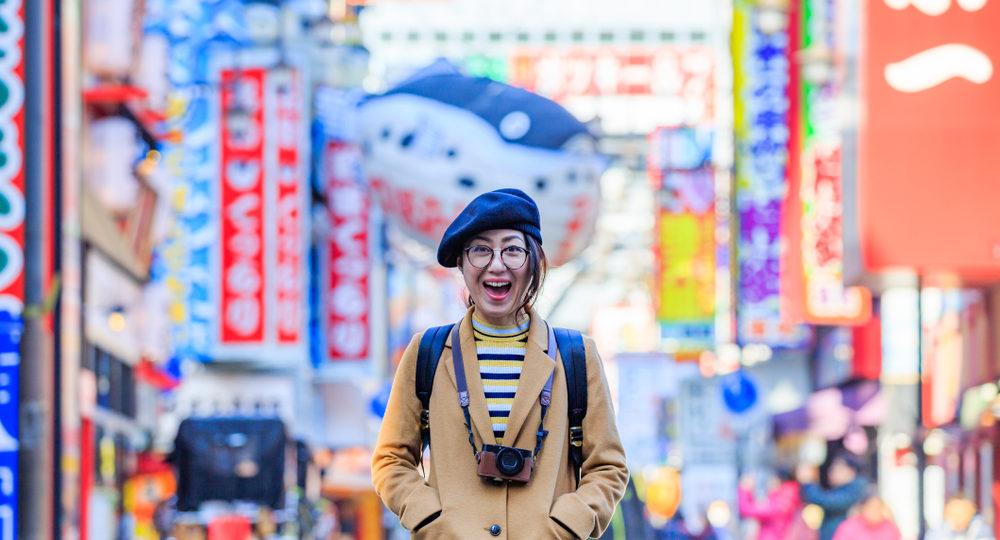
There are many non-Japanese who travel around Japan by various means in order to slowly enjoy their trips.
David M. WEBER, an American living in Tokyo, often travels by overnight bus because they are “cheap and convenient.” “I often take the JR Highway Bus because the seats recline like chairs and are comfortable. I get on a bus in Tokyo at night, sleep throughout the trip, and wake up the next morning in Kansai or Tohoku with the whole day ahead of me to enjoy sightseeing,” he says with a smile.
David has visited many places across Japan. The trip that left the strongest impression on him was when he went to Hokkaido and saw ryuuhyou or Drift Ice in the ocean. “First, I went to see the Snow Festival (in Sapporo). Then I decided to go further north on an overnight bus to Abashiri to see the ryuuhyou. In Abashiri, I got on a ship to join a one hour ryuuhyou-seeing tour. It was the first time for me to see the beautiful ryuuhyou save on TV or in a book. I even fed the seagulls some food,” he recalls.
David has used various means of transportation to travel around the Tohoku region. “I took an overnight bus to Morioka then got on a shinkansen to Kakunodate. From there, I took a rental car to Tazawako. Next, I took a local line to Aomori City. There I got on a night-ferry to Hakodate, Hokkaido. After looking around Hakodate, I took a ferry back to Honshu. Then, I took a local bus to Osorezan. I got to see not only a number of historical sites but also parts of remote Japan that few people get to see,” he explains.
British Louise ROUSE quit traveling by air due to its effect on climate change. She came to Japan on the Trans-Siberian railway and then by ferry. “I use all means of transportation except airplanes to travel in and around Japan. On the railroad, I often use passes for foreign travelers and Seishun Juuhachi Kippu. The ultra luxurious night trains are my favorites. When I went to Kyushu, I carried a bicycle on the train and rode it around Kumamoto City and the surrounding area. When I went to Hokkaido, I made a round trip from Oarai (Ibaraki Prefecture) to Tomakomai on a ferry that had an inbuilt public bathing facility,” she recounts.
Louise’s most unforgettable trip was the one she took with her parents to Kurobe Gorge. “It’s an area that is not often mentioned in sightseeing guidebooks for foreigners,” she says. “Although my mother is a Japanese translator, the Toyama Prefecture dialect can be quite difficult. So, I worked on my Japanese all summer to prepare. And we stayed at a kominka (old private house) that is a cultural property. It was a house where children stay overnight with their teachers to study history. We laid out futons and slept in an expansive, 40-tatami mat room, complete with an iori (sunken hearth).”
Louise and her parents also took the Tateyama-Kurobe Alpine Route where the mountains between Toyama and Nagano prefectures are visible. “We took a cable car, a trolley bus, a ropeway and so on to travel from Tateyama Station to Shinano-Ohmachi Station. Along the way, we saw the enormous Kurobe Dam, stayed at an inn in the Murodo Area, where we took a hot spring bath while looking at the mountains. My suggestion is to search for hidden places of natural interest, and not rely too much on guidebooks.”
Canadian Moonie GARNER likes to hitchhike. “I like to travel slowly. I prefer traveling by foot, bike, boat, bus or train over airplanes. My most favorite way of transportation is hitch-hiking. It’s by far the cheapest and most environmentally friendly way to travel,” she says.
A few years ago, Moonie went to Kumano, Wakayama Prefecture. She hitchhiked from Kanagawa and spent some time in the mountains with an elderly couple. “I joined their organic farm, picking natural fruit, making umeboshi (pickled plums) miso and so on. We went to a sacred hot spring together. They were leading a very environmentally-friendly life,” she says.
During her trip to Kumano, Moonie realized that she knew little about the rest of Japan outside of Tokyo. This made her start a hitch-hiking journey from Kagoshima to Tokyo in October, 2010. “Some friends advised me not to do it saying hitch-hiking is a dangerous way of travel for young females. But if you ask for a ride while looking closely at the driver, then it’s all right. Since hitchhiking is rarely seen in Japan, I surprised people, but more often than not, I was offered a ride”
“When you hitch-hike drivers often share information about the area. You encounter different dialects and scenery along the way and that increases your knowledge of the country. This cannot be sensed while seated in a shinkansen or by an airplane window,” explains Moonie.
Photographer Arina ANJONG traveled around Japan on a motorbike for 46 days in 2009. “Since I had to move from Okinawa to Tokyo, I decided to make a journey on a scooter. I started from Okinawa in the south, went all the way up to Wakkanai, Hokkaido then turned around and went south until I reached Tokyo. The journey covered a distance of 6,640 km and 23 prefectures.”
Since Arina’s scooter is only 50cc, he could not ride on expressways and had to take regular roads. “I could see the various areas and feel the differences. I experienced both the untouched nature of Yakushima Island and the densely populated city of Osaka. I went to historical cities of Himeji and Nara. When I reached the Soya Promontory, the northern most part of Japan, I felt a sense of accomplishment,” he says proudly.
During his journey, Arina made friends with many local people. “This happened in Miroku-machi of Kanazawa, Ishikawa Prefecture. I noticed a festival being held in the streets so I stopped and took photos of it. Then a man came up and talked to me. He offered to let me join a banquet, and after the festival and let me stay at his home. Being treated so kindly by a person I hadn’t known a moment ago was the highlight of my trip,” he remembers.
While the Japan National Tourism Organization offers non-Japanese travelers various kinds of options to help them enjoy easy traveling across Japan, there are still those who want to take the time to enjoy travelling in their own ways, and at their own pace.
David’s website
Louise’s website
Arina’s websiteText: SAZAKI Ryo
[2011年2月号掲載記事]
「旅をゆっくり楽しみたい」と、日本国内をいろいろな乗り物をつかって自分らしい旅行をしている外国人がおおぜいいます。
東京在住のアメリカ人、デイヴィッド・ウィーバーさんは、夜行バスをつかって旅行します。「安い上に便利ですから」とデイヴィッドさんは言います。「私はJRの高速バスをよくつかいます。いすを後ろに倒すことができて、快適だからです。夜、東京を出発して寝ている間に移動し、翌朝には関西や東北に着くので、丸一日観光を楽しめるんですよ」と笑います。
デイヴィッドさんは日本のいろいろなところへ行きましたが、中でも印象に残っているのは北海道へ行ったときに流氷(海の上を漂っている氷)を見たことです。「最初は、雪祭りを見に札幌へ行ったんです。それから流氷を見にもっと北の町、網走へ行ってみようという気になり、夜行バスで移動しました。網走では船に乗って約1時間、流氷見学ツアーを楽しみました。テレビや本でしか見たことがなかった美しい流氷を見たり、カモメにえさをやったりしましたよ」と回想します。
デイヴィッドさんはいろいろな乗り物をつかって東北地方を旅したこともあります。「夜行バスで盛岡へ行き、そこで新幹線に乗り換えて角館へ行って、そこからはレンタカーで田沢湖へ向かいました。次に在来線で青森へ出て、夜行フェリーに乗って函館へ渡り、観光した後、またフェリーで本州へ戻りました。地元のバスで恐山へ行ったりもしました。名所旧跡だけでなく、あまり人が行かない遠い場所へ行くことができました」と説明します。
イギリス人のルイーズ・ロウスさんは気候変動への悪影響を避けるために、飛行機に乗らないようにしています。日本へもシベリア鉄道とフェリーで来ました。「日本国内も、飛行機以外の乗り物で旅行しています。鉄道を利用するときは外国人旅行者向けのパスや、青春18きっぷをよく使います。一番好きなのは豪華な夜行列車です。九州へ行ったときは新幹線に自転車を持ち込み、熊本市内やその周辺をサイクリングしました。北海道へ行ったときは、大洗(茨城県)と苫小牧の間を行き来している、大浴場付きのフェリーにも乗りましたよ」と彼女は話します。
ルイーズさんにとって忘れられない旅は、両親と行った黒部峡谷です。「外国人向けの観光ガイドにはあまり大きく取り上げられていない地域です」と話します。「私の母は日本語の翻訳者ですが、富山県の方言はとてもわかりにくいです。それで私がひと夏、特訓して準備しました。そして歴史的な価値がある古民家に泊りました。ふだんは子どもたちが、歴史を勉強するために、先生といっしょに泊まる家です。そして囲炉裏(火を燃やす場所)がある、畳が40枚も並べてある広い部屋に、ふとんを敷いて寝ました」。
ルイーズさんたちは、富山県と長野県の間の山々を観光できる、立山黒部アルペンルートにも行きました。「ケーブルカーやトロリーバス、ロープウェイなどに乗り、立山駅から信濃大町駅まで旅しました。巨大な黒部ダムを見学したり、室堂駅のホテルに泊って山々を見ながら温泉に入ったりしました。私がお勧めするのは、ガイドブックにあまり頼らず、黒部のような隠れた景観を探す旅行です」。
カナダ人のムーニー・ガーナーさんが好きなのはヒッチハイクです。「私はゆっくり旅行したいんです。だから飛行機より、徒歩や自転車、船、バス、電車の方が好きです。いちばんのお気に入りがヒッチハイクですね。とても安いし、環境にもやさしいので」と言います。
ムーニーさんは2~3年前、和歌山県の熊野へ行きました。神奈川からヒッチハイクで旅行して、ある年配の夫婦といっしょにしばらく山の中で暮しました。「農薬をつかわないで農業をしたり、野生の果物を取ったり、梅干し、みそなどを作ったりしました。神聖だといわれている温泉にも行きました。とても環境にやさしい生活でしたよ」。
この熊野旅行でムーニーさんは、自分が東京以外の日本をほとんど知らないことに気が付きました。そこで2010年10月、鹿児島から東京までヒッチハイクしました。「若い女性には危ない手段だ、とアドバイスしてくれた友人もいましたが、相手をよく見て頼めばだいじょうぶです。日本ではヒッチハイクがめずらしいので驚かれましたが、たいていの場合、乗せてもらえました」。
「ヒッチハイクをすると、運転する人からその地域についての話を聞くことができます。それに、移動するにつれ方言が変わっていくのを聞いたり、景色の移り変わりを眺めたりすると、その国についての知識が増えます。これは新幹線や飛行機の窓から見ただけではできないことです」とムーニーさん。
フォトグラファーのアリーナ・アンジョンさんは2009年、46日かけて日本国内をスクーターで旅行しました。「沖縄から東京へ引っ越すことになったので、スクーターで旅行しながら移動しようと思ったのです。南の沖縄から、北の稚内まで北上し、それから南下して東京に着きました。距離は6,640キロ、23の都道府県を走りましたよ」。
アリーナさんのスクーターは50ccなので、日本の高速道路を走ることができません。そのため一般道を走りました。「日本のいろいろな地域を見て、その違いを感じることができました。手つかずの自然が残っている屋久島へも行きましたし、人口がとても多い大阪へも行きました。姫路や奈良など歴史的な町も訪ねました。日本の最北端(いちばん北の地点)である宗谷岬に着いたときには、達成感がこみあげてきました」と誇らし気に言います。
この旅でアリーナさんは、地元の人と仲よくなることもできました。「石川県金沢市の弥勒町での出来事です。道でお祭りが行われているのを目にしたので止まって写真を撮っていたところ、一人の男性が話しかけてきました。彼は私を、祭りの後の宴会に招待してくれ、その上自宅に泊めてくれました。会ったばかりの人にこれほど親切にしてもらったこのときが、旅のハイライトでした」と振り返ります。
日本の観光庁は、外国人が日本を楽に旅行できるようにと、いろいろな支援をしていますが、一方では、自分らしい旅行を時間をかけて楽しんでいる人たちもいます。
デイヴィットさんのサイト
ルイーズさんのサイト
アリーナさんのサイト文:砂崎 良
-
[From February Issue 2011]
In the windows and display cases of Japan’s restaurants and other eating establishments, delicious-looking ramen, soba, hamburger steaks, and more can be seen. These are real-looking, life-size samples of restaurant menu items. Now, similar food samples are made into small, popular, souvenir items such as key rings and fridge magnets.
The technique of making realistic food samples was developed in Japan around 1920. Hachiman-cho, Gujo City, Gifu Prefecture dominates Japan’s fake-food market, and has recently drawn attention as the product’s place of origin. There is even a studio where visitors can try their hand at making food samples. Those interested often come from far away on organized tours.
Located in Tokyo’s Toshima Ward, Yamato Sample was founded in 1952, and also manufactures fake-food samples. However, not only do they make and sell fake-food samples, but they also actively organize hands-on workshops in and around the Tokyo metropolitan area. At one event held at Sunshine City Ikebukuro, Tokyo, they had 150 people attend their two-day workshop.
When making a mini-parfait, silicon is used for the cream. By making a similar soft ice cream shape, then adding the pre-made fruits and other garnishes, the parfait is completed. The fake fruits are all handmade and with very realistic color and texture, making it difficult to distinguish them from actual fruits.
After putting a few drops of melted wax into a bucket of lukewarm water, wrap it around a prawn-shaped mold before removing it, which completes, in a blink, your fake, prawn tempura. The wax’s outer coating is then exposed to air and solidifies, giving it a crispy looking texture, just like real, fried batter. To make a lettuce leaf, which will resemble the relish, drop some white wax (the inside of the leaf) and green wax (the outside of the leaf) into the lukewarm water. Pinching the corners while keeping the wax submerged for a second let’s you quickly and easily create a piece of fake lettuce.
ITO Yuichi, a Yamato Sample representative, visits each workshop participant one by one, to give detailed instruction. “At our hands-on workshops, children from two-years-old to senior citizens come to try and make food samples. Each participant is entrusted different fruit molds, so no two finished pieces look the same,” he says, adding that he started the workshops after receiving requests from customers who wanted to try making food sample for themselves.
One participant, NAGANO Fumiko, expressed her pleasure by saying, “I was surprised that I could do it so easily. I feel attached to it since I made it myself. It’s now my treasure.” The participation fee to try and make a mini-parfait, a tart or a cup cake, is 1,575 yen. This includes the instruction and the cost of the materials. However, since melted wax could splash onto people and cause burns when making fake tempura, this type of workshop is presently not being offered. But they are planning to include it at their new studio, scheduled to open this spring, after they have devised a safer way to do it.
Thanks to food samples on display at the entrances of many eating establishments, customers know what they can have there. “Displaying food samples was born out of the kindness of Japanese people who wanted to let their potential customers more easily understand what they offered. By having more people try to make their own food samples, we want them to more deeply understand this particular aspect of Japanese culture,” says Ito.
Text: MUKAI Natsuko
[2011年2月号掲載記事]
日本ではレストランなどのショーケースには、ラーメンやそば、ハンバーグなどおいしそうな食べ物が並んでいる。それらは実物大のメニューで、本物そっくりの食品サンプルである。小さいタイプは、キーホルダーやマグネットなどの小物に加工され、おみやげとしても人気だ。
食品サンプルとは食品をかたどった模型のことで、1920年頃日本で発明された手法である。全国シェアの大半を占めている岐阜県郡上市八幡町は食品サンプル発祥の地として近年注目されている。食品サンプル作りを体験できる工房もあり、遠方からのツアーもあるほどだ。
東京都豊島区にある大和サンプル製作所は1952年創業の食品サンプルの製作会社である。食品サンプル製作販売の一方で、首都圏都内近郊への出張体験も積極的に行っている。サンシャインシティ(東京・池袋)で行った食品サンプル作り体験イベントには2日間で150人の参加希望者が集まった。
ミニパフェ作りでは、クリームの部分にシリコンを使う。ソフトクリームのようにくるくると円を描き、あらかじめ用意されているフルーツなどの飾りを盛り付ければ出来上がりだ。フルーツはすべて手作りのもので、色合いや質感はまるで本物である。
ぬるま湯を張ったおけに、溶かした薄い黄色のろうをぽたぽたと落とす。中央にエビを置いて手早く包み、湯から引き上げると、あっという間にエビの天ぷらが出来上がる。空気に触れてパリパリに固まったろうは、てんぷらの衣そのものだ。付け合せのレタスは、芯の部分の白色と葉の部分の緑色のろうを落とし、ろうの端を両手の指先でつまみながらぬるま湯の中にくぐらせる。ほんの1秒でろうが一枚のレタスに仕上がる。
代表の伊藤裕一さんは、参加者ひとりひとりを見てまわり丁寧に指導をする。「体験イベントでは2歳のお子さんからお年寄りまで多くの人に楽しんでいただいています。フルーツの飾り方は人それぞれなので、出来上がりは同じものが一つもありません」と語る。体験イベントを始めるようになったきっかけは、食品サンプルを作ってみたいというお客から寄せられた要望だ。
実際に体験した長野芙美子さんは、「簡単にできて驚きました。自分で作ったので愛着がわきます。宝物になりました」と嬉しそうだ。イベント参加費用はミニパフェ、タルト、カップケーキは指導料、材料費込みで1,575円。てんぷらは溶かしたろうがはねてやけどをする恐れがあるので、イベントでは体験はできないが、今年の春にオープンする予定の工房では、安全に体験できるように検討している。
店の前に並ぶ食品サンプルのおかげで、お客は店内でどんなものが食べられるのかを知ることができる。「食品サンプルは、相手にわかりやすく正確に教えてあげたいという日本人の親切心から生まれたものだと思います。食品サンプル作りをより多くの人に体験してもらうことで日本の文化の一つとして理解を深めてもらいたいです」と伊藤さんは話す。
文:向井奈津子
-
[From February Issue 2011]
It is said that the Japanese work far too much. In fact, it is very common for Japanese to work overtime until late at night, as well as over the holidays. That’s why fatigue-reducing equipment continues to evolve in this country.
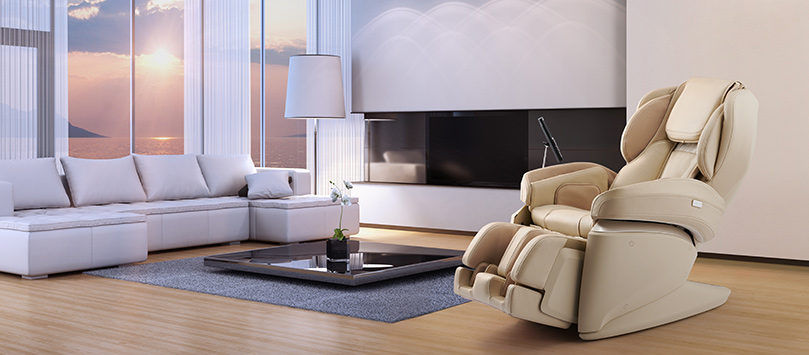
In 1954 Fujiiryoki Co., Ltd. became the world’s first company to design and manufacture a massage chair. Momi-dama (kneading balls) and air bags installed within the massage chair’s frame, mold and manipulate the human body. And while the company sells several different chairs types, presently its most sophisticated model is the Cyber Relax AS-840.
The AS-840 was developed to mimic the same movements as human hands. It has been programmed to perform 796 different kinds of massage in order to meet various specific needs, including “massaging the whole body” or “loosening up the lower back.” Two kneading balls located in the chair back are powered by four electric motors which control the massage intensity, the up-and-down movement, and the tapping and kneading functions. The 42 air bags within the chair expand and contract to stretch and twist the body being massaged. Before starting to massage, a chair sensor measures the line from the occupant’s shoulders to waist, so that it can then perform a massage suitable to the build of that particular person.
“Every time I design a new chair prototype, I test it on my own body. Sometimes, I get massaged all day long, for days on end. It’s during those times that I find it difficult to sleep at night because it feels like my body is still being massaged when I go to bed,” says FUJISHIRO Mitsuaki, product development team manager. “On my days off, I sometimes visit electric appliance stores to check out the massage chairs on display. And when I see someone praising one of ours, I get an extremely happy feeling,” he adds.
Rinnai Co., Ltd. and Toho Gas Ltd. jointly developed the RBHM-C415K1U, a bathroom heater/dryer that installs into the ceiling and also offers a massage function. Located above the tub, it drops hot water onto the person below creating a relaxing feeling.
“We developed this product, hoping to design a bathroom where you not only wash your body and warm yourself, but also relax and relieve your fatigue,” says SATO Shinjiro, a sales and planning department team member. “At hot springs and public bathhouses, you can get a similar massage called ‘utaseyu’ (hit with hot water) which uses this dripping technique. So I wanted to make that available at home, too.”
Those in charge of the product’s development actually went to a hot spring to capture the way the water fell using high-speed photography, further researching and measuring the amount and speed of the falling water. What they discovered was that the water formed round droplets when it hit the body. So, in order to reproduce this for household bathrooms, they repeated experiments with different nozzle shapes and various amounts of water.
“We were measuring and taking photographs at the hot spring very often, so some local people got suspicious and told us not to do it,” Sato laughs. “But when one of our customers told me that our product’s massages felt really good, then I knew that it was really worth all that trouble.”
Fujiiryoki Co., Ltd.
Rinnai Co., Ltd.Text: SAZAKI Ryo
[2011年2月号掲載記事]
日本人は働きすぎだとよく言われます。確かに、夜遅くまで残業する人や休日も出勤する人はめずらしくありません。そのため、疲れを癒す機械も発達しています。
株式会社フジ医療器は、1954年に世界で初めてマッサージチェアを作ったメーカーです。マッサージチェアの内部にはもみ玉やエアーバッグなどが入っており、これらが動いて人の体をもんだり叩いたりするのです。同社は何種類ものマッサージチェアを販売していますが、今最も高機能なのは「サイバーリラックス AS-840」です。
AS-840は、人の手によるマッサージと同じ動きをめざして開発されました。796種類のマッサージがプログラムされていて、「全身をもんでほしい場合」「腰をほぐしてほしい場合」などの要望に、細かく対応しています。背もたれ部分には2つのもみ玉が入っていて、4つのモーターにより、強弱、上下、叩く、もむの動作をコントロールします。42個入っているエアーバッグはふくらんだり縮んだりすることで、人の体を伸ばしたりひねったりします。マッサージを始める前には、座った人の体格に合ったマッサージができるよう、肩から腰までのラインをセンサーで計測することができます。
「チェアを試作するたびに、自分の体で効果を確かめます。試作品に一日中もまれている日が続くこともあります。この時期は、夜寝ようとしてもマッサージの感触がよみがえり、眠れなくてつらい思いをします」と、商品開発ユニット担当部長の藤代光明さんは言います。「休日も家電のお店へ行ってマッサージチェアコーナーをチェックしています。わが社のチェアをいいねとおっしゃる方がいると、嬉しくてたまりませんね」。
リンナイ株式会社はマッサージ機能がついた浴室暖房乾燥機(浴室を暖めたり乾燥させたりする製品)を、東邦ガス株式会社と共同開発しました。RBHM-C415K1Uは、お風呂場の天井に取り付けます。そして天井からお湯を落とし、お風呂に入っている人の体に当てて、マッサージをします。
「ただ体を洗ったり温めたりするだけでなく、リラックスして疲れを取るお風呂を開発できないか。そう思ってこの製品を作りました」と、営業企画部の佐藤伸二郎さんは言います。「温泉や銭湯には、『うたせ湯』といってこのような落ちてくるお湯のマッサージがあります。それを自宅でもできるようにしたいと考えました」。
開発担当者が実際に温泉へ行って、お湯が落ちる様子を高速写真で撮影したり、お湯の量や速度を測ったりして調べました。すると体にちょうど当たるとき、お湯が丸いしずくになっていることがわかりました。これを家庭のお風呂で再現できるように、ノズルの形やお湯の量などの実験をくりかえしました。
「温泉でしきりに測ったり撮影したりしていたので、地元の人に怪しまれて注意されてしまったことがあります」と佐藤さんは笑います。「でもお客様に、本当に気持ちがいいと言っていただいたとき、苦労したかいがあったと思いました」。
文:砂崎 良
-
[From February Issue 2011]
Approximately an hour outside Japan’s second largest city of Osaka, on the JR Tokaido Main Line, is Hemeji, a town rich in history and culture. Just a 15-minute walk along Otemae-dori, right outside JR Himeji Station, you will find Himeji Castle.
The castle hasn’t changed in 400 years. Throughout its long history, Himeji Castle has fortunately escaped the ravages of war. Because of the way it rises skyward, it is likened to a shirasagi (an egret) flying gracefully through the air, and is therefore also referred to as Hakuro Castle. In addition to being designated a national treasure because of its cultural value, Himeji Castle was also one of the first sites in Japan to be registered as World Heritage Site, along with Horyuji Temple (Nara Prefecture).
Today’s Himeji Castle was built by IKEDA Terumasa in 1609 at the beginning of the Edo period. Before that, TOYOTOMI Hideyoshi, who ruled Japan, was once based there.
The castle’s symbol is its keep (the central tower of a medieval castle, with a rooftop observation deck). Located on a hill, the castle contains several different keeps, with the main tower connecting to three small ones.
Seen from the outside, Himeji Castle’s highest tower seems five stories tall. But seen from within, it actually contains seven floors, a security design intended to trick attackers. Since feudal lords lived in the castle, they had to be prepared to defend themselves against outside enemies, therefore various security systems can be found within the castle.
Enemy troops entering through the “ote-mon,” or main gate, cannot easily get to the keep. Built throughout the castle are a maze of white walls that turn left, right, and 180 degrees around. Unless tourists follow the fixed route, they will most likely end up getting lost.
Following along the white walls, visitors pass through a number of gates. Some of these are designed so that soldiers hiding in the ceiling above can spear an enemy walking below. In the walls there are also square, triangular and round holes called “sama” through which guns are shot and arrows released. Although the holes are intended for defensive purposes, their design blends into the castle’s decor, adding to its overall beauty.
If the enemy somehow reaches the keep, even after slipping through the various traps, they will eventually come up against a high stone wall towering in front of them. Not only does the wall consist of stones piled high, but its sloping design, similar to an open fan (sensu) prevents the enemy from climbing up. This curved wall also creates a wider foundation that better supports the keep.
As the castle has never been attacked, these defense systems have never actually been tested. The only time that it was really in any danger was during World War II. Hoping to protect the castle, citizens covered it with black nets. However, despite their efforts, a bomb fell into the keep through a window, but fortunately never exploded.
The way Himeji Castle remained standing on such devastated land, provided symbolic emotional support for Himeji’s citizens during the reconstruction. In the castle’s surrounding park, cherry, maple and gingko trees have now been planted, decorating the castle in different colors throughout the seasons. During the cherry blossom viewing season, or for autumn’s changing leaves, the park crowds with families and groups of people who laugh cheerfully. Himeji Castle is the center of its citizens’ lives as well as a lasting symbol of peace.
“Aijo-kai” (the castle loving club) consists mostly of local elementary and middle school students who have been regularly cleaning the castle for over thirty years. Furthermore, since the castle was designated as a World Heritage Site, Himeji itself has developed into an international tourist destination where English signs can be found throughout the city.
In the castle’s vicinity are Hyogo Prefectural Museum of History, Himeji City Museum of Art, Himeji Center for Research into Castles and Fortifications, Himeji City Museum of Literature, and other cultural facilities where you can appreciate Himeji’s history and culture, all while seeing Himeji Castle from various angles. The retro-looking sightseeing bus is just one convenient method of transportation for tourists, costing 100 yen per adult, or 300 yen for a one-day pass.
Admission to Himeji Castle is 400 yen per adult, although discount tickets that include admission to the art museum and Koko-en (a Japanese-style garden) are also available. The street running from JR Himeji Station to the castle is lined with numerous souvenir shops and restaurants offering local specialties, as well as seafood from the Seto Inland Sea.
Traditional crafts unique to the town that developed around the castle include myochin hibachi (tongs), leather-made goods and himeyama ningyou (dolls). Local specialties include takoyaki, made with octopus from the Akashi Strait and plenty of eggs, and shioaji manju (salty steamed buns), made with salt from Akou. Also recommended are almond toast and Himeji oden, which are among the local dishes known as “Gotouchi Gurume (gourmet)” that are much talked about these days.
Himeji Castle has been under repair since October 2009. As of spring 2011, the main keep will remain covered from the outside. However, an elevator for tourists will be in operation so that tourists can see it while repairs are being done. Although you won’t be able to enjoy the keep’s view in its entirety, this will provide the opportunity to see it up close. All repair work is scheduled to be completed in March, 2015.
Himeji City
Virtual Tour – Himeji CastleText: OBAYASHI Hitoshi
[2011年2月号掲載記事]
日本第二の都市、大阪からJR東海道本線に乗ると約1時間で歴史と文化の町、姫路に着きます。JR姫路駅からまっすぐにのびる大手前通りを15分歩けば姫路城の正面に着きます。
今から400年前に建築されたままの姿です。長い歴史の中で幸運にも戦火をまぬがれてきました。空に浮かぶ姿が、羽を広げて大空を優雅に舞う白鷺を思わせることから別名「白鷺城」と呼ばれています。その歴史、文化的価値から国宝に指定されている上に、法隆寺(奈良県)とともに日本で最初に世界文化遺産に登録されました。
今の姫路城は江戸時代初期、1609年に池田輝政が建てたものです。その前は、全国を統一した豊臣秀吉もここを拠点としました。
城のシンボルとなるのが天守閣(城の中心部にもうけられた最も高い建物で、屋上に展望台のような部屋が作られている)です。小高い丘の上に大天守と3つの小天守がつながっています。
一番高い大天守は、外から見ると5階建てになっています。ところが内部は7階建てになっています。これは侵入者の目をあざむくための構造です。城は領主の住まいですから、敵に対する備えをしなければなりません。姫路城には防衛のための様々な工夫がみられます。
正面玄関の大手門から侵入した敵兵が天守閣にたどり着くのは簡単ではありません。城の中に張り巡らされた白壁が迷路を作っているかのようです。右や左に曲がるだけではなく、ぐるりと180度進行方向を変えなければならないところもあります。観光で訪れたときは順路に従って歩かないと迷子になってしまいます。
白壁に沿って進んでいくと、たくさんの門をくぐることになります。門の中には天井に隠れた兵が、下を歩く敵兵を頭の上から槍で突き刺すことができる構造になっているものがあります。白壁には狭間と呼ばれる、四角や三角や丸の穴があけられています。この穴から鉄砲や矢を放つのです。防衛のための穴ですが、配列は調和をうみ、城の美しさにもなっています。
様々な仕掛けをかいくぐり天守閣の下までたどり着いても、高い石垣が目の前に立ちはだかります。石が高く積みあがっているだけでなく、傾斜面は扇を開いたような曲線を描いています。これではよじ登ることなどできません。土台を広げる曲線構造で、天守閣を支えています。
数々の防衛上の仕掛けは、実際には戦場になることはなく効果を発揮することはありませんでした。唯一の危機は、第二次世界大戦のときでした。市民は城を守りたいと願い、城を黒い網でおおい隠したのです。ところが窓から天守閣に爆弾が入ってしまいました。しかし、それは幸運にも爆発しませんでした。
焼け野原に、以前と変わらない姿でたつ姫路城は、復興期には姫路市民の心の支えとなりました。城を取り囲む公園には今では桜、もみじ、イチョウが植えられ、四季折々の色彩で城を包みます。花見や紅葉のシーズンには、家族連れやグループでにぎわい歓声が絶えません。姫路城は市民の生活の中心であり、平和のシンボルとなっています。
地元の小・中学生を中心に30年以上前から「愛城会」がつくられ、定期的な清掃活動を行っています。また、世界文化遺産に登録されたことをきっかけに市内には英語の看板や案内板が作られ、国際的な観光地として充実してきています。
姫路城を取り囲むように県立歴史博物館、市立美術館、日本城郭研究センター、文学館などの文化施設があります。姫路城を様々な角度から眺めながら、姫路の歴史と文化を味わうことができます。レトロ調の観光バスが、大人一回乗車100円、一日券300円で観光客の足となっています。
美術館や好古園(和風庭園)とセットのお得なチケットもありますが、姫路城のみの入城料は大人400円です。JR姫路駅から城までの通り沿いには土産物屋や飲食店が多く立ち並び、姫路の名物や瀬戸内の海の幸に出あうことができます。
城を中心に発展した町ならではの伝統工芸品として、明珍火箸、皮細工、姫山人形などがあります。また、明石海峡で獲れるタコに卵をたっぷり使ったたこ焼、赤穂の塩を使った塩味まんじゅうなどが名物です。今話題のご当地グルメ、アーモンドトーストや姫路おでんもおすすめです。
姫路城は2009年10月から修理が行われています。2011年春から大天守はシートで覆われます。しかし、観光客用のエレベーターが設置され、天守閣や修理作業を見ることができます。天守閣の全景を見ることはできませんが、逆に天守閣を間近に見ることのできるチャンスです。工事が終わるのは2015年3月の予定です。
文:大林 等