-
Voice / Word Art – Hiragana Times August 2026 issue
Listen to the Audio:
What the Festival Leaves Behind
祭りが残す、生き方のかたち
What we call kotowaza is written 諺. Here we go beyond its original sense — to the Analects, waka poetry, and modern spoken Japanese — introducing the art of words (言技), where 言波 (voice waves) and 言の葉 (word leaves) intermingle and nurture our sensibilities. The Japanese have long marked the turning of the seasons, and the meeting of this world and the next, through their festivals. In this issue, please enjoy the word art (言技) born from Japan’s festival culture.
「ことわざ」は「諺」と書きます。ここでは諺にとどまらず、論語、和歌、現代口語まで、「言波」と「言の葉」が融合し感性を育ててきた言葉のアート(言技)を紹介します。日本人は古くから、祭りを通して季節の節目や、この世とあの世の出会いを刻んできました。今号では、日本の祭り文化から生まれた言技をお楽しみください。After the Festival — Already Too Late|後の祭り
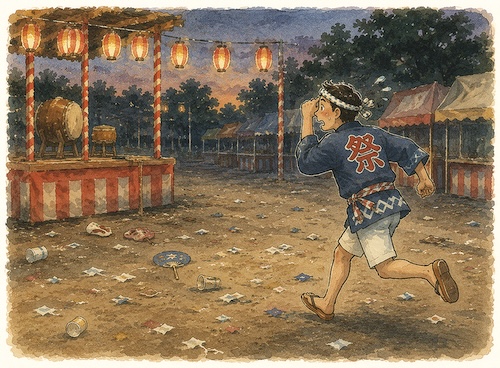
Ato no matsuri means missing the right moment — a regret that comes too late to change anything. Rush to the festival after it has ended, and the revelry is already gone.
「後の祭り」とは、時機を逃してしまい、今さら悔やんでも間に合わないことを指します。祭りが終わったあとに駆けつけても、賑わいはもうそこにはありません。The phrase has several proposed origins. Some trace it to Kyoto’s Gion Festival, whose “after-festival” was quieter than the first; others to the emptiness of arriving the day after the celebration is done. And there is one more: that the matsuri for the dead — the rites of memorial — can never be offered in time once a person is already gone.
語源には諸説あります。祇園祭の後祭が前祭ほど華やかでなかったからとも、祭りの済んだ翌日では何も残っていないからとも言われます。そしてもう一つ――亡き人を悼む祭り、すなわち供養は、逝ってしまってからでは間に合わない、という説もあります。Perhaps that is why Obon exists — so that our feelings for those who have passed never become entirely “too late.” Once a year, we light the welcoming fire and see the spirits off with the parting flame. The Japanese keep a season for welcoming back, once more, what we could not reach in time.
だからこそ、お盆があるのかもしれません。逝った人への想いが、すっかり「後の祭り」になってしまわないように。年に一度、迎え火を灯し、送り火で見送る。日本人は、間に合わなかったものを、もう一度迎え直す季節を持っているのです。Ato no matsuri is usually a word of resignation. Yet turned over, it teaches how much it matters to do all we can, and to speak our hearts, while there is still time. To leave no regret behind — this, too, is a wisdom the festival has handed down.
「後の祭り」は、ふだんは諦めの言葉です。けれど裏を返せば、間に合ううちに手を尽くし、想いを伝えておくことの大切さを教えてくれます。悔いを残さないこと――それもまた、祭りが伝えてきた知恵なのです。
■ Meaning / 意味
Ato: after something has already passed.
後(あと): 物事が過ぎ去ったあと。Matsuri: a rite honoring gods or spirits; by extension, the peak moment itself.
祭り(まつり): 神や霊をまつる行事。転じて、絶好の機会そのもの。■ Usage / 使う場面
Kenta: They say the early-bird tickets are already gone.
ケンタ: 早割チケット、もう終わっちゃったって。Misaki: What? I should have signed up yesterday…
ミサキ: えっ、昨日申し込んでおけばよかった…。Kenta: Saying that now is ato no matsuri — the festival’s already over.
ケンタ: 今ごろ言っても後の祭りだよ。Misaki: You’re right. Next time I’ll act right away.
ミサキ: そうだよね。次はすぐ動くよ。Kenta: That’s the way. The trick is to leave no regret.
ケンタ: それがいちばん。悔いを残さないのがコツ。Misaki: Enjoy the festival before it ends, huh.
ミサキ: 祭りは終わる前に楽しまなきゃ、だね。Online Japanese Language Courses
Learn Japanese The Fun Way!
🎁 1 Month FREE for Hiragana Times Subscribersひらがなタイムズ定期購読者は1ヶ月無料でご受講いただけます
Start Learning → -

Word Leave – Hiragana Times August 2026 issue
Listen to the Audio:
Words the Festival Binds
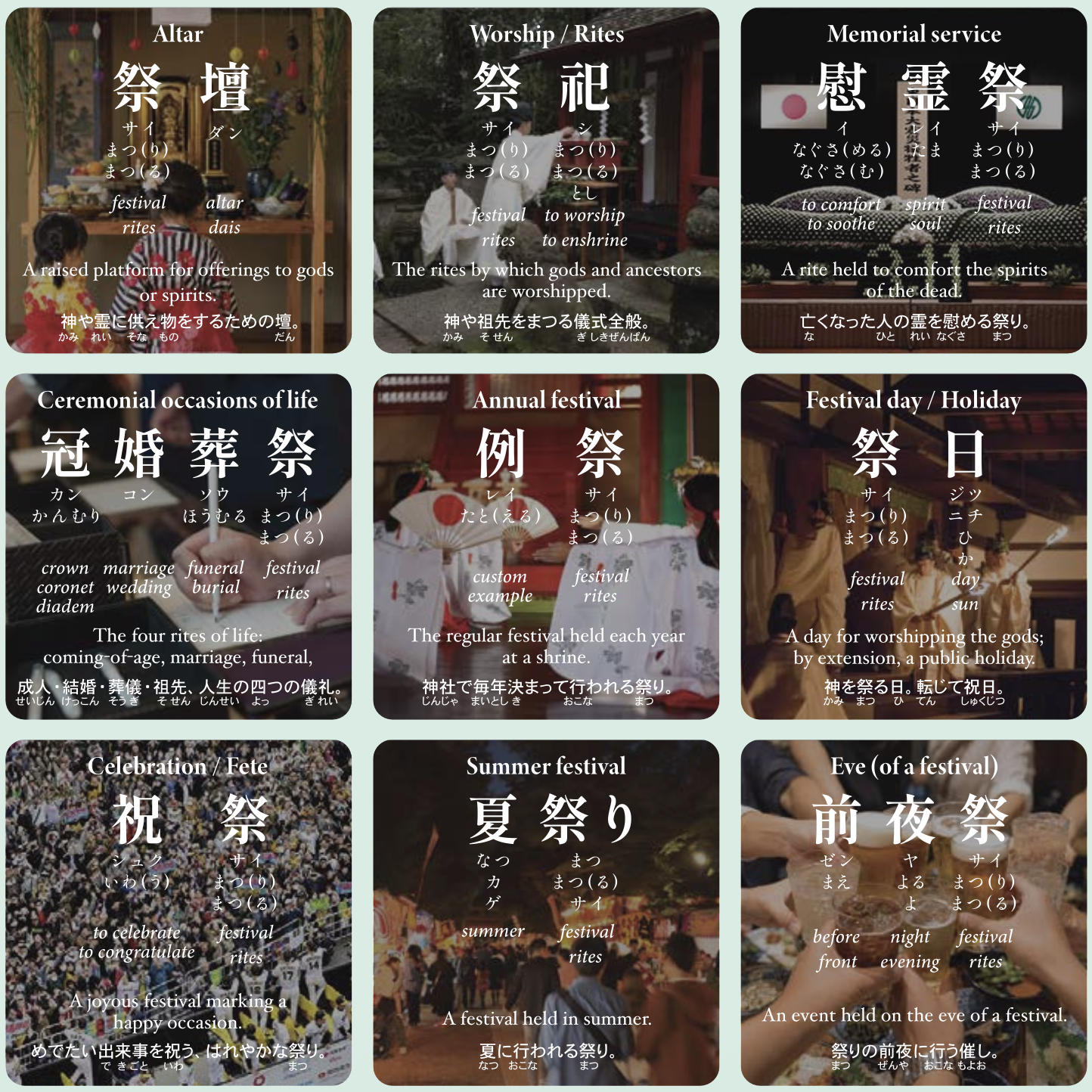
祭が結ぶ言の葉
Words are like leaves on a tree. They are colored by people’s thoughts and emotions, and carried from one person to another. The reason the character for “leaf” is used in the word kotoba (words) is believed to be connected to the Japanese reverence for nature. Japan’s oldest poetry anthology is also titled the Manyoshu (“Collection of Ten Thousand Leaves”). In this issue, in connection with the magazine’s theme, we explore words related to festivals and trace how the Japanese have faced their gods and ancestors.
言葉はまるで木の葉のようです。人の心や考えに色づけられ、他者へと伝わっていきます。「ことば」に「葉」という漢字を当てた背景には、日本人の自然崇拝が関係していると考えられます。日本最古の歌集も『万葉集』と名付けられています。今号では、本誌のテーマにあわせ、「祭」にまつわる言葉を通して、日本人が神々や祖先とどう向き合ってきたかをたどっていきます。
-
Nihongo Do | Word Art – Hiragana Times July 2026 issue
Listen to the Audio:
『言技』 Voice / Word Art
Food, and the Shape of a Life
食(しょく)が映(うつ)す、生(い)き方(かた)のかたちWhat we call kotowaza is written 諺. Here we go beyond its original sense — to the Analects, waka poetry, and modern spoken Japanese — introducing the art of words (言技), where 言波 (voice waves) and 言の葉 (word leaves) intermingle and nurture our sensibilities. The Japanese have long found wisdom, restraint, and beauty in the act of eating. In this issue, please enjoy the word art (言技) born from Japan’s rich culture of food.
「ことわざ」は「諺(ことわざ)」と書(か)きます。ここでは諺(ことわざ)にとどまらず、論語(ろんご)、和歌(わか)、現代口語(げんだいこうご)まで、「言波(ことなみ)」と「言(こと)の葉(は)」が融合(ゆうごう)し感性(かんせい)を育(そだ)ててきた言葉(ことば)のアート(言技(ことわざ))を紹介(しょうかい)します。日本人(にほんじん)は古(ふる)くから、食(た)べるという営(いとな)みの中(なか)に、知恵(ちえ)や節度(せつど)、美(うつく)しさを見(み)いだしてきました。今号(こんごう)では、日本(にほん)の豊(ゆた)かな食文化(しょくぶんか)から生(う)まれた言技(ことわざ)をお楽(たの)しみください。Eating Until Eight-Tenths Full Keeps the Doctor Away
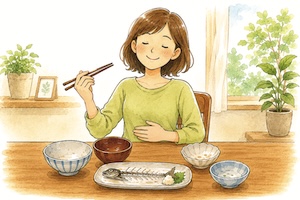
腹八分目(はらはちぶんめ)に医者(いしゃ)いらずEating without overdoing it, and stopping when you are about eight-tenths full, leads to good health. In Japan, it has long been believed that moderation is best in all things.
食(た)べ過(す)ぎず、腹八分目(はらはちぶんめ)でやめることが健康(けんこう)につながる――日本(にほん)では古(ふる)くから、何事(なにごと)も「ほどほど」が良(よ)いとされてきました。This saying points to more than just the amount we eat. The Japanese have found beauty in leaving something unfilled — in vessels, gardens, waka poetry, and even conversation.
この言葉(ことば)が示(しめ)すのは、食事(しょくじ)の量(りょう)だけではありません。日本人(にほんじん)は、器(うつわ)や庭(にわ)、和歌(わか)、そして会話(かいわ)の中(なか)にも、すべてを満(み)たしきらない余白(よはく)の美(うつく)しさを見(み)いだしてきました。The same can be said of words. Rather than defeating the other person in argument, one leaves space for both sides to stand. The Japanese sense of “not saying everything” also carries the aesthetics of hara hachibunme.
それは言葉(ことば)も同(おな)じです。相手(あいて)を言(い)い負(ま)かすのではなく、互(たが)いの余白(よはく)を残(のこ)す。日本語(にほんご)に息(い)づく「言(い)い切(き)らない」感覚(かんかく)にも、「腹八分目(はらはちぶんめ)」の美学(びがく)が通(とお)っています。This saying is not only wisdom for health, but also a reflection of a Japanese way of life: knowing what is enough and finding meaning in the space left unfilled.
この言葉(ことば)は、健康(けんこう)のための知恵(ちえ)であると同時(どうじ)に、足(た)るを知(し)り、余白(よはく)に意味(いみ)を見出(みいだ)してきた日本人(にほんじん)の生(い)き方(かた)を映(うつ)した言葉(ことば)でもあるのです。■ Meaning / 意味
Hara hachibunme: Finishing a meal while leaving a little room in the stomach.
腹八分目(はらはちぶんめ): お腹(なか)が少(すこ)し余(あま)るくらいで食事(しょくじ)を終(お)えること。Isha irazu: Being healthy enough not to need a doctor.
医者(いしゃ)いらず: 医者(いしゃ)が必要(ひつよう)ないほど健康(けんこう)でいられること。■ Usage / 使(つか)う場面(ばめん)
A: Shall we order something else?
A: もう少(すこ)し何(なに)か頼(たの)む?B: No, I think this is enough for today.
B: いや、今日(きょう)はこのくらいで。A: Oh? Are you on a diet?
A: あれ、ダイエット中(ちゅう)?B: You know what they say, “Eating until eight-tenths full keeps the doctor away.”
B: 「腹八分目(はらはちぶんめ)に医者(いしゃ)いらず」って言(い)うでしょ。A: I see. I tend to eat too much.
A: なるほど。つい食(た)べ過(す)ぎちゃうんだよね。B: Exactly. Stopping at eight-tenths full is hard.
B: そう。腹八分(はらはちぶん)でやめるのが難(むずか)しいよね。
Nihongo Do | Word Leave – Hiragana Times July 2026 issue
Listen to the Audio:
『言葉』/ Word Leave
Words Nourished by Food
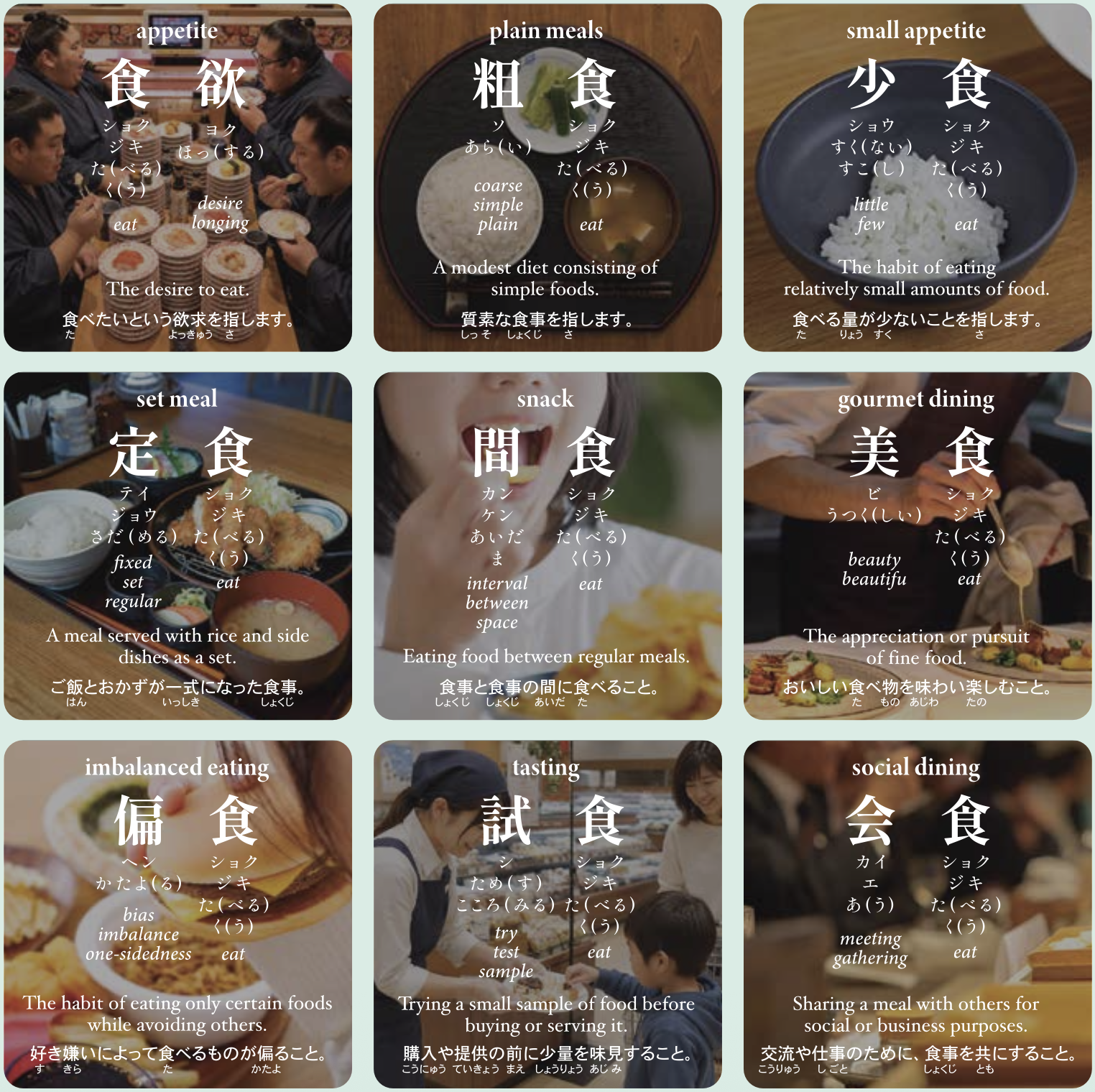
食(しょく)に育(はぐく)まれた言(こと)の葉(は)Words are like leaves on a tree. They are colored by people’s thoughts and emotions, and carried from one person to another. The reason the character for “leaf” is used in the word kotoba (words) is believed to be connected to the Japanese reverence for nature. Japan’s oldest poetry anthology is also titled the Manyoshu (“Collection of Ten Thousand Leaves”).
言葉(ことば)はまるで木(こ)の葉(は)のようです。人(ひと)の心(こころ)や考(かんが)えに色(いろ)づけられ、他者(たしゃ)へと伝(つた)わっていきます。「ことば」に「葉(は)」という漢字(かんじ)を当(あ)てた背景(はいけい)には、日本人(にほんじん)の自然崇拝(しぜんすうはい)が関係(かんけい)していると考(かんが)えられます。日本最古(にほんさいこ)の歌集(かしゅう)も『万葉集(まんようしゅう)』と名付(なづ)けられています。In this issue, in connection with the magazine’s theme, we explore words related to food and the sensibilities they have nurtured in Japanese daily life.
今号(こんごう)では、本誌(ほんし)のテーマにあわせ、「食(しょく)」にまつわる言葉(ことば)を通(とお)して、日本人(にほんじん)の日々(ひび)の暮(く)らしに育(はぐく)まれてきた感性(かんせい)をたどっていきます。Online Japanese Language Courses
Learn Japanese The Fun Way!
🎁 1 Month FREE for Hiragana Times Subscribersひらがなタイムズ定期購読者(ていきこうどくしゃ)は1ヶ月(いっかげつ)無料(むりょう)でご受講(じゅこう)いただけます
Start Learning →
[NIHONGO DO – Voice-word Art – June 2026 Issue]
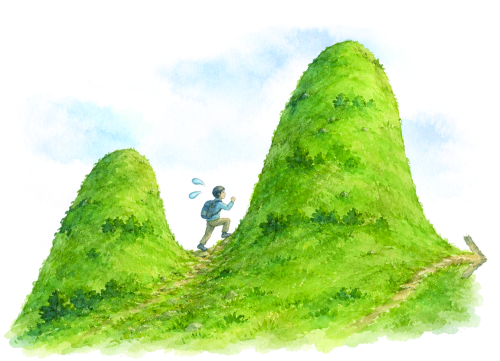
Mountains, and the Shape of a Life
山(やま)が語(かた)る、人生(じんせい)のかたちWhat we call kotowaza is written 諺. Here we go beyond its original sense — to the Analects, waka poetry, and modern spoken Japanese — introducing the art of words (言技), where 言波 (voice waves) and 言の葉 (word leaves) intermingle and nurture our sensibilities. The Japanese, living in a “land of mountains,” have created a wealth of mountain-inspired expressions. In this issue, please enjoy the word art (言技) born only of mountainous Japan.
「ことわざ」は「諺(ことわざ)」と書(か)きます。ここでは諺(ことわざ)にとどまらず、論語(ろんご)、和歌(わか)、現代口語(げんだいこうご)まで、「言波(ことなみ)」と「言(こと)の葉(は)」が融合(ゆうごう)し感性(かんせい)を育(そだ)ててきた言葉(ことば)のアート(言技(ことわざ))を紹介(しょうかい)します。山(やま)の国(くに)に暮(く)らしてきた日本人(にほんじん)は、山(やま)にまつわる豊(ゆた)かな表現(ひょうげん)を数多(かずおお)く生(う)み出(だ)してきました。今号(こんごう)では、山(やま)の国(くに)・日本(にほん)ならではの言技(ことわざ)をお楽(たの)しみください。
Life has its ups and downs.
人生(じんせい)、山(やま)あり谷(たに)あり。
In life, there are smooth times and there are hard times. This is an expression that overlays those ups and downs onto the landscape of mountains and valleys.
人生(じんせい)には、順調(じゅんちょう)な時(とき)もあれば、苦(くる)しい時(とき)もあります。その浮(う)き沈(しず)みを、山(やま)と谷(たに)の風景(ふうけい)に重(かさ)ねて表(あらわ)した言葉(ことば)です。
Japan is a land of mountains. Since ancient times, people have lived their lives crossing peaks and traversing valleys. In time, “mountain” came to symbolize hardship or a great turning point, and “valley” a downturn or sorrow.
日本(にほん)は山(やま)の多(おお)い国(くに)です。人々(ひとびと)は古(ふる)くから山(やま)を越(こ)え、谷(たに)を渡(わた)りながら暮(く)らしてきました。そのため、「山(やま)」は困難(こんなん)や大(おお)きな節目(ふしめ)を、「谷(たに)」は落(お)ち込(こ)みや苦(くる)しみを象徴(しょうちょう)する言葉(ことば)として使(つか)われるようになりました。
Yet mountains open up the view, and valleys let the water flow. The phrase yama ari, tani ari carries a distinctly Japanese sensibility: the will to walk on, embracing life’s very changes.
しかし、山(やま)があるからこそ景色(けしき)が広(ひろ)がり、谷(たに)があるからこそ水(みず)が流(なが)れます。「山(やま)あり谷(たに)あり」という言葉(ことば)には、人生(じんせい)の変化(へんか)そのものを受(う)け入(い)れながら歩(あゆ)んでいこうとする、日本人(にほんじん)らしい感覚(かんかく)が込(こ)められています。
■ Meaning / 意味(いみ)
Yama ari: there are good times and great turning points.
山(やま)あり:良(よ)い時期(じき)や大(おお)きな節目(ふしめ)がある。
Tani ari: there are also hard times and moments of decline.
谷(たに)あり:苦(くる)しい時期(じき)や落(お)ち込(こ)む時(とき)もある。
■ Usage / 使(つか)う場面(ばめん)
A: How’s the new project going?
A: 新(あたら)しいプロジェクト(project)は順調(じゅんちょう)?
B: Well, it’s been yama ari, tani ari — ups and downs. We’re right at the yamaba (climax) now.
B: いやあ、山(やま)あり谷(たに)ありだよ。今(いま)ちょうど山場(やまば)でさ。
A: Sounds like the challenges are yamazumi (piled up like a mountain)?
A: 課題(かだい)が山積(やまづ)みって感(かん)じ?
B: Yeah. Everyone’s got a bit of yamakke (an adventurous, risk-taking spirit), so we tend to aim big.
B: そう。みんな山(やま)っ気(け)あるから、つい大(おお)きく構(かま)えちゃってね。
A: But once you get over the mountain, things should settle down, right?
A: でも、山(やま)を越(こ)えれば落(お)ち着(つ)くんじゃない?
B: I hope so. This time we can’t just rely on yamakan (gut instinct) and yama wo haru (take a wild bet), so we’re moving carefully.
B: だといいけどね。今回(こんかい)は山勘(やまかん)だけで山(やま)を張(は)れないから、慎重(しんちょう)に進(すす)めてるよ。
This article is from the June 2026 issue of Hiragana Times.
この記事(きじ)は、月刊誌(げっかんし)『ひらがなタイムズ』2026年(ねん)6月号(がつごう)より掲載(けいさい)しています。
[NIHONGO DO – Word Leaves – June 2026 Issue]
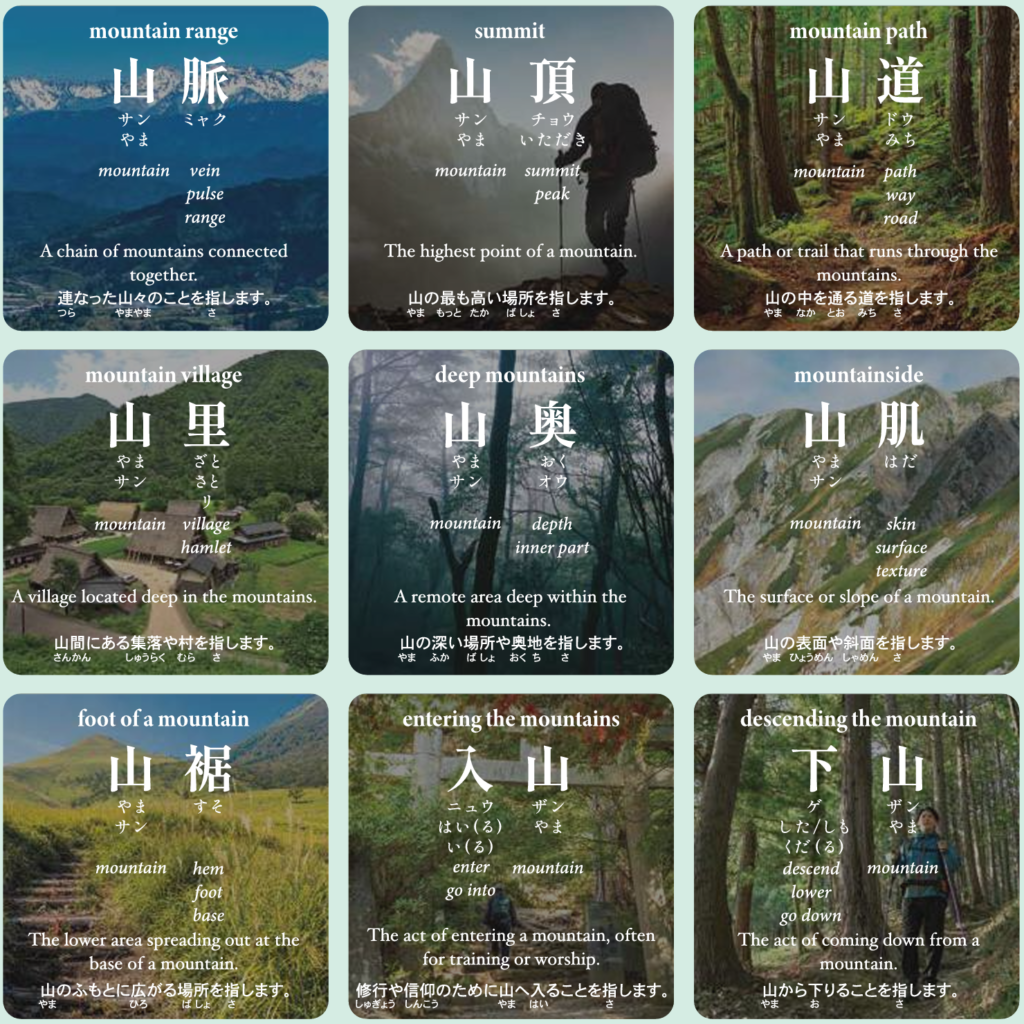
Word Breathing in the montains
山に息づく言の葉Words are like leaves on a tree. They are colored by people’s thoughts and emotions, and carried from one person to another. The reason the character for “leaf” is used in the word kotoba (words) is believed to be connected to the Japanese reverence for nature. Japan’s oldest poetry anthology is also titled the Manyoshu (“Collection of Ten Thousand Leaves”).
In this issue, in connection with the magazine’s theme, we explore words related to mountains and the spirit and sensibilities they have inspired in Japanese culture.言葉はまるで木の葉のようです。人の心や考えに色づけられ、他者へと伝わっていきます。「ことば」に「葉」という漢字を当てた背景には、日本人の自然崇拝が関係していると考えられます。日本最古の歌集も『万葉集』と名付けられています。今号では、本誌のテーマにあわせ、「山」にまつわる言葉を通して、日本人の感性や精神文化をたどっていきます。
This article is from the June 2026 issue of Hiragana Times.
この記事は、月刊誌『ひらがなタイムズ』2026年6月号より掲載しています。
[NIHONGO DO – Voice-word Art– May 2026 Issue]
“Good feeding before good breeding.” – When people are well fed and clothed, they come to know courtesy and propriety.
「衣食(いしょく)足(た)りて礼節(れいせつ)を知(し)る」– 国(くに)の品格(ひんかく)は、まず民(たみ)の暮(く)らしの安定(あんてい)から始(はじ)まる。This “Voice-Word Art” section introduces seasonal words related to the time of year. Enjoy the timeless beauty of these artistic expressions.
この「言技(ことわざ)」セクションでは、季節(きせつ)にちなんだ季語(きご)を紹介(しょうかい)しています。時代(じだい)を超(こ)えて響(ひび)く言葉(ことば)のアート(言技(ことわざ))をお楽(たの)しみください。
Good feeding before good breeding.
衣食足(いしょくた)りて礼節(れいせつ)を知(し)る
“Ishoku tarite reisetsu wo shiru.”“Ishoku tarite reisetsu wo shiru” is an expression meaning that only when clothing and food are sufficient do people come to understand courtesy and proper conduct. In other words, human morality and dignity can be nurtured only when they rest on the foundation of a stable daily life.
「衣食足(いしょくた)りて礼節(れいせつ)を知(し)る」とは、衣服(いふく)と食(た)べ物(もの)が満(み)たされてこそ、人(ひと)は礼儀(れいぎ)や節度(せつど)をわきまえるようになる、という意味(いみ)のことばです。言(い)い換(か)えれば、人(ひと)としてのモラル(morality)や品位(ひんい)は、まず暮(く)らしの安定(あんてい)という土台(どだい)があってこそ育(はぐく)まれる、ということです。
In this month’s Japan Style feature, Emperor Nintoku is introduced as a ruler who first turned his attention to the people’s food. The well-known story tells how, seeing no smoke rising from the hearths of the people, he realized their hardship and chose to lighten their burden. Only when the lives of the people are protected can a nation become stable, and only then can great undertakings and culture begin to flourish. Even those magnificent kofun may be seen as having been built upon such a foundation of prosperity.
今月号(こんげつごう)の Japan Style で紹介(しょうかい)した仁徳天皇(にんとくてんのう)も、まず民(たみ)の「食(しょく)」に目(め)を向(む)けました。民(たみ)のかまどに煙(けむり)が立(た)たないのを見(み)て、その困窮(こんきゅう)を察(さっ)し、負担(ふたん)を軽(かる)くしたという逸話(いつわ)はよく知(し)られています。民(たみ)の暮(く)らしが守(まも)られてこそ、国(くに)は安定(あんてい)し、その先(さき)に大(おお)きな営(いとな)みや文化(ぶんか)も育(そだ)っていく――あの壮大(そうだい)な古墳(こふん)も、そうした豊(ゆた)かな土台(どだい)の上(うえ)に築(きず)かれたものと見(み)ることができるでしょう。
Eiichi Shibusawa, whose portrait appears on today’s 10,000-yen note and who is often called the father of Japanese capitalism, is known for the phrase, “The Analects in one hand, the abacus in the other.” In those words lies the idea that while morality and compassion for others must be cherished, economic activity must also be kept moving so that such ideals do not remain mere abstractions.
現在(げんざい)の一万円札(いちまんえんさつ)の肖像(しょうぞう)であり、「日本資本主義(にほんしほんしゅぎ)の父(ちち)」とも呼(よ)ばれる渋沢栄一(しぶさわえいいち)は、「片手(かたて)に論語(ろんご)、片手(かたて)にそろばん(abacus)」という言葉(ことば)で知(し)られています。そこには、道徳(どうとく)や人(ひと)への思(おも)いやりを大切(たいせつ)にしながらも、それを空論(くうろん)に終(お)わらせないために、経済(けいざい)をしっかりと回(まわ)していくことの重要性(じゅうようせい)が込(こ)められています。
Another famous saying comes from Ninomiya Sontoku, known for the philosophy of Hōtoku: “Economy without morality is a crime; morality without economy is empty talk.” A society cannot be sustained by moral teachings alone. Yet if it pursues profit alone, it will inevitably fall into ruin. What matters is to uphold both morality and economy, both ideals and reality.
また、報徳思想(ほうとくしそう)で知(し)られる二宮尊徳(にのみやそんとく)の「道徳(どうとく)なき経済(けいざい)は犯罪(はんざい)であり、経済(けいざい)なき道徳(どうとく)は寝言(ねごと)である」という言葉(ことば)も有名(ゆうめい)です。人(ひと)の道(みち)を説(と)くだけでは社会(しゃかい)は成(な)り立(た)たず、かといって利益(りえき)だけを追(お)えば、そこには荒廃(こうはい)が生(う)まれます。大切(たいせつ)なのは、道徳(どうとく)と経済(けいざい)、理想(りそう)と現実(げんじつ)、その両方(りょうほう)を支(ささ)えることなのでしょう。
If daily life is not secure, it is difficult for people to maintain calmness, compassion, and the dignity proper to human beings. The phrase “Ishoku tarite reisetsu wo shiru” is a kotowaza that teaches this simple yet profoundly essential truth.
まず日々(ひび)の暮(く)らしが安定(あんてい)していなければ、人(ひと)は落(お)ち着(つ)きや思(おも)いやり、そして人(ひと)としての品位(ひんい)を十分(じゅうぶん)に保(たも)つことが難(むずか)しい――「衣食足(いしょくた)りて礼節(れいせつ)を知(し)る」ということばは、そうした素朴(そぼく)でありながらも、きわめて本質的(ほんしつてき)な現実(げんじつ)を教(おし)えてくれる言技(ことわざ)です。
This article is from the May 2026 issue of Hiragana Times.
この記事(きじ)は、月刊誌(げっかんし)『ひらがなタイムズ』2026年(ねん)5月号(がつごう)より掲載(けいさい)しています。
[NIHONGO DO – Word Leaves – May 2026 Issue]
Seasonal Words: Japan’s May, Satsuki — A Month When Life Grows and Gratitude Blooms.
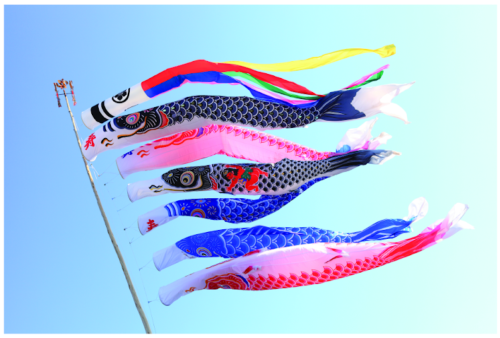
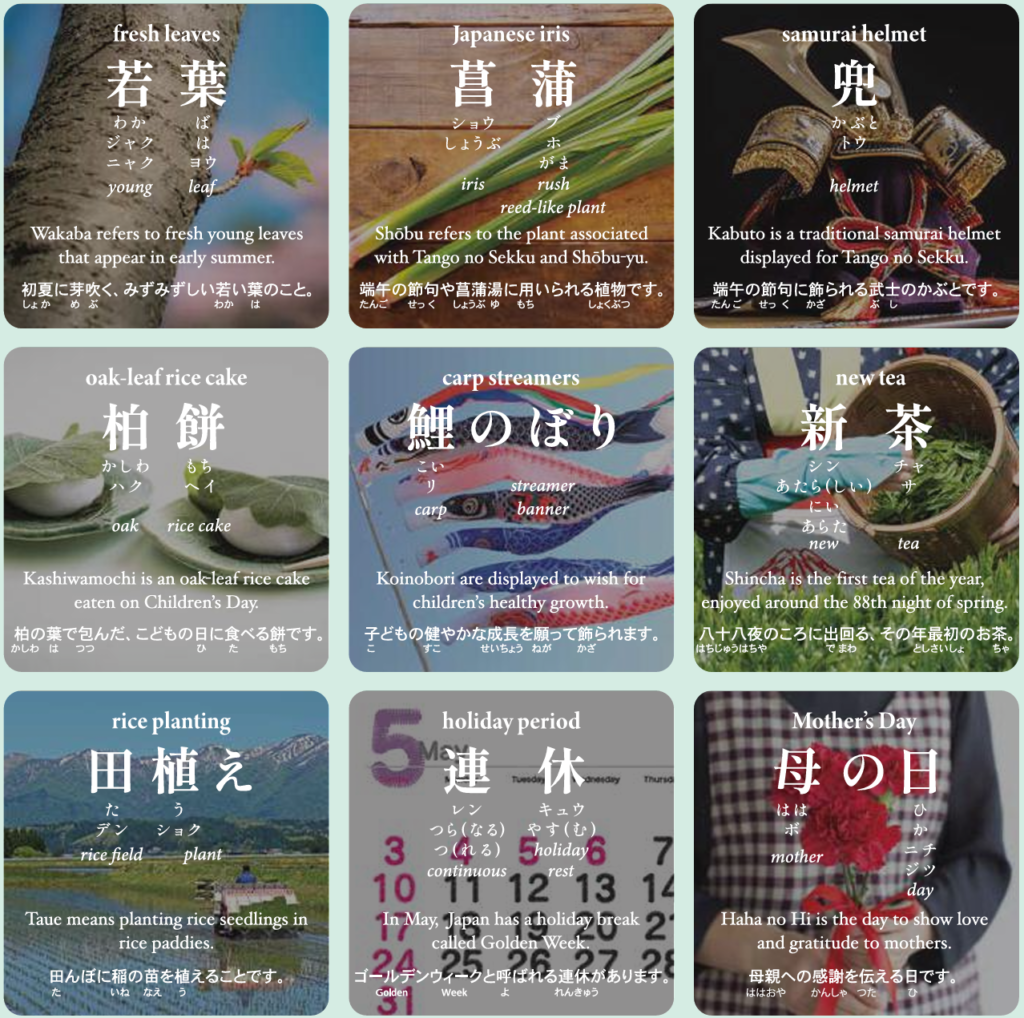
季節の言の葉:日本の5月「皐月(さつき)」— 命が伸び、感謝が芽生える月。In May, Japan fills with wishes for children’s healthy growth. Through kabuto, koinobori, shōbu, kashiwamochi, and chimaki, Tango no Sekku has long carried prayers for strength and safe passage into the future. Yet May also brings Mother’s Day, gently turning our hearts toward gratitude for the mothers who watch over that growth with love and devotion. In this issue, we have gathered words that hold both the vigor of life reaching upward and the quiet warmth of thankfulness.
5月の日本には、子どもたちの健やかな成長を願う思いが満ちています。兜や鯉のぼり、菖蒲、柏餅、ちまきに託されてきたのは、強く、無事に、未来へ伸びていってほしいという祈りです。そして5月はまた、そうした成長をやさしく見守り、支えてきた母へ感謝を向ける「母の日」の季節でもあります。この5月号では、上へ上へと伸びる命の勢いと、それを包み込む感謝のぬくもりを映す言葉を集めてみました。
This article is from the May 2026 issue of Hiragana Times.
この記事は、月刊誌『ひらがなタイムズ』2026年5月号より掲載しています。
[NIHONGO DO – Voice-word Art– April 2026 Issue]
‘Only by throwing oneself away, is there also a shallow to float.’ — When you make up your mind and face reality, a path may open.
今月の言技:「身を捨ててこそ浮かぶ瀬もあれ」― 覚悟を決めたとき、道がひらける。
In this month’s “Voice-Word Art” section, we revisit a phrase featured in “Japan Savvy” and take a closer look at it. We hope you’ll savor the deeper meaning behind the words in your own way.
今月の「言技」セクションでは、”Japan Savvy” で触れた言葉を取り上げ、深掘りしていきます。言葉の奥にある深い意味を、あなたなりの感性で味わってみてください。
‘Only by throwing oneself away, is there also a shallow to float.’
「身を捨ててこそ浮かぶ瀬もあれ」
The more you think, “I want to protect myself,” “I want to live,” “I don’t want to lose,” the more fear clings to you. But once you let go—once you stop clinging—there’s suddenly nothing to fear. When you’re cornered, if you make up your mind and accept reality as it is, a path can open.
「自分を守りたい」「生きたい」「負けたくない」と思えば思うほど、恐怖はまとわりつく。でも、いったん身を捨ててしまえば、怖いものはなくなる。追い詰められたとき、覚悟を決めて現実をまるごと受け入れれば道がひらける——
This proverb offers exactly that kind of calmness and courage. For example, akirameru (“to give up”) is sometimes said to be linked to the idea of “see clearly” — not quitting in a reckless, defeated way, but looking the situation straight in the eye and accepting it. And “to cast yourself away” here does not mean rushing into reckless self-sacrifice. Rather than struggling against the current, trying to handle everything on your own, it points to the moment you loosen your grip, surrender to the flow, and suddenly stay afloat—only to find your feet touching the shallows before you know it.
この言葉は、そんな冷静さと勇気を与えてくれます。例えば、「諦める」は、投げやりに断念することではなく、「明らかに見る」に通じると言われます。状況を澄んだ目で見定めて受け入れる、という感覚です。また、ここで言う「身を捨てる」は、無謀に自己犠牲へ突っ込むことではありません。「自分だけで何とかしよう」と川の流れに抗って足掻くのではなく、力を抜いて流れに身を委ねたとき、ふっと体が浮き、気づけば浅瀬に足がつく——。そんな情景を表しています。
Although the source of this line is debated, it is also handed down as part of a poem linked to Kūya Shōnin, a mid-Heian-period figure remembered for walking Kyoto’s streets chanting the nembutsu. Rather than carrying everything alone through “self-power” (jiriki), it points to accepting your limits, noticing the “other-power” (tariki) that supports you—connections, circumstances, unseen workings—and receiving it with gratitude. Loosen the “self-power” grip on your own ideas and past experience, and things can begin to move—one layer of meaning this line holds.
この句の出典には諸説ありますが、平安中期、京の町をひたすら念仏を唱えながら歩き回り続けたと伝えられる空也上人にまつわる歌として伝わっています。
“自力”で抱え込むのではなく、自分の限界を受け入れ、支えてくれている“他力”(縁・環境・目に見えないはたらき)に気づき、感謝して受け取る。自分の考えや過去の経験にしがみつく“自力”の手をほどいた時、物事は動き出す——そんな含みがあります。In Buddhism, there is a teaching called engi (dependent arising). It holds that nothing exists on its own: everything comes into being through connection, and is always shifting—changing shape as it goes. This “network of connection without a fixed substance” is what Buddhism calls kū (“emptiness”). To loosen the grip of what you’ve been clinging to—that is, to cast yourself away. When you truly recognize and accept engi, you can float in this world of kū… and be carried along.
仏教には「縁起」という教えがあります。この世界は、何ひとつ単体で存在しているのではなく、すべてはつながり合って成り立ち、いつも形を変えながらゆらいでいる——という考え方です。
その「実体のないつながりのネットワーク」を、「空」と呼びます。握りしめていた執着を手放す。つまり、身を捨てる——。「縁起」を自覚し、受け入れたとき、人は「空」の世界に浮かぶことができる。そして、運ばれていくのです。
This article is from the April 2026 issue of Hiragana Times.
この記事は、月刊誌『ひらがなタイムズ』2026年4月号より掲載しています。
This article is from the April 2026 issue of Hiragana Times.
この記事は、月刊誌『ひらがなタイムズ』2026年4月号より掲載しています。
[ NIHONGO DO – Word Leaves – April 2026 Issue]
Seasonal Words: Japan’s April, Uzuki — A Month When a New Everyday Life Begins.
季節の言の葉:日本の4月「卯月(うづき)」— 新しい日常が始まる月。The name Uzuki is said to come, in one view, from U (the Rabbit), the fourth sign of the zodiac. At the same time, it also carries a seasonal feel: Uetsuki, a month for tending the rice fields, and the time when unohana—the white blossoms of utsugi—begin to appear. The sound “u” itself is also said to have a resonance of “coming into being,” echoing words like ui (“first”) and ubu (“newborn”).
卯月という名の由来は、十二支の四番目「卯」に由来するとされる一方、卯に手を入れる「植月」や、白い房をつける「卯の花」の白という季節感も含まれます。さらに「う」の音には、はぐくみを「うみ」、を「むかしる」音があるとも言われます。この4月号では、そんな「始まり」に寄り添う言葉を集めてみました。
This article is from the April 2026 issue of Hiragana Times.
この記事は、月刊誌『ひらがなタイムズ』2026年4月号より掲載しています。

Past Articles Category “Nihongo-Dou | 日本語道”







- Copyright 2020 Hiragana Times