-
[From June Issue 2013]
Fukui Prefecture is located in the northwest of the Chubu region. Rich in natural resources, since it faces the Japan Sea, it also has an abundance of seafood such as echizen crab, wakasa puffer fish and amaebi shrimp. Divided into two regions by the Kinome pass; to the east is Reihoku and to the west is Reinan. Reihoku – known as Echizen in the past – has deep snows in the wintertime. Because of its proximity to Kyoto, Reinan – also known as Wakasa – has been heavily influenced by the former capital’s culture.
Located in Reihoku on the Fukui Plain is Fukui City, the capital of the prefecture. Within the city beside the Asuwagawa river is Yokokan, the villa of the Matsudaira family, who formerly ruled the Fukui domain. These Edo era buildings have been reconstructed and it’s also possible to enjoy the beautiful gardens there. Visitors can see what life was like in the old days deep in the snow country at Osagoe Minka En, where five dismantled private houses from the Edo era, have been reconstructed.
In the suburbs of Fukui City are the Ichijoudani-asakurashi Ruins; a former castle town from which the Asakura family ruled over Echizen during the Warring States period. The family thrived for a century until they were overthrown by ODA Nobunaga in the War of Unification. As you stroll through the valley along the reconstructed streets, past the Asakura mansion ruins and its gardens, you almost get the sense that you have travelled back in time to that era. Also impressive is Japan’s oldest remaining castle tower, Maruoka Castle, in the neighboring city of Sakai.
Located further inland is Katsuyama City, a “dinosaur town” that attracts international attention for its excavations of dinosaurs and research into fossils. Shaped like a huge egg, Fukui Prefectural Dinosaur Museum has an impressive collection of more than 40 dinosaur skeletons on display. There is a lot to see, what with its enormous amount of specimens on display and large scale dioramas.
If you’re interested in Zen, don’t miss out on a visit to Eiheiji temple. Built around 770 years ago by the Buddhist monk, Dogen, this majestic temple, surrounded by huge Japanese cedar trees said to be 700 years old, is the headquarters (to some 12,000 other temples) of the Soto sect. Even today about 200 unsui (monks in training) practice ascetic disciplines according to strict rules. There, it’s possible to experience Zen practices such as zazen (simply sitting single-mindedly) and sutra transcription.
Well-known throughout Japan, Tojinbo cliffs have been designated as one of Japan’s natural monuments. Created by wave erosion, these rugged, immense cliffs stretch for about a kilometer and the sight of raging waves breaking against them is breathtaking. To the north of Tojinbo is Oshima, a small island about two kilometers in circumference, where, after crossing a long vermilion-painted bridge and climbing stone steps, visitors arrive at a mysterious place. Since ancient times, the island has been revered by locals as being divine.
East of Oshima is Echizen Matsushima Aquarium. Their popular displays are not only visual, but also creative and interactive. There are also pools in which you can touch dolphins, sharks and huge octopuses, and swim with fish in summertime. It’s possible to experience the sensation of floating on the surface of the sea by lying down on the transparent acrylic floor of the “Coral Seawater Tank,” in which tropical fish swim.
If you are going to stay the night in Reihoku, we recommend staying at Awara Onsen. This spa resort has a history stretching back 130 years and has gardens, open air baths and plenty of seafood dishes to be enjoyed. Across the rotary from Awara-yu-no-machi station on the Echizen Line, is “Yukemuri Yokocho,” a street with outdoor food stalls. There you can enjoy broiled offal and ramen in an old world atmosphere.
The Echizen Coast is perfect for driving along. Created by the waves and wind from the Sea of Japan, “Kochomon” is a large natural tunnel of craggy and oddly-shaped rocks. In wintertime, echizen daffodils blossom, covering the cliffs, their yellow color contrasting impressively with the blue of the sea. You can also eat echizen crab, a winter delicacy, and other fresh seasonal seafood.
Another attraction of Fukui Prefecture is the lacquer ware of Sabae City and the washi (Japanese paper) of Echizen City. Sabae also has more than 100 years of history of producing glasses. With their advanced technology, Sabae enjoys a more than 90% domestic share of the spectacle market. At the “Glasses Museum” dioramas show how glasses were produced 100 years ago and there is a glasses shop that stocks the latest stylish models.
On the other side of the Kinome ridge, in Reinan is Tsuruga City, which was formerly a way station for cargo ships making their way between Hokkaido and Kyoto or Osaka. Not far from the port area is the “Pine Tree Field of Kehi,” one of three best pine tree forests in Japan, offering a beautiful tricolor landscape of sea, beach and pine trees. To the west of Tsuruga is Mikata Five Lakes; five lakes with different water qualities and depths. These beautiful lakes change color with the seasons and are also known as the “Five-colored Lakes.”
Further west, the city of Obama is famous for its numerous temples and has been called “Nara by the sea.” Under the cultural influence of the capital, Obama prospered as the starting point of the “Mackerel Way” – a route called “Saba Kaido” that used to run between Wakasa and Kyoto, which transported goods, like seafood, including mackerel. The charming city streets, including the red-light district (pleasure districts containing geisha), of “Sanchomachi” still remain.
The best known souvenir from Fukui is “habutae mochi.” It’s a sticky rice cake made to resemble “habutae” – a kind of silk that used to be produced in Fukui. Fukui also has many other souvenirs that go well with alcoholic drinks: mackerel sushi named after the Mackerel Way and the dried “heshiko” Wakasa mackerel. Traditional crafts like refined Japanese-style candles and Wakasa lacquered chopsticks are also popular.
To get to Fukui by plane, use Komatsu airport. It takes just over an hour from Haneda airport (Tokyo). From the airport to the urban area of Fukui City, it takes roughly one hour by bus. By train from JR Tokyo station to Maibara station on the Tokaido bullet train (shinkansen) Hikari, it takes about two hours and ten minutes. After transferring to the Shirasagi special express, you’ll arrive at Tsuruga in around 30 minutes. It takes about an hour to Fukui City.
Fukui Tourist Association
Awara-yukemuri SouseijukuText: YAMAZAKI Yuriko
[2013年6月号掲載記事]
福井県は、中部地方北西部にあります。自然が豊かで、日本海に面しているため、越前がにや若狭フグ、甘エビなどおいしい海の幸がたくさんとれます。木ノ芽峠を境に、東側の嶺北地方、西側の嶺南地方に分かれています。歴史的観点から嶺北地方は越前とも呼ばれ、冬は豪雪地帯(雪がたくさん積もるところ)となります。嶺南は若狭地方とも呼ばれ、京都に近いため昔から都の文化の影響を強く受けてきました。
嶺北の福井平野に県庁所在地の福井市があります。市街地を流れる足羽川のそばに、養浩館という、かつての福井藩主、松平家の別邸があります。江戸時代の建物が復元されていて美しい庭園も楽しめます。江戸時代から残っていた古民家5棟などを移築した、おさごえ民家園では、豪雪地帯の昔の人々の暮らしを見ることができます。
福井市郊外の一乗谷朝倉氏遺跡は、戦国時代に越前を支配した朝倉氏の城下町の遺跡です。朝倉氏は、天下統一の戦いで織田信長に敗れ滅びるまで1世紀にわたり栄えました。谷に復元された町並み、朝倉館跡や庭園を歩けば戦国時代にタイムスリップできそうです。また、となりの坂井市にある丸岡城は、現存する天守閣では日本最古のものが残っていて見ごたえがあります。
さらに内陸部にある勝山市は、恐竜の化石発掘と研究で、世界的に注目されている恐竜の町です。恐竜の巨大な卵のような建物の福井県立恐竜博物館では、40体以上の恐竜の骨格が展示され、見る人を圧倒します。膨大な量の標本の展示や大型の復元ジオラマなど見どころがたくさんあります。
大本山永平寺は、禅に興味があればぜひお参りしたい場所です。樹齢700年といわれる杉の巨木に囲まれた荘厳なこの寺は、今から約770年前に道元禅師によって建てられた曹洞宗の大本山(宗派約12,000の寺の本拠地)です。今も200人ほどの雲水(修行僧)が厳しい作法に従って修行をしています。坐禅(ただひたすらに坐る修行)や写経(お経を写す修行)など、禅の修行を体験することもできます。
東尋坊は日本でもよく知られた断崖で、国の天然記念物に指定されています。波の浸食がつくり出した荒々しい巨大な岩壁が約1キロ続き、荒波が打ち寄せる風景は迫力があります。東尋坊の北側にある雄島は周囲2キロほどの小さな島で、朱塗りの長い橋を渡り石段を上がると神秘的な場所に出合えます。この地域では昔から神の島とあがめられてきました。
雄島から海岸を東へ行けば越前松島水族館があります。見るだけでなく、工夫をこらした体験型の展示が人気です。イルカやサメ、巨大なタコにふれたり、夏には魚と一緒に泳げるプールもあります。熱帯魚の泳ぐ「サンゴの海水槽」は水面が透明のアクリル板の床になっていて寝転ぶこともでき、海面を浮遊しているような体験ができます。
嶺北で泊まるなら、あわら温泉の宿がおすすめです。約130年の歴史ある温泉で、旅館では庭園や露天風呂、海の幸をふんだんに使った料理などが楽しめます。また、えちぜん鉄道の「あわら湯のまち駅」のロータリー前には、「湯けむり横丁」という屋台形式の飲食店街があります。ここではホルモン焼きやラーメンなどを昔なつかしい雰囲気の中で味わえます。
越前海岸は、ドライブに最適のコースです。日本海の波と風がつくり出した自然の大トンネル「呼鳥門」など、荒々しい奇岩の連なる風景が続きます。冬は断崖に群生する越前水仙の花が咲き、海の青に水仙の黄色のコントラストが魅力的です。また冬の味覚である越前がにや、旬の新鮮な海の幸が食べられます。
福井では鯖江市の越前漆器、越前市の越前和紙などの伝統工芸品も魅力です。また鯖江は100年以上の歴史を持つめがねの産地です。高い技術があり、シェアは全国の90パーセント以上を占めています。「めがねミュージアム」には、100年前の生産現場風景の再現や、最新のおしゃれなめがね店などがあります。
木の芽峠を越え、嶺南の都市、敦賀は、かつて北海道と京都、大阪を行き来した船の拠点でした。港町からほど近い「気比の松原」は日本三大松原の一つで、海と砂浜と松の3色が続く美しい風景です。敦賀の西には三方五湖があります。水質や水深がそれぞれ違う5つからできていて、季節ごとに色が変化するので「五色の湖」とも呼ばれる美しい湖です。
その西の小浜市は寺院の多いことで知られ、「海のある奈良」とも呼ばれてきました。かつて、若狭から京都へ、サバをはじめとした魚介類などの物資を運ぶ「鯖街道」と呼ばれたルートがあり、小浜はその起点として都の文化の影響を受け発展しました。今も花街(芸者などのいる歓楽街)だった「三丁町」などの町並みを残しています。
福井のおみやげの代表格は「羽二重餅」です。これは福井の特産品だった絹織物「羽二重」をイメージしてつくられた餅菓子です。そのほか鯖街道にちなんだ鯖寿司や若狭のサバを保存食にした「へしこ」など、お酒に合うものも多いです。伝統工芸の上品な和ろうそくや、若狭塗の箸も人気があります。
福井へ飛行機で行くには小松空港を利用します。羽田空港(東京)から1時間余りです。空港から福井市街地へはバスで約1時間です。電車の場合はJR東京駅から米原駅まで東海道新幹線ひかりで約2時間10分。特急しらさぎに乗り換えて敦賀まで約30分。福井までは約1時間です。
文:山崎百合子
-
[From May Issue 2013]
Developed as a dormitory suburb for commuters, Saitama Prefecture lies to the north of Tokyo. The western Chichibu district is a mountainous area, rich with nature’s bounty. The Kanto plains take up the rest of the prefecture. Kawagoe, a city in the south-western part of Saitama, is a sightseeing spot where visitors can get a flavor of a historical cityscape. It is popular because it is about one hour away from the metropolitan Tokyo area.
Having prospered during the Edo era (17–19th centuries) as the castle town of the Kawagoe clan, Kawagoe is also known as Koedo, or “little Edo” (Edo being the former name of Tokyo). Visitors should first make their way to Kura-zukuri Street, a shopping street lined with black warehouses. Built to withstand fires, a peculiar feature of these buildings is their thick walls and well-tiled roofs. Telling the time since the Edo era, the eye-catching Toki-no-kane bell tower is Kawagoe’s most famous landmark.
Continuing north-east, on Ichiban-gai Street, the Hikawa shrine sits surrounded by trees. With a history stretching back 1500 years, this Shinto shrine is known for honoring the god of marriage. Held every autumn, the Kawagoe festival is one of the events celebrated at this shrine. Approximately eight meters tall, splendid dashi, or floats, are wheeled around the downtown area and the sight of these floats passing by each other is really impressive. These dashi, along with footage of the festival, can be seen on display and on screen at the Kawagoe Matsuri Kaikan (festival hall).
By providing an important line of defense to the north for the Edo Shogunate, the Kawagoe clan played an important role during the Edo era. Symbolizing this is the Honmaru-goten, (where the lord of the castle carried out his daily life and dealt with affairs of state); part of the entrance and the big hall of this building still remains standing and has a distinct architectural style. A deeper insight into the history of Kawagoe can be attained at the the Honmaru-gotten and Kawagoe City Museum.
Another 15 minutes’ walk away is Kitain. During the Edo era, this temple had ties to the Tokugawa Shogunate. Buildings, such as the reception hall where the third shogun, Iemitsu, was born, were moved from Edo castle and reconstructed in the temple grounds. Also worth seeing are the Gohyaku Rakan: 538 carved stone statues of Buddha’s disciples lined up in rows. The poses and expressions of the stone statues vary, and it is said that among them, it’s possible to find a statue that is your spitting image.
A local specialty of Kawagoe is the satsumaimo sweet potato. In the Edo era, when roast sweet potato become popular, Kawagoe was known for producing good quality sweet potatoes. That is why Kawagoe produces many snacks, including noodles, which contain sweet potatoes. Futomen yakisoba (thick fried noodles) has also become a popular local dish. Those who grew up in Kawagoe during the Showa era (1926–1989) fondly remember this snack.
Chichibu is another tourist spot worth visiting. Once the site of a flourishing silk trade, the town of Chichibu sits in a valley surrounded by mountains, such as Mt. Bukouzan. The buildings of Chichibu, especially Chichibu Furusato-kan, have a charming old-world feel. Those feeling hungry might like to try local koduuhan (small lunches) such as “okkirikomi” or the “miso-potato.” Hitsujiyama Park commands a view of the town below. In spring shiba-zakura blossom covers the park.

Chichibu Night Festival / Chichibu Kawase Matsuri
Held in Chichibu shrine, Chichibu is particularly well known for its festivals. During the summer, men carry a mikoshi (portable shrine) into the waters of the Arakawa river for the Chichibu Kawase Matsuri (Chichibu rapids festival), and during the winter at the Yomatsuri (Night Festival), flamboyant and striking floats and firework displays impress visitors. In addition, Chichibu is a historically famous site for pilgrimages. At the 34 Kannon reijou (holy Kannon sites), amulets are given out as proof of worship and, as they worship the Kannons (goddesses of Mercy), visitors can also enjoy the various gardens and flora of each temple.
In western Chichibu away from urban areas, a unique tradition has been passed down from generation to generation. Handmade rockets are launched for the Ryuusei Matsuri; a festival that started out in the Edo era and takes place at the Muku shrine in Yoshida. In Ogano-machi, a Ogano kabuki performance is held six times a year, using a mobile festival float and others as a stage.
To enjoy nature go to Nagatoro. Here there is a 500-meter long rocky ravine running along the Arakawa river; a protected habitat, this wild and rocky gorge, is a beautiful sight to behold. Enjoy the exhilarating rush as boatmen daringly guide the boat downstream. The area is crowded with tourists during cherry blossom season in spring and when the leaves change color in autumn.
Deeper into the mountains is the sacred mountain, Oku-Chichibu. It takes approximately one hour by bus to get there from Mitsumineguchi station. Thought to be the birthplace of the legendary prince Yamato Takeru no Mikoto, Mitsumine shrine is located 1,100 meters above sea level. Deep within tall trees, the atmosphere is very mysterious. To the west, beyond Lake Chichibu, lies the 50-meter high Fudoutaki (the motionless waterfall). Another fantastic sight is the Misotsuchi-no Tsurara; icicles that grow along the Arakawa river to a length of approximately eight meters.

Float downstream at Nagatoro / Hitsujiyama Park
With its fertile natural environment, Chichibu is the center of production for Chichibu soba (buckwheat noodles). Other excellent souvenirs from Chichibu are Chichibu wine and Bukou Masamune sake made with Chichibu’s delicious waters. In Oku-Chichibu, you can try wild boar and sushi made with char caught in the mountain streams.
There are also hot-spring ryokan (inn) in Chichibu. Hatago Ichiban, which has been in business since the Edo era, and Araki Kousen Ryokan, with a history stretching back for more than 180 years, are both examples of ryokan with long histories. If you’re just on a day trip, affordable outdoor hot springs with views over the ravine include the excellent Chichibu Onsen Mangan no Yu in Oku-nagatoro and the popular Ootaki Onsen in Oku Chichibu.
To get to Kawagoe station from Ikebukuro station, it takes 30 minutes by express on the Tobu Tojo Line. On the Seibu Shinjuku Line it takes approximately 45 minutes from Seibu Shinjuku station to Hon-Kawagoe station on the Koedo-Express. To get to Seibu Chichibu station, it takes approximately one hour and 20 minutes from Ikebukuro station on the Chichibu Express along the Seibu Ikebukuro Line. In addition, recently the Tokyu-Toyoko line and the Fukutoshin line were connected, and from Yokohama you can go directly to Kawagoe and Chichibu without transferring.
Kawagoe City
Koedo Kawagoe Tourism Association
Chichibu City
Chichibu Tourism Association
Nagatoro Tourism AssociationText: YAMAZAKI Yuriko
[2013年5月号掲載記事]
埼玉県は、東京都の北側に接していて、東京に通勤する人々のベッドタウンとして発展しています。西側の秩父地方は山岳地帯が広がり、自然に恵まれています。それ以外の地域は、関東平野の一部です。川越は南西部に位置する都市で、歴史の町並みを味わえる観光地です。都心から1時間ほどで行けるので人気です。
江戸時代(17~19世紀)に川越藩の城下町として栄えた川越は、小さな江戸のような都市という意味で、小江戸とも呼ばれています。まず訪れたいのは、蔵造りの町並みで、黒い商家の蔵などが立ち並んでいます。火事で燃えないように造られた厚い壁と、ずっしりした瓦屋根が特徴です。ひときわ目を引く塔、時の鐘は、江戸時代から時を知らせてきた川越のシンボルです。
一番街を北東へ行くと、木々の中に氷川神社があります。1500年の歴史があり、縁結びの神社としても知られています。毎年秋に行われる川越まつりはこの神社の行事です。高さ約8メートルある豪華な山車(祭りのときに使う屋台)が、何台も町中をひきまわされ、すれ違う様子は迫力です。川越まつり会館では、この祭りの様子を山車の展示やスクリーンで見ることができます。
江戸時代、川越藩は江戸幕府の北の守りとして重要な役割を担っていました。そのシンボルだった川越城の本丸御殿(城主の日常生活や政務をおこなう場所)の玄関部分や大広間が、風格ある建築物として今も残っています。本丸御殿と川越市立博物館では、川越の歴史を深く知ることができます。
さらに15分ほど歩いて喜多院へ。ここは江戸幕府の徳川家ゆかりの寺でした。境内には三代将軍、家光が生まれた客殿などの建造物が、江戸城から移築されています。また、538体の聖者の石像が並ぶ五百羅漢も見どころの一つです。石像のポーズも表情もさまざまで、その中には自分に似た表情があるといわれています。
川越の名物といえば、さつまいも料理です。江戸時代、庶民に焼きいもがはやったとき、川越は質のいいさつまいもの産地でした。そのため今もさつまいもを使ったそばやお菓子がたくさんあります。またご当地グルメとして、太麺やきそばも人気です。これは昭和(1926~1989年)の川越の子どもたちが、おやつとして親しんできたなつかしい味です。
秩父地方は、ぜひ行きたいもう一つの観光地です。秩父の街は武甲山などの山々に囲まれた盆地にあり、かつて絹織物業で栄えました。秩父ふるさと館など、レトロな街並みが魅力です。おなかがすいたら、「おっきりこみ」や「みそポテト」などの郷土料理「小昼飯」を食べるのもおすすめです。街を見下ろせる羊山公園は、春には芝桜が一面に咲きます。
秩父では、秩父神社の行う祭りが知られています。夏の秩父川瀬祭では、男たちがみこしをかついで荒川に入る儀式、冬の夜祭では豪華で迫力ある山車と打ち上げ花火が人々を圧倒します。また秩父は歴史的に有名な巡礼の地でもあります。34ヵ所の観音霊場には参拝のしるしをもらう札所があり、寺それぞれの庭園や花を楽しみながら、お参りできます。
市街地を離れた西秩父では、ユニークな伝統文化が受け継がれています。吉田地区の椋神社では、江戸時代に始まった、手作りロケットを打ち上げる龍勢祭が行われています。小鹿野町では、移動可能な祭り屋台などで演じる、小鹿野歌舞伎が年6回上演されます。
自然を楽しむなら、長瀞へ。荒川の峡谷で、長さ500メートルにわたる天然記念物の岩畳や荒々しい渓谷美を眺めることができます。船頭のこぐ船で豪快に川を下るライン下りではスリルと爽快感も味わえます。桜や紅葉のシーズンは観光客でにぎわいます。
さらに山深い奥秩父は山岳信仰の場所です。三峰口駅からバスで約1時間。標高1,100メートルの場所に日本武尊の創建とされる三峯神社があります。巨木に囲まれ神秘的な雰囲気です。秩父湖を通りさらに西へ行くと、50メートルの落差のある不動滝も見られます。冬に荒川にできる、高さ約8メートルの三十槌の氷柱も幻想的です。
自然豊かな秩父は、秩父そばの産地です。また、秩父ワインや、秩父のおいしい水でつくられた日本酒「武甲正宗」などはおみやげにも喜ばれます。奥秩父では、イノシシ料理や渓流でとれるイワナを使ったすしも味わえます。
秩父には温泉宿もあります。江戸時代から営んできた旅籠一番や、180年以上の歴史を持つ新木鉱泉旅館などは歴史のある宿です。日帰り温泉なら、名湯といわれる奥長瀞の秩父温泉満願の湯や奥秩父の大滝温泉など、安い料金で渓谷を眺めながら露天風呂につかれる温泉も人気があります。
川越駅へは、池袋駅から東武東上線の急行で約30分。西武新宿線の場合は西武新宿駅から本川越駅まで、特急小江戸号で約45分。西武秩父駅へは、西武池袋線の池袋駅から特急ちちぶで1時間20分。また、最近東急東横線と副都心線がつながりました。これにより横浜方面から川越や秩父に乗り換えなしで行けるようになりました。
川越市
社団法人小江戸川越観光協会
秩父市役所
社団法人秩父観光協会
社団法人長瀞町観光協会文:山崎百合子
-
[From April Issue 2013]
Located roughly in the center of Honshu, Shizuoka Prefecture is home not only to Mount Fuji – Japan’s national symbol – but also to other beautiful natural features: mountains, the sea and lakes. This prefecture can be divided into three regions: the eastern region which includes the foothills of Mount Fuji and the Izu peninsula; the central region which includes the Gulf of Suruga and the mountains leading to the Southern Japanese Alps; and the western region around Hamanako (Lake Hamana). The climate is generally mild throughout the year, but there is a distinct difference between the seasons and as a result it’s possible to enjoy different scenery depending on the season.
The Tokaido road was one of the highways developed during the Edo period (17–19 century). Inns within Shizuoka Prefecture that ran along this route prospered. Many famous places and historic sites still remain in the prefecture. Easily accessible from the capital, to take in its numerous sightseeing spots, it’s suitable for day trips or longer vacations.
To kick off a trip to Shizuoka, it’s best to go and check out Mount Fuji. Mount Fuji can be viewed from many places in the eastern to central areas of Shizuoka Prefecture. At an altitude of 3,776 meters, it is the highest mountain in Japan. Its strong and beautiful form has greatly influenced many artists. Mount Fuji has even been depicted by Edo period ukiyoe (woodblock print) artists: by KATSUSHIKA Hokusai in his “Fugaku Sanjurokkei” (Thirty-six Views of Mount Fuji) and UTAGAWA Hiroshige in his series “Tokaido Gojusan Tsugi” (Fifty-three stages on the Tokaido highway). This landscape has long been treasured and is close to the hearts of the Japanese people.
Mount Fuji / Mount Fuji Hongu Sengen Taisha
Ever since ancient times Mount Fuji has been considered to be a sacred place by religious groups; the Asama sect was founded on the belief that Mount Fuji is a deity. This sect was said to have been founded in order to calm the frequent eruptions of Mount Fuji. The main temple of this Buddhist sect is the Mount Fuji Hongu Sengen Taisha in Fujinomiya City. Designated as an important cultural property, the main building stands in front of Mount Fuji. It is 13 meters in height, built in two sections and has multiple stories.
A little distance away from Mount Fuji is the Izu peninsula which is one of the main sightseeing areas in Shizuoka. The peninsula with its mountains running down it like a spine jutting up through the sea has been loved by both people in positions of power and by artists alike. Izu is also known as the setting of many literary works including “Izu no Odoriko” (The Dancing Girl of Izu) by KAWABATA Yasunari, which portrays the love between a woman of a travelling dance troupe and a lonely young man.
Named after Shuzenji temple built by Kuukai in 807 AD, the Shuzenji area also appears in this novel. Shuzenji is also the place where the Genji clan defeated the Heike clan and rose to power establishing the Kamakura era (12–14th century), before subsequently falling from power. Originally a Shingon Buddhist temple, after a fire, it was reduced to ashes during the war. It was resurrected by HOUJOU Souun as a Soutou sect temple during the Muromachi Era (14–16th centuries). These days many people visit the temple throughout the year and the area has come to be renowned as a spot for viewing the autumn leaves.
Scenic view at Izu / Koibito Misaki
Izu has a special tourist attraction that sweethearts should visit. This is “Koibito Misaki” (Lovers’ Cape) in Izu City. Located at the end of the 700 meter Fujimi path, it’s possible to see the Suruga Gulf and Mount Fuji on the opposite bank of the cape. There you will find an adorable bell called the “Love Call Bell;” by ringing this bell and calling out the name of your lover it is said that you can make your love a reality. This place is also known for having beautiful views around sunset.
Shizuoka Prefecture is a health resort and many artists have moved here to concentrate on their work, making it a center for artistic activity. There are over 30 art galleries and museums within Shizuoka, each with its own unique characteristics.
One example is the Shizuoka Prefectural Museum of Art, located in Shizuoka City in the central part of the prefecture. This art museum is the only museum in the country that has 32 works of the sculptor, RODIN, on display, in addition to well-known works of exquisite art by both western and eastern artists including MONET, GAUGUIN, and YOKOYAMA Taikan. Since the museum concentrates its efforts on displaying modern art and putting on special exhibitions, it has a diverse collection of art works that attracts fans of modern art from all over Japan.
With its fertile environment, Shizuoka has a variety of delicious produce, but, producing more tea than any other prefecture in the country, it’s most famous for Shizuoka tea. Blessed with conditions that include a warm climate, pure water and fertile soil, high quality tea leaves are cultivated.
Delicious inexpensive “gotouchi gourmet” – local cuisine that can only be enjoyed within a particular region – is increasingly popular in Japan. “Fujinomiya yakisoba” (fried noodles), from Fujinomiya City, Shizuoka, was the catalyst for this trend. This dish is made with al dente noodles, oilcake of pressed lard, and powdered sardines.
There are so many hot springs in Shizuoka that it has been dubbed the “hot spring kingdom.” Encircled by sea and mountains, Atami onsen is one of Japan’s foremost onsen towns, garnering popularity with its female customers because its waters moisturise and promote beautiful skin. Effective in treating skin problems, the waters are recommended for people with sensitive skin.
The western part of the prefecture is the area around Hamamatsu City and Hamanako, a lake with a circumference of 141 kilometers is located there. Rich in minerals, because seawater flows into its brackish waters, it is home to a wide variety of fish and is excellent for eel farming. Around the lake, flowers bloom throughout the year and it’s possible to enjoy leisure facilities like Hamamatsu Flower Park there.
Hamanako / Hamamatsu Museum of Musical Instruments
Because Yamaha, the global musical instrument manufacturer has its head office in Hamamatsu City, music has flourished in this town. Many music fans visit the Hamamatsu Museum of Musical Instruments because it is one of the largest museums in Orient. These instruments include rare musical instruments native to particular regions and even instruments that have been used by well-known composers. From its collection of over 3,000 musical instruments, approximately 1,300 pieces are on display. In the “experience room,” visitors can try playing various musical instruments.
To get to eastern Shizuoka, from JR Tokyo station it takes approximately 45 minutes by Shinkansen to JR Atami station and to JR Mishima station 53 minutes. To get to central Shizuoka, it takes approximately one hour and ten minutes to JR Shin-fuji station or one hour and 30 minutes to JR Shizuoka station. To get to western Shizuoka, it takes one hour and 45 minutes to JR Kakegawa station, or two hours to JR Hamamatsu station. It takes about three to six hours by bus departing from nearby Tokyo station.
Photos courtesy by Shizuoka Prefectural Tourism Association
Text: OMORI Saori
[2013年4月号掲載記事]
本州のほぼ中央に位置する静岡県は、日本のシンボルでもある富士山をはじめ、山、海、湖など豊かな自然を持つ土地です。県は3つのエリア--富士山麓及び伊豆地方を含む東部、駿河湾から南アルプスに続く山間部が中心の中部、浜名湖を中心とした西部--に分けられます。年間を通じて全体的に温暖な気候ですが、四季がはっきりしているため、季節ごとに違った景観を楽しむことができます。
静岡県は、江戸時代(17~19世紀)に整備された街道の一つである東海道の宿場町として発展してきました。県内には名所や旧跡も多く残っています。首都圏からのアクセスがよいこともあって、日帰りや長期旅行にも向いています。
旅の始まりに見ておきたいのが富士山です。県の東部から中部辺りまでは、多くの場所でその姿を見ることができます。標高3,776メートルで日本一の高さです。力強く優美な姿はたくさんの芸術家に大きな影響を与えてきました。江戸時代の浮世絵作家、葛飾北斎の「富嶽三十六景」や歌川広重の連作「東海道五十三次」にも描かれており、日本人の心の風景として長く愛されてきました。
古代より信仰の対象として神聖なものとされてきた富士山は、富士山を神として信仰する浅間信仰発祥の地です。たびたび噴火した富士山を鎮めることを目的として始まったといわれています。この浅間信仰の総本山が、富士宮市内にある富士山本宮浅間大社です。富士山を背景に、二重構造で高さ約13メートルの本殿は重要文化財に指定されています。
富士山周辺から少し移動すると、静岡の中でも主要な観光地である伊豆地方があります。海と山が、まるで背中を合わせるようにしてくっついているような景観が特徴の伊豆地方は、時の権力者や文化人に愛されてきました。旅芸人一座の女性と孤独な青年との恋を描いた、川端康成の「伊豆の踊り子」など、多くの文学作品の舞台となった場所としても知られています。
この小説の舞台の一つ、修善寺地域の地名の由来となった修禅寺は、807年に空海によって建てられました。平家を倒したことで権力を握り、鎌倉時代(12~14世紀)の基盤を築いた源氏が滅亡した地でもあります。かつては真言宗の寺院でしたが、戦乱による大火災が起こり全焼。室町時代(14~16世紀)に北条早雲によって曹洞宗の寺院として再興されました。現在は紅葉の名所としても知られるようになり、年間を通じて多くの人たちが訪れています。
伊豆には、恋人と一緒に訪れたい観光スポットがあります。伊豆市にある恋人岬です。約700メートルの富士見遊歩道の先端にある恋人岬からは、駿河湾や対岸の富士山を見ることができます。この恋人岬には「ラブコールベル」と呼ばれるかわいらしい鐘があり、これを鳴らして恋人の名前を呼ぶと、愛が実るといわれています。また、夕日が沈む美しい光景を見ることができる場所としても知られています。
静岡県は保養地であることから多くの芸術家たちが移住し、創作活動に取り組んでいる背景もあり、芸術活動が盛んです。県内には個性豊かな美術館や博物館が30件以上あります。
その代表が、県の中部、静岡市にある静岡県立美術館です。国内でただ一つ、彫刻家ロダンの作品32点を常設展示しており、その他にもモネ、ゴーギャン、横山大観など西洋・東洋の著名な作品を所蔵しています。現代アートや企画展にも力を入れているため作品の幅は広く、全国からも多くのファンが訪れています。
自然豊かな静岡県にはおいしいものがたくさんありますが、最も有名なのが生産量全国一の静岡茶です。温暖な気候、清らかな水、豊かな土壌という地形条件にも恵まれ、高品質のお茶が栽培されています。
日本では、安くておいしい、また、その土地でしか食べることができないご当地グルメがブームです。この火付け役が、静岡県富士宮市の「富士宮やきそば」です。こしのあるめんとラードをしぼった後の油かす、イワシの削り粉を使って作られます。
静岡県には温泉王国といわれるほど温泉がたくさんあります。特に、海と山に囲まれた日本有数の温泉都市である熱海温泉は美肌、保湿などに効果があることから、女性客の人気を集めています。皮膚疾患にも効果があるため、肌の弱い人にもおすすめです。
県西部は浜松市を中心とした地域です。また、周囲141キロメートルの浜名湖があります。栄養分も豊富で海水が流れ込むため、魚の種類も多く、ウナギの養殖が盛んです。湖の近くには、1年を通じてそれぞれの季節の花が見られる、はままつフラワーパークなどのレジャー施設もあります。
浜松市は世界的な楽器メーカーであるヤマハの本社があることから、音楽が盛んな街です。浜松市楽器博物館は、東洋では最大級の楽器専門の博物館のため、音楽ファンがたくさん訪れています。地域特有のめずらしい楽器や、著名な作曲家たちが使用していた楽器3,000点以上を収蔵しており、そのうち約1,300点を展示しています。体験ルームでは、楽器を自由に演奏することもできます。
JR東京駅を起点にすると、静岡県東部エリアへはJR熱海駅まで新幹線で約45分。JR三島駅まで約53分。中部エリアへはJR新富士駅まで約1時間10分。または、JR静岡駅まで約1時間30分。西部エリアへはからJR掛川駅まで約1時間45分。またはJR浜松駅まで約2時間。東京駅周辺から出発する高速バスでは約3~6時間かかります。
大森沙織
-
[From March Issue 2013]
There are many unique districts in Tokyo, each with its own special features: for luxury shopping, there’s Ginza, for young women’s fashion, there’s Shibuya and for anime and electrical goods there’s Akihabara. Shinjuku is “a town for everybody that has just about anything.”
With six railways running through it, Shinjuku Station is a major terminal. In just one day 3.46 million passengers pass through this station, the largest amount in the world, a fact that has been recognized in the Guinness Book of Records. Shinjuku Station has six adjoining department and specialty stores: Lumine 1, Lumine 2, Luminesto, Keio, Odakyu and Odakyu Halc.
These stores have their own special features. On the seventh floor of Lumine 2 is “Lumine the Yoshimoto,” a comedy theater. Run by Yoshimoto Creative Agency, many comedians from its stable perform at daily shows.
Omoide Yokocho
To the north of Odayku department store is Omoide Yokocho, an area with a nostalgic feel. The narrow alleyways of Omoide Yokocho are lined with tiny eateries, the majority of which are yakitoriya (restaurants that serve grilled chicken on a skewer). Walking down these streets, the smoke and smell of yakitori is enticing. The spot is crowded with office workers, couples and tourists in the evening, and is also popular among non-Japanese.
The west exit of the station is a bus terminal. Limousine buses depart from here to Narita and Haneda airports. Night busses to local cities are popular among young people as it’s possible to travel cheaply, while sleeping. Behind the bus terminal are electronic discount stores, such as Yodobashi Camera, and the beyond that is a business district filled with skyscrapers.
One of these skyscrapers is Tokyo Metropolitan Office; its viewing platform is a popular sightseeing spot, visited by approximately 1,800,000 tourists a year. From there which you can view the whole of Tokyo, including Tokyo Skytree, Tokyo Tower and Mt. Fuji. Volunteer guides give humorous explanations about the view in English, Chinese and Korean. On the first floor is Tokyo Tourist Information Center, where leaflets with sightseeing information and PCs are available.
From the south exit of the JR station, you can see Takashimaya department store. Inside the department store you can find Tokyu Hands, a large DIY store. A few minutes’ walk from the department store is Shinjuku Gyoen, an oasis for city dwellers. It has an elegant traditional Japanese garden and in spring is a well-known spot for cherry blossom viewing.
At the east exit, Studio Alta is used as a meeting spot and Shinjuku Dori, the main shopping street, runs away from here towards the east. On this street is the large bookstore, Kinokuniya, and Bicqlo (a store which is a collaboration between Big Camera and Uniqlo), further down is Marui department store and Isetan department store. In this vicinity there are a variety of different restaurants.
Bicqlo / Isetan department sore
Leaving by the east entrance and heading north you soon come to Yasukuni Dori. Beneath this street is “Subnade,” a huge underground shopping mall. Crossing Yasukuni Dori, you will come to Kabukicho, Japan’s largest entertainment district. It’s packed with recreational facilities and restaurants, including movie theatres, pachinko parlors (much loved by Japanese) and game arcades.
Kabukicho is also an adult entertainment area. There are many adult entertainment establishments and adult video shops. Among these are host clubs where male hosts entertain rich women and off-duty hostesses. Pictures of handsome hosts are displayed in front of these clubs. In recent years a cleanup campaign has been carried out by the Metropolitan Government and an association of local small businesses, so harassment of tourists has practically died out. The northern part of Kabukicho is the love hotel (special hotels for couples) district.
Shinjuku Goldengai is in the east next to Kabukicho. Its old fashioned narrow alleys are packed with tiny bars. Though each bar fits only about ten around its counter, customers can enjoy a conversation with the mama (female proprietor) and other customers. Many customers are involved in the media or cultural arts, be they people in the movie or theatre business, novelists, writers or journalists. You may even come across some famous people.
Kabukicho / Manga bookstore
Next door to Goldengai is the scarlet-colored Hanazono Shrine. Its peaceful grounds are encircled by trees. Stalls are set up in its grounds on festive occasions. About five minutes’ walk from Hanazono Shrine to the east is Shinjuku-nichome, an area packed with gay bars. Many gay celebrities who appear on TV started out here.
As you can see, Shinjuku is rich in variety. For this reason, it’s much loved by people, because men and women of all ages can visit without feeling out of place. In a survey of foreign tourists, Shinjuku was chosen as the town that most lived up to people’s expectations.
[2013年3月号掲載記事]
東京には、高級ショッピングは銀座、若い女性のファッションは渋谷、アニメと電気製品では秋葉原というように、独自の特色を持つ街がたくさんあります。新宿は、「何でもあるみんなの街」です。
新宿駅は6つの鉄道が乗り入れる巨大なビッグターミナルです。一日の乗降客は346万人で、ギネスブックにも世界一と認定されています。新宿駅にはルミネ1、ルミネ2、ルミネエスト、京王、小田急、小田急ハルクの6つの百貨店・専門店が隣接しています。
これらの店はそれぞれの特色を持っています。ルミネ2の7階にはお笑い専門劇場「ルミネtheよしもと」があります。多くのお笑い芸人が所属するよしもとクリエイティブ・エージェンシーが運営している劇場で、毎日公演を行っています。
小田急デパートの北側には、レトロな雰囲気の「思い出横町」があります。細い路地には、焼鳥屋を中心とした屋台風の小さな食堂が並んでいます。この通りを歩くと、焼鳥を焼く煙とにおいが食欲をさそいます。夕方からは仕事帰りのサラリーマン、カップル、さらには観光客などで混み合います。外国人にも人気のあるスポットです。
駅の西口はバスターミナルになっています。ここから成田空港や羽田空港へのリムジンバスも発着しています。また、地方都市への深夜便は寝ている間に安く行けることから若者に人気です。バスターミナルの先にはヨドバシカメラなどの家電量販店があり、その先は高層ビルが立ち並ぶビジネス街です。
高層ビルの一つに都庁があり、東京が一望できる展望台は人気の観光スポットで、年間約180万人が訪れます。ここからは東京スカイツリー®、東京タワー、富士山も見えます。ボランティアガイドがユーモアをまじえながら英語、中国語、韓国語で案内してくれます。1階には東京観光情報センターがあり、外国語で書かれた観光案内のパンフレットや観光情報を自由に検索できるパソコンがあります。
JR南口からは髙島屋百貨店が見えます。ここには大きなDIY店の東急ハンズもあります。そこから徒歩数分で都民の憩いの場所である新宿御苑へ行けます。日本庭園は風情があり、春は桜の名所としてもよく知られています。
東口には待ち合わせ場所として利用されるスタジオアルタがあります。そこから東へのびる新宿通りはメインショッピングストリートです。大型書店の紀伊國屋、ビックカメラとユニクロがコラボしてできたビックロ、その先にはマルイや伊勢丹百貨店があります。この周辺にはさまざまなレストランもあります。
東口を出て北へ進むと、すぐに靖国通りに着きます。この通りの地下には巨大な地下ショッピング街、サブナードがあります。靖国通りを渡ると、日本一の歓楽街の歌舞伎町があります。ここには、映画館をはじめ、日本人が大好きなパチンコやゲームセンターなどの娯楽施設や飲食店などが密集しています。
歌舞伎町は風俗の街でもあり、風俗店やアダルトビデオ店がたくさんあります。その中にお金持ちの女性やホステスを相手にしたホストクラブもあります。店の前には、イケメンホストの写真がずらりと貼られています。近年は東京都と地元商店組合が浄化キャンペーンを行ったため、観光客とのトラブルはほとんどなくなりました。歌舞伎町の北側はラブホテル(カップル専用のホテル)街です。
新宿歌舞伎町の東に接して、新宿ゴールデン街があります。ここには狭い路地に古き良き時代の小さなバーが密集しています。バーには10人ほど座れるカウンターがあるだけで、ママ(女性のオーナー)や他のお客との会話を楽しみます。ここに来るお客には、映画や演劇、作家、ジャーナリストなど、メディアや文化的なビジネスに携わる関係者がたくさんいます。有名人との思わぬ出会いもあります。
ゴールデン街の隣には、朱色の花園神社があります。境内は木々に囲まれています。縁日には境内に屋台がたくさん並びます。花園神社から徒歩で東へ5分ほどで、ゲイバーが集まる新宿二丁目へ行けます。テレビに出演する有名なゲイタレントがここからたくさん生まれました。
このように、新宿はバラエティーに富んでいます。そのため、男女、年齢に関係なく集える街として多くの人に愛されています。外国人旅行者のアンケートでも、新宿は東京で一番満足した街に選ばれています。
-
[From February Issue 2013]
Located in the westernmost part of Honshu (mainland Japan), Yamaguchi Prefecture has prospered as a gateway between Honshu and Kyushu. Having long traded with other Asian countries such as China and Korea, these days the prefecture is still an important place for international trade. Bounded by the Sea of Japan to the north and the Seto Inland Sea to the south, the Chugoku Mountains run across its center. Even within the prefecture, there is a difference in temperature between the north and the south, but in general the climate is relatively warm and there are few natural disasters, making it popular not only as a tourist destination but also as a pleasant place to live.
Yamaguchi Prefecture has produced brilliant politicians and cultural figures who have contributed to the development of modern Japan. In particular, figures who played a pivotal role in the Meiji Restoration (late 19th century), grew up there. These men were instrumental in overthrowing the Edo Shogunate, which wielded absolute power at that time.
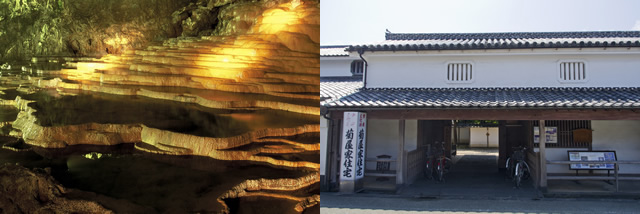
The first stop on your itinerary should be to Akiyoshidai, the largest karst plateau in Japan, located in Mine City in the central part of Yamaguchi Prefecture. Formed under water 350 million years ago when the area was a coral reef, these limestone remains have been eroded by the rain to create unique, strangely shaped rock formations. Stretching beneath Akiyoshidai, is Akiyoshido, the largest limestone cave in the Orient. In addition to the regular tourist route, there is an adventure route available.
Akiyoshido / Kikuya Juutaku
Hagi City in the northern part of Yamaguchi Prefecture is a castle town. Samurai residences and merchant dwellings built about 400 years ago look the same as they did in the old days. With its beautifully laid out streets of white-walled houses, the town is called “little Kyoto” and is bustling with tourists all year long. At its heart is Kikuya Juutaku (Kikuya Family Residence), where valuable artworks are exhibited and visitors can sense the changes in the seasons in its spectacular garden.
Art lovers should check out hagiyaki pottery, a craft that has a 400 year old tradition in Yamaguchi Prefecture. Hagiyaki tea bowls have long been highly prized for use in tea ceremonies. There are numerous hagiyaki studios in Hagi City, some of which offer tourists the opportunity to make their own hagiyaki. Even if you are new to the craft, a veteran instructor will attentively teach you.
If you come to Yamaguchi Prefecture, you absolutely must try its blowfish, a local specialty. You can enjoy blowfish in a variety of ways: savor its natural taste with thin slices of sashimi (raw fish); in nabe (a broth); or as hire-zake (simmered roasted fins in hot sake).
Blowfish sashimi / Tsunoshima Ohashi
Tsunoshima, an isolated island in the Sea of Japan, located to the north of Shimonoseki City, has been getting a lot of attention in recent years as a tourist spot. With its cobalt blue sea and silken white sand beaches, you can soak up the atmosphere of this southern land at this popular resort. The bridge to Tsunoshima is only 18 meters high, low enough to allow those making the crossing to take in the view. Tsunoshima has been used as a location in movies and for a car commercial on TV. In summer, the island is packed with tourists who come to bathe in the sea.
One of Yamaguchi’s famous tourist spots is Ganryu-jima, an island in the Kanmon Straits, which separates Kyushu and Honshu. Legend has it that Japan’s greatest swordsman MIYAMOTO Musashi won a duel against his rival SASAKI Kojiro at Ganryu-jima. The island is accessible from Karato-sanbashi pier by ferry. On the island’s square, statues of Miyamoto Musashi and Sasaki Kojiro stand against the scenic backdrop of the Kanmon Straits. During 2012, various events were held on Ganryu-jima to mark the 400th anniversary of the duel. Other martial art events will also be held in 2013 to commemorate the duel.
Spanning the Nishiki River in Iwakuni City in the eastern part of Yamaguchi Prefecture, Kintaikyo (the Kintai Bridge) is a modern Japanese structure with an old world feel. With its series of five arches, the structure of this arched bridge is one that is not common in any country. The lord of the Iwakuni domain ordered his vassal KODAMA Kuroemon to construct the bridge and the structure was completed under his direction in 1673. Using construction techniques from those days, the present bridge was reconstructed in 2001 and took three years to complete. Both sturdy and beautiful, Kintaikyo was indispensable to the political world of the Iwakuni domain.
Ganryu-jima / Kintaikyo
The steam locomotive that runs between JR Shin-Yamaguchi Station in Yamaguchi City and JR Tsuwano Station in Shimane Prefecture has captured the interest of not only railway enthusiasts, but also international travelers. Having been decommissioned, the train disappeared during the drive towards modernization in the 1960s and 1970s, but at the request of many steam locomotive fans, it was put back into service in 1979 and named SL Yamaguchi-go. Yamaguchi-go travels a distance of 62.9 kilometers in about two hours. The retro interior and the throbbing of the steam engine will make you feel as if you have stepped back in time. The steam locomotive runs from late March to mid-November every year.
A hot spring will revive you after your tiring journey. There are over 50 hot springs in Yamaguchi Prefecture. Yuda Hot Spring in Yamaguchi City is the most easily accessible. A mixture of a bustling shopping district and a hot spring resort, Yuda Hot Spring is said to have been frequented by literary figures. The hot spring waters are effective in relieving neuralgia, muscle pain and fatigue.
It takes about one and a half hours to fly from Haneda Airport in Tokyo to Yamaguchi-Ube Airport or Iwakuni Kintaikyo Airport in Yamaguchi Prefecture. Buses and taxis are available at the airport to take you to any tourist spot. To get to Yamaguchi City, you can take the bullet train from JR Tokyo Station to Shin-Yamaguchi Station, a journey which takes roughly four hours and 20 minutes. To get to Shimonoseki City, it takes approximately five hours by bullet train from JR Tokyo Station to Shin-Shimonoseki Station in the city center. If you use an expressway bus departing from nearby Tokyo Station, it takes about 15 hours and 20 minutes.
Yamaguchi Prefectural Tourism Federation
Text: OMORI Saori
[2013年2月号掲載記事]
本州の最西端に位置する山口県は、本州と九州地方の玄関口として栄えてきました。古くから中国や朝鮮など、アジア各国との貿易も盛んに行われてきたこともあり、現代でも貿易の要所として知られています。北は日本海、南は瀬戸内海に囲まれ、中央を中国山地が横断した地形。県内でも北と南の気候に差がありますが、比較的温暖で過ごしやすく災害も少ないため、観光だけでなく住みやすい場所としても人気です。
山口県は、近代日本の発展に貢献した優秀な政治家や文化人たちを世に多く送り出してきました。とりわけ、明治維新(19世紀後半)--当時の絶対的な封建主義であった江戸幕府を倒した--において中心的な役割を果たした人物たちを育んできました。
旅の始めに訪れたいのが、県中央部の美祢市にある日本最大のカルスト台地、秋吉台です。3億5千万年前、この場所が海だった頃に生まれたさんご礁などの殻が積み重なってできた石灰岩を雨が溶かしていき、独自の奇岩を形成しました。秋吉台の地下100メートルに広がる秋芳洞は東洋最大の鍾乳洞です。通常の観光コースの他、探検コースも用意されています。
県北に位置する萩市は城下町です。約400年前につくられた武家屋敷と商人の住居跡が現在も当時のまま残っています。小京都といわれるほど美しく整った白壁の街並みは、年間を通じて多くの観光客でにぎわいます。中でも中心部の菊屋家住宅は、貴重な美術品などが展示されており、季節の移り変わりを感じられる庭園も見ごたえがあります。
アートに興味がある人にお勧めなのが、400年の歴史を持つ伝統的な陶器である萩焼です。昔から茶道で使われる茶器としても重宝されてきました。萩市内には萩焼の陶房がたくさんあり、観光客が萩焼を作ることもできます。ベテランの先生たちが初心者にも丁寧に教えてくれます。
山口県を訪れたら食べておきたいのは、名物のふぐ料理です。素材を活かした刺身、鍋料理、そしてあぶったひれを熱かんに入れてうま味を楽しむひれ酒など、様々な調理方法で楽しむことができます。
観光地で近年注目されているのが、下関市の北部に位置する日本海に面した離島、角島です。コバルトブルーの海と、白くさらさらとした砂浜は南国のような雰囲気で人気のリゾート地です。角島に行くための橋は、景観を楽しめるように橋の高さが約18メートルと低めに設計されているため、訪れる人たちはその景色を楽しむことができます。角島は自動車のテレビコマーシャルや映画のロケ地としても使われます。また、夏には海水浴客でにぎわいます。
県を代表する観光地の一つに、九州と本州を隔てる関門海峡に浮かぶ巌流島があります。巌流島は、日本一の剣士である宮本武蔵が、ライバルである佐々木小次郎と決闘して勝利した逸話の舞台となりました。巌流島へは唐戸桟橋から観光船が出ています。島の展望広場には関門海峡をバックに宮本武蔵と佐々木小次郎の像が立っています。2012年はこの決闘から400年を迎え、巌流島では様々なイベントが開催されました。2013年も決闘にちなんだ武道や格闘技のイベントなどが開催される予定です。
近代日本のレトロな雰囲気を感じられる場所といえば、県東部の岩国市錦川にかかる錦帯橋です。五つに連なったアーチを描く反り橋は、世界でも特徴的なものです。当時の岩国藩主から命令を受けた家臣、児玉九郎右衛門が指揮をして、1673年に完成させました。現在のものは、2001年に当時の技法を守りながら3年間かけて再現されたものです。頑丈さと美しさを兼ね備えた錦帯橋は、岩国藩の政治にも欠かせない存在となったのです。
鉄道ファンだけでなく、海外からの旅人にとっても注目されているのが、山口市のJR新山口駅から島根県のJR津和野駅までの間を運行するSL列車です。1960~70年代に効率化のために廃止されて一度姿を消しますが、たくさんのSLファンの声によって1979年にSL「やまぐち号」として復活しました。やまぐち号は62.9キロメートルの距離を約2時間かけて走ります。レトロな車内、蒸気機関の躍動を感じることができ、タイムスリップしたかのような雰囲気を楽しむことができます。毎年3月末~11月中旬に運行しています。
旅の疲れをいやしてくれるのは温泉です。山口県には、50以上の温泉があります。その中でも交通のアクセスが最も良いのが、山口市内にある湯田温泉です。繁華街と温泉街が一体となった湯田温泉は、作家たちも愛したといわれています。温泉は神経痛、筋肉痛、疲労回復などの効果が期待できます。
山口県へは、東京の羽田空港から山口宇部空港または岩国錦帯橋空港まで約1時間30分。空港から各地までは、路線バスやタクシーが運行しています。山口市へはJR東京駅から新山口駅まで新幹線で約4時間20分。下関市へはJR東京駅から下関市の新下関駅まで新幹線で約5時間。東京駅周辺から出発する高速バスでは約15時間20分です。
文:大森沙織
-
[From January Issue 2013]
Miyazaki Prefecture is located in the southeastern part of the Kyushu region. With its mild climate, Miyazaki was a mecca once for honeymooning couples. Now it’s a mecca for surfers and from spring to autumn a number of surfing competitions are held in the prefecture. There are even people who move there just to go surfing. Miyazaki is also known for being the location of training camps for professional baseball and soccer teams and there are tours that show visitors round these camps.
Palm trees, such as the Phoenix and Washington Palms, are the symbol of Miyazaki. Washington Palms can often be seen lining the road and grow to about 25 meters tall. Able to withstand strong winds, these trees rarely break, but withered leaves are regularly removed by crews using cranes so that they will not fall and harm pedestrians.
To enjoy a day out in Miyazaki, it’s a good idea to go on a sightseeing bus tour. On Saturdays, Sundays and national holidays, a tour, titled “Nichinan-kaigan Coast and Obi, Kyushu’s little Kyoto,” runs along the shore, stopping at places of interest. Although there is no English-speaking guide on board, you can still enjoy the tour by obtaining a pamphlet written in English, Chinese or Korean in advance.
Washington Palms / Aoshima Shrine
The first place the bus stops at is Aoshima. Although it’s a small island of about 1.5 kilometers in circumference, there are 27 kinds of subtropical plants growing there. The island is surrounded by undulating rocks called “the Demon’s Washboard.” Having been eroded by the waves for a long time, only hard layers of sandstone that resemble a pile of planks have been left behind. When the tide is out, you can often find small crabs and shellfish moving about on the Demon’s Washboard. What looks like a sandy beach is actually made up of seashells.
It is said that the “Kojiki” (Records of Ancient Matters) is Japan’s oldest history book, and that about two thirds of the places featured in the book are in Miyazaki Prefecture. In the Kojiki, Aoshima Shrine on Aoshima Island is the place where the love story between Yamasachihiko and Princess Toyotama takes place, and thus is a shrine to the god of marriage.
About a ten-minute drive from Aoshima is Horikiri-toge Pass. Nearby is Phoenix, a rest stop which sells local specialty products, including soft-serve ice cream with such special local flavors as ashitaba (a herb of the parsley family), mango, lobster and hyuuganatsu (a citrus fruit similar to a tangerine). There you can enjoy views of the Pacific Ocean stretching out endlessly before you and the Nichinan Phoenix Road, which has been chosen as one of the 100 best roads in Japan.
Udo Jingu Shrine / Garden at Obi
Continuing on your journey you come to Udo-jingu Shrine, which enshrines Ugaya Fukiaezuno Mikoto. This is where Prince Toyotama gave birth to Ugaya Fukiaezuno Mikoto. The main shrine is inside a cave. When you visit, you must try your hand at undama-nage (throwing a lucky ball). Aiming for the kame ishi (turtle stone) throw the undama – a ceramic ball about two centimeters in diameter – with your left hand if you are a man and with your right hand if you are a woman. It costs 100 yen for five balls. It is said that if a ball goes into a hole in the stone, your wish will come true. Undama balls are made by hand by local elementary and middle school students.
The last stop is Obi. This is called “Kyushu’s little Kyoto,” characterized by streets of old stone walled houses where samurai used to live. You can tour the residence and garden of the ITO family, who served under Shogun TOYOTOMI Hideyoshi. Visitors really ought to try eating obi-ten and atsuyaki-tamago. Obi-ten is deep-fried fish paste, and atsuyaki-tamago (a thick omelet) is as soft and fluffy as a custard pudding.
The bus mainly runs along Nichinan-kaigan Coast, allowing you to enjoy views of the sea. At the high of its popularity, in the 1960s and 1970s 370,000 pairs of newlyweds visited Miyazaki’s coast annually. Ninety-five buses ran along the route per day. All this started in 1960, when SHIMAZU Takako, the fifth daughter of Emperor Showa, went to Miyazaki on her honeymoon. Two years later, the then crown prince and crown princess, who had just got married, also visited Miyazaki, feeding the trend.
Sunmesse Nichinan / Heiwadai Park
Other unique tourist spots include Sunmesse Nichinan and Heiwadai Park. You can see moai statues from Easter Island at Sunmesse Nichinan, the only place in the world where the statues were allowed to be replicated by the Chilean government. It also houses an animal farm, and “the Bell that Gives Thanks to the Earth,” the first structure to be built with funds donated by top officials from religious organizations from around the world, including Christian and Buddhist sects.
Heiwadai Park is a relaxing place for the citizens of Miyazaki and its symbol is a 37-meter-high tower. In a plaza within the park is a stone platform, if you stand on top of it and clap your hands, the sound echoes against the tower. The starting point of the second leg of the torch relay for the Tokyo Olympics 1964 was in Heiwadai Park and the torch used then still remains there. Next to the park is Haniwa-en Garden, where you can enjoy looking at the expressions on the faces of haniwa (ancient clay figures).
Miyazaki is famous for its mangoes and hyuuganatsu, and there are also a number of sweets made using these fruits. Famous local dishes include hiyajiru, nikumaki-onigiri (rice balls wrapped with slices of meat), chicken nanban (fried chicken with vinegar and tartar sauce), miyazaki-jitokko (a local variety of chicken) and Miyazaki beef. These days, many sweet shops produce cheese manjuu (buns stuffed with cheese instead of bean paste), which are popular as souvenirs.
It takes one hour and 40 minutes to fly from Haneda Airport in Tokyo to Miyazaki Airport. On the rooftop of Miyazaki Airport, there is a plane on display which you can actually climb inside, which was used for training purposes by the Civil Aviation College. This plane was able to avoid being damaged by the tsunami on the day of the Great East Japan Earthquake, as it was flying over Sendai for training.
Miyazaki City Tourisum Association
Nichinan City
Miyazaki Kotsu Co., Ltd.[2013年1月号掲載記事]
宮崎県は九州地方の南東部に位置しています。気候は温暖で、かつては新婚旅行のメッカといわれました。今はサーファーのメッカといわれ、春から秋にかけて多くの大会が行われます。サーフィンを目的に移住する人もいます。プロ野球やサッカーチームのキャンプ地としても知られ、それらをまわるツアーもあります。
宮崎はフェニックスやワシントニアパームなどヤシ科の木がシンボルです。街路樹によく見られるワシントニアパームは25メートルほどに成長します。風には強く、折れることはありませんが、枯れた葉が落ちて下にいる人がけがをしないよう、クレーン車による葉を落とす作業が定期的に行われます。
宮崎での一日を楽しむには、定期観光バスがおすすめです。毎週土・日曜日と祝日には、海岸に沿って名所をまわる「日南海岸と九州の小京都・飫肥」が運行しています。英語でのガイドサービスはありませんが、事前に英語、中国語、韓国語のパンフレットがもらえるので十分楽しめます。
バスが最初に訪れるのは青島です。周囲約1.5キロメートルの小さな島ですが、ここには27種類の亜熱帯植物が生えています。島の周りは波状岩に囲まれており、「鬼の洗濯板」といわれています。長い間に波に洗われ、固い砂岩層だけが板のように積み重なって見えるようになりました。潮の満ち状態によりますが、鬼の洗濯板では小さなカニや貝が動き回っているのがよく見られます。また、砂浜に見えるのは砂ではなく貝がらです。
「古事記」は日本最古の歴史書といわれていますが、古事記に登場する場所のおよそ3分の2が宮崎県といわれています。青島内にある青島神社は古事記に登場する山幸彦と豊玉姫の恋物語が伝えられていて、縁結びの神社です。
青島から10分ほど走ったところには堀切峠があります。すぐ近くには道の駅フェニックスがあり、アシタバ味、マンゴー味、エビ味、日向夏(みかんの一種)味のソフトクリームをはじめ地元の特産品が販売されています。どこまでも続く太平洋と、日本の道100選にも選ばれている日南フェニックスロードの景色が楽しめます。
続いて鵜葺草葺不合命をまつる鵜戸神宮へ。ここは豊玉姫が鵜葺草葺不合命を出産したところです。本殿は洞くつの中にあります。ここを訪れたら試してみたいのは運玉投げです。素焼きでできた直径2センチほどの運玉(5個で100円)を「亀石」めがけて、男性は左手で、女性は右手で投げます。亀石に空いているくぼみのなかに入れば願いごとがかなうといわれています。運玉は地元の小・中学生による手作りです。
最後に立ち寄るのは飫肥です。ここは九州の小京都と呼ばれ、武家屋敷の古い石垣の街並みが特徴です。豊臣秀吉に仕えた伊東家の屋敷や庭園などが見学できます。ここで食べてみたいのは「おび天」と「厚焼きたまご」です。おび天は魚のすり身を揚げたもの、厚焼きたまごはプリンのような食感です。
バスは主に日南海岸沿いを走るので海の景色が楽しめます。1960年代から1970年代には一番多いときで、この海岸に年間37万組の新婚カップルが訪れました。一日にバス95台が動いたといわれています。1960年、昭和天皇の第五皇女である島津貴子さんの新婚旅行先が宮崎だったことがきっかけです。その2年後には結婚したばかりの皇太子ご夫妻(当時)がやはり宮崎を訪れ、さらにブームを呼びました。
この他ユニークな観光地として、サンメッセ日南や平和台公園があります。サンメッセ日南では、世界でここだけ、チリ政府によって複製が許されたイースター島のモアイ像を見ることができます。世界ではじめて、キリスト教や仏教など世界の宗教団体のトップの人たちからの出資によって建てられた「地球感謝の鐘」や、牧場もあります。
宮崎市民のいこいの場でもある平和台公園のシンボルは、高さ37メートルの塔です。広場中央にはふみ石があり、この上に立って手を打つと、塔に音がはね返って響きます。1964年に開催された東京オリンピックで、国内聖火リレー第2コースの起点となったのが平和台公園で、そのときに使われた聖火台が残っています。公園の隣には「はにわ園」があり、さまざまな表情のはにわ(古代の素焼き人形)が楽しめます。
宮崎ではマンゴーや日向夏が特産品で、これらを使ったお菓子もたくさんあります。ご当地グルメとしては、冷や汁、肉巻きおにぎり、チキン南蛮(あげた鶏肉にタルタルソースをかけたもの)、宮崎地頭鶏、宮崎牛など。最近ではチーズまんじゅうが多くの菓子店で作られており、お土産として人気です。
羽田空港(東京)から宮崎空港まで飛行機で1時間40分です。宮崎空港の屋上には航空大学校の訓練に使われた飛行機が展示されていて、実際に乗ってみることができます。この飛行機は東日本大震災の日、仙台上空を訓練中で、津波の被害を免れることができました。
-
[From December Issue 2012]
On October 1 this year, Tokyo Station reopened after renovation work. In 1914, a train line was built to connect Shimbashi Station, the gateway to Western Japan, with Ueno Station, the gateway to Eastern Japan, with a central station established at the halfway point between them. That was the beginning of the Tokyo Station story. It was decided it would be situated in front of the Imperial Palace. Reflecting the special importance of this station to the country, the station was named Tokyo Station; taking the same name as the capital of Japan.
Tokyo Station is a huge terminal located in the center of Japan. According to a survey, conducted in 2011 by East Japan Railway Company, on the number of passengers passing through ticket gates, Shinjuku is the busiest of all the stations run by JR East Japan, followed by Ikebukuro and Shibuya. Although it has the most platforms in Japan and serves as the terminal of many lines, Tokyo Station is the fifth busiest. That’s because many people transfer to other lines at this station instead of exiting through a ticket gate.
For the past five years there have been a number of development projects being carried out in the vicinity of Tokyo Station, such as the renovation of the station house and the construction of buildings nearby. The tagline for this project has been: “Tokyo Station will become a town.” The area around Tokyo Station was named “Tokyo Station City.” Now, Tokyo Station is no longer just a place to catch a train, but has been reincarnated as an attractive place that anybody would go out of their way to visit.
Tokyo Station building has been designated as an important national cultural property. It has been fitted with a quake absorbing system that uses the latest architectural techniques to help it withstand major earthquakes. Particularly noticeable are the two round roofs or domes, located on the north and south sides of the station building. Due to fire damage during the war, the building had been limited to being a two-story structure up until recently, but it has now been restored to its original three-story layout. Inside the domes are elaborate carvings of flowers and animals.
Inside one of the domes / Tokyo Station Gallery
Located inside the main station building, Tokyo Station Gallery was opened in 1988 with the aim of making the station a cultural destination, not simply a place which people pass through. Now the station has been renovated as a three-story structure, it has three times as much floor space as before. On the second floor gallery, you can touch the building’s iconic red brick walls. To celebrate the completion of the renovation work, an exhibition is being held titled, “Nine Artworks that tell a Story about Tokyo Station and the Railroads, to be Enjoyed While Waiting for the First Train.”
Tokyo Station Hotel, adjacent to the station building, reopened on October 3. Its new “Dome Side” rooms are designed so that guests can look down at the ticket gates below the dome. Opened in 1915, Tokyo Station Hotel is one of Japan’s most famous classic hotels and has been patronized by writers such as KAWABATA Yasunari, and other celebrities. The hotel houses a beauty salon and a small department store that sells traditional crafts.
The JR East Travel Service Center, a service center for foreign tourists, has been set up in the station building in the Marunouchi North Exit Dome. They can handle inquiries in four languages: Japanese, English, Chinese and Korean. At the center, there is a tourist information center, a travel agency, a currency exchange counter, and an ATM. At the travel agency, they provide a number of convenient services for foreign tourists: you can pick up a Japan Rail Pass or pick up and buy a JR East Pass; you can also buy tickets for special English-language trips, tickets for JR trains, and Suica (an IC card).
JR EAST Travel Service Center / Tokyo Okashi Land
At Tokyo Station Ichiban-gai (First Avenue Tokyo Station), right outside the Yaesu Underground Central Ticket Gate, there is a wide variety of shops. Tokyo Character Street and Tokyo Okashi (Snack) Land are popular spots that entertain children and adults alike. Offering freshly baked snacks and chocolates, Tokyo Okashi Land is a collection of “antenna shops” (showroom stores) run by three major confectionary makers in Japan.
Tokyo Ramen Street brings together eight of Tokyo’s most famous ramen shops. Among these, Rokurinsha Tokyo’s tsuke-men, is so famous that some people travel long distances just to try it. Hirugao’s shio (salt) ramen is especially popular with women. You can savor the taste of these popular ramen here without having to trek all over the city.
At Tokyo Station you can have a good time without even having to go through the ticket gate. The “ekinaka” (within the station) area has more facilities than any other station in Japan. At Gransta, about 50 shops sell special dishes and packed lunch boxes from famous restaurants, as well as sweets, sake and other goods. Many limited edition products on sale here are difficult to get hold of elsewhere, making it a popular place for tourists to pick up souvenirs of Tokyo.
Using ingredients delivered fresh from all over Japan, at Gransta Dining you can enjoy eating at popular restaurants that serve not just Japanese cuisine, but also Chinese and Italian food. Every single shop has a good reputation for its breakfast menus. On Central Street around 150 types of ekiben (boxed lunches sold at train stations) are on sale. A popular feature of these stores is how you’re able to watch from outside as these meals are prepared.
In the evening, the entire building of Tokyo Station is magically lit up in the dark with LED spotlights. The color of the walls and the design of the station building have been reproduced so that it exactly resembles the way it appeared when it was first built. The exact same scene of 100 years ago has been recreated before your very eyes. The traditions and culture that have continued up until this day will be passed on throughout the next 100 years.
East Japan Railway Comapany
Tokyo Station City
Tokyo Station Development Co., Ltd.Text: MUKAI Natsuko
[2012年12月号掲載記事]
今年10月1日、東京駅がリニューアルオープンしました。1914年、西日本への入口であった新橋駅と、東日本への入口であった上野駅を結ぶための路線がつくられ、その中間地点に中央停車場が設けられました。それが東京駅の始まりです。場所は皇居の正面に設定されました。首都である東京を駅名に採用したことからも、東京駅は国家にとって特別な位置づけでした。
東京駅は日本の中心にある大きなターミナル駅です。2011年、東日本旅客鉄道株式会社の乗降人員調査によると、JR東日本管内における各駅の中で多い順に第1位は新宿駅、第2位は池袋駅、第3位は渋谷駅です。プラットホームの数は日本一多く、各路線の発着駅となっているにもかかわらず、東京駅は第5位です。それは東京駅で降りることなく乗換駅として利用する人が多いためです。
東京駅周辺では5年前から駅舎の復原工事と周辺ビル建設などの土地開発が進められてきました。キャッチフレーズは「東京駅が、街になる」。東京駅を中心とした一帯は「東京ステーションシティ」と名付けられました。今、東京駅は列車を利用する人だけでなく、誰もがわざわざ足を運びたくなるような場所に生まれ変わり、魅力にあふれています。
東京駅の駅舎は国の重要文化財に指定されています。最新の建築技術で巨大地震に耐えられる免震構造になりました。ひときわ目を引くのは、駅舎の北と南にある丸屋根のドームです。戦災により焼失し、現在まで2階建てとなっていましたが、創建当時の姿が再現され3階建てへと復原されました。ドーム内側には花や動物などの細かな彫刻が施されています。
駅舎内の東京ステーションギャラリーは、駅を単なる通過点ではなく、文化発信の場として提供したいという願いから1988年に開業しました。今回リニューアルされ3階建てとなり、面積がこれまでより3倍になりました。2階の展示室では赤レンガの壁を間近に感じることができます。現在、復原工事の完成を記念して、展覧会「始発電車を待ちながら東京駅と鉄道をめぐる現代アート9つの物語」が開催されています。
駅舎に併設する東京ステーションホテルも10月3日にリニューアルオープンを迎えました。「ドームサイド」という客室からはドーム下の改札口が見下ろせる設計になっています。1915年開業の東京ステーションホテルは、日本を代表するクラシックホテルの一つで、作家の川端康成をはじめとする多くの作家や著名人に愛されてきました。ホテル内には東京の伝統工芸品などを買うことができるミニ百貨店やエステなどもあります。
また、外国人旅行者向けのサービスセンター「JR EAST Travel Service Center」が駅舎内、丸の内北口ドーム内に新設されました。ここでは日本語、英語、中国語、韓国語の4ヵ国語での対応が可能です。観光案内所や旅行カウンター、外貨両替所およびATMが設置されています。旅行カウンターではJAPAN RAIL PASSの引き換え、JR EAST PASSの引き換えと販売、英語版特別企画乗車券やJR券、Suica(ICカード)の販売など、外国人旅行者には便利なサービスが充実しています。
八重洲地下中央口改札を出てすぐにある東京駅一番街には種類豊かな店舗が並びます。「東京キャラクターストリート」や「東京おかしランド」は、大人から子どもまで楽しめるスポットとして人気です。東京おかしランドは日本を代表する大手菓子メーカー3社のアンテナショップで、その場で揚げたてのスナック菓子やチョコレートが食べられます。
「東京ラーメンストリート」には、東京を代表するラーメン店8店舗が集まっています。なかでも「六厘舎TOKYO」はつけ麺の有名店で、遠方からわざわざ食べに来る人がいるほどです。また「ひるがお」の塩ラーメンは特に女性に人気です。都内を移動しなくても人気のラーメンがここで味わえます。
東京駅は、駅の改札を出なくても楽しむことができます。「駅ナカ」と呼ばれるエリアが他のどの駅よりも充実しています。GRANSTAには有名料亭のそうざいやお弁当、スイーツ、雑貨や日本酒専門店など、約50店舗が集まっています。ここでしか手に入らない限定品も数多くあり、東京のお土産として観光客に喜ばれています。
またGRANSTA DININGでは日本各地から届けられる新鮮な食材を使った日本食はもちろん、中華、イタリアンなどの人気レストランでの食事が楽しめます。どの店も朝食メニューが好評です。セントラルストリートでは約150種類の駅弁が販売されています。調理している様子を外から見ることができるのも人気です。
夕方になると東京駅はLEDを使用したスポットライトで、駅舎全体が幻想的に浮かびあがります。壁の色や駅舎の造りは創建当時の姿へと忠実に再現されました。今、目の前に見えるのは100年前と同じ風景です。これまでの伝統と文化は、次の100年へと受け継がれてゆきます。
東日本旅客鉄道株式会社
東京ステーションシティ
東京ステーション開発株式会社文:向井奈津子
-
[From November Issue 2012]
Kagawa Prefecture is located in the north east of the Shikoku region. In recent years it’s been gaining a lot of attention as the “Udon Prefecture” because of a PR campaign promoting the unique appeal of the area’s “sannuki udon” (noodle soup) dish. To the north, facing the Seto Inland Sea is a wide flat plain and to the south, surrounded by the Sanuki Mountains, is an area which has a long history of maritime trading.
Since the Seto Ohashi Bridge opened in 1988, connecting Shikoku with Honshu (the main island of Japan), Takamatsu City, the capital of Kagawa Prefecture, has been playing an even more important role as a gateway to the Shikoku region. It’s a hub for artistic events, like the Setouchi International Art Festival that will be held for the second time next year.
You might want to begin your trip by visiting Ritsurin Garden. Built during the Edo Period, it took about 100 years for successive daimyou (lords) of the Sanuki Takamatsu Domain to complete the garden. Divided into a southern garden and a northern garden, the garden contains six artificial ponds and 13 miniature hills. It’s not only been designated as a Special Place of Scenic Beauty in Japan, but it’s also known all over the world for being a lovely garden and has been featured in foreign magazines.
Kagawa Prefecture is a place deeply associated with the military leader, TAIRA no Kiyomori, who is featured in a period drama currently being broadcast on NHK. Partly because of this, the Takamatsu Heike Monogatari Historical Museum is attracting attention. The museum allows you to see the world of “The Tale of the Heike,” an epic which centers around Taira no Kiyomori and depicts the rise and fall of the Heike clan in the Heian period (8 ~ 12th century). The 300 lifelike wax dolls are a must-see.
Yashima appeared in “The Tale of the Heike” as the site of the battle that took place between the Genji and the Heike. Having a number of landmarks related to the battle, it is constantly being visited by history buffs. This area also boasts a host of leisure facilities. At the summit of Mount Yashima, there is an observation deck and an aquarium commanding beautiful views of the Seto Inland Sea. The New Yashima Aquarium houses 300 kinds of creatures and is the only aquarium in Japan to stand on top of a 290-meter mountain. Dolphin and sea lion shows are very popular among children.
When you get hungry, go to a sanuki udon shop. The udon is a delicious al dente noodle and its base is a refreshing broth made from small dried sardines. With more than 900 sanuki udon shops, Kagawa Prefecture boasts the highest number of udon shops per capita and produces the largest amount of udon noodles in Japan.
The climate and soil in Kagawa Prefecture is well suited for growing wheat and the prefecture has long thrived on producing salt and soy sauce, as well as dried sardines, all of which are used to make the broth. Featured in magazines and movies, Kagawa became known all over the nation. Many tourists visit the prefecture to eat udon, and there are even “udon tours” available.
Art lovers should visit the Isamu Noguchi Garden Museum. The museum has a collection of over 150 works by NOGUCHI Isamu. One of the foremost sculptors of the 20th century, Noguchi spent his twilight years in Kagawa Prefecture and wanted his works to be a source of inspiration for future artists and researchers. It’s no exaggeration to say that the museum, which embodies that wish of his, is his life itself.
Another place known for art is Naoshima. Located about 50 to 60 minutes away from Takamatsu Port by ferry, the island is a popular tourist spot that blends nature, urban life and modern art. In 2013, the Setouchi International Art Festival, a modern art festival that showcases the islands in the Seto Inland Sea as one museum, will be held once again. As a major attraction of this festival, Naoshima captivates visitors from both home and abroad.
A must-visit place in Kagawa is Kotohira-gu. This historic site enshrines a god of the sea. Especially famous is the long approach of stone steps connecting the main shrine with the rear shrine. With 1,368 steps in total, it’s known for its great length. Attracting scores of visitors throughout the year, the shrine has a number of treasure halls containing important cultural properties and ancient shaden (buildings that enshrine holy objects).
Kotohira-gu / The Old Konpira Ooshibai Kabuki Theater
Close to Kotohira-gu is the Old Konpira Ooshibai Kabuki Theater (Kanamaruza), known as Japan’s oldest existing playhouse. Designated as an important cultural property, this place is considered to be a mecca for kabuki by actors and fans. Held in April each year, Shikoku Konpira Kabuki Ooshibai is a traditional event that heralds the arrival of spring.
Inside Takamatsu City is Aji Onsen, a hot spring that commands views of the Seto Island Sea. Here you can enjoy open-air baths, saunas and cold-water plunge pools. The hot springs are effective for treating neuralgia, muscle pain and skin diseases, as well as for relieving fatigue. You can also savor reasonably priced seafood dishes made with the fresh catch of the day from Aji Port.
To get to Takamatsu City, Kagawa Prefecture, it takes about one hour and 15 minutes to fly from Haneda Airport in Tokyo to Takamatsu Airport. There are limousine buses available from the airport to JR Takamatsu Station. From JR Tokyo Station, you can take the Tokaido Shinkansen and get to Okayama Station in roughly three hours and 15 minutes. Transferring for the JR Seto Ohashi Line at Okayama Station, you will arrive at Takamatsu Station in approximately 50 minutes. You can also get there in about 11 hours on an expressway bus departing from the vicinity of Tokyo Station.
Kagawa Prefecture Tourism Association
Text: OOMORI Saori
[2012年11月号掲載記事]
香川県は四国地方北東部に位置しています。近年、名物の「讃岐うどん」をアピールした「うどん県」というユニークなPRで注目を集めました。北部は瀬戸内海に面した平野が広がり、南部は讃岐山脈に囲まれ、古くから海上交易の要として栄えた歴史があります。
香川県の県庁所在地である高松市は、1988年に本州と四国を結ぶ瀬戸大橋が開通してから、四国地方の玄関口としての役割がさらに高まりました。来年には第2回目となる瀬戸内国際芸術祭2013が開催されるなど、アートをまちづくりの中心としたプロジェクトが行われています。
旅の始まりに訪れたい場所は栗林公園です。江戸時代、讃岐高松藩の歴代藩主たちによって約100年かけて完成した歴史を持ちます。庭園は南庭と北庭に大きく分かれ、6つの人工池と13の築山を中心に構成されています。国の特別名勝に指定されているだけでなく、海外の雑誌でも紹介されるなど世界的にも評価を得ている美しい庭園です。
香川県は武家のリーダー、平清盛ゆかりの地です。現在NHKの大河ドラマで放映されています。その影響もあって注目されているのが「高松平家物語歴史館」です。平安時代(8~12世紀)、平清盛を中心とした平家の栄光から衰退までを描いた「平家物語」の世界が体感できます。まるで本物のような300体のろう人形が見どころです。
「平家物語」に登場する、源氏と平家の合戦の地として知られる場所が屋島です。合戦に関連した史跡がたくさんあり、訪れる歴史ファンは後を絶ちません。ここはレジャー施設も充実しています。屋島山上には瀬戸内海の美しい風景を一望できる展望台や水族館があります。新屋島水族館は日本でただ一つ、標高290メートルの山の上にある水族館で、300種類の生き物が展示されています。イルカやアシカのショーは子どもに大人気です。
お腹がすいたら讃岐うどんの店へ。こしのある麺、さっぱりとした煮干しだしをベースとしたつゆが讃岐うどんの基本です。香川県にはうどんの店が900店以上あり、人口に対する店の数やうどん生産量が日本一です。
このような背景には、香川県が気候や土壌の面で小麦の栽培に適していたこと、また、古くから塩や醤油の生産も盛んで、だしに使う煮干しの産地でもあったことがあげられます。雑誌で紹介されたり映画になったりして全国に知られるようになりました。うどん目当てに訪れる観光客もたくさんいて、「うどんツアー」もあります。
アートを楽しみたい人にはイサム・ノグチ庭園美術館がおすすめです。20世紀を代表する彫刻家、イサム・ノグチの作品約150点が収蔵されています。晩年を香川県で過ごしたノグチは、自分の作品が未来の芸術家や研究者たちのインスピレーションのルーツとなることを望んでいました。その遺志を具体化した美術館は、ノグチの人生そのものと言えるでしょう。
もう一つ、アートでよく知られているところといえば直島です。高松港からフェリーで約50~60分の場所にあり、自然と町並み、現代アートが融合した注目のスポットです。2013年には瀬戸内海の島々を一つの美術館に見立てた現代アートの祭典、瀬戸内国際芸術祭が再び開催されます。直島はこの芸術祭の中心として、国内外から訪れる人々の心をとらえています。
香川へ行ったら必ず行きたいところは金刀比羅宮です。海の神様をまつる歴史的な名所です。特に有名なのが参道で、本宮、奥社をつなぐ長い石段。合計1,368段と、とても長いことで知られています。重要文化財が収蔵された宝物館や由緒ある社殿(神体をまつっておく建物)が多くあり、年間を通じて観光客がたくさん訪れます。
金刀比羅宮の近くには、現存する日本最古の芝居小屋として知られる旧金毘羅大芝居「金丸座」があります。ここは国の重要文化財に指定されており、歌舞伎役者やファンにとって聖地とも呼べる場所です。毎年4月に開催される四国こんぴら歌舞伎大芝居は、春を告げる伝統行事となっています。
高松市内には、瀬戸内海の風景を眺めながら入浴できる庵治温泉があります。露天風呂、サウナ、水風呂を楽しむことができます。温泉には神経痛、筋肉痛、皮膚病、疲労回復などに効果が期待できます。また、毎朝庵治港に水揚げされる新鮮な海の幸を使った料理を、手頃な価格で味わうことができます。
香川県高松市へは、東京の羽田空港から高松空港までは約1時間15分。空港からJR高松駅までリムジンバスが運行しています。JR東京駅から岡山駅まで東海道新幹線で約3時間15分。岡山駅からJR瀬戸大橋線に乗り換えて高松駅まで約50分。東京駅周辺から出発する高速バスでは約11時間です。
文:大森沙織
-
[From October Issue 2012]
Ueno, located in Taito Ward, Tokyo, is a sight-seeing area the Japanese are well acquainted with. A five-minute train ride away from Tokyo Station, Ueno Station is a railway terminus at which a number of trains, including bullet trains stop at. A number of songs have been written about the fact that it has been the gateway to the Tohoku region for about 20 years.
Located right by Ueno Station, Ueno Onshi Koen (Ueno Park) is a spacious green park. Built at the suggestion of Anthonius Franciscus BAUDUIN, Holland’s surgeon general, at a time when the word “park” didn’t even exist in the national vocabulary, it was the first ever park in Japan. The park often appears on the news and on other TV programs as a place bustling with activity, with live broadcasts of events such as cherry-blossom viewing being shown. One of the most photographed spots in the park is a bronze statue of SAIGO Takamori, known to tourists as “Ueno no Saigo-san” (Mr. Saigo of Ueno). A historical Japanese figure, Saigo is typically depicted with a dog by his side.
In the park is a zoo, a shrine and a number of museums. The Tokyo National Museum houses 110,000 items ranging from archaeological documents to arts and crafts works, including 87 designated national treasures and 631 important cultural assets. The National Museum of Western Art contains the Matsukata collection and other art works dating from the late Middle Ages to the early 20th century. The National Science Museum is also known for its unique exhibits, such as its models of outer space and dinosaur skeletons, and is the only national science museum in Japan that covers all scientific disciplines. Because so many important cultural assets are on display, these national museums are well worth checking out.
The Ueno no Mori Museum (The Ueno Royal Museum) exhibits works donated by members of the public, and also holds special exhibitions to display items borrowed from art museums in other countries. At the Tokyo Bunka Kaikan, internationally and domestically renowned performances of classical music, opera and ballet are held. On top of all of this, the Tokyo Metropolitan Art Museum, which opened in 1926, has just been reopened in April after two years of renovation work.
Opened in 1882, Ueno Zoo is the oldest zoo in Japan. Housing about 3,000 animals of 500 species, the zoo is famous for keeping rare animals and giant pandas. With its pond, rocks and bamboo groves, the renovated panda house is an environment that closely resembles the natural habitat of pandas. At “The Sea of Polar Bears and Seals,” you can watch seals and polar bears in action from every angle as they swim about the tank.
Passing by the children’s amusement park located opposite Ueno Zoo, you can see Ueno Toshogu Shrine in front of you. Designated as a national important cultural property, at Ueno Toshogu Shrine, TOKUGAWA Ieyasu, the founder of Tokugawa shogunate is worshiped as a god. Known as a good spot for viewing cherry blossoms in spring, and the changing colors of leaves in autumn, the shrine can get crowded, especially during the New Year holidays with tourists visiting the shrine for the first visit of the New Year, or with people coming to see peonies that bloom in winter. It also attracts those who pray for good luck or success in entrance examinations, as well as a number of people interested in Japanese architecture from abroad as an example of authentic Edo period architecture.
There are a number of famous spots inside the park, one of which is Shinobazu Pond. When an inlet of Tokyo Bay was reclaimed, part of it remained to form the pond. Two kilometers in circumference, the pond consists of three sections: U no Ike (the Cormorant Pond), Hasu Ike (the Lotus Pond), and the Boating Pond, which gets crowded with couples and families. In spring, cherry blossoms blooming around the pond are reflected in the water, and in summer lotus flowers, for which the pond is famous, bloom over its surface.
At the southern end of the park, beside Shinobazu Pond, you will find Suijo Ongaku-do (the Waterfront Concert Hall). There are various events held there according to the season, such as classical concerts in spring and Japanese drum performances in summer. Some concerts cost only 500 yen while other events can be enjoyed free of charge.
If you’re looking for a place to eat in Ueno Park, then Ueno Seiyoken and Ueno Inshotei, both have views out over Shinobazu Pond. Loved by Japan’s great literary figures, Ueno Seiyoken offers authentic French cuisine. Opened in 1875, Inshotei is a restaurant with a long history that serves kaiseki-ryouri (traditional Japanese cuisine consisting of a number of small dishes). Dishes are made using ingredients that vary according to the season.
Inside the park, there’s a traditional Japanese sweet shop called “Shin Uguisutei.” The shop opened in 1915, and the most popular item on its menu are delicious uguisu dango dumplings made from sweet red bean paste and pounded rice. There you can also enjoy seasonal sweets, such as shaved ice in summer and oshiruko (sweet red-bean soup with rice cake) in winter. For a light meal or to buy souvenirs, you can go to Ueno Green Salon, a cafe right next to the entrance of Ueno Park. Panda-themed merchandising and dishes are popular there.
The Shitamachi Fuzoku Shiryokan (Downtown Museum), located by the Shinobazu Pond, exhibits quite a few precious items that bring back memories of the good old days. Many houses collapsed during the Great Kanto Earthquake in 1923 and in the war in 1945, but here you can see lost scenes from the Edo period. In addition, antique fairs, where old tools and coins are sold, are held regularly near the museum.
Besides the park, there are other popular tourist spots in Ueno.Walking from Ueno Station toward Okachimachi, you come to a shopping street called Ameya Yokocho. Also known as Ameyoko, the street is lined with more than 400 shops, and around the end of the year it gets crowded with customers stocking up on food for the New Year holidays. The shops carry not only domestically produced items, but also imported items, and are known for selling food products, such as fish and dried goods, clothing, jewelry and shoes. Known for its cheap prices, the shopping street is popular with tourists from abroad too.
Ueno Tourist Association
Tokyo National Museum
The National Museum of Western Art
National Museum of Nature and Science,Tokyo
Ueno Zoological Gardens
The Ueno Royal Museum
Tokyo Bunka KaikanText: BOTAMOCHI Anko
[2012年10月号掲載記事]
上野は東京都台東区に位置する、日本人になじみの深い観光地です。上野駅は東京駅から電車で5分ほどの場所にあり、新幹線を含むたくさんの電車が停車することでも知られているターミナル駅です。約20年くらい前までは東北地方の玄関口だったため、それをテーマにした歌がたくさんつくられました。
上野駅のすぐそばにある上野恩賜公園は緑ゆたかな広い公園です。日本に公園という言葉すらなかった時代に、オランダの一等軍医、アントニウス・フランシスカス・ボードワンの提言をきっかけにできた国の公園第一号です。お花見の中継が行われるなど、にぎわいの象徴としてニュースやテレビ番組でよく紹介されます。園内にある西郷隆盛の銅像は「上野の西郷さん」として知られ、観光客の写真撮影スポットです。西郷隆盛は日本の歴史上の人物で、犬を引いている姿が特徴的です。
公園内には動物園や神社、また、たくさんのミュージアムがあります。東京国立博物館では国宝87件、重要文化財631件を含め、考古資料から美術工芸品まで11万件を所蔵する博物館です。また国立西洋美術館では松方コレクションを中心に中世末期から20世紀初頭までの美術作品を所蔵。国立科学博物館は、国内でただ一つの国立の総合科学博物館で、宇宙のしくみや恐竜の骨格標本など展示品がユニークなことでも知られています。国立のミュージアムは重要文化財を多く展示しているため、見応えがあります。
上野の森美術館では公募展や、海外の美術館の所蔵品を借り受けての特別展などが開催されます。東京文化会館では、国内、海外の著名なクラシックコンサートやオペラ、バレエなどが行われます。また1926年開館の東京都美術館は、2年間の改修工事を経て4月にリニューアルオープンしました。
1882年に開園した上野動物園は、日本で一番古い動物園です。約500種類3,000点の動物が飼育されており、希少動物やジャイアントパンダの飼育で知られています。リニューアルされたパンダ舎は、池や岩、竹林があり、自然に近い環境です。また、「ホッキョクグマとアザラシの海」ではダイナミックに泳ぐアザラシやホッキョクグマなどの姿をあらゆる角度から見ることができます。
上野動物園の前にあるこども遊園地の脇を通ると、正面に上野東照宮が見えてきます。上野東照宮は日本の重要文化財に指定されており、徳川幕府を開いた徳川家康を神様としてまつる神社です。春は桜の名所として、秋は紅葉狩り、お正月は初詣や冬ぼたんを見る観光客でにぎわいます。また、開運・合格を願う人や、本格的な江戸建築を間近で見られる神社として日本建築に興味がある外国人も多く訪れます。
公園内にはいろいろな名物がありますが、その一つに不忍池があります。不忍池は、東京湾の入り江の部分を埋め立てたときに残った池といわれています。池は周囲2キロにわたり、「鵜の池」と呼ばれる池や「蓮池」と呼ばれる池の他にカップルや親子連れなどでにぎわう「ボート池」の3つに分かれています。春は池周辺に咲く桜の花が水面に映り、夏は一面に広がるはすの花が咲くことでも知られています。
公園の南端の方へ行くと、不忍池のほとりに野外ステージ「水上音楽堂」があります。春はクラシックコンサート、夏は和太鼓ライブなどが行われ、季節ごとにさまざまなイベントが開催されています。中には500円で見られるコンサートや、無料のイベントなども楽しむことができます。
上野恩賜公園を望む食事処といえば上野精養軒と上野韻松亭で、どちらも不忍池を見下ろす場所にあります。上野精養軒は日本の文豪たちからも愛された、本格的なフランス料理を楽しむことができるレストランです。また上野韻松亭も1875年に創業された歴史のある懐石料理店です。季節ごとに違うこだわりの食材を使った料理を楽しむことができます。
公園内には1915年創業の甘味屋「新鶯亭」があり、定番メニューは「鶯だんご」という口当たりのなめらかなあんこが楽しめるだんごです。また、夏はかき氷、冬はお汁粉(おもちの入った甘いあんこの汁)と、季節の甘味も味わえます。また軽く食事をしたりお土産を買いたいときは、上野公園口すぐそばに、カフェ「上野グリーンサロン」があります。パンダをモチーフにしたグッズやメニューが人気です。
不忍池の脇にある下町風俗資料館は、古き良き時代の生活を懐かしむことができるようにと、たくさんの貴重な資料が展示されています。1923年の関東大震災や1945年の戦災により家屋などが崩壊したため、江戸の面影をすっかりなくしてしまった下町の風景を見ることができます。また、資料館の近くでは定期的に骨董市が行われ、古い道具やお金などが販売されています。
上野には公園以外にも人気の観光名所があります。上野駅から御徒町方面に進むとアメヤ横町(通称アメ横)という商店街に着きます。商店街には400軒以上の商店が並び、年末はお正月の買い出しなどで混みあいます。商店は国産品をはじめ、海外から輸入された雑貨や、魚介類や乾物などの食品、衣類、宝飾品、靴が安いことで知られており、外国人観光客にも人気の商店街です。
上野観光連盟
東京国立博物館
国立西洋美術館
国立科学博物館
上野動物園
上野の森美術館
東京文化会館文:牡丹餅あんこ
-
[From September Issue 2012]
Okayama Korakuen
Okayama Prefecture, situated in the southeast of the Chugoku region, has been called the “land of fine weather,” due to the fact that for many days during the year less than one millimeter of rain falls. To the north is the grandeur of the Chugoku Mountains and to the south is the beautiful Seto Inland Sea. The prefecture enjoys a mild climate and is extremely fertile. It’s blessed both with the bounty of nature and the fact that natural disasters, such as typhoons, rarely occur. Its capital Okayama City is a historical city that has thrived as a castle town since the Warring States Period.
In front of Okayama Station is a statue of “Momotaro” (Peach Boy), the hero of the fairy tale Momotaro. Okayama is the birthplace of Momotoro, who set off from the region towards Oniga-shima (Demon Island) with a dog, monkey and pheasant. It is said that the statue of Momotaro is still looking towards of Demon Island.
Okayama Castle, about a ten minute bus ride from Okayama Station, is a famous castle of great historic value and is the most important historical landmark in the prefecture. It was built in 1597 by UKITA Hideie – one of the five daimyou (lords) chosen to form the Council of Five Elders by TOYOTOMI Hideyoshi to rule Japan. It’s is said that the castle was modeled after ODA Nobunaga’s Azuchi Castle. Because of its black exterior, the castle has been nicknamed “U-jou” or “Crow Castle.” With three stories and six levels, the keep has valuable items on display such as matchlocks and suits of armor. Built for defense there is also a tsukimiyagura observation post, which has been designated as an important cultural asset.
Okayama Castle / Saidaiji Hadaka Festival
Spread out beneath Okayama Castle, is Korakuen, a beautiful Japanese garden that is counted among Japan’s three most famous gardens. IKEDA Tsunamasa, the feudal lord of Okayama, ordered one of his vassals to build the garden, and it took 13 years before it was complete. Featuring a spacious lawn, a pond, a miniature hill, and a tea house, the garden allows visitors to enjoy a traditional Japanese atmosphere and the beauty of each season. Seasonal events are held there, such as cherry blossom viewing in spring and moon viewing in autumn. You can drink maccha (powdered green tea) inside the garden while enjoying the views.
Taking the JR Ako Line from Okayama Station for about 20 minutes, get off at Saidaiji Station, from there walk about ten minutes and you’ll come upon Saidaiji Kannonin Temple. In February each year, the Saidaiji Hadaka Festival is held to determine the year’s fuku-otoko (lucky men). This festival, which is also known as “Saidaiji Eyo,” is one of Japan’s three most bizarre festivals. Held to herald spring, men wearing nothing but a loincloth fight for the shingi – a sacred, cylindrical, wooden stick about 20 centimeters in length – at this traditional event.
Also known as “The Fruits Kingdom,” Okayama produces large amounts of quality fruits, such as white peaches and muscat grapes. Plump and bursting with juice, white peaches make especially pleasing gifts.
Seto Bridge / Kurashiki Bikan Area
Reflecting the bounty of the nearby mountains and sea, Okayama’s most famous local dish is bara-zushi. It’s a kind of chirashi-zushi: a rice bowl, topped generously with ingredients harvested from the mountains and the sea. Each ingredient is cooked separately to bring out its optimum flavor and this dish has been loved by the people of Okayama since the old days. It’s often eaten on festive occasions.
Bizen-yaki (Bizen ware), is a handicraft that has a history going back 1,000 years and is produced at one of Japan’s six oldest kilns. Because glaze is not applied, these pieces of ceramic look simple, but are imbued with the deep warmth of the soil. Bizen-yaki has been appreciated by people for a long time, but these days aficionados come not only from outside the prefecture, but also from abroad. Increasingly, new bizen-yaki artists are establishing their own studios.
Taking the JR Sanyo Main Line from Okayama Station and traveling for about 20 minutes, you arrive at Kurashiki Station. A short walk from the station takes you to the Kurashiki Bikan Historical Quarter. These highly prized rows of buildings, with their white walls and latticed windows, have been designated to be preserved as part of the townscape. These beautiful streets are known throughout the country, and rickshaws that fit in with the atmosphere of the neighborhood are popular among tourists. At night, the area is lit with streetlights, lending the scenery a rather different beauty to that of the day.
Ohara Museum of Art / Yubara Onsen
The Ohara Museum of Art, established by OHARA Magosaburo, a businessman from Kurashiki, was the first private art museum in Japan to house mostly Western artworks. It exhibits world-famous paintings and sculptures such as “Annunciation” by El Greco and “Waterlilies” by Claude MONET. The museum is also a champion of contemporary art and is active in supporting young artists by inviting them to Kurashiki. The museum is currently participating in the Google Art Project, where people can view works exhibited at art museums all over the world on the Internet.
About a 30 minute drive from the center of Kurashiki is the Seto-Ohashi Bridge, which connects Honshu and Shikoku. In addition to linking islands in the Seto Inland Sea, the Seto-Ohashi Bridge has long been cherished as a symbol of Okayama. From Mount Washu, you can enjoy a panoramic view of the beautiful Seto Inland Sea. In Shimotsui, rows of old houses with tiled roofs and earthen walls give the port town a retro feel.
Hotels and inns located in the suburbs of Kurashiki City that command views of the Seto Inland Sea are especially popular; in summer they’re also great for bathing in the sea. There you can enjoy delicious vegetables, and fresh seafood from the Seto Inland Sea. Okayama and Kurashiki cities also have hot springs, but particularly popular are Yunogo and Yubara; hot spring towns in the northern part of the prefecture. These springs are said to be effective in healing injuries and illnesses.
Peach (left) and muscat (right)
It takes about one hour and ten minutes to fly from Haneda Airport to Okayama Airport. From the airport, located in the suburbs of Okayama City, there are limousine buses available to take you to Okayama Station. If travelling by the JR rail network, you can take the Tokaido Shinkansen from JR Tokyo Station and get to Okayama Station in roughly three hours and ten minutes. It takes approximately ten hours by highway bus.
Okayama Visitors & Convention Association
Ohara Museum of Art
Kurashiki Convention & Visitors Bureau
Okayama Castle
Okayama Korakuen
Okayama Prefectural Tourism FederationText: OOMORI Saori
[2012年9月号掲載記事]
中国地方の南東部に位置する岡山県は、年間降水量が1ミリ未満の日が多いことから「晴れの国」と呼ばれています。北は雄大な中国山地、南は美しい瀬戸内海に面し、温暖な気候と豊富な栄養分のある大地、台風などの災害が少ない自然豊かな土地です。県庁所在地の岡山市は、戦国時代から城下町として栄えてきた歴史ある街です。
岡山駅前にはおとぎ話「桃太郎」の主人公、桃太郎の像があります。岡山は、犬、猿、キジの家来を連れて鬼ヶ島へ鬼退治に行った桃太郎のゆかりの地です。桃太郎像は今でも鬼ヶ島のある方向を見張っているといわれています。
岡山駅からバスで約10分のところにある岡山城は、歴史的に価値ある名城として岡山を代表する史跡の一つです。日本を統治していた豊臣家五大老の一人、宇喜多秀家が1597年に造りました。天守閣は織田信長の安土城を参考にしたといわれています。黒い外観からカラスを意味する「烏城」とも呼ばれています。3層6階の天守閣には、火縄銃や鎧などの貴重な資料が展示されています。また重要文化財に指定されている月見櫓と呼ばれる見張りや防御を目的とした建物もあります。
岡山城の真下に広がる後楽園は、日本三名園に数えられる美しい庭園です。岡山藩主、池田綱政が家臣に命じ、13年の歳月をかけて完成させました。広い芝生や池、築山、茶室などがあり、和の雰囲気、そして四季の美しさを感じられる場所です。春には満開の桜、秋には月見会など季節に応じた催しが開催されています。園内では庭園の景色を眺めながら抹茶を飲むことができます。
岡山駅からJR赤穂線で約20分、西大寺駅からさらに徒歩10分のところにあるのが西大寺観音院です。毎年2月には、その年の福男を決める「西大寺裸祭り」が行われます。「西大寺会陽」とも呼ばれ、日本三大奇祭の一つでもあります。男性たちがふんどし一丁になり、宝木という約20センチほどの円柱形の神聖な木の棒をめぐって争う様子は、春を告げる恒例の伝統行事となっています。
岡山は「フルーツ王国」とも呼ばれており、白桃やマスカットといった高品質な果物がたくさん作られています。特に白桃は、果肉があつく甘い果汁がたっぷりとあって、贈り物としても喜ばれています。
山と海の両方に恵まれた岡山を代表する郷土料理が「ばら寿司」です。山の幸、海の幸が豪華に盛り付けられたちらし寿司の一種です。具はすべて別々に煮炊きし、各材料の持ち味が生かされた料理で、昔から岡山県人に愛されてきました。お祝いごとがあるときによく食べられます。
備前焼は日本六古窯の一つで、一千年の伝統を持つ工芸品です。陶芸で一般的に使われる釉薬と呼ばれる薬品を使わないので、素朴で味わい深く土のぬくもりが感じられる仕上がりになっています。昔から根強いファンは多くいますが、最近では県外だけでなく海外からも魅了された人々がやって来て、備前焼作家として工房を持つことも増えました。
岡山駅からJR山陽本線で約20分で倉敷駅に着きます。駅から少し歩くと、倉敷美観地区に到着します。町並み保存に指定されている白壁と格子窓の建物群はとても貴重です。美しい町並みは全国的にも有名で、町の雰囲気にあった人力車は観光客にも人気です。また、夜には夜間景観照明で照らされ、昼とはまた一味違った美しい景観を見ることができます。
倉敷の実業家、大原孫三郎が設立した大原美術館は、日本最初の西洋美術を中心とした私立美術館です。エル・グレコの「受胎告知」やクロード・モネの「睡蓮」などの、世界的な名画や彫像などが多く展示されています。また、現代アートにも力を入れており、若手作家を倉敷に招いて支援する活動も積極的に行っています。現在、インターネット上から世界中の美術館の作品を見ることができる「グーグルアートプロジェクト」にも参加しています。
倉敷の中心部から車で約30分のところにあるのが、本州と四国を結ぶ瀬戸大橋です。瀬戸内海の島々を結ぶ瀬戸大橋は、岡山を象徴するものとして人々に愛されてきました。また、鷲羽山からは、美しい瀬戸内海の風景が一望できます。本瓦葺きの屋根や土蔵の下津井の古い家並みは、レトロな港町の雰囲気を感じることができます。
倉敷市郊外にある瀬戸内海が一望できる宿泊施設は特に人気で、夏には海水浴もできるのでお薦めです。瀬戸内海の新鮮な海産物や、おいしい野菜を味わうことができます。また、岡山や倉敷市内にも温泉はありますが、特に人気があるのが県北の湯郷温泉、湯原温泉などです。けがや病気の治癒に効果があるといわれています。
東京・羽田空港から岡山空港まで約1時間10分。岡山市郊外にある空港からはJR岡山駅までのリムジンバスが運行しています。JRでは、東海道新幹線でJR東京駅から岡山駅までが約3時間10分。高速バスでは約10時間かかります。
おかやま観光コンベンション協会
大原美術館
倉敷観光コンベンションビューロー
岡山城
岡山後楽園
岡山県観光連盟文:大森沙織